Home Blog Page 521

Digitalizing Sri Lanka’s Public Sector: A Call for Urgent Reform

0

By: Staff Writer

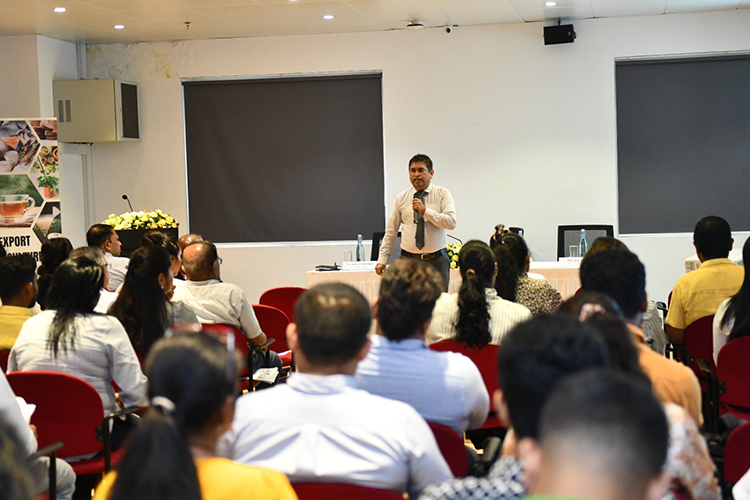
December 27, Colombo (LNW): Sri Lanka’s public sector must embrace digitalization to unlock its economic potential, urged WSO2 Founder and CEO Sanjiva Weerawarana during a Central Bank lecture on “Unleashing the Digital Economy in Sri Lanka.”

 Highlighting the inefficiencies in the current system, Weerawarana called for radical reforms, including capping cash transactions at Rs. 2.5 lakhs and phasing out Rs. 5,000 notes to foster transparency and drive digital adoption.

While Sri Lanka boasts high National ID and birth certificate coverage, efforts to implement a robust digital identity system have stagnated for over two decades. Weerawarana criticized the slow progress and emphasized the importance of user-friendly, scalable solutions to overcome authentication challenges.

The reliance on cash remains a significant barrier, with 77% of the Rs. 1.26 trillion in circulation held outside the banking system. Although there are 19 million debit cards in use, digital payment platforms like Just Pay and Lanka QR remain underutilized. Government payments totaling Rs. 330 billion annually also highlight the untapped potential of digital systems.

Weerawarana urged the adoption of scalable digital ID systems, streamlined payment platforms, and reduced cash dependency to formalize the economy and promote sustainable growth. By bridging the gaps in the current system, Sri Lanka could unlock significant opportunities in its journey toward digital transformation.

While 19 million debit cards are active, only 1.9 million credit cards are in use, with unique holders likely fewer due to multiple cards. Additionally, government payments total Rs 330 billion annually, but digital payment platforms like Just Pay and Lanka QR remain underutilized.

“Payment is the most fundamental component of an economy—moving money around in some form is essential,” Weerawarana stressed.

He highlighted LankaPay’s “human bridge” initiative, which enables government departments to integrate digital payments even without advanced system setups, as an example of bridging gaps in the current ecosystem.

Weerawarana’s recommendations to limit cash transactions and phase out Rs 5,000 notes aim to drive digital adoption and formalize the economy.

By embracing these measures, combined with scalable digital ID systems and wider adoption of payment platforms, Sri Lanka could unlock significant economic potential.

Weerawarana’s analysis of the current system showed that even with outdated forms of National Identity Cards which were susceptible to forgery there was limited mass scale identity fraud in the country.

New Government aspires to Join BRICS amid Strategic Moves

0

By: Staff Writer

December 27, Colombo (LNW): Sri Lankan President Anura Dissanayake has formally expressed the country’s desire to join BRICS, according to Pakeer Amza, Sri Lanka’s ambassador to Moscow.

The request, conveyed in a letter to Russian President Vladimir Putin in October, highlights Colombo’s intent to become part of the influential bloc.

Sri Lanka has also sought support from other BRICS members to secure its membership by 2025, emphasizing its commitment to the group’s vision of multilateral cooperation.

In October 2024, Foreign Minister Vijitha Herath announced Sri Lanka’s decision to apply for BRICS membership and join its affiliated New Development Bank (NDB).

 Herath explained that Sri Lanka views BRICS as an essential platform to foster partnerships promoting sustainable development, peace, and global cooperation, aligning with the principles of the UN Charter.

The country has since reached out to several BRICS leaders, including Indian Prime Minister Narendra Modi, for support in its bid.

BRICS, established in 2006, initially comprised Brazil, Russia, India, China, and South Africa. Over time, it has expanded to include Egypt, Ethiopia, Iran, the UAE, and Saudi Arabia, solidifying its position as a counterbalance to Western-led global economic dominance.

 With Russia presiding over BRICS in 2024, the bloc has gained increasing geopolitical significance by challenging the dominance of the U.S. dollar and promoting alternatives to existing global economic frameworks.

Sri Lanka’s engagement with BRICS has been active in recent months. A delegation led by Foreign Secretary Aruni Wijewardena participated in the BRICS summit in Russia, formally submitting an application for membership.

However, during the summit, BRICS decided against further expansion, postponing Colombo’s aspirations.

Despite this setback, Herath noted that Sri Lanka’s application remains under consideration, with the Russian Embassy affirming that new bids will be reviewed through consensus among current members.

Parallel to its BRICS membership pursuit, Sri Lanka has sought to join the NDB, a multilateral institution established by BRICS in 2015.

The NDB mobilizes resources for infrastructure and sustainable development projects in emerging economies. While full BRICS membership may take time, Colombo hopes to leverage the NDB as a stepping stone to align with the bloc’s economic initiatives.

Herath highlighted that countries like Bangladesh, though not BRICS members, are part of the NDB, suggesting a similar path for Sri Lanka.

The Foreign Ministry stated on November 10, 2024, that the government remains optimistic about future opportunities to join BRICS. Cabinet discussions are ongoing to assess the benefits of NDB membership, with the Finance Ministry tasked with evaluating its potential impact.

 Meanwhile, Sri Lanka continues to engage diplomatically with BRICS nations, seeking their backing for its long-term integration into the bloc.

As BRICS evolves into a more significant player on the global stage, Sri Lanka’s application reflects its strategic ambition to align with emerging economic powers.

While membership may not be immediate, Colombo’s pursuit of inclusion underscores its commitment to advancing national development through multilateral partnerships.

Excise Chief Proposes Settlement for Mendis License amid Renewals of 2,000 Permits

0

By: Staff Writer

December 27, Colombo (LNW): The Excise Department has introduced a proposal to resolve the longstanding tax arrears issue with W. M. Mendis and Co. Ltd., whose production license was recently suspended for defaulting on Rs. 5.8 billion in taxes.

 Excise Commissioner General (ECG) Udaya Kumara Perera revealed that the proposal entails the company settling 50% of the arrears—amounting to Rs. 3 billion—as a prerequisite to reactivating its license. 

This initiative aims to recover significant revenue for the state while also protecting the livelihoods of over 600 employees and their 1,500 dependents.

According to ECG Perera, this plan is the most pragmatic solution to address the tax default while enabling the company to resume operations. “We must balance recovering the government’s dues with safeguarding jobs and the economy.

This proposal provides a pathway for Mendis to settle its arrears and return to business while ensuring compliance going forward,” he explained.

The company, which operates three excise manufacturing licenses for its facilities in Welisara, Moragalla, and Kalkuda, has been given the opportunity to outline a repayment plan for the initial Rs. 3 billion settlement. 

Once this payment is made, the license will be reactivated, and subsequent monthly renewals will be conditional on the settlement of new production taxes.

The suspension of Mendis’ license on December 4th followed repeated warnings over the past year, which the company failed to heed.

The ECG emphasized that the Department of Excise had no choice but to take this step to address the staggering tax default. 

However, Perera noted that the current proposal allows the company to demonstrate its commitment to resolving the issue and moving forward in compliance with regulations.

In parallel, the Excise Department is preparing for the renewal of approximately 2,000 excise permits for 2025.

To facilitate this process, the Commissioner General has requested the Inland Revenue Department (IRD) to submit a comprehensive report on permit holders who have paid their taxes. 

So far, the IRD has forwarded 1,636 applications along with tax clearance reports, with an additional 232 reports expected shortly. ECG Perera stressed that permits will only be renewed for applicants whose tax payments are verified by the IRD. 

This measure aims to ensure fairness and efficiency while encouraging compliance among excise permit holders.With 4,500 excise permits required nationwide for the sale of alcoholic beverages, the tax compliance process remains a critical component of ensuring smooth operations in the sector. 

The proactive steps taken by the Excise Department highlight its commitment to maintaining transparency, accountability, and economic stability in the industry.

Ceylon Literary and Arts Festival 2025: A Global Cultural Exchange in Sri Lanka

0

By: Staff Writer

December 27, Colombo (LNW): The HSBC Ceylon Literary and Arts Festival is scheduled for January 17-19, 2025, curated by Mita Kapur, a prominent figure in the global literary community.

Kapur, renowned for her work with international festivals like Bhutan’s Mountain Echoes (now Bhutan Echoes) and as the founder of India’s leading literary consultancy Siyahi, brings a wealth of expertise to the event.

Her vision aligns with the festival’s mission to showcase Sri Lanka’s art and culture, amplify its soft power, and connect Sri Lanka’s rich traditions to the global stage.

The festival will emphasize cultural dialogue, featuring sessions that celebrate Sri Lanka’s heritage, from its folklore and architecture to its artistic and musical traditions. Highlighting this goal, Mita Kapur explained,

“This is about more than organizing an event—it’s about fostering connections, debates, and exchanges that reflect Sri Lanka’s vibrant cultural tapestry.

 Every session is crafted to inspire meaningful conversations, bridge generations, and promote powerful voices, particularly those of women who have shaped literature over time.”

Ajai Vir Singh, Co-Founder and Director of the festival, noted its role as a catalyst for positioning Sri Lanka as a dynamic hub for South Asian artistic and literary discourse.

 He emphasized the importance of bridging global perspectives, adding that Mita Kapur’s experience, including her role as a former curator of the Jaipur Literature Festival, ensures a thoughtfully curated program designed to ignite impactful dialogue.

The Colombo Public Library, a venue celebrating its 100th anniversary in 2025, will host the festival. Symbolic of Sri Lanka’s literary and cultural heritage, the library embodies the country’s intellectual continuity.

Its democratic appeal aligns with the festival’s mission to make culture accessible while fostering youth engagement.

Fazeena Majeed Rajabdeen, Co-Founder and Director of the festival, stressed the event’s focus on empowering the next generation. “Through literature, arts, films, and creative platforms, we aim to inspire young talent to find their voices and shape Sri Lanka’s future narrative. They are the stewards of our cultural legacy,” she remarked.

The festival also reflects a collaborative effort among various partners. HSBC, as the title sponsor, underscores its commitment to cultural innovation. Dilmah Ceylon, Cinnamon Grand, The British Council, and the Goethe Institute contribute to the event’s international scope, while media partners like Wijeya Newspapers and literary contributors like Sarasavi and Hardtalk help realize the festival’s vision.. The event promises to be an extraordinary celebration of Sri Lanka’s cultural richness and a platform for global artistic exchange.

President AKD remembers former Indian Prime Minister Manmohan Singh

0

By: Isuru Parakama

December 27, Colombo (LNW): President Anura Kumara Dissanayake has expressed his profound sadness and extended heartfelt condolences following the passing of Dr Manmohan Singh, the former Prime Minister of India.

In a special message shared via Twitter, the President conveyed his sympathies to the people of India, Dr Singh’s family, and his many admirers across the globe.

The message, which was also posted on behalf of the people of Sri Lanka, reads:

On behalf of the people of Sri Lanka and myself, I extend my deepest condolences to the Republic of India, to Dr. Manmohan Singh’s family, and to his innumerable admirers worldwide. Dr Singh was a visionary leader whose influence reached beyond national borders. His tenure as Prime Minister from 2004 to 2014 saw significant transformative policies, including the Right to Education Act and the Mahatma Gandhi National Rural Employment Guarantee Scheme, both of which reflected his unwavering commitment to fostering inclusivity and equity in society.

A dedicated proponent of international cooperation, Dr. Singh played a key role in forging robust partnerships and was instrumental in the creation of coalitions such as BRICS. His diplomatic efforts, including the landmark Indo-US nuclear agreement, stand as testament to his remarkable leadership and global outlook. Dr Singh’s humility, intellect, and dedication to public service will continue to inspire generations to come. May his soul rest in peace and find eternal solace.

The President’s heartfelt tribute was shared by the President’s Media Division (PMD).

National Zoological Gardens sees significant revenue growth in 2024

0

December 27, Colombo (LNW): The National Zoological Gardens Department has reported a remarkable surge in its income, with a 150 per cent increase compared to the previous year, according to Director General Ranjana Marasinghe.

As of December 23, 2024, the department has generated Rs. 1.42 billion in revenue, with expectations to reach Rs. 2 billion by the close of the year.

Marasinghe revealed that the Pinnawala Elephant Orphanage has been the primary contributor to this impressive growth, accounting for 61.4 per cent of the total revenue, amounting to Rs. 876 million.

This popular attraction continues to draw both local and international visitors, bolstering the overall income of the zoological parks.

In addition to Pinnawala, the Dehiwala Zoological Gardens has contributed 22 per cent of the revenue, while the Ridiyagama Safari Park and the Pinnawala Open Zoo have provided 9 per cent and 7.5 per cent, respectively.

These figures highlight the growing appeal of Sri Lanka’s wildlife conservation and tourism sector, with a diverse range of parks and sanctuaries attracting a steady flow of visitors.

The highest revenue months were recorded in January, February, March, April, and August, with January standing out as the most profitable month of the year.

The department remains optimistic about sustaining this upward trend in the coming months.

Minister clarifies govt’s role in debt restructuring

0

December 27, Colombo (LNW): Amidst ongoing discussions about credit for the country’s debt restructuring efforts, Labour Minister Prof. Anil Jayantha Fernando addressed the issue at a press conference yesterday (26), offering a detailed explanation of the government’s involvement in the process.

The fundamental agreements for restructuring 99 per cent of Sri Lanka’s external debts were already in place during the previous administration, and the current government’s role has been limited to restructuring just one percent, which amounts to approximately US$ 300 million, according to Fernando.

Speaking at the President’s Media Centre, Fernando elaborated on the debt restructuring negotiations, highlighting that the current government focused solely on debts owed to other official creditors, such as Kuwait, Saudi Arabia, Iran, and Pakistan.

He made it clear that these amounted to a relatively small portion of the total external debt burden.

The restructuring of bilateral debt is managed by the Official Creditor Committee (OCC), which is co-chaired by France, India, and Japan. This committee represents 17 countries, including China Exim Bank and China Development Bank, as well as other official creditors and commercial lenders. By June 2024, the OCC had reached agreements on the terms and conditions for restructuring, and loans from China Exim Bank were already restructured by October 2023, following the agreed framework, ensuring comparable treatment across all creditors,” the Minister explained.

On the topic of International Sovereign Bonds (ISB), Fernando clarified that the previous government had made an agreement in principle to restructure these bonds on September 19, 2024, just days before the Presidential election.

The current administration continued the process and successfully concluded the restructuring on December 20, 2024.

ISBs, which total US$ 14.2 billion, including overdue interest of US$ 1.7 billion, were restructured with the cooperation of the Ad Hoc Group (AHG) and a local banking consortium. The government’s swift and decisive actions have been crucial in stabilising the economy, and this has been recognised by external rating agencies, which have upgraded Sri Lanka’s credit ratings. This success was only possible through the government’s strategic focus and timely implementation of stabilisation measures,” he added.

Fernando further remarked that while there had been significant debate about the notion of a country’s bankruptcy, the economic crisis was, in fact, a consequence of policies adopted by previous governments.

He pointed to the unilateral suspension of external debt payments in April 2022 as the key moment that led to the country’s financial turmoil.

The current government has worked hard to lay the foundations for financial stability, and we are confident that by the end of 2025, we will see positive changes both in the economy and in the lives of the people,” Fernando emphaised.

He assured that the government is fully committed to guiding the nation towards a path of growth and prosperity, despite the challenges it faces.

Sri Lanka launches initiative to encourage digital payments across government institutions

0

By: Isuru Parakrama

December 27, Colombo (LNW): The Ministry of Digital Economy has unveiled an ambitious initiative aimed at accelerating the adoption of digital payment systems across Sri Lanka.

This new programme seeks to shift away from traditional cash transactions in favour of more efficient, secure, and transparent digital methods.

Deputy Minister Eranga Weeraratne highlighted the significant economic burden of cash transactions, noting that they account for approximately 1.5 per cent of the country’s annual Gross Domestic Product (GDP).

He also pointed out that the reliance on cash not only hinders economic efficiency but also creates opportunities for fraud and corruption, exacerbating problems with payment processing and transparency.

Under the new scheme, all payments to government institutions are set to be transitioned to digital platforms.

To facilitate this, the Ministry has introduced the GovPay application, which is already integrated with 16 government entities.

Weeraratne confirmed that additional government departments and services are scheduled to join the system in January 2025, with the aim of fully digitising all government payments in the near future.

The move to digital payments is expected to significantly enhance the efficiency and accountability of public sector transactions, eliminating the manual processing of payments and reducing the potential for errors and corruption.

Furthermore, the switch to digital platforms will improve convenience for the public, offering faster and more secure payment options for a wide range of government services.

Deputy Minister Weeraratne emphasised that this digital shift would not only streamline administrative processes but also foster a more transparent and efficient governance structure, benefiting both citizens and the wider economy.

The government is optimistic that the initiative will encourage greater financial inclusion, reduce the operational costs associated with handling cash, and contribute to the modernisation of Sri Lanka’s economy.

Outstanding “Aswesuma” welfare payments to be deposited in beneficiaries’ bank accounts

0

December 27, Colombo (LNW): Beneficiaries of the Aswesuma social welfare scheme can begin receiving their outstanding payments from today, directly through their bank accounts, the Welfare Benefits Board (WBB) announced.

This initiative follows efforts to ensure the timely disbursement of overdue funds to those eligible under the first phase of the scheme.

According to Jayantha Wijeratne, Chairman of the Welfare Benefits Board, a total of 212,423 qualifying families will benefit from the transfer of these outstanding payments.

Over Rs. 1.3 billion has been allocated for the pending disbursements, with the WBB facilitating the deposit of the funds into the designated bank accounts of the recipients.

This move is expected to provide financial relief to the families awaiting their payments under the Aswesuma scheme, which aims to improve the welfare of vulnerable households across Sri Lanka.

The WBB has reassured recipients that all necessary steps have been taken to ensure the smooth and efficient transfer of funds.

Sri Lankan political leaders pay tribute to former Indian Prime Minister Manmohan Singh

0

December 27, Colombo (LNW): Several prominent Sri Lankan political leaders have expressed their heartfelt condolences following the death of former Indian Prime Minister Manmohan Singh, who passed away yesterday at the age of 92.

The tributes reflect the deep respect and admiration Singh commanded across South Asia, with his legacy as an economist and leader continuing to resonate.

Former President Mahinda Rajapaksa took to social media platform ‘X’ to remember Singh as a visionary economist and a pivotal figure in India’s economic transformation. Rajapaksa described Singh as the “architect of India’s economic liberalisation,” noting that his far-reaching contributions helped to shape a new and prosperous era for India.

He extended his deepest sympathies to Singh’s family and the people of India, acknowledging the loss of a leader who had a profound impact on the region’s economic landscape.

Similarly, Opposition Leader Sajith Premadasa shared his sorrow on ‘X,’ emphasising that Dr. Singh’s economic reforms had not only transformed India but also inspired neighbouring countries.

Premadasa highlighted Singh’s unwavering commitment to progress and integrity, qualities that would continue to inspire generations to come. He offered his condolences to Singh’s family and to India, sending thoughts of solidarity during this moment of grief.

M.A. Sumanthiran, former Member of Parliament for the Tamil National Alliance, also paid tribute to Singh, remembering him as “a gentleman par excellence.” Sumanthiran recalled Singh’s sincere efforts towards addressing the Tamil National Question in Sri Lanka, noting that Singh’s diplomatic endeavours and leadership left a lasting impression on Sri Lankan politics.

In his message, Sumanthiran offered his sincere condolences to the people of India, acknowledging Singh’s role in modernising India’s economy while also working towards regional stability.

Manmohan Singh’s passing marks the end of an era in Indian politics. Admitted to the emergency department of the All India Institute of Medical Sciences (AIIMS), Singh passed away despite efforts to revive him.

Singh served as Prime Minister of India for a historic 3,656 days, from May 22, 2004, to May 26, 2014. During his tenure at the helm of the Congress-led United Progressive Alliance (UPA), he became the third-longest serving Prime Minister in Indian history, surpassed only by Jawaharlal Nehru and Indira Gandhi.