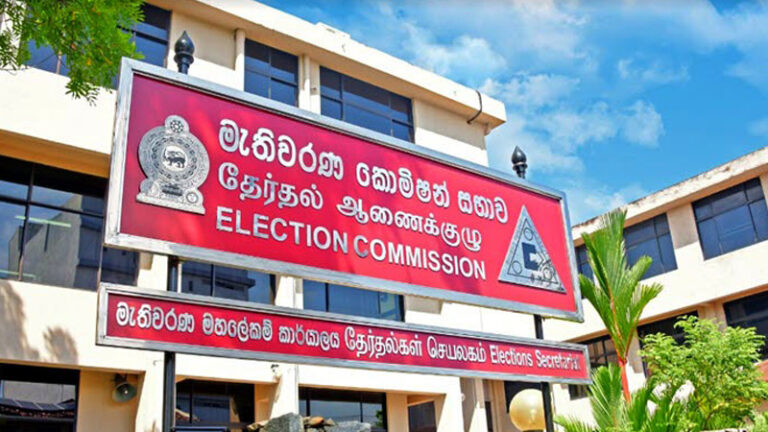
May 22, Colombo (LNW): The Election Commission has reiterated its call for all political parties and independent groups to swiftly submit the names of their elected representatives to local government bodies, following the recent completion of local council elections.
Commission Chief R.M.A.L. Rathnayake revealed that the timely submission of these details is critical for the official publication of elected members’ names in the Government Gazette.
The Commission has stressed that this procedural requirement must be fulfilled without delay to finalise the post-election administrative process at the local level.
In addition to the request for elected member details, the Commission has also reminded all candidates, political organisations, and independent collectives to submit their official income and expenditure statements relating to their election campaigns. The final deadline for this submission has been set for May 27.
Failure to provide these financial disclosures, as required under election law, could result in penalties or disqualifications.
The Commission emphasised the importance of transparency and accountability in electoral finance, especially in light of growing public scrutiny over campaign spending.
May 22, Colombo (LNW): A consignment of humanitarian aid from Sri Lanka has arrived in Myanmar, marking a gesture of cross-border solidarity in response to the devastating earthquake that struck the country recently.
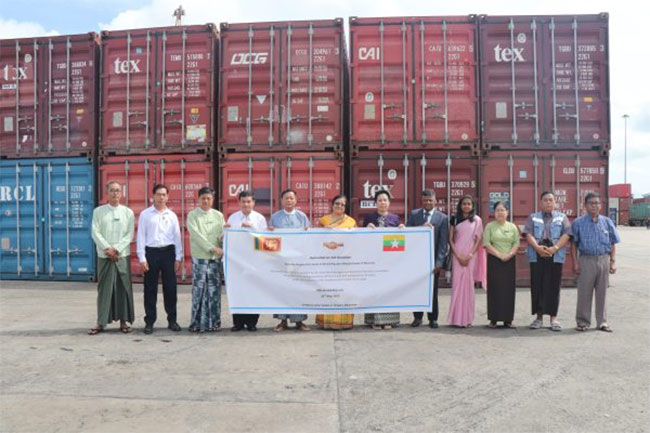
The relief shipment, coordinated under the guidance of the Sri Lankan President, was formally handed over to Myanmar authorities at the Asia World Port Terminal in Yangon.
The Sri Lankan Ambassador and embassy staff were present at the port to deliver the aid to officials representing several Myanmar government departments, including the Ministries of Foreign Affairs and Social Welfare, Relief and Resettlement. Port authorities also took part in the official transfer.
The consignment, which includes essential supplies such as dry rations, clothing, and basic medical items, was assembled through a broad-based national effort. Notably, the Amarapura and Ramanna monastic traditions played a central role in mobilising the relief initiative.
These Buddhist monastic communities, with deep ties to both Sri Lankan society and Myanmar’s religious landscape, led the appeal for aid in collaboration with various state institutions and members of the public who responded with generosity.
In addition to the tangible relief, the initiative symbolises a renewal of religious and cultural ties between the two nations. Sri Lanka and Myanmar have long maintained strong historical and spiritual connections, particularly through Theravāda Buddhism, and this act of assistance has been widely seen as an extension of that enduring relationship.
In the aftermath of the earthquake, which caused widespread destruction and displacement in several parts of Myanmar, the arrival of international aid has been crucial. The Sri Lankan contribution, although modest in scale compared to larger donors, was welcomed warmly by Myanmar authorities as a meaningful expression of friendship and empathy during a time of national hardship.
May 22, Colombo (LNW): Eleven Indian fishermen who had been detained in Sri Lanka since early January returned to Tamil Nadu late on Wednesday, bringing closure to a months-long diplomatic effort involving both New Delhi and Colombo.
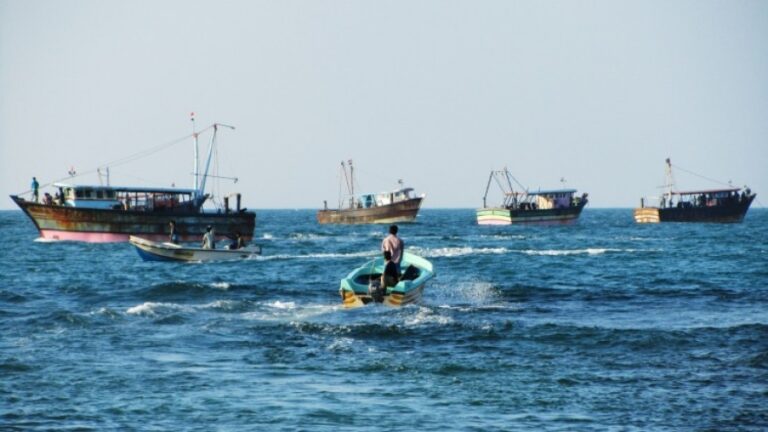
The men, all from Rameswaram, had ventured into the Palk Strait for what was intended to be a routine fishing expedition on January 11, only to find themselves in custody after allegedly breaching Sri Lanka’s maritime border.
According to officials familiar with the matter, the Sri Lankan Coast Guard intercepted the fishermen after they were believed to have crossed the International Maritime Boundary Line (IMBL).
The group’s fishing vessels were confiscated, and the crew was taken ashore and later placed in judicial custody. Their detention drew concern from local communities in southern India, where cross-border fishing incidents have long been a point of contention.
The Tamil Nadu state administration, led by Chief Minister M.K. Stalin, promptly called upon the Indian central government to intervene. In the weeks that followed, diplomatic efforts intensified.
The Indian High Commission in Colombo worked in tandem with the Ministry of External Affairs in New Delhi to negotiate the fishermen’s release.
On May 14, after more than four months in Sri Lankan custody, the group was officially released. The handover to Indian authorities was conducted with due protocol, followed by consular assistance in preparing travel documents for their safe passage home.
The incident once again underscored the sensitive nature of maritime boundaries in the region, where small-scale fishermen often risk detention due to the ambiguity and proximity of national borders in shared fishing zones.
With Indian and Sri Lankan authorities periodically agreeing to release detained fishermen as a gesture of goodwill, long-term solutions to prevent such occurrences happens to have remained elusive.
May 22, Colombo (LNW): Sri Lanka today observes the 53rd anniversary of becoming a republic—a pivotal moment in its journey from colonial subjugation to sovereign statehood.
It was on May 22, 1972 that the country, then known as Ceylon, adopted its first homegrown Constitution, formally severing its remaining constitutional ties with the British Crown.
Though Ceylon had attained independence on February 04, 1948, that freedom came with limitations. The country remained a Dominion within the Commonwealth, recognising the British monarch as its head of state.
It was not until the Republican Constitution was introduced by a constituent assembly of elected Sri Lankan representatives that the nation fully embraced its identity as a republic, shedding the last vestiges of colonial rule.
This significant constitutional shift marked more than just a change in legal status. It signalled the country’s intent to forge a political and legal order rooted in its own traditions, aspirations, and values—independent from external authority.
The 1972 Constitution replaced the Soulbury Constitution, a document inherited from the British, and reaffirmed the sovereignty of the people through a newly established National State Assembly.
The republic’s birth took place during a period of global decolonisation, when many former colonies were striving to reclaim their political agency. For Sri Lanka, this transition was also symbolic of a broader cultural and national resurgence—one that sought to reassert the island’s own identity following centuries of foreign dominance.
With a civilisation spanning more than two millennia and a history rich in cultural and political evolution, Sri Lanka’s republican milestone is widely regarded as one of the defining chapters in its modern narrative.
Yet in recent decades, the annual commemoration has gradually faded from public prominence. Whilst the day continues to hold constitutional significance, formal state celebrations ceased after 2009, and there have since been no large-scale observances organised by the government.
Nevertheless, many legal scholars, historians, and civic organisations continue to reflect on the day as one that redefined the nature of the Sri Lankan state. For them, Republic Day serves not only as a historical marker, but also as a reminder of the country’s ongoing responsibility to uphold democratic values, institutional integrity, and the rule of law.
May 22, Colombo (LNW): South-West monsoon has established over the island, and showers or thundershowers, therefore, will occur at times in Western, Sabaragamuwa, North-western and Central provinces and in Galle and Matara districts, the Department of Meteorology said in its daily weather forecast today (22).
A few showers may occur in North-central province.
Showers or thundershowers may occur at a few places in Uva province and in Ampara district during the evening or night.
Fairly strong winds of about (30-40) kmph can be expected at times over Western slopes of the central hills and in Northern, North-central, North-western and Southern provinces and in Trincomalee district.
The general public is kindly requested to take adequate precautions to minimise damages caused by temporary localised strong winds and lightning during thundershowers.
Marine Weather:
Condition of Rain: Showers or thundershowers will occur at several places in the sea areas off the coast extending from Puttalam to Hambantota via Colombo and Galle.
Winds: Winds will be westerly to south-westerly and wind speed will be (30-40) kmph. Wind speed can increase up to (55-60) kmph at times in the sea areas off the coast extending from Chilaw to Kankasanthurai via Puttalam and Mannar and from Galle to Pottuvil via Hambanthota.
Wind speed can increase up to 50 kmph at times in the sea areas off the coast extending from Chilaw to Galle via Colombo and from Kankasanthurai to Trincomalee via Mullaittivu.
State of Sea: The sea areas off the coast extending from Chilaw to Kankasanthurai via Puttalam and Mannar and from Galle to Pottuvil via Hambanthota will be rough at times. The sea areas off the coast extending from Chilaw to Galle via Colombo and from Kankasanthurai to Trincomalee via Mullaittivu will be fairly rough at times.
The wave height may increase (about 2.0 – 2.5 m) in the sea areas off the coast extending from Puttalam to Pottuvil via Colombo, Galle and Hambantota (this is not for land area).
Naval and fishing communities are requested to be vigilant in this regard.
Temporarily strong gusty winds and very rough seas can be expected during thundershowers.
In a touching moment that transformed a room into a place of joy and music, 16-year-old Tharushi Meedumi’s greatest wish came true when her musical idol Shihan Mihiranga paid her a surprise visit, arranged by the recently launched Make-A-Wish Sri Lanka foundation.
Diagnosed with Ewing’s Sarcoma, a rare and aggressive form of cancer, Tharushi has endured countless hospital visits and grueling treatments over the past months. Throughout her difficult journey, Mihiranga’s music has been her constant companion, providing comfort and strength during her most challenging moments.
The surprise visit was meticulously planned by Make-A-Wish volunteers. Tharushi was told to prepare for her regular evening relaxation program, unaware that she would instead be meeting the artist whose voice had carried her through her darkest days.
When Shihan Mihiranga walked into her, guitar in hand, the emotional impact was immediate. Witnesses described the teenager’s face transforming with disbelief and joy as tears welled in her eyes.
Visibly moved by the encounter, Mihiranga later reflected that seeing Tharushi’s reaction made him realize the true impact his music could have.
During the hour-long visit, Mihiranga performed several songs, including a special acoustic rendition just for Tharushi. The pair also shared stories and laughter, creating memories that transcended the clinical setting.
This marks one of the several wishes granted by Make-A-Wish Sri Lanka since its launch on April 29 in partnership with the Indira Cancer Trust. The organization, which operates in nearly 50 countries worldwide, is dedicated to fulfilling the wishes of children with critical illnesses.
The foundation, working alongside the Indira Cancer Trust established and managed by passionate trustees and volunteers, aims to create transformative experiences for children battling life-threatening conditions across Sri Lanka.
As the program continues to establish itself in Sri Lanka, organizers hope Tharushi’s story will inspire others to support their mission of granting wishes to every eligible child in the country facing a critical illness.
The Make-A-Wish/ Indira Cancer Trust team emphasizes that every child deserves to have their one true wish come true, especially those facing challenges no child should have to endure.
For Tharushi, whose medical journey continues, the memory of her special day with Mihiranga provides a new source of strength.
Reported by Make- a- wish / Indira Cancer Trust team
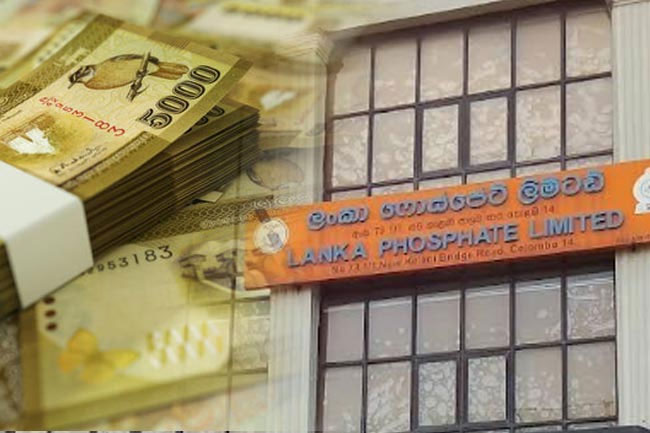
May 21, Colombo (LNW): The Lanka Phosphate Company (LPL) is under legal scrutiny following revelations of large-scale financial misappropriations and irregularities in the mining and sale of rock phosphate during previous administrations.
Court proceedings have been initiated, and investigations are being conducted by the Illegal Assets Investigation Division (IAID) of the CID, based on a complaint filed by a Nittambuwa resident.
At the heart of the probe is a controversial deal involving the export of 3,000 metric tons of rock phosphate to three companies under the former government.
This transaction allegedly caused a staggering loss of Rs. 2.7 billion to the state. The matter was recently brought before the Colombo Magistrate’s Court.
Additionally, Rs. 650 million was spent on constructing an 850-meter road within the phosphate deposit area, and a factory was built on land belonging to a temple in Kurunegala — all without conducting a proper feasibility study.
LPL holds exclusive rights to mine rock phosphate across 450 hectares in Eppawala, which houses a globally significant deposit estimated at 60 million metric tons. This deposit contains 33–40% of phosphorous pentoxide (P2O5), making it one of the richest natural phosphate sources.
The company currently produces Eppawala Rock Phosphate (ERP) and High-Grade ERP (HERP), mainly used for perennial crops such as tea, rubber, and coconut. However, for short-term crops like paddy and vegetables,
Triple Super Phosphate (TSP) is preferred — a fertilizer the country currently imports due to the lack of sufficient local production capacity.
To address this, LPL is working on manufacturing Single Super Phosphate (SSP), a viable local substitute for TSP. However, the plant’s current capacity cannot meet the national annual demand of 75,000 metric tons.
A senior finance ministry official stated that Rs. 9 billion is required to upgrade processing facilities to enhance phosphate solubility and meet domestic needs.
He emphasized that local production would be more cost-effective in the long run, considering the government currently spends Rs. 35 billion annually on imported phosphate fertilizers.
The Eppawala deposit, located in the Anuradhapura District, was discovered in 1971. A key challenge is the low solubility of the Eppawala rock phosphate, which limits its effectiveness for short-duration crops unless treated to increase its solubility.
Authorities are now working to uncover the full extent of the losses and mismanagement linked to this vital natural resource.
May 21, Colombo (LNW): The government has announced plans to amend the controversial Online Safety Act, No. 9 of 2024, a law initially passed under the previous regime despite strong opposition from civil society groups, media organizations, and opposition parties.
Public Security Minister Ananda Wijepala confirmed that the move is part of broader efforts to align Sri Lanka’s legislation with European Union (EU) standards, particularly in light of the upcoming review of the country’s eligibility for the EU’s Generalised Scheme of Preferences Plus (GSP+).
The EU’s GSP+ facility grants Sri Lanka preferential trade access, which is vital for sectors such as apparel and manufacturing. Losing this benefit could result in significant economic setbacks, affecting both exports and employment.
Wijepala revealed that a special committee comprising representatives from the Ministries of Public Security, Health, Media, and Justice has been tasked with drafting amendments. These ministries are expected to submit a joint Cabinet Paper outlining proposed changes to the Online Safety Act.
A monitoring delegation from the EU is scheduled to visit Sri Lanka in late April 2025 to evaluate the country’s compliance with GSP+ requirements.
These include adherence to international standards on human rights, labor rights, environmental protection, and good governance. The Online Safety Act and the Prevention of Terrorism Act (PTA) have drawn particular concern due to their potential impact on freedom of expression.
An official from the Department of Commerce noted that EU oversight could influence domestic policies, especially legislation that affects internet freedom or privacy.
He also mentioned that new GSP+ guidelines may require signatories to ratify additional treaties, including those related to disability rights, children’s rights, and climate change.
Originally proposed by former Public Security Minister Tiran Alles, the Online Safety Act aimed to combat online fraud, gender-based violence, and child abuse.
However, the bill was met with fierce legal and public resistance. Over 50 petitions were filed with the Supreme Court, challenging the bill’s constitutionality.
The court ruled that several provisions required a special parliamentary majority but could be passed with a simple majority if amended at the committee stage.
Despite widespread objections, then-Speaker Mahinda Yapa Abeywardena signed the bill into law, prompting further legal action. Transparency International Sri Lanka and others filed fundamental rights petitions, claiming the enactment process violated constitutional principles.
During a court session in February 2025, Additional Solicitor General Viraj Dayaratne confirmed that the current National People’s Power (NPP)-led government intends to introduce amendments. The Supreme Court, acknowledging this development, postponed the next hearing to June 23, 2025.
May 21, Colombo (LNW): Sri Lanka’s Samurdhi community-based banks and rural banking societies are set to be brought under formal government oversight, according to the Ministry of Finance.
The move aims to regulate the Samurdhi banking system by placing it under the scrutiny of government audit processes.
On Wednesday, May 7, the Cabinet of Ministers approved the publication of a draft bill in the Government Gazette to amend the Samurdhi Act No. 1 of 2013, as previously updated by the Divinaguma (Amendment) Act No. 2 of 2017. The bill will later be presented to Parliament for final approval.
Cabinet Spokesman and Minister Dr. Nalinda Jayatissa stated at the weekly post-Cabinet press briefing that the proposed amendments will bring all Samurdhi community banks and rural banking societies under government audit.
This is expected to enhance financial supervision, ensure transparency, and improve accountability in the handling of public funds allocated under the Samurdhi welfare programme.
Initially approved by the Cabinet in December 2024, the draft legislation has since been cleared by the Attorney General and was prepared by the Legal Draftsman’s Department.
This development, first reported by Sunday Times Business on April 28, 2024, aims to curtail misuse of Samurdhi funds by corrupt officials or politicians.
The regulation will ensure better transparency and independence, with plans to eventually place Samurdhi banking activities under the Central Bank’s oversight.
Currently, the Samurdhi banking system holds assets amounting to Rs. 400 billion, which includes compulsory savings of Samurdhi beneficiaries. These funds have been invested in various banks and government securities.
Despite operating like banks, the 1,092 Samurdhi “branches” across the country are not legally classified as banks, as they fall outside the Central Bank’s regulatory framework. Instead, they have mainly served as distribution centers for monthly welfare payments.
However, numerous reports have emerged of funds being siphoned from these institutions, sometimes in collusion with branch managers and Samurdhi development officers. These abuses were often masked as welfare-related transactions.
Additionally, during the COVID-19 pandemic in 2020, the government drew heavily from Samurdhi banks and beneficiary savings to provide emergency cash relief.
Over Rs. 50 billion was disbursed—including Rs. 5,000 to more than five million individuals and Rs. 10,000 to two million households—to support vulnerable groups such as the elderly, disabled, and low-income families.
While this provided critical aid, it also created significant liquidity and capital challenges for the Samurdhi banking system.
The proposed amendments are part of a broader initiative to restore credibility and integrity to the Samurdhi financial framework while ensuring protection for beneficiaries’ savings.
May 21, Colombo (LNW): The construction of a flyover above the railway track near Justice Akbar Mawatha in Kompanna Veediya, launched in 2020, has faced major delays, forcing the government to pay more than Rs. 400 million in delay charges to the contractor.
Originally scheduled for completion by June 2022, the project deadline was later extended to September 2024 due to complications with relocating local residents, according to sources from the Road Development Authority (RDA).
In August 2020, the Cabinet approved the construction of two flyovers near the Kompanna Veediya railway station in Colombo at an estimated cost of Rs. 6 billion.
The project includes the design and construction of two main flyovers and a connecting section between them. These flyovers are positioned over the railway lines along Sri Uttarananda Mawatha and Justice Akbar Mawatha.
One of the flyovers, linking Kompanna Veediya with Justice Akbar Mawatha and Uttarankanda Mawatha, was inaugurated by former President Ranil Wickremesinghe on April 8 last year.
The area in question is known for intense traffic congestion, worsened by the railway crossing which disrupts movement in this busy commercial district.
The region houses government offices, hospitals, religious sites, restaurants, and entertainment venues, contributing to its high traffic volume.
To ease congestion, the RDA assigned Maga Engineering to carry out the construction work. However, due to prolonged delays, the government has been incurring Rs. 500,000 in daily penalty payments. During a site visit on Monday the 28th,
Transport Minister Bimal Rathnayake confirmed the accumulated delay charges and expressed optimism that the underlying issues would be resolved soon.
A major obstacle to progress has been the flyover along Boy Scouts Lane, which cuts through an area containing police quarters. The demolition of six buildings was necessary, resulting in an estimated two-year delay in that section of the project.
Despite setbacks, the new flyovers are anticipated to greatly improve long-term traffic flow. They aim to mitigate the severe congestion that results from frequent closures at the railway crossings, especially during peak travel hours.
Once completed, the infrastructure will significantly enhance accessibility and connectivity within the Kompanna Veediya area, alleviating the burden on both commuters and local institutions.