Home Blog Page 538

Ceylon Chamber Raises Alarm Over 44% US Tariff on Sri Lankan Exports

0

The Ceylon Chamber of Commerce (CCC) has expressed deep concern over the imposition of a 44% tariff on Sri Lankan exports to the United States, following a sweeping trade move announced by US President Donald Trump.

The Chamber noted that with the US accounting for approximately USD 3 billion in exports and representing 25% of Sri Lanka’s total merchandise exports, the new tariff presents a serious challenge to trade and economic stability.

In a statement issued today, the CCC warned that the tariffs, alongside broader global trade disruptions, could hamper economic growth by reducing demand in key export markets, including the US and EU.

The CCC welcomed the Sri Lankan President’s decision to appoint a committee to evaluate the impact of the tariffs and recommend steps to safeguard the export sector.

Amid ongoing efforts under the IMF Extended Fund Facility programme, the CCC stressed the importance of negotiating a reduction in the tariff rate and called for a review of the local tariff structure to improve trade facilitation and the ease of doing business.

Reaffirming its commitment to support the Government, the CCC urged all stakeholders to collaborate in developing a coordinated, strategic response to protect Sri Lanka’s trade interests and ensure the sustainability of the export sector.

Sri Dalada Maligawa and Malwathu-Asgiri Viharas Donate Rs.15 Million to Earthquake-Hit Myanmar

0

The Malwathu and Asgiri Maha Viharas, together with the Sri Dalada Maligawa, have donated Rs.15 million to support the people of Myanmar affected by the recent earthquake.

The donation was formally handed over to the Myanmar Ambassador in Colombo, Daw Marlar Than Htaik, at the Sri Dalada Maligawa premises. The contribution was presented by Most Ven. Warakagoda Gnanarathana Thera, the Mahanayake of the Asgiriya Chapter, with the participation of the Anunayake Theras of both the Malwathu and Asgiriya Chapters.

The gesture reflects the strong religious and cultural ties between the two nations and the commitment of Sri Lanka’s Buddhist clergy to humanitarian support.

Cabinet Appoints Committee to Address UK Sanctions on Former Sri Lankan Commanders

0

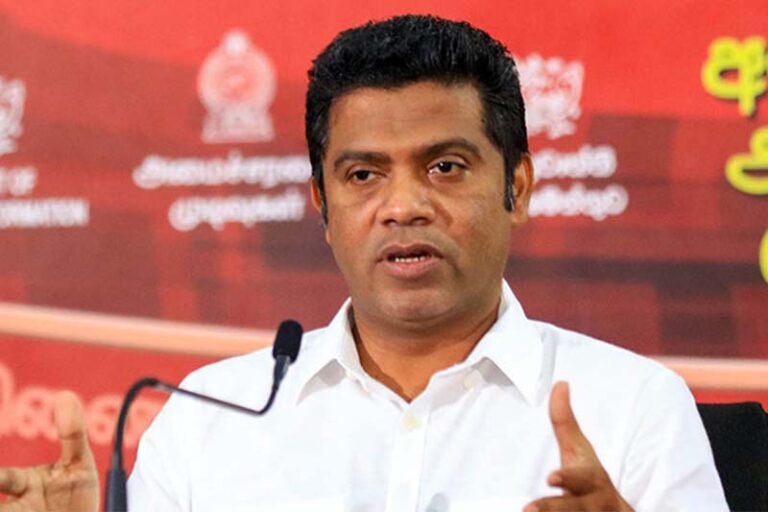
The Cabinet of Ministers has appointed a three-member committee to examine the recent sanctions imposed by the United Kingdom on four individuals, including three former military commanders, Cabinet Spokesman and Minister Dr. Nalinda Jayatissa announced.

The committee includes Foreign Minister Vijitha HerathJustice Minister Harshana Nanayakkara, and Defence Deputy Minister Aruna Jayasekara. It is tasked with studying the implications of the sanctions and recommending appropriate measures to the Cabinet.

The committee has been granted authority to consult with relevant officers and subject experts, as necessary, to formulate its recommendations.

Dr. Jayatissa described the UK’s action as a unilateral decision and emphasized that the committee was formed to assess potential responses and measures the Sri Lankan Government could consider in light of the situation.

Health Minister Pledges Depoliticised Medicine Supply to Strengthen Healthcare System

0

In a strong move to improve Sri Lanka’s healthcare delivery, Minister of Health and Mass Media Dr. Nalinda Jayatissa has vowed to keep the medicine procurement process free from political interference.

Addressing a key stakeholder meeting at the Colombo National Hospital, the Minister reaffirmed the government’s commitment to ensuring a reliable and uninterrupted supply of high-quality medicines to the public.

For the first time in the country’s healthcare history, officials involved in medicine procurement convened at the hospital’s new Outpatient Department auditorium to discuss streamlining procedures and reducing delays that contribute to drug shortages.

The initiative focuses on improving efficiency, transparency, and the timely delivery of essential medications, marking a significant step toward strengthening Sri Lanka’s public health infrastructure.

Indian PM Modi to Visit Sri Lanka, Emphasises Strengthening Regional Partnerships

0

Indian Prime Minister Narendra Modi announced that he will review progress on the joint vision of “Promoting Partnerships for a Shared Future” during his upcoming visit to Sri Lanka from April 4 to 6.

In a post shared on X, Modi said his visit follows the successful trip of Sri Lankan President Anura Kumara Dissanayake to India in December, and he expressed optimism that the upcoming engagements will further strengthen bilateral ties, deepen cooperation, and promote regional progress.

Before arriving in Sri Lanka, Modi is scheduled to attend the 6th BIMSTEC Summit in Thailand today (April 3), as part of a broader regional tour aimed at enhancing multilateral and bilateral partnerships.

Showers will occur at most places on the island during the afternoon or night

0

Showers may occur in Western, Southern and North-western coastal areas in the morning too.

Heavy rainfall of above 100 mm are likely at some places in Western, Sabaragamuwa, Central, North-western and North-central provinces.

Misty conditions can be expected at some places in Central, Sabaragamuwa, Uva and North-central provinces during the morning.

The general public is kindly requested to take adequate precautions to minimize damages caused by temporary localized strong winds and lightning during thundershowers.

Sri Lanka Faces Economic Setback as US Tariffs Rise to 44%

0

By: Staff Writer

April 03, Colombo (LNW): US President Donald Trump has introduced a broad set of reciprocal tariffs, imposing a minimum 10% tax on all imports and significantly higher rates on countries with which the US has trade deficits.

 As a consequence, Sri Lanka now faces the sixth-highest tariff rate globally—44%, a sharp rise from its previous 12.2% rate.

Sri Lanka’s economy is particularly vulnerable to this tariff hike, as 25% of its total exports, mainly apparel, are shipped to the US. In 2024, Sri Lanka earned USD 3 billion from exports to the US, with USD 346 million generated in January 2025 alone. 

Economists warn that the apparel sector, a key driver of employment, could suffer significant losses due to the steep increase in tariffs. A potential decline in export revenue could threaten jobs, leaving thousands unemployed.

Dr. Harsha de Silva, a key opposition leader from the Samagi Jana Balawegaya (SJB), has called on the government to take swift action to safeguard trade relations with the US, Sri Lanka’s largest export market. 

He emphasized that inexperience cannot be an excuse for inaction and offered to assist the government in addressing the trade challenges.

Experts caution that higher tariffs will increase the cost of Sri Lankan imports and reduce the competitiveness of Sri Lankan goods in the US market. 

To counter these challenges, Sri Lanka must adopt strategies to mitigate the negative impacts of shifting global trade policies.

 The government has already imposed various levies, such as the port and airport levy and the export development CESS. 

However, these para-tariffs raise costs for businesses outside Board of Investment (BOI) zones, making it harder for them to compete internationally.

Deputy Minister of Industry and Entrepreneurship Development Chathuranga Abeysinghe announced plans to implement a long-awaited tariff policy that aims to create a predictable and transparent trade framework. 

This new policy will help exporters secure raw materials at competitive prices. Other proposed measures include setting minimum prices for key inputs, lowering energy and transport costs, and enhancing the business environment to attract investment.

A senior economist, speaking anonymously, highlighted the need for a transparent mechanism to evaluate industry proposals on tariff adjustments. Such a data-driven system would ensure that businesses and workers receive necessary support during the transition.

Meanwhile, Sri Lanka’s Minister of Labour and Deputy Minister of Economic Development, Dr. Anil Jayantha Fernando, stated that the government plans to negotiate with US officials before April 9 to seek a reduction in the newly imposed tariffs. 

He acknowledged that while Sri Lanka was aware of the potential policy shift, it could not intervene before the US formally enacted the changes.

Dr. Fernando remains optimistic that Sri Lanka could secure a tariff reduction, citing the country’s ongoing collaboration with the International Monetary Fund (IMF) and its economic recovery efforts. 

He also noted the possibility of leveraging the GSP+ tariff system as an alternative if negotiations with the US do not yield favorable results. The government is determined to maintain strong trade and investment ties with the US while seeking long-term solutions beneficial to both nations.

Government Targets US$ 15 Billion Digital Economy 

0

By: Staff Writer

April 03, Colombo (LNW): In today’s world, where technology fuels economic advancement, embracing the digital economy is imperative rather than optional. Countries worldwide are leveraging digital innovations to drive growth, improve governance, and generate employment. Sri Lanka, with its strategic location and skilled workforce, is poised to capitalize on this shift. A significant step in this direction is the nation’s goal of establishing a $15 billion digital economy, supported by the creation of a dedicated Ministry of Digital Economy to spearhead the transformation.

The Digital Economy and Its Potential

The digital economy comprises various technology-driven activities, including e-commerce, financial technology (fintech), artificial intelligence (AI), and cloud computing. While it has become a major contributor to GDP in developed countries, for developing nations like Sri Lanka, it presents a transformative opportunity. As the country navigates economic recovery, a thriving digital sector could unlock significant growth, attract investment, and empower its citizens.

Strategic Approach to Digital Transformation

Achieving the ambitious $15 billion digital economy target necessitates a strategic and focused approach. Establishing the Ministry of Digital Economy is crucial for streamlining policies across different sectors and formulating a cohesive strategy. This ministry will enhance coordination among government agencies, private enterprises, and global organizations to ensure impactful digital initiatives.

To facilitate this transition, the Sri Lankan government has committed $10 million (approximately Rs. 3 billion) towards digital transformation efforts in 2025. Key initiatives include implementing a unique digital identification system and establishing new regulatory frameworks for digital services, overseen by a centralized Digital Economic Authority.

A significant focus is the transition towards a cashless economy, emphasizing investments in emerging sectors such as AI, robotics, and fintech. However, balancing innovation with regulatory oversight remains critical in managing risks within the fast-evolving digital landscape.

Fintech’s Expansion and Regulatory Challenges

The rise of fintech has reshaped financial services, offering greater speed, efficiency, and accessibility—qualities particularly valued by younger generations like Gen Z. Fintech companies operate in diverse areas, with some expanding access to traditional financial services, while others introduce entirely new tech-based financial products.

In Sri Lanka, however, certain fintech firms that do not offer traditional banking services operate outside the regulatory purview of the Central Bank of Sri Lanka (CBSL). This lack of oversight creates risks such as financial instability, cybersecurity threats, and market volatility. Additionally, unregulated fintech activities can challenge conventional banking institutions that function under strict CBSL regulations.

Foreign exchange transactions via unregulated fintech platforms pose further concerns, potentially enabling untraceable cross-border financial flows. Ex-Minister Patali Champika Ranawaka has warned about underground financial networks, such as Undiyal and Hawala, which could bypass tax regulations, making enforcement difficult for authorities like the Inland Revenue Department.

The Future of Cryptocurrency in Sri Lanka

Cryptocurrency is gaining global traction, and Sri Lanka is witnessing increasing interest in digital currencies like Bitcoin. There have been proposals to establish a crypto agency in Colombo’s port city, but without a clear regulatory framework, the sector could pose substantial financial risks, similar to past issues in the casino industry.

Many Sri Lankans are already engaged in cryptocurrency trading and mining, generating income in the process. However, Bitcoin mining is an energy-intensive activity, and Sri Lanka currently lacks the necessary infrastructure to support large-scale operations. Even developed countries like the U.S. are planning to expand production to meet future industry demands.

Moving forward, Sri Lanka must develop a comprehensive strategy for cryptocurrency regulation. This should address key concerns, including energy consumption, infrastructure readiness, and financial security. Simply acknowledging the rise of digital currencies is insufficient—establishing well-defined policies and regulations is essential to ensure that technological advancements contribute positively to the country’s economic transformation.

By embracing a robust regulatory framework alongside technological innovation, Sri Lanka can create a secure, inclusive, and thriving digital economy that benefits both businesses and citizens alike.

Sri Lanka raises Foreign Financing Mobilisation in Post-Debt Restructuring

0

By: Staff Writer

April 03, Colombo (LNW): Sri Lanka made significant strides in mobilising foreign financing, closely tied to its debt restructuring agreements with international bondholders, lending agencies, and donor countries between 2024 and March 2025. But it is less than the amount mobilised by the treasury in 2023, finance ministry data shows.

Debt restructuring arrangements of Sri Lanka in December 2024 facilitated foreign financing and assisted in economic recovery. However, the continuity of foreign borrowing during this period necessitates careful fiscal management for maintaining long-term debt sustainability and economic stability.

This achievement has provide a five-year grace period from bilateral creditors and extended repayment periods, creating approximately US $5 billion in fiscal space.

While this process resulted in immediate fiscal relief and improved liquidity, continued foreign borrowing during this period had significant effects.

It has helped the government to set apart resources to critical areas such as infrastructure, healthcare, and economic growth initiatives.

These foreign funds contributed to a 5 percent economic growth in 2024 resulting recovery from the 2022 financial crisis, a high official of the ministry disclosed.

From January to October 2024, the Government entered into sixteen agreements with foreign development partners and lending agencies to mobilize foreign financing amounting to $ 955.5 million, of which USD 904.7 million was committed in the form of loans.

Given the prevailing economic situation of the country, 43 percent of the total commitments, i.e $ 408 million has been mobilized for budgetary support purposes, the latest budget, economic and fiscal Position report of the finance ministry revealed.

Out of the total loans, US$ 511.5 million and $ 393 million had been borrowed from the World Bank and the Asian Development Bank (ADB), respectively

Apart from loan agreements, $ 50.8 million was committed through eight grant agreements with the Government of Japan, Government of Australia and the European Union under Official Development Assistance (ODA) in the first ten months of 2024.

Foreign Financing Disbursements and Utilization

Total foreign fund disbursements from January 1 to October 31, 2024 amounted to $1,482.3 million of which $1,458.4 million were disbursed as loans and $23.9 million were disbursed as grants.

ADB accounted for the majority share of disbursements amounting to 37 percent of all the disbursements, followed by loan agreements with WB (33 percent) and IMF (23 percent), respectively.

The majority of disbursements had been to the budget support sector which accounted for 50 percent of the disbursements, water supply and sanitation sector by 8 percent, SME development sector by 7 percent and finance insurance sector by 5 percent.

Sri Lanka entered into several agreements with foreign nations and organizations in 2023 that attracted vast foreign funding.

January 1 to September 30, 2023, witnessed the government inking 13 agreements with foreign lending agencies and development partners and raising around $1,479 million as financing.

Aside from that, during the same period, Sri Lanka also received $114.2 million from the World Bank and $58 million from the Asian Development Bank (ADB).

Concerns Over Transparency in Bandaranaike Airport Expansion Tender Process

0

By: Staff Writer

April 03, Colombo (LNW): The Phase II expansion of Bandaranaike International Airport (BIA) has come under scrutiny due to recent allegations of irregularities in the tender process. Questions have arisen about the fairness and transparency of Sri Lanka’s public procurement system after an unexpected extension was granted for bid submissions, reportedly benefiting a single bidder. This decision has sparked widespread criticism, raising doubts about the integrity of the tendering process.

The BIA expansion is a crucial project aimed at enhancing Sri Lanka’s aviation infrastructure. With the Japan International Cooperation Agency (JICA) investing Rs. 170 billion, the project is set to increase the airport’s annual passenger capacity to 16 million, addressing growing air traffic congestion. Initially launched in 2020 with an estimated cost of Rs. 145 billion, progress was hindered by Sri Lanka’s 2022 economic crisis, leaving only six percent of Phase II incomplete.

As per the original plan, the tender process was to follow the Japanese Official Development Assistance (ODA) guidelines, inviting international bidders. The deadline for bid submission was initially set for March 18, 2025.

 However, a last-minute extension was granted upon the request of a single bidder, prompting protests from leading construction firms. Critics argue that this decision disrupts fair competition and compromises the procurement system’s credibility.

Several key concerns have been raised regarding this controversial extension:

Unfair Advantage – The deadline shift benefits a particular bidder, placing others at a disadvantage. Many companies had already allocated resources to meet the original timeline, only to be undermined by this sudden change.

Impact on Foreign Investment – Such discrepancies in the tendering process could tarnish Sri Lanka’s reputation among international investors. A lack of transparency may deter future foreign participation in large-scale infrastructure projects.

Economic and Corruption Risks – Manipulating bid processes may lead to inflated costs and compromised quality. Favoritism in awarding contracts has historically resulted in project delays, cost overruns, and undue financial strain on taxpayers.

Damage to National Interests – A lack of transparency in national projects erodes public trust in governance. This could lead to economic and political instability, affecting Sri Lanka’s global standing.

Precedent for Future Projects – Allowing such extensions could set a negative precedent, signaling that procurement processes can be altered to suit specific interests, thereby undermining fair competition in future tenders.

In response, there have been increasing calls for the government to reinstate the original bid deadline and provide clarity on the extension’s rationale. Citizens and industry leaders are urging authorities to uphold transparency and prevent corruption in public projects.

 This issue poses a significant governance challenge for the administration, testing its commitment to accountability. Failure to address these concerns could severely impact Sri Lanka’s development prospects and credibility on the global stage.