Home Blog Page 54

No Ban on Releasing Drug-Raid Information to Media – Minister Wijepala

0

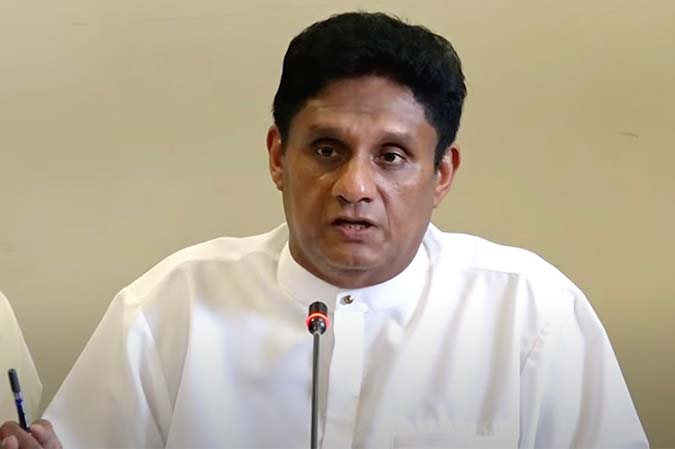
Public Security and Parliamentary Affairs Minister Ananda Wijepala yesterday dismissed allegations that the government has banned the release of information on drug-related raids following the arrest of a National People’s Power (NPP) Urban Councillor’s husband over drug smuggling.

Clarifying the matter, the Minister stressed that no circular has been issued prohibiting the dissemination of information to the media, contrary to claims circulating on social media and in political circles.

He explained that the recent police circular—issued after a video went viral showing the arrest of a suspect linked to the Weligama Pradeshiya Sabha Chairman’s murder—only instructs officers not to release information in a manner that could hinder ongoing investigations.

“There is no ban on releasing information on drug raids. What we have said in the circular is simply that information should not be released in ways that obstruct investigations,” Minister Wijepala stated.

He noted that legal experts and civil society groups have repeatedly raised concerns about police releasing videos of suspects on mainstream and social media immediately after arrests, warning that such actions could compromise investigations and potential prosecutions.

The Minister emphasised that the circular aims to ensure professionalism and protect the integrity of investigations—not to limit media access to information.

Govt to Expand ‘Suwa Seriya’ Ambulance Fleet to 500 with Advanced Technology Integration

0

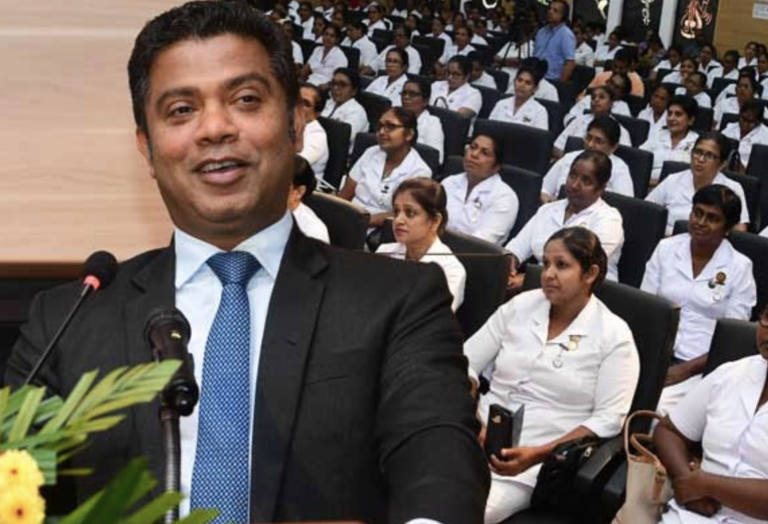
The government plans to expand the “Suwa Seriya” ambulance fleet to 500 vehicles, integrating the service with the latest technologies, Minister of Health and Mass Media Dr. Nalinda Jayatissa announced.

He revealed this while addressing a special training programme aimed at enhancing the skills of Emergency Medical Technicians (EMTs) at the Suwa Seriya Foundation.

Dr. Jayatissa stated that measures are already underway to modernize the ambulance service by incorporating advanced global technologies to improve efficiency and emergency response capacity.

He further noted that discussions are ongoing with the Indian government to procure 100 additional ambulances for the service.

In addition, the Asian Development Bank (ADB) is expected to provide 20 ambulances under loan assistance and another 25 ambulances as a grant, he said.

U.S. and Sri Lanka Sign MOU Formalizing Defense Partnership Under State Partnership Program

0

Colombo, Nov. 13 – The United States and Sri Lanka today signed a Memorandum of Understanding (MOU) at the Ministry of Defense, officially establishing a defense partnership between the Montana National GuardU.S. Coast Guard District 13, and the Sri Lankan Armed Forces under the U.S. Department of Defense’s State Partnership Program (SPP).

The agreement was signed by U.S. Ambassador Julie ChungBrigadier General Trenton Gibson, Adjutant General of the Montana National Guard, and Sri Lanka’s Secretary of Defense Air Vice Marshal Sampath Thuyacontha, marking a historic advancement in bilateral defense ties.

A Strengthened Commitment to Indo-Pacific Security

In a statement, the U.S. Embassy said the MOU underscores both nations’ commitment to regional stability, maritime security, and professional military cooperation across the Indo-Pacific.

Ambassador Julie Chung emphasized the significance of this partnership:

“This partnership with Sri Lanka strengthens our shared resolve for a secure Indo-Pacific—building trust, readiness, and lasting peace through partnership.”

Defense Secretary Thuyacontha called the agreement a “progressive initiative” to enhance Sri Lanka’s defense capabilities, noting decades of cooperation in training, disaster relief, and military exchanges.

Brig. Gen. Gibson stated:

“Together, we’ll build strength, trust, and lasting bonds that enhance the security of both our nations.”

Background: A Growing Partnership

The Montana–Sri Lanka partnership, established in 2021, has since expanded through:

  • Joint training
  • Expert exchanges
  • Disaster response exercises
  • Reciprocal visits

Key recent engagements include:

  • ATLAS ANGEL 2024
  • PACIFIC ANGEL 2025
  • Joint oil spill response training in Seattle with the U.S. Coast Guard District 13

Sri Lanka now becomes part of a global network of 115 partner nations linked with U.S. state National Guards under the SPP.

What Comes Next

The first activities under the new MOU are scheduled for summer 2026, focusing on:

  • Disaster response and crisis readiness
  • Maritime domain awareness
  • Professional military education
  • Aviation operations
  • Humanitarian assistance and military engineering
  • Military–civilian disaster coordination

The Montana National Guard, known for both its state and federal missions, will bring extensive expertise in homeland defensedisaster management, and international security cooperation.

Sri Lanka Records 82,270 Tourist Arrivals in November So Far

0

Sri Lanka has welcomed 82,270 tourists in November to date, according to the latest data released by the Sri Lanka Tourism Development Authority (SLTDA).

India continues to be the largest source market, with 20,217 arrivals, accounting for 24.6% of total visitors so far this month. Other key markets include:

  • Russia – 10,668 arrivals
  • Germany – 6,312
  • United Kingdom – 5,765
  • France – 3,506

Meanwhile, total tourist arrivals for 2025 have reached 1,972,957, reflecting continued growth in the sector.

Of the cumulative arrivals this year:

  • 443,622 visitors are from India
  • 180,592 from the United Kingdom
  • 144,308 from Russia
  • 123,053 from Germany
  • 115,400 from China

The SLTDA notes that the upward trend highlights strengthening global confidence in Sri Lanka as a travel destination.

SriLankan Airlines Expands Self-Check-In Services at BIA Ahead of Winter Travel Peak

0

SriLankan Airlines’ Airport and Ground Services division, the exclusive ground handling provider at the Bandaranaike International Airport (BIA), has expanded its self-check-in facilities ahead of the anticipated surge in winter-season travel.

With more than 300,000 tourists expected to arrive in Sri Lanka in December, authorities say the expansion is aimed at improving efficiency and easing passenger flow at the airport.

Last month, 20 new self-check-in kiosks were installed at the BIA departure terminal, increasing the total number of kiosks to 28. The upgraded system—developed by SriLankan Airlines’ in-house IT team—enables passengers to complete several processes independently, including:

  • Check-in
  • Seat selection
  • Boarding pass printing
  • Bag tag generation

The airline says the enhancement will significantly reduce queues and help decongest the terminal, providing a smoother travel experience as Sri Lanka prepares for a busy tourism season.

WEATHER FORECAST FOR 15 NOVEMBER 2025

0

The low-level atmospheric disturbance still persists to the East of the island.

Under its influence, showers or thundershowers will occur at times in Northern, North-central and Eastern provinces. Heavy falls about 100 mm are likely at some places in Northern and Eastern provinces.

Showers or thundershowers will occur at several places in the other areas of the island after 1.00 p.m.

Showers may occur in Uva province and in Hambantota district during the morning too.
Fairly heavy falls above 75 mm are likely at some places in Western, Sabaragamuwa, Central, Southern and Uva provinces.

Cloudy skies are expected over the Northern, Eastern, North-central, Uva and Central provinces.

Misty conditions can be expected at some places in Western, Sabaragamuwa, Central and Southern provinces during the early hours of the morning.

The general public is kindly requested to take adequate precautions to minimize damages caused by temporary localized strong winds and lightning during thundershowers.

Revenue Surge to Stall in 2026 as Vehicle Imports Decline

0

Sri Lanka’s fiscal outlook for 2026 appears to be entering a cooling phase, with revenue growth expected to slow sharply following an exceptional 2025 performance driven largely by vehicle import duties. 

The warning comes from the Committee on Public Finance (COPF), which recently reviewed the draft report on the 2026 Appropriation Bill under the chairmanship of Dr. Harsha de Silva, MP.

According to the draft report prepared by the COPF’s technical team in line with Standing Order 121(5)(i) of Parliament the 2026 Budget has been formulated in compliance with the Public Financial Management (PFM) Act, the Public Debt Management (PDM) Act, and commitments under the International Monetary Fund (IMF) Extended Fund Facility (EFF).

The report cautions that, despite the record fiscal performance in 2025, a moderation in revenue growth is imminent due to the government’s anticipated restrictions and policy adjustments on vehicle imports.

The 2025 fiscal year saw total government revenue exceed projections by over Rs. 100 billion, largely owing to the one-off windfall from resumed vehicle imports.

 Customs data indicate that vehicle import taxes alone contributed around Rs. 680 billion to state coffers, a dramatic increase from just Rs. 50 billion in 2024 when imports were tightly controlled.

This surge helped Sri Lanka Customs surpass its annual revenue target of Rs. 2.115 trillion, a historic high for the department and a key pillar in the government’s revenue recovery strategy.

However, the COPF report underscores that such windfalls are unsustainable, as the government does not intend to maintain the same level of vehicle imports in 2026.

This slowdown is expected to trim customs duties, excise taxes, and VAT collections, all of which are heavily dependent on import activity. Preliminary projections suggest that revenue growth, which expanded by nearly 40% in 2025, could fall to single-digit levels in 2026, posing a challenge to the Treasury’s fiscal consolidation plans.

Economists have warned that the anticipated decline could tighten the government’s fiscal space, complicating efforts to meet IMF targets for debt reduction and primary surplus maintenance.

 With the 2026 Appropriation Bill expected to allocate significant funds toward debt servicing estimated at over Rs. 6 trillion, or nearly half of total expenditure the state may face pressure to either broaden its tax base or enhance non-tax revenue streams.

The COPF’s deliberations also included consultations with civil society representatives, who raised concerns about budget transparency, equitable sectoral allocations, and policy consistency. 

Many argued that while the 2025 revenue uptick offered short-term relief, it failed to address deeper structural weaknesses in public finance, such as inefficiencies in tax administration and the absence of a coherent investment strategy.

Chairman Dr. Harsha de Silva stated that these observations would be formally conveyed to the Ministry of Finance for review.

 He emphasized the need for “credible and sustainable revenue sources” rather than dependence on temporary import-related gains, calling for reforms in tax policy, public sector efficiency, and digital revenue tracking mechanisms.

As Sri Lanka braces for 2026, fiscal planners face a delicate balancing act sustaining growth, meeting IMF obligations, and maintaining social spending all amid a potential revenue downturn. 

The decline in vehicle imports, while intended to stabilize foreign reserves, could expose the fragility of a revenue system still reliant on trade taxes rather than long-term, productivity-based growth.

BOC Reboots Digital Future with New IT Solutions Arm

0

In a strategic move to accelerate its digital transformation, the Bank of Ceylon (BOC) is gearing up to establish a dedicated Information Technology Institute BOC IT Solutions Ltd. aimed at upgrading its digital infrastructure, optimizing IT operations, and enhancing customer experience in an increasingly competitive banking environment.

The initiative, approved by the Cabinet of Ministers this week, marks a major shift in the state banking giant’s approach to technology management and innovation.

The proposal was submitted by President Anura Kumara Dissanayake in his capacity as Minister of Finance, Planning, and Economic Development, underscoring the government’s renewed focus on modernising public-sector financial institutions.

According to Cabinet Spokesman Dr. Nalinda Jayatissa, the institute will not only handle BOC’s internal digital needs but also develop advanced information and communication technology (ICT) solutions to support broader digital initiatives across the banking and financial ecosystem.

“The establishment of BOC IT Solutions Ltd. reflects the bank’s long-term vision to transform its operational framework and adapt to the rapidly changing technological landscape,” he said during the post-Cabinet media briefing.

The move effectively revives BOC Management and Support Services Ltd, a subsidiary created in 1992 to handle the bank’s manpower and support services but discontinued in 2007.

 This revival, however, comes with a sharper focus on IT innovation, digital resilience, and cybersecuritya key concern for the financial sector amid rising cyber threats and data breaches.

BOC, Sri Lanka’s largest state-owned commercial bank with over Rs. 4.5 trillion in assets, has long been under pressure to keep pace with private banks that have aggressively adopted digital platforms,

AI-driven customer services, and online banking tools. The establishment of a specialised IT arm is expected to strengthen the bank’s competitiveness by improving transaction efficiency, automating legacy systems, and expanding mobile and online banking services for both retail and corporate customers.

However, financial analysts note that while the initiative is commendable, its success will depend heavily on BOC’s execution capacity and governance framework.

The bank’s previous attempts at digital modernisation have been hampered by bureaucratic inertia, skills shortages, and slow procurement processes issues that could undermine the new entity’s effectiveness if not addressed.

“Creating a separate IT arm is a promising strategy, but it must operate with autonomy, agility, and accountability. Otherwise, it risks becoming another bureaucratic appendage rather than a true driver of innovation,” a senior banking consultant said . .

The institute’s success will also hinge on attracting and retaining skilled IT professionals at a time when Sri Lanka faces a growing talent drain in the tech sector. BOC insiders admit that offering competitive remuneration and fostering a results-driven culture will be critical if the new venture is to deliver on its promise.

As Sri Lanka’s banking landscape pivots toward digitalisation, the BOC’s latest initiative represents both an opportunity and a test case whether a state-owned institution can reinvent itself for the digital era while overcoming entrenched inefficiencies. If executed effectively, BOC IT Solutions Ltd. could mark the dawn of a new era in public-sector banking innovation.

Pipeline Promise or Policy Mirage? Sri Lanka’s Risky Irrigation Gamble

0

In a bold but contentious move, the Sri Lankan Government has approved the implementation of four pilot pipeline irrigation projects across the North Western and Uva Provinces, with the aim of reducing water wastage and improving crop yields in drought-hit regions.

While the initiative is touted as a technological leap in modernising the island’s agriculture, questions loom large over its feasibility, policy consistency, and administrative readiness.

The plan seeks to introduce a closed pipeline system to replace the traditional open irrigation channels long used by farmers.

These earthen canals, though simple and inexpensive, have been plagued by water seepage, siltation, and destruction from erratic monsoonal rains.

Officials argue that the new system, by transporting water through underground pipelines, will ensure better efficiency and equitable distribution among farmers, particularly benefiting smallholders struggling under prolonged drought conditions.

According to Cabinet-approved proposals, four pilot projects covering 877 hectares of farmland will test three distinct pipeline irrigation models tailored for Sri Lanka’s dry zone.

The initiative is expected to serve as a proof of concept for a nationwide rollout if proven successful.

In addition to improving water use efficiency, the government claims the project will encourage the cultivation of high-value crops and boost female participation in agriculture.

 Funding for the pilot phase includes a $3.3 million grant from the Japan Fund for Prosperous and Resilient Asia and the Pacific (JFPR), channeled through the Asian Development Bank (ADB), supplemented by $1.68 million from the Sri Lankan Government.

The Ministry of Agriculture, Livestock, Lands, and Irrigation has presented the project as a “transformative solution” to Sri Lanka’s long-standing irrigation inefficiencies.

However, analysts and agricultural experts have voiced skepticism over the viability of the initiative.

They point out that Sri Lanka’s track record in executing large-scale irrigation and water management projects has been marred by bureaucratic delays, cost overruns, and inconsistent policy direction.

Several irrigation schemes launched over the past decade including canal rehabilitation and tank restoration programs have struggled to meet deadlines or produce measurable improvements due to weak coordination between central and provincial agencies.

Experts also warn that the introduction of high-tech pipeline systems demands robust maintenance, skilled technical staff, and sustained funding all of which remain uncertain in the current fiscal climate.

“Without institutional discipline and clear accountability, these projects risk becoming another set of pilot experiments that never reach scale,” said a retired senior engineer from the Irrigation Department.

With farmers increasingly disillusioned by unfulfilled promises and delayed project outcomes, the pipeline irrigation scheme could either herald a new era of agricultural modernization or serve as another reminder of Sri Lanka’s widening gap between policy ambition and ground reality.

Whether this experiment becomes a model for resilience or another casualty of bureaucratic inertia will depend on the government’s ability to deliver  not just design  effective solution

Tea Research Institute Marks 100 Years of Innovation and Growth

0

The Tea Research Institute of Sri Lanka (TRI), the pioneering research arm of the country’s most iconic export industry, is celebrating its centenary in 2025, marking 100 years of scientific excellence, innovation, and sustainability in tea cultivation and production.

Established in 1925 at St. Coombs Estate, Talawakelle, the institute has played a central role in shaping the trajectory of Sri Lanka’s tea industry, which today remains one of the world’s largest exporters of high-quality orthodox tea.

The centenary celebrations, held under the theme “Perfect Sip: Bridging Innovations, Sustainability and Lifestyles,” feature a series of milestone events, including the International Tea Symposium (InTSym100) and a staff felicitation ceremony recognizing decades of research contributions.

The symposium gathers global tea scientists, policymakers, and industry experts to discuss the future of tea through the lenses of innovation, climate resilience, and market diversification.

Over the past century, TRI’s scientific breakthroughs have transformed the productivity and sustainability of Sri Lanka’s tea sector. The institute has developed over 70 high-yielding tea cultivars, many with enhanced resistance to pests, drought, and fungal diseases.

Notably, the TRI 4042 and TRI 4049 series, introduced in recent years, have boosted per-hectare yields while maintaining the signature quality that has made Ceylon Tea a global brand.

In line with global environmental goals, TRI is currently implementing a regenerative agriculture programme aimed at restoring soil fertility and reducing dependence on chemical fertilizers.

The initiative encourages tea estates and smallholders to adopt organic matter recycling, mulching, and bio-composting techniques, which have already improved soil health and reduced input costs in several pilot regions such as Nuwara Eliya and Ratnapura.

The institute’s commitment to technology dissemination has also evolved over time. Since the early 2000s, TRI has launched mobile laboratories, “crop clinics,” and digital extension services to deliver real-time advisory support to smallholder farmers who now contribute nearly 75% of Sri Lanka’s total tea output.

These outreach programmes are critical at a time when the industry is facing labour shortages, rising production costs, and shifting international price structures.

Despite global headwinds, the Sri Lanka tea industry continues to generate around US$1.2 billion annually, exporting approximately 250–270 million kilograms of tea to markets in the Middle East, Russia, and the EU.

TRI’s innovations in mechanisation, water management, and climate-adaptive planting have helped sustain productivity, even as unpredictable rainfall and soil erosion pose mounting threats to highland plantations.

However, insiders note that TRI faces significant challenges. Budgetary constraints, delays in research funding, and the retirement of senior scientists have created institutional gaps.

 A recent internal review stressed the need for stronger industry–research collaboration, modernization of laboratories, and better digital infrastructure to ensure the institute’s continuity as a centre of excellence.

Speaking at the centenary inauguration, TRI Director Dr. (Name Placeholder) said the next decade will focus on “linking sustainability with profitability,” ensuring that both large estates and smallholders can benefit from science-based practices.

 “We have a century of knowledge, but our real test lies in how we translate that into resilience and innovation for the next hundred years,” he noted.

As TRI enters its second century, the institute stands as both a guardian of Sri Lanka’s tea heritage and a driver of its scientific future bridging tradition and technology to ensure the world continues to savour the perfect cup of Ceylon Tea.