June 03, Colombo (LNW): The government is preparing to dismantle longstanding legal obstacles that have hindered the return of citizens who fled the country during the protracted civil conflict with the LTTE and have since been living as refugees in India.
Minister of Public Security and Parliamentary Affairs Ananda Wijepala announced that preliminary steps are already underway to revise existing immigration and emigration regulations.
These changes are intended to support the reintegration of thousands of displaced individuals who sought safety in Tamil Nadu during the years of violence that engulfed Sri Lanka’s north.
Many of these individuals have spent decades in Indian refugee camps, unable to return to their homeland due to restrictive legal frameworks. Minister Wijepala acknowledged that the current laws present significant barriers to re-entry and resettlement.
He confirmed that a Cabinet proposal aimed at amending these legal provisions is in preparation and will soon be presented for formal approval.
Meanwhile, authorities in Talaimannar have detained three individuals who arrived from India by sea, underscoring the urgency of legal reforms. The group—a young couple aged 24 and their toddler—reportedly made the journey from Rameswaram. Police investigations indicate they originally fled Sri Lanka by boat in May 2023 and were attempting to return outside official channels due to the legal constraints still in place.
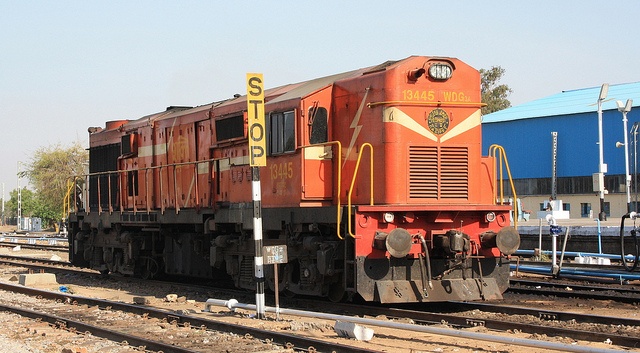
June 03, Colombo (LNW): India is sending 22 powerful WDM3D Alco-class diesel locomotives to Sri Lanka, offering a much-needed lifeline to the crisis-hit Sri Lanka Railways (SLR).
Among the 32 locomotives identified for export, five come from Mumbai, including four from the Kurla Diesel Loco Shed and one from Kalyan.
This move follows an official request from the Sri Lankan government and represents a significant act of regional cooperation and goodwill.
These WDM3D locomotives, developed by Banaras Locomotive Works in 2003 and produced until 2016, have been the backbone of Indian Railways for decades, especially on routes like the Konkan Railway prior to electrification.
With a robust 3300-horsepower diesel-electric engine and their iconic chugging sound, the Alco-class units are beloved by rail enthusiasts and valued for their durability and performance.
The Ministry of External Affairs (MEA) approved the transfer via the Railway Board’s infrastructure directorate. “
The locomotives are being dispatched in excellent working condition,” an official confirmed. India has previously shared similar locomotives with countries like Bangladesh and Sri Lanka, underscoring its commitment to regional support through rail diplomacy.
This timely donation comes as Sri Lanka Railways grapples with aging infrastructure, reduced service reliability, and chronic financial losses.
According to Sri Lanka’s Ministry of Transport, the railway department recorded losses exceeding LKR 14 billion in 2023 alone. A lack of new rolling stock and years of underinvestment have led to increased breakdowns, delays, and commuter dissatisfaction.
As of 2024, Sri Lanka Railways operates a fleet of over 300 locomotives, but more than 40% are inoperable due to technical issues and lack of spare parts.
The majority of the active fleet is decades old, some dating back to the 1970s. These aging engines consume excessive fuel and are often unable to meet the demands of daily commuter and freight services.
Transport experts suggest that India’s contribution could help fill the operational gaps, especially for long-distance and freight services.
However, they warn that without systemic reforms—such as improved maintenance regimes, staff training, and investment in infrastructure—the benefits of the new locomotives may be short-lived.
Nevertheless, this gesture not only symbolizes India’s support for Sri Lanka during economic hardship but also highlights the strategic importance of railways in regional connectivity and trade. With the right strategic planning, these locomotives could be the first step in modernizing Sri Lanka Railways and restoring public confidence in the island’s vital transportation network
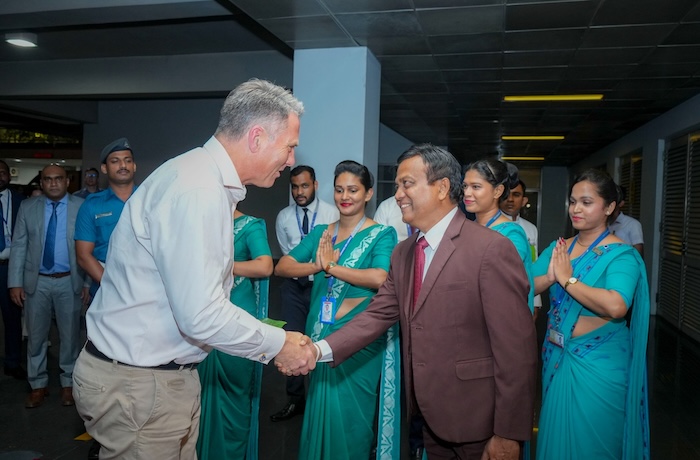
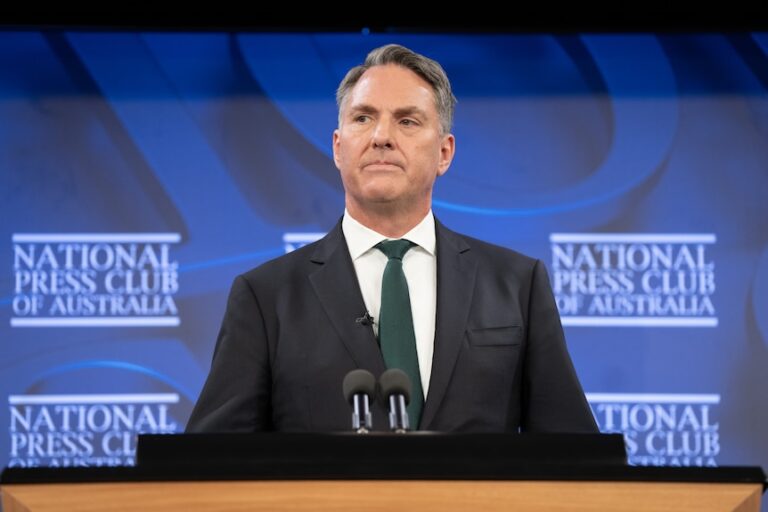
June 03, Colombo (LNW): Richard Marles, Australia’s Deputy Prime Minister and Minister for Defence, commenced an official visit to Sri Lanka this morning (03), marking a significant diplomatic engagement aimed at deepening bilateral ties between the two nations.
Upon his arrival, he was formally welcomed at Bandaranaike International Airport by Deputy Minister of Public Security and Parliamentary Affairs, Sunil Watagala.
This visit, seen as a reaffirmation of Australia’s growing interest in South Asian regional partnerships, includes a series of high-level meetings with senior members of the Sri Lankan government.
Marles is scheduled to hold discussions with President Anura Kumara Dissanayake, whose administration has been working to reposition Sri Lanka as a strategic hub in the Indian Ocean through a policy of non-alignment and diversified international engagement.
The discussions are expected to cover a broad spectrum of issues including maritime security, defence capacity-building, and regional cooperation on transnational threats.
Marles will also meet with Foreign Minister Vijitha Herath, who oversees not only diplomatic affairs but also labour migration and tourism—two sectors where collaboration with Australia continues to grow.
The Australian government has expressed interest in expanding opportunities for skilled migration from Sri Lanka, particularly in healthcare and engineering, whilst also encouraging increased tourism exchanges.
A key engagement during the visit will be a formal luncheon hosted at Australia House in Colombo, where Prime Minister Dr Harini Amarasuriya is expected to be the Chief Guest. The event, attended by government officials, business leaders, and representatives from civil society, is aimed at fostering people-to-people connections alongside formal state-level dialogue.
Defence cooperation remains central to Mr Marles’ agenda. He is set to engage in detailed bilateral talks with Sri Lanka’s Deputy Minister of Defence, Major General (Retired) Aruna Jayasekara. These discussions are likely to address joint training initiatives, maritime surveillance, and enhancing interoperability between the two countries’ defence forces.
Australia has provided support in areas such as naval capability development and disaster response coordination in the past, and there are expectations of new frameworks being proposed to deepen such assistance.
Marles is accompanied by a delegation of senior officials from Australia’s Department of Defence, Department of Foreign Affairs and Trade, and the Prime Minister’s Office, underscoring the strategic weight of the visit.
June 03, Colombo (LNW): Authorities at the National Water Supply and Drainage Board (NWSDB) have confirmed that a recent cyber intrusion targeting their SMS communication system has not resulted in any loss or compromise of sensitive customer data.
The incident, which unfolded on Sunday, involved an unauthorised attempt to access the Board’s web-based systems, leading to a temporary disruption in its SMS services.
According to Additional General Manager Pradeep Herath, whilst the infiltration allowed the unidentified perpetrator to send out around 10,000 deceptive text messages to customers’ mobile phones, internal systems containing user data remained secure.
The attacker reportedly issued messages urging recipients to make payments in exchange for access to their own information—a tactic reminiscent of common phishing or ransomware schemes, though no payment platform was engaged.
The Board acted swiftly to regain control of the SMS platform, cutting off the unauthorised access and restoring normal operations within hours. Affected customers were subsequently notified about the fraudulent nature of the messages, with reassurances that no action was required on their part.
The organisation has since launched a specialised programme to enhance the security infrastructure surrounding its digital platforms.
This breach has raised broader concerns over the vulnerability of state-run digital infrastructure. In response, the Sri Lanka Computer Emergency Readiness Team (SLCERT) has announced plans to implement round-the-clock monitoring mechanisms for public sector websites.
Charuka Damunupola, a senior cybersecurity analyst at SLCERT, noted that weaknesses in existing security protocols may have contributed to the success of the intrusion. He stressed the urgent need for robust preventative measures across all government-managed web platforms.
June 03, Colombo (LNW): The Colombo Magistrate’s Court has granted bail to former cabinet minister Keheliya Rambukwella and his son, Ramith Rambukwella, who are currently under investigation for alleged abuse of public funds.
The decision was made by Colombo Chief Magistrate Thanuja Lakmali following detailed submissions presented by both the Commission to Investigate Allegations of Bribery or Corruption and the defence.
The court ruled that both individuals be released on a cash bail of Rs. 50,000 each, in addition to two surety bails amounting to Rs. 1 million per suspect. As part of the bail conditions, a travel ban has been imposed on both the former minister and his son, barring them from leaving the country while the legal proceedings are ongoing.
The corruption case centres on allegations that Keheliya Rambukwella, during his time as a government minister, orchestrated the appointment of fifteen individuals to his personal staff without proper authorisation.
These appointments, according to the complaint lodged by the Bribery Commission, resulted in a financial loss exceeding Rs. 8 million to the state, through the illicit collection of salaries, allowances, and overtime payments made to these personnel.
Rambukwella was initially detained on May 07, whilst his son, a former national cricketer, was arrested two weeks later after voluntarily appearing before the anti-corruption authorities to provide a statement.
The case is now set to resume on October 10, when the court will review the progress of the investigation.
June 03, Colombo (LNW): Several spells of showers will occur in Western, Sabaragamuwa, Central and North-western provinces and in Galle and Matara districts, the Department of Meteorology said in its daily weather forecast today (03).
Showers or thundershowers may occur at a few places in Uva province and in Ampara and Batticaloa districts during the afternoon or night.
Fairly strong winds of about (30-40) kmph can be expected at times over Western slopes of the central hills and in Northern, North-central, North-western and Southern provinces and in and Trincomalee district.
The general public is kindly requested to take adequate precautions to minimise damages caused by temporary localised strong winds and lightning during thundershowers
Marine Weather:
Condition of Rain:
Showers or thundershowers will occur at several places in the sea areas off the coast extending from Puttalam to Hambantota via Colombo and Galle.
Manly fair weather will prevail over the other sea areas around the island.
Winds:
Winds will be south-westerly.
wind speed will be (30-40) kmph and can increase up to 50 kmph at times in the sea areas off the coast extending from Chilaw to Kankasanthurai via Puttalam and Mannar and from Galle to Pottuvil via Hambantota.
Wind speed will be (20-30) kmph in the other sea areas around the island.
Wind speed can increase up to 45 kmph in the sea areas extending from Chilaw to Galle via Colombo and from Kankasanthurai to Trincomalee via Mullaittivu.
State of Sea:
The sea areas off the coast extending from Chilaw to Kankasanthurai via Puttalam and Mannar and from Galle to Pottuvil via Hambantota will be rough at times.
The sea areas extending from Chilaw to Galle via Colombo and from Kankasanthurai to Trincomalee via Mullaittivu will be fairly rough at times.
Temporarily strong wind gust and very rough seas can be expected during thundershowers.
June 02, Colombo (LNW): Port City Colombo marked a significant milestone on Friday with the official handover of office space to key anchor tenants at its Business Centre. The event signals the commencement of active commercial operations within the Colombo Port City Special Economic Zone (SEZ), enhancing investor confidence in the region and putting the zone’s progressive regulatory framework into action.
The Business Centre comprises nine low-rise office buildings, including a dedicated IT hub and commercial hub. Approximately 80% of the office space has already been leased to “Authorised Persons” – investors registered and approved by the Colombo Port City Economic Commission (CPCEC) to operate within the SEZ.
This development represents a $5 million Foreign Direct Investment (FDI) by China Harbour Engineering Company (CHEC), a subsidiary of China Communications Construction Company (CCCC), one of the world’s largest infrastructure firms and a Fortune 500 company. With the Business Centre soon to be operational, Port City Colombo strengthens its position as a rising hub for business, investment, and innovation in South Asia.
The handover ceremony drew high-profile attendees including CCCC Deputy General Manager Chen Zhong, CPCEC Chairman Harsha Amarasekera, CHEC Chairman Bai Yinzhan, Finance Ministry’s Director General of Corporate Affairs Dr. Sulakshana Jayawardena, and CHEC Port City Colombo Managing Director Xiong Hongfeng.
Construction of the Business Centre began in March 2024, and it now stands as a premier IT and business park designed to facilitate business growth, knowledge sharing, and technological advancement. The new tenants are expected to benefit from the SEZ’s attractive fiscal and non-fiscal incentives, positioning Port City as a magnet for regional and international enterprise.
CCCC, employing over 120,000 people across 145 countries, has been active in Sri Lanka since 1998 and views Port City Colombo as one of its most strategic investments. Through CHEC, it has already invested around $1.4 billion in the Port City project—Sri Lanka’s largest FDI-backed Public-Private Partnership (PPP) to date.
With the onboarding of new tenants, Port City Colombo is poised to contribute significantly to Sri Lanka’s economic transformation—creating jobs, fostering innovation, and anchoring the nation’s future as a vibrant business destination in South Asia.
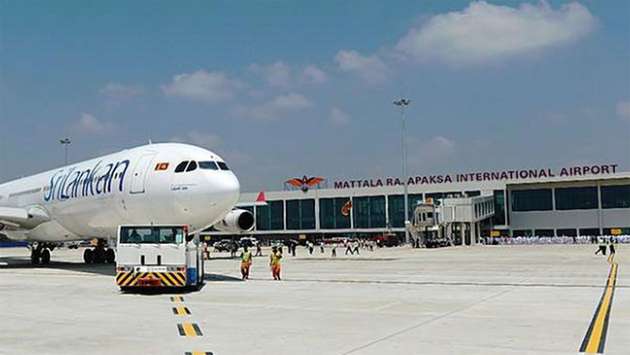
June 02, Colombo (LNW): In a significant policy shift, the National People’s Power (NPP) government is preparing to invite Expressions of Interest (EoI) from private investors to operate various services at the loss-making Mattala Rajapaksa International Airport (MRIA), despite its long-standing opposition to the privatization of state assets.
Opened in 2013 with funding from China EXIM Bank, the MRIA has consistently drawn criticism due to its underutilization and heavy financial losses. Over the years, multiple administrations have sought to transfer its operations to private or foreign entities, with limited success.
Most notably, the previous government attempted to hand over the airport’s management to a 30-year India-Russia joint venture—India’s Shaurya Aeronautics (Pvt) Ltd. and Russia’s Airports of Regions Management Company. The proposal, however, was eventually shelved due to legal constraints under the Civil Aviation Authority Act, which prohibits the outsourcing of certain core aviation services.
Now, the NPP government is aiming for a more segmented approach. Ports and Civil Aviation Ministry confirmed that a Cabinet paper would soon be submitted to initiate the EoI process. He added that the previous India-Russia consortium could also respond once the call is officially made.
The government intends to invite private investment in areas such as passenger services, cargo handling, and aircraft maintenance—while retaining core aviation functions like air traffic control and airport security under the state-run Civil Aviation Authority of Sri Lanka (CAASL).
The Civil Aviation Authority official reiterated that while airport management could be partially opened to private players with ministerial consent, key services related to safety and air navigation must remain under state control.
Internal documents obtained through the Right to Information Act revealed that the former government had already forwarded a draft agreement with the Indo-Russian venture to the Attorney General’s Department.
If approved, it would have marked Sri Lanka’s first instance of outsourcing airport operations to a non-state entity, diverging from the precedent of using the government-owned Airport and Aviation Services (Sri Lanka) Ltd. (AASL).
However, legal barriers surfaced. The AASL’s Memorandum of Association (MoA) did not allow any entity other than itself to manage an airport. The Attorney General, in an opinion dated August 8, 2024, advised amending three key clauses in the MoA to facilitate such a move.
The AG further clarified that, under existing laws, essential services—such as firefighting, search and rescue, aviation security, and air traffic operations—must remain under government oversight, either through AASL or CAASL.
The Cabinet subsequently cleared the AASL in August 2024 to revise its MoA, allowing it to partner with or promote other companies to operate non-core services at the MRIA. These amendments are seen as a way to navigate legal constraints while still attracting foreign or private sector participation to salvage the struggling airport.
If implemented, the move could signal a pragmatic shift in the NPP’s economic policy, blending public control with private efficiency in an effort to finally make Mattala a viable transport hub.
June 02, Colombo (LNW): The economic revival of Sri Lanka is tenuous as the country is about to have a balance of payments (BoP) crisis, and as-yet unresolved tariffs issue with the United States, and rising geopolitical alignments based on escalating ties with China.
Even after achieving short-term financial stability after a sovereign debt crisis in 2022, Sri Lanka’s path towards sustainable growth continues to be hampered by structural obstacles and tight fiscal space
“There are only four methods that can fix the economy, one is to have a high income, second is to limit the expenditure, third is to maintain the budget deficit by managing the income and expenditure and fourth is to have an influx of foreign exchange income and minimise the outflow,”.vetran economist and former minister Bandula Gunawardana told the Sunday Times.
Sri Lanka is unlikely to fully bridge its projected Rs. 2 trillion budget deficit or resolve its balance of payments (BoP) crisis in 2025 due to major fiscal and monetary constraints, he predicted.
As per Q1 2025 data, the government recorded a Rs. 498.28 billion deficit, with total revenue at Rs. 1,064.66 billion and expenditure at Rs. 1,562.94 billion.
Borrowing is restricted by the Public Finance Management Act, and monetary financing is banned under the Central Bank Act (2023).
On the BoP front, foreign reserves remain fragile (USD 3–4 billion), and Sri Lanka continues to face external debt repayments, high import costs, and limited capital inflows. While remittances and tourism are recovering, they are not sufficient to close the external financing gap.
Despite these challenges, partial stability can be realized through continued IMF support, increased tax collections, grants, and structural reforms such as privatization of SOEs and export diversification.
The government must also complete external debt restructuring to ease pressure on reserves and restore investor confidence, he emphasised.
Sri Lanka cannot fully overcome its budget and BoP crises in 2025, but with strong reform implementation, fiscal discipline, and external support, the country can achieve gradual stabilisation and lay the groundwork for sustainable recovery by 2026–2028, he opined. .
Sri Lanka is also faced with critical fiscal constraints as it grapples to achive revenue targets outlined in the 2025 Budget while dealing with its ongoing current account deficit in the Balance of Payments (BoP), economic analysts added.
The government has to collect Rs 4.2 trillion in total revenue this year, of which Rs 3.9 trillion would be raised through taxes – an increase of 46 percent over last year. Dr. Gunawardana warns that weak tax compliance, delay in the refund of VAT, and widespread application of tax exemptions could threaten such estimates
The IMF emphasised that boosting tax compliance and reinstating an efficient VAT refund mechanism are essential to avoiding further tax hikes and preventing fiscal leakages.
The Fund also warned that new tax exemptions should be avoided to reduce corruption risks and preserve funding for social safety nets.
At the same time, Sri Lanka’s BoP current account remains in deficit, reflecting a wider imbalance between imports and exports. As of 2024, the country recorded a US$ 1.2 billion current account shortfall, fueled by high import bills and modest foreign exchange inflows.
“The country’s dual deficits – the State Budget’s current account deficit and the BoP current account deficit – were central to the 2022 economic crisis,” Dr Gunawardana said. adding that addressing both fronts is critical to long-term recovery.”
Failure to meet previous IMF performance benchmarks has delayed financial support and damaged investor confidence, further complicating the economic recovery path.
The government’s four-pronged strategy is for stabilizing the economy includes: enhancing revenue collection, curtailing recurrent and capital spending, increasing foreign exchange inflows, and reducing unnecessary outflows.
Finance Ministry officials are also reviewing public sector efficiency and import restrictions to manage pressure on the rupee and foreign reserves.
As Sri Lanka navigates a fragile post-crisis recovery, fiscal discipline, transparency, and effective implementation of reforms will be key to building economic resilience and regaining international credibility.
June 02, Colombo (LNW): A senior delegation from Australia led by Deputy Prime Minister and Defence Minister Richard Marles is scheduled to arrive in Sri Lanka tomorrow (02) for a diplomatic visit aimed at reinforcing strategic ties and fostering closer defence cooperation between the two countries.
The visit, announced by the Sri Lankan Ministry of Foreign Affairs, marks an important chapter in the growing partnership between Colombo and Canberra, particularly in the realms of maritime security, regional stability, and mutual support in geopolitical matters.
During his stay, Mr Marles is expected to engage in official discussions with President Anura Kumara Dissanayake and Minister of Foreign Affairs, Foreign Employment and Tourism, Vijitha Herath.
These courtesy calls are intended to review ongoing bilateral engagements and explore fresh avenues for collaboration in areas ranging from defence training and security coordination to economic partnerships and regional diplomacy.
Further engagements will include a high-level dialogue with Deputy Minister of Defence, Major General (Retired) Aruna Jayasekara, where both parties are likely to delve into regional defence concerns, joint military exercises, and capacity-building initiatives.
As part of the diplomatic hospitality, Prime Minister Dr Harini Amarasuriya will host a luncheon at the Australia House in Colombo, where she will also serve as the Chief Guest. The gathering is expected to underscore the long-standing ties between the two Commonwealth nations, whilst celebrating shared values and people-to-people connections.
The Deputy Prime Minister will be accompanied by senior officials from Australia’s Department of Defence, Department of Foreign Affairs and Trade, and the Prime Minister’s Office, highlighting the importance placed on this visit by Canberra. Their presence is expected to contribute to a series of parallel consultations with Sri Lankan counterparts across multiple sectors.