June 02, Colombo (LNW): The nation’s foremost body of legal professionals has called for immediate action to address a critical leadership gap at the helm of the Right to Information Commission.
The Bar Association of Sri Lanka (BASL) has issued a formal communication to the Constitutional Council, expressing grave concern over the continued vacancy of the position of Chairperson of the Commission, a post considered integral to safeguarding citizens’ access to public information.
The letter, jointly signed by BASL President Rajeev Amarasuriya and Secretary Chathura Galhena, underscores the urgent need to restore full operational capacity to the Commission, which has been without a Chairperson since the departure of retired Supreme Court Justice Upali Abeyratne on 9 March 2025.
In the absence of a new appointment, the Commission’s ability to discharge its legal duties, particularly those involving oversight and enforcement of the public’s right to information, has been significantly impaired.
The Right to Information Act, enacted in 2016, outlines the Chairperson’s central role in leading the Commission’s deliberations, issuing directives, and ensuring administrative accountability. Without a properly appointed Chairperson, the BASL argues, the Commission is unable to function with the effectiveness and credibility that the law requires.
This vacancy, the BASL notes, comes at a time when public interest in governmental transparency is increasingly urgent, with citizens relying on mechanisms like the RTI Commission to obtain answers on matters of governance, accountability, and public expenditure.
The lack of leadership at the top, they caution, risks eroding public trust in the very institutions designed to protect democratic rights.
The letter calls upon the Constitutional Council, which is constitutionally mandated to advise on key appointments to independent commissions, to fulfil its obligation without further delay.
The BASL stressed that recommending a suitably qualified and independent candidate for Presidential appointment would be a strong affirmation of the state’s commitment to openness, accountability, and the rule of law.
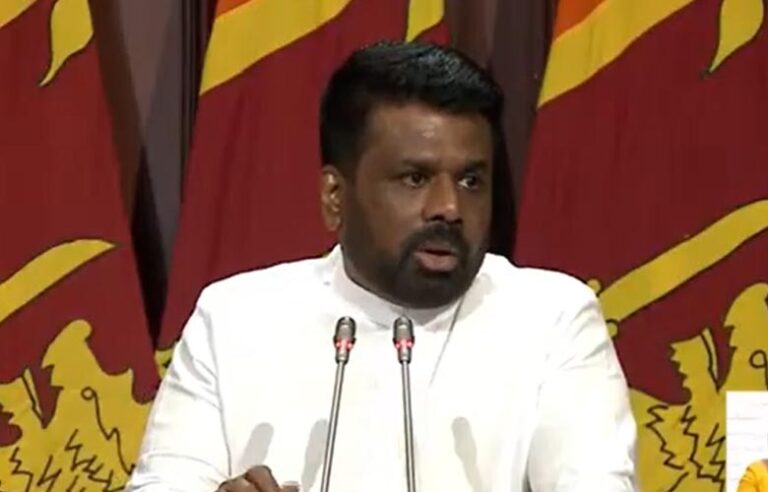
June 02, Colombo (LNW): President Anura Kumara Dissanayake underscored his administration’s firm commitment to safeguarding public funds, revealing that substantial reductions have already been made to discretionary spending under the presidential budget.
His remarks came during the formal inauguration of National Tax Week, held at the Presidential Secretariat, where he reiterated that every rupee entrusted to the state by the people must be used with utmost responsibility.
In a strongly worded address, the President emphasised that this commitment to frugality is not merely symbolic but represents a decisive shift in how public finances are managed.
He framed it as the first concrete step in dismantling entrenched inefficiencies and misuse of resources within the state apparatus. At the heart of this effort, he noted, is a mission to reinforce public confidence by ensuring every taxpayer’s contribution is treated with respect and protected from waste or corruption.
President Dissanayake spoke candidly about the systemic flaws that have long plagued Sri Lanka’s revenue ecosystem. Rather than placing blame solely on high-profile departments such as Customs or Excise, he described a far more entrenched “black mechanism” of interlinked inefficiencies and corruption within state institutions. He warned that unless this network is dismantled through genuine reform, the country risks sliding deeper into economic stagnation.
As part of this broader reform effort, the President announced plans to accelerate the digital transformation of government services. He said that digitalisation would not only improve service delivery but also serve as a powerful tool in bringing transparency and accountability to areas vulnerable to manipulation or abuse.
By introducing technology into tax collection and administrative procedures, the government aims to eliminate room for malpractice and ensure the rule of law applies uniformly across all sectors of society.
Speaking directly to the business community and the wider public, President Dissanayake made a pledge: those who contribute to the nation’s development through honest tax compliance will be protected. He assured taxpayers that the government views its duty to protect their contributions as paramount, and that any misuse of funds would trigger swift legal consequences. “If you pay, we will protect every rupee. If a single rupee is squandered, legal action will follow,” he stated firmly.
National Tax Week, which will continue until 7 June, is being observed under the theme “Badu Shakthi”, or “Power of Tax”. The Inland Revenue Department (IRD) will lead a range of educational and outreach efforts to increase public understanding of tax responsibilities and procedures. The campaign seeks to promote a culture of voluntary compliance and to expand the country’s tax base.
In a significant development marking the start of this initiative, the President also officiated the launch of the IRD’s new digital platform, which will now serve as the exclusive portal for tax report submissions from the 2024–2025 assessment year onwards.
This move, officials say, represents a pivotal moment in the modernisation of Sri Lanka’s tax administration and will enhance the efficiency, traceability and integrity of financial declarations.
June 02, Colombo (LNW): A national initiative aimed at promoting awareness of tax responsibilities and strengthening the country’s fiscal framework officially commenced today, with a week-long series of activities and public outreach.
Dubbed “National Tax Week”, the programme marks a concerted government effort to encourage civic understanding of taxation and the benefits of timely compliance.
The launch ceremony took place at the Presidential Secretariat in Colombo, with President Anura Kumara Dissanayake attending in his official capacity to underline the significance of the campaign.
Framed under the theme “Badhu Shakthi”, meaning “Power of Tax”, the week-long initiative is being spearheaded by the Inland Revenue Department (IRD), with events scheduled nationwide until 7 June.
Deputy Commissioner General of the IRD, P.K.S. Shantha, explained that the campaign is designed to demystify the tax process, assist citizens in understanding their obligations, and shed light on how public funds are utilised for national development.
Officers from the department will engage directly with the public through information booths, community workshops, and media appearances to improve literacy around income tax, value-added tax (VAT), and the role of taxation in building resilient public services.
One of the focal points of this drive is the promotion of the Taxpayer Identification Number (TIN), which has become an increasingly essential requirement for a range of official transactions.
These include registering motor vehicles, opening designated types of bank accounts, and participating in formal economic activity.
According to recent statistics, more than 10 million individuals have already secured their TINs, a figure that reflects growing integration into the country’s formal tax network.
June 02, Colombo (LNW): A fresh chapter in grassroots governance began today as 161 local authorities across Sri Lanka officially commenced their administrative functions, following the outcomes of last month’s island-wide local government elections.
These institutions, representing diverse urban and rural constituencies, will now operate under newly appointed Mayors and Chairpersons, where clear majorities were secured.
The establishment of the new councils has been guided by directives issued under a recent government gazette, which outlined procedures based on the official results declared after the May 06 elections. Where a political party or independent group achieved an undisputed victory, leadership has now been formally installed and operations set in motion.
For councils where no single group holds a majority, further deliberations chaired by Local Government Commissioners are expected to shape the final leadership structures in the coming days.
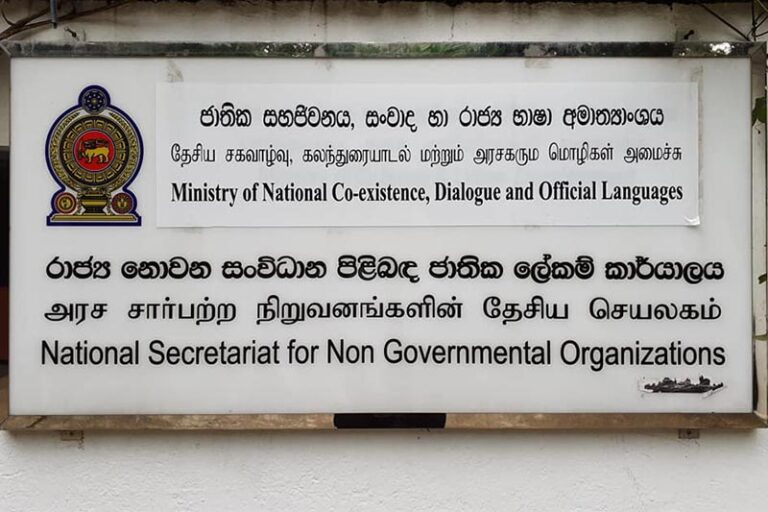
June 02, Colombo (LNW): Sri Lanka’s non-governmental sector is facing a dangerous impasse, as the country’s NGO Secretariat has ceased approving registrations for new organisations and processing amendments for existing ones—effectively paralyzing a vital pillar of civil society.
The deadlock stems from the resignation of former Director General of the NGO Secretariat, Sanjeewa Wimalagunarathna, in March. Since then, the government has failed to appoint a successor, triggering an administrative void with far-reaching consequences.
While L.K. Muhandiramge has stepped in as Acting Director General, she lacks the legal authority to perform the concurrent and essential role of Registrar. This dual responsibility is critical for signing off on NGO registrations, amendments, and authorisations to access foreign funding.
“The dilemma lies in the two roles,” Muhandiramge explained. “I have informed the Ministry about this, but without empowerment as Registrar, everything has stalled.”
Deputy Minister of Public Security Sunil Watagala admitted to being only vaguely aware of the issue, citing an ongoing process to recruit a replacement. Meanwhile, Public Security Minister Ananda Wijepala appeared completely unaware of the problem, telling reporters, “I will have to look into the matter.”
This leadership vacuum is more than a bureaucratic hiccup—it is an operational chokehold. NGOs, many of which provide critical services in health, education, environmental protection, and humanitarian aid, are now legally unable to function, open bank accounts, or receive foreign funds.
An official from the NGO Secretariat, speaking anonymously, confirmed that both new registrations and changes to existing entities were on indefinite hold. “Some NGOs expected to register weeks ago. Now they’re stuck. It’s not just about paperwork—without registration, they face legal complications in fund transfers and cannot operate properly.”
The crisis is compounded by shifting global aid flows. With recent USAID cuts, many NGOs are pivoting toward European donors like Germany. However, adjustments to their operations—often required to meet donor conditions—cannot proceed without official approval.
The NGO Secretariat, under the Ministry of Public Security, is tasked with ensuring the transparency and legality of NGO activity. But in its current state, it is doing the opposite—crippling legitimate organisations and pushing them into a legal grey area.
This prolonged lapse not only threatens the survival of NGOs but also undermines public trust and Sri Lanka’s international credibility in supporting civic engagement. If unresolved swiftly, the paralysis risks transforming into a systemic breakdown in the regulation of civil society.
June 02, Colombo (LNW): In response to ongoing disruptions in the medicine supply chain, Sri Lanka’s Ministry of Health and Mass Media has announced plans to secure essential medicines through direct assistance from foreign governments. This interim measure aims to ensure the uninterrupted availability of critical medical supplies until the local procurement process stabilizes.
The Ministry stated that a Cabinet Paper was recently submitted and approved, leading to the formation of a high-level committee tasked with overseeing the direct procurement mechanism. The proposal, endorsed by the National Procurement Commission, will be resubmitted to the Cabinet for final approvals before implementation.
The newly appointed committee is chaired by Health Ministry Secretary Dr. Anil Jasinghe and includes senior representatives from key ministries including Finance, Industry, Trade, Foreign Affairs, and the Attorney General’s Department. On May 29, the committee met to outline initial steps for launching the foreign procurement process and to coordinate swift actions to restore medicine supply levels.
“This committee will ensure that all necessary measures are taken to complete preliminary tasks quickly and guarantee the continuous supply of essential medicines, medical equipment, and related services,” the Ministry said.
Meanwhile, Deputy Health Minister Dr. Hansaka Wijemuni has addressed concerns raised in the media about a reported shortage of 180 types of medicines in hospitals. He clarified that while shortages exist, only around 40 types are currently unavailable at the hospital level. The broader figure, he explained, includes temporary deficits mainly at the Medical Supplies Division (MSD) in Colombo.
“The shortage has been a long-standing issue, worsened by the recent economic crisis. There are still disruptions, but they do not affect the entire country equally,” Dr. Wijemuni said.
He emphasized that the government has allocated a higher budget this year for medicine procurement and is taking steps to allow hospitals to purchase medicines directly when necessary. This, he believes, will reduce reliance on the central supply system and prevent shortages from escalating.
One key solution under consideration is maintaining a three-to-six-month buffer stock of essential medicines at the MSD. This would help mitigate delays caused by supply chain issues or tendering inefficiencies. Dr. Wijemuni stressed that this stockpile would be acquired through a legal, transparent, and quality-assured process.
“We’re not compromising on quality. The idea is to maintain a stable supply and eliminate disruptions—not to import substandard medicines,” he affirmed.
As Sri Lanka navigates its economic recovery, the Ministry’s strategy to collaborate with foreign governments for medical procurement reflects a focused effort to ensure public access to life-saving treatments, even amid persistent logistical and financial challenges.
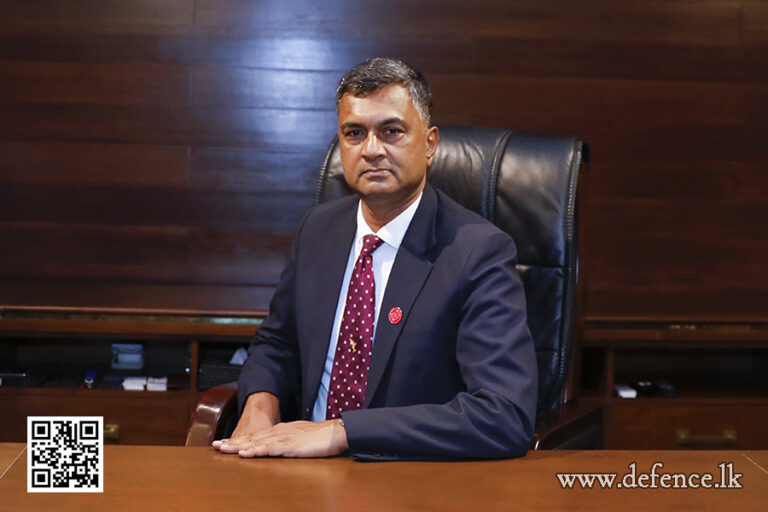
June 02, Colombo (LNW): In a bold move to strengthen national security and align with global counter-terrorism standards, the Sri Lankan Ministry of Defence has issued an Extraordinary Gazette announcing the freezing of all financial assets, funds, and economic resources of individuals, groups, and entities designated under the United Nations Regulations No. 1 of 2012.
The Gazette notification, released under the signature of Defence Secretary Air Vice Marshal (Retd) Sampath Thuyacontha, was published on May 30, 2025. Thuyacontha, who serves as the Competent Authority under the UN Regulations, exercised his powers under Regulation 5 to enforce these financial restrictions with immediate effect.
The latest directive applies to all persons—natural or legal—listed under Regulation 4 of the same regulation, first published in Gazette Extraordinary No. 1854/41 dated March 21, 2014. The list of designated entities has been updated multiple times, with the latest changes formalized through Gazette Extraordinary No. 2438/47 issued on May 30, 2025.
Under the new orders, the government has not only frozen the assets of designated individuals and organizations but also revoked earlier freezing orders issued through Gazette notifications No. 2335/31 (June 10, 2023), No. 2387/03 (June 3, 2024), and No. 2424/52 (February 20, 2025).
However, the Ministry has clarified that this revocation does not nullify any enforcement or action previously taken under those gazettes. The new list of designated persons replaces the prior schedules published in March 2014 and last amended in February 2025.
This legal mechanism forms part of Sri Lanka’s obligations to comply with international frameworks combating terrorism financing and the proliferation of weapons of mass destruction. The UN Regulations No. 1 of 2012 provide the legal basis for the government to identify and act against individuals and groups that pose a threat to global peace and security.
National Security vs. Individual Rights: A Complex Balancing Act
The move has sparked mixed reactions among legal experts, human rights activists, and financial analysts. While many commend the Defence Ministry for its proactive stance on cracking down on illicit financial flows, others caution against potential overreach and unintended consequences.
Advantages of the New Regulation
Proponents argue that freezing the assets of designated individuals and entities prevents the misuse of the financial system for extremist purposes.
This enhances Sri Lanka’s international standing and protects the country from sanctions or grey-listing by global watchdogs like the Financial Action Task Force (FATF). It also sends a strong message that the government is taking terrorism financing seriously.
The regulation is also expected to improve coordination between domestic intelligence agencies and international organizations like the United Nations, Interpol, and the Egmont Group, facilitating more efficient tracking of illicit networks.
Concerns and Risks
However, civil society organizations and legal experts have raised red flags over the broad scope of the regulation. There is concern that individuals or organizations may be included in the designated list without adequate due process or the opportunity to challenge their designation in a transparent and timely manner. Such missteps could lead to wrongful asset freezes, damaging reputations and livelihoods without recourse.
Moreover, businesses and NGOs that operate in conflict-prone or politically sensitive areas may be inadvertently impacted if their names or associations are misunderstood or misinterpreted. Critics emphasize the need for oversight mechanisms, independent review boards, and judicial pathways to appeal any questionable listings.
Implications for Affected Individuals and the Broader Economy
For individuals and organizations affected by the new designation, the implications are severe. Access to bank accounts, investments, and other financial instruments is immediately restricted. Property holdings may be frozen, and business operations could grind to a halt. The stigma associated with being publicly listed as a potential security threat also carries long-lasting personal and professional consequences.
There is also the potential for indirect fallout. Employees of such organizations, family members, and affiliated partners may face financial insecurity or social stigma, raising ethical questions about collective punishment and the need for safeguards.
As Sri Lanka navigates a complex security landscape, the government’s recent asset freeze under the UN Regulations marks a firm step in combating terrorism financing.
However, the long-term success of this policy will depend not only on enforcement but also on transparency, due process, and robust mechanisms to ensure that justice is served fairly—without compromising civil liberties.
June 02, Colombo (LNW): Sri Lanka is in talks with the United Arab Emirates (UAE) to establish a long-term credit line to directly import crude oil and refined petroleum, as the island nation grapples with ongoing fuel needs and foreign exchange constraints.
The move could mark a significant shift in Sri Lanka’s energy procurement strategy, potentially easing pressure on its forex reserves and enhancing regional energy cooperation.
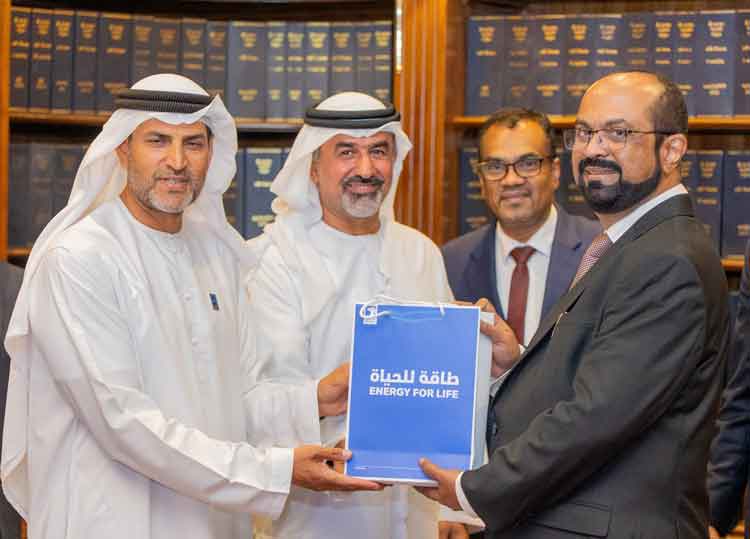
A high-level meeting was held at the Presidential Secretariat in Colombo between representatives from the Abu Dhabi National Oil Company (ADNOC) and a Sri Lankan delegation. Leading the discussions were Power Minister Kumara Jayakody and Deputy Economic Development Minister Dr. Anil Jayantha Fernando.
The talks focused on securing petroleum supplies, exploring investment opportunities in Sri Lanka’s energy sector, and laying the groundwork for joint ventures.
Key figures at the meeting included UAE Ambassador to Sri Lanka Khaled Nasser Al Ameri and ADNOC Senior Vice President for Crude and Condensate, Abdulla Al Qubaisi.
Talks revolved around the formation of a long-term oil supply agreement on concessionary terms, improving Sri Lanka’s refining capacity, and strengthening its position in the regional petroleum market. Energy Ministry officials confirmed preliminary discussions on the oil credit line were underway.
The two sides also agreed to sign a Memorandum of Understanding (MoU) aimed at enhancing bilateral cooperation in the energy sector.
The initiative follows recent discussions between UAE’s Ambassador Sheikh Ahmed Ali Hamad Al Mualla and Sri Lanka’s Energy Minister Udaya Gammanpila, who highlighted the urgency of securing affordable oil due to a dollar shortage.
Trincomalee, a key port city on Sri Lanka’s east coast, is also set to become a focal point in a trilateral energy partnership involving India, Sri Lanka, and the UAE. Under a framework agreement signed by the three nations,
Trincomalee could be transformed into a major energy hub. The plans reportedly include infrastructure projects such as a potential pipeline between India and Sri Lanka and the development of a new oil refinery.
However, exact details of UAE’s role in the Trincomalee initiative remain unclear. Indian Foreign Secretary Vikram Misri confirmed that refurbishing the World War II-era Trincomalee Oil Tank Farm – partially owned by Indian Oil Corp – could be part of the project. While the broader plan awaits further business-to-business discussions, it underscores India’s increasing engagement in Sri Lanka’s energy sector.
Meanwhile, China’s presence in Sri Lanka’s energy landscape remains a point of tension. A proposed $3.7 billion oil refinery in Hambantota by China’s Sinopec has raised strategic concerns in New Delhi, particularly given the port’s proximity to India. If completed, this would be Sinopec’s first fully controlled overseas refinery.
For the UAE, closer collaboration with India in South Asia serves its broader strategic interests, especially amid growing regional competition with Saudi Arabia. The trilateral framework with Sri Lanka and India could bolster Abu Dhabi’s influence and complement India’s already significant footprint in Sri Lanka’s energy sector.
June 02, Colombo (LNW): In a bold bid to revive its economy, Sri Lanka has extended a direct invitation to high-level Chinese companies to form joint ventures with local counterparts in key growth sectors including agro-processing, fisheries, ICT and BPO, apparel, tourism, and renewable energy.
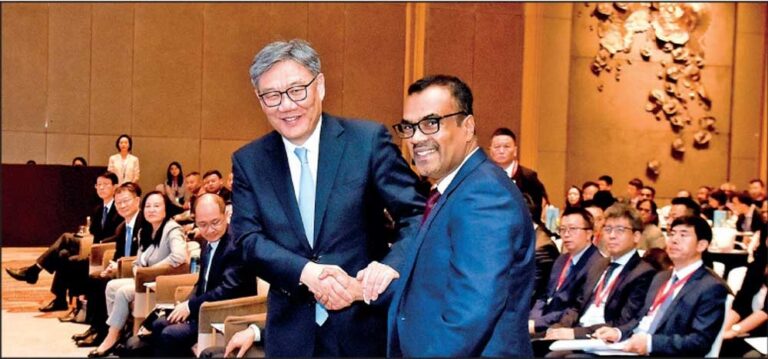
The announcement was made by Labour and Economic Development Deputy Minister Dr. Anil Jayantha Fernando at the “Sri Lanka and China Trade and Investment Forum 2025” held in Colombo.
The forum, co-hosted by the Ceylon Chamber of Commerce and Chinese business chambers, marked a significant deepening of Sino-Lankan economic ties. Attended by China’s Commerce Minister Wang Wentao, Ambassador Qi Zhenhong, and over 100 Chinese delegates from 77 firms, the event symbolized Sri Lanka’s push to convert diplomatic goodwill into tangible investment.
Dr. Fernando emphasized the importance of moving from dialogue to concrete action, calling the event “a special step in our journey” and underlining the island’s commitment to attracting ethical, sustainable, and value-added investment.
He presented Sri Lanka’s improved macroeconomic indicators—including 5% GDP growth, $12 billion in exports, and over 2 million tourist arrivals in 2024—as signs of renewed potential.
China’s presence, through four major chambers of commerce, points to serious interest in sectors like agriculture, manufacturing, clean energy, textiles, and digital services. Business-to-business meetings focused on partnerships in the automotive supply chain, tea plantations, clean technology, and engineering further underscored this momentum.
However, this strategic alignment with China raises geopolitical concerns, particularly for India. New Delhi, which provided over $4 billion in aid to help Sri Lanka navigate its recent economic crisis, may view Colombo’s pivot toward Beijing with caution.
India has long regarded the Indian Ocean region as its sphere of influence, and growing Chinese economic entrenchment—especially through joint ventures—could be perceived as a challenge to regional balance.
Sri Lanka’s balancing act is delicate. While the economic lifeline offered by China could accelerate recovery, the island nation must manage its diplomatic relationships carefully, ensuring that increased Chinese investment does not strain its ties with India or other regional partners.
Critics warn that overdependence on China could echo past debt-related pitfalls, while others argue that diversified partnerships are essential for long-term resilience.
As Sri Lanka and China near the 70th anniversary of diplomatic relations, the forum marks a turning point—one that could shape the nation’s economic and geopolitical trajectory for years to come.
June 02, Colombo (LNW): Intermittent showers are anticipated in the Western, Sabaragamuwa, Central, and North-Western provinces, with rainfall expected to occur in the southern districts of Galle and Matara as moisture-laden monsoonal winds continue to influence weather patterns across the island, the Department of Meteorology said in its daily weather forecast today (02).
Meanwhile, isolated evening or night-time showers, possibly accompanied by thunder, are expected in the eastern regions, particularly in Ampara and Batticaloa, as well as in parts of the Uva Province.
The department has highlighted that although rainfall in these areas may be sporadic, thunderstorm activity could lead to sudden downpours and localised disruptions.
In addition to the rainfall warnings, forecasters have noted the likelihood of persistent strong winds in several regions. Wind speeds reaching between 30 to 40 kilometres per hour are predicted in areas along the western slopes of the central hills and in northern and southeastern districts including Hambantota and Trincomalee. The Northern, North-Central, and North-Western provinces are also expected to be affected by these gusty conditions.
Given the current meteorological outlook, the public is advised to take safety measures, particularly during periods of heavy rain or thunderstorms.