Home Blog Page 544

Sri Lanka, KOICA Partner for Waste Management and Governance Reforms

0

By: Staff Writer

December 12, Colombo (LNW): In a landmark initiative to promote environmental sustainability, the Government of Sri Lanka and the Korea International Cooperation Agency (KOICA) have partnered to implement the “Developing Sustainable Integrated Solid Waste Management Project in Uva and Northern Provinces.”

 The agreement was signed at the Ministry of Public Administration, Home Affairs, Provincial Councils, and Local Government (MoPCLG).

The ceremony was attended by KOICA Sri Lanka Office Country Director Kim Myung Jin, MoPCLG Secretary Alokabandara, Department of External Resources Director General Samantha Bandara, and other dignitaries. The project seeks to address solid waste management challenges in the Badulla and Vavuniya districts, with KOICA committing $11 million to the initiative.

This collaboration aims to enhance waste management infrastructure, introduce Korea’s best practices in the field, and strengthen the capacity of Sri Lankan officials. Speaking at the event, Alokabandara highlighted the importance of the initiative, noting that it could lead to long-term sustainable benefits, including a reduction in greenhouse gas emissions and a shift toward eco-friendly waste management practices.

KOICA’s Country Director, Kim Myung Jin, emphasized the organization’s commitment to global environmental protection, expressing confidence that the project would pave the way for sustainable development in Sri Lanka’s waste management sector.

In addition to this project, KOICA plans to invest over $65 million in Sri Lanka over the next five years, focusing on climate change mitigation and adaptation technologies. This underscores KOICA’s dedication to supporting the country’s environmental and developmental goals.

KOICA has also pledged its support for governance and transparency reforms in Sri Lanka. During a recent meeting at the Presidential Secretariat, high-ranking KOICA officials assured their commitment to assisting the government in preventing fraud and corruption.

The agency agreed to provide tailored loan assistance to meet the country’s specific needs in strengthening accountability mechanisms.

Key officials, including Korean Ambassador Miyon Lee, Deputy Ambassador Songyi Jeong, and Sri Lanka Railways Deputy General Manager B.M.U Banneheka, were present at the discussions, reinforcing the strong bilateral ties between the two nations.

 This multi-faceted collaboration between Sri Lanka and KOICA signals a significant step forward in addressing critical environmental and governance challenges while fostering long-term sustainable development.

European Chamber of Commerce of Sri Lanka Embarks on Strategic Growth under New Leadership

0

By: Staff Writer

December 12, Colombo (LNW): The European Chamber of Commerce of Sri Lanka (ECCSL) is entering an exciting new chapter, marked by its recent Annual General Meeting (AGM) in Colombo.

The event saw the appointment of John Wilson as President and Mario Stubbs as Vice President, ushering in a fresh leadership team to drive the Chamber’s efforts in strengthening European business ties with Sri Lanka.

In his inaugural address, President Wilson expressed gratitude for the members’ trust and outlined his vision for growth. “We are building momentum, focusing on strategic growth, and positioning ourselves to better serve our members. With your support, I am confident we will achieve great things,” he remarked.

Wilson acknowledged past challenges but emphasized the opportunities ahead for the ECCSL to enhance trade and investment relations between Europe and Sri Lanka.

To foster meaningful engagement, the Chamber plans to host networking events where members can exchange ideas and stay updated on global business trends. The continued publication of EuroLink, ECCSL’s trade and commerce magazine, will provide valuable insights into trade, investment, and business developments across Europe and Sri Lanka.

A key focus will be on regulatory updates, including the Corporate Sustainability Due Diligence Directive (CSDDD), the Deforestation Regulation, the Critical Minerals Regulation, and the Textile Labelling Regulation. By collaborating with relevant organizations, ECCSL aims to keep its members informed and well-prepared for compliance with these critical European regulations.

Wilson highlighted plans to expand membership, drawing new participants from both Sri Lanka and Europe to ensure a vibrant and diverse network. The Chamber also aims to strengthen ties with European Business Councils, Embassy trade desks, and other trade organizations to support members’ cross-border business endeavors.

Advocacy will remain a priority as the Chamber represents the interests of European businesses in Sri Lanka. Whether addressing challenges or pushing for favorable policies, ECCSL is committed to being a strong voice for its members. Additionally, its enhanced digital presence will ensure clear and consistent communication through social media and digital platforms.

Special recognition was given to retiring Board members for their contributions, with Wilson thanking them for their service and welcoming them to the Advisory Board. Vice President Stubbs was also commended for his vision and leadership in shaping the Chamber’s future direction.

Looking ahead, the ECCSL is focused on building a stronger business ecosystem, promoting sustainable trade, and encouraging collaboration between European and Sri Lankan industries. “The challenges are significant, but the opportunities are greater. Together, we can create a more prosperous future,” Wilson concluded.

Historic Restoration unites Nations: Kandyan Kings Palace Reopens with US-Supported Renovation

0

By: Staff Writer

December 12, Colombo (LNW): The Old Kandyan Kings’ Palace and Archaeology Museum, nestled within Sri Lanka’s sacred Temple of the Tooth Relic complex, has been meticulously restored to its former grandeur through a $265,000 (Rs. 77 million) grant from the U.S. Ambassadors Fund for Cultural Preservation (AFCP).

The U.S. Embassy, in collaboration with Sri Lanka’s Ministry of Buddhasasana, Religious, and Cultural Affairs, marked this achievement with a grand reopening ceremony on December 11.

The event was graced by U.S. Ambassador Julie Chung and Sri Lanka’s Cultural Minister, Hiniduma Sunil Senevi, who underscored the importance of the project in preserving the nation’s cultural identity.

The restoration, initiated in 2021, unfolded in two phases. The first focused on structural conservation and improving accessibility for individuals with disabilities. The second phase upgraded the museum’s exhibits and facilities, creating an engaging space for education and cultural appreciation.

Speaking at the ceremony, Ambassador Chung emphasized the transformative impact of cultural preservation, stating, “The restoration of the Kandyan Kings’ Palace and Archaeology Museum symbolizes the enduring partnership between the United States and Sri Lanka.

 This museum serves as a gateway for all to delve into Sri Lanka’s rich history, fostering appreciation while boosting cultural tourism. We are proud to support initiatives that celebrate Sri Lanka’s heritage and enhance its cultural and economic vibrancy.”

Minister Senevi highlighted the collaborative effort’s significance, adding, “This project ensures that visitors, including those with disabilities, can access and connect with Sri Lanka’s cultural heritage.

By conserving the historic infrastructure and enhancing the museum’s displays, we safeguard our history while showcasing it to the world, promoting education and cultural pride.”

The U.S. Embassy’s Counselor for Public Affairs, Heidi Hattenbach, noted that the AFCP embodies the United States’ dedication to safeguarding global cultural treasures. She explained,

“The preservation of the Kandyan Kings’ Palace exemplifies our commitment to protecting Sri Lanka’s cultural heritage while fostering sustainable tourism and economic growth. This site now offers a deeper and more immersive experience for all visitors.”

Over its 23-year history, the U.S. Ambassadors Fund for Cultural Preservation has supported over 1,000 projects in more than 140 countries. In Sri Lanka alone, the AFCP has invested $1.3 million across 17 projects since 2001.

These initiatives range from conserving the Rajagala Buddhist forest monastery and preserving collections at the Anuradhapura Archaeological Museum to restoring the Batticaloa Dutch Fort.

Additionally, the fund is aiding the preservation of the Godawaya shipwreck, the oldest known vessel in the Asia-Pacific, located off Hambantota’s coast.

The restoration of the Kandyan Kings’ Palace not only preserves an iconic piece of Sri Lankan history but also reinforces the cultural bond between Sri Lanka and the United States, ensuring that future generations continue to learn from and appreciate this rich heritage.

Govt loses over Rs. 1.3 bn in tax revenue due to flawed electric vehicle import scheme

0

By: Isuru Parakrama

December 12, Colombo (LNW): A recent audit by the National Audit Office has revealed that the Sri Lankan government has lost approximately Rs. 1,384 million in tax revenue due to a significant increase in the luxury tax exemption limit for electric vehicle imports.

This exemption, initially set at Rs. 6 million, was doubled to Rs. 12 million, resulting in financial losses for the state.

The controversial scheme, which allowed Sri Lankan migrant workers to import electric vehicles, granted the exemption to 510 vehicles, raising questions about the effectiveness and oversight of the programme.

Launched in 2022 by the Ministry of Labour and Foreign Employment, the initiative was designed to incentivise remittances from Sri Lankan workers abroad by encouraging them to import electric vehicles.

According to the audit report, the scheme issued a total of 1,077 permits between September 2022 and June 2024. However, 77 of these permits were later cancelled, and only 510 of the permit holders proceeded with importing vehicles.

The report further indicates that by June 2024, only 375 of the imported vehicles had been successfully registered with the Department of Motor Traffic.

During this period, the scheme facilitated foreign remittances amounting to approximately US$ 121.5 million, while US$ 24.1 million was spent on the importation of the vehicles.

One of the key findings of the audit was the identification of significant lapses in internal controls and irregularities in the permit issuance process.

Several administrative procedures, including the acceptance and verification of applications, as well as the issuance and cancellation of permits, were handled unethically by some officials within the Ministry.

The audit also highlighted that the Ministry had failed to ensure compliance with the necessary eligibility criteria for the permit holders.

For example, permits were issued to four individuals whose foreign employment status could not be verified.

Despite receiving US$ 445,942 in foreign remittances, the Ministry did not carry out the necessary checks to confirm the legality of these funds.

Additionally, the report pointed out that the criteria for the duration of foreign employment required for eligibility were not clearly defined in the official circulars.

This lack of clarity resulted in permits being granted to individuals with minimal overseas employment or those with sporadic foreign travel.

The audit also noted a lack of coordination between the Ministry and other key authorities, such as the Treasury’s Department of Trade and Investment Policy and the Controller of Imports and Exports, which led to further breaches in governance and accountability.

The audit report calls for greater transparency and stricter oversight to ensure that such schemes are properly managed and do not result in the misuse of government resources or policies.

Police deny claims linking Army Intelligence officer to attack on Police officers during protest

0

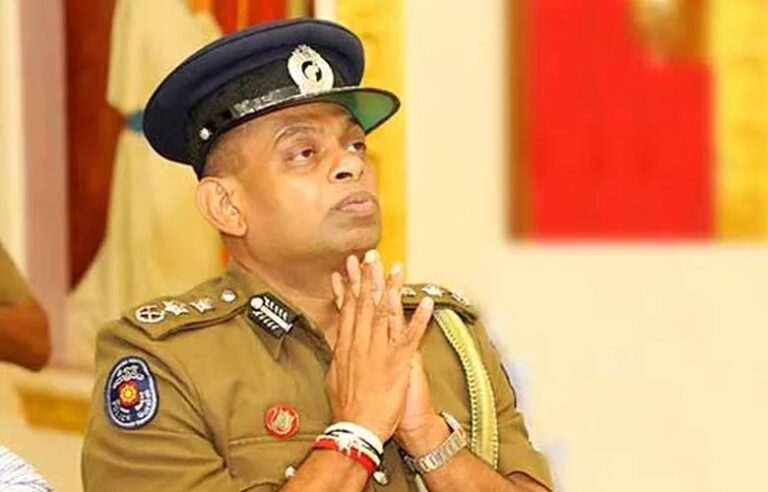
December 12, Colombo (LNW): The Sri Lankan Police have refuted reports circulating on social media and in print, which falsely claimed that the individual responsible for injuring three police officers with a sharp weapon during a protest outside the Ministry of Education on December 02, was an army intelligence officer.

In an official statement, the Police Media Division clarified that these allegations were unsubstantiated and inaccurate.

According to the police, misinformation had spread, suggesting that the Thalangama Police had provided such details to the Kaduwela Magistrate’s Court.

However, after conducting thorough investigations, the police revealed that there was no evidence to support the claim that an army intelligence officer was involved in the incident.

The police have also stated that the Police Special Investigation Unit has been instructed by the Acting Inspector General of Police to look into the matter further.

The investigation will focus on determining whether the individual who appeared in court on the day of the incident had made such a statement.

The protest, which took place in front of the Ministry of Education, was organised by a group of school development officers who were demanding teacher appointments.

During the demonstration, tensions escalated, leading to the injuries of three police officers.

The authorities have urged the public to refrain from spreading unfounded rumours and assured that they are committed to uncovering the truth behind the incident.

Former Sri Lankan diplomat fined after exploiting domestic worker

0

December 12, Colombo (LNW): Himalee Arunatilaka, the former Deputy High Commissioner of Sri Lanka to Australia, has been handed a substantial fine of $117,028.80 by the Federal Court, following her conviction for mistreating her domestic worker, Priyanka Danaratna.

Danaratna, a Sri Lankan national, was employed by Arunatilaka at her residence in Canberra between 2016 and 2018.

During this period, she was required to work grueling hours—often exceeding 14 hours a day, seven days a week—without receiving fair compensation.

Over the two years of her employment, Danaratna was paid a mere $11,212.70, a sum far below the legal minimum wage.

The Federal Court ruled that Arunatilaka had breached several key provisions of the Fair Work Act 2009.

These included failing to provide proper pay slips, underpaying wages, and compelling Danaratna to work excessively long hours without adequate rest.

In addition to the fine, Arunatilaka had previously been ordered to pay Danaratna a compensation sum of $374,151.90 for unpaid wages and other entitlements.

The court’s ruling underscored the gravity of the exploitation Danaratna had endured and sought to provide some measure of justice for her.

Arunatilaka, who now holds the position of Sri Lanka’s Permanent Representative to the United Nations in Geneva, was given 60 days to pay the fine.

The case has drawn attention to the issue of mistreatment and exploitation of domestic workers, sparking discussions about worker rights and the need for stronger protections.

Mysterious illness causing fatalities in North identified as Leptospirosis

0

December 12, Colombo (LNW): Health authorities have confirmed that the mysterious fever, which has recently spread across the northern part of Sri Lanka and led to the deaths of seven individuals, is caused by Leptospirosis, commonly referred to as ‘rat fever’.

The confirmation follows extensive testing on several samples by the Epidemiology Unit of the Ministry of Health.

The outbreak had initially raised concerns due to its rapid spread and the severity of symptoms, which included high fever and respiratory issues. Authorities were unable to pinpoint the exact cause of the illness for several days, leading to widespread alarm amongst the public.

However, after rigorous laboratory tests, it has now been definitively identified as Leptospirosis, a bacterial infection typically transmitted through contact with water contaminated by the urine of infected animals, particularly rats.

The illness, which is prevalent in tropical regions, has been known to cause severe complications if not treated promptly, including kidney damage, liver failure, and even death.

The Ministry of Health has urged the public, particularly those living in flood-prone areas or working in occupations with high exposure to water, to take preventive measures to avoid infection.

This includes wearing protective clothing, avoiding direct contact with potentially contaminated water, and seeking medical attention if symptoms develop.

Opposition considers bringing no-confidence motion against Speaker over doctorate controversy

0

December 12, Colombo (LNW): The Samagi Jana Balawegaya (SJB), is contemplating a no-confidence motion against Speaker Asoka Sapumal Ranwala, citing concerns over the authenticity of his academic qualifications.

This move follows growing scrutiny regarding the legitimacy of his claimed doctorate, which has yet to be substantiated.

SJB lawmaker Ajith P. Perera stated that the Speaker must publicly clarify whether he indeed holds a valid doctorate.

It is crucial for the Speaker to present clear evidence of his qualifications. If he fails to do so and refuses to step down, we will have no choice but to proceed with a no-confidence motion,” Perera declared on Wednesday.

The SJB has also expressed confidence that MPs from the National People’s Power (NPP), who they believe will act with integrity, will join them in supporting the motion should a vote take place.

This suggests that the opposition is hoping to gather enough support across party lines to ensure the Speaker’s removal.

The controversy surrounding Ranwala’s academic credentials gained significant attention after the Parliament’s official website removed the title “Dr.” from his profile.

The SJB MP emphasised that a clarification from the Speaker’s end being delayed and the swaying away of the Cabinet Spokesman (who is responsible for providing clarification from the government’s end) from the question when asked would be problematic, further exacerbating the need to take action.

Prime Minister calls for transformation in Sri Lanka’s education system

0

December 12, Colombo (LNW): Prime Minister Harini Amarasuriya has strongly emphasised that education should not be treated as a commodity but rather as a fundamental right that contributes to individual and societal development.

During her address at a workshop held under the theme “Preparing Relevant Strategies to Transform the Existing Education System” at the Colombo Foundation Institute, the Prime Minister stressed the need to shift the prevailing mindset that views education merely as a transactional process.

Education is not something that can be bought or sold,” she said, urging a cultural shift away from the transactional view that education is simply a product to be consumed.

It has become a transaction, and this culture must be changed. We need to understand that education is not just about acquiring knowledge; it is about personal transformation, social change, and a collective development of society as a whole.

In her speech, Prime Minister Amarasuriya highlighted the importance of crafting policies and making decisions based on data that serves the best interests of schoolchildren.

We must approach education as a long-term investment, not something that will yield immediate results,” she explained. “The government is committed to investing in education, but we need to do so with careful consideration, making data-driven decisions that can genuinely improve the system over time.

The workshop, attended by key stakeholders including Deputy Minister of Education Dr. Madura Seneviratne, Secretary to the Ministry of Education Nalaka Kaluwewa, and other educational professionals, was part of the broader efforts to discuss reforms across various educational stages, from early childhood development to higher education and vocational training.

Amarasuriya underscored that the need for reform was critical in order to develop a system that equips students not just with knowledge, but with the skills and sense of social responsibility required to contribute to a greater society.

She continued, “Our education system must open opportunities for students to engage with the world. It should foster a sense of social responsibility. It is not just about personal development, but about contributing to the betterment of society as a whole. We must equip our children with knowledge and skills, but also with the values of empathy, responsibility, and community.

The Prime Minister also noted the importance of fostering a more humane and empathetic approach from public service officers, urging that officials in the education sector treat the public with respect and dignity.

She highlighted concerns raised by the public regarding officers who were perceived as unresponsive, impolite, or disengaged.

We must address these concerns and ensure that our public service officials are not only efficient but also compassionate,” she said.

Prime Minister Amarasuriya concluded by stressing that a reformed education system should be built on clear, well-researched data, and that steps should be taken to eliminate inefficiencies and improve the quality of service in the education sector.

The culture of inefficiency and neglect must end,” she said firmly.

Lanka Milk Foods sets new milestone with record daily milk production at Ambewela Farms

0

December 12, Colombo (LNW): Lanka Milk Foods (CWE) PLC (LMF) has achieved a remarkable milestone at its Ambewela Farms, setting a new record by producing an impressive 62,000 litres of milk daily from a single source.

This achievement marks a dramatic rise from the 3,000 litres it initially produced, with the company now consistently delivering a massive 60,000 litres a day.

When LMF took over the Ambewela facility from the state sector in 2001, it began with a modest daily output of fewer than 3,000 litres. Fast forward to today, and the farm now contributes an extraordinary 20 million litres of milk annually to Sri Lanka’s national supply, underscoring the company’s role as a key player in the country’s dairy sector.

The company attributes this success to years of strategic planning, significant investments, and the implementation of cutting-edge farming techniques.

A pivotal development occurred in 2019 when LMF invested Rs. 5 billion to modernise the farm, introducing two automated dairy housing and milking systems.

These systems doubled production capacity within two years, bringing the farm up to world-class standards. Every aspect of the operation, from the comfort of the dairy cows to the sophisticated computerised management systems, reflects the company’s commitment to excellence.

A core component of the farm’s success is its innovative approach to breeding. By employing a state-of-the-art breeding programme using sexed semen from world-renowned bulls, LMF has developed a herd of genetically superior cows capable of producing yields on par with the best commercial herds globally.

These cows, which are capable of producing up to 12,000 litres per 305-day lactation cycle, form the backbone of the farm’s output. To maintain high productivity, LMF has also implemented rigorous health surveillance systems to keep the herd disease-free and healthy.

Nutrition is another key factor in the farm’s success. LMF collaborates with international nutritionists to create precision feeding systems that cater specifically to the needs of high-yielding cows.

Additionally, the farm has cultivated purpose-bred grass varieties on its pastures, optimising the cows’ nutritional intake.

Calf care is also a priority, with advanced feeding and care systems in place to ensure that the young stock grows quickly and reaches maturity at an early age, which contributes to the overall productivity of the herd.

As a result of these comprehensive efforts, the dairy cows at Ambewela Farms now produce an average of up to 40 litres of milk per cow each day.

General Manager of Farms, Sarath Bandara, reflected on the achievement, stating, “This milestone is the culmination of years of dedication, strategic planning, and innovation. By combining international expertise with the passion and commitment of our local teams, we’ve set a new standard for dairy production in Sri Lanka. We are committed to advancing the dairy industry and ensuring national self-sufficiency through improved productivity and quality.

In addition to its own success, LMF is sharing the benefits of its advancements with local farmers. By providing them with high-quality offspring from its superior herd, the company is empowering local dairy producers to improve their productivity and adopt best practices.