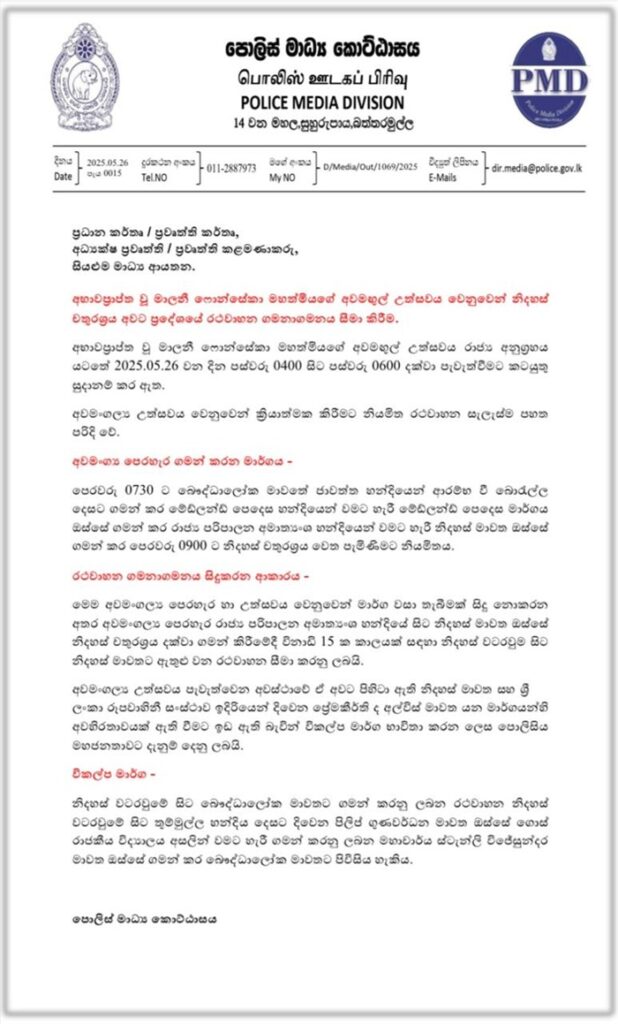
May 26, Colombo (LNW): Motorists in Colombo have been advised to expect temporary traffic disruptions today as the final farewell to legendary actress Malini Fonseka takes place at Independence Square.
The funeral, scheduled with full state honours, will be held from 4.00 pm to 6.00 pm and is expected to draw large crowds, including prominent figures from the arts, politics, and public life.
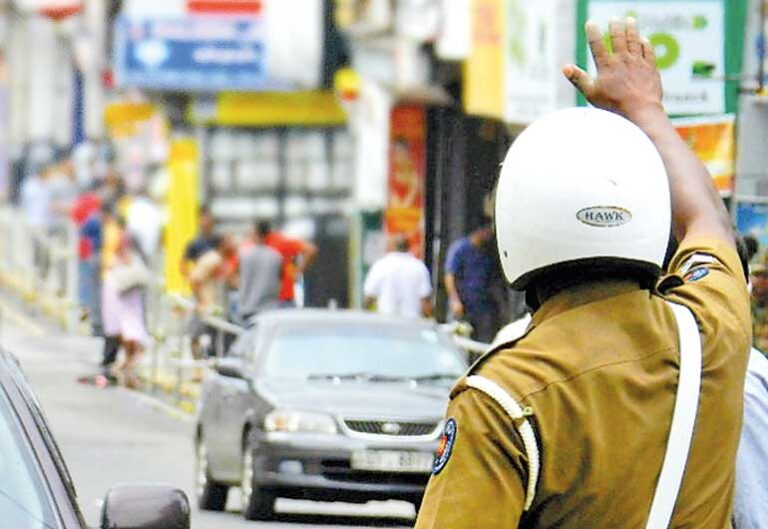
Authorities have announced that whilst roads in the vicinity will not be entirely closed, vehicle access will be intermittently limited to facilitate the ceremonial proceedings. Police have requested the public to cooperate with traffic officers on duty and urged commuters to use alternate routes where possible to avoid delays.
The late Malini Fonseka, a towering figure in Sri Lankan cinema, passed away in Colombo on Saturday at the age of 78. Her contributions to the silver screen, spanning over five decades and more than 150 films, earned her the title “Queen of Sinhala Cinema”—a title bestowed not merely for her prolific body of work, but for the indelible mark she left on the nation’s cultural landscape.
Her body, which lay in state at the National Film Corporation premises on Sunday for public homage, is set to be transported to Independence Square this morning ahead of the funeral. There, under the fading evening light, the nation will bid farewell to an artist whose work touched generations and brought the stories of Sri Lankan society to life.
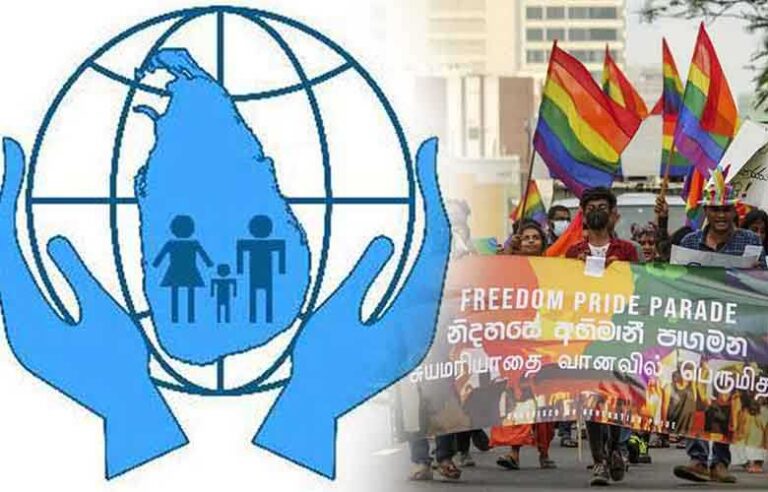
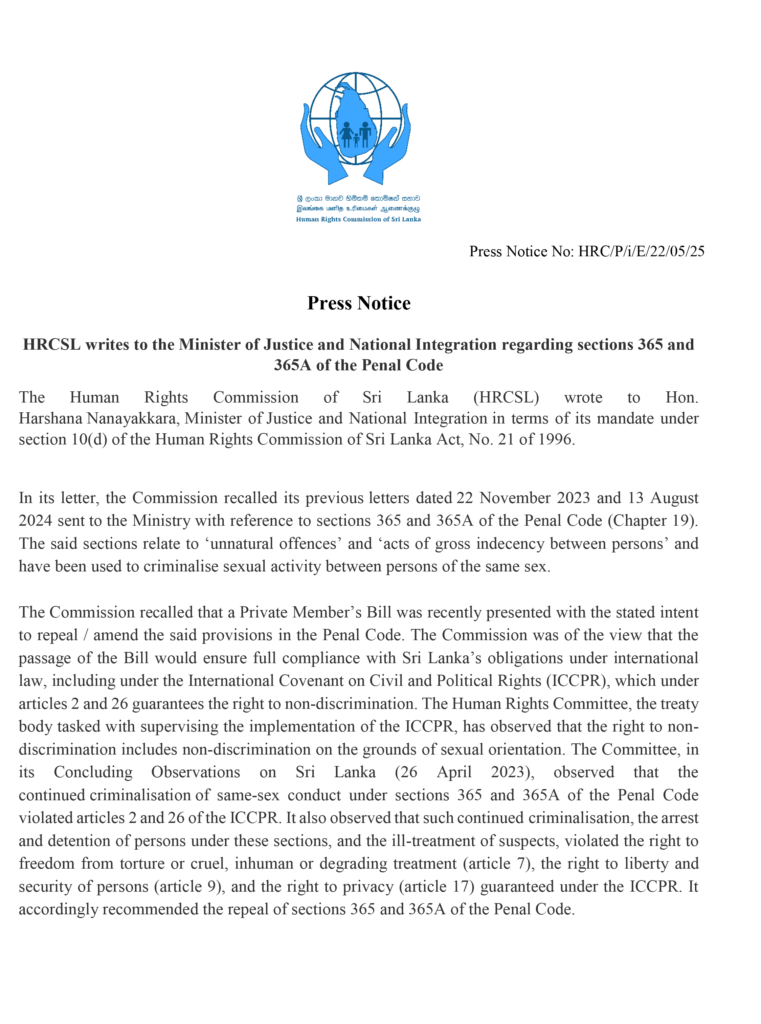
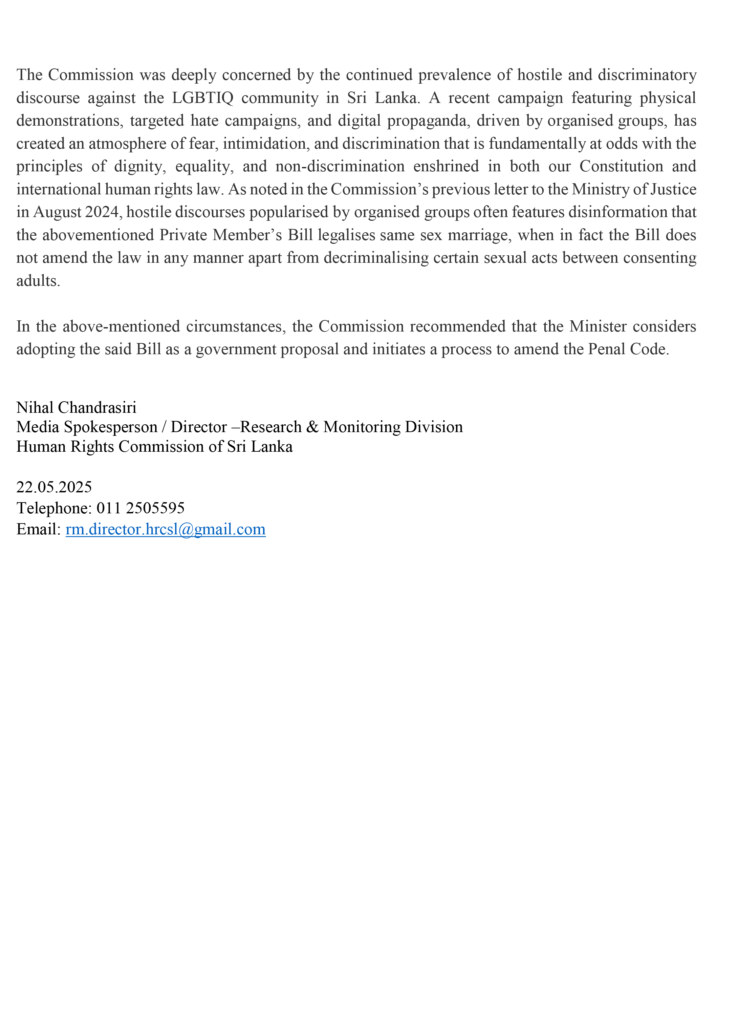
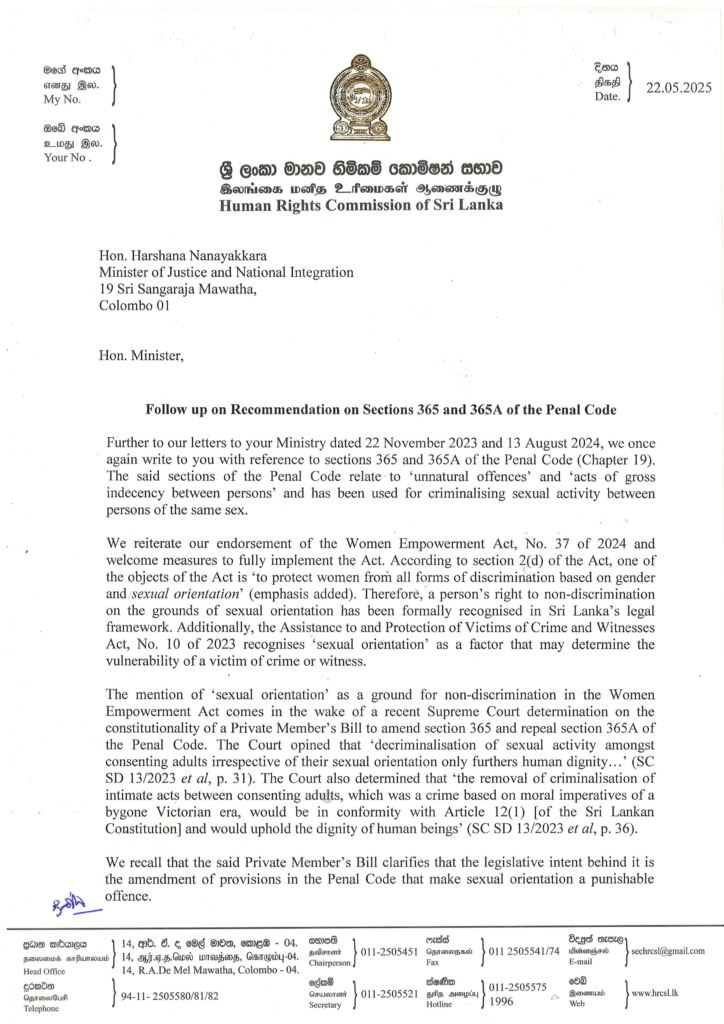
May 26, Colombo (LNW): In a significant move for LGBTQIA+ rights in Sri Lanka, the Human Rights Commission of Sri Lanka (HRCSL) has issued a renewed and strongly-worded appeal to the Ministry of Justice, urging the government to finally repeal sections 365 and 365A of the Penal Code—outdated provisions that criminalise consensual same-sex relationships.
In a formal letter dated 22 May 2025, addressed to Justice and Nation Integration Minister Harshana Nanayakkara, the HRCSL reiterated its longstanding recommendation to eliminate these discriminatory legal relics. Sections 365 and 365A, dating back to colonial times, classify same-sex relations as “unnatural offences” and “acts of gross indecency,” forming the legal backbone for the ongoing persecution and marginalisation of the LGBTQIA+ community in Sri Lanka.
The Commission’s letter follows earlier communications in November 2023 and August 2024, as well as a landmark Supreme Court determination in 2023 that affirmed the constitutionality of a Private Member’s Bill aimed at decriminalising consensual same-sex activity. The Court stated unequivocally that the “removal of criminalisation of intimate acts between consenting adults… would uphold the dignity of human beings” and align with Article 12(1) of the Constitution, which guarantees equality before the law.
Moreover, the HRCSL welcomed the enactment of the Women Empowerment Act, No. 37 of 2024, which explicitly recognises non-discrimination on the grounds of sexual orientation—a significant legislative first for Sri Lanka. Similarly, the Assistance to and Protection of Victims of Crime and Witnesses Act, No. 10 of 2023, considers sexual orientation a potential factor of vulnerability, further reinforcing the legitimacy of LGBTQIA+ protection within the country’s legal framework.
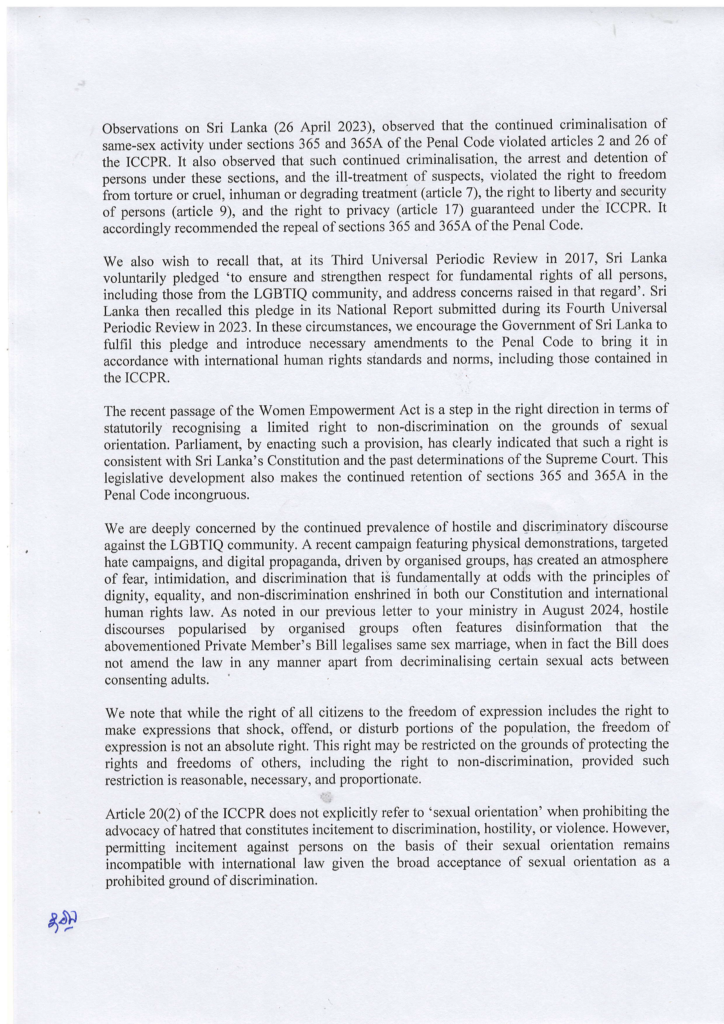
Despite these progressive legal strides, the HRCSL expressed grave concern over the increasing hostility targeting the LGBTQIA+ community. According to the Commission, recent campaigns featuring physical demonstrations, hate speech, and digital misinformation—falsely claiming that decriminalisation equates to the legalisation of same-sex marriage—have created a climate of fear and intimidation.
These actions, often driven by coordinated and organised groups, contradict Sri Lanka’s constitutional commitments and its international obligations under the International Covenant on Civil and Political Rights (ICCPR).
The ICCPR’s supervising body has already condemned the criminalisation of same-sex relationships in Sri Lanka as a violation of multiple rights, including protection from torture, the right to privacy, and freedom from discrimination. During Sri Lanka’s Third Universal Periodic Review in 2017 and again in 2023, the government pledged to strengthen protections for LGBTQIA+ individuals—a commitment the HRCSL now insists must be honoured through concrete legal reform.
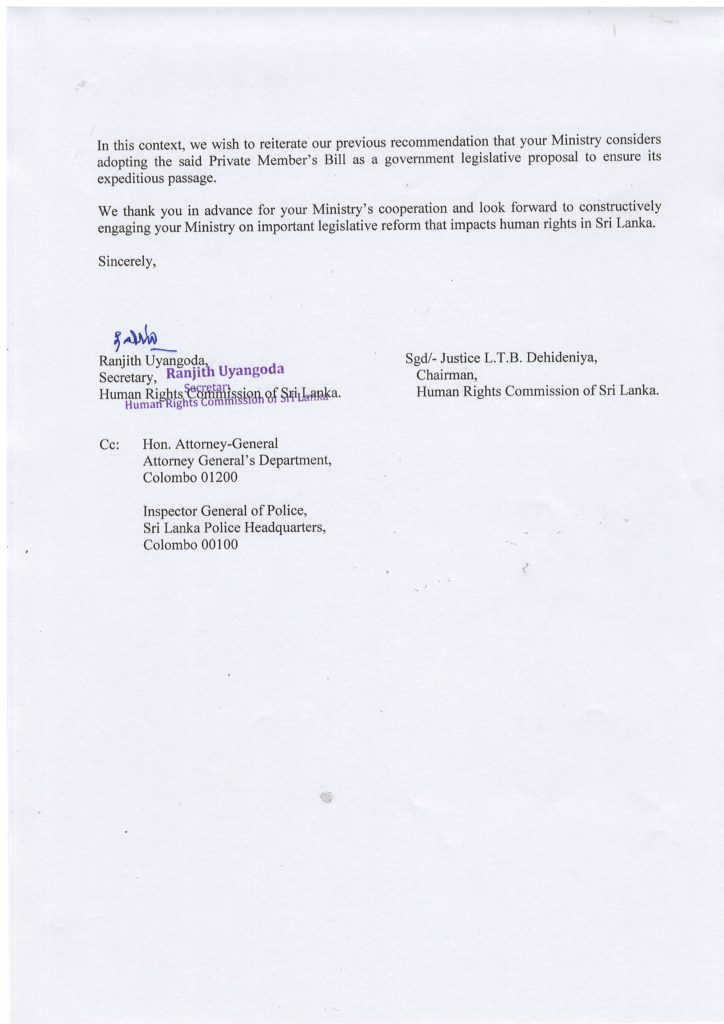
It urges the Ministry of Justice to adopt the Private Member’s Bill as a government-sponsored legislative initiative, expediting its passage through Parliament. Doing so, the HRCSL argues, would not only fulfil Sri Lanka’s international obligations but also send a powerful message of inclusion and respect for diversity.
In the face of mounting challenges, the HRCSL’s emphasised that equality cannot be conditional, and dignity is not negotiable. Decriminalising consensual same-sex relationships is not about extending special rights—it is about affirming basic human rights for all Sri Lankans.
May 26, Colombo (LNW): Showers or thundershowers will occur at times in Western, Sabaragamuwa and North-western provinces and in Nuwara-Eliya, Kandy, Galle and Matara districts, the Department of Meteorology said in its daily weather forecast today (26).
Fairly heavy falls above 75 mm are likely at some places.
A few showers may occur elsewhere.
Strong winds of about (40-50) kmph can be expected at times over Western slopes of the central hills and in Northern, North-central, Southern and North-western provinces and in Trincomalee and Monaragala districts.
Marine Weather:
Condition of Rain: Showers or thundershowers will occur at several places in the sea areas off the coast extending from Puttalam to Hambantota via Colombo and Galle. Showers or thundershowers may occur at a few places over the other sea areas around the island.
Winds: Winds will be south-westerly in the sea areas around the island. Wind speed will be (40-50) kmph and wind speed may increase up to (60-70) kmph at times in the sea areas off the coast extending from Chilaw to Kankasanthurai via Puttalam and Mannar and from Matara to Pottuvil via Hambanthota.
Wind speed will be (30-40) kmph and wind speed may increase up to (50-55) kmph at times in the sea areas off the coast extending from Chilaw to Matara via Colombo and from Kankasanthurai to Trincomalee via Mullaittivu.
State of Sea: The sea areas off the coast extending from Chilaw to Kankasanthurai via Puttalam and Mannar and from Matara to Pottuvil via Hambanthota will be very rough at times and Naval and fishing communities are advised not to venture into these sea areas, until further notice.
The sea areas off the coast extending from Chilaw to Matara via Colombo and from Kankasanthurai to Trincomalee via Mullaittivu will be rough at times.
The wave height may increase (about 2.0 – 3.0 m) in the sea areas off the coast extending from Mannar to Pottuvil via Puttalam, Colombo, Galle and Hambantota (this is not for land area).
Naval and fishing communities are requested to be vigilant in this regard.
Temporarily strong gusty winds and very rough seas can be expected during thundershowers.
Today, we say goodbye to Malini Fonseka. But we are not here to be sad. We are here to celebrate a beautiful life that brought hope and courage to so many people.
Everyone knew Malini as the queen of Sinhala cinema. For many years, she acted in movies that made people laugh, cry, and happy. Families would sit together to watch her films. Her acting was so real that people felt she understood their lives.
But for us, we knew Malini differently. To us, she was the queen of hearts. She was brave, kind, and always ready to help others. Just like Indira Jayasuriya, who fought cancer with strength, Malini showed us what real courage looks like.
We knew a story.
When Indira Cancer Trust asked her to help tell people about breast cancer, she said yes right away. She didn’t just become a spokesperson; she became much more than that. She became a heroine, a teacher, and a friend.
Malini had breast cancer herself. She knew how scary it could be. She knew the fear that comes when a doctor gives you bad news. She knew about the treatments, the pain, and the worry. But she also knew something else – she knew that cancer could be beaten.
When she sat in that yellow blouse for the Indira Cancer Trust’s breast cancer awareness campaign, she wasn’t acting. She was being herself – a woman who had faced cancer and won. Her message was simple but powerful: “Don’t be afraid. Fight back. You can win this battle, too.”
Her words weren’t just words. They were the truth from someone who had lived through it. When she told people to be brave, they listened because they knew she had been brave, too. When she said cancer could be defeated, they believed her because she was living proof.
Because of Malini, many women went for check-ups. Many cancers were found early. Many lives were saved. But her gift was bigger than just the numbers. She gave people something precious – hope.
When a woman got scary news from her doctor, she could remember Malini’s face and think, “If she can do it, so can I.” When families felt lost and afraid, they could remember her message of courage. When doctors and nurses worked hard to help patients, they could think of Malini and know their work mattered.
Malini understood that helping people was more important than being famous. She knew that her most important job wasn’t acting in movies. Her most important job was helping people fight cancer and win.
Even though she was sick herself, she chose to help others. She didn’t complain. She didn’t hide. Instead, she stood up and said, “Look at me. I had cancer, and I’m still here. You can be here too.”
She knew that being truly great meant helping other people. Her best performances weren’t in movies – they were in real life, in hospital rooms where she comforted sick people, in meetings where she spoke about cancer, and in quiet moments when she gave hope to people who had lost it.
Malini lived her life completely. She gave everything she had to help others. She showed us that when someone lives like this, death cannot take away what they built. Her love, courage, and kindness live on in everyone she helped.
Her story continues every time someone finds courage because of her example, every time a life is saved through early detection, and every time a family keeps hope alive during hard times.
Even in the end, Malini faced death the same way she faced everything else – with grace, strength, and dignity. She never stopped being the brave woman who taught others to be brave, too.
Today, we don’t say goodbye to Malini. We say thank you. Thank you for your movies, which brought joy to so many families. Thank you for your courage, which saved so many lives. Thank you for your big heart, which made our world better.
Thank you for showing us that real queens aren’t born—they become queens by serving others, being kind, and never giving up on helping people.
The queen of cinema has left us, but the queen of hearts will always be with us. She lives on in every person she helped save, every moment of courage she inspired, and every act of love she taught us to give.
Her message will never die: Be brave, don’t give up, help each other, and love wins.
Thank you, dear Malini. You did good work. You lived a beautiful life. Now rest in peace, knowing that your love continues through all of us.
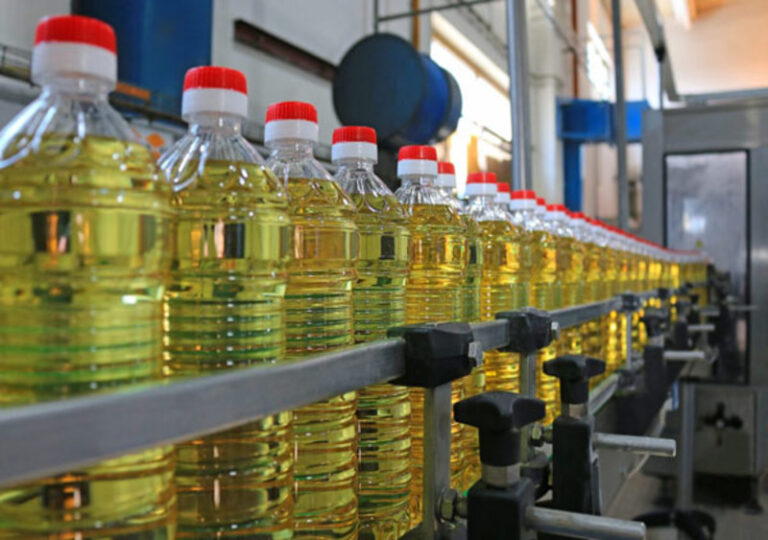
May 25, Colombo (LNW): Sri Lanka is grappling with a deepening crisis in the coconut and palm oil industry, triggered by a severe shortage of coconuts and soaring global palm oil prices sky rocketing edible oil prices.
A complete ban on oil palm cultivation as a substitute crop, along with a restriction on oil palm imports, is threatening the industry, potentially leading to a halt in domestic production within the next 3-4 years. The government’s position is still uncertain, with no clear indication of when the ban may be lifted.
Without altering current import duties, the government could allow the import of alternative products such as palm oil, palm olein, and similar substitutes while granting farmers’ limited permission to grow oil palm on unused or barren land, several leading palm oil industrialists said.
It also has to only approve new palm oil plantations for companies willing to export their products as a solution to tackle this problem he said adding that it is essential to support the rehabilitation of at least 5 out of the 10 closed factories to resume export-oriented production.
Sena Suriyapperuma economic and financial analyst and industry expert suggested to promote palm cultivation partnerships between refining companies and smallholder farmers, increasing rural income.
As the nation struggles to meet domestic demand, essential foreign exchange continues to drain from the economy, he pointed out.
The annual consumption of coconut oil in Sri Lanka is high, at 240,000 metric tons while, only 40,000 metric tons are locally produced.
In the present, reduced duties on coconut oil imports are costing Sri Lanka valuable foreign exchange.
For instance, in December 2024, the global CIF (Cost, Insurance, and Freight) price of a metric ton of palm oil stood at US$ 1,220. As of now, that price has nearly doubled to $2,680 per ton.
Even with basic calculations, it becomes clear that Sri Lanka imports approximately 120,000 metric tons of palm oil annually.
This results in a significant outflow of foreign exchange, with the country losing around $1,530 per ton. That adds up to $ 153 million leaving the economy each year. The million dollar question is whether the country can continue to bear such a loss, Mr Suriyapperuma asked.
Oil palm’s productivity is nearly four times that of coconut oil, and increasing coconut oil production would require more time and land, making oil palm a more efficient solution for both local supply and foreign exchange earnings, he revealed.
President of Palm Oil Industry Association of Sri Lanka (POIASL) Dr. Rohan Fernando has renewed its clarion call for the Government to lift the ban on oil palm cultivation, insisting on its significant economic, environmental and strategic benefits).
The present regime is yet to take a decision on lifting the ban, despite the scientific evidence that oil palm is the most efficient vegetable edible oil and that more than 40 percent of the world demand is met by this golden crop, he pointed out.
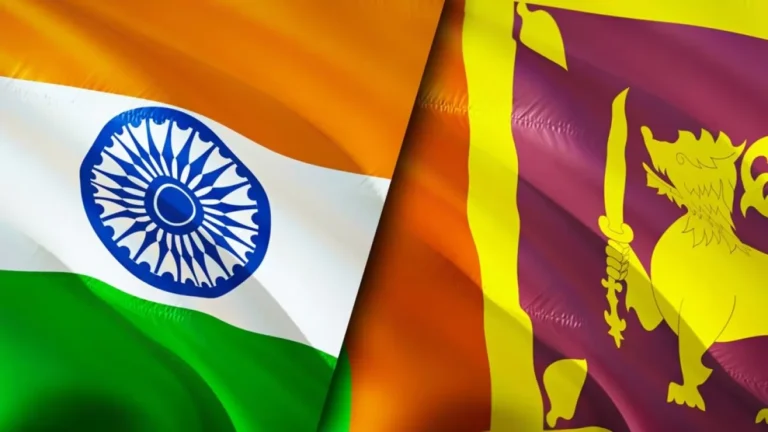
May 25, Colombo (LNW): Indian state-owned companies are gearing up to enter Sri Lanka’s critical mineral sector following the introduction of a new national policy aimed at encouraging foreign investment and joint ventures.
This policy shift, combined with duty-free benefits under the Indo-Sri Lanka Free Trade Agreement (ISLFTA), has opened doors for Indian firms to access Sri Lanka’s rich mineral deposits using imported machinery without customs duties.
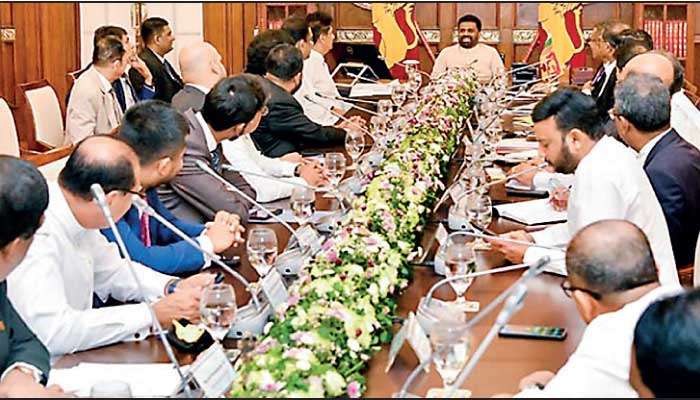
A delegation led by India’s Ministry of Mines, which included top public sector mining firms, recently visited Sri Lanka. They toured key mining locations and met senior Sri Lankan officials, including Industries Minister Sunil Handunnetti.
Discussions were also held with heads of major state-owned enterprises such as Kahatagaha Graphite Lanka Ltd., Lanka Mineral Sands Ltd., and the Geological Survey and Mines Bureau (GSMB), focusing on potential collaborations, advanced mining technologies, and joint value addition initiatives.
This visit followed an earlier meeting in New Delhi between India’s Minister of State for Coal & Mines, Satish Chandra Dubey, and Minister Handunnetti in February 2025. The engagements underscore India’s long-standing interest in Sri Lanka’s mineral-rich regions, particularly its coastal and northern areas.
According to the Board of Investment (BOI), Sri Lanka has approximately 7.5 million metric tons of Ilmenite, Rutile, and Zircon in Pulmudai and Puttalam, along with 45,000 MT of graphite and 60 million MT of apatite. The country also holds unique deposits of high-purity crystalline vein graphite, crucial for lithium-ion battery production, with reserves estimated at 1.3 million tonnes.
In 2023, Sri Lanka exported around 2,500 tonnes of graphite, earning $6 million. However, overall mineral exports dropped to $25 million in 2024—less than half of 2022 figures—highlighting the sector’s underperformance.
The government aims to revitalize it by easing restrictions: mining companies are now permitted to export up to 30% of raw minerals or operate for 24 months before setting up local value addition facilities.
The previous administration led by former President Ranil Wickremesinghe attempted reforms, including policy changes to attract foreign direct investment and address corruption. These included prioritizing landowner rights to mineral exploration and easing value addition regulations.
Despite these efforts, concerns persist. Environmentalists warn that the fast-tracked foreign mining push could lead to ecological harm. Nonetheless, interest remains strong, especially from Indian firms like Ola Electric, Hindalco Industries, and Gujarat Mineral Development Corporation, which are exploring graphite mining opportunities.
With Sri Lanka exporting to key markets like the U.S., U.K., China, India, and Pakistan, the government is now pushing to leverage its mineral wealth to stimulate economic growth and maximize the creation of value-added products. As regulatory frameworks evolve, the country is positioning itself as a regional hub for critical mineral extraction and processing.
May 25, Colombo (LNW): The release of funds to Sri Lanka’s local government bodies, while constitutionally envisioned, remains subject to the discretionary powers of the central government—raising questions about the legal status of such financial flows and whether the Finance Ministry can lawfully withhold them.
In essence, the Sri Lankan government provides financial resources to local bodies through a central ministry, with capital expenditure being a key component of this funding, and various sources contributing to these allocations
Under Sri Lanka’s system of devolution, the 13th Amendment to the Constitution consecrates devolution of power to Provincial Councils and to local institutions like Municipal Councils, Urban Councils, and Pradeshiya Sabhas.
They are to a great extent reliant on central government appropriations, conveyed mainly by means of Provincial Councils, in order to carry out significant grassroots functions.
In Sri Lanka’s 2025 national budget, the Ministry of Public Administration, Home Affairs, Provincial Councils and Local Government—which oversees local government bodies—has been allocated Rs 81.24 billion.
This funding supports the operations of 341 local authorities, including 29 Municipal Councils, 36 Urban Councils, and 276 Pradeshiya Sabhas
Even though the local government authorities are to be given financial aid, there is no legal provision that necessitates the Ministry of Finance to effect such a release, a former treasury secretary said .
Rather, the Finance Commission established under Article 154R of the Constitution makes recommendations for fund allocations to provinces and local governments based on developmental needs and fiscal capacity, he said. These are advisory and not binding recommendations, he explained.
The legal ambiguity gives the Ministry of Finance significant administrative leeway to determine when and how money is released—even after budgetary allocations are endorsed by Parliament.
Technically, the Ministry cannot cancel a Parliament-approved budget line but can delay or limit disbursements, citing policy or fiscal reasons,” says a constitutional lawyer.
Historical precedents confirm this reading. In 2019, the capital expenditure recommended by the Finance Commission was just 34 percent actually transferred to local bodies, indicative of the disparity between sanctioned budgets and transfer reality
These shortcomings have continued in more recent years, mainly in economic crisis periods and during political instability.This is further amplified by the loans to the local authorities provided via Local Loans and Development Fund (LLDF), a statutory body under the Ministry of Public Administration.
May 25, Colombo (LNW): Three of its electoral organisers of the Samagi Jana Balawegaya (SJB) have relinquished their posts, signalling possible internal unease within the main opposition party, according to sources.
Galle District organiser Bandula Lal Bandarigoda has resigned from his position.
Joining him is Ashoka Sepala, who has resigned from his role as co-organiser of the Nuwara Eliya electorate—a crucial multi-ethnic constituency in the Central Province.
Additionally, former Provincial Councillor Anura Buddhika has tendered his resignation as the party’s organiser for the Horowpathana electorate in the Anuradhapura District.
May 25, Colombo (LNW): Sri Lanka is once again gearing up for high-level trade talks in Washington, D.C., after receiving an invitation from the U.S. Trade Representative’s office.
The meeting, part of a continued bilateral initiative, is aimed at deepening trade relations and exploring tariff-related cooperation. However, despite frequent interactions, Sri Lanka continues to lack the strategic discipline required to secure favorable trade outcomes.
For Sri Lanka, as calculated using 2024 data, 95.6% of US imports are subject to reciprocal tariffs, with the 90-day pause, standing currently as a 10% global tariff. In addition, 4.2% of imports from Sri Lanka are subject to the tariffs on steel, aluminium, and auto parts imposed under Section 232.
However, 0.2% of its imports are exempted from the new tariff measures. These exemptions were made by issuing Annexe-II of the US Executive Order on the reciprocal tariffs and a notice issued by the US Customs and Border Protection (CBP) on April 12.
Sri Lanka’s exports will be subjected to an additional 25 per cent of the value of the steel and aluminium content under the 2025 Section 232 tariffs.
The newly added aluminium derivative products account for USD 28.5 Mn in US imports from Sri Lanka, across 27 products. There are USD 80.78 Mn imports under 20 products from Sri Lanka, which are categorised as steel derivatives under the Section 232 Steel and Aluminium tariff proclamation by the US.
One main challenge of the new US tariff structure is the additional reporting requirements for exporters. Notably, the stipulated tariffs will be calculated for the steel or aluminium value of the products, which are exempt from reciprocal tariffs.
The upcoming talks build on earlier virtual sessions and are positioned as an opportunity to press for U.S. tariff relief. Yet this is not the first time Sri Lanka has found itself in this position—and previous efforts have largely fallen short.
Analysts point to a recurring pattern of weak preparation, late-stage strategy formulation, and unclear national objectives, all of which diminish the country’s negotiating power.
President Anura Kumara Dissanayake has taken a hands-on approach by convening a key meeting with senior officials to prepare for the Washington trip.
The delegation includes representatives from trade, finance, foreign affairs, the Attorney General’s office, and the Central Bank. Despite the involvement of top-level personnel, Sri Lanka has struggled to make a persuasive economic case to U.S. negotiators in past rounds, mainly due to inconsistent messaging and limited follow-through.
Sri Lanka’s inability to use the World Trade Organization (WTO) mechanisms effectively, and its slow implementation of trade facilitation reforms, further erodes its position.
Measures like customs simplification and bureaucratic streamlining are essential, yet have not been prioritized. Meanwhile, the broader tools of economic diplomacy—such as alliance-building and mutual economic storytelling—remain underutilized.
If Sri Lanka hopes to gain real benefits from this meeting, it must show up with more than good intentions. It needs a coherent strategy, strong data, and skilled negotiators who can argue the case for tariff concessions and trade facilitation with precision and confidence. Without that, these talks may end like so many before them—with little to show, and much to regret.
CG Hospitality—controlled by Nepalese billionaire Binod Chaudhary—is collaborating with Marriott International to expand its presence across India as it seeks to tap into the tourism boom across the country.
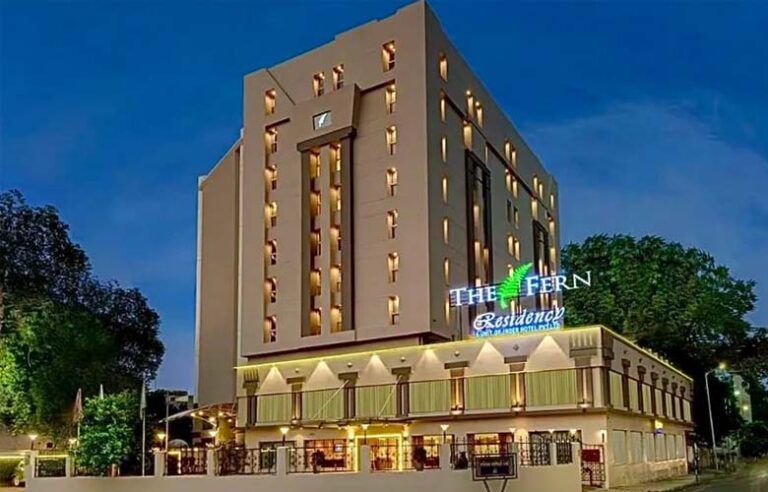
Under the deal announced late Thursday, Marriott and CG Hospitality’s Concept Hospitality, the hotel management company behind The Fern chain of hotels, have agreed to develop 380 new hotels and resorts across India over the next five years. The Fern currently operates over 120 properties in the country.
“With this partnership, we’re aiming to grow The Fern to 500 hotels by 2030, potentially making it the largest brand in its segment in India, while expanding CG Hospitality’s global footprint to 650 hotels,” said Rahul Chaudhary, managing director & CEO of CG Corp Global and CG Hospitality.
The deal, which includes a reported $15 million investment by Marriott into Concept Hospitality, also marks the global debut of Marriott’s new midscale and upscale lodging brand, Series by Marriott. The Fern’s portfolio will also complement Marriott’s existing 158 properties that it manages in India under various brands.
“This deal will significantly strengthen Marriott’s leadership in India, a key growth market,” said Anthony Capuano, president and CEO of Marriott International. Marriott expects India to become its third-largest market after the U.S. and China within the next few years, up from fifth place currently.
Chaudhary’s CG Hospitality currently manages 195 hotels, resorts, and wellness destinations across 12 countries through brands such as Taj, Taj Safari, and Vivanta. The company also recently agreed to include The Farm at San Benito in Batangas, south of Manila, as part of Marriott’s Autograph Collection. The 70-hectare rebranded luxury wellness resort aims to open in the third quarter of this year. Chaudhary also wants to replicate the wellness resort concept in India.
Besides his interest in hotels, Chaudhary also holds stakes in Nepal-based privately owned Nabil Bank and CG Foods, maker of Wai Wai instant noodles. With a net worth of $2 billion, Chaudhary is Nepal’s sole billionaire.