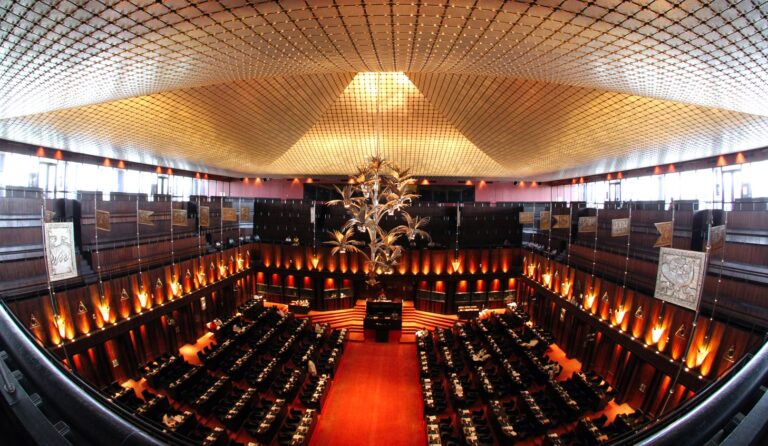
- The Resolution on the Vote on Account for the first four months of 2025 was passed in Parliament without a vote. The Resolution on the Vote on Account, which facilitates the uninterrupted continuation of government operations and debt servicing for the first quarter of 2025, were presented to Parliament on 03 December.
- Leader of the House, Minister Bimal Rathnayake, announced that the position of Chairman of the Committee on Public Accounts (COPA) will be granted to the opposition. He made this statement in response to a query in Parliament regarding the Parliamentary Affairs Committee or the Party Leaders’ meeting.
- The Supreme Court has issued an interim injunction order preventing the implementation of a Gazette notification issued by the previous government to increase the annual fee for liquor licenses. The three-judge bench, comprising Justices A.H.M.D. Nawaz, Kumuduni Wickramasinghe, and Priyantha Fernando, issued this order while granting leave to proceed with the fundamental rights petition filed by the Sri Lanka Liquor Licensees’ Association.
- The Ceylon Electricity Board (CEB) has submitted its electricity tariff revision proposal to the Public Utilities Commission of Sri Lanka (PUCSL). In its proposal, the CEB has stated that the existing tariffs will continue further for the next six months.
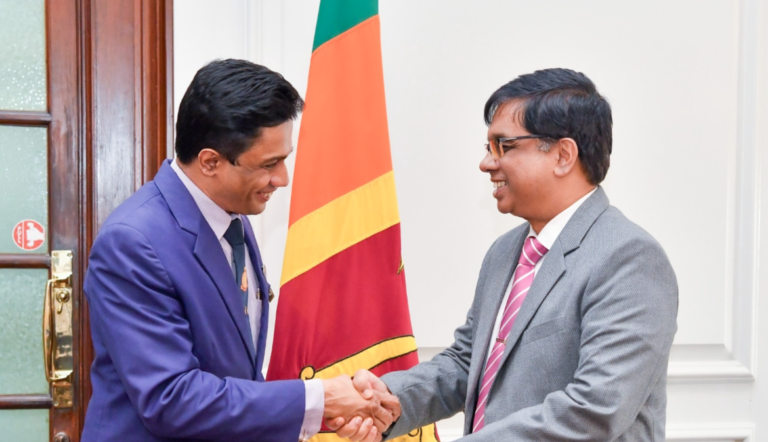
- U.S. Assistant Secretary of State for South and Central Asian Affairs, Mr. Donald Lu, paid a courtesy call on Prime Minister Dr. Harini Amarasuriya at the Parliament of Sri Lanka. The meeting focused on enhancing bilateral relations, addressing Sri Lanka’s economic challenges, and exploring opportunities for educational and governance collaboration.
- Sri Lankan authorities are bringing together all stakeholders in tourism at a conference in January to finalise a nation branding strategy to propel the industry which is enjoying a period of growth, officials said.
- A U.S. delegation led by Assistant Secretary of State for the Bureau of South and Central Asian Affairs (SCA), Donald Lu, met with Sri Lanka’s Foreign Minister, Vijitha Herath. The delegation included representatives of key agencies such as the United States Agency for International Development (USAID) and the U.S. Department of Treasury, which have played integral roles in Sri Lanka’s economic recovery.
- Former State Minister Lohan Ratwatte, who was released on bail yesterday, has been arrested at Kollupitiya following a traffic accident. Police said the former state minister was arrested due to driving under the influence of alcohol. A Land Rover Defender driven by the former parliamentarian had collided with a car in the Kollupitiya area while he was driving under the influence of alcohol, police said.
- Sri Lanka’s first-ever vision-impaired Member of Parliament, Sugath Wasantha de Silva addressed the Parliament today, marking a historical moment in Sri Lanka’s Parliament. MP Sugath Wasantha de Silva was appointed as a Member of Parliament through the National List of the National Peoples’ Power (NPP) led by President Anura Kumara Dissanayake.
- The Asian Cricket Council (ACC) today announced that Mr. Shammi Silva, President of Sri Lanka Cricket, has officially assumed the Presidency of the ACC.
Sri Lanka Original Narrative Summary: 07/12
Supreme Court Halts Gazette Notification on Excise License Fee Hike
December 07, Colombo (LNW): The Supreme Court yesterday issued an interim order suspending the operation of Gazette Notification No. 1/2024, which significantly increased annual excise license fees. The notification, issued by former President Ranil Wickremesinghe in his capacity as Finance Minister, had raised fees for distillery licenses from Rs. 1 million to Rs. 25 million and for Palmyra arrack licenses from Rs. 250,000 to Rs. 5 million.
The three-judge bench comprising Justices H. M. D. Nawaz, Kumudini Wickramasinghe, and Priyantha Fernando granted leave to proceed with a Fundamental Rights petition filed by the Sri Lanka Liquor Licensees Association. The association argued that the steep fee hike was unreasonable, caused severe financial hardship, and violated their constitutional rights.
The petitioners requested the Court to reinstate the levies outlined in a 2017 gazette notification, claiming the recent increases were unjust. The Finance Ministry Secretary and other officials were named as respondents in the case.
This interim order ensures that the excise license fees under Gazette No. 1/2024 will not be enforced until the case is resolved.
MPs Urge Government to Address Essential Goods Supply and Budget Allocations
December 07, Colombo (LNW): Badulla District NDF MP Chamara Sampath Dassanayake voiced concerns in Parliament yesterday over the challenges faced by the public in accessing essential goods through Lanka Sathosa. Highlighting the plight of private-sector employees and laborers, Dassanayake urged the Government to ensure essential items are made available at reasonable prices without shortages. “People cannot stand all day long at Lanka Sathosa to buy five kilos of rice and coconuts,” he stated.
SJB MP Kabir Hashim raised questions about budget allocations for the Presidency, asserting that the expenditure head assigned to the current President mirrors that of the former. Hashim criticized government officials for providing misleading information, stating, “It is the officials who are misleading you. We were also misled by these officials in the past.”
He further criticized ruling party members for not fulfilling earlier promises, including the removal of the Central Bank Governor, adding, “You can have professor and doctor titles. We are not jealous of them. But there are things to learn from us too.”
Hashim’s remarks reflected broader concerns about governance and financial transparency, drawing attention to the consistency in budgetary allocations despite political transitions.
Disabled community to get Rs. 10,000 allowance from Budget 2025 – MP Sugath Wasantha
December 07, Colombo (LNW): National People’s Power (NPP) MP Sugath Wasantha de Silva, delivering his maiden speech in Parliament yesterday, announced an increase in the allowance for the disabled community from Rs. 7,500 to Rs. 10,000 in the next budget. De Silva’s speech marked a historic moment as he became the first visually impaired MP in Sri Lanka’s 76-year parliamentary history.
The MP highlighted the significance of representation for persons with disabilities, emphasizing the importance of inclusivity and diversity in decision-making. “A person with a disability is a messenger who brings beauty to this world. Diversity arises from inclusivity,” he stated.
Expressing gratitude, De Silva said, “This is my maiden speech, and it is also a historic moment. For the first time in the history of the Sri Lankan Parliament, a person with a disability has taken a seat here. This seat is not random or divinely given but the result of a determined effort by a group advocating for this representation. I thank that group on behalf of the 1.7 million-strong disabled community in Sri Lanka.”
De Silva further remarked on the value of diversity, underscoring that disability is a lived reality rather than a choice. “My presence here as a visually impaired person adds to the diversity of this assembly. The diversity of human society is enriched by our differences. Disability is not something we have chosen; it is a reality we live with,” he added.
The announcement of the allowance increase was warmly received, marking a step towards greater inclusivity and support for the disabled community in Sri Lanka.
Cabinet Approval to Be Sought for VAT Exemption on Lanka Sugar’s Brown Sugar
December 07, Colombo (LNW): Cabinet approval will soon be sought to remove the Value-Added Tax (VAT) on brown sugar produced by Lanka Sugar, a state-owned enterprise. The move aims to address the growing stockpile of unsold brown sugar at the Pelwatte and Sevenagala plants, according to Deputy Minister R. M. Jayawardhana, who raised the issue in Parliament.
Industries Minister Sunil Handunnetti highlighted that Lanka Sugar’s brown sugar faces an 18% VAT, alongside a 2.5% Social Security Levy, whereas imported white sugar is exempt from VAT. This discrepancy results in higher production costs for brown sugar, pricing it at approximately Rs.300 per kilogram at the factory, compared to Rs.220 for imported white sugar.
“The VAT on brown sugar must be removed urgently to clear the stockpile and ensure the sustainability of factory operations. Without this concession, the factories face significant operational challenges,” Minister Handunnetti stated.
Lanka Sugar was established in 2011 following the expropriation of Pelwatte Sugar and other firms. The factories, previously under private ownership, were brought under state control during the Rajapaksa administration, with substantial taxpayer funding used to sustain operations.
Deputy Minister Jayawardhana further noted that the Pelwatte Sugar facility currently holds 1.5 million liters of ethanol, adding another layer of operational and logistical challenges for the enterprise.
Under Sri Lanka’s Special Commodity Levy Act, essential food items like white sugar are subject to a simplified single tax structure. A similar approach for brown sugar is expected to provide the necessary relief to reduce production costs and boost the competitiveness of Lanka Sugar in the domestic market.
The proposal to remove VAT is seen as a critical step to revive the struggling state enterprise and ensure its continued contribution to Sri Lanka’s economy.
Easterly Wave to Enhance Showery Conditions Across Sri Lanka
December 07, Colombo (LNW): An easterly wave type disturbance will be affecting the weather conditions in the island in next few days. Under its influence, showery conditions are expected to enhance in the Northern and Eastern provinces from 10th December. The Northeast monsoon condition also expected to establishing gradually over the island along with above condition.
Several spells of showers will occur in Northern and Eastern provinces.
Showers or thundershowers may occur at several places in Western, Sabaragamuwa and Southern provinces and in Nuwara-Eliya and Kandy districts during the evening or night.
Mainly fair weather will prevail elsewhere.
Misty conditions can be expected in most places of the island during the morning.
The general public is kindly requested to take adequate precautions minimize damages caused by temporary localized strong winds and lightning during thundershowers.
27 Sri Lankans Return Home from Lebanon Amid Middle East Crisis
Twenty-seven Sri Lankans stranded in Lebanon due to the ongoing Lebanon-Israel conflict arrived safely at Katunayake Airport on Wednesday (4) night. Among them were five children, three women, and 19 men.
The repatriation was facilitated by the International Organization for Migration (IOM), in coordination with the Sri Lankan Embassy in Lebanon and the Ministry of Foreign Affairs.
Efforts to bring Sri Lankans back home from Lebanon have been ongoing, with flights scheduled on November 6, November 12, November 28, and December 1. So far, a total of 53 Sri Lankans have returned through these arrangements.
The latest group arrived at 11:30 p.m. on Emirates Airlines flight EK-648 from Dubai, marking another step in the government’s efforts to ensure the safety and well-being of its citizens abroad during the crisis.
US Court considers a 45-day stay for Hamilton Reserve Bank vs SL Govt. case
In a pivotal moment for Sri Lanka’s ongoing sovereign debt restructuring, the U.S. District Court for the Southern District of New York is considering a 45-day stay request filed by the Democratic Socialist Republic of Sri Lanka.
The stay, sought by the Government, is critical to finalizing a complex debt exchange necessary to stabilize the nation’s economy and meet the requirements of an International Monetary Fund (IMF)-supported recovery program.
The dispute revolves around Hamilton Reserve Bank Ltd.’s (HRB) claim for $250 million in Sri Lankan International Sovereign Bonds (ISBs) that matured in 2022.
Sri Lanka defaulted on these bonds amid a severe economic and humanitarian crisis. While HRB has pursued legal action, Sri Lanka argues that an additional stay would facilitate the debt restructuring process and prevent disruption to its recovery efforts.
Judge Denise L. Cote has ordered HRB to file its opposition by 11 December 2024, with Sri Lanka’s reply due by 16 December 2024.
Sri Lanka’s debt restructuring is at a critical juncture. The country has achieved key milestones, including agreements with bilateral creditors in mid-2024 and private bondholder groups later in the year.
These agreements addressed contentious issues such as aligning creditor terms with IMF program requirements and ensuring equitable treatment for all stakeholders. Most recently, on 25 November 2024, Sri Lanka initiated a debt exchange program that allows bondholders to swap their existing securities for restructured bonds.
This exchange has garnered substantial support from major creditors and international financial institutions, reinforcing its potential to stabilize the economy.
However, HRB’s refusal to participate in restructuring negotiations poses a significant challenge. The bank has opted to pursue litigation, a move critics argue undermines collaborative efforts and prioritizes individual claims over collective recovery.
HRB has also been accused of threatening to obstruct IMF funding, which could jeopardize Sri Lanka’s fragile recovery framework.
If the Court denies the stay and rules in HRB’s favor, it could prompt other creditors to file lawsuits, leading to legal chaos and derailing the restructuring process.
Sri Lanka’s legal team emphasizes that granting the stay aligns with international principles and U.S. policy, which traditionally support sovereign nations’ good-faith negotiations in debt disputes.
The Government contends that delaying HRB’s claim would not harm the bank, as accrued interest would compensate any postponement. Moreover, a stay would uphold the comparability of treatment principle, ensuring all creditors are treated equitably under the IMF-supported program.
While the Government’s restructuring efforts have earned support internationally, domestically, President Anura Kumara Dissanayake’s administration faces criticism. Allegations of corruption and inefficiency in State institutions have fueled doubts about the Government’s ability to deliver on its promises.
Sri Lanka’s Auto Assembly Industry Eyes US$2 billion Exports amid Challenges”
Sri Lanka’s local automobile assembly industry is set to expand significantly, with projections to increase exports of vehicles, two-wheelers, and components from the current $800 million to $2 billion within five years.
This growth is expected to create 45,000 direct jobs, according to a senior member of the Local Assemblers’ Association.
Drawing inspiration from nations like Morocco, Thailand, and South Africa, the industry leverages strategic advantages such as location, skilled labor, and government incentives.
Sri Lanka’s Standard Operating Procedure (SOP) under the Ministry of Industries oversees over 17 assembly plants producing motorcars, SUVs, motorcycles, electric three-wheelers, and heavy trucks.
These plants are supported by local manufacturers producing components like tyres, batteries, exhausts, and wiring systems.
The temporary ban on vehicle imports catalyzed the industry’s growth, creating over 10,000 indirect jobs and hiring over 5,000 technically skilled workers, including students and trainees.
However, stakeholders warn that this progress is at risk due to potential unregulated imports of completely built units (CBUs), which could undermine local assemblies and their ecosystems.
Currently, over 20 global automotive brands, including Hyundai, Mahindra & Mahindra, TATA, and Hero, have partnered with local assemblers, contributing to a thriving below-250cc motorcycle market and bolstering Sri Lanka’s industrial reputation.
The component manufacturing sector, which emerged from scratch, now meets international standards and attracts foreign investment, showcasing Sri Lanka’s growing technical capabilities.
The industry emphasizes its economic contributions, from boosting GDP and exports to creating jobs and fostering technological growth.
Assemblers urge the government to ensure a fair and competitive tax policy between locally assembled units and CBU imports when the temporary suspension is lifted, safeguarding the sector’s progress and future potential.
Additionally, this industry has indirectly created more than 10,000 jobs over the past five years, establishing a complete ecosystem that risks being threatened if unregulated imports are allowed. They risk losing all the advancements made over this period.
Although the SOP is a government policy to promote local industry, the new decision to open up completely built unit (CBU) imports will discourage more than 20 local assemblies of international brands operating in Sri Lanka.
Another crucial aspect is the component manufacturing sector, which has grown from nothing to one capable of developing components, scaling down manufacturing processes, and meeting international standards.
“This growth has enabled major brands to set up operations in Sri Lanka, promoting the country’s technical capability on the world stage.”
This has led to significant economic benefits, including job creation, GDP growth, and increased exports. Moreover, a thriving local assembly industry not only contributes to GDP and job creation but also enhances the country’s industrial image, attracts further foreign investments, and fosters technological and economic growth.
Debt Restructuring Nears Completion Amid Interim Budget Debate
Labour Minister and Economic Affairs Deputy Minister Prof. Anil Jayantha Fernando announced in Parliament that the debt restructuring process is nearing its final stage, with efforts underway to conclude it by December 31.
The Minister made this statement while opening the debate on the motion related to the interim Vote on Account (VoA)yesterday (5). The VoA seeks Parliament’s approval for the Government to spend Rs. 1,403 billion during the first four months of 2025.
Prof. Fernando emphasized the urgent need for debt restructuring, noting that delays could result in an additional US$ 1.7 billion in interest arrears. He highlighted the current economic challenge, describing it as an “unsustainable debt trap,” and criticized previous borrowing practices for failing to contribute effectively to the country’s production processes.
Outlining the expenditure breakdown for the VoA, he stated:
- Rs. 1,000 billion for recurrent expenses,
- Rs. 425 billion for capital expenditure, and
- Rs. 1,175 billion for foreign debt restructuring and servicing.
This amounts to an estimated total of Rs. 2,600 billion, while government revenue for the period is projected at Rs. 1,600 billion, necessitating a basic borrowing limit of Rs. 1,000 billion.
The Minister’s remarks underscore the critical importance of finalizing the debt restructuring process to ensure fiscal stability and economic recovery.