Home Blog Page 57

Fitch Flags Sri Lanka Debt Risks despite Budget Improvements

0

Fitch Ratings has sounded a cautionary note on Sri Lanka’s fiscal trajectory, highlighting that while the 2026 Budget reflects improvements in deficit management, high public debt and long-term repayment obligations remain key challenges. The ratings agency stressed that sustained revenue growth and disciplined fiscal management will be critical for the government to meet its medium-term targets and maintain macroeconomic stability.

The 2026 Budget, presented on November 7, sets the fiscal deficit at 5.1% of GDP, slightly higher than the 4.5% expected in 2025. Although this represents a modest setback, it still marks an improvement from earlier projections.

Fitch pointed out that Sri Lanka’s stronger-than-expected fiscal performance in 2025 reflected in a revised IMF deficit estimate of 5.4% versus the initial 6.7%—provides some buffer against emerging risks. The government expects the primary balance, which excludes interest payments, to remain in surplus at 2.5% of GDP, above the 2.3% target under the IMF programme, reinforcing policy credibility in Fitch’s assessment.

Revenue mobilization remains central to Fitch’s outlook. While the budget forecasts a slight decline in revenue-to-GDP ratio to 15.4% in 2026 from 15.9% in 2025, Fitch cautioned that any failure to maintain tax growth in line with GDP could erode the country’s credit profile.

 External trade taxes are expected to fall by 1.2% after a one-time surge in vehicle imports, while goods and services tax collections are projected to rise 3.5% and income tax by 8%. Fitch described these projections as “conservative,” noting that nominal GDP growth is likely to exceed 7% due to improved VAT registration thresholds and strengthened tax auditing.

Fitch also flagged structural risks in Sri Lanka’s fiscal approach. Underspending in 2025, with public investment at just 3.2% of GDP compared to the 4% target, may limit long-term growth potential. The 2026 Budget includes measures to stimulate investment, including Colombo Airport expansion, LKR 342 billion for road development, tax incentives for digital infrastructure, and public-private partnership legislation for infrastructure projects.

Despite these measures, Fitch emphasized that high public debt remains a critical challenge. Gross government debt is projected to decline only marginally, from 100.5% of GDP in 2024 to around 96% by 2027 well above the 74% median for similar ‘CCC’ rated countries.

Post-2027, debt repayment obligations are expected to rise after the IMF programme concludes, underscoring Fitch’s warning that sustained fiscal discipline, robust revenue collection, and effective debt management are essential to prevent future fiscal stress.

Asbury’s GK Takeover Signals Renewed Interest in Sri Lankan Graphite

0

AMG Critical Materials N.V. (AMG) has announced the sale of its subsidiary, Graphit Kropfmühl GmbH (GK), to Asbury Carbons Inc., a portfolio company of Mill Rock Capital, marking AMG’s complete exit from the natural graphite business. The deal, valued at $65 million, positions Asbury Carbons to expand its global graphite operations, including in Sri Lanka.

GK operates a graphite mine in Kropfmühl, Germany, and holds a majority stake in Bogala Graphite Lanka PLC, which manages one of Sri Lanka’s oldest graphite mines. The acquisition includes all GK operations and approximately 350 employees worldwide. For the 12 months ending August 2025, GK recorded $65 million in revenue, reflecting stable performance despite challenges in the natural graphite market.

Following the announcement, Bogala Graphite Lanka PLC shares surged 25%, closing at Rs. 137, driven by investor optimism about Asbury’s potential to boost Sri Lanka’s graphite production and market reach.

Commenting on the divestment, AMG CEO and Management Board Chairman Dr. Heinz Schimmelbusch said the sale underlines AMG’s focus on strategic portfolio management. “While natural graphite remains an attractive industry, GK did not achieve the scale required to compete as a major supplier to the battery anode market.

Under Asbury Carbons, GK will have better prospects for growth,” he stated. Schimmelbusch added that the proceeds would be used to strengthen AMG’s balance sheet and invest in its core growth areas, particularly critical materials essential for clean energy technologies.

This sale follows AMG’s March 2025 repurchase of the remaining 40% of GK shares from Alterna Capital Partners, finalizing full ownership before the divestment. Under the agreement, AMG can settle the purchase in cash within three years or opt for AMG shares at its discretion.

Asbury Carbons, headquartered in Asbury, New Jersey, is a global leader in carbon-based materials with over 300 employees across 10 facilities in North America and Europe. The company supplies graphite and carbon solutions to industrial clients in steel, automotive, energy, and technology sectors.

Gregg Jones, CEO and Chairman of Asbury Carbons, described the acquisition as a strategic milestone: “Bringing together Asbury and GK combines over 250 years of collective expertise. This move enhances our global supply chain resilience and allows us to deliver advanced carbon technologies to our clients.”

The transaction, pending customary regulatory approvals, is expected to close by the end of 2025. Analysts note that the sale underscores shifting dynamics in the graphite industry, as demand for battery-grade materials intensifies amid global energy transitions.

With Asbury’s entry into the Sri Lankan graphite sector through GK’s majority stake in Bogala Graphite, industry observers anticipate renewed foreign investment interest and potential expansion in Sri Lanka’s high-purity graphite exports a critical component in electric vehicle and battery manufacturing.

Sri Lanka’s Economic Backbone Faces Breaking Point

0

The micro, small and medium enterprise (MSME) sector in Sri Lankalong hailed as the backbone of the economy  is now facing acute stress, with many firms on the verge of collapse amid constrained bank lending and inadequate government relief. While MSMEs contribute over half the nation’s gross domestic product and employ millions, their plight is now emerging as a critical fault‐line.

Speaking on behalf of the Ceylon Federation of MSMEs, President Mahendra Perera warned that the 2026 Budget fails to provide meaningful support to this vital constituency. He highlighted two major concerns: the absence of viable relief for businesses saddled with non-performing loans, and the impending reduction of the VAT registration threshold from Rs. 60 million to Rs. 36 million, effective April 2026 a move he says will squeeze small retailers and shift the burden onto struggling consumers.

Despite the government introducing new credit lines for MSMEs, Perera pointed out that businesses which have already suffered multi-year losses cannot access fresh financing because they are classified as NPLs (non-performing loans). “There is no mechanism for businesses that have been hit over the past five years to obtain new loans,” he told the Daily FT. Many firms remain liquidity-constrained, unable to service existing debt, let alone grow.

Official data underline how critical MSMEs are to Sri Lanka’s economy. The sector is estimated to generate over 52% of GDP and employ around 4.5 million people.

Yet, the support structure is breaking down. A survey commissioned by the government found that during 2019–22 more than one-in-five surveyed MSMEs had closed permanently or temporarily 20.2%.

While some relief measures were introduced such as circulars from the Central Bank of Sri Lanka (CBSL) advising banks to negotiate business revival plans with affected SMEs by 31 March 2025critics say they fall far short of the scale and specificity required.

The bank-execution issue looms large. Many MSMEs report that banks continue to move toward enforcing collateral calls and recovery actions rather than restructuring loans. Such pressure comes just when government-promoted budgeted credit facilities are being rolled out, yet these schemes do not reach enterprises already trapped in NPL status. The mismatch, Perera says, means that while new financing is nominally available, the firms that most need help are excluded.

Adding to the complexity is the value-added tax change. By lowering the registration threshold to Rs. 36 million, the government risks dragging more small retailers into the VAT net and increasing end-consumer VAT burdens potentially reducing demand for MSME-supplied goods and services just as cash‐flow is already under strain.

The MSME crisis also has broader macro implications. With MSMEs accounting for such a large part of output and employment, their distress risks dragging down investment, exports and broader growth momentum. The economy grew by around 4.5% in the first quarter of 2025, but analysts warn that structural damage and enterprise distress could undermine this recovery.

In the coming days, the Federation plans to press the government and engage with banks to advance a practical mechanism that will restore viable access to capital for genuinely affected MSMEs. Without such intervention, the sector may not only shrink but also leave a lasting void in Sri Lanka’s employment and growth engine.

The signs are clear: Sri Lanka’s MSMEs are running on fumes. They require targeted relief, inclusive credit restructuring and demand‐support policies not just new loan schemes that do not reach the hardest hit. Whether policy-makers step in now will determine whether the sector survives or becomes another casualty of the crisis.

Fragile Reserves Undermine Sri Lanka’s External Stability

0

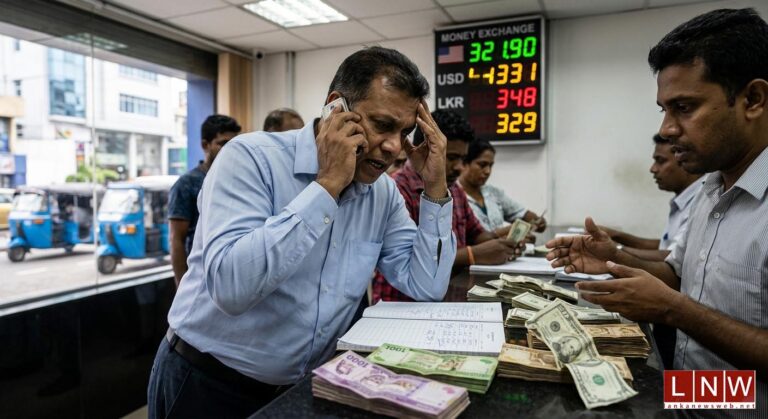
Sri Lanka’s foreign exchange reserves, though showing modest recovery, remain under pressure as rising import expenditure and continued foreign currency outflows strain the island’s external position.

According to Central Bank of Sri Lanka (CBSL) and international data, gross official reserves stood at US$ 6.3 billion by April 2025, slightly lower than US$ 6.47 billion recorded in October 2024. By September 2025, reserves edged up to US$ 6.24 billion, indicating some improvement but still far below sustainable levels.

These reserves cover only about 3.4 months of imports, leaving the country with little cushion against external shocks. Meanwhile, import pressures continue to intensify. In September 2025, import expenditure surged to US$ 2.048 billion, while exports were limited to US$ 1.139 billion, producing a trade deficit exceeding US$ 900 million.

During the first seven months of 2024, import spending grew 9.1% year-on-year, outpacing the 5.6% growth in exports a clear signal of widening foreign exchange leakage. Fuel imports, intermediate goods, and raw materials continue to dominate the import bill, while renewed private-sector credit growth further drives import demand.

CBSL data also show that December 2024 recorded the highest import bill of the year, widening the merchandise trade deficit even further. Part of the reserve buildup during late 2024 came from currency-swap arrangements and unsterilised foreign-exchange purchases, raising questions about the true level of usable reserves. Analysts estimate reserves could be overstated by around US$ 1.4 billion, due to the inclusion of a RMB 10 billion Chinese swap that does not meet full international reserve standards.

To stabilize the situation, policymakers face a dual challenge: boosting foreign-currency earnings through tourism, remittances, and services exports, while curbing non-essential imports and maintaining transparent reserve management. CBSL has emphasized the need for cautious reserve-building and clearer reporting to restore investor confidence.

Governor Nandalal Weerasinghe has set a target of US$ 7 billion in reserves by end-2025, a goal that depends on sustained export recovery and disciplined fiscal management. Failure to control import-driven outflows and narrow the structural foreign exchange gap could expose the economy to renewed currency volatility and external debt risks.

In essence, Sri Lanka’s reserve recovery remains a fragile balancing act. To convert its modest buffer into genuine resilience, the nation must strengthen export competitiveness, attract stable foreign inflows, and ensure transparency in managing its limited reserves.

Government Allocates Rs. 1 Billion to Support Potato and Big Onion Farmers

0

Trade, Commerce, Food Security and Cooperative Development Minister Wasantha Samarasinghe told Parliament yesterday that the Government has taken necessary measures to provide a fair and sustainable solution to the challenges faced by potato and big onion farmers.

Responding to a point of order raised by SJB MP Dayasiri Jayasekara, the Minister said that Rs. 1,000 million has been allocated under the 2026 Budget to implement a long-term programme for the purchase and storage of potatoes and big onions.

“The Government has already made the required interventions to ensure a fair solution to farmers’ issues,” Minister Samarasinghe said. “Although the Opposition has attempted to turn this matter into a national crisis, we have been implementing a structured programme for potatoes and big onions since August.”

He emphasized that addressing these issues requires strategic, long-term planning, particularly to stabilize market prices and ensure adequate storage facilities for local produce.

Raising the matter in Parliament, MP Jayasekara said that farmers continue to suffer due to the absence of a formal government mechanism for purchasing their harvests. He urged the Government to establish a consistent and transparent system to protect the farming community from financial losses.

Minister Samarasinghe reiterated that the Government remains committed to safeguarding farmers’ livelihoods and ensuring price stability through effective intervention and storage strategies.

Police Urge Public to Refrain from Posting Location-Based Photos During Holiday Travel

0

The Sri Lanka Police have urged the public to avoid posting photos, selfies, or status updates revealing their current locations on social media platforms during holiday trips, pilgrimages, or family excursions.

Police Media Spokesman ASP F. U. Wootler cautioned that sharing real-time travel information online can expose individuals and families to potential security risks, including theft and burglary.

“We are entering the festive season, and many families will be travelling on vacations, pilgrimages, or excursions,” ASP Wootler said, speaking at a media briefing at the Police Media Division in Battaramulla. “We have observed that some people announce or post their travel plans, or share selfies from places like Nuwara Eliya, Galle, or Kataragama. This is unwise, as it could provide useful information to criminals monitoring public posts.”

He warned that such social media activity can alert criminals to the absence of residents from their homes, making properties more vulnerable to break-ins.

ASP Wootler also advised the public to be vigilant when arranging transport for holiday trips, especially when children are involved. “The bus or vehicle, the driver, and the owner should all be verified beforehand. Ensure that the driver is responsible and that the vehicle is mechanically sound before your journey,” he said.

The Police emphasized the importance of discretion and personal security during the upcoming festive period, urging citizens to share travel photos only after returning home.

Cabinet Approves New Legislation to Safeguard Private Investments and Prevent Arbitrary Nationalisation

0

The Cabinet of Ministers has approved a proposal to introduce new laws preventing the arbitrary nationalisation of private enterprises and properties, as part of broader efforts to strengthen investor confidence and ensure long-term policy stability in Sri Lanka.

Announcing the decision at the weekly Cabinet media briefing, Cabinet Spokesman and Health and Mass Media Minister Dr. Nalinda Jayatissa said the initiative, first proposed in the 2025 Budget, includes the creation of an Investment Security Board to serve as a dedicated dispute resolution mechanism for investors.

Dr. Jayatissa explained that the upcoming Investment Protection Act will establish a comprehensive legal frameworkdesigned to prevent politically motivated or arbitrary takeovers of private businesses, assets, or properties.

“Over the years, certain government actions have led investors to lose trust in Sri Lanka,” he said. “It has therefore become necessary to introduce legal safeguards to protect investments and rebuild confidence.”

He added, “If investors fear that their assets might be taken over when governments or ministers change, they will hesitate to invest. This affects both local and foreign investors. It is essential to demonstrate that Sri Lanka is firmly committed to upholding investment security.”

The Minister also stressed that policy inconsistency has long been a deterrent to investment and that the new legislation seeks to guarantee a stable and predictable policy environment.

To advance this initiative, the Cabinet has approved the proposal submitted by President Anura Kumara Dissanayake, in his capacity as Minister of Finance, Plan Implementation, and Economic Development, to instruct the Legal Draftsman to prepare the draft Bill.

committee of officials has already been appointed to develop the initial concept paper for the proposed Act, which will guide the drafting process.

Court of Appeal Extends Interim Order Preventing Arrest of Former Army Intelligence Officer Until January 29

0

The Court of Appeal today extended until January 29, 2026, the interim injunction preventing the arrest of former Sri Lanka Army intelligence officer Colonel K. S. Maddumage without consulting the Attorney General, in connection with the investigations into the Easter Sunday terror attacks.

The order was issued after the Court reconsidered the writ petition filed by Colonel Maddumage. The matter was taken up before a bench comprising Court of Appeal President Justice Rohantha Abeysuriya and Justice Priyantha Fernando.

During the hearing, the court was informed that a personal lawyer would appear for Public Security Ministry Secretary Ravi Seneviratne, who is named as a respondent in the case.

Meanwhile, Rev. Fr. Rohan Silva, who filed the original plaint related to the Easter Sunday investigation, sought permission to intervene in the case through his legal representative.

President’s Counsel Ali Sabry, appearing for the petitioner, told the court that his client is a senior military intelligence officer currently serving at the Sri Lanka Military Academy (SLMA), Diyatalawa. He emphasized that the petition was filed solely to prevent his client’s arrest and not to obstruct ongoing investigations.

Additional Deputy Solicitor General Suharshi Herath, representing the Attorney General, informed the court that the Criminal Investigation Department (CID) has already filed complete investigation reports before the Fort Magistrate’s Court and that inquiries into the incident are still ongoing.

The Court of Appeal directed all parties to file objections by December 11 and counter-submissions by January 14, before the next hearing date.

Foreign Minister Vijitha Herath Meets Saudi Fund for Development CEO in Riyadh

0

Sri Lanka’s Minister of Foreign Affairs, Vijitha Herath, held discussions with the Chief Executive Officer of the Saudi Fund for Development (SFD)Sultan Abdulrahman Al-Marshad, on the sidelines of the TOURISE Global Summit 2025 in Riyadh.

During the meeting, Minister Herath expressed Sri Lanka’s deep appreciation for the SFD’s longstanding development partnership and its continued financial assistance during the country’s recent economic challenges.

The Minister also reaffirmed Sri Lanka’s commitment to enhancing cooperation with the SFD in key development sectors in the years ahead.

Following the meeting, Minister Herath posted on X (formerly Twitter):

“I conveyed Sri Lanka’s gratitude to the SFD’s longstanding development assistance to Sri Lanka and their continued disbursement of funds, even during the country’s recent economic downturn. I also expressed Sri Lanka’s commitment to further strengthening cooperation with SFD in the years ahead.”

Foreign Minister Vijitha Herath is currently in Riyadh to participate in the 26th Session of the UN World Tourism Organization (UNWTO) General Assembly and related events, including the TOURISE Global Summit 2025.

WEATHER FORECAST FOR 12 NOVEMBER 2025

0

Showers or thundershowers will occur at most parts of the island after 1.00 p.m.

Fairly heavy falls above 75 mm are likely at some places in Central, Sabaragamuwa, Southern and Uva provinces and in Kalutara and Ampara districts.

Showers may occur in Northern province and in Trincomalee district during the morning too.
Misty conditions can be expected at some places in Western, Sabaragamuwa, Central, Southern and Uva provinces and in Ampara district during the early hours of the morning.

The general public is kindly requested to take adequate preca