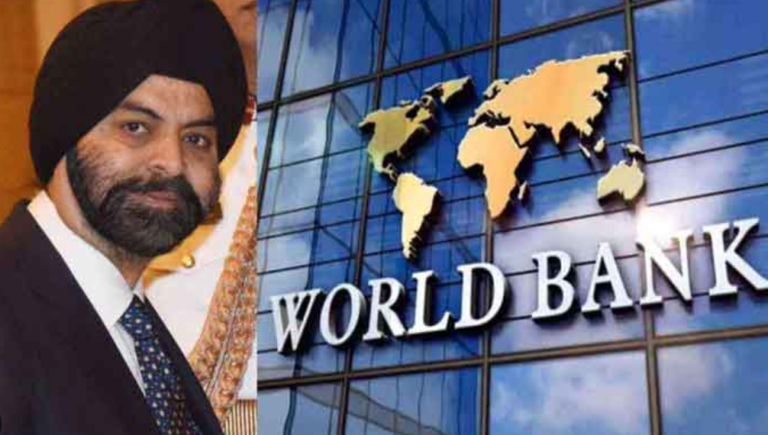
World Bank Group President Ajay Banga arrived in Sri Lanka today, marking the first presidential visit by a World Bank chief to the island nation in nearly two decades. The high-level visit follows the recent local council elections and underscores the World Bank’s commitment to supporting Sri Lanka’s path to economic recovery and sustainable development.
Banga’s arrival comes at a pivotal time for the country, as it continues to emerge from a severe economic crisis and navigates the early political landscape shaped by the newly elected local councils. His visit was initiated at the invitation of President Anura Kumara Dissanayake, who extended congratulations to Banga in a call shortly after taking office in November last year.
The visit highlights the World Bank Group’s strategic interest in strengthening its 70-year partnership with Sri Lanka. With a focus on boosting private sector engagement, creating jobs, and promoting inclusive growth, Banga is expected to reinforce the importance of continued reform and investment in key economic sectors.
During his stay, Banga will hold discussions with President Dissanayake, Prime Minister Dr. Harini Amarasuriya, and other senior government and private sector stakeholders. The talks are expected to centre on strategies to tackle poverty, attract private investment, and build a more resilient economic foundation.
The World Bank Group currently manages a $2.2 billion portfolio in Sri Lanka, encompassing projects across both the public and private sectors. Recent World Bank assessments have acknowledged the country’s progress in stabilising its economy, while emphasizing the need for sustained reforms and targeted support to vulnerable communities.
Observers see Banga’s visit as both symbolic and practical—signalling renewed confidence in Sri Lanka’s economic reform trajectory and the World Bank’s readiness to assist in implementing long-term solutions.
With the local council elections concluded, the visit also serves as an opportunity to align national development goals with grassroots governance, ensuring that economic recovery efforts translate into tangible benefits for communities across the country.
As Sri Lanka works to rebuild trust in its institutions and attract international investment, the presence of the World Bank President provides an important boost to morale and a reminder that global partners remain engaged in the island’s recovery journey.
Banga’s visit is expected to conclude with joint statements on collaborative efforts aimed at fostering inclusive growth and ensuring that the country’s hard-earned economic progress is both equitable and sustainable.
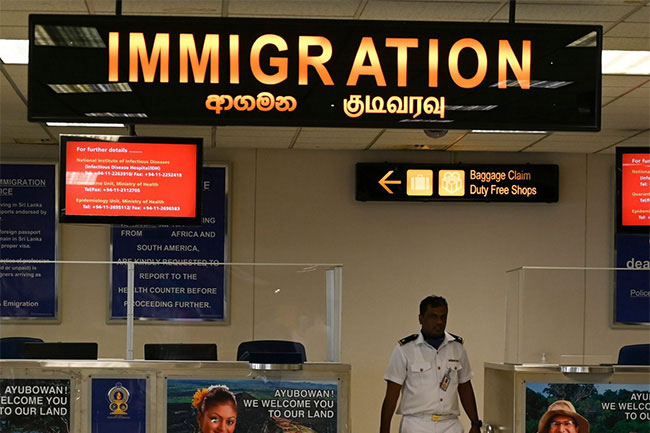
The UK government is reportedly preparing to introduce tighter visa controls targeting countries with high asylum claim rates, including Sri Lanka, amid growing concerns over migration levels. The move, which could significantly affect Sri Lankan nationals seeking better opportunities abroad due to economic and political instability at home, comes as part of the UK’s broader efforts to reduce net migration.
According to a report by The Times, Sri Lanka is among a list of countries—including Pakistan and Nigeria—under increased scrutiny by the Home Office for visa overstays and asylum claims. The upcoming Immigration White Paper is expected to outline new measures aimed at curbing applications for work and study visas from such nationalities.
Sri Lanka’s deepening economic crisis, compounded by ongoing political tensions, has prompted a surge in migration to countries like the UK, with many citizens viewing migration as the only viable path to financial stability. In some cases, migrants initially entering the UK on legal visas later apply for asylum, citing fears of persecution or economic hardship.
The Labour government, elected with a pledge to manage immigration more effectively, is under pressure to act. In its manifesto, the party promised that net migration figures would be brought under control, arguing that high migration can undermine local workforce development. “Failure to do so reduces the incentives for businesses to train locally,” the party stated.
A spokesperson for the Home Office confirmed that intelligence gathering is underway to identify and prevent visa abuse. “To tackle abuse by foreign nationals who arrive on work and study visas and go on to claim asylum, we are building intelligence on the profile of these individuals to identify them earlier and faster,” the spokesperson said.
The Home Office emphasized that the visa system is under continuous review, and trends that threaten to undermine immigration rules will be swiftly addressed. “Our upcoming Immigration White Paper will set out a comprehensive plan to restore order to our broken immigration system,” the spokesperson added.
Recent data indicates a substantial drop in visa applications, with work, study, and family visa requests falling 37% year-on-year—from nearly 1.24 million to 772,200 in the 12 months to March 2025. This decline is largely attributed to stricter rules introduced by the previous Conservative government, such as banning overseas care workers and international students from bringing dependants, and raising the skilled worker salary threshold to £38,700.
The UK’s tougher stance on immigration is likely to affect Sri Lankans disproportionately, especially those fleeing economic despair and seeking greener pastures. As the government tightens its policies, many migrants may find fewer legal avenues available, potentially increasing irregular migration or asylum claims.
With political uncertainty still looming in Sri Lanka and economic recovery slow, the motivations for migration remain strong. However, the UK’s evolving immigration strategy signals that access to such destinations may become increasingly difficult for those hoping to escape crisis through legal means.
The 2025 Sri Lankan local government elections, held on May 6, marked a significant political event, with the National People’s Power (NPP) party, led by President Anura Kumara Dissanayake, securing a substantial number of seats across various local councils. However, the elections also highlighted the complexities of coalition politics and the challenges of governance at the local level.
Election Outcomes
National People’s Power (NPP): The NPP emerged as the dominant party, winning 932 seats across 339 local councils, including municipal, urban, and pradeshiya sabhas.
Samagi Jana Balawegaya (SJB): The SJB secured 393 seats, positioning itself as a significant opposition force at the local level.
Sri Lanka Podujana Peramuna (SLPP): The SLPP experienced a decline, obtaining 189 seats, a significant drop from previous local elections.
United National Party (UNP): The UNP managed to win 100 seats, reflecting its continued presence in local governance.
Implications of a United Opposition
If opposition parties such as the SJB, SLPP, and UNP were to form a united front, their combined seat count would surpass that of the NPP in several local councils. This coalition could effectively challenge the NPP’s control in specific areas, necessitating the NPP to engage in negotiations and potentially form alliances to maintain governance.
For instance, in the 2024 Elpitiya Pradeshiya Sabha election, the NPP won 15 out of 30 seats, falling short of an outright majority. The SJB and other parties secured the remaining seats, compelling the NPP to seek coalition partners to govern effectively.
Consequences of NPP Receiving Less Than 50% of Votes
In councils where the NPP received less than 50% of the vote, it may face challenges in implementing its policies without support from other parties. The need for coalition-building becomes imperative in such scenarios to ensure stable governance and the passage of local legislation.
For example, in the Tangalle Urban Council, the NPP secured 46.18% of the votes, translating to 9 out of 19 seats. Without a clear majority, the NPP would need to collaborate with other parties to form a functioning council.
Broader Political Context
The NPP’s performance in the local elections follows its significant victory in the 2024 parliamentary elections, where it secured 159 seats, including 18 bonus seats, representing 61.56% of the total votes. This success marked a shift in Sri Lanka’s political landscape, moving away from traditional party dominance.
However, the local elections underscore the importance of coalition politics in Sri Lanka’s multiparty system. Even with substantial support, parties like the NPP must navigate alliances and partnerships to govern effectively at the local level.
Conclusion
The 2025 local government elections have reinforced the NPP’s position as a leading political force in Sri Lanka. Nevertheless, the necessity for coalitions in councils where no single party holds a majority highlights the complexities of governance in a diverse political landscape. The NPP’s ability to build effective partnerships will be crucial in translating its electoral success into tangible governance outcomes.
In a landmark move to promote environmental and social resilience, the Central Bank of Sri Lanka (CBSL) has launched the Sustainable Finance Roadmap 2.0 (2025–2029), an enhanced version of its original 2019 framework. The roadmap aims to integrate Environmental, Social, and Governance (ESG) principles more deeply into the financial system, ensuring Sri Lanka’s financial sector aligns with global sustainability goals.
Launched with technical support from the International Finance Corporation (IFC) and funding from the European Union, the roadmap is part of the Accelerating Climate Smart and Inclusive Infrastructure in South Asia (EU-ACSIIS) program. It arrives at a time when Sri Lanka is increasingly vulnerable to climate-related economic shocks and social disparities.
CBSL Governor. Nandalal Weerasinghe described the roadmap as a “critical step” towards embedding ESG into core business operations. While ESG adherence in Sri Lanka remains voluntary, other countries have begun enforcing mandatory climate disclosure regulations.
The roadmap seeks to bridge that gap by merging global best practices with insights from Sri Lankan institutions such as the Securities and Exchange Commission (SEC), Insurance Regulatory Commission (IRCSL), Colombo Stock Exchange (CSE), and industry associations.
A key element of the roadmap is the development of risk-informed decision-making and targeted financial tools. These include:Green loans for sectors like renewable energy and sustainable agriculture.Climate risk insurance to protect farmers from natural disasters and training bank staff on green finance principles to better assess environmental risks.
Weerasinghe stressed the urgency of these measures, referencing World Bank data projecting that climate change could push 32 to 132 million people into extreme poverty by 2030. He noted that financial resilience for all, especially in rural and vulnerable communities, is essential.
Another major focus is inclusive finance. The roadmap supports the second phase of the National Financial Inclusion Strategy (NFIS), which targets Micro, Small, and Medium Enterprises (MSMEs) through Inclusive Green Finance (IGF). The CBSL aims to uplift these sectors while protecting financial consumers, strengthening digital payments, and enhancing trust through transparency.
He also emphasized the importance of financial literacy, especially for women, low-income households, and people with special needs. Educating these groups is seen as key to building climate-resilient MSMEs and preventing financial exploitation.
The roadmap aligns with the recent adoption of SLFRS S1 and S2 (based on international sustainability reporting standards), now effective from January. These standards mandate the disclosure of sustainability and climate-related financial information, enhancing accountability across sectors.
Additionally, the CBSL supports Sri Lanka’s Carbon Net Zero 2050 Strategic Plan, which outlines emissions reduction strategies across energy, transport, industry, agriculture, waste, and forestry. The goal is to shift industries toward sustainable practices that combine profitability with measurable environmental and social impact.
IFC’s Country Manager Gevorg Sargsyan commended the CBSL’s leadership, noting that sustainable finance is pivotal for job creation, economic growth, and attracting investment. He reaffirmed the IFC’s continued commitment to building a resilient and inclusive financial ecosystem in Sri Lanka.
The National People’s Power (NPP) emerged victorious at the 2025 Local Government (LG) election, securing the most seats and council control nationwide. Despite a decline in vote share compared to the Presidential and Parliamentary elections, the NPP more than doubled the vote count of its main rival, the Samagi Jana Balawegaya (SJB).
The NPP won 3,921 LG seats and secured majority control in over 100 local authorities, though it polled over 150 council majorities in total. However, it faced notable setbacks in urban centres and the north and east of the country, where opposition parties maintained or regained support.
Colombo Municipal Council: No Clear Winner
Despite a strong campaign led by Prime Minister Dr. Harini Amarasuriya, the NPP failed to secure outright control of the Colombo Municipal Council (CMC). The final tally showed:
NPP: 81,814 votes (36.92%) – 48 seats
SJB: 58,375 votes – 29 seats
UNP: 26,297 votes – 13 seats
With no party securing a majority in the 117-seat council, opposition groups are expected to form coalitions to gain control of the CMC.
Regional Breakdown
NPP: Strong in rural areas, especially in the Deep South.
SJB: Over two million votes, victories in Kandy and parts of the North and East.
ITAK: Resurgence in Tamil-majority areas, winning 8 local bodies in the north and east.
SLPP: Maintained a strong showing, securing 742 seats.
UNP: Won 379 seats.
People’s Alliance (PA): Took 300 seats.
Sarvajana Balaya (SB): A new entrant, won 226 seats, with notable success in several areas.
Peaceful Polls and High Engagement
Polling was held on May 6, from 7:00 a.m. to 4:00 p.m., and concluded peacefully with no major incidents reported. Election monitors praised the process as well-organized and relatively calm compared to previous elections.
The outcome of the 2025 LG election signals continued nationwide support for the NPP, but also highlights the resilience of traditional and regional parties, especially in urban and minority-dominated regions.
The National People’s Power (NPP) has claimed victory in the Thalawa Pradeshiya Sabha of the Anuradhapura District and the Alawwa Pradeshiya Sabha of the Kurunegala District while the Eelam People’s Democratic Party (EPDP) won the Kytes Pradeshiya Sabha in the Jaffna District.
Thalawa PS – Anuradhapura
National People’s Power (NPP) – 28,656 (20 seats) Samagi Jana Balawegaya (SJB) – 9,332 (6 seats) People’s Alliance (PA) – 4,336 (3 seats) Sri Lanka Podujana Peramuna (SLPP) – 3,508 (2 seats) United National Party (UNP) – 2,392 (2 seats)
Alawwa PS – Kurunegala
National People’s Power (NPP) – 15,501 (13 seats) Samagi Jana Balawegaya (SJB) – 6,377 (5 seats) Sri Lanka Podujana Peramuna (SLPP) – 3,704 (3 seats) Independent Group – 3,126 (2 seats)
The National People’s Power has won the Dambulla Municipal Council after securing 56.77% of the votes.The NPP polled 7,688 votes and secured 13 seats in the council.
The Independent Group 2 received 2,442 votes and won 4 seats.
The Sri Lanka Podujana Peramuna (SLPP) obtained 1,774 votes and secured 3 seats.
The Samagi Jana Balawegaya (SJB) polled 1,294 votes and claimed 2 seats in the Dambulla Municipal Council.
Dambulla MC | Matale District
National People’s Power (NPP) – 7,688 (13 seats) Independent Group – 2,442 (4 seats) Sri Lanka Podujana Peramuna (SLPP) – 1,774 (3 seats) Samagi Jana Balawegaya (SJB) – 1,294 (2 seats)
The National Congress has secured the Akkaraipattu Municipal Council of the Ampara District.
National Congress (NC) – 7,902 (11 seats) National People’s Power (NPP) – 3,584 (4 seats) Sri Lanka Muslim Congress (SLMC) – 3,133 (3 seats) All Ceylon Makkal Congress (ACMC) – 2,066 (2 seats) Sri Lanka Podujana Peramuna (SLPP) – 5,801 (3 seats) Independent Group (IND) – 424 (1 seat)