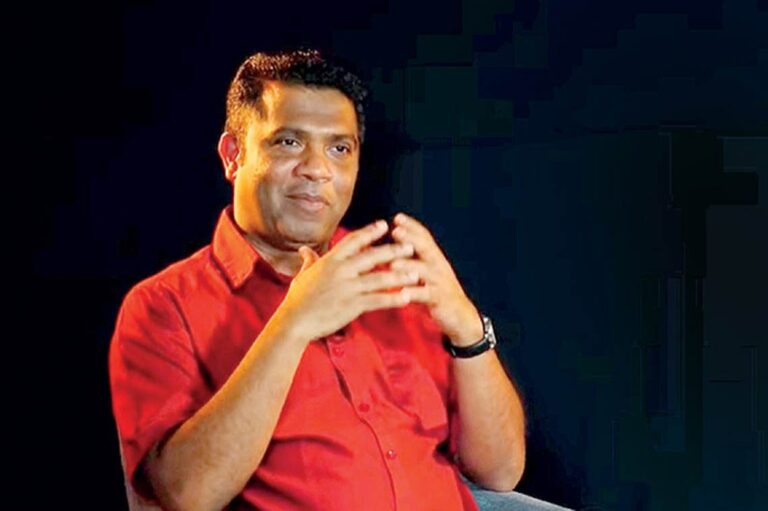
A total of Rs. 1.027 billion was spent on official foreign visits made by former President Ranil Wickremesinghe between 2022 and 2024, according to Chief Government Whip and Health and Mass Media Minister Dr. Nalinda Jayatissa.
Dr. Jayatissa disclosed the figures in response to a parliamentary question posed by National People’s Power (NPP) MP Lakmali Hemachandra. The inquiry, directed to the Prime Minister, sought specifics on the scale, cost, and composition of the delegations that accompanied the former President abroad.
According to the Minister, President Wickremesinghe undertook four official foreign visits in 2022 with a delegation of 63 members, costing the government Rs. 129 million. In 2023, the number of trips rose to 14, with 252 individuals accompanying him, leading to an expenditure of Rs. 577 million. In 2024, five visits were made with 111 delegates, costing Rs. 300 million.
Altogether, over the three-year span, Wickremesinghe made 23 foreign visits accompanied by 426 delegates. Additionally, 19 individuals were sent abroad as the President’s special representatives, incurring an extra Rs. 19 million in expenses.
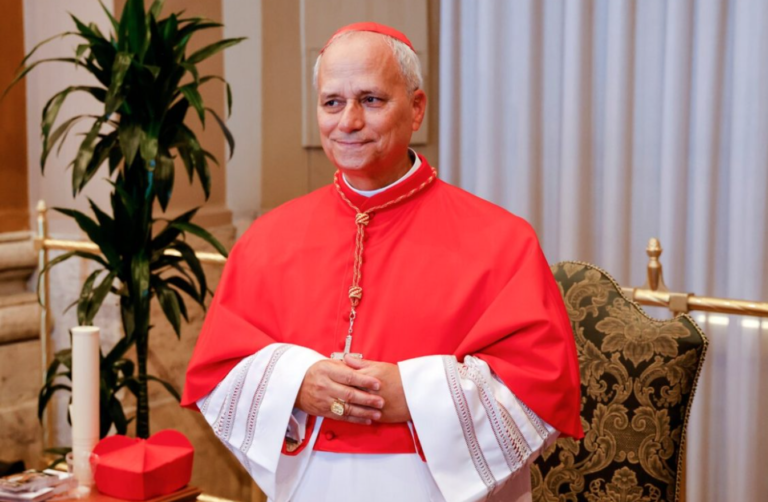
Cardinal Robert Francis Prevost, a native of Chicago who is now the first American-born pope, has spent most of his career outside of the United States, ministering to the dispossessed and marginalized.
The “Latin Yankee,” as he is known in Rome, worked 20 years in Peru’s poorest enclave — falling so in love with the country that he became a naturalized citizen. His commitment there echoes the legacy of Pope Francis, an Argentine who became the Catholic Church’s first leader from South America.
“He’s right out of Francis’s playbook,” said Kathleen Sprows Cummings, a professor of history at the University of Notre Dame who focuses on U.S. Catholics. “He ticks off all the boxes of a future pope: a pastoral heart, managerial experience and vision.”
Francis turned to Prevost on repeated occasions. In 2022, he had him preside over a revolutionary reform: adding three women to the voting bloc that decides which bishop nominations go forward to the pope. Yet his successor is considered more middle of the road, pragmatic as well as cautious.
In picking the 69-year-old Prevost, the papal conclave in Rome looked past allegations that hehad mishandled or failed to act on sexual abuse cases involving priests in both Peru and the United States.
He was selected despite being “an enigma to cardinals, especially to American cardinals, because he spent his life outside of the United States,” said Jon Morris, a theologian and former priest who has been in Rome to observe the transition as a Fox News contributor.
Prevost’s childhood roots were deep on Chicago’s South Side, where he grew up worshiping at St. Mary of the Assumption Church on E. 137th Street.Local media have reported that his father, of French and Italian ancestry, was an educator who served in the church as a catechist and that his mother, of Spanish ancestry, was a librarian. Members of the clergy would come to his family’s home from across Illinois for community and his mother’s tasty cooking, according to the Pillar, a Catholic media project.
As a youth, he served as an altar boy and went to the parish school and then a seminary high school. He attended Villanova University, graduating with a bachelor’s degree in mathematics in 1977. He was ordained five years later and completed a doctorate in canon law at the Pontifical University of St. Thomas Aquinas in Rome. Then came two decades of service in Peru, much of it as a missionary and parish priest.
Prevost, who is fluent in English, Spanish, Portuguese, Italian and French, was twice elected top leader of the centuries-old Order of St. Augustine. Its website describes the international order as “living together in harmony, being of one mind and one heart on the way to God,” calling nothing your own and living communally.
Francis tracked Prevost’s career for years, sending him back to Peru in 2014 after appointing him apostolic administrator of the Diocese of Chiclayo, in the country’s northwest. In 2015, he was named bishop there.
In 2023, the pope appointed Prevost to dual roles: president of the Pontifical Commission for Latin America and leader of the Dicastery for Bishops, a powerful office at the Vatican that selects bishops around the world. He held that latter position until Francis died on April 21.
His role in two different cases of sexual abuse by priests in Chicago and Peru ultimately did not derail him.
The first case dates to about 25 years ago, when Prevost led the Augustinian Province of Chicago. A priest who church leaders found had sexually abused minors was allowed to stay at an Augustinian monastery near a Catholic elementary school. The Vatican denied Prevost ever authorized that arrangement.
More recently, questions were raised about Prevost’s knowledge of abuse allegations in the Chiclayo diocese during his tenure as bishop. Two priests were accused of molesting three young girls, and a complaint this year by Survivors Network of Those Abused by Priests (SNAP) alleged that “Prevost failed to open an investigation [and] sent inadequate information to Rome.”
The Vatican again denied any wrongdoing by Prevost.
“Given what we know about the pervasiveness of clerical sexual abuse, it is certainly plausible that abuse occurred on his watch; he was superior general of a congregation of priests that ministers in 50 countries across the globe,” Cummings said. “It’s also entirely conceivable that he failed to act decisively in punishing perpetrators and supporting victims but, sadly, that’s true of almost all the men who occupied positions of high leadership in the Catholic Church in the second half of the 20th century. The cardinal electors would be hard-pressed to find a man among their number whose record on this issue is spotless.”
Because he has crisscrossed multiple borders — both geographic and religious — Prevost had a prominence going into the conclave that few other cardinals had, Cummings said.
In a 2023 interview with Vatican News, Prevost spoke about the essential leadership quality of a bishop.
“Pope Francis has spoken of four types of closeness: closeness to God, to brother bishops, to priests and to all God’s people,” he said. “One must not give in to the temptation to live isolated, separated in a palace, satisfied with a certain social level or a certain level within the church.
“And we must not hide behind an idea of authority that no longer makes sense today,” he continued. “The authority we have is to serve, to accompany priests, to be pastors and teachers.”
The popularity of Anura Kumara Dissanayake and the National People’s Power has clearly declined, posing a significant challenge for AKD.
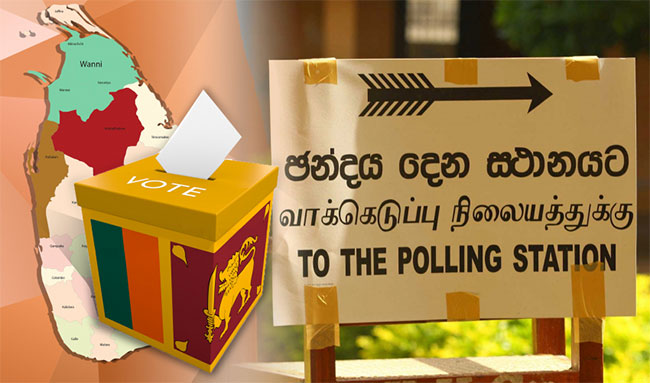
Among the major parties, it was the only one to lose its vote share in this election, with its support base shrinking by approximately ten to twenty percent. Furthermore, the National People’s Power failed to secure a majority in terms of total votes cast and the number of elected representatives. While it did win an overwhelming majority in terms of Local Government Authorities, it managed to exceed half of the elected members in only about a hundred of them. Samagi Jana Balawegaya (SJB), led primarily by Sajith Premadasa, has not gained new momentum. The election results indicate that Sajith Premadasa’s leadership does not inspire voters. However, the SJB has reaffirmed its position as the country’s second national party. SLPP leader Namal Rajapaksa emerged as the best loser in the local government election. However, his entourage includes corrupt individuals and thugs. The Ilankai Tamil Arasu Katchi (ITAK), formerly known as the Federal Party, has managed to re-establish its political dominance in the North and East. Three former presidents—Gotabaya Rajapaksa, Mahinda Rajapaksa, and Maithripala Sirisena—did not cast their votes, effectively becoming political relics. The argument that approximately 8% of invalid votes in the presidential and general elections should be considered as votes against the system has lost its relevance. This time, invalid votes accounted for less than 2%. According to election laws, votes in local government elections should be cast only for a party, making the process straightforward. Sarvajana Balaya, led by media magnate Dilith Jayaweera, and the UNP, led by Ranil Wickremasinghe, have collapsed. These parties no longer qualify as national-level entities. The UNP’s vote share decreased, while Sarvajana Balaya spent millions of rupees per candidate. The LG election results indicate that an SJB-UNP merger is inevitable. If not, the UNP has no future, and its supporters will likely shift toward the SJB. In the last general election, the SJB received 62% of the votes cast, the SLPP 18%, the UNP-led alliance 4%, and the SLPP 3%. The LG election results underscore Namal Rajapaksa’s foresight in deciding to contest the presidential election as the SLPP candidate, despite most party leaders aligning with Ranil Wickremasinghe’s “cylinder alliance.” Rajapaksa has successfully increased the SLPP vote base to 9%, largely by appealing to the Sinhala nationalist Rajapaksa supporters. Although the SJB’s vote share has increased to 21%, it has suffered a significant setback in urban areas. The party’s support remains weak in the Western Province, where 29% of the population resides. Failing to secure a majority in the Colombo Municipal Council (CMC) is a major defeat for the SJB. However, the SJB (29 seats) and the UNP (13 seats) gave the NJP (49 seats) a close contest. The Muslim Congress holds 4 seats, and Sarath Fonseka’s Democratic National Alliance has 1 seat in the CMC. Ranil Wickremasinghe’s UNP has seen a decline in its vote base, making him politically insignificant. Apart from the UNP, the only party to see its vote base decline is the National People’s Power (NPP), which suffered a 43% drop—representing a 20% reduction in votes received since the general election. The NPP government still remains in its honeymoon phase, benefiting from popular propaganda issues such as exposing corruption within the Rajapaksa family and Ranil Wickremasinghe. The NPP ran its LG election campaign much like a general election campaign, with President Anura Kumara and Prime Minister Harini Amarasuriya addressing massive rallies across the country. However, it has failed to uphold promises of a new political culture, even threatening to withhold central government funds from local governments that did not support the NPP. Prime Minister Harini Amarasuriya, despite her potential to emerge as a progressive political leader, openly advocated for violations of election laws. More concerning, the NPP engaged in opportunistic propaganda targeting Tamil voters. It glorified the LTTE through campaign videos, appealing to pro-LTTE sentiments. Some songs promised to build a statue of Prabhakaran if the NPP won, while others proposed constructing a port in memory of Prabhakaran’s parents. One song declared, “The ideology of the Tamil national leader is communism. The ideology of the National People’s Power is also communism. Let us unite under one shared vision.” However, Prabhakaran was not a communist, and the National People’s Power is not a communist organization. The NPP opportunistically sought Tamil votes, despite the JVP—its leading force—having once campaigned for the destruction of Prabhakaran and the LTTE. Despite these efforts, the Ilankai Tamil Arasu Katchi (ITAK) won 43 Tamil-majority institutions. The Akila Ilankai Tamil Congress (ACTC) secured 3 LG bodies. The TVMP, led by Pillayan, and the Democratic Tamil National Alliance, led by the EPRLF, won one institution each. The NPP secured a majority in three Vavuniya Pradeshiya Sabhas, but Tamil parties collectively won the majority of seats in two of them. The Muslim Congress, led by Rauf Hakeem, won 6LG bodies, while the ACMC, led by Rishad Bathiudeen, won 3 LG bodies. NPP had an illusion that Tamils and Muslims in the North and East were aligned with the NPP due to a superficial interpretation of presidential and general election results. In those elections, Tamil votes were divided, allowing the NPP to win by default. However, in this LG election, the NPP won a significant share of Tamil votes, making it the most popular Sinhala-led party in these regions—a notable victory. The NPP, however, failed to secure local government bodies with a majority Muslim population as well. These election results indicate that the government has not earned the trust of minority communities, which is problematic both domestically and internationally. Many leaders of the National People’s Power have made reckless statements after coming to power. Although the party claims to advocate a new political culture, it has failed to address ethical concerns within its ranks. No disciplinary action has been taken against a former party speaker who falsely posed as a professor with fake educational credentials. Similarly, MPs and ministers who have made inflammatory or sexist remarks have not faced accountability. In a democratic society, several JVP government ministers would be expected to resign over such issues. The ongoing conflict between the National People’s Party and its foundation—the Janatha Vimukthi Peramuna—weakens the government. The JVP perceives even constructive criticism from civil society as hostile, with JVP Secretary Tilvin Silva framing dissent as a battle between “traitors and heroes.” Despite once campaigning against the executive presidency, the JVP now opposes its abolition—a stark contradiction. Issues faced by Tamil communities remain unresolved, while citizens see little improvement in their daily lives. Economically, the future presents formidable challenges. The government’s primary advantage lies in the corrupt history of opposition figures and Sajith Premadasa’s centralized and one man leadership. However, these factors are not unchangeable. The emergence of a third political leader, Namal Rajapaksa, could significantly shift pro-Rajapaksa votes away from the NPP. Anura Kumara Dissanayake—the challenge posed by the local government election results is now yours to navigate.
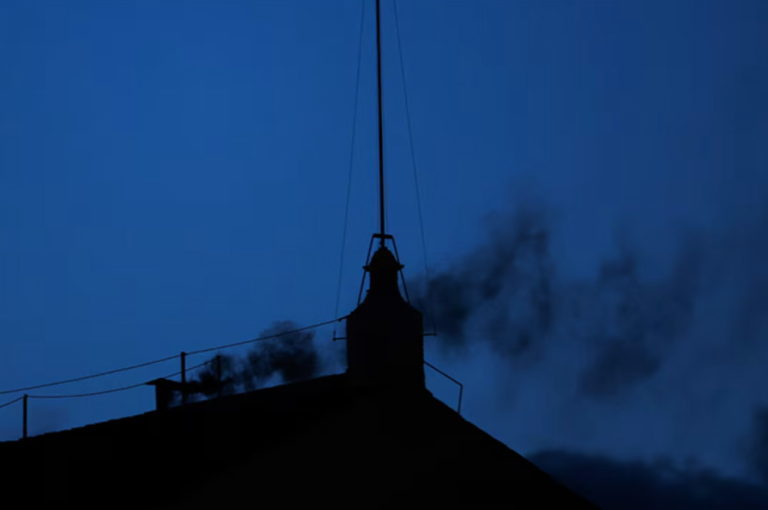
Black smoke rose from the chimney of the Sistine Chapel on Wednesday evening, signaling that the first vote by the College of Cardinals to elect a new pope ended without a decision. Thousands of faithful gathered in St. Peter’s Square watched as the smoke emerged later than expected, more than three hours after the conclave began—longer than it took during the 2013 conclave that elected Pope Francis.
The inconclusive vote came as no surprise, as a pope has not been elected on the first day of a conclave in modern times. Nevertheless, some cardinals expressed hope that the process could conclude by Thursday or Friday to demonstrate unity following the divisive 12-year papacy of Francis, who passed away last month.
The 133 cardinal electors under the age of 80 will spend the night at Vatican guesthouses, where informal discussions may continue before they return to the chapel for two votes each in the morning and afternoon. A two-thirds majority—at least 89 votes—is required to elect a new pontiff. The only sign of progress to the outside world will be the color of the smoke: black for no decision and white when a pope is chosen.
The conclave comes amid a complex landscape within the Catholic Church, with cardinals split over the direction of the next papacy. While some advocate continuity with Francis’ progressive approach, others seek a return to traditional values. In a pre-conclave sermon, 91-year-old Italian Cardinal Giovanni Battista Re urged his fellow prelates to prioritize the good of the Church and humanity, emphasizing unity in diversity.
Francis’ critics, especially ultra-conservatives, accused him of heresy for his openness to the LGBT community, dialogue with other religions, and reforms in Church doctrine. The lack of consensus on a clear successor has turned attention to potential front-runners, including Italian Cardinal Pietro Parolin and Filipino Cardinal Luis Antonio Tagle. If neither can gather sufficient support, other candidates such as France’s Jean-Marc Aveline, Hungary’s Peter Erdo, American Robert Prevost, and Italy’s Pierbattista Pizzaballa may emerge as compromise choices.
This year’s conclave features a record 133 cardinal electors from 70 countries, a reflection of Pope Francis’ efforts to diversify Church leadership. The cardinals will weigh whether to elect a pope from the growing congregations of the global South, return the leadership to Europe, or potentially make history with the first American pope.
The solemn proceedings began with cardinals entering the Sistine Chapel amid Latin chants and organ music, beneath Michelangelo’s Last Judgment fresco. Each elector took a vow of secrecy before non-participants were ordered out with the traditional Latin phrase “Extra omnes!” and the doors were shut to the outside world. While formal discussions are forbidden during voting, unofficial lobbying is expected during breaks and meals as support for various “papabili” shifts in successive rounds.
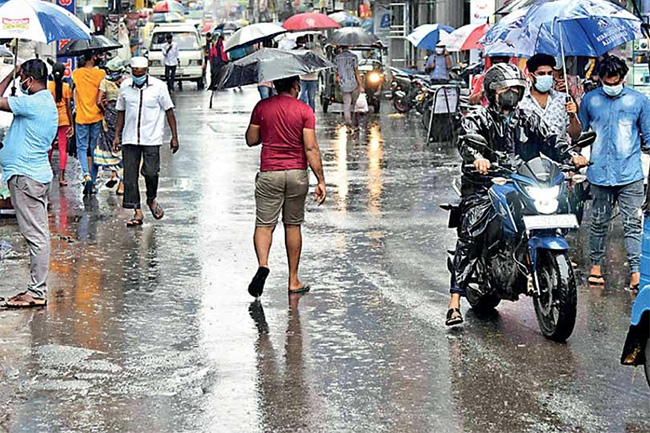
The Department of Meteorology has forecast showers or thundershowers in multiple regions of Sri Lanka today, particularly after 1.00 p.m. Areas likely to experience rainfall include the Western, Sabaragamuwa, Central, Uva, Southern, and Eastern provinces, as well as the Polonnaruwa district. Some of these locations could see fairly heavy rainfall exceeding 50 mm.
In addition, showers or thundershowers may also occur in other parts of the island during the afternoon or night. Morning showers are expected along coastal areas of the Western and Southern provinces, as well as in the Puttalam district.
The general public is advised to take necessary precautions against potential damage from temporary localized strong winds and lightning during thundershowers. Misty conditions are also expected in the morning in parts of the Central and Uva provinces and in the Ampara and Polonnaruwa districts.
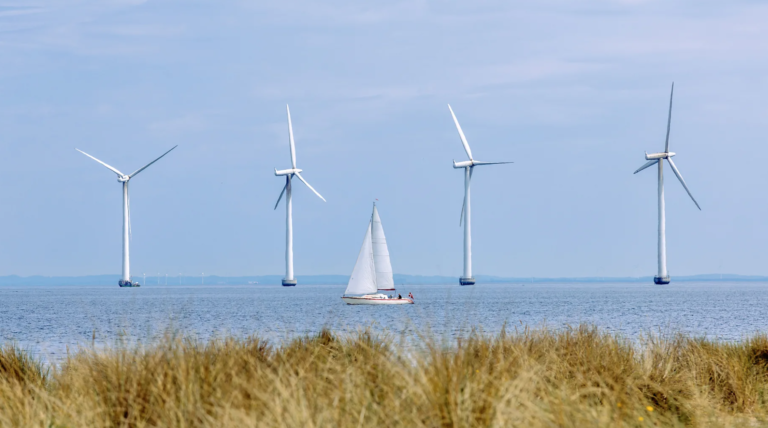
As wind farms expand, some can accidentally “steal” each others’ wind – causing worries over some countries’ energy transition to net zero.As offshore wind farms are expanding around the world in the race to meet net zero climate targets, a worrying phenomenon is attracting growing attention: in some conditions, wind farms can “steal” each other’s wind.
“Wind farms produce energy, and that energy is extracted from the air. And the extraction of energy from the air comes with a reduction of the wind speed,” says Peter Baas, a research scientist at Whiffle, a Dutch company specialising in renewable energy and weather forecasting. The wind is slower behind each turbine within the wind farm than in front of it, and also behind the wind farm as a whole, compared with in front of it, he explains. “This is called the wake effect.”
Simply put, as the spinning turbines of a wind farm take energy from the wind, they create a wake and slow the wind beyond the wind farm. This wake can stretch more than 100km (62 miles) for very large, dense offshore wind farms, under certain weather conditions. (Though more typically, the wakes extend for tens of kilometres, according to researchers). If the wind farm is built upwind of another wind farm, it can reduce the downwind producer’s energy output by as much as 10% or more, studies suggest.
Colloquially, the phenomenon is known as wind theft – though as Eirik Finserås, a Norwegian lawyer specialising in offshore wind energy, notes: “The term wind theft is a bit misleading because you can’t steal something that can’t be owned – and nobody owns the wind.”
The wind wake caused by wind turbines can stretch for more than 100km (62 miles) (Credit: Getty Images)
Still, he points out that the phenomenon can have a number of negative consequences for wind farm developers, and even, potentially, cause problems across borders (more on this later). There are in fact a number of ongoing disputes between wind farm developers over alleged wind theft, raising concerns in countries that rely on ramping up offshore wind energy to meet their net zero climate targets.
While the problem of wind theft has been long known in principle, it is growing more pressing due to the scale and speed of the offshore expansion, and the size and density of offshore wind farms, experts say.
In less than five years, we need to deploy thousands more turbines – Pablo Ouro
In the North Sea, which is seeing an offshore wind boom, the impact of such wakes on offshore energy production is likely to increase in the next decades as the sea becomes more crowded with wind farms, according to simulations by Baas together with researchers from the Delft University of Technology and the Royal Netherlands Meteorological Institute. The denser and bigger the wind farm, the stronger the wake effect, Baas says.
A new research project in the UK, launched this spring, aims to provide a clearer picture of the wake effect to help governments and developers improve their planning, and avoid disputes. The project will model wakes and their impact on wind farms’ output in 2030, when there will be thousands more turbines in UK waters than today, says project lead Pablo Ouro, a research fellow in civil engineering at the University of Manchester.
“We have seen wake effects for years, and knew they happen,” says Ouro. “The problem is that in order to achieve net zero, we need to deploy a given amount of offshore wind capacity. So for 2030, we need to have three times more capacity than we have now, which means that in less than five years, we need to deploy thousands more turbines,” he explains.
“[Some of] these turbines are going to be operating very close to those that are already operating, so things are getting more and more crowded. So these wake effects are now starting to have more impact,” he says.
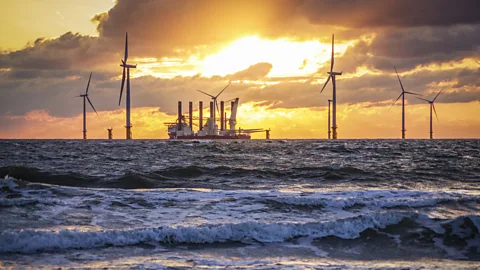
Countries are ramping up offshore wind energy, resulting in disputes between wind farm developers over “wind theft” (Credit: Getty Images)
The UK government has pledged that by 2030, Britain will generate enough power from renewable sources, such as wind, to cover its electricity needs. A 2025 UK government policy paper highlights the need to better understand wake effects in this context, describing them as an emerging issue that creates uncertainty for offshore wind farms.
Currently, there are a number of disputes in the UK between offshore wind farm developers over potential wake effects, Ouro says. In his view, these disputes are partly caused by uncertainty over the precise impact of wakes. For example, current UK guidelines on how much offshore wind farms should be spaced apart to avoid wake effects, may not reflect the actual extent the wakes can reach, he says. Also, because offshore wind farms are built in clusters, it can be difficult to assess how they might all affect each others’ energy output, he explains.
“When you have two wind farms, it’s very simple to assess that wind farm A is interacting this much with wind farm B, and vice versa. But what if you have six wind farms, how do they interact with each other? That’s what we don’t know – but it’s going to be happening for sure,” as more and more wind farms are built, Ouro says.
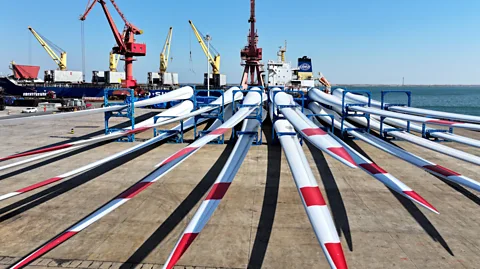
“The other issue is that turbines are getting very big,” he notes. Turbines have been growing taller and their blades getting larger to capture more energy from the wind. The latest turbines have blades that can span more than 100m (328ft), the length of a football pitch. Among the biggest offshore turbines, a single one can power around 18,000 to 20,000 average European households. But this increase in size could worsen the wake effect since a bigger rotor diameter may create a longer wake, Ouro says, adding that more research should be done to understand the impact.
Grabbing the best spots?
Finserås led a study of wind wakes and regulatory gaps while undertaking doctoral research at the University of Bergen in Norway. The study analyses how the wake of a planned wind farm in Norway could negatively affect a downwind farm in Denmark. Finserås warns that unless the problem of managing wake effects is addressed, it could result in legal and political conflicts and make it harder to invest in wind energy.
“The North Sea and particularly the Baltic Sea, in Europe at least, will likely be a hub for a massive-scale build-out of offshore wind farms,” Finserås says. “So this issue of wake effects will very likely permeate the energy transition in the North Sea, and elsewhere.”
From an investment perspective, even relatively small wake effects can cause problems for offshore developers, Finserås says. “There are huge costs to building an offshore wind farm,” he explains, due to the sheer scale of these farms as well as all the complex related work, including deploying special-purpose vessels. To justify their investment and make a profit, “it’s very important for a developer to be able to project that the wind farm will produce a given amount of electricity for 25 or 30 years“, the typical lifespan of a wind farm, he says. Even a relatively small, unexpected reduction in that energy output can upset this investment calculation and make the wind farm not financially viable, Finserås says.
If operators or countries try to avoid these wake effects by securing the best spots for themselves, it can create another risk, he warns: wake effects may cause what’s known as “the ‘race to the water’ phenomenon, whereby states rush development in order to reap benefits from the best-yet available wind resources”. Rushing development could then increase the risk of ignoring other important aspects of wind farm planning, such as protecting the marine environment, he says.
Wind turbines are getting taller and their blades larger, in a bid to capture more energy from the wind (Credit: Getty Images)
Ouro, at the University of Manchester, also sees a growing risk of cross-border problems: “All the disagreements that are filed to date [in the UK] are between UK wind farms, but what if tomorrow there’s a dispute between a UK wind farm and a Dutch, Belgian or French wind farm? So, the sooner we anticipate this situation, and lay the groundwork for: ‘Ok, that’s how we’re going to address this,’ the better. It reduces uncertainty and is much better for the industry.”
Finserås recommends European countries address the problem of wind theft by cooperating and consulting with one another when planning wind farms, as well as introducing clear regulations that help manage wind as a shared resource. Essentially, wind could be treated like other shared marine resources for which there is regulation, such as oil deposits that cross state boundaries, or fish, he suggests. “It’s not like [states] haven’t regulated similar issues before,” he says.
To tackle these thorny issues, it’s helpful that the European countries involved generally have good political relations, says Finserås.
“We have to decarbonise energy sectors, and we have to do so very quickly, that’s the ambition of the European Union when it comes to offshore wind policies,” he says. “So there’s no question that all of this is happening very quickly. But we shouldn’t be prevented from finding good solutions just because things are happening quickly.” After all, he says, it’s in nobody’s interest to fight over the wind. “There is an incentive to cooperate to find equitable solutions between states, despite the fact that [the wind energy expansion] is going ahead at full speed.”
It’s not only Europe that’s racing to better understand wake effects. China, for example, is rapidly expanding its offshore wind farms, and researchers there have cast a spotlight on the growing impact of wake effects on Chinese offshore wind farms.
Since the project was announced in March, Ouro has been flooded with emails from people interested in it, which in his view shows just how urgent the issue is. “We need to understand this, we need to progress more on the modelling, so everyone is confident, because we need this amount of offshore wind to get to net zero. We have to deliver this.”
The World Bank Group has unveiled a landmark initiative to support job creation and accelerate private sector growth in Sri Lanka, pledging more than US$1 billion in financing over the next three years. The funding will target sectors with strong potential for employment and investment—namely energy, agriculture, tourism, and regional development—with the goal of expanding economic opportunity, strengthening local industries, and attracting private capital to drive long-term growth.
The announcement followed a meeting in Colombo between President Anura Kumara Dissanayake and World Bank Group President Ajay Banga, marking the first visit by a World Bank President to Sri Lanka in over two decades. The visit signals a renewed commitment to the country’s economic recovery and future development.
President Dissanayake emphasized that the support represents a significant investment in the Sri Lankan people, adding, “It will help create jobs, support small businesses, and open up new opportunities across the country. We are committed to ensuring this partnership delivers real change for our communities.”
World Bank President Ajay Banga highlighted that Sri Lanka is at a pivotal moment to build on recent economic stabilization efforts. “With progress underway to stabilize the economy and restart growth, core elements for job creation are in place. Now is the time to accelerate reforms and create the conditions for private enterprise to thrive—particularly in sectors that can create jobs at scale,” he stated.
According to the World Bank, nearly one million young people are expected to enter Sri Lanka’s workforce over the next decade, while only about 300,000 jobs are projected to be created under current conditions. The new financing aims to close this gap by mobilizing both public and private investments in high-impact sectors.
The immediate funding allocations include US$185 million for energy, targeting the development of solar and wind projects with one gigawatt of capacity and mobilizing over US$800 million in private investment. Agriculture will receive US$100 million to help farmers adopt new technologies and reach markets, benefiting more than 380,000 people. Tourism development will be supported by US$200 million to protect cultural and natural heritage while expanding employment. Another US$200 million will be directed toward regional development, with a focus on infrastructure and job creation in the Northern and Eastern Provinces.
The World Bank’s integrated approach, combining financing, knowledge-sharing, and private sector tools, underscores its ability to support comprehensive economic growth and job generation. With current investments in Sri Lanka exceeding US$2.2 billion, this new package deepens a seven-decade partnership aimed at fostering a more resilient and inclusive economy.
The European Union Delegation on the GSP+ Monitoring Mission has expressed its appreciation for Sri Lanka’s recent policy reforms, particularly those aligning with the fundamental objectives of the GSP+ mechanism. This recognition came during a high-level meeting with Prime Minister Dr. Harini Amarasuriya on Monday, where the EU team also offered guidance on Sri Lanka’s re-application process for GSP+ concessions and reiterated their readiness to support the country’s formal application.
Key topics discussed during the meeting included ongoing engagement with the International Monetary Fund (IMF), the importance of enhancing women’s participation in politics and the economy, and the need to improve support systems such as childcare, eldercare, and public transportation to foster broader inclusion. The discussions also addressed Sri Lanka’s major development priorities, including poverty alleviation, digital transformation, and the Government’s “Clean Sri Lanka” initiative. Prime Minister Amarasuriya further emphasized legal reform efforts underway, such as new legislation to combat drug and human trafficking and the enactment of the Online Safety Act, as part of broader reconciliation and governance objectives.
The EU delegation was led by Charles Whiteley, Head of the South Asia Division of the European External Action Service, and included other senior officials. The meeting concluded with remarks from EU Ambassador to Sri Lanka Carmen Moreno, who reaffirmed the EU’s continued commitment to deepening its relationship with Sri Lanka across economic, cultural, and tourism sectors. Key Sri Lankan officials present included Prime Minister’s Secretary Pradeep Saputhanthri, Additional Secretary Sagarika Bogahawatta, and Sugeeshwara Gunaratna, Director General of the Europe and North America Division at the Ministry of Foreign Affairs.
A massive fraud has been uncovered at the Sri Lanka Bureau of Foreign Employment (SLBFE), where over 30,000 individuals, primarily women, were sent overseas for employment without undergoing the mandatory training program, resulting in financial losses exceeding Rs. 2.5 billion. The scam reportedly took place between 2022 and August 2024 and involved forged documents used to falsely show first-time job seekers as experienced workers, thereby bypassing the required training and associated fees.
So far, six SLBFE officials have been interdicted, including an Additional General Manager, four Arabic translators, and an Administrative Officer. However, SLBFE sources believe a larger network of officials and foreign employment agents is involved. The racketeers are alleged to have charged between Rs. 70,000 and Rs. 130,000 from each individual, while avoiding the official Rs. 28,000 training fee imposed by the SLBFE. The forged documents included fake job agreements and falsified travel histories, which were used to present these individuals as eligible for exemption from training based on prior experience.
The SLBFE had previously issued a circular allowing returning migrant workers with proof of experience and prior training to bypass the program. Investigators say this policy was exploited by racketeers to facilitate fraudulent departures. As a result, many women who were sent abroad through this scheme faced serious risks, including exploitation and abuse, due to their lack of proper training and preparation.
Alongside the internal SLBFE investigation, complaints are also being filed with the Criminal Investigation Department (CID) and the Commission to Investigate Allegations of Bribery or Corruption (CIABOC) for further action.
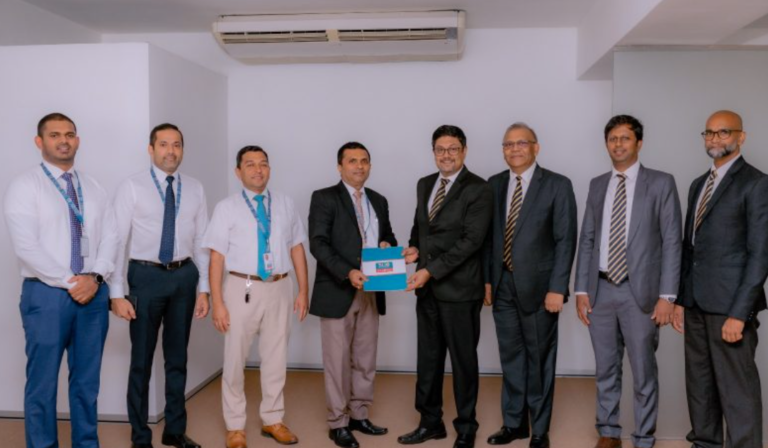
In a significant move to blend financial security with community empowerment, Sri Lanka Insurance Corporation General Ltd. (SLICGL) and the Royal College Union (RCU) signed a Memorandum of Understanding (MoU) on April 9, 2025. The strategic partnership aims to offer exclusive insurance benefits to RCU members while channeling support towards the education and development of deserving students from Royal College.
Under the agreement, SLICGL will contribute a portion of net premiums from policy conversions directly to the RCU Loyalty Pledge. This fund supports honorary scholarship schemes for talented students, reinforcing both organizations’ commitment to social responsibility and long-term educational impact.
Highlighting the unique value of the collaboration, SLICGL Chief Operating Officer Priyantha Perera stated, “We are proud to collaborate with RCU in an initiative that not only provides financial security but also strengthens alumni engagement. This partnership redefines the role of insurance, showing that it can be a vehicle for community upliftment, not just profit.”
RCU members will enjoy a range of tailored benefits, including discounted rates on SLICGL’s medical insurance policies ‘Medi Plus’ and ‘Medi 60’, as well as loyalty rewards on apparel, vehicle services, eyewear, and travel. For Old Royalists insuring high-value vehicles under SLICGL’s Motor Comprehensive Policy, additional perks such as the ‘Inform & Move’ service and complimentary Home Protect Lite or Solar Insurance cover are available.
Aruna Samarajewa, Secretary of RCU, welcomed the partnership as a powerful example of community-driven progress. “This collaboration is a testament to the strength of the Royal College community. Through the Loyalty Pledge scholarship programme, we are ensuring sustainable support for our young students, and SLICGL’s contribution enhances our ability to give back to our alma mater.”
As one of Sri Lanka’s most respected alumni networks, RCU has long played a pivotal role in supporting Royal College. This latest partnership not only brings financial advantages to its members but also establishes a model for impactful corporate-alumni collaboration. By linking insurance benefits with educational philanthropy, SLICGL and RCU are setting a new standard in socially conscious partnerships.