Public Health Inspectors (PHIs) have issued a warning to those who attended Sinhala and Tamil New Year celebrations held in paddy fields, cautioning that the risk of contracting rat fever is currently high.
PHI Union Treasurer M.A.C. Prasad told the Daily News that an increasing number of New Year events are being organised in newly harvested or abandoned paddy lands—a trend growing in popularity on social media.
“These events are now widely promoted online, and we expect many more to take place in the coming weeks,” Prasad said. “Rat fever is spreading rapidly. If you have participated in such an event, you must remain vigilant.”
He advised the public to seek immediate medical attention at the first sign of symptoms and to inform doctors of possible exposure to high-risk areas. Early symptoms of rat fever, also known as leptospirosis, often resemble the flu and include fever, headaches, muscle and joint pain, skin rashes, nausea, vomiting, and swollen lymph nodes. Symptoms typically appear within three to ten days of exposure.
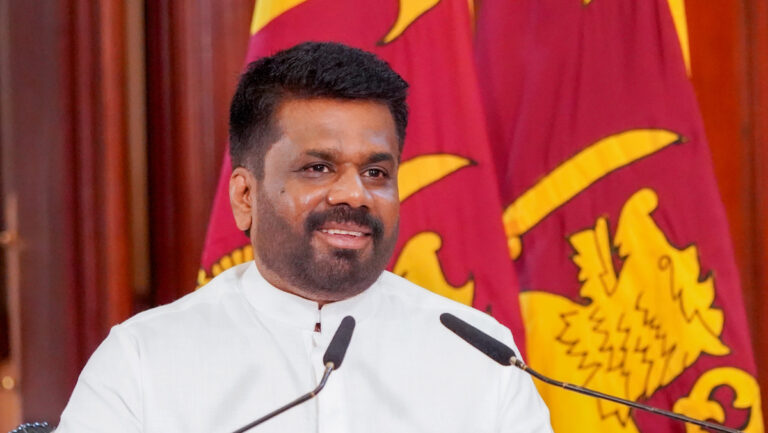
President Anura Kumara Dissanayake announced that an additional 400,000 families will be granted Aswesuma welfare benefits starting in June. The announcement was made during a rally in Mannar in support of National People’s Power (NPP) candidates contesting the upcoming Local Government elections.
The President also emphasized a shift in policy regarding wind power projects in the region, stating that all future renewable energy initiatives in Mannar will only proceed following consultations with local communities and comprehensive environmental assessments.
“We cannot repeat the mistakes of the past,” President Dissanayake said, referring to previous projects that drew criticism for overlooking ecological concerns and public input. “Development must be sustainable, and it must serve the people – not come at their expense.”
Mannar is known for its high potential in wind energy generation. The President reassured residents that future development will prioritize ecological balance and community welfare. “This Government listens. We will not allow development to proceed in a way that alienates or harms the very people it is meant to uplift.”
In addition, President Dissanayake announced that efforts are underway, with support from the Indian Government, to launch a passenger boat service between Mannar and Rameswaram in Tamil Nadu. “Restoring this historic connection will not only boost cross-border relations, but also enhance economic and cultural exchange for the people of Mannar,” he said.
Also present at the rally were Fisheries Minister Ramalingam Chandrasekar, Members of Parliament Jegatheeswaran and Thilaganathan, and NPP candidates from the Mannar Urban Council, as well as representatives from Nanattan, Musali, and Manthai West.
A high-level delegation of Sri Lankan officials is set to visit the United States next week to hold discussions on the recent tariff increases imposed on Sri Lankan goods, Export Development Board (EDB) Chairman and CEO Mangala Wijesinghe announced on Wednesday.
Wijesinghe said that President Anura Kumara Dissanayake had appointed a special committee on April 3 to address the issue. The committee has since submitted a report outlining short-, medium-, and long-term strategies to mitigate the impact of the U.S. tariffs.
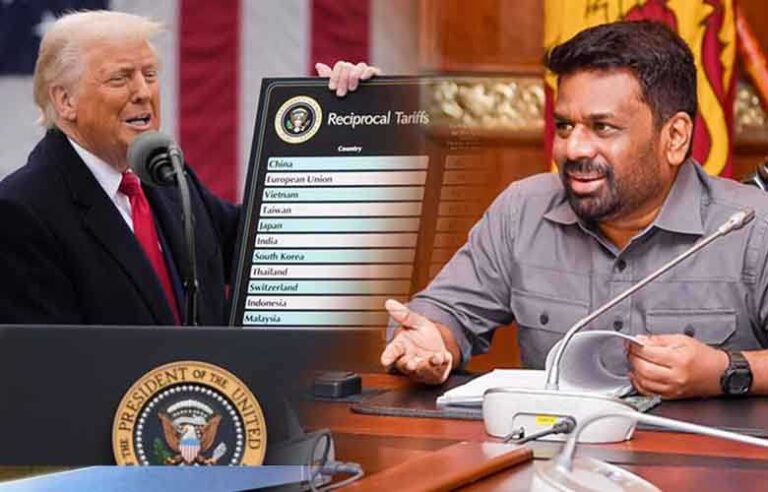
Although the new tariffs were initially scheduled to take effect from April 9, U.S. President Donald Trump announced a 90-day pause, except for a 10% across-the-board tariff on all countries.
Sri Lanka has already held two meetings with U.S. Embassy trade officials in Colombo, during which relief was requested in light of the country’s ongoing IMF programme and its need to begin loan repayments by 2028.
Among the highest tariff rates imposed, Sri Lanka faces a 44% rate, with 25% of its exports destined for the U.S. Only a few nations, including Cambodia and Lesotho, are subject to higher rates.
The government is still finalizing the composition of the delegation, and if no further reprieve is granted, the full tariff measures will come into effect in July.
Showers or thundershowers will occur at several places in Western, Sabaragamuwa, Central, Southern, Eastern, North-central and Uva province during the afternoon or night.Fairly heavy falls of above 50 mm are likely at some places in these areas.
A few showers may occur in the coastal areas of Western province and in Galle, Matara and Puttalam districts in the morning too.
The general public is kindly requested to take adequate precautions to minimize damages caused by temporary localized strong winds and lightning during thundershowers.
Misty conditions can be expected at some places in Central, Sabaragamuwa, and Uva provinces and in Ampara and Batticaloa districts during the morning.
April 17, Colombo (LNW): The Global Franchise Forum (GFF) is gearing up to host its Sri Lanka edition on April 27 at Sheraton Hotel, Colombo, bringing together prominent global brands, investors, and entrepreneurs. This prestigious event aims to explore franchising and business expansion opportunities within Sri Lanka’s growing market.
Endorsed by top business bodies like the Indo-Lanka Chamber of Commerce, Ceylon National Chamber of Industries (CNCI), International Chamber of Commerce (ICC) Sri Lanka, Colombo Chamber of Commerce, and the Federation of Chambers of Commerce and Industry of Sri Lanka (FCCISL), the forum highlights the increasing importance of international franchising in Sri Lanka’s economic development.
Positioned as a strategic entry point to South Asia, Sri Lanka offers a rapidly recovering economy, a rising middle class, and favourable policies that support foreign investment. Key sectors such as hospitality, retail, education, and healthcare are drawing attention from global franchises eager to establish a local presence.
The GFF event promises attendees a valuable experience through exclusive franchise exhibitions, direct business meetings with global brand owners and investors, and expert-led discussions on franchising strategies. Seminars and workshops will address market entry tactics, while networking sessions will connect entrepreneurs with potential franchise partners. An awards ceremony will also be held to recognise outstanding achievements in the franchise sector.
According to Franchise India Group Chairman Gaurav Marya, the 2025 forum will be essential for a wide range of participants, including entrepreneurs, investors, and corporate leaders. He emphasized that the event acts as a vital bridge between international brands and local business leaders, creating pathways for successful expansion into high-growth markets.
Marya also noted Sri Lanka’s economic momentum, citing a projected GDP growth rate of 3.3% in 2025, and foreign direct investment (FDI) exceeding $1.5 billion in the past year. With continued urbanisation and a strengthening consumer base, the country presents attractive prospects for international business.
By encouraging partnerships between global franchisors and Sri Lankan entrepreneurs, the forum contributes to sustainable growth, job creation, skill development, and innovation. Its mission aligns with Sri Lanka’s broader objective of increasing FDI and establishing itself as a competitive business destination in South Asia.
Overall, the Global Franchise Forum is set to be a game-changing event for both international players and local entrepreneurs, reinforcing Sri Lanka’s status as a key hub for franchise-driven economic growth.
April 17, Colombo (LNW): The Employees’ Provident Fund (EPF) has firmly reinforced its leadership in Sri Lanka’s superannuation sector, commanding an impressive 81.0% share of the sector’s total assets by the end of 2024. This dominant position highlights the Fund’s ongoing financial stability and its critical role in safeguarding retirement savings for the country’s workforce.
EPF’s net worth rose significantly by 12.6% year-on-year, reaching Rs. 4,375.7 billion compared to Rs. 3,886.7 billion in 2023. This robust growth was fueled primarily by strong investment performance and a notable recovery in net contributions.
Total member contributions climbed by 11.3% to Rs. 234.4 billion in 2024. Simultaneously, refund payments to members and their legal heirs dropped by 12.9% to Rs. 188.1 billion, resulting in a net positive contribution of Rs. 46.3 billion for the year. This marks a dramatic reversal from the Rs. 5.3 billion net outflow recorded in 2023.
On the investment front, the EPF achieved an income of Rs. 513.8 billion in 2024, reflecting a 6.8% increase from the previous year’s Rs. 481.1 billion. Interest income—its primary revenue stream—rose modestly by 2.9% to Rs. 455.1 billion.
Meanwhile, dividend income saw a substantial surge of 82.9% to Rs. 5.5 billion, and net fair value gains from listed equity investments more than doubled, reaching Rs. 49.2 billion. These figures underscore the Fund’s diversified and strategic investment approach, which has contributed significantly to its overall financial strength.
In terms of operational performance, the EPF maintained an impressively low operating expenses to gross income ratio of just 0.6%, reflecting a high degree of cost efficiency. However, with the rise in investment income, tax expenses also increased, reaching Rs. 64.1 billion in 2024.
Reflecting the strong financial performance, the Governing Board of the Central Bank of Sri Lanka has proposed an interest rate of 11.00% on member balances for the year 2024. This proposed rate is currently pending approval from the Ministers of Labour and Finance.
These financial highlights and strategic developments were outlined in the Central Bank of Sri Lanka’s Annual Economic Review 2024, reinforcing the EPF’s vital role in ensuring long-term financial security for its members.
April 17, Colombo (LNW): Sri Lanka Government is now facing the challenge of introducing the Information Technology (IT) industry policy as the country’s gig economy (informal sector in IT industry) holds the potential to accommodate and benefit a significant portion of the country’s population, especially with the upcoming implementation of the National Digital Strategy, an IT expert and pioneer in the industry said
As the world revolves around the digital landscape, Sri Lanka has also become competitive in the digital world, but under the present situation of imposing 15 percent tax on IT services and us President Donald Trump’s 44 percent tariff imposition on Sri Lanka’s would rock the country’s formal and informal sectors
The gig economy broadly refers to an economy where freelancers or independent contractors (gig workers) widely exist in the labour market instead of traditional work arrangements between the employer and employee.
The Government has to consult the experts in the sector immediately to clarify its stance on the gig economy and introduce concrete policies s for the IT formal and informal sectors and e-commerce, including international transactions, to address payment systems, tax revenue, and worker welfare.
Director and Co-founder of Creative Software Sushena Ranatunga an IT expert and pioneer in the industry said that Following the Covid-19 pandemic, companies and individuals are also working with freelancers and seek support from freelancing institutes,”
He added that that Sri Lanka is now moving towards the next level of freelancing, the digital entrepreneurship
Sri Lanka’s Information Technology (IT) industry has experienced significant growth, with revenues increasing from approximately US$ 750 million ten years ago to between $1.5 to 2 billion, headed.
Recent fiscal reforms have introduced new tax measures impacting the digital services sector. While these policies aim to bolster government revenue, they present challenges for IT companies striving to maintain competitiveness.
A notable concern is the regulatory divergence between Sri Lanka’s mainland and the Port City Colombo Special Economic Zone (SEZ). Port City Colombo offers substantial incentives, including up to 25-year tax holidays, exemptions from indirect taxes, and streamlined business operations under the Colombo Port City Economic Commission Act, Mr Ranatunge elaborated.
These advantages create an uneven playing field, potentially disadvantaging IT enterprises operating outside the SEZ. he said.
The recent tax hikes may exacerbate challenges for these entities, increasing the likelihood of tax defaults and hindering their growth prospects.
Data on the exact number of IT product companies in Sri Lanka is limited. But creating such businesses is crucial to diversify the industry away from services.
Encouragement of IT product manufacturing can increase the value addition, innovation, and international tech market standing of the country, he stated.
Strategic Intellectual Property Rights (IPR) Regulations are important to safeguard innovations and attract investments in the IT sector. Sri Lanka has brought its commercial legislation into line with international standards, including intellectual property rights treaties, electronic transactions, and computer crime treaties.
Enforcing and strengthening such laws can also boost investor confidence and foster an innovation culture, he claimed. .
Policy inconsistencies need to be addressed, informal sector transition to formality facilitated, product-based IT business promoted, and IPR protection strengthened as key measures toward maintaining the industry’s growth momentum and providing level playing fields for all the stakeholders.
April 17, Colombo (LNW): Sri Lanka is preparing to send a high-level delegation to Washington next week for direct negotiations with the United States Trade Representative (USTR) following the Trump-era decision to impose a steep 44 percent tariff on Sri Lankan exports. The move, however, has drawn criticism from economists and trade experts who describe the government’s approach as delayed, fragmented, and lacking strategic foresight.
The U.S. currently accounts for nearly 25 percent of Sri Lanka’s total exports, with the apparel and textile sectors most at risk. The newly imposed tariffs threaten to severely disrupt this key export channel, potentially destabilizing employment and economic performance.
Despite the gravity of the situation, Sri Lanka’s response has been notably sluggish compared to other developing countries. Nations such as India, Vietnam, and Bangladesh engaged U.S. officials promptly, mounted strong diplomatic offensives, and made evidence-based appeals for relief or exemption. In contrast, Sri Lanka failed to act decisively, missing the opportunity to influence U.S. policymakers at an early stage.
Export Development Board (EDB) Chairman Mangala Wijesinghe confirmed the upcoming visit, stating that the delegation would present Sri Lanka’s concerns and attempt to chart a path forward to protect the country’s economic stability. He noted that the initiative follows a series of virtual meetings with U.S. authorities and the appointment of a special presidential committee tasked with evaluating the full implications of the tariff decision and formulating urgent countermeasures.
The government’s decision to send a separate high-powered team solely for this purpose has raised questions about coordination and resource management. A senior Sri Lankan delegation, which includes officials from the Ministry of Finance, the Central Bank, and the Ministry of Foreign Affairs, is already scheduled to be in Washington from April 21 for the IMF Spring Meetings. Observers argue that this group is well-positioned to handle the tariff discussions as part of broader economic diplomacy efforts.
Critics suggest that dispatching two different delegations signals poor inter-ministerial communication and unnecessary duplication of efforts. It reflects weak coordination at a time when Sri Lanka should be projecting a united and efficient front to international partners. Moreover, the additional expenditure involved in sending a second team has been deemed avoidable and counterproductive.
The special committee appointed by President Anura Kumara Dissanayake includes a mix of senior government officials and private sector leaders. Among its members are Senior Economic Adviser to the President Duminda Hulugamuwa, Central Bank Governor Dr. Nandalal Weerasinghe, Finance Secretary Mahinda Siriwardana, Trade Secretary A. Wimalaneththiraja, and Senior Director General of the Ministry of Foreign Affairs Dharshana Perera. Also included are EDB Chairman Wijesinghe, Brandix CEO Ashroff Omar, MAS Co-Founder Sharad Amalean, Lanka Garments MD Saif Jafferjee, Michelin Lanka’s Head of Legal and Public Affairs Nilanthi Weliwe, Labour Minister Dr. Anil Jayanta Fernando, and Deputy Finance Minister Dr. Harshana Suriyapperuma.
Wijesinghe indicated that the discussions thus far have explored both the economic rationale behind the U.S. tariffs and their wider implications for developing economies. The delegation is expected to seek continued relief beyond the current 90-day tariff reduction to 10 percent and pursue long-term trade cooperation mechanisms, regulatory alignment, and enhanced engagement with the U.S. market.
As Sri Lanka attempts to navigate this crisis, experts are urging the government to develop a more cohesive and proactive trade diplomacy strategy. Calls are growing for stronger inter-agency collaboration and a clearly defined national approach to counter future economic shocks.
Without a consolidated response and clear leadership, analysts warn that Sri Lanka risks losing further ground in global trade negotiations—particularly in times of rising protectionism and shifting geopolitical priorities.
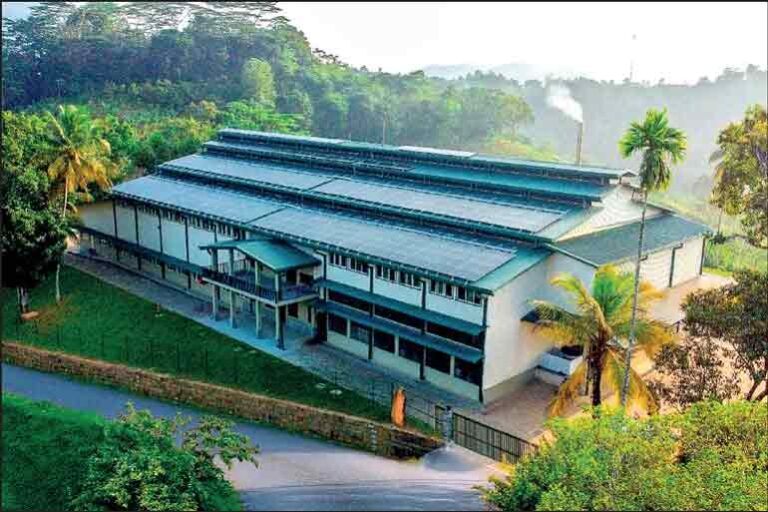
April 17, Colombo (LNW): Hayleys Plantations has celebrated a key milestone with the inauguration of its state-of-the-art Kiruwanaganga Tea Factory, a Rs. 780 million investment that underlines the group’s dedication to innovation, sustainability, and excellence in Sri Lanka’s tea industry.
Operated by Talawakelle Tea Estates PLC and located in Kirillapone, Matara, the new factory replaces an older facility impacted by environmental and economic challenges. Despite obstacles such as the pandemic, landslides, and financial pressures, Hayleys Plantations ensured continuous tea production during the transition—reflecting its resilience and commitment to stakeholders.
The factory features cutting-edge technology, including modern rollers, dryers, colour sorters, and dedicated elevators for tea transport. An in-house tea tasting area enhances quality control, while upgraded fire protection and safety measures boost workplace security. With a daily production capacity of 14,000 kilograms, it has already earned the No. 1 low-grown tea factory ranking from the Colombo Tea Traders Association (CTTA).
Designed in accordance with international environmental benchmarks and the Green Building Concept, the Kiruwanaganga facility is a symbol of Hayleys’ broader sustainability strategy. It holds multiple prestigious certifications, including Rainforest Alliance, ISO 22000:2018, ISO 14064-1:2018, and the Ecolabel. It also meets ethical and environmental standards, with acknowledgments such as the UN Climate Neutral Now pledge and the Mother & Child Friendly Seal. Green Building certification is also underway.
Beyond technological advancements, the factory fosters local economic growth by integrating smallholder farmers into the formal tea supply chain, further strengthening community ties and regional development.
The launch event was graced by key figures including Hayleys Chairman and CEO Mohan Pandithage, Hayleys Plantations MD Dr. Roshan Rajadurai, and Talawakelle Tea Estates CEO Senaka Alawattegama. Proceedings included the national flag hoisting, traditional oil lamp lighting, religious blessings, a commemorative plaque unveiling, and the planting of a Na tree—a symbol of environmental stewardship.
“This is not just a factory; it is a statement of our values,” said Pandithage. “It reflects our dedication to quality, innovation, and sustainable growth. Wherever Hayleys goes, opportunities follow.”
Dr. Rajadurai echoed this sentiment, calling the facility a product of perseverance and vision. Regional GM Gimhan Jayatilake highlighted its legacy, the employment prospects it creates, and its future potential for the community.
The celebration concluded with cultural performances and a heartfelt exchange of appreciation, blending tradition with forward-looking progress.
April 17, Colombo (LNW): A growing number of incidents tied to the upcoming Local Government elections have sparked concern among electoral authorities and civil society observers, as police have confirmed the arrest of 18 candidates linked to various election-related offences.
These arrests were made over a period stretching from March 3 to April 16, as part of efforts to maintain order and ensure the integrity of the 2025 electoral process.
In a statement issued by the Police Media Division, it was further revealed that law enforcement authorities have taken into custody 62 individuals believed to be supporters of political parties, along with 14 vehicles suspected of being used in connection with unlawful election activities.
Police noted the registration of 38 criminal complaints directly linked to the Local Government election campaigns, alongside an additional 138 reports concerning violations of election laws.
These include instances of unauthorised campaigning, defacement of public property, failure to adhere to guidelines set by the Election Commission, and other breaches of electoral conduct.
Authorities have indicated that many of the investigations remain ongoing, with further arrests likely as surveillance operations continue.