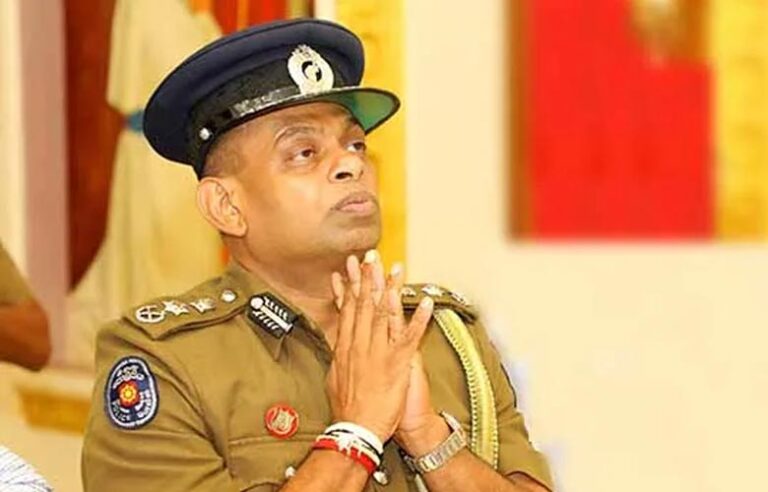
April 10, Colombo (LNW): Former Inspector General of Police (IGP) Deshabandu Tennakoon, who is currently under suspension, has been released on bail following his appearance before the Matara Magistrate’s Court.
The high-profile figure, embroiled in an ongoing legal investigation related to a shooting in southern Sri Lanka, was granted bail today (10) under two personal sureties valued at Rs. 1 million each.
His release follows a brief remand period that began after he surrendered to authorities on March 19, having evaded arrest for nearly three weeks. The surrender was initiated through a formal legal motion submitted to the court, a move that came shortly after a warrant was issued in connection with a shooting near a coastal hotel in the Pelena area of Weligama, Matara.
The incident, which occurred on the final day of 2023, has since triggered significant controversy and public concern, particularly as it implicates several senior police personnel.
The shooting, which reportedly took place outside the W15 Hotel, prompted the Matara Magistrate’s Court to order the arrest of eight police officers, including former members of the Colombo Crimes Division and the then-Inspector General himself.
The Criminal Investigation Department (CID) was tasked with executing the arrests and presenting the accused before the judiciary.
Efforts by the former police chief to halt his arrest via judicial channels proved unsuccessful. A writ petition seeking a court injunction against the arrest order was dismissed by the Court of Appeal on March 17.
The appellate judges instead reinforced the original directive, instructing the CID to proceed without delay in apprehending the former official.
In parallel to the judicial developments, Parliament has initiated its own proceedings against the former Inspector General. A resolution to form a special committee to investigate his conduct was passed earlier this week.
The motion aims to examine accusations of professional misconduct and alleged abuses of authority during his tenure, with the stated goal of determining whether he should be formally removed from office.
April 10, World (LNW): In a striking fusion of futuristic design and animal-like motion, Japanese tech giant Kawasaki has unveiled its latest innovation: a hydrogen-powered quadruped robot named Bex, now rebranded as HORSE – an acronym for Humanoid & Object Robotic Synergy with Environment.
This advanced robotic steed has left viewers stunned with a viral video showcasing its almost surreal ability to traverse complex terrain with the grace and coordination of a real horse.
Kawasaki, known globally for its motorcycles and heavy industry expertise, has been quietly developing robotic systems that mimic organic life, pushing the boundaries of what machines can achieve in human environments.
The HORSE robot, with its sturdy legs, sleek chassis, and impressively coordinated gait, represents a significant leap in bio-inspired engineering. It was first introduced in prototype form in 2022, but the latest footage shows a dramatic improvement in its mobility, suggesting Kawasaki is steadily refining the robot for real-world use.
What sets HORSE apart is its use of hydrogen fuel cells, placing it at the forefront of sustainable robotics. Whilst most walking robots rely on electricity or cumbersome battery systems, Kawasaki’s hydrogen-based solution not only extends the machine’s operational life but also aligns with broader global efforts to transition away from fossil fuels.
This clean energy approach ensures that HORSE is not just a marvel of mechanics but also a statement about the future of eco-conscious technology.
The video, which has sparked a flurry of social media reactions and media coverage, depicts the robot navigating rocky terrain and forest paths with surprising fluidity.
It carefully adjusts its footing, balances over uneven ground, and changes direction seamlessly—capabilities that are notoriously difficult for quadruped robots to master.
HORSE’s movements are eerily natural, to the point that viewers have described it as “unsettlingly realistic.” It is a moment that evokes both fascination and a tinge of unease, a reminder of the increasingly narrow gap between biology and machinery.
Unlike Boston Dynamics’ famous robot dog Spot, which is built for industrial inspection and security roles, Kawasaki’s HORSE is envisioned as a load-bearing companion, potentially capable of transporting goods or people over difficult terrain.
Earlier versions were shown carrying human riders in demonstration videos, suggesting military or agricultural applications may be on the horizon. With rugged adaptability and a modular platform, HORSE could assist in disaster relief, wilderness exploration, or even battlefield logistics—scenarios where wheeled vehicles struggle.
Whilst the robot has sparked awe, it also raises pertinent ethical and societal questions. As humanoid and animal-like machines become more prevalent, public concern is growing about the role of robotics in replacing traditional human labour, the potential for military exploitation, and the psychological effects of living alongside machines that mimic life. HORSE, with its imposing frame and almost sentient stride, embodies these dilemmas in mechanical form.
Nevertheless, the innovation reflects a broader trend in robotics: a shift from static, factory-floor machines to adaptive, intelligent entities capable of navigating and interacting with dynamic environments.
Kawasaki’s project is part of its larger Kaleido initiative, which includes humanoid robots designed for human coexistence. Together, these projects hint at a future where humans and machines share not just workplaces but ecosystems—walking, working, and perhaps even coexisting in complex, symbiotic ways.
For now, HORSE remains a research platform, but its viral debut has cemented its place as a symbol of what is coming next. With hydrogen power coursing through its frame and four legs deftly stepping into tomorrow, this robotic stallion may soon find itself galloping out of the lab and into the world.
April 10, Colombo (LNW): The Ministry responsible for labour affairs has announced a comprehensive uplift in private sector wages, as part of a broader economic strategy outlined in the government’s 2025 financial roadmap.
The changes, intended to support income security and enhance worker welfare, mark one of the most significant wage policy shifts in recent years.
According to the Ministry’s official communication, a phased increase in both the basic salary and minimum daily wage will take effect this year, following approval by the Cabinet.
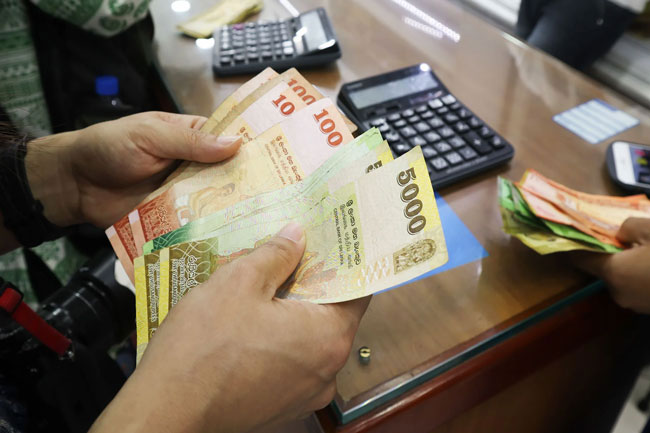
The revised wage structure proposes a hike in the basic salary from Rs. 21,000 to Rs. 27,000, alongside an increase in the minimum daily wage from Rs. 700 to Rs. 1,080.
These measures are grounded in commitments made within the national budget for 2025, and the relevant legislative framework is expected to be tabled in Parliament in the coming weeks.
Historically, the minimum wage figure of Rs. 21,000 has been a composite amount, comprising Rs. 17,500 under the National Minimum Wage of Workers (Amendment) Act, Rs. 1,000 under the 2005 Budgetary Relief Allowance Act, and a further Rs. 2,500 allocated in the 2016 Budgetary Relief Allowance legislation.
The forthcoming changes will incorporate an additional Rs. 3,500 that had previously been distributed as a separate relief allowance, consolidating it into the base wage and effectively raising the financial floor for workers.
Looking ahead, the Ministry has revealed that a further increase is anticipated in 2026. At that time, the basic salary is projected to climb to Rs. 30,000, while the daily minimum wage is set to rise to Rs. 1,200.
This dual-phase wage enhancement plan forms part of a broader effort to ease the burden of living costs and foster a more equitable labour market across the country’s private sector.
Government officials argue that these steps are essential in aligning national wage standards with rising inflation and the evolving demands of the workforce.
They also believe it will have a positive spillover effect, stimulating domestic consumption and improving household stability, particularly in low-income communities.
Whilst some in the business community may raise concerns about short-term cost implications, authorities maintain that the initiative is both fiscally responsible and socially necessary.
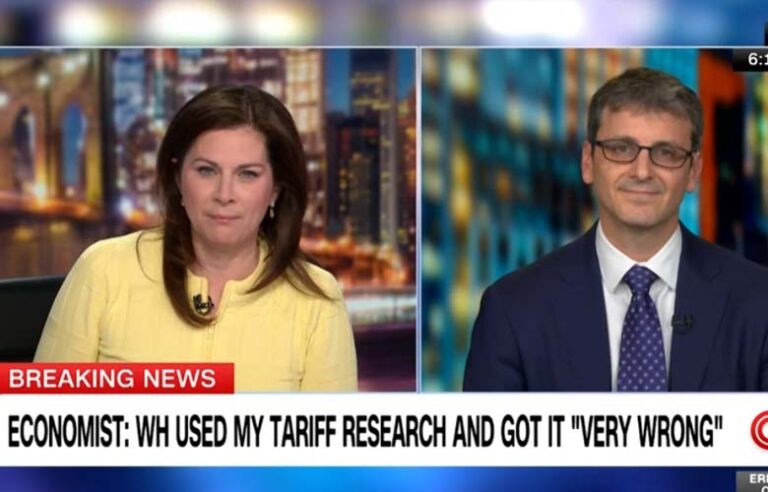
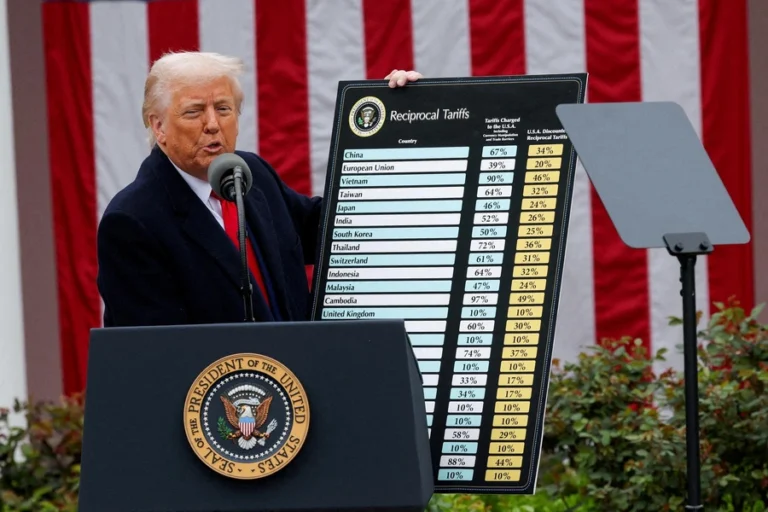
April 10, Colombo (LNW): A segment aired by CNN has drawn attention to Sri Lanka’s unexpected inclusion in the list of nations affected by the United States’ latest tariff proposals, sparking questions about the rationale behind the Trump administration’s broader trade strategy.
The televised discussion featured anchor Erin Burnett and Brent Neiman, an economics professor at the University of Chicago, who both expressed doubts over the logic used to determine which countries would face the new levies.
Burnett questioned whether Sri Lanka truly warranted such measures, pointing out that the country’s trade with the US is relatively modest in scale and does not present a significant imbalance.
“Americans buy a lot of clothes from Sri Lanka, but Sri Lanka doesn’t buy many gas turbines from America. That’s not a trade imbalance that needs to be corrected,” she remarked, highlighting the lack of proportionality in the decision.
Professor Neiman reinforced this view, suggesting that the inclusion of smaller economies such as Sri Lanka, Jordan, and Zambia raised concerns about how the tariff calculations were made.
He described the strategy as evidence of a “mistaken philosophy,” questioning whether the formula behind these reciprocal tariffs genuinely reflects the realities of global trade dynamics.
The Trump administration’s tariff scheme—introduced as part of its ‘America First’ economic agenda—has already provoked significant market turbulence and widespread criticism from both allies and analysts.
The central argument for the policy has been the need to redress trade imbalances with countries that export significantly more to the United States than they import.
However, critics argue that the calculations behind these imbalances are simplistic and fail to take into account broader economic relationships, service trade, and investment flows.
Following mounting backlash from business leaders and international partners, the White House announced a 90-day delay in implementing most of the proposed tariffs, with the exception of China, which remains subject to the harshest rates.
The announcement has brought some temporary relief to global financial markets, which had suffered dramatic declines in the days leading up to the pause.
Nevertheless, the episode has reignited debates over the effectiveness and coherence of the current US trade posture. For smaller economies like Sri Lanka—whose export profile is largely composed of garments and tea, and which has limited leverage in bilateral trade disputes—the implications of such policies are significant.
Analysts warn that being swept into broader geopolitical and economic battles could risk destabilising fragile industries and complicate diplomatic ties with Washington.
With Sri Lanka continuing to navigate the economic and diplomatic fallout from its unexpected listing, questions remain over how the Trump administration intends to balance domestic political messaging with the complex realities of global trade relations.
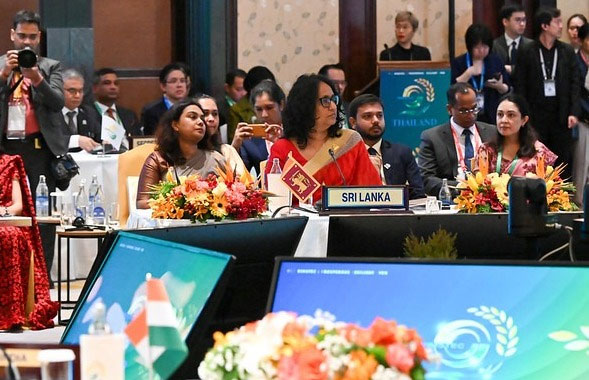
April 10, Colombo (LNW): The sixth edition of the Bay of Bengal Initiative for Multi-Sectoral Technical and Economic Cooperation (BIMSTEC) Summit concluded in Bangkok on April 04, 2025, marking a significant moment for regional diplomacy and collaboration.
The event, held under the theme “Prosperous, Resilient and Open BIMSTEC,” also included the 20th Ministerial Meeting and the 25th Senior Officials Meeting. Hosted by Thailand, the summit convened leaders and senior delegates from across South and Southeast Asia.
Sri Lanka’s delegation was led by Prime Minister Dr Harini Amarasuriya, who was accompanied by Deputy Minister of Foreign Affairs and Foreign Employment Arun Hemachandra, as well as senior representatives from the Foreign Affairs, Foreign Employment and Tourism Ministries.
In her address, Prime Minister Amarasuriya extended her gratitude to the Thai government and Prime Minister Paetongtarn Shinawatra for their hospitality and the smooth conduct of the summit.
During her remarks, Dr Amarasuriya reaffirmed Sri Lanka’s dedication to fostering deeper regional ties, especially in the domains of science, technology, and innovation.
She highlighted the island nation’s role as the lead country in this sector, and expressed confidence in the forthcoming operationalisation of the BIMSTEC Technology Transfer Facility in Colombo. This initiative is anticipated to provide a platform for member states to collaborate on innovation-driven growth, capacity-building, and research partnerships.
Equally emphasised was the recently concluded Plan of Action on Human Resource Development. Dr Amarasuriya urged its swift rollout, noting the central role that skilled and adaptable workforces will play in steering the region through complex future challenges. According to her, human capital investment must remain a cornerstone of regional strategies for sustainable development.
The Prime Minister also drew attention to the untapped potential for intra-regional trade, transport linkages, and economic cooperation. She stressed the need for candid dialogue, cross-border knowledge exchange, and a commitment to dismantling outdated bottlenecks in connectivity.
Upgrading infrastructure—not only in terms of roads and ports but also in digital and energy domains—was cited as a necessary step to unlocking BIMSTEC’s full potential.
At the ministerial level, Deputy Minister Arun Hemachandra represented Sri Lanka in the signing of the BIMSTEC Agreement on Maritime Cooperation—an accord designed to facilitate enhanced maritime safety, resource sharing, and logistical collaboration amongst member nations.
Furthermore, additional memoranda of understanding were finalised with the Indian Ocean Rim Association (IORA) and the United Nations Office on Drugs and Crime (UNODC), signalling BIMSTEC’s intention to foster strategic ties beyond the Bay of Bengal.
The summit culminated in the adoption of several key frameworks and documents. These included the 6th BIMSTEC Declaration, the BIMSTEC Bangkok Vision 2030—a roadmap outlining long-term priorities and integration goals—and new rules of procedure for institutional mechanisms within the bloc.
Leaders also endorsed the Report of the Eminent Persons Group, a strategic blueprint to guide BIMSTEC’s evolution over the coming decade.
In a gesture of solidarity, the summit concluded with a joint statement expressing support for Myanmar and Thailand in the aftermath of the March 28 earthquake. The message reinforced the collective spirit of regional unity that underpinned the summit proceedings and affirmed the grouping’s readiness to stand together in moments of crisis.
April 10, World (LNW): Financial markets across the Asia-Pacific region rallied strongly after a temporary halt was announced on a significant portion of trade tariffs recently introduced by the United States.
The decision, revealed by President Donald Trump, signals a 90-day suspension on the implementation of most so-called “reciprocal” tariffs, triggering widespread relief amongst global investors.
The reaction was particularly pronounced in Tokyo, where Japan’s benchmark Nikkei 225 index surged over 8% in early trading. Analysts attributed the rebound to improved market sentiment following several days of volatility and uncertainty.
One Tokyo-based investment strategist described the regional response as a “collective exhale,” noting that markets had been under intense pressure amid escalating trade hostilities.
In the United States, the positive momentum was already being felt, with Wall Street recording some of its most significant single-day gains in recent history.
Investors responded favourably to the pause, which they interpreted as a sign that the door remains open for dialogue and renegotiation, even as deeper trade disputes persist.
Despite the temporary relief, tensions between Washington and Beijing remain elevated. Whilst the new reprieve covers many countries, China continues to face additional economic pressure after the US raised its tariff rate on Chinese imports to 125 per cent. The move was seen as retaliation after China earlier announced an 84 per cent levy on a broad range of American goods.
President Trump, speaking at a public event held at the White House, struck a defiant yet measured tone. Addressing a crowd gathered for a Nascar-related ceremony, he insisted that the new trade approach was about securing “fair deals” for the United States.
He stated that countries that had long benefitted from imbalanced agreements would now be required to engage in more equitable trading arrangements.
Under the updated measures, a general tariff of 10 per cent will still apply to most US trading partners, excluding those currently engaged in bilateral negotiations. Whilst the temporary suspension offers a reprieve to businesses and investors, economists warn that the broader trade environment remains fragile.
In the coming weeks, attention is expected to shift towards diplomatic efforts to resolve deeper economic disagreements. Market analysts suggest that if progress can be made between the US and its trading partners—especially China—the volatility seen in recent weeks could give way to a more stable outlook.
However, if talks falter, the current rally may prove to be short-lived.
April 10, Colombo (LNW): The government is preparing to initiate a fresh and more comprehensive animal census amid concerns over the reliability of previous data collected on the country’s wildlife populations.
The move comes as part of a broader strategy to implement structured animal management policies that align with international standards.
Addressing the media following a regional development meeting in Kandy, Agriculture Minister K. D. Lal Kantha acknowledged that the earlier attempt at conducting a national animal census had significant shortcomings.
He remarked that whilst it marked a step in the right direction, it fell short of providing the precise data required for effective policy planning.
The Minister emphasised that globally, countries with well-established wildlife and agricultural policies rely on rigorous census exercises before initiating any management measures.
Citing Australia as an example, he noted that even species such as kangaroos are monitored through detailed censuses before control or conservation actions are undertaken.
Sri Lanka, he stated, lacks a consistent history of systematic animal enumeration. The absence of dependable statistics, particularly in rural and forested regions, has made it difficult for authorities to formulate targeted interventions.
This gap in information has become increasingly significant given recent reports of growing human-wildlife conflicts in various parts of the island.
Minister Lal Kantha reiterated that accurate animal data is essential, especially when managing species whose populations are either surging beyond sustainable levels or are at risk.
He indicated that following the upcoming census, the government intends to roll out targeted programmes to address issues posed by certain species, notably monkeys, whose interactions with human settlements have escalated in recent years.
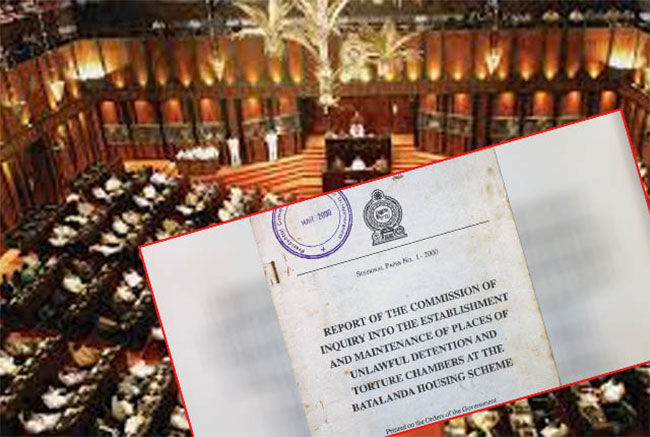
April 10, Colombo (LNW): Today marks the beginning of a significant debate in Parliament, focused on the findings of the Commission of Inquiry into allegations surrounding illegal detention centres and torture chambers purportedly operating within the Batalanda Housing Scheme.
The debate, set to start at 11:30 this morning, is expected to run until 5:30 p.m. and will span a full two days.
The debate follows the release of the Commission’s comprehensive report, which was officially presented to Parliament March 14. The report outlines disturbing claims regarding the establishment of covert detention facilities and the systemic abuse carried out within them.
These findings have raised serious concerns about human rights violations and the rule of law.
Whilst the first session of the debate will take place today, attention now turns to the second session, which is scheduled for May. Parliamentarians will continue their discussions on the allegations and the government’s role in addressing such matters.
After today’s proceedings, Parliament will adjourn for a brief period, reconvening on May 08. This pause allows time for further reflection on the implications of the Commission’s report, with many MPs expected to call for a thorough investigation and the establishment of measures to prevent similar abuses in the future.
April 10, Colombo (LNW): Showers will occur at times in Western and Southern provinces and in Puttalam district.
Showers or thundershowers may occur at several places in Sabaragamuwa, Central, and Uva provinces and in Ampara, Batticaloa and Polonnaruwa districts during the afternoon or night.
Fairly heavy rainfall of above 50 mm are likely at some places in Southern, Sabaragamuwa, Uva and Central provinces and in Ampara district.
Misty conditions can be expected at some places in Sabaragamuwa, Central and Uva provinces during the morning.
The general public is kindly requested to take adequate precautions to minimise damages caused by temporary localised strong winds and lightning during thundershowers.
On the apparent northward relative motion of the sun, it is going to be directly over the latitudes of Sri Lanka during April 05 to 14 in this year. The nearest areas of Sri Lanka over which the sun is overhead today (10) are Hatthikuchchi, Kalankuttiya, Halmillewa, Ipalogama, Palugaswewa, Habarana at about 12:11 noon.
Marine Weather:
Condition of Rain:
Showers or thundershowers will occur at several places in the sea areas off the coast extending from Colombo to Pottuvil via Galle. Showers or thundershowers may occur at a few places in the other sea areas around the island during the evening or night.
Winds:
Winds will be Westerly or South-westerly in direction and wind speed will be (25-35)kmph. Wind speed may increase up to (45-50) kmph at times in the sea areas off the coasts extending from Kankesanthurai to Pottuvil via Puttalam, Galle and Hambantota.
State of Sea:
The sea areas off the coasts extending From Kankesanthurai to Pottuvil via Puttalam, Galle and Hambantota will be fairly rough at times. The other sea areas around the island will be slight to moderate. Temporarily strong gusty winds and very rough seas can be expected during thundershowers.
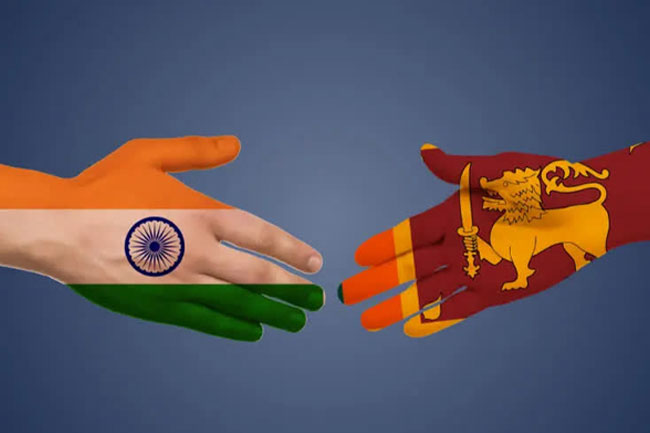
Indian High Commissioner to Sri Lanka Santosh Jha is a seasoned diplomat with experience in several key postings. In this interview, he discusses the significance of PM Narendra Modi’s visit to Sri Lanka and the opportunities and challenges in the India-Sri Lanka partnership. He highlights the importance of fostering a business-friendly, stable investment climate to attract Indian investment and notes that the visit is expected to deliver key outcomes that will elevate the partnership to new heights.
Q: Given the current regional challenges, what is the trajectory of India-Sri Lanka relations?
India-Sri Lanka relations have never been stronger. Rooted in shared aspirations for prosperity, development, and security, our partnership is expanding into new and diverse areas. Sri Lanka remains an integral part of India’s Neighborhood-First Policy and the MAHASAGAR (Mutual and Holistic Advancement for Security and Growth Across Regions) approach. As a reflection of this commitment, India extended an unconditional financial assistance package of over $ 4 billion—the largest ever deployed in support of any country. With Sri Lanka now on the path to economic recovery, it has a great opportunity to integrate with India’s fast-growing economy, which has doubled in size from $ 2.1 trillion in 2015 to $ 4.3 trillion in 2025. As the fifth-largest economy, soon to be the third-largest, India remains a key partner in Sri Lanka’s resurgence.
Indian High Commissioner to Sri Lanka Santosh Jha
Q: India’s support for Sri Lanka’s economic stabilisation is now widely acknowledged by the public. What Sri Lanka needs now is growth. Could you share insights on the next phase of economic support?
India is Sri Lanka’s largest trade partner, a leading investor, and the biggest source of tourism revenue. The India-Sri Lanka Free Trade Agreement (FTA) has significantly benefited Sri Lanka, with 65% of Sri Lanka’s exports utilising FTA benefits compared to just 5% for India. Sri Lanka has also maintained a trade surplus in FTA-covered goods. However, both nations recognise the need to upgrade the FTA by removing existing impediments, eliminating non-tariff barriers, and enabling greater trade facilitation. India’s development partnership in Sri Lanka includes railway modernisation and port upgrades such as the Kankesanthurai Port, infrastructure projects like housing, schools, and hospitals, renewable energy initiatives such as solar electrification of religious places and hybrid energy projects in Jaffna, and support for agriculture, fisheries, and cold storage facilities. To date, India has extended financial assistance exceeding $ 7 billion, including $ 800 million in grant aid and the conversion of $ 100 million in loans into grants. These projects span all 25 districts in Sri Lanka.
Q: How can India and Sri Lanka further strengthen business and investment flows?
India is already a leading foreign investor in Sri Lanka, and this trend is expected to grow. Major Indian investments include the West Container Terminal at Colombo Port, the ITC Hotel, renewable energy projects, and CEAT’s $ 225 million acquisition of two Michelin plants. Bilateral infrastructure and energy projects are investment-driven, and India continues to encourage private sector investments. A business delegation from the Confederation of Indian Industry (CII) is expected later this year. During President Disanayake’s visit to India in December 2024, he engaged with Indian industry leaders, reinforcing the importance of Sri Lanka’s proximity to India’s economic growth. To capitalise on this, Sri Lanka must ensure a business-friendly, stable investment climate.
Q: Another critical area of concern is maritime security and regional challenges. How are India and Sri Lanka addressing these issues?
Both nations have reaffirmed their shared maritime security interests in the Indian Ocean Region and are committed to strengthening regional security through the Colombo Security Conclave, BIMSTEC, and IORA. This includes joint training, military exercises, and defence collaboration such as the deployment of a Dornier aircraft for maritime surveillance and the establishment of a Maritime Rescue and Coordination Centre in Sri Lanka. Sri Lanka has also made it clear that it will not allow its territory to be used in ways that threaten India’s security or regional stability.
Q: What steps are being taken to strengthen cultural and educational ties between India and Sri Lanka?
The people-to-people ties between India and Sri Lanka span millennia. Recent initiatives to strengthen cultural and educational connections include recognising Pali as a classical language in India, with Sri Lanka being the first to welcome the announcement, translating Jataka Tales into Sinhala and reprinting the Namamala Pali grammar book, and promoting Buddhist circuits and the Ramayana trail, which attract visitors from both countries. Education and youth engagement remain key priorities, with nearly 800 scholarships awarded annually to Sri Lankan students, including 200 new scholarships for students of Jaffna and Eastern Universities, along with expanded skills training and development opportunities for Sri Lankans in Indian institutions.
Q: How do you see the future of the India-Sri Lanka partnership amid the influence of other global players?
The India-Sri Lanka partnership is built on people-centric cooperation, with future collaboration focusing on digital transformation and IT-enabled services, renewable energy and sustainable infrastructure, human resource and skill development, and trade and investment growth to strengthen both economies. These areas will define the partnership’s next decade, ensuring that both nations grow together and remain future-ready.
i’m Q: Lastly, what is the broader significance of Indian PM Narendra Modi’s visit to Sri Lanka?
Indian PM Narendra Modi’s upcoming visit follows President Disanayake’s first official visit to India in December 2024. This visit holds special significance as PM Modi will be the first foreign leader to visit Sri Lanka under the new Government—underscoring the unique and strategic nature of bilateral relations. This will be PM Modi’s fourth visit to Sri Lanka in the last decade, reflecting India’s commitment to supporting Sri Lanka’s economic recovery, deepening cooperation on shared growth and development, and strengthening ties in areas such as investment, connectivity, digitisation, energy, security, and defence. The visit is expected to yield key outcomes that will elevate the India-Sri Lanka partnership to new heights.




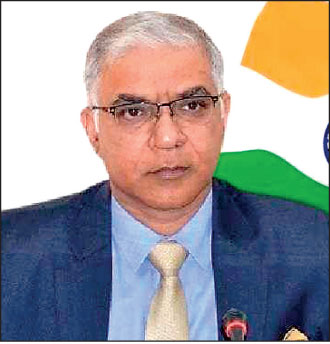 Indian High Commissioner to Sri Lanka Santosh Jha