March 29, Colombo (LNW): The Ministry of Health has revealed that a staggering 83 per cent of all deaths in Sri Lanka are caused by non-communicable diseases (NCDs), underscoring a growing public health crisis in the country.
Amongst the most concerning issues is hypertension, with 35 per cent of individuals over the age of 60 suffering from high blood pressure.
Minister of Health and Mass Media Dr. Nalinda Jayatissa warned that undiagnosed hypertension leads to nearly 60,000 strokes annually, with approximately 4,000 individuals either dying or becoming permanently disabled each year.
The alarming statistics highlight the urgent need for better early detection and treatment of cardiovascular diseases.
Diabetes also remains a significant concern, with 20 per cent of the adult population affected. Shockingly, 41 per cent of those diagnosed do not seek any form of medical treatment, raising fears of severe long-term complications such as organ failure, blindness, and amputations.
Health experts are calling for immediate action, urging nationwide awareness campaigns, improved access to early screenings, and better lifestyle interventions to combat the growing burden of NCDs in Sri Lanka.
March 29, Colombo (LNW): Popular Sri Lankan comedy duo “Blok & Dino” have responded to backlash over a recent video, which critics claim mocks the country’s Indigenous Veddah community.
The controversy escalated after reports suggested that the Chief of the Veddah community had lodged a complaint with the Criminal Investigation Department (CID).
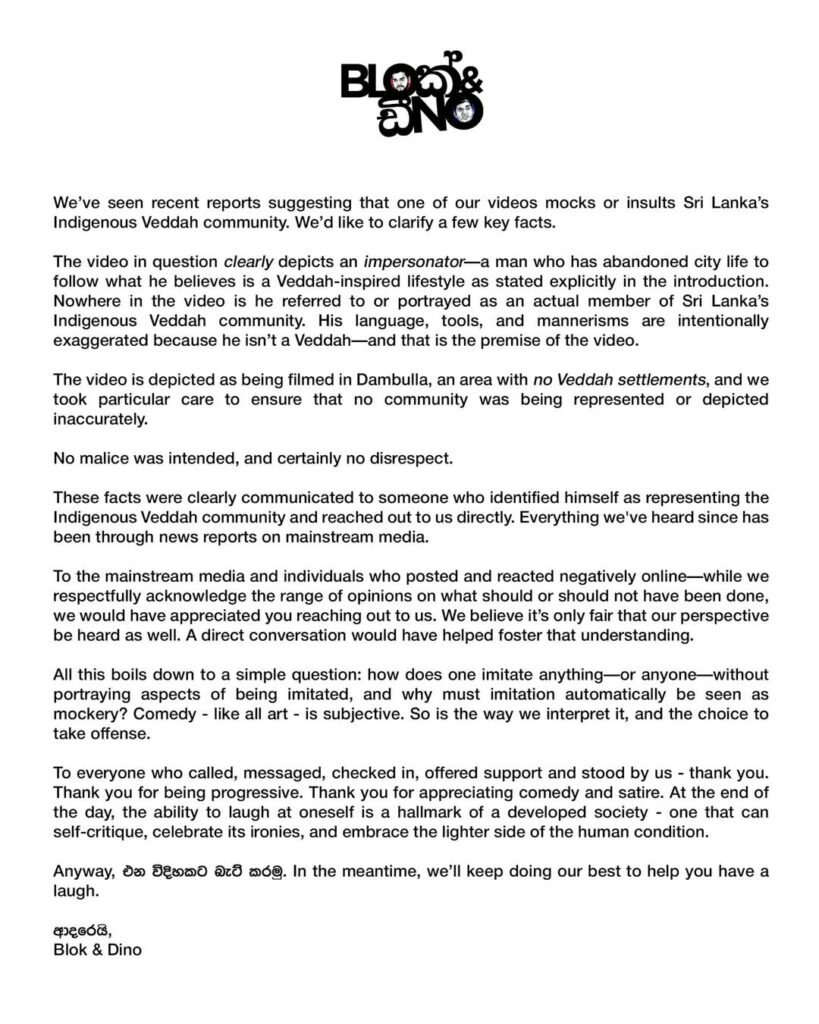
In a public statement, Blok & Dino clarified that the video features an impersonator—a man who adopts what he believes to be a Veddah-inspired lifestyle.
They emphasised that the character is not portrayed as an actual member of the Indigenous community, and the exaggerated mannerisms, tools, and speech are intentional for comedic effect.
The duo also addressed concerns regarding the location, confirming that the video was filmed in Dambulla, an area with no Veddah settlements, and that they took care to avoid misrepresentation. They stated that no offence was intended and reaffirmed their respect for the Indigenous community.
Blok & Dino revealed that they had previously communicated with an individual who identified himself as a representative of the Veddah community, but were unaware of any further concerns until the matter gained traction in the media.
The comedians criticised mainstream media for not reaching out to hear their side of the story before publishing reports.
“Comedy—like all art—is subjective. So is the way we interpret it, and the choice to take offence,” their statement read, underscoring their belief that satire and self-irony are essential aspects of society.
The controversy has sparked debate on the fine line between comedy and cultural sensitivity, with supporters of Blok & Dino defending artistic expression, whilst critics argue the portrayal was inappropriate.
Namal Rajapaksa Indicted for Misappropriation of Funds in Krrish Project
By:Ovindi Vishmika
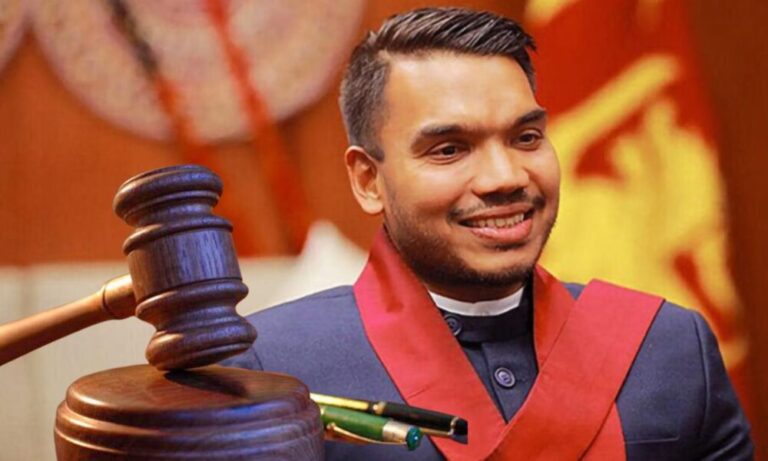
March 29, Colombo (LNW): Namal Rajapaksa, the son of former Sri Lankan President Mahinda Rajapaksa, has been indicted on charges of misappropriating Rs. 70 million in connection with the controversial Krrish project. The indictment, filed by Sri Lanka’s Attorney General on January 28, 2025, alleges that Rajapaksa diverted funds from the Indian real estate company, Krish Realtech Private Limited, which were originally intended for the development of rugby in Sri Lanka. The case has been a subject of public scrutiny for several years and is now gaining traction in the courts.
A Long-Running Investigation
The charges stem from an investigation that was initially launched in 2015 when current Minister Wasantha Samarasinghe filed a complaint accusing Rajapaksa of financial irregularities involving the Krish company. The Financial Crimes Investigation Division (FCID) conducted an inquiry, and in 2016, Rajapaksa was arrested as a suspect. However, he was later released on bail, and the case has since been delayed multiple times. Now, almost eight years later, the Attorney General has moved forward with formal charges, alleging that Rajapaksa misused the funds for personal gain instead of rugby development as claimed.
Rajapaksa, a former national rugby player, has denied all allegations, calling the charges politically motivated. In a statement on social media, he claimed that the indictment was a tactic by the National People’s Power (NPP) government to distract from its failures in governance. He further accused the government of fabricating allegations against his family to shift focus away from national issues and the hardships faced by the people.
Despite the political claims, the legal proceedings are moving forward. Rajapaksa remains out on bail while awaiting further court hearings. The Krrish project itself has been under investigation for corruption in both Sri Lanka and India, with Krish Realtech’s promoter, Amit Katyal, facing charges of money laundering in India.
Legal Setbacks: Judicial Recusals
In a related development, the case has been complicated by judicial recusal. Colombo High Court Judge Manjula Thilakaratne, who was initially overseeing the money laundering case, recused himself after social media posts targeted him. These posts, published by individuals named “Poddala Jayantha” and “Sanath Balasuriya,” were deemed to have caused contempt of court. As a result, Thilakaratne decided to step down, and the case was referred to another judge, Sujeewa Nissanka. However, Nissanka also recused himself, citing similar concerns.
The case is now in the hands of Colombo Chief High Court Judge Adithya Patabendige, who will appoint a new judge to proceed with the trial. The next hearing is scheduled for May 2025.
The ongoing investigations also include money laundering allegations. The FCID has been investigating the involvement of several individuals, including Rajapaksa, in illicit financial activities related to the Krrish project. As part of the investigation, the FCID has frozen several bank accounts linked to the case and requested a travel ban for the individuals involved, excluding Rajapaksa. These actions highlight the seriousness of the financial misconduct charges and the potential consequences for those implicated.
The legal and political implications of the case remain significant. While Namal Rajapaksa continues to maintain his innocence and insists that the charges are politically driven, the case is closely watched both within Sri Lanka and internationally. It has become a key point of contention in Sri Lankan politics, raising questions about accountability and transparency within the political elite.
Looking Ahead: What’s Next for Namal Rajapaksa?
As the legal proceedings continue, the public remains eager to see how the case unfolds. With hearings scheduled for May 2025, there is still time for new developments and revelations to emerge. The outcome of this high-profile case could have lasting ramifications on Namal Rajapaksa’s political career, as well as on the broader political environment in Sri Lanka. Will the charges stick, or is this simply another attempt to tarnish the Rajapaksa family’s legacy? The coming months will provide answers.
March 29, World (LNW): In rather a controversial move reflecting growing concerns over Europe’s security landscape, the European Union has recommended that its 450 million citizens stockpile essential supplies sufficient for at least 72 hours.
This guidance aims to enhance individual preparedness in the face of potential crises, including natural disasters, cyberattacks, pandemics, and geopolitical tensions.
The EU’s Preparedness and Crisis Management Commissioner, Hadja Lahbib, emphasised the interconnected nature of contemporary threats, stating, “Today’s threats facing Europe are more complex than ever, and they are all interconnected.”
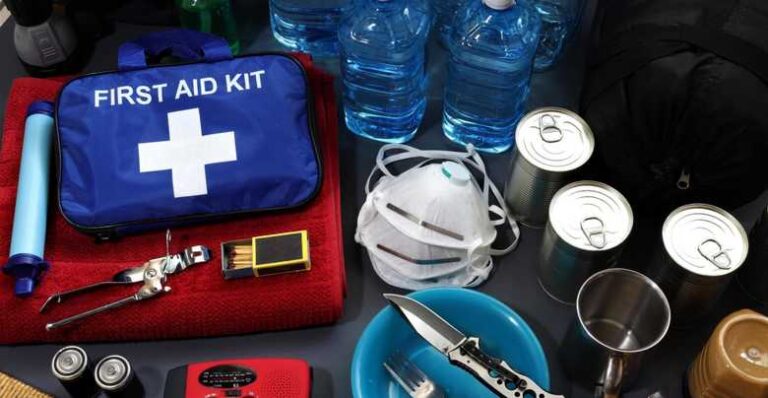
She underscored the importance of proactive readiness, advising citizens to assemble emergency kits containing food, water, flashlights, identification documents, medications, and shortwave radios.
This initiative aligns with similar measures adopted by several European nations. Sweden, for instance, updated its Cold War-era civil emergency advice to better reflect current security realities, including guidance on actions during nuclear incidents.
Finland has also launched a state-run online resource detailing how individuals should prepare for various emergencies.
In the Baltic states, Lithuania reported that 115,000 people enrolled in civil resilience courses in the first two months of 2025 alone, a significant increase from previous years.
The EU’s recommendation has sparked widespread speculation about the underlying reasons for such guidance. Some citizens interpret it as a precautionary measure against potential military conflicts, particularly given NATO Secretary-General Mark Rutte’s warning that Russia could be capable of launching another attack in Europe by 2030.
Others view it as a response to the increasing frequency of natural disasters, such as the recent 7.7 magnitude earthquake that struck Myanmar and Thailand on March 28, 2025, resulting in significant casualties and infrastructure damage.
Despite the varied interpretations, EU officials maintain that the guidance is a proactive step to ensure public safety and resilience.
The strategy includes plans for a “national preparedness day” and the integration of preparedness education into school curricula, aiming to foster a culture of readiness across member states.
Experts in emergency management support the EU’s advice, highlighting the importance of individual preparedness in mitigating the impact of unforeseen events.
They recommend that households maintain supplies such as bottled water (one gallon per person per day), non-perishable food items, radios, hygiene products, first aid kits, and essential documents.
Some suggest extending the supply duration to two weeks, acknowledging economic challenges for many families.
Whilst the EU’s call for preparedness has been met with a mix of support and scepticism, it underscores a broader trend towards enhancing civil resilience in an era marked by uncertainty. With Europe navigating complex challenges, the emphasis on individual and collective readiness serves as a reminder of the importance of proactive measures in safeguarding communities against a spectrum of potential crises.
March 29, Colombo (LNW): The Department of Examinations has issued a formal clarification regarding misinformation circulating about the release of the G.C.E. Advanced Level examination results.
In an official statement, the department strongly refuted recent media reports, asserting that no official announcement has yet been made concerning the publication of results.
Authorities urged students, parents, and the general public to disregard unverified information being spread across various media platforms.
They emphasised that official updates regarding the results will only be communicated through the department’s official channels, warning against reliance on speculative reports.
The statement also highlighted the importance of verifying information before sharing it, as misleading claims can cause unnecessary anxiety among students awaiting their results.
Officials reassured the public that an announcement would be made in due course and encouraged students to remain patient while the necessary administrative processes are completed.
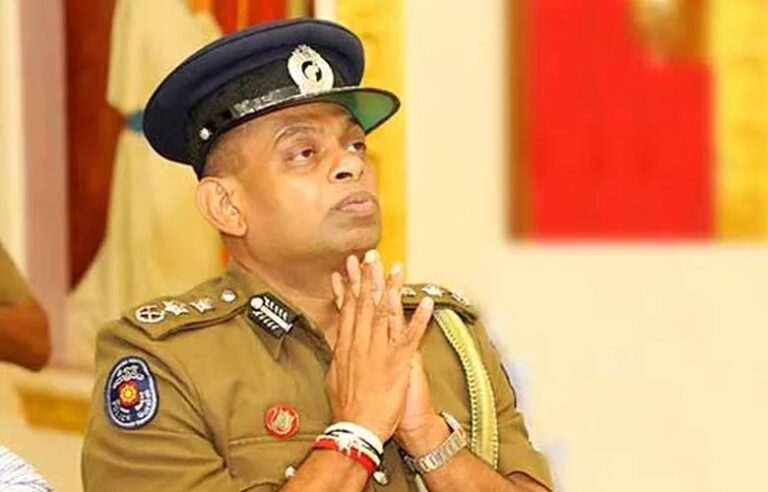
March 29, Colombo (LNW): A police constable attached to the Special Protection Division, along with a civilian from Thalawathugoda, has been taken into custody for allegedly assisting suspended Inspector General of Police (IGP) Deshabandu Tennakoon in evading arrest for nearly three weeks.
The arrest was confirmed by the police spokesperson, who stated that the two individuals had helped Tennakoon remain in hiding from February 27 to March 19.
Tennakoon, who had been the subject of an active arrest warrant, was wanted in connection with a shooting that took place near a hotel in Weligama’s Pelena area on December 31, 2023.
Despite repeated attempts by law enforcement to apprehend him, he managed to evade capture until eventually surrendering to the court on March 19.
Following his appearance, he was remanded in custody and is currently being held at Dumbara Prison in Kandy until his next court hearing on April 03.
Prior to his suspension, Tennakoon held the highest-ranking position in Sri Lanka’s police force, making his evasion of arrest and subsequent surrender a topic of national debate.
Earlier, the Matara Magistrate’s Court had issued arrest warrants for eight police officers, including former members of the Colombo Crimes Division (CCD), alongside Tennakoon.
All were named as suspects in the shooting incident outside the W15 Hotel in Weligama.
Authorities are continuing investigations into the circumstances surrounding Tennakoon’s disappearance, including the possible involvement of additional individuals in aiding his escape.
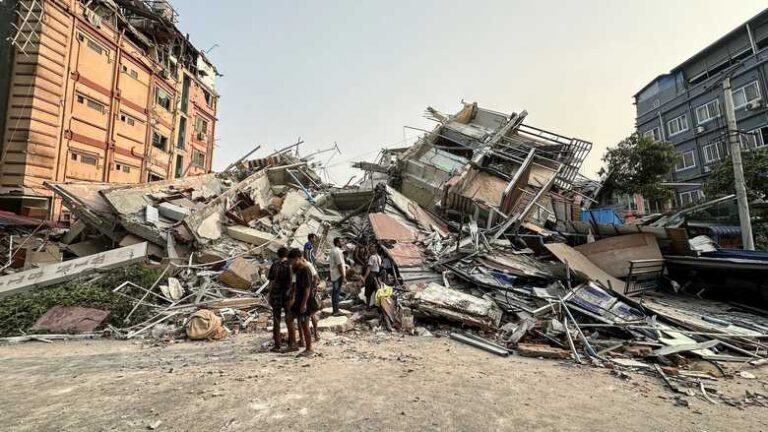
March 29, Colombo (LNW): A powerful earthquake struck Myanmar on Friday, leaving at least 144 people dead and injuring more than 700, according to reports from state-run MRTV.
The tremor, which originated within Myanmar, sent shockwaves across Southeast Asia, causing widespread panic and structural damage in neighbouring countries.
The earthquake triggered a humanitarian crisis in Myanmar, with emergency response teams struggling to navigate through debris-laden streets to reach affected communities.
Hospitals, already stretched thin, have been overwhelmed by the influx of injured victims, whilst rescue efforts are being hampered by damaged infrastructure and power outages.
Entire neighbourhoods in some areas have been reduced to rubble, with officials warning that the death toll could rise further as search operations continue.
The tremors were also strongly felt in Thailand, where the disaster caused significant structural collapses, including the complete destruction of a high-rise building under construction in Bangkok.
Thai emergency services reported that at least five people had been killed in the collapse, whilst 117 remain missing as search-and-rescue teams race against time to locate survivors trapped beneath the wreckage.
Authorities across the region have urged residents to remain vigilant, as aftershocks continue to rattle affected areas. Governments in both Myanmar and Thailand have mobilised emergency response teams, whilst neighbouring countries have offered assistance in relief efforts.
Experts have pointed out that the region sits along an active seismic zone, making it particularly vulnerable to earthquakes of this magnitude.
Whilst Myanmar has experienced devastating quakes in the past, the scale of destruction in this incident underscores the urgent need for improved disaster preparedness and stronger building regulations to mitigate future catastrophes.
March 29, Colombo (LNW): A parliamentary inquiry has revealed that a private firm, ‘Savorite’, was granted Waiver of Registration (WoR) certificates to import 38 types of medicines in 2022 without undergoing mandatory evaluation by the National Medicines Regulatory Authority (NMRA).
The revelation has raised serious concerns about regulatory oversight in the country’s healthcare sector.
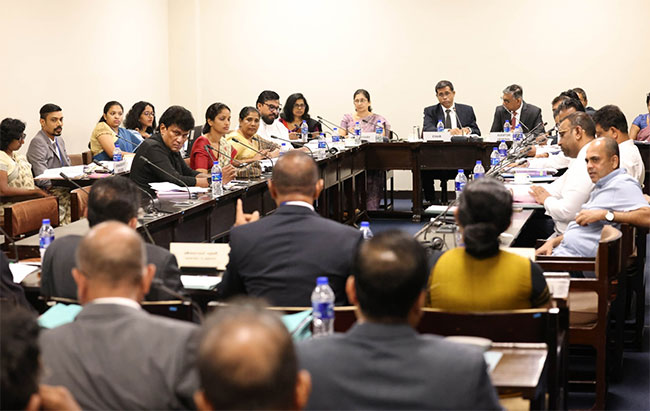
During a meeting of the Committee on Public Enterprises (COPE) held on Wednesday (26) in Parliament, it was disclosed that the former Minister of Health had directly instructed that ‘Savorite’ be selected to import medicines under this arrangement.
The former Secretary to the Ministry of Health confirmed to the committee that the decision was made under ministerial directives.
The committee, chaired by MP Dr Nishantha Samaraweera, convened to review the Auditor General’s reports for 2022, 2023, and 2024, as well as to assess the ongoing performance of the NMRA.
The chairperson criticised the NMRA’s failure to evaluate the imported medicines, stating that the authority’s core function is to ensure drug quality, safety, and efficacy—responsibilities that should not be delegated to the Medical Supplies Sector.
Former NMRA board members clarified that, although there were emergency provisions for expedited medicine imports, such approvals required a proper evaluation.
They stressed that the board had not authorised the process and, therefore, could not accept accountability for the decision.
The discussions further revealed that the former Minister of Health had directed ‘Savorite’ to supply medicines for three months to address shortages.
COPE also examined a Cabinet Memorandum submitted by the former minister on 26 September 2022, which stated that a critical shortage of medicines was imminent within three weeks.
When questioned, Ministry of Health officials explained that the Cabinet Memorandum was based on data from the existing medicine supply database.
However, the committee chairperson expressed scepticism, deeming it highly unlikely that such a vast range of essential medicines could reach zero stock levels simultaneously.
He accused the responsible officials of negligence for allowing the situation to escalate to such an extent.
The Auditor General also raised concerns, noting that medicines had been imported even when existing stocks were already on order and due to arrive, further questioning the legitimacy of the crisis.
As a result, the COPE chair directed officials to compile a comprehensive report identifying those involved in preparing the Cabinet Memorandum.
The committee also resolved to submit a full investigative report on these irregularities to Parliament and ensure swift action is taken against those responsible.
Several Members of Parliament, including Mano Ganeshan, Nalin Bandara Jayamaha, S. M. Marikkar, Chaminda Wijesiri, Attorney-at-Law Nilanthi Kottahachchi, Chandima Hettiarachchi, Asitha Niroshana Egoda Vithana, Kosala Nuwan Jayaweera, Sudath Balagalla, Dr S. Sri Bavanandarajah, Lieutenant Commander (Retd.) Prageeth Madhuranga, and Samanmali Gunasinghe, attended the committee meeting.
March 29, Colombo (LNW): Showers or thundershowers will occur at several places in Western, Sabaragamuwa, Southern, Central and Uva provinces and in Kurunegala district after 2.00 p.m., the Department of Meteorology said in its daily weather forecast today (29).
Fairly heavy showers above 50 mm can be expected at some places in Sabaragamuwa and Southern provinces.
Misty conditions can be expected at some places in Western, Sabaragamuwa, Central and Uva provinces and in Galle, Matara and Kurunegala districts during the morning.
The general public is kindly requested to take adequate precautions to minimise damages caused by temporary localised strong winds and lightning during thundershowers.
Marine Weather:
Condition of Rain:
Showers or thundershowers are likely at a few places in the sea areas off the coast extending from Puttalam to Hambantota via Colombo, Galle and Matara during the evening or night.
Winds:
Winds will be North-westerly or variable in direction and wind speed will be (20-30)kmph.
State of Sea:
Sea areas around the island will be slight to moderate. Temporarily strong gusty winds and very rough seas can be expected during thundershowers.
March 28, Colombo (LNW): the revolutionary Starlink satellite broadband services will be available in the country from next month Cabinet Spokesman and Minister Dr. Nalinda Jayatissa announced yesterday.
Responding to journalists at the weekly post-Cabinet meeting media briefing, he explained that the Government has taken steps to regulate and oversee the service to ensure national security and service quality.
“The Government intervened to streamline the process and ensure that all necessary security measures and regulatory standards are met,” he said, adding that these considerations should have been prioritised from the outset of the discussions.
Starlink, developed by SpaceX, is the world’s first and largest satellite constellation that operates in low Earth orbit to provide high-speed, low-latency broadband internet. The service is designed to support streaming, online gaming, video calls, and more, making it a potential game-changer for internet access in Sri Lanka.
In January, the Telecommunications Regulatory Commission of Sri Lanka (TRCSL) approved the tariff plans for Elon Musk’s ‘Starlink’ satellite broadband services to be implemented through ‘Starlink’ Lanka Ltd in Janauary this year. .
The five ‘Starlink’ monthly packages inclusive of tax approved include Residential (Fixed – Rs. 15,000) with unlimited residential data offering download speed of 50-200 Mbps and upload speed of 20-40 Mbps and Residential Lite Fixed (Rs. 9,200) with unlimited deprioritised data offering download speed of 30-100 Mbps and 5-25 Mbps of upload speed.
Priority – Fixed package options include Rs. 20,994 per month inclusive of 40 GB of priority data; Rs. 62,859.24 per month inclusive of 1 TB; Rs. 125,965.46 for 2 TB and customer subscribes to a 1 TB, 2 TB or 6 TB monthly data plan with an additional charge of Rs. 125.57 per GB for priority data above the subscribed levels.
The Roam (Mobility) package is Rs. 27,000 per month regional service and Rs. 145,000 per month global service.
The mobility priority is Rs. 92,374.67 per month upto 50 GB of priority mobile data and Rs. 370,486.66 per month upto 1 TB of priority mobile data; Rs. 1.85 million per month for up to 5 TB of priority mobile data and Rs. 738.71 per GB of priority data above these levels.