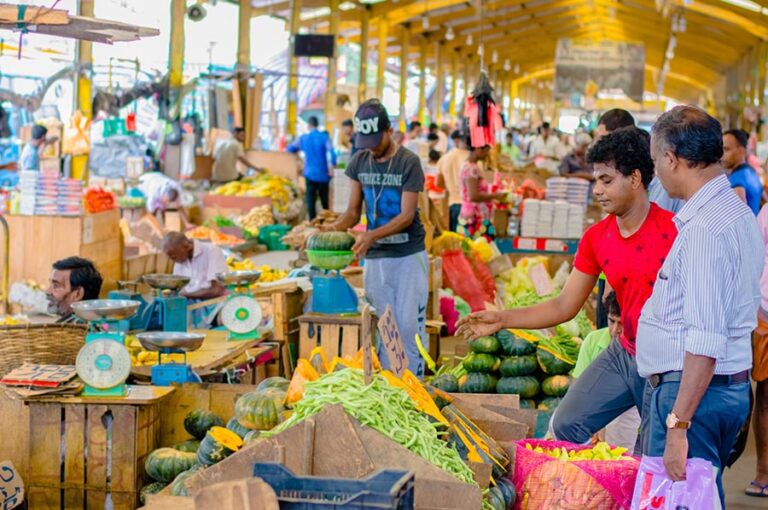
March 18, Colombo (LNW): In a move aimed at supporting the agricultural sector, the Cabinet of Ministers has approved the allocation of fertiliser subsidies for farmers planning to cultivate land during the 2025 Yala season.
The decision follows a proposal presented by the Minister of Agriculture, Livestock, Lands, and Irrigation, which outlines financial assistance for various farming activities.
Under the approved plan, farmers involved in paddy cultivation will receive a subsidy of Rs. 25,000 per hectare, with a limit of two hectares per farmer.
Additionally, those cultivating other field crops on paddy lands, as identified in seasonal consultations, will be eligible for a subsidy of Rs. 15,000 per hectare, again with a cap of two hectares.
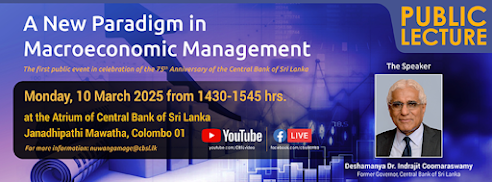
This article is to present key points published in the Daily Mirror, 14 March 2025 (Press here to read the article), based on a public lecture made by Dr. Indrajit Coomaraswamy, Central Bank Governor 2016-2019, on 10 March 2025 in celebration of the 75th Anniversary of the Central Bank of Sri Lanka.
This blog article reveals the importance of the contents of the Daily Mirror article to provide a key source of information critical for investigating into those who are responsible for the economic crisis that the country has been confronting since late 2020 if relevant authorities are interested in conduct of a technical investigation.
It is the general practice seen in many countries that official reports are published after economic crises to inform the public of causes, impact and resolution measures of such crises and reform agenda proposed to prevent the recurrence of such crises.
However, whole blame for the crisis in Sri Lanka has been singularly passed to a handful of leaders and officials who were involved in managing the economy in 2020/21 based purely on political agendas without any official crisis reports of macroeconomic nature published by relevant authorities.
Key points in the Daily Mirror article showing untold causes of the crisis
I list down important points below. However, I don’t wish to comment or add to them in order to keep their investigative value open for public debate or investigation.
Despite a pushback against future borrowings via International Sovereign Bonds (ISBs) from certain quarters, Sri Lanka will, at some point, have to tap international capital markets to prevent further economic compression and close the external financing gap, which remains wide.
Sri Lanka should not and cannot achieve smooth debt management and gradually reduce its external financing needs before tapping ISBs again—something the country has neither done nor been able to do since 2019.
Without such borrowings—typically at a relatively lower cost than portfolio investments in rupee government securities and with longer maturities—Sri Lanka will struggle to bridge its external financing gap.
Unless funds come from sovereign bonds, Sri Lanka would experience compression in both consumption and investment, which the country cannot afford due to the deep contraction and its economic consequences on businesses and the public alike.
ISBs are probably the most effective way of doing it unless we sell ourselves to some donor who will bankroll us, which is not a good outcome.
Total outstanding sovereign bonds rose from US$ 5.0 billion at the beginning of 2015 to US$ 15.0 billion by the end of 2019, with US$ 4.5 billion raised in 2019 alone.
This was done for two reasons—first, to reduce reliance on highly volatile portfolio inflows into government securities, which stood at around US$ 3.5 billion in early 2015, and second, to reduce approximately US$ 2.5 billion worth of currency swaps with other central banks.
Portfolio investments in rupee securities were causing significant trouble due to their extreme volatility, creating uncertainties for policy-making at a time when the U.S. Federal Reserve was raising interest rates. As a result, portfolio investments were brought down to about US$ 600 million and currency swaps down to US$ 500 million by the end of 2019, from where they stood at the start of 2015.
Funds raised through ISBs were crucial in extending the maturities of Sri Lanka’s external debt and lowering borrowing costs, as ISBs were issued at rates between 6 percent and 7 percent, compared to rupee bonds, which were around 12 percent at the time.
US$ 4.5 billion worth of bonds issued in 2019 were raised both to extend maturities and to create buffers for the next administration, which was almost certain to come into power later that year due to public dissatisfaction following the Easter bombings.
It was fairly certain that the economic stabilisation programme would not continue under a future administration, which could lead to the discontinuation of the then-ongoing International Monetary Fund (IMF) programme.
Even the markets were willing to lend to Sri Lanka at the time, as they believed in the country’s progress in strengthening macroeconomic fundamentals under the IMF programme and through the Active Liability Management Act, which was passed in parliament during that period.
Pushing back against claims that large-scale bond issuances were primarily responsible for Sri Lanka’s 2022 debt default, Dr. Coomaraswamy argued that these borrowings actually helped delay an otherwise inevitable default. Without continued to borrow or issue ISBs, the default would have been much earlier because of literally borrowing to repay the debt where at least 90 percent of fresh borrowings during that period were used to settle existing debts.
Concluding remarks
The celebration referred to in the article seems to be that of the Central Bank operated under the Monetary Law Act (MLA) since 28 August 1950 until 13 September 2023. The present Central Bank of Sri Lanka is the world’s newest central bank that was established on 14 September 2023 under the Central Bank of Sri Lanka Act, No. 16 of 2023 which repealed the MLA ,which is to celebrated its second anniversary in September this year.
However, the said public lecture is really an insight into how those who governed the Central Bank under the MLA caused the catastrophe to the economy and living standards during its last years of operations despite their public mandates.
The Central Bank under the MLA was the monetary policymaker, public debt manager, fiscal agent, fiscal adviser, banker to the government, country’s foreign reserve manager, exchange rate manager and bank regulator supported by a wide range of public policy powers granted by the MLA for the overall statutory objective of maintaining the economic and price stability and financial system stability of the country financed by discretionary money printing as determined by a handful of central bank managers. This is the only institution in the county that does not encounter financing constraints for its operations. Therefore, the Central Bank has been so generous even to borrow through ISBs in 2019 to create a buffer for the next government predicted by the Central Bank on prevailing political circumstances.
Therefore, in reading through relevant provisions of the MLA and events that led to the crisis, there is no doubt that the crisis was the singular outcome of the gross failure and negligence of the managers of the Central Bank on their public policy duties especially after 2015.
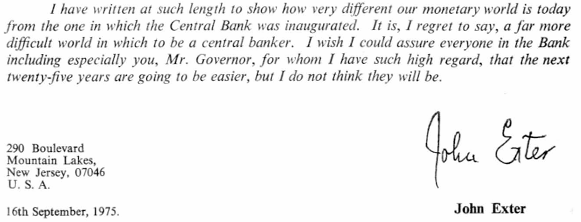
For any investigation on the crisis if it were to commence, the Exter Report along with subsequent amendments made to the MLA from time to time would be a necessary source of information. In addition, two paragraphs are noted below from Mr. John Exter’s message sent to the 25th Anniversary Commemorative Volume of the Central Bank, who alerted a difficult period of next 25 years and beyond for the Central Bank.
Until we do the investigation and resolve the monetary and economic structure of the country to be capable of mobilizing resources and opportunities for higher living standards targeted in next 50 years, the present crisis may never end as the monetary system will be governed by those of the network macroeconomic thoughts connected to the contents of the Daily Mirror article as revealed at present. Therefore, what we should be interested in are only the capable systems and not artificially created images of specific persons and institutions.
Otherwise, the crisis will continue as the single source of the country’s political instability created by leaders struggling for the power through false promises made for recovering the economy and people from the crisis without knowing real causes and effective recovery measures.
Finally, contents of the Daily Mirror article show how the economy and people of Sri Lanka were trapped in the global network of IMF and financial investors and firm signals of its persistence despite the change in the hands of national leaders.
(This article is released in the interest of participating in the professional dialogue to find out solutions to present economic crisis confronted by the general public consequent to the global Corona pandemic, subsequent economic disruptions and shocks both local and global and policy failures. All are personal views of the author based on his research in the subject of Economics which have no intension to personally or maliciously discredit characters of any individuals.)
P Samarasiri
Former Deputy Governor, Central Bank of Sri Lanka
(Former Director of Bank Supervision, Assistant Governor, Secretary to the Monetary Board and Compliance Officer of the Central Bank, Former Chairman of the Sri Lanka Accounting and Auditing Standards Board and Credit Information Bureau, Former Chairman and Vice Chairman of the Institute of Bankers of Sri Lanka, Former Member of the Securities and Exchange Commission and Insurance Regulatory Commission and the Author of 13 Economics and Banking Books and a large number of articles published.)
Article’s purpose and background
This article is to present key points published in the Daily Mirror, 14 March 2025 (Press here to read the article), based on a public lecture made by Dr. Indrajit Coomaraswamy, Central Bank Governor 2016-2019, on 10 March 2025 in celebration of the 75th Anniversary of the Central Bank of Sri Lanka.
This blog article reveals the importance of the contents of the Daily Mirror article to provide a key source of information critical for investigating into those who are responsible for the economic crisis that the country has been confronting since late 2020 if relevant authorities are interested in conduct of a technical investigation.
It is the general practice seen in many countries that official reports are published after economic crises to inform the public of causes, impact and resolution measures of such crises and reform agenda proposed to prevent the recurrence of such crises.
However, whole blame for the crisis in Sri Lanka has been singularly passed to a handful of leaders and officials who were involved in managing the economy in 2020/21 based purely on political agendas without any official crisis reports of macroeconomic nature published by relevant authorities.
Key points in the Daily Mirror article showing untold causes of the crisis
I list down important points below. However, I don’t wish to comment or add to them in order to keep their investigative value open for public debate or investigation.
Despite a pushback against future borrowings via International Sovereign Bonds (ISBs) from certain quarters, Sri Lanka will, at some point, have to tap international capital markets to prevent further economic compression and close the external financing gap, which remains wide.
Sri Lanka should not and cannot achieve smooth debt management and gradually reduce its external financing needs before tapping ISBs again—something the country has neither done nor been able to do since 2019.
Without such borrowings—typically at a relatively lower cost than portfolio investments in rupee government securities and with longer maturities—Sri Lanka will struggle to bridge its external financing gap.
Unless funds come from sovereign bonds, Sri Lanka would experience compression in both consumption and investment, which the country cannot afford due to the deep contraction and its economic consequences on businesses and the public alike.
ISBs are probably the most effective way of doing it unless we sell ourselves to some donor who will bankroll us, which is not a good outcome.
Total outstanding sovereign bonds rose from US$ 5.0 billion at the beginning of 2015 to US$ 15.0 billion by the end of 2019, with US$ 4.5 billion raised in 2019 alone.
This was done for two reasons—first, to reduce reliance on highly volatile portfolio inflows into government securities, which stood at around US$ 3.5 billion in early 2015, and second, to reduce approximately US$ 2.5 billion worth of currency swaps with other central banks.
Portfolio investments in rupee securities were causing significant trouble due to their extreme volatility, creating uncertainties for policy-making at a time when the U.S. Federal Reserve was raising interest rates. As a result, portfolio investments were brought down to about US$ 600 million and currency swaps down to US$ 500 million by the end of 2019, from where they stood at the start of 2015.
Funds raised through ISBs were crucial in extending the maturities of Sri Lanka’s external debt and lowering borrowing costs, as ISBs were issued at rates between 6 percent and 7 percent, compared to rupee bonds, which were around 12 percent at the time.
US$ 4.5 billion worth of bonds issued in 2019 were raised both to extend maturities and to create buffers for the next administration, which was almost certain to come into power later that year due to public dissatisfaction following the Easter bombings.
It was fairly certain that the economic stabilisation programme would not continue under a future administration, which could lead to the discontinuation of the then-ongoing International Monetary Fund (IMF) programme.
Even the markets were willing to lend to Sri Lanka at the time, as they believed in the country’s progress in strengthening macroeconomic fundamentals under the IMF programme and through the Active Liability Management Act, which was passed in parliament during that period.
Pushing back against claims that large-scale bond issuances were primarily responsible for Sri Lanka’s 2022 debt default, Dr. Coomaraswamy argued that these borrowings actually helped delay an otherwise inevitable default. Without continued to borrow or issue ISBs, the default would have been much earlier because of literally borrowing to repay the debt where at least 90 percent of fresh borrowings during that period were used to settle existing debts.
Concluding remarks
The celebration referred to in the article seems to be that of the Central Bank operated under the Monetary Law Act (MLA) since 28 August 1950 until 13 September 2023. The present Central Bank of Sri Lanka is the world’s newest central bank that was established on 14 September 2023 under the Central Bank of Sri Lanka Act, No. 16 of 2023 which repealed the MLA ,which is to celebrated its second anniversary in September this year.
However, the said public lecture is really an insight into how those who governed the Central Bank under the MLA caused the catastrophe to the economy and living standards during its last years of operations despite their public mandates.
The Central Bank under the MLA was the monetary policymaker, public debt manager, fiscal agent, fiscal adviser, banker to the government, country’s foreign reserve manager, exchange rate manager and bank regulator supported by a wide range of public policy powers granted by the MLA for the overall statutory objective of maintaining the economic and price stability and financial system stability of the country financed by discretionary money printing as determined by a handful of central bank managers. This is the only institution in the county that does not encounter financing constraints for its operations. Therefore, the Central Bank has been so generous even to borrow through ISBs in 2019 to create a buffer for the next government predicted by the Central Bank on prevailing political circumstances.
Therefore, in reading through relevant provisions of the MLA and events that led to the crisis, there is no doubt that the crisis was the singular outcome of the gross failure and negligence of the managers of the Central Bank on their public policy duties especially after 2015.
For any investigation on the crisis if it were to commence, the Exter Report along with subsequent amendments made to the MLA from time to time would be a necessary source of information. In addition, two paragraphs are noted below from Mr. John Exter’s message sent to the 25th Anniversary Commemorative Volume of the Central Bank, who alerted a difficult period of next 25 years and beyond for the Central Bank.
Until we do the investigation and resolve the monetary and economic structure of the country to be capable of mobilizing resources and opportunities for higher living standards targeted in next 50 years, the present crisis may never end as the monetary system will be governed by those of the network macroeconomic thoughts connected to the contents of the Daily Mirror article as revealed at present. Therefore, what we should be interested in are only the capable systems and not artificially created images of specific persons and institutions.
Otherwise, the crisis will continue as the single source of the country’s political instability created by leaders struggling for the power through false promises made for recovering the economy and people from the crisis without knowing real causes and effective recovery measures.
Finally, contents of the Daily Mirror article show how the economy and people of Sri Lanka were trapped in the global network of IMF and financial investors and firm signals of its persistence despite the change in the hands of national leaders.
(This article is released in the interest of participating in the professional dialogue to find out solutions to present economic crisis confronted by the general public consequent to the global Corona pandemic, subsequent economic disruptions and shocks both local and global and policy failures. All are personal views of the author based on his research in the subject of Economics which have no intension to personally or maliciously discredit characters of any individuals.)
P Samarasiri
Former Deputy Governor, Central Bank of Sri Lanka
(Former Director of Bank Supervision, Assistant Governor, Secretary to the Monetary Board and Compliance Officer of the Central Bank, Former Chairman of the Sri Lanka Accounting and Auditing Standards Board and Credit Information Bureau, Former Chairman and Vice Chairman of the Institute of Bankers of Sri Lanka, Former Member of the Securities and Exchange Commission and Insurance Regulatory Commission and the Author of 13 Economics and Banking Books and a large number of articles published.)
March 17, Colombo (LNW): He spent his childhood in Mauritius and South Africa. He then attended school in Sri Lanka at Trinity College, Kandy. He began his rugby career with the Up-Country Lions team, sponsored by the then Sports Minister Mahindananda Aluthgamage. He later played for CR & FC before joining the Kandy team.
Nigel Ratwatte rose to prominence after joining the Kandy team. He was also the Kandy captain for the 2021-2022 season. Nigel, who had been associated with Kandy as well as the national rugby team for over a decade, showed his mettle in this rugby season as well, playing a pivotal role in securing victory for Kandy, he bid farewell to the sport, marking the end of an illustrious rugby career.
In his farewell match, Kandy Sports Club secured a commanding 50-24 victory over Havelocks. Fittingly, the final try that pushed Kandy’s lead from 45 to 50 was scored by none other than Nigel Ratwatte, donning the iconic number 10 jersey. These photos capture the moment his preparation, the decisive run, and the try itself. Congratulations to Nigel on a remarkable farewell, sealing his team’s triumph with a final, unforgettable touch!
March 18, Colombo (LNW): Imthiaz Bakeer Markar, the Chairman of the Samagi Jana Balawegaya (SJB), has resigned from his position and all other responsibilities within the party.
In a move that has surprised many, Markar submitted his resignation letter directly to the party leader and the Secretary General earlier today.
March 18, Colombo (LNW): The Disaster Management Centre (DMC) has issued an island-wide incident summary today, reporting a series of fatalities and damages caused by various natural disasters between March 10 and 13.
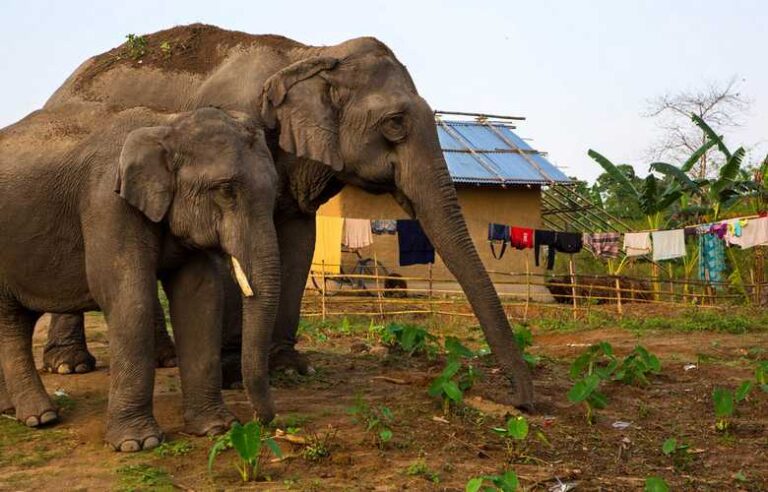
Four individuals from the Moneragala, Anuradhapura, and Hambantota districts tragically lost their lives in separate elephant attacks.
In total, seven people have been killed in the past few days, with additional fatalities recorded in Galle and Puttalam due to drowning and falling trees.
Furthermore, 214 individuals from 60 families across ten districts have been directly affected by the recent adverse weather conditions.
The DMC highlighted that two individuals sustained injuries in Jaffna due to high winds, while significant damage was reported to homes. Forty-six houses across six districts, including Ratnapura, Kegalle, Jaffna, Trincomalee, Anuradhapura, and Galle, have sustained partial damage, with 15 homes in Ratnapura being the most affected.
Additionally, one house in Jaffna was completely destroyed due to the strong winds.
Fortunately, no residents have been relocated to temporary shelters or safe houses at this stage.
The DMC also issued a warning to those living downstream of the Ulhitiya Ratkinda, Kala Wewa, and Rajanganaya reservoirs, as heavy rainfall has led to the opening of several spill gates.
The gates of the Ulhitiya Ratkinda Reservoir have been raised by four feet, and those of the Kala Wewa and Rajanganaya reservoirs by two feet, causing a rapid rise in water levels.
Authorities have advised the public to remain vigilant and exercise caution in these areas.
In terms of infrastructure, the DMC has announced the reopening of one lane at the 12th-mile post along the Ella-Wellawaya road, which had been temporarily closed due to a minor landslide.
From today, this road will remain open to vehicle traffic 24 hours a day. However, the Dematawalhinna road on the Hali-Ela route has been temporarily closed for a few days due to similar landslide risks.
March 18, Colombo (LNW): A portion of the government’s fertiliser subsidy funds intended for farmers has been misappropriated, Deputy Minister of Agriculture, Namal Karunaratne disclosed.
This revelation came in response to a question raised by MP Susantha Kumara Nawarathna during a parliamentary session this (18) morning.
The Deputy Minister informed the house that a total of Rs. 2,934,310, allocated for fertiliser subsidies for 155 farmers in the Anuradhapura district, has been stolen.
This substantial amount was earmarked to support agricultural activities but has instead disappeared due to misappropriation.
In response to the incident, the Ministry of Agriculture confirmed that one official has already been arrested in connection with the theft.
Additionally, a formal complaint has been lodged with the Criminal Investigation Department (CID), which has launched a full investigation into the matter.
The Deputy Minister assured that further inquiries are underway to determine the extent of the misappropriation and identify all individuals involved.
March 18, Colombo (LNW): The Fundamental Rights (FR) petitions filed in the Supreme Court challenging the Cabinet’s approval for the Adani Green Energy wind power project in Wedithalathivu, Mannar, were officially withdrawn today (18).
The withdrawal follows a motion presented by the Attorney General (AG) to the court, which informed that Adani Green Energy, the Indian energy giant behind the project, had formally notified the Chairman of Sri Lanka’s Board of Investment (BOI) of their decision to pull out from the venture.
This written communication marked the end of the legal challenge, with the petitioners, including the Centre for Environmental Justice (CEJ), confirming that they would no longer pursue their claims.
The proposed wind power project had sparked significant controversy and public debate due to environmental concerns raised by various stakeholders.
March 18, Colombo (LNW): Home to more than six million people, the Western Province has long struggled with a mounting waste disposal crisis. With 3,500 metric tonnes of solid waste generated daily, the region faces not only environmental degradation but also health risks.
A tragic reminder of the dangers of untreated waste came seven years ago when the collapse of a massive waste pile at the Meethotamulla landfill in Colombo tragically claimed the lives of 32 people.
The tragedy, caused by flooding and a fire that destabilised the heap, highlighted the urgent need for a sustainable solution.
Untreated solid waste, aside from posing physical hazards, also contributes significantly to pollution. As waste decomposes, it releases harmful gases such as methane, a potent greenhouse gas, whilst contaminating the soil and groundwater.
Despite ongoing challenges, Sri Lanka has taken significant strides to tackle this issue, with the launch of the country’s first waste-to-energy power plant in 2021, a major milestone in solid waste management.
Operated by the Western Power Company Ltd, a subsidiary of Aitken Spence PLC, the plant incinerates between 600 to 800 metric tonnes of waste daily, converting it into 10 megawatts of electricity for the national grid.
This innovative solution addresses both waste management and energy needs simultaneously. The residue from the incineration process is transformed into cinder blocks for the construction industry, whilst the flue gas is treated to remove harmful particles before being released into the atmosphere.
Aitken Spence, a long-standing signatory of the UN Global Compact, has credited its sustainability vision to the initiatives promoted by the organisation, which it joined in 2002.
Over the past two decades, the company has been an active participant in various UN programmes, including those focused on climate change, human rights, gender diversity, and sustainable supply chains.
Deshamanya Harry Jayawardena, Chairman of Aitken Spence PLC, emphasised the company’s commitment to responsible corporate stewardship and sustainability. “This venture is driven by our belief in progress through innovation and sustainable development, values that guide all of our investments,” he stated.
The creation of the waste-to-energy plant, however, was not without its challenges. Fluctuating interest rates, unfulfilled support promises, and a financial crisis that led to currency depreciation created significant obstacles during the project’s development.
Despite these setbacks, the plant has successfully processed over 815,000 metric tonnes of municipal solid waste, preventing it from being dumped in landfills and mitigating potential environmental damage.
Former Prime Minister Mahinda Rajapaksa hailed the plant’s construction as a pivotal moment for Sri Lanka’s waste management strategy, not only for Colombo but for the country as a whole.
The idea for the plant was first proposed in 2012, and following the 2017 Meethotamulla disaster, the project was fast-tracked by the government.
The waste-to-energy plant has played a crucial role in preserving the Muthurajawela wetlands, a sensitive ecosystem at risk from uncontrolled waste disposal.
“The plant provides a permanent solution to the waste management crisis whilst protecting the environment, wetlands, and waterways for future generations,” said R. Shanmugapriya, Assistant Director at the Waste Management Authority of the Western Province.
Shahina Mysan, Director of Engineering at the Colombo Municipal Council, highlighted the environmental benefits of the plant.
“For years, solid waste was piling up in landfills, polluting both the groundwater and the environment. Now, the waste-to-energy plant has safeguarded our wetlands, ensuring the protection of these invaluable ecosystems,” she explained.
Rathika de Silva, Executive Director of the UN Global Compact Network Sri Lanka, commended Aitken Spence for its innovative approach to sustainability. “Their commitment to scientific data and bold strategies, such as the waste-to-energy plant, positions them as leaders in corporate responsibility and environmental stewardship,” she remarked.
ByDr. Dayanath Jayasuriya P. C. and Malik Cader, Attorney-at-Law
For Whom the Bell Tolls is a novel by Ernest Hemingway published in 1940. It is widely believed that the title was derived from a poem written by John Donne (1572-1631), an English poet and dean of St. Paul’s Cathedral in London. Donne argues that the tolling of church bells, which signified the death of another human life, is a toll for each of us, as we are all bound together. In an article that appeared many years ago on the forfeiture of the proceeds of crime legislation in another jurisdiction, the author had used the title because of the wide ranging scope of the law for culprits it means virtual death. Losing almost all the ill-gotten wealth is good enough to trigger a fatal heart attack,
Apart from a few statutes such as the Penal Code and Civil Procedure Code, the draft Proceeds of Crime Bill is one of the longest statutes in Sri Lanka. The bill that was published in the Gazette Supplement of 21 February 2025 runs into 227 A4 size pages with 151 clauses. It was drafted by an expert committee headed by Supreme Court Justice Yasantha Kodagoda P.C. The enactment of the Bill into an Act of Parliament is an IMF imposed condition.
In the evolution of anti-money laundering and terrorist financing and anti-corruption legal regimes, the enactment of a law on the seizure and forfeiture of the proceeds of crime is more or less a response to the ineffectiveness of other measures such laws to deter financial crimes as well as regulatory and compliance requirements such as Know Your Customer and Due Diligence.
Preamble to the Bill
The rationale underlining the Bill is set out in the Preamble to the Bill:
WHEREAS the committing of unlawful activities results in serious consequences and in certain circumstances causes pecuniary and other losses and the deprivation of the enjoyment of property rights by victims of such unlawful activities, the public at large and the state:
AND WHEREAS those who commit unlawful activities do not possess any legal right or other entitlement to enjoy and benefit from proceeds of such unlawful activities, and those who receive or derive proprietary rights to proceeds of such unlawful activities also do not possess any legal right to such property:
AND WHEREAS it is the responsibility of the state to take necessary measures to deprive perpetrators benefitting from proceeds of such unlawful activities and to have such proceeds returned to those who shall otherwise have received the entitlement to benefit from such proceeds:
AND WHEREAS the existing legislation including the Penal Code, Code of Criminal Procedure Act, Offences Against Public Property Act, Convention on the Suppression of Terrorist Financing Act, Prevention of Money Laundering Act, Financial Transactions Reporting Act and the Anti-Corruption Act need to be supplemented by new legislation for the purpose of providing an efficacious legislative framework for the effective identifying, tracing, detecting, investigating, restraining, seizure, preserving, protecting, managing, judicial freezing, forfeiting and returning proceeds of crime to those who are legitimately entitled to such property:
AND WHEREAS for the purpose of realizing the objectives of this Act, it is necessary to vest duties and responsibilities on certain law enforcement officers and to suitably empower them to perform such duties and responsibilities, and also to establish certain statutory bodies including the Proceeds of Crime Management Authority:
AND WHEREAS it is necessary to provide for a legislative mechanism to enable law enforcement authorities of Sri Lanka to cooperate with law enforcement, administrative and judicial authorities of other countries with regard to proceeds of crime located both within and outside Sri Lanka, and to cause the return to Sri Lanka or repatriate from Sri Lanka such proceeds of crime or value thereof to those who are legitimately entitled to such property:
AND WHEREAS it is necessary to provide restitution and repatriation to victims of crime and to the community or the general public who have been affected by unlawful activities, and for such purpose provide for the creation and establishment of the Victims of Crime Reparation Trust Fund:
AND WHEREAS it is also necessary to give full effect to Sri Lanka’s obligations under the United Nations Convention Against Corruption, the United Nations Convention Against Transnational Organized Crime, and the United Nations Convention Against the Illicit Traffic in Narcotic Drugs and Psychotropic Substance and to enact legislation relating to proceeds of crime, compatible with contemporary international norms and best practices…
Objectives of the Bill
In this background the Bill sets out the following objectives:
to —
(a) disincentivize the committing of unlawful activities for the purpose of benefitting from the proceeds of such unlawful activities;
(b) prevent and deprive any person from benefitting from the proceeds of unlawful activities committed by such person or by any other person;
(c) facilitate the investigation into the committing of unlawful activities including bribery and corruption, drug trafficking, terrorist financing and other organized and financial crimes;
(d) provide for the recognition, adoption and enforcement of advanced investigation techniques and cooperation between domestic law enforcement and administrative authorities pertaining to investigation of proceeds of crime;
(e) facilitate and provide for the tracing, identification and recovery of proceeds of crime;
(f) provide for restraining the use and seizure of proceeds of crime;
(g) provide for the issuance of judicial orders for the judicial freezing of proceeds of crime;
(h) provide for protection, preservation and management of proceeds of crime including the disposal of proceeds of crime under certain circumstances pending the conduct and completion of forfeiture proceedings;
(i) deter the committing of unlawful activities which yield proceeds of crime;
(j) provide for legislative mechanisms for the conduct of judicial proceedings and the issuance of judicial orders for the forfeiture of proceeds of crime –
(i) following the conviction of a person for having committed an unlawful activity which yielded such proceeds of crime (hereinafter referred to as the ‘post-conviction forfeiture proceedings’); and
(ii) independent of prosecuting a person for having committed the unlawful activity which yielded such proceeds of crime, (hereinafter referred to as the ‘non conviction based forfeiture proceedings’);
(k) recognize and provide a cause of action in civil law to enable victims of crime to recover loss or damage through civil litigation;
(l) establish a statutory authority for the protection, preservation, management and disposal of restrained, seized or frozen proceeds of crime;
(m) provide a mechanism for the management and the use of the realized value of the disposal of forfeited proceeds of crime;
(n) establish a Trust Fund to provide for restitution and reparation to victims of crime;
(o) provide a mechanism for cooperation, mutual assistance and reciprocity with judicial, law enforcement and administrative authorities of other countries pertaining to the recovery of proceeds of crime or value located overseas and for repatriation of the value of proceeds of crime located in Sri Lanka; and
(p) give effect to Sri Lanka’s obligations under the United Nations Convention Against Corruption, the United Nations Convention Against Transnational Organized Crime and international standards and best practices pertaining to anti-money laundering and countering the financing of terrorist activities.
Unlawful Activity
The term ‘unlawful activity’ appears in many clauses and in the definition clause it is defined to mean ‘any conduct which constitutes an offence under the laws of Sri Lanka, and includes-
(a) any activity which is wholly or partly committed in or outside Sri Lanka which constitute an offence under the laws of Sri Lanka if it was wholly committed in Sri Lanka; and
(b) any activity which had been committed prior to this Act coming into operation, provided, such activity constituted an offence under the law of Sri Lanka at the time it was committed.’
The terminology ‘unlawful activity’ finds specific expression in the Prevention of Money Laundering Act and in the Financial Transactions Act. However, the tem will apply to prohibited or unlawful activities in other legislation such as the Anti-Corruption Act.
Institutional Mechanisms
Proceeds of Crime Management Authority with a Board of Directors and a C.E.O. and other staff. Apart from four ex-officio members the Board will have 7 appointed members, namely
(i) a Chartered Accountant in consultation with the Institute of the Chartered Accountants of Sri Lanka;
(ii) an Engineer in consultation with the Institute of the Engineers of Sri Lanka;
(iii) an Attorney-at-Law in consultation with the Bar Association of Sri Lanka;
(iv) a Chartered Valuer in consultation with the Institute of Valuers of Sri Lanka;
(v) a person qualified and experienced in management in consultation with the Ceylon Chamber of Commerce; and
(vi) two persons from reputed non-politically aligned civil society organizations of which the mandate shall include the development of transparency, strengthening of anticorruption measures or advancement of objectives of criminal justice in consultation with the Minister assigned the subject of Social Services.
The Authority will have or oversee the following funds:-
(a) Management and Administration fund of the Authority;
(b) Fund for the Protection, Preservation and Management of Proceeds of Crime
There will be a separate Trust Fund to provide for restitution and reparation to victims of crime (Victims of Crime Reparation Trust Fund)
Institution of Legal Proceedings
In a short article of this nature, justice cannot be done to the technical procedures set out in the Bill in greater detail.
Where the committing of an unlawful activity has been investigated into and the suspected perpetrator prosecuted for having committed the relevant unlawful activity and he has been convicted of having committed such unlawful activity, proceedings which shall be referred to as post-conviction forfeiture proceedings may thereafter be instituted for –
(a) the forfeiture of proceeds of such unlawful activity which has been frozen; or
(b) the corresponding value of the proceeds of crime to be recovered and forfeited.
(2) Such proceedings can be instituted –
(a) against the person who has been convicted for having committed the unlawful activity which yielded the relevant proceeds of crime or who had in his possession control or dominion the property of the corresponding value of such proceeds of crime; or
(b) against any other person from whom the relevant proceeds of crime was recovered.
However, if
(a) the trial does not result in the conviction of the accused; or
(b) the appeal against the conviction is successful and the conviction is set-aside, the Attorney-General may initiate non–conviction based forfeiture proceedings in respect of the property believed to be proceeds of crime or in respect of the property of the corresponding value of such proceeds of crime.
Following the conviction of any person for having
committed any unlawful activity, the court which convicted such person must, in addition to the punishment specified for such unlawful activity in the relevant law, be entitled to impose a penalty to the value of the proceeds of crime derived at the time committing of the unlawful activity and any value derived by the utilization of such proceeds of crime:
Provided however, an order for payment for a penalty as provided above cannot be made if the unlawful activity had been committed prior to the date of the coming into operation of this Bill/Act.
There are several clauses that deal with non-conviction based proceedings, namely where a property suspected to be proceeds of crime has been investigated into and material collected to establish prima-facie that such property is proceeds of crime, and such property has been either restrained or seized and thereafter frozen in terms of this Act, civil proceedings may be thereafter instituted in the High Court in terms of this Bill, against such property, for the forfeiture of such property suspected to be proceeds of crime as provided in this Act. Such civil judicial proceedings are referred to as non conviction based forfeiture proceedings.
For the forfeiture of a proceed of crime in terms of non-conviction based forfeiture proceedings, it is not necessary to prosecute and obtain a conviction against the person who had committed the unlawful activity which yielded the relevant proceeds of crime.
Other remedies
Civil Remedy for Victims Of Crime
Where any person has committed an unlawful activity and such activity has resulted directly or indirectly in pecuniary, sentimental or other loss or deprivation of any benefit, service or other entitlement, the party adversely affected by such unlawful activity, any other person being so affected including the state shall be entitled to recover the pecuniary, sentimental, or other loss or damage suffered by such party.
Observations
This Bill is highly technical in nature; however, given the scope of the subject-matter this was a necessity and the experts have done an admirable job in trying their best to demystify some of the concepts. There are several innovative measures in the Bill, compared with relevant laws in a few other jurisdictions. It will require a considerable amount of time and resources to make the legislation fully operational with trained Judges and officers. Integrity has to be in the genetic make up of those entrusted with the wide ranging statutory powers. The legal profession must extend their fullest cooperation to make this legislation to be successfully implemented rather than viewing it as a means of a new ‘gold mine’.
Corporate Vigilance Key to Avoiding Criminal Proceeds in Company Accounts
Corporations and financial sector organizations must exercise heightened vigilance to ensure they do not unknowingly become entangled in activities involving criminal proceeds, which could inadvertently appear in their financial records. Such involvement, even if unintentional, could lead to severe repercussions not only for the organizations but also for their directors and staff, as stipulated by the relevant legislation. The penalties under this act are stringent, emphasizing the necessity for rigorous adherence to compliance protocols. By maintaining robust preventive measures, organizations can effectively safeguard against the infiltration of illicit funds into their accounts. Directors and partners of partnerships need to be aware that they are equally liable (subject to some exceptions) if the corporate entity or one partner has committed an offence.
If no financial crimes are committed there will be no need for such a law to deal with the proceeds of crime. This should be one of the ultimate goals of the ‘Clean Sri Lanka’ endeavor.
A seminar under the above title will be held on 3rd April at the NH Collections Colombo, Colombo 3. For any details and registration inquiries, please contact Jane on 0763666246 or [email protected].The event is sponsored by Daily FT.
The writers are former Chairman and Director Generals of the Securities and Exchange Commission of Sri Lanka, with extensive experience in white-collar crime investigation. Dr. Jayasuriya was a Senior State Council attached to the Attorney General’s Department and has extensive local and international hands on experience on financial market regulations. Mr. Cader is an Attorney-at-Law, a Solicitor of the United Kingdom and Wales, a former Senior Advisor to the Ministry of Finance, and a past President of the Corporate Lawyers Association of Sri Lanka. He can be reached via [email protected].
March 18, Colombo (LNW): As Sri Lanka prepares for the upcoming Sinhala and Tamil New Year, the nation’s economy has seen continued growth, with both the manufacturing and services sectors showing positive performance throughout February.
The festive season has provided an added impetus, contributing to further expansion across various industries.
The Purchasing Managers’ Index (PMI), which measures the health of the manufacturing and services sectors, recorded values of 56.8 and 56.5 respectively for February, signalling consistent growth in both areas.
Whilst this marks a slight slowdown from January’s readings of 59.0 for manufacturing and 58.5 for services, the index values still indicate robust expansion, as anything above 50.0 reflects growth.
Manufacturing activities were notably driven by the food and beverage sector, as businesses within this field geared up for the festive demand. The sector saw positive movement in both new orders and production levels, a clear indicator that preparations for the festive period are well underway.
Additionally, employment within this sector has seen an uptick, with companies hiring workers to meet the increasing demand, possibly helping to replace jobs lost during the economic downturn.
The survey conducted by the Central Bank revealed that both employment and the volume of stock purchases grew, suggesting that firms are proactively preparing for the surge in demand.
In the services sector, growth has been driven by a diverse range of industries, from financial services to wholesale and retail trade, education, real estate, and more.
Notably, the financial services sector has seen a boost, largely due to increased lending activities facilitated by lower interest rates.
This has led to the emergence of new business opportunities, further stimulating economic activity. Additionally, other sectors, including accommodation, food and beverage, insurance, and personal services, have all shown signs of growth when compared to the previous month.
The services sector has also experienced a rise in employment, as companies across various industries ramp up hiring in preparation for the festive season.
The ongoing positive trend in employment reflects the broader economic recovery, with businesses expanding to meet the demands of the season.
Looking ahead, both the manufacturing and services sectors remain optimistic, with expectations for continued growth, largely driven by the upcoming festive season.