Home Blog Page 623

Sri Lanka Original Narrative Summary: 23/10

0
  1. Control prices of rice will remain unchanged, President Anura Kumara Dissanayake said during a meeting with rice millers and officials from the Department of Agriculture. He also highlighted that plans are underway for a long-term program to create an organized agricultural plan, which would provide greater benefits to farmers.
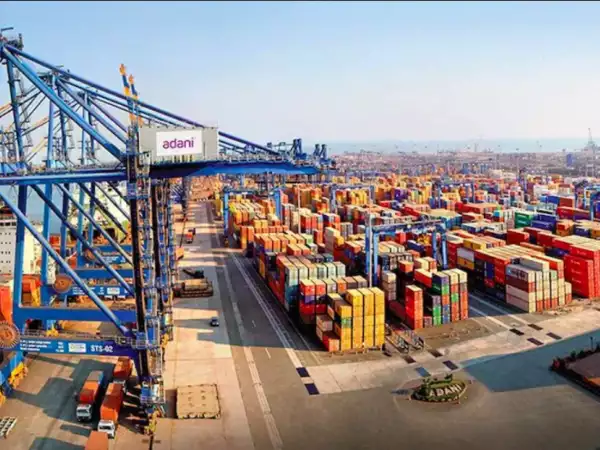
  2. The Cabinet has granted approval to designate the Eastern Container Terminal (ECT) project as a “Special Project.” This decision was made based on a proposal by the Minister of Transport, Highways, Ports, and Civil Aviation. The Sri Lanka Ports Authority (SLPA) will develop the ECT in phases as part of the Colombo South Port project, operating it as a fully-owned terminal of the SLPA.
  3. The Supreme Court has granted permission to name former President Ranil Wickremesinghe as a respondent in Fundamental Rights (FR) petitions filed regarding the alleged police attack and dispersing of a protest organized by the Socialist Youth Union (SYU) in 2022.
  4. Samagi Jana Balawegaya (SJB) leader Sajith Premadasa stated that his party could renegotiate the current IMF agreement to benefit the people, something the past and present governments failed to do. Addressing a gathering in Borella, Premadasa emphasized that even from the opposition, SJB has engaged in multiple discussions with the IMF, reaching several understandings.
  5. The Chinese Ambassador to Sri Lanka, Qi Zhenhong, met with President Anura Kumara Dissanayake at the Presidential Secretariat in Colombo. During their meeting, Ambassador Qi made a donation of LKR 30 million (USD 100,000) as emergency flood relief to assist those affected by the recent flooding in the country
  6. Former President of Sri Lanka, Gotabaya Rajapaksa, has expressed his willingness to provide testimony in any court in the country, except the Jaffna Magistrate’s Court, regarding the disappearance of two human rights activists in 2011. This statement was made through his lawyer, Romesh de Silva, during a hearing at the Supreme Court.
  7. The Supreme Court has announced that it will deliver its decision today (23) regarding the petition submitted by the Democratic National Alliance (DNA), seeking a writ order invalidating the decision of the District Returning Officer to reject their nomination for the Vanni Electoral District in the General Election.
  8. Rev. Fr. Cyril Gamini Fernando, Director of Communications for the Archdiocese of Colombo, says that they reject the report of the Committee of Inquiry, chaired by retired High Court Judge A.N.J. De Alwis. He made this statement in response to comments made by Pivithuru Hela Urumaya (PHU) leader and former MP Udaya Gammanpila during a press conference where he disclosed the contents of a previously unreleased report regarding the Easter Sunday terror attacks.
  9. The Buddha Sasana, Religious and Cultural Affairs, National Unity, Social Security and Media Ministry has organized the 2024 Presidential Media Awards to honor and encourage journalists’ contributions to fostering a strong media culture in Sri Lanka. The awards will cover multiple categories, including print, radio, television, web platforms, media research, and school media, with a total of 54 awards planned, including four lifetime achievement awards. Only media creations published or broadcast between January 1 and December 31, 2023, will be eligible for consideration.
  10. The BLACKCAPS have called upon a promising all-rounder and an up-and-coming wicketkeeper-batsman for next month’s white-ball tour of Sri Lanka. Wellington Firebirds bowling-allrounder Nathan Smith and Canterbury wicketkeeper-batsman Mitch Hay have earned their maiden BLACKCAPS call-ups, joining a 15-strong squad led by Mitchell Santner for two T20Is and three ODIs starting in Dambulla on November 9.

Why new govt’s borrowing also is high? For debt service or high local interest rates?

0

Article’s purpose and background

This short article highlights how high domestic interest rates inappropriate for the economy have become the key reason for continuously high borrowing by the new government.

  • The media is full of comments why the new government also borrows in large amounts despite its anti-borrowing stance. 
  • Analyst’s provide reasons of own fantasy. The borrowing to repay debt and interest raised by previous governments, mismanagement of debt by past governments and high exchange rates involved in repayment of foreign debt are cited as popular reasons.
  • Although the Ministry of Finance has the full set of information, it does not provide clarifications to the public on the facts.

Real reason – high domestic interest rates

I provide high domestic interest rates as the prime reason for rising indebtedness of the new government. A graphical presentation is given below based in statistics published by the Central Bank (CB).

Highlights of the statistical evidence are as follows.

  • Domestic debt holds a dominant share in total debt. Treasury bills and bonds which face market interest rates in line with the CB monetary policy are the major debt categories.
  • Therefore, interest payment on domestic debt led by Treasury bills and bonds is the burden on the government which has to borrow newly for interest payment in addition to amortization (or debt repayment). Domestic debt amortization is the biggest component. In fact, foreign debt service (interest and amortization has declined in the recent past. The trend will continue till 2028 due to ongoing default and restructuring of foreign debt. However, borrowing to repay debt at the maturity or to amortize cannot be separately identified as such borrowing is not a budgetary expenditure that is counted in the deficit.
  • The budget deficit which is the cause for new debt is almost the interest cost. However, the debt stock has increased in 2022 unreasonably, mainly due to increase in foreign debt, without any association with budget deficit, interest payment and amortization.
  • Therefore, unusually high interest rates maintained by the CB for its monetary policy in 2022 and 2023 as well as in many years in the past two decades are behind the significant rise in borrowing. Interest rates around 10% or above have been the key burden to successive governments in their fiscal operations.
  • The interest paid at red hot rates (i.e.,15% to 33%) on huge volume of borrowing through Treasury bills in 2022 and 2023 (Total Treasury bill turnover of around Rs. 9,970 bn) (and Treasury bonds) should be accumulating as new borrowing while the govt. does not have income or a fiscal space to retire these Treasury bills.
  • Information on maturity profile of debt with contractual interest rates is necessary do assess the extent of the problem. This information is not publicly available. 
  • As such, high exchange rate (or currency depreciation) is not a noteworthy reason for new borrowing as the need for the government to service foreign debt is low while same exchange rate is a good source of domestic proceeds on continued foreign borrowing from supra-national institutions for fiscal operations.

Remarks

  • Inappropriately high domestic interest rates are the prime cause of high debt burden. Interest rates are driven by the CB’s monetary policy which has no consideration over fiscal and supply side requirements of the economy. The monetary policy effectiveness for the price stability or inflation control through the demand side of the economy is also not established, other than the citation of the old monetary hypothesis.
  • However, nobody is dare to question the appropriateness of the CB’s interest rate policy, possibly thinking that such interest rates are divine-determined with no room for any policy error.
  • Therefore, whatever the vision of the new government for a new economic system to replace the old system, the heritage of debt problem will no doubt cripple the new government too as already seen from political comments on continued borrowing. The newly cleaned up Parliament expected in the middle of November will not be able to fix this economic governance problem as nobody can lawfully influence in the CB’s independence or the fiscal space fixed by the IMF network. Therefore, as the new public debt law provides for non-market borrowing, the new government also may resort to such borrowings to reduce the cost in the similar manner of pre-2015 placement systems that were highly regarded by CB’s front-running economists as supportive of the control of interest rates.
  • However, no government can recover the presently bankrupted economy under the current fiscal and monetary system unless, at least, Rs. 3 trillion of new money is created at low interest rates for credit distribution required across the priority sectors over few years ahead.

(This article is released in the interest of participating in the professional dialogue to find out solutions to present economic crisis confronted by the general public consequent to the global Corona pandemic, subsequent economic disruptions and shocks both local and global and policy failures. All are personal views of the author based on his research in the subject of Economics which have no intension to personally or maliciously discredit characters of any individuals.)

P Samarasiri

Former Deputy Governor, Central Bank of Sri Lanka

(35 years of staff grade service in the Central Bank, a former Director of Bank Supervision, Assistant Governor, Secretary to the Monetary Board and Compliance Officer of the Central Bank, Former Chairman of the Sri Lanka Accounting and Auditing Standards Board and Credit Information Bureau, Former Chairman and Vice Chairman of the Institute of Bankers of Sri Lanka, Former Member of the Securities and Exchange Commission and Insurance Regulatory Commission and the Author of 13 Economics and Banking Books and a large number of articles published.)

Economy Forward

New Govt moves swiftly to attract Saudi investments strengthening bilateral ties

0

By: Staff Writer

October 22, Colombo (LNW): The new administration headed by President Anura Kumara Dissanayake is  set to take prompt action to further enhance bilateral relations making maximum use of the general agreements signed  with Saudi Arabia for cooperation in the economic, trade, investment, scientific, artistic, cultural, youth and sports fields contributed to the formation of a joint committee between the two countries.

It aims to strengthen and expand the existing bilateral relations between Sri Lanka and Saudi Arabia.

 Efforts will focus on making the most of the agreements signed between the two nations, particularly in the fields of economic cooperation, trade, investment, science, culture, youth, and sports. T

hese agreements have contributed to the formation of a joint committee aimed at advancing mutual goals.

In line with these efforts, Sri Lanka is committed to adhering to the Double Tax Avoidance Agreement signed in January 2023, the Memorandum of Understanding (MoU) on Political Consultations from May 2023, and the MoU on the Promotion of Direct Investment signed in April 2024. 

These treaties will guide future collaborations and investment regulations between the two nations.

During a recent meeting in Colombo with the Saudi Ambassador, Khalid Hamoud Alkahtani, President Dissanayake informed him that Sri Lanka’s government is actively working on drafting new regulations related to investment.

 A committee, which includes officials from the Sri Lanka Investment Development Authority, has been established to review these regulations. Once finalized, these guidelines will be shared with the Saudi Embassy.

The joint committee’s first meeting took place in Riyadh from May 21-22, 2023. The primary goal of the meeting was to bolster cooperation in areas of mutual interest. 

It is anticipated that by implementing the outcomes of these discussions, trade and investment relations between Sri Lanka and Saudi Arabia will be significantly enhanced.

Saudi Arabia has played a pivotal role in supporting Sri Lanka’s development efforts. The Saudi Fund for Development has financed numerous projects in Sri Lanka, including education, irrigation, agriculture, and infrastructure initiatives.

 Notable projects include the establishment of a medical faculty at the University of Sabaragamuwa, the development of the Wayamba University Township, and the construction of the Kurinchakerni Bridge.

Additionally, Saudi Arabia has extended financial aid for constructing 500 housing units in Norachcholai in Sri Lanka’s Eastern province, assisting those affected by the 2004 Tsunami disaster. Moreover, the Kingdom has offered free scholarships to over 450 Sri Lankan students at Saudi universities.

Humanitarian assistance from Saudi Arabia has also been significant. The King Salman Humanitarian Aid and Relief Center has launched 18 projects in Sri Lanka, focusing on food security, health, and charitable works, with a total investment of over USD 15 million. 

Next month, the center is set to implement a free medical campaign called “Combat against Blindness in Sri Lanka,” to be held in Kattankudy and Walasmulla.

In terms of labor relations, around 200,000 Sri Lankan workers are currently employed in Saudi Arabia, predominantly in sectors such as construction, healthcare, and hospitality. 

With large-scale development projects underway in Saudi Arabia, this number is expected to grow in the coming years.

 A technical committee consisting of representatives from both countries regularly meets to facilitate the recruitment and placement of Sri Lankan workers in the Kingdom.

The collaborative efforts between Sri Lanka and Saudi Arabia reflect a strong partnership focused on mutual economic growth, development projects, and humanitarian initiatives. 

This continued cooperation is set to benefit both nations significantly in the years ahead.

Sri Lanka gains economic stability amid Growth in Revenue and Reserves

0

By: Staff Writer

October 22, Colombo (LNW): The Sri Lankan economy has shown significant recovery in 2024, marked by growth in GDP, improved tax revenue, low inflation, and increased foreign currency reserves.

 In the first half of 2024, the country’s economy expanded by 5.0%, while tax revenue saw a notable rise of 41.4%, reaching Rs. 2,348.5 billion by August compared to the same period in 2023.

Additionally, inflation turned into a deflation of 0.5% in September 2024, and Gross Official Reserves increased to USD 6.0 billion, bolstered by a swap arrangement with the People’s Bank of China as of the end of August 2024.

The Sri Lankan rupee also strengthened, appreciating by 8.2% by the end of September 2024. These improvements were driven by reforms under the International Monetary Fund’s Extended Fund Facility (IMF-EFF), which supported economic stability and improved living standards.

The government’s focus on maintaining macroeconomic stability and restoring debt sustainability aims to achieve a medium-term primary balance target of 2.3% of GDP by the end of 2025.

Sri Lanka surpassed the IMF’s annual primary surplus target, reaching an estimated 2.1% of GDP in the first eight months of 2024. The Ministry of Finance’s Pre-Election Budgetary Position Report 2024 revealed a substantial increase in the primary balance, which improved to Rs. 648.8 billion from Rs. 55 billion during the same period in 2023.

Despite this progress, it was a slight decline from the 3.7% of GDP recorded earlier in the year. The Ministry remains confident in achieving the primary balance of 1.0% set under the second IMF-EFF review.

Capital Alliance Limited (CAL) highlighted that exceeding this target could accelerate Sri Lanka’s debt reduction, further stabilizing the country’s financial health.

The budget deficit was reduced to Rs. 911 billion, down from Rs. 1,470.7 billion in the same period in 2023, driven by higher revenue and slower growth in government expenditure, especially in welfare.

Government revenue, including grants, grew by 40.5% to Rs. 2,565.9 billion in the first eight months of 2024, realizing 62.2% of the annual estimate of Rs. 4,127.0 billion. VAT collections also surpassed expectations, exceeding the entire 2023 figure of Rs. 694.5 billion within the first eight months of 2024.

The Ministry of Finance stressed the need to sustain and enhance revenue generation by focusing on tax compliance, eliminating tax leakages, digitalizing processes, and minimizing corruption.

Meanwhile, overall government expenditure grew moderately by 5.4% to Rs. 3,476.9 billion, accounting for 49.8% of the expenditure estimate for 2024. This increase was mainly due to higher salaries, wages, and interest payments on both domestic and foreign debt.

Foreign debt interest payments rose by 34.9% to Rs. 100.0 billion, partly due to the commencement of bilateral loan repayments. However, interest payments on domestic loans showed only a slight increase.

Expenditure on subsidies and transfers grew slightly by 1.5%, while capital and net lending saw a substantial increase of 22.4% in the first eight months of 2024.

Overall, Sri Lanka’s economy is on a path to recovery with improvements in fiscal stability and efforts to streamline revenue and expenditure, setting the stage for a more stable economic outlook in the coming years.

Sri Lanka Tourism to Make a Significant Impact at World Travel Market 2024

0

By: Staff Writer

October 22, Colombo (LNW): Sri Lanka Tourism is set to make a significant impression at the World Travel Market (WTM) 2024 in London, UK, as the country’s tourism industry shows promising growth and development.

This year, the largest-ever trade delegation from Sri Lanka will participate, featuring over 100 travel agencies, tour operators, and hoteliers, highlighting the nation’s commitment to establishing itself as a top travel destination for UK travelers.

At WTM 2024, Sri Lanka will present its strategic roadmap to revitalize tourism, with a focus on sustainable growth. The country has already experienced a remarkable 50% year-on-year increase in arrivals from the UK, its second-largest source market.

This surge indicates a positive outlook for Sri Lanka’s travel sector, with the country’s renewed tourism strategy aimed at boosting its appeal.

This year’s participation is especially crucial as it aligns with Sri Lanka’s transformative phase under the new government.

The government’s vision for tourism emphasizes sustainable development, cultural enrichment, and eco-tourism, aiming to leverage the country’s diverse offerings. Efforts to streamline the visa process and enhance Sri Lanka’s reputation as a safe and peaceful destination are also key components of this strategy.

The Sri Lanka Tourism Pavilion, located at N12-210 in the Asia Area of ExCeL Hall, London, will serve as a hub for industry stakeholders, including tour operators, travel agents, media representatives, and diplomats. This collaborative effort aims to promote Sri Lanka’s vibrant tourism experiences to a global audience.

According to. Buddhika Hewawasam, the newly appointed Chairman of the Sri Lanka Tourism Promotion Bureau, this year’s focus will be on showcasing Sri Lanka as a unique travel destination that emphasizes sustainability and innovation. He noted that the stunning landscapes and the country’s commitment to a forward-thinking strategy will be central themes at WTM 2024.

Sri Lanka will also host an official press conference on November 6, 2024, during the WTM event, marking a crucial moment in its tourism revival. This platform will allow Sri Lanka Tourism to engage directly with leading UK and global travel trade media, enhancing its visibility among key industry influencers and potential travelers.

 The conference aims to reinforce Sri Lanka’s appeal to UK travelers and highlight its long-term tourism strategy.As Sri Lanka continues to gain attention in the global travel industry, its participation at WTM 2024 represents a pivotal opportunity to expand its tourism horizons.

Visitors to the Sri Lanka Pavilion can expect insights into the country’s future in tourism, networking opportunities, and an immersive introduction to its authentic travel experiences.

WTM 2024 will be held from November 5-7 at the ExCeL Hall in London, marking its 44th year. The event is expected to attract around 50,000 visitors, 5,000 exhibitors, and over 4,000 tourism service providers, making it one of the largest gatherings in the global travel industry.

Project Apollo: A Major Step toward Renewable Energy in Sri Lanka

0

By: Staff Writer

October 22, Colombo (LNW): DH Ceylon Energy Pvt Ltd, a subsidiary of Ceylon Energy (PTE) Ltd and DH Energy (SG) PTE. LTD from Singapore, has announced a significant partnership with Southern Nexus Pvt Ltd to launch Project Apollo, a transformative solar park with a capacity of 110MW in Hambanthota, Sri Lanka.

With a substantial investment of USD 82 million, this project aims to place Sri Lanka at the forefront of renewable energy initiatives, marking a pivotal move towards a sustainable energy future.

Project Apollo will include an innovative 11x10MW Ground Mounted Solar Project at the Gonnoruwa Solar Energy Park.

This advanced facility is designed to supply clean, renewable energy to thousands of homes and businesses, playing an essential role in strengthening Sri Lanka’s energy infrastructure while also reducing its carbon footprint.

The project underscores DH Ceylon Energy’s dedication to addressing both local and global energy issues in the 21st century.

Beyond serving as a solar park, Project Apollo embodies a visionary approach to Sri Lanka’s energy landscape.

It aligns with the broader FL Business Model outlined in the “Report of the Way Forward for Integration of Renewable Energy Resources to the National Grid from 2023 to 2026.”

This initiative has received approval from the Public Utilities Commission of Sri Lanka (PUCSL) and support from the Ceylon Electricity Board (CEB).

Project Apollo is poised to accelerate the integration of renewable energy into the national grid, marking a significant milestone in the country’s pursuit of energy independence and sustainability.

This project is also integral to the government’s ambitious goal of sourcing 70% of its electricity from renewable sources by 2030. The 110MW capacity of Project Apollo will be crucial in achieving this target.

The collaboration between private entities and the government highlights the potential of partnerships in facilitating the transition to a cleaner energy future.

The environmental impact of Project Apollo is substantial, with an anticipated annual reduction of 165,600 tons of CO2 emissions, comparable to taking tens of thousands of cars off the road.

Over 20 years, this reduction could total approximately 3,301,200 tons of CO2 emissions avoided, making a significant contribution to Sri Lanka’s climate action efforts and aligning with global initiatives to combat climate change.

As countries worldwide intensify their efforts to lower greenhouse gas emissions, Project Apollo serves as a testament to Sri Lanka’s commitment to a low-carbon future.

It showcases DH Ceylon Energy’s leadership in sustainability, with a focus on reducing environmental impacts while maximizing social and economic advantages. 

“Project Apollo is not just about energy generation—it’s about creating a sustainable future for all Sri Lankans,” stated. Madusanka Fernando, Chairman of Ceylon Energy PTE Ltd. 

“This project represents an investment in the well-being of our communities and a commitment to ensuring future generations have access to clean, reliable energy.”

New leadership appointed to National Transport Commission

0

By: Isuru Parakrama

October 22, Colombo (LNW): The Cabinet of Ministers has approved the appointment of a new chairman and members to the National Transport Commission (NTC), as confirmed by Cabinet Spokesman Minister Vijitha Herath.

Dr. Bandura Dileepa Witharana, a Senior Lecturer at the Open University of Sri Lanka, has been appointed as the new Chairman of the NTC. His extensive academic background is expected to bring a fresh perspective to the Commission’s activities.

Joining him on the commission are W. Ravi Prasad De Mel, a Senior Lecturer at the University of Sri Jayawardenapura, Dr. Namali Tharanga Sirisoma, a Senior Lecturer at Sir John Kotelawala Defence University, and A.I.U. Perera, Commissioner of the Inland Revenue Department.

These appointments, made in accordance with the National Transport Commission Act of 1991, are part of a broader effort to strengthen the governance of Sri Lanka’s transport sector.

The Act stipulates that the Commission is composed of eight members, three of whom are appointed ex officio to represent the Ministries of Transport, Policy Planning, and Finance.

The remaining five members, including the Chairman, are selected by the Minister of Transport with Cabinet approval for a term of three years.

IMF Chief praises SL’s commitment to reforms during key meeting

0

By: Isuru Parakrama

October 22, Colombo (LNW): Kristalina Georgieva, Managing Director of the International Monetary Fund (IMF), met with Sri Lanka’s delegation, led by Central Bank Governor Dr. Nandalal Weerasinghe, for a discussion on the country’s ongoing economic reforms.

The meeting took place in Washington DC, during the 2024 Annual Meetings of the IMF and the World Bank Group (WBG).

In a post on ‘X’, Georgieva expressed her encouragement over the Sri Lankan authorities’ dedication to continuing their reform agenda, which is vital for maintaining the progress achieved under the IMF-supported programme.

She reassured that the IMF remains fully committed to helping Sri Lanka build a more stable and prosperous future for its citizens.

Sri Lanka’s delegation also included Finance Secretary Mahinda Siriwardena and Senior Economic Advisor to the President, Duminda Hulangamuwa.

Their participation underscored the government’s intent to strengthen economic stability and ensure the success of the reform initiatives amidst ongoing challenges.

The dialogue comes at a critical juncture for Sri Lanka as it works to stabilise its economy and rebuild after a series of financial setbacks.

Ex-MP Johnston Fernando to appear before CID over unregistered luxury car incident

0

By: Isuru Parakrama

October 22, Colombo (LNW): Attorneys representing former SLPP MP Johnston Fernando have informed the Court of Appeal that their client will voluntarily appear before the Criminal Investigation Department (CID) tomorrow (23) to provide a statement regarding an unregistered luxury vehicle allegedly linked to him.

The vehicle was discovered parked at a high-end hotel in Colombo, raising questions about its ownership.

The case stems from a petition filed by Fernando, who sought legal intervention to prevent his arrest in connection with the incident.

His legal team made the announcement during a court hearing today, assuring the court of Fernando’s cooperation with the ongoing investigation.

The Court of Appeal, after hearing submissions, scheduled the petition for further consideration on October 25.

The court’s decision will be closely watched as it could impact the next steps in the investigation into the origins of the unregistered luxury vehicle.

NPP Cabinet declares Colombo Port’s ECT “a Special Project”

0

By: Isuru Parakrama

October 22, Colombo (LNW): The Cabinet of Ministers has officially designated the development of the Colombo Port’s Eastern Container Terminal (ECT) as a “special project,” a move aimed at accelerating its progress and enhancing its strategic significance.

The proposal, put forward by Minister of Transport, Highways, Ports and Civil Aviation, Vijitha Herath, received unanimous approval.

This declaration marks a critical step in the continued development of the ECT, which forms part of the larger Colombo South Development Project.

Under the original decision made in February 2021, the Eastern Container Terminal was to be developed in phases by the Sri Lanka Ports Authority (SLPA), with full ownership retained by the authority.

Since then, considerable progress has been made.

Speaking at a press conference held earlier today (22), Minister Herath confirmed that the contract for civil works on the terminal had already been awarded and construction was well underway.

This significant infrastructure project is expected to bolster the Colombo Port’s capacity and further strengthen Sri Lanka’s position as a key player in regional and global maritime trade.

In addition to civil works, the procurement of cranes for the terminal has also been finalised, marking another crucial step in equipping the facility with the necessary tools to handle large-scale container operations.

The project is anticipated to boost the efficiency of the port, enabling it to accommodate larger vessels and facilitate increased cargo volumes.

Minister Herath also highlighted the array of tax concessions provided to private terminal operators and service providers involved in the project.

These incentives, offered under the Strategic Development Act and the Board of Investment (BOI) Law, are designed to attract private investment and ensure the project’s financial viability while aligning with national development goals.

This initiative is expected to not only enhance the country’s shipping and logistics infrastructure but also contribute to Sri Lanka’s long-term economic growth by fostering trade and investment opportunities.