Home Blog Page 624

ADIC highlights economic and health cost of liquor and tobacco use

0

By: Staff Writer

February 02, Colombo (LNW): Sri Lanka faces significant economic and health challenges due to alcohol consumption, with an annual economic loss of Rs. 241 billion, equating to 1.5% of the country’s GDP. According to a survey by the Alcohol and Drugs Information Centre (ADIC), Sri Lankans spend a staggering Rs. 1,210 million daily on arrack, beer, and cigarettes.

People aged 15 and above account for daily spending of Rs. 510 million on arrack, Rs. 180 million on beer, and Rs. 520 million on cigarettes.

In 2022, income generated from alcohol use was Rs. 165.2 billion, yet the health and economic costs were far higher, amounting to Rs. 237 billion. These costs include direct healthcare expenses as well as indirect factors such as absenteeism, presenteeism, and decreased productivity in the workforce.

The ADIC survey highlighted that Colombo had the highest percentage of alcohol users (35.8%), followed by Kandy (33.5%), while Jaffna had the lowest (21.4%). Beer emerged as the most consumed alcohol, representing 53.8% of alcohol use, followed by arrack at 42%.

Social events like parties and sports gatherings were found to be key triggers for alcohol consumption, with 35.6% of people reporting alcohol use initiation at such events, and 32.8% influenced by peer pressure.

Alcohol consumption leads to a significant public health burden in Sri Lanka, contributing to 4,201 deaths per 100,000 people annually from non-communicable diseases and injuries. Key causes include liver cirrhosis (2,880 deaths), road traffic accidents (675 deaths), and cancers (646 deaths).

The ADIC reports that 40 to 50 people die daily in Sri Lanka from alcohol-related causes, amounting to 15,000–20,000 deaths each year. Additionally, alcohol consumption has led to a 57% reduction in the labor force.

A public opinion poll conducted by ADIC across five provinces found strong support for more stringent alcohol policies. A majority of respondents (64%) felt that current laws were inadequate to protect against alcohol-related harm.

The poll also revealed that 93% of participants believed government involvement was essential in addressing alcohol-related issues.

Furthermore, 73% favored raising alcohol prices, 75% supported alcohol taxation, and 70% agreed that revenues from alcohol taxes should fund public services such as healthcare, education, and infrastructure development.

The survey underscores the profound social and economic impacts of alcohol use in Sri Lanka, with the population largely advocating for stronger regulations and government intervention to reduce alcohol-related harm and mitigate its effects on public health and finances.

India-Sri Lanka Economic Pact: Renewing Trade and Investment Ties

0

By: Staff Writer

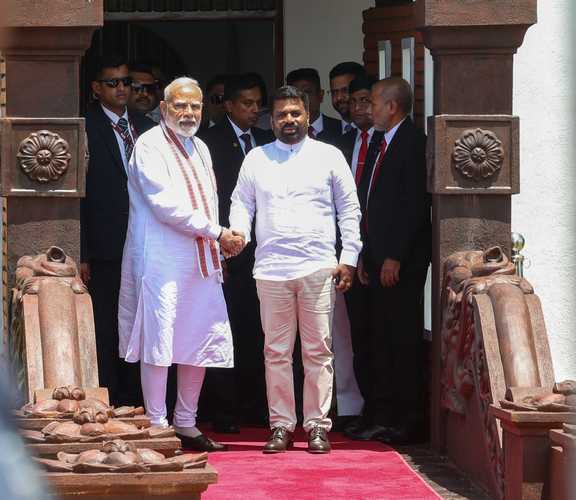
February 02, Colombo (LNW): President Anura Kumara Dissanayake (AKD) and Indian Prime Minister Narendra Modi recently reached a 34-point agreement aimed at strengthening economic cooperation between Sri Lanka and India. Among the key aspects discussed were trade, investment, and financial transactions, laying the groundwork for a closer economic partnership.

One of the most significant agreements is the revival of discussions on the Economic and Technological Cooperation Agreement (ETCA), which had previously stalled.

The leaders also agreed on facilitating direct transactions between the Indian Rupee (INR) and Sri Lankan Rupee (LKR), reducing dependency on the US dollar.

Additionally, India pledged to invest in sectors that would boost Sri Lanka’s export potential. These elements are interconnected and are expected to be central to the renewed ETCA negotiations.

Sri Lanka reaffirmed its commitment to restarting ETCA discussions, seeing it as a pathway to improving trade relations between the two nations.

This decision was highlighted during bilateral talks between AKD and Modi, with both leaders acknowledging the success of the India-Sri Lanka Free Trade Agreement (ISFTA).

They expressed the need to build on this foundation by advancing ETCA negotiations, as stated in the India-Sri Lanka Joint Statement of Fostering Partnerships for a Shared Future.

Negotiations on ETCA have gone through 13 rounds, with talks resuming in November 2023 after a five-year break. The most recent round took place in January 2024, and officials anticipate finalizing the agreement by the 2025 financial year.

ETCA, an extension of the ISFTA signed in 2000, is expected to enhance trade and investment flows between the two countries.

 A senior official involved in the discussions emphasized that Sri Lanka stands to benefit from integrating into India’s supply chain, leveraging its strategic location and resources.

ETCA presents new opportunities for Sri Lankan businesses to expand into India’s vast market, allowing for diversification and growth.

Additionally, cooperation in technology sectors like IT and telecommunications could facilitate skill development, innovation, and knowledge transfer.

This agreement is intended to replace the Comprehensive Economic Partnership Agreement (CEPA), which was proposed in 2003 under the Chandrika Bandaranaike Kumaratunga–Ranil Wickremesinghe administration but never materialized.

The ISFTA, a precursor to ETCA, was Sri Lanka’s first free trade agreement, signed in December 1998 and fully implemented by March 2000.

 However, it has resulted in a substantial trade imbalance. Over 15 years, India’s exports to Sri Lanka amounted to $4,023 million, while Sri Lanka’s exports to India were only $625 million, according to Dr. Naresh Bana, Vice Chairman of the Indo-Sri Lanka Chamber of Commerce and Industry.

Despite the economic benefits ETCA promises, it has faced strong opposition. Critics argue that increased competition from Indian professionals, particularly in IT, could threaten Sri Lankan small-scale industries and technical service providers, potentially impacting local employment and wages.

Additionally, concerns have been raised about a growing trade deficit, which, if not carefully managed, could lead to economic instability. Skeptics also fear that closer economic ties might compromise Sri Lanka’s economic sovereignty and limit its independent policy-making capacity.

The success of ETCA hinges on addressing these concerns while ensuring a mutually beneficial agreement. Transparent negotiations with protective safeguards will be essential to maintaining a balanced trade relationship that fosters economic growth without undermining national interests.

Sri Lanka Accelerates Free Trade Agreement with Singapore to Boost Economic Ties

0

By: Staff Writer

February 02, Colombo (LNW): Sri Lanka is set to fast-track the long-pending Free Trade Agreement (FTA) with Singapore, ensuring consistency in trade policy, according to Deputy Finance Minister Harshana Suriyapperuma. Speaking at a recent Committee on Public Finance (COPF) meeting, he confirmed the government’s commitment to fully implementing the agreement, which had faced multiple delays since its signing in 2018.

The Sri Lanka-Singapore Free Trade Agreement (SLSFTA) was signed at the ministerial level on January 23, 2018, and came into effect on May 1, 2018. 

Covering a broad range of economic activities—including trade in goods and services, investments, intellectual property rights, telecommunications, e-commerce, trade facilitation, government procurement, and economic cooperation—the agreement aims to foster stronger trade relations between the two nations.

Initially, the FTA faced opposition and was temporarily suspended in October 2018 by former President Maithripala Sirisena due to concerns about inadequate consultation with key government agencies. 

However, the current administration has reaffirmed its dedication to activating the agreement, which includes a phased elimination of tariffs on 80% of tariff lines over a 15-year period.

To facilitate the agreement’s implementation, a Gazette Notification (No. 2377/39) was presented to Parliament on January 7, 2025, under the Ports and Airports Development Levy (PAL) Act. This amendment, effective from March 29, 2024, reduces PAL from 10% to 6% on several imported goods from Singapore.

The tax reduction applies to items such as certain types of cement, apples, infant foods (excluding milk-based products approved by health 

authorities), medicines, surgical instruments, and bathroom fittings. Additionally, import duties on goods like electrical equipment, polythene, and aluminum products were revised under the FTA, while items outside the agreement remain subject to previous tax rates.

A key aspect of the SLSFTA is its aim to establish a stable and predictable business environment for Singaporean investors while providing Sri Lanka with expanded trade and economic opportunities. The agreement mandates a gradual reduction of import duties and para-tariffs over five to six years.

In line with this, the Sri Lankan government has already lowered import duties on two categories of goods, aligning with the FTA’s tariff liberalization roadmap, impacting multiple taxes such as Customs Import Duty (CID), CESS tax, and PAL.

 Despite initial resistance, COPF members eventually endorsed the PAL reduction, with Chairman Harsha de Silva underscoring the significance of fostering a free trade relationship with Singapore. He emphasized that the agreement aligns with Sri Lanka’s broader economic objectives and long-term growth strategy.

The implementation of the FTA had been delayed due to various factors, including the 2018 constitutional crisis, which led to its suspension by then-President Sirisena over concerns about insufficient consultation with key financial and port authorities. 

However, officials reassured COPF that the revised order activating the agreement, which was approved by the Cabinet in 2018, now provides a well-defined framework for tariff reductions.

With its renewed focus on trade liberalization, Sri Lanka views the Singapore FTA as a crucial step toward fostering economic growth and strengthening international trade partnerships. The agreement marks a significant policy milestone, positioning Sri Lanka for enhanced global commerce and investment opportunities.

Sri Lanka’s Apparel Industry Poised for Growth amid Challenges and Reforms

0

By: Staff Writer

February 02, Colombo (LNW): Sri Lanka’s apparel sector showcased remarkable resilience and adaptability in 2024, with export earnings reaching approximately USD 4.7 billion—reflecting a 5% year-on-year growth. When factoring in direct textile exports, total earnings exceeded USD 5 billion. This steady progress underscores the industry’s potential for sustained expansion, supported by strategic policies and government backing.

The government reaffirmed its commitment to ensuring the apparel industry remains competitive on a global scale. During the 42nd Annual General Meeting (AGM) of the Sri Lanka Apparel Exporters Association (SLAEA), Industry and Entrepreneurship Development Minister Sunil Handunneththi pledged increased support for innovation, technical assistance, and regulatory reforms to help local manufacturers strengthen their market position.

Market Performance and Diversification

United States: Exports rose by 5.23% to USD 1.9 billion, though still 19.4% below 2019 levels, indicating room for further recovery.

United Kingdom: A robust 7.65% growth brought exports close to pre-pandemic figures, fueled by demand for ethically and sustainably produced garments.

European Union: A modest 0.81% increase helped maintain the sector’s market presence.

Emerging Markets: Exports surged by 10.13%, reflecting successful market diversification and direct shipping initiatives.

Key Government Interventions

To enhance global competitiveness, the government has prioritized improvements in supply chain efficiency and policy frameworks. A major development was the reactivation of the Export Development Council (EDCM) after a four-year hiatus. One of its key decisions was the introduction of an automated scanning system at Bandaranaike International Airport (BIA) to replace outdated manual inspections, reducing export delays.

Minister Handunneththi emphasized the need to overcome global supply chain disruptions, particularly in sourcing raw materials. He highlighted the government’s accelerated efforts to develop the Eravur Fabric Park, which aims to strengthen local textile production, reduce dependence on imports, and improve cost efficiency. The Joint Apparel Association Forum (JAAF) has reiterated the importance of localizing fabric manufacturing to boost competitiveness and align with global sustainability and traceability standards.

Challenges and Future Outlook

Despite 2024’s growth, export earnings remain 10.3% below the 2019 peak of USD 5.3 billion, with the industry facing headwinds such as global inflation and reduced consumer spending. The government recognizes that strategic investments and policy reforms will be crucial to regaining lost momentum and achieving future targets, including surpassing USD 6 billion in export revenue.

Handunneththi reaffirmed the apparel industry’s reputation as a global leader in ethical manufacturing, recalling Sri Lanka’s pioneering role in promoting fair labor practices and eco-friendly garment production through the ‘Garments Without Guilt’ initiative. Moving forward, he emphasized the need for continuous innovation, improved production processes, and alignment with international best practices to secure long-term, sustainable growth.

With strategic reforms and strengthened public-private collaboration, Sri Lanka’s apparel sector is well-positioned to navigate global challenges and solidify its standing as a key economic pillar.

Justice Mohamed Lafar Tahir appointed Acting President of Court of Appeal

0

By: Isuru Parakrama

February 02, Colombo (LNW): Justice Mohamed Lafar Tahir has been appointed as the Acting President of the Court of Appeal, following the decision of President Anura Kumara Dissanayake.

Justice Tahir, the most senior judge currently serving in the Court of Appeal, was formally sworn in to his new role today (02), at a ceremony held at the Presidential Secretariat.

The appointment follows the acceptance of pre-retirement leave by Justice Bandula Karunaratne, the former President of the Court of Appeal.

Justice Karunaratne, having taken his leave, will step down from his position, and his departure has led to the elevation of Justice Tahir to the acting role.

The President’s Media Division (PMD) confirmed that the appointment is in line with established protocols for judicial leadership transitions.

Sri Lanka takes first step towards national policy on early childhood education and development

0

February 02, Colombo (LNW): Sri Lanka has officially launched the first phase in the development of a National Policy on Early Childhood Education and Development, marking a significant move towards improving the foundation of education for young children across the country.

The initiative was introduced at a special event held at the Ministry of Education, Higher Education, and Vocational Education, with the participation of Prime Minister Harini Amarasuriya and Deputy Minister of Women and Children’s Affairs, Dr. Namal Sudarshana.

Prime Minister Amarasuriya highlighted the critical need for a comprehensive national policy on early childhood development that would be applicable not only to the central government but also to provincial authorities.

She pointed out that the current lack of a unified policy framework for early childhood education had led to inconsistencies in the quality and accessibility of services provided to young children across the nation.

The discussions during the event focused on creating a cohesive policy that could bring together the various early childhood education institutions operating across Sri Lanka.

The Prime Minister emphasised that the new policy must be holistic, encompassing a wide range of elements, from teacher training and guidelines to salary structures and recruitment exams.

She also stressed the importance of ensuring that the policy is integrated with the ongoing education reforms that the government is planning to introduce.

In collaboration with the Ministry of Women and Children’s Affairs and the Ministry of Education, Higher Education, and Vocational Education, a dedicated committee will be formed.

This committee will be responsible for drafting the necessary policy documents and preparing an integrated policy statement, which will later be formalised within a legal framework.

Prime Minister Amarasuriya also underscored the importance of safeguarding the well-being of preschool children, particularly during after-school hours, evenings, and teacher holidays.

She emphasised that ensuring the safety and security of young learners must be a priority within the new policy.

The event was also attended by K.D.R. Olga, Secretary of the Ministry of Women and Children’s Affairs, Nalaka Kaluwawa, Secretary of the Ministry of Education, Higher Education, and Vocational Education, and a number of other senior officials, all of whom expressed their commitment to the successful development and implementation of the policy.

Over 1.5 mn kg of expired food aid wasted due to distribution delays

0

February 02, Colombo (LNW): Over 1.5 million kilogrammes of food aid, including essential items such as rice, lentils, and dates, stored at the Veyangoda warehouse complex under the Food Commissioner’s Department, have expired and are no longer suitable for consumption, reports said.

The food, which had been intended for distribution to vulnerable communities across Sri Lanka, was rendered useless due to significant delays in its distribution.

The stock, which was received under the World Food Programme (WFP) in 2023, was meant to assist low-income families, schoolchildren, and other at-risk groups.

However, despite its timely arrival, authorities failed to ensure that the supplies reached their intended recipients, leading to the unfortunate wastage of the goods.

The Veyangoda District Granary, a large storage facility covering 28,000 square feet and comprising 16 warehouses, is a central hub for government food reserves.

Of these, 10 warehouses are dedicated to food storage, and three were used to house the now-expired stock of WFP aid.

The food, sourced from countries such as Kazakhstan and Australia, had been kept in storage with the intention of assisting those most in need.

A team of officials, including Deputy Minister Mohamed Munir, MP Ruwan Mapalagama, and law enforcement officers, visited the Veyangoda facility earlier today to assess the extent of the damage.

During the inspection, it was noted that the mismanagement and lack of timely action had directly contributed to the massive wastage of valuable food supplies.

This incident has raised serious concerns about the efficiency and accountability of food distribution systems in the country. Experts are calling for immediate reforms to ensure that aid reaches the people who need it most and that such resources are not wasted due to logistical or administrative failures.

Jayasuriya attributes Sri Lanka’s loss to weak batting performance against Australia

0

February 02, Colombo (LNW): Sri Lanka’s head coach, Sanath Jayasuriya, has stated that the team’s disappointing loss to Australia in the first Test was primarily due to a lacklustre batting performance.

Addressing the media at a press conference in Galle following the defeat, the former Sri Lankan cricket legend emphasised that there was no justification for the poor showing and no excuses to be made for the result.

Jayasuriya was candid in his assessment of the match, acknowledging that the conditions were not overly challenging.

This wicket is not particularly difficult to play on. The players must learn how to cope with pressure and know when to bat with confidence,” he said. “Test cricket presents a range of situations, and it’s important to manage those situations effectively.

He further stressed that Sri Lanka boasts a strong batting line-up and that the team needs to take responsibility for its performance.

We should have done better, and it’s clear that we didn’t perform to our potential. The batsmen must learn how to convert starts into big centuries. If the wicket had been challenging, I would have acknowledged that, but that’s not the case here,” Jayasuriya explained.

Looking ahead to the upcoming Test, the head coach expressed hope for a strong recovery from the team. “I expect to see a much better performance in the next match,” he added.

In response to a query about potential changes to the team for the second Test, Jayasuriya confirmed that discussions would be held with the selectors to assess the possibility of adjustments.

Surge in chikungunya cases across SL attributed to monsoon season

0

February 02, Colombo (LNW): Health officials have raised concerns over a notable increase in chikungunya cases across Sri Lanka, particularly in the wake of the monsoon season.

Dr. Deepal Perera, a paediatrician at the Lady Ridgeway Hospital for Children, explained that the surge in cases can be largely attributed to the rising number of mosquitoes during the wet season, which creates ideal breeding conditions for the Aedes mosquito responsible for transmitting the virus.

Chikungunya shares many symptoms with dengue fever, including high fever, joint pain, and rash, making it difficult for the public to distinguish between the two illnesses.

As the number of affected individuals rises, Dr. Perera has emphasised the importance of taking preventative measures to minimise exposure to mosquitoes, which thrive in stagnant water during the rainy months.

The Ministry of Health has urged the public to adopt proactive measures to eliminate mosquito breeding sites, such as ensuring containers are emptied of stagnant water, using mosquito repellents, and installing netting or screens in living spaces.

Public health campaigns have been rolled out to raise awareness about the disease and the steps individuals can take to protect themselves and their families.

Whilst chikungunya is generally not fatal, the symptoms can be severe, especially for young children and the elderly, and can cause long-term joint pain that may persist for months.

Cabinet forms committees to reassess Adani Group’s wind power project amid legal scrutiny

0

February 02, Colombo (LNW): The Sri Lankan Cabinet has established two new committees to conduct a comprehensive review of the Adani Group’s proposed wind power project, amidst ongoing legal proceedings surrounding the initiative.

Legal counsel has been sought regarding the operation of these committees to ensure that all necessary procedures are followed during the review process.

The Ministry of Power has outlined that these committees will focus on evaluating several key aspects of the project, including the projected costs, legal compliance, and the environmental impact assessments associated with the wind power development.

The aim is to ensure that the project aligns with national interests and regulations, and to address any concerns raised during the legal proceedings.

The Adani Group is planning a significant investment of US$ 1 billion into the project, which includes the construction of a 484 MW wind power facility in the regions of Mannar and Pooneryn.

However, with the legal challenges currently in motion, the government has opted to reassess the project’s feasibility and potential long-term impact before proceeding further.