March 16, Colombo (LNW): The Grassroots Conflict Prevention in Sri Lanka Project (GRACE), a €2.1 million initiative funded by the European Union and implemented by World Vision Lanka, continues to make a significant impact on vulnerable communities across Sri Lanka. Running from April 2023 to March 2025, GRACE aims to address critical conflict drivers such as resource scarcity, economic hardship, ethnic and religious tensions, and the effects of natural disasters.
The project has directly benefited 227,815 individuals, contributing to their long-term well-being through various interventions. A key element of GRACE’s success is its close collaboration with local communities and administrations, ensuring sustainability and ongoing positive outcomes.
Notably, 156,992 individuals have received support in conflict resolution and social cohesion, while 60,417 have been trained in violence prevention and rapid response mechanisms. In addition, 10,406 individuals have improved their income opportunities through income-generating activities and savings groups.
Implemented across five areas—Kalpitiya, Nawagattegama, Mundalama, Wattala, and Ja-Ela—GRACE integrates both development and peacebuilding efforts, fostering stability and economic resilience in the region. By addressing both immediate needs and long-term solutions, GRACE has helped bridge community divides, creating a foundation for lasting peace and prosperity.
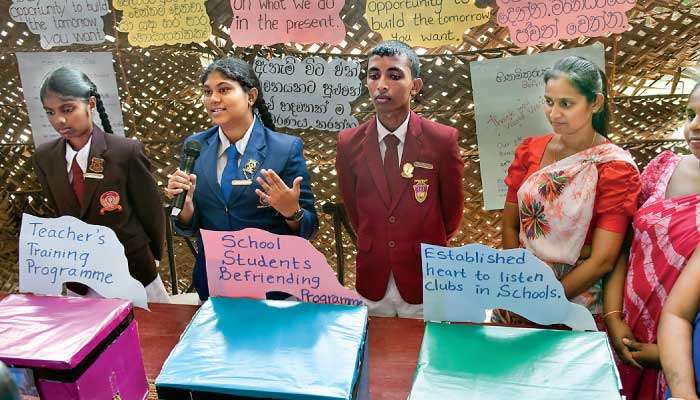
The project’s impact was celebrated during the “A Maze in GRACE” closure event, held on 25 February at the Don Bosco Development Centre. This event marked two years of transformative progress and offered participants the opportunity to interact with stakeholders, women’s groups, and youth, who showcased their achievements and shared the personal effects of the project on their lives.
The event featured an interactive maze, panel discussions, presentations, and networking opportunities that highlighted GRACE’s role in driving social change and strengthening conflict resolution.
One of the most impactful aspects of the event was the session dedicated to personal impact stories, where stakeholders shared how GRACE contributed to their communities’ recovery and economic empowerment. This was a powerful reminder of how collaboration among diverse sectors can foster positive change.
European Union Ambassador Carmen Moreno commended the project, noting its tangible results in empowering women and youth while supporting Sri Lanka’s economic recovery efforts.
She emphasized the European Union’s commitment to promoting climate-neutral, socio-economic growth. GRACE Project Manager Deepthi Silva expressed that the initiative had created a space for transformation, dialogue, and hope, enabling communities to break barriers and embrace change, thus sparking a ripple effect of positive transformation across the region.
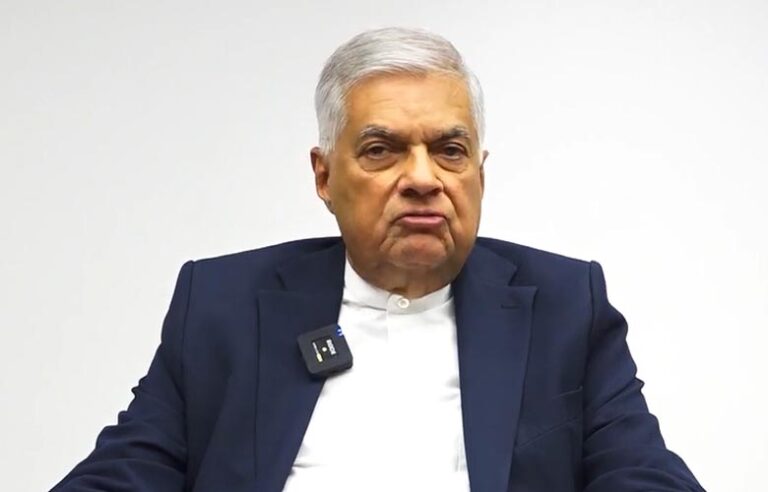
March 16, Colombo (LNW): Former President Ranil Wickremesinghe has strongly rejected the conclusions of the Batalanda Commission report, labelling it a politically driven attempt to tarnish his reputation.
In a special address, Wickremesinghe asserted that the commission’s formation was motivated by the desire to discredit him, though it ultimately failed to achieve this goal.
Wickremesinghe pointed out that the report only referred to his role in facilitating housing for police officers during the 1988-1990 insurgency, a function he said was conducted according to established regulations.
He clarified that he was summoned to the commission solely as a witness and that his involvement was limited to the provision of housing, a task that, by protocol, should have been overseen by the Inspector General of Police.
The commission’s findings suggested that both he and Nalin Delgoda were indirectly involved in this process, but beyond this, he was not implicated in any other allegations.
“I was not accused of any criminal wrongdoing or direct involvement in the other matters raised by the commission. The report only touches upon my role in housing, which was in accordance with the regulations at the time,” Wickremesinghe explained.
He further emphasised that despite the gravity of the issues discussed, the report was presented in Parliament as early as 2000, yet none of the political parties, including the JVP, had called for a debate on its contents.
Full Statement:
In 1987, following the signing of the Indo-Lanka Accord, the Janatha Vimukthi Peramuna (JVP) launched a wave of terror across the country.
During this period, President J.R. Jayewardene assigned the responsibility of securing key locations in the country to Cabinet ministers. Several economically significant sites were located in the Biyagama area, including the oil refinery, diesel power plant, the substation supplying electricity from Mahaweli to Colombo, and the free trade zone. The military was deployed to safeguard these locations.
To accommodate security personnel, it was decided to provide them with abandoned buildings and houses owned by the Lanka Fertilizer Manufacturing Corporation. At the time, several employees of the Ceylon Electricity Board were residing in some of these houses.
During this period of terror, the Sapugaskanda police station was attacked, and its officer-in-charge was killed. In response, Deputy Minister of Defence Ranjan Wijeratne contacted me, requesting that the vacant houses in the complex be allocated to military and police personnel for their security. Consequently, the administrator at the time took steps to hand over the houses to Kelani Police Chief Nalin Delgoda.
Several individuals, including a provincial councilor, a cooperative society chairman, and a police sergeant, were assassinated during this period. Additionally, an attack was carried out on the residence of another provincial council member.
The government in power took steps to restore the country’s stability, rebuilding the economy and ensuring national security.
After 1994, President Chandrika Bandaranaike Kumaratunga appointed a commission to investigate allegations of a torture centre in the Batalanda area. Several individuals were summoned before the commission, and I was called as a witness. At that time, I was serving as the Leader of the Opposition. The establishment of the Batalanda Commission was politically motivated, but the attempt to use it for political gain was unsuccessful.
According to the commission’s findings, I was implicated only in the matter of providing housing for police officers, which, as per regulations, should have been done through the Inspector General of Police. The report indicates that both Nalin Delgoda and I were indirectly responsibile for this process.
Apart from this, I was not implicated in any other allegations in the commission’s report. The report also extensively documented the JVP’s terrorist activities between 1988 and 1990, detailing the background and listing numerous violent acts committed by the JVP in Chapter Three. The entire history of those events is included in the report.
Beyond these findings, no other accusations in the report are relevant to me, and I completely reject the report.
No one can claim that the Batalanda Commission report was hidden. It was made available as a parliamentary session record in 2000, yet no one, including the JVP, requested a debate on it. Many did not accept the report, which may explain why no steps were taken to debate it in Parliament.
It is also noteworthy that no political party that came to power has attempted to use the report for political advantage. Furthermore, there is no precedent in Sri Lanka or other parliaments for debating a session record 25 years after its publication.
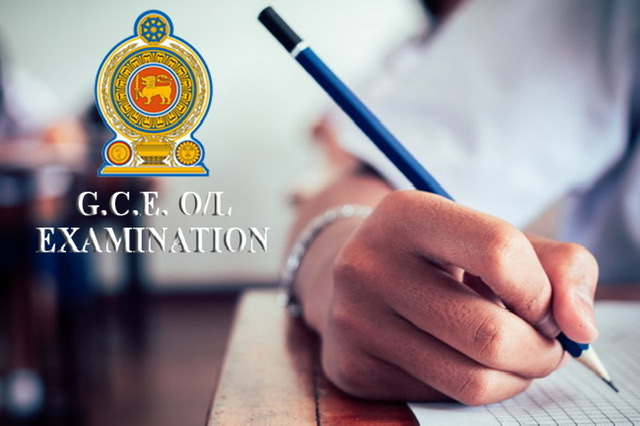
March 16, Colombo (LNW): The Department of Examinations has confirmed that all question papers for the upcoming GCE Ordinary Level (O/L) examinations have been successfully distributed to the relevant examination centres.
The exams are scheduled to commence tomorrow (17) and will continue until March 26.
According to the Department, a total of 534 coordination centres have been established to manage the distribution of the papers, ensuring that everything is in place ahead of the testing period.
This year, the O/L examinations will be conducted at 3,663 centres across Sri Lanka, with a total of 478,182 candidates registered to take part. Of these, 398,182 are school candidates, marking a significant turnout as students across the nation prepare to sit for one of the most important academic assessments.
To ensure the smooth conduct of the examinations and maintain the integrity of the process, a special security protocol has been put in place. Police officers have been assigned to examination centres as necessary, adding an extra layer of oversight and protection.
In a bid to further ensure the security and confidentiality of the examination process, the Department of Examinations has implemented a policy restricting mobile phone use.
Only examination supervisors and their assistants will be allowed to carry mobile phones into the centres during the exam sessions, ensuring that no unauthorised communication or cheating occurs during the tests.
March 16, Colombo (LNW): Labour Minister Anil Jayantha has issued a public warning regarding a fraudulent job offer scam circulating on social media, which falsely claims to be linked to the Department of Labour.
The Minister revealed that his office has been inundated with complaints from the public about these deceptive schemes, which mislead job seekers by promising employment opportunities through fake accounts.
These accounts are said to be offering jobs under the Ministry of Labour, creating a false sense of legitimacy to lure unsuspecting individuals into providing sensitive personal information.
Minister Jayantha clarified that there is no such job programme being operated by the Ministry and strongly advised the public to exercise caution. He specifically warned against sharing personal details or bank account information with these fraudulent accounts, as they are part of an elaborate scam designed to exploit vulnerable individuals.
The Minister urged the public to verify any employment opportunities directly through official channels, such as the Ministry’s website or authorised representatives, to avoid falling victim to these scams.
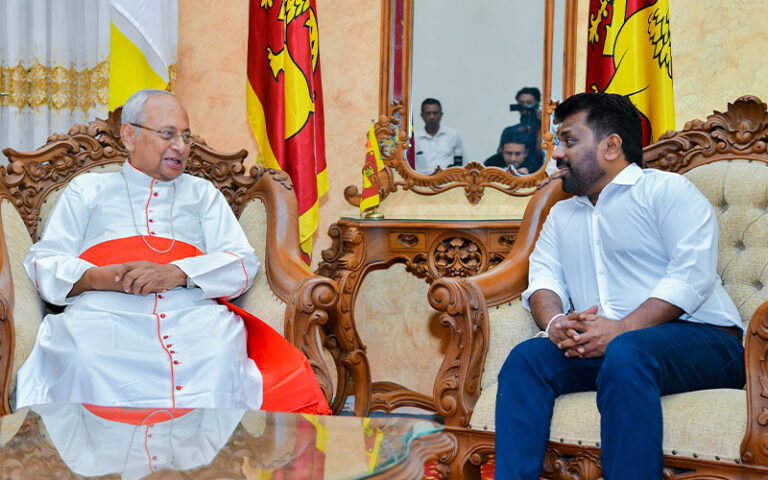
March 16, Colombo (LNW): His Eminence Malcolm Cardinal Ranjith, the Archbishop of Colombo, has expressed his continued hope for justice to be delivered for the victims of the Easter Sunday attacks before the sixth anniversary of the tragic event.
Speaking at a public forum at the Archbishop’s House in Colombo on March 15, Cardinal Ranjith strongly emphasised the urgent need for accountability and justice, warning that the failure to act would compel the public to take to the streets in protest.
The Cardinal reminded the gathering of the promises made by the political leadership of Sri Lanka following the devastating attacks of April 2019.
“The leaders who were in power at the time vowed to bring those responsible for the Easter Sunday bombings to justice. However, none of these assurances have been realised,” he said.
He further explained that the church had supported the election of the current government in the hope that it would enact meaningful change and bring about justice for the victims.
“We stood behind the change in leadership, believing it would address the deep-rooted issues in the system. But if no progress is made, we will have no choice but to reconsider our position.”
Cardinal Ranjith reiterated the government’s responsibility to fulfil the promises made by President Gotabaya Rajapaksa during his visit to the Katuwapitiya Church, where he pledged to ensure justice for the victims.
“We are still waiting for a fair and just response from the government. If we do not receive one before the sixth anniversary of the attacks, we will be left with no other option but to take to the streets once again,” the Cardinal warned.
This statement underscores the ongoing frustration and anguish felt by the victims’ families and the Catholic community, who have repeatedly called for accountability for those responsible for the deadly bombings that claimed the lives of over 250 people and injured many more.
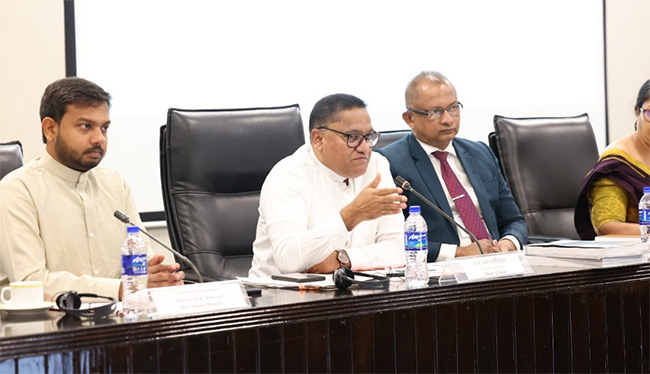
March 16, Colombo (LNW): Foreign Affairs Minister Vijitha Herath has called on the public to utilise the ‘1989’ hotline for accurate and trustworthy information regarding private employment agencies, particularly for those seeking job opportunities abroad.
The Minister’s remarks came during a recent session of the Ministerial Consultative Committee on Foreign Affairs, Foreign Employment, and Tourism, held in Parliament, where Members of Parliament (MPs) raised concerns about fraudulent schemes.
These scams involve individuals who falsely claim to secure overseas employment for hopeful jobseekers, thereby defrauding them of large sums of money.
In response, Minister Herath highlighted that the public could access verified information about licensed employment agencies and approved fee structures through the Sri Lanka Bureau of Foreign Employment’s official website.
He stressed that any agency charging fees above the officially approved rates or operating without the necessary licences should be reported to the Bureau for investigation.
During the committee meeting, MPs also drew attention to the disturbing reports regarding Sri Lankan nationals in Russia, alleging that they were being exploited for military operations in the country.
The MPs voiced their concerns about the inhumane treatment of these individuals, prompting the Chairperson of the Committee to acknowledge the gravity of the situation.
He described the issue as multifaceted and complex, requiring thorough investigation and intervention.
The session also touched upon concerns regarding the tourism sector, specifically the limitations imposed on the use of loudspeakers for musical events and night parties in tourist areas.
MPs argued that the curfew on loudspeaker usage at 10:00 p.m. was hindering the growth of tourism, especially in areas that rely on vibrant nightlife to attract visitors.
Herath responded to these concerns by stating that any such restrictions should be carefully balanced to ensure that the public’s peace is not disturbed while still fostering a thriving tourism industry.
The meeting was attended by Deputy Minister Arun Hemachandra, as well as other Deputy Ministers, MPs, and senior officials from various institutions affiliated with the Ministry of Foreign Affairs, Foreign Employment, and Tourism.
March 16, Colombo (LNW): In commemoration of World Consumer Rights Day on March 15, a new initiative has been unveiled under the “Clean Sri Lanka” programme, aimed at fostering greater awareness and driving a positive shift in attitudes towards consumer rights protection across the nation.
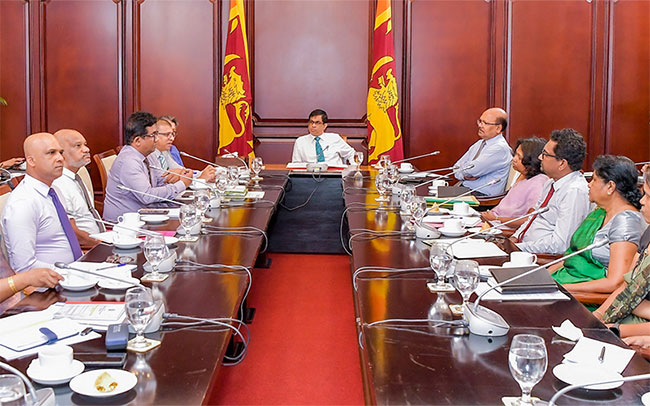
A key discussion regarding this initiative took place at the Presidential Secretariat, led by Dr. Nandika Sanath Kumanayake, Secretary to the President.
The meeting saw the active participation of representatives from various government ministries, including those responsible for Health and Agriculture, reported the President’s Media Division (PMD).
Dr. Kumanayake underscored the importance of translating existing policies into tangible actions, especially those related to ensuring that citizens have access to food that is not only safe but also of the highest quality.
He highlighted the pressing need for a robust framework to safeguard consumers’ rights, particularly in the area of food safety, as well as the role of both the public and private sectors in upholding these standards.
The meeting delved into a wide-ranging discussion focused on the practical steps needed to ensure that food products meet stringent health and safety regulations.
Participants explored methods to improve compliance with health standards while boosting consumer confidence.
Furthermore, the integration of the “Clean Sri Lanka” initiative with ongoing government efforts to regulate and certify food-related businesses was a key point of the dialogue.
In particular, attention was given to how the “Clean Sri Lanka” programme can work in tandem with the Ministry of Agriculture’s National Policy framework. Discussions centred on how to guarantee the safety and proper storage of agricultural products, which are crucial components of the national food supply.
Also addressed were existing regulations regarding restaurant certifications, the registration and regulation of street vendors, as well as the oversight of food trucks and other informal food establishments.
There was a consensus that these regulations must be enforced more effectively to protect consumers and maintain high standards within the food industry.
Moreover, there was a collective emphasis on the importance of strengthening the training of personnel in the food industry, which is seen as vital to improving food safety and quality assurance across the country.
The meeting was attended by a range of senior government officials, including G.M.R.D. Apponsu, Senior Additional Secretary to the President, S.P.C. Sugiswara, Additional Secretary to the President, and representatives from various ministries and institutions. These included the Ministry of Public Administration, Provincial Councils, and Local Government, the Ministry of Health and Mass Media, the Ministry of Agriculture, Livestock, Land and Irrigation, the Ministry of Trade, Commerce, Food Security and Cooperative Development, as well as key departments such as the Department of Food Commissioner, Department of Agriculture, and Consumer Affairs Authority. Representatives from the Sri Lanka Standards Institution, National Medicines Regulatory Authority, and other regulatory bodies also contributed to the discussions.
March 16, Colombo (LNW): The Parliament of Sri Lanka has confirmed that discussions on the highly anticipated ‘Batalanda’ Commission report will officially begin on April 10.
The Acting Director of Communications for Parliament, Mr. Jayalath Perera, revealed that the debate will unfold in two stages, with the first scheduled for April 10.
The debate will run from 11:30 AM to 5:30 PM, focusing on the ‘Report of the Commission of Inquiry into the Establishment and Maintenance of Places of Unlawful Detention and Torture Chambers at the Batalanda Housing Scheme,’ which was presented in Parliament on March 14.
Mr. Perera also noted that the debate will continue into May, with a second session set aside to ensure a comprehensive two-day discussion.
The ‘Batalanda’ report was formally introduced by the Leader of the House, Minister Bimal Ratnayake, who confirmed that the two-day debate, as previously outlined, will proceed as planned.
Minister Ratnayake also provided some insight into the government’s approach to the findings, revealing that President Anura Kumara Dissanayake had authorised a Cabinet decision to take appropriate actions based on the report’s conclusions.
The report, which delves into allegations of unlawful detention and torture in a notorious housing scheme, has attracted significant attention due to its serious implications.
Minister Ratnayake further explained that the government has opted to forward the report to the Attorney General for a thorough legal review, ensuring that any necessary legal actions will be considered.
In addition, a special Presidential Committee has been established to guide future steps and provide strategic recommendations for dealing with the aftermath of the findings.
Notably, the report has implicated several high-profile figures, including former President Ranil Wickremesinghe. In light of these allegations, Wickremesinghe has announced that he will address the claims in a public statement, which he plans to deliver on March 16.
March 16, Colombo (LNW): Showers or thundershowers will occur at times in Northern, Eastern and Uva provinces and in Hambantota, Polonnaruwa, Nuwara-Eliya and Matale districts.
Showers or thundershowers will occur at several places elsewhere in the island after 1.00 p.m.
Fairly heavy showers above 75 mm can be expected at some places in Western, Sabaragamuwa, Central, Southern and North-western provinces.
Cloudy skies can be expected over the Southern half of the island.
Misty conditions can be expected at some places in Western and Sabaragamuwa provinces and in Galle, Matara and Kurunegala districts during the morning.
The general public is kindly requested to take adequate precautions to minimise damages caused by temporary localised strong winds and lightning during thundershowers.
Marine Weather:
Condition of Rain:
Showers or thundershowers will occur at several places in the sea areas off the coast extending from Trincomalee to Galle via Batticaloa and Hambantota. Showers or thundershowers may occur at several places in the other sea areas around the island during the evening or night.
Winds:
Winds will be North-easterly or variable and speed will be (20-30) kmph.
State of Sea:
Sea areas around the island will be slight to moderate. Temporarily strong gusty winds and very rough seas can be expected during thundershowers.
March 15, Colombo (LNW): The recent sexual assault of a doctor at Anuradhapura Hospital has reignited discussions around the pervasive violence against women in Sri Lanka.
The National People’s Power (NPP) Women Members of Parliament have expressed solidarity with the victim whilst calling for systemic reforms to address the ongoing issue of gender-based violence.
They emphasised that the fight must not be confined to the identity of individual victims, but rather focus on dismantling the broader culture of misogyny and violence against women that persists in society.
The MPs noted that crimes against women, ranging from sexual harassment to assault and even murder, are alarmingly frequent in Sri Lanka. These acts, they argue, are not only a result of physical violence but also the pervasive culture of hate speech and online abuse that dehumanises women.
This culture, they said, feeds into the normalisation of violence against women and creates an environment in which such crimes are overlooked or trivialised.
The NPP Women MPs specifically raised concerns over the media’s handling of the victim’s statement, criticising the lack of sensitivity towards survivors of violence.
They stressed that violations of privacy, particularly in the media, often lead to victim-blaming and further discourage women from coming forward to report crimes.
The MPs urged the media, law enforcement, and the judiciary to prioritise the privacy and dignity of survivors to ensure that victims feel empowered to report such incidents without fear of further harm or stigma.
The MPs also called for urgent reforms to the criminal justice system, insisting that clear and strict standards be established for the police, judiciary, and media when handling cases of gender-based violence.
They underscored the need for these reforms to focus on the lived experiences of women, to better support them through the legal process and beyond.
In closing, the MPs appealed to society to show empathy, refrain from gossip and speculative theories, and work together to protect survivors from further harm.
They called for a collective commitment to combatting the “silent epidemic” of violence against women and ensuring that survivors are given the support they need to seek justice.
Full Statement:
ACollective Pledge for Justice Reforms and Demand for Ethical Reporting – NPP Women MPs
The Sexual Assault of a doctor in Anuradhapura hospital has once again sparked a discussion on our collective failure to combat violent crimes against women. While we express our solidarity and empathy with the survivor of this particular incident we also stress that regardless of the social category or the identity of the victim, our mission should be to dismantle the culture of violence against women.
Every day we hear of one crime or the other against women, ranging from murder to sexual assault to sexual harassment at a workplace or in cyber space. Hate Speech against women is normalized indicating a deeper problem of a culture of misogyny which builds towards a culture of physical and sexual violence. It is important to understand that often normalized acts of online abuse and verbal harassment are part and parcel of a culture that considers women to be sub- human.
If we take this particular incident we notice the same casual misogyny taking over what was initially an empathetic response from all quarters of the society.
Therefore as women, who have continuously advocated for reforms to support survivors of violence and harassment, we consider it our duty to contribute to the public debate as we strive in our capacities to reform the systems tacking violence and harassment against women.
We are especially deeply concerned about the publication of the victim’s statement in the media and the lack of sensitivity in our system towards violent crimes against women which leads to such lapses. The law enforcement authorities and the media must act with sensitivity towards survivors of violence and harassment. In a large number of cases women are discouraged to report incidents of violence and harassment to authorities precisely because of the stigma attached to their names from there on. Every survivor has a right to privacy. The judiciary, police and the media must prioritize the privacy and well-being of survivors if we are to encourage reporting of crimes to authorities.
Often such violations of privacy lead to victim blaming on a large scale, as we see in this case too. Social media chatter about the supposed credibility of the actions of the woman following the crime creates a culture of shame and self-doubt which prevents women from reporting sexual assault to authorities.
Therefore we request everyone to protect the privacy of the woman involved and refrain from gossiping and sharing misguided theories about such violent crimes. Survivors do not have one size fit all reactions. In order to combat this silent epidemic of violence against women we must center our justice system on the experience of women who face such situations.
Therefore we urge that necessary reforms to our criminal justice system and media should be made to enhance our institutional capacity to combat violence against women. Clear and definite standards should be put in place for the police, the judges and the media to handle cases of crimes against women. As a society we need to approach these crimes with empathy protecting the privacy of the survivors without adding to her burden and discouraging women from coming forward to report and seek justice.
1 Dr. Harini Amarasuriya, Prime Minister and Minister of Education, Higher Education and Vocational Education 2 Ms. Hemali Weerasekara, Deputy Chairperson of Committees 3 Ms. Saroja Savithri Paulraj, Minister of Women and Child Affairs 4 Ms. Sagarika Athauda, Attorney-at-Law, Member of Parliament 5 Dr. Kaushalya Ariyarathne, Member of Parliament 6 Ms. Oshani Umanga, Member of Parliament 7 Ms. Krishnan Kalaichelvi, Member of Parliament 8 Ms. Nilanthi Kottahachchi, Attorney-at-Law, Member of Parliament 9 Ms. M.A.C.S. Chathuri Gangani, Member of Parliament 10 Mrs. Nilusha Lakmali Gamage, Member of Parliament 11 Mrs. Samanmali Gunasingha, Member of Parliament 12 Mrs.Thushari Jayasingha, Attorney-at-Law, Member of Parliament 13 Ms. Anushka Thilakarathne Attorney-at-Law, Member of Parliament 14 Ms.A.M.M.M. Rathwaththe, Member of Parliament 15 Ms. Hasara Liyanage, Attorney-at-Law, Member of Parliament 16 Ms. Deepthi Wasalage, Member of Parliament 17 Ms. Hiruni Wijesinghe Attorney-at-Law, Member of Parliament 18 Ms. Ambika Samivel, Member of Parliament 19 Ms. Lakmali Hemachandra, Attorney-at-Law, Member of Parliament 20 Ms. Geetha Herath, Attorney-at-Law, Member of Parliament