Home Blog Page 633

Sri Lanka and Saudi Arabia formalise agreement for Hajj 2025

0

January 16, Colombo (LNW): Sri Lanka has recently signed a significant agreement concerning the Hajj pilgrimage for the year 2025, marking a new chapter in the bilateral relations between Sri Lanka and Saudi Arabia.

The agreement was finalised in Jeddah, with the Sri Lankan delegation led by the Minister of Buddhasasana, Religious and Cultural Affairs, Dr. Sunil Senevi.

On the Saudi side, Dr. Abdulfattah Bin Sulaiman Mashat, the Deputy Minister of Hajj and Umrah, represented the Kingdom.

The agreement underscores the shared commitment of both nations to enhancing the Hajj pilgrimage experience for Sri Lankan Muslims.

Minister Senevi’s visit to Saudi Arabia was arranged at the invitation of Dr. Tawfiq Fawzan Alrabiah, the Saudi Minister of Hajj and Umrah, and is seen as a crucial step towards streamlining Hajj operations in the future.

In discussions preceding the signing, Minister Senevi highlighted the Sri Lankan government’s dedication to improving the Hajj journey for its citizens.

He outlined plans for making the pilgrimage process more efficient and seamless, a sentiment that reflects the broader ambitions of the Sri Lankan administration to enhance its international partnerships and ensure a smooth experience for pilgrims.

As part of his official visit, Minister Senevi is scheduled to meet with Dr. Tawfiq Fawzan Alrabiah and various Hajj service providers to discuss future developments in Hajj arrangements.

The delegation will also make visits to key religious and cultural sites, including Madinah, the holy city of the Prophet, and significant landmarks in Jeddah. Furthermore, Minister Senevi took time to engage with the Sri Lankan expatriate community in Jeddah, strengthening ties between the two nations.

The Sri Lankan delegation accompanying Minister Senevi includes a range of senior officials, such as Deputy Minister of National Integration Muneer Mulaffar, Sri Lanka’s Ambassador to Saudi Arabia Ameer Ajwad, Director of the Department of Muslim Religious and Cultural Affairs M.R.M. Nawas, Acting Consul General Mafusa Lafir, and Hajj Coordinator Dr. M.N.M. Ahsraff.

Heavy showers, strong winds expected across island (Jan 16)

0

January 16, Colombo (LNW): Showers or thundershowers will occur at times in North-central, Eastern, Uva and Central provinces and in Hambantota district, and fairly heavy showers above 50 mm are likely at some places in Eastern province and in Matale, Nuwara-Eliya and Polonnaruwa districts.

Showers or thundershowers will occur at several places in Western and Sabaragamuwa provinces and in Galle and Matara districts during the afternoon or night.

Fairly strong winds of (30-40) kmph can be expected at times over Eastern slope of the central hills and Northern, North-central, Eastern, North-western and Uva provinces and in Hambantota district.

Misty conditions can be expected at some places in Western, Sabaragamuwa, Central, province in Galle and Matara districts during the morning.

The general public is kindly requested to take adequate precautions to minimise damages caused by temporary localised strong winds and lightning during thundershowers.

Marine Weather:

Condition of Rain:
Showers or thundershowers will occur at several places in the sea areas extending from Kankasanthurai to Matara via Trincomalee and Pottuvil. Showers or thundershowers will occur at several places in the other sea areas around the island during the afternoon or Night.
Winds:
Winds will be north-easterly and speed will be (30-40) kmph. Wind speed can increase up to (50-60) kmph at times in the sea areas off the coast extending from Colombo to Kankasanthurai via Puttalam and Mannar and from Matara to Pottuvil via Hambantota. Wind speed can increase up to 50 kmph at times in the other sea areas around the island.
State of Sea:
The sea areas off the coasts extending from Colombo to Kankasanthurai via Puttalam and Mannar and from Matara to Pottuvil via Hambantota will be rough at times. Other sea areas around the island may be fairly rough at times. Temporarily strong gusty winds and very rough seas can be expected during thundershowers.

Missing Vehicles and Management Issues in Sri Lanka’s Local Governments

0

The primary role of Local Governments in Sri Lanka is to offer essential services that improve the quality of life for citizens, including regulatory functions, public health promotion, and providing infrastructure to enhance the comfort and well-being of communities. However, these bodies often face challenges in service delivery, resulting in public criticism.

A key issue has been the misuse and mismanagement of state resources, highlighted by a government initiative to track down official vehicles misappropriated by former politicians and officials. 

The investigation uncovered that hundreds of vehicles, including 201 motorcycles, were unaccounted for under the Southern Provincial Council. An audit report confirmed the disappearance of 201 vehicles registered to the Southern Provincial Council, while sources indicated that over 2,000 vehicles from provincial councils are missing across the country.

The missing vehicles, many of which are luxury cars and jeeps, raise concerns about the improper use of state property. An investigation is ongoing to determine the whereabouts of these vehicles. 

Minister of Public Administration, Provincial Councils, and Local Government, Professor Chandana Abeyratne, has directed officials to locate the missing vehicles and has acknowledged past misuse of these resources, particularly by lower-ranking officials with political connections.

Further audit findings show that 31 vehicles from the Central Provincial Council remain unaccounted for, and the physical existence of 201 vehicles from the Southern Provincial Council remains unverified. 

These developments highlight the need for stricter measures to ensure accountability and prevent future mismanagement of public resources.

Local Governments in Sri Lanka also face broader issues, including lack of resources, political interference, outdated regulations, human resource management problems, and inefficiencies in procurement processes. 

The effectiveness of service delivery is influenced by factors such as employee commitment, leadership, the use of technology, citizen participation, and performance evaluations. Policy measures are needed to address these challenges and improve public service delivery across the country.

Import Scams, Mismanagement, and Policy Failures Fuel Sri Lanka’s Rice Crisis

0

Former Minister of Agriculture, Mahinda Amaraweera, accused unscrupulous importers of exploiting import permits meant for Nadu rice by smuggling other grains, such as basmati rice, mung beans, cashew nuts, and urad dal. 

He claimed these items were hidden in stock warehouses, where a tax evasion scheme allowed basmati rice (which carries a higher tax) to be imported under the guise of Nadu rice, attracting only a tax of Rs. 65 per kilogram. 

This practice contributed to artificially low market prices for these grains, allowing large-scale traders to repackage and sell imported rice at inflated prices. Amaraweera emphasized that there was no shortage of red raw rice, which was available in mills but intentionally held back to manipulate prices.

 He defended the previous government’s rice distribution efforts to low-income families, asserting it did not contribute to the current crisis. Furthermore, Amaraweera claimed to know the locations where red rice stocks were hidden and was willing to expose them if necessary.

Minister of Trade, Commerce, and Food Security, Wasantha Samarasinghe, countered Amaraweera’s claims, attributing the shortage of red rice to resource mismanagement by past administrations. 

Samarasinghe presented data from 2024, highlighting that 277,315 hectares were cultivated across the Yala and Maha seasons, producing 1.1 million metric tons of paddy. However, due to inefficient distribution policies, market shortages of red rice persisted. 

Samarasinghe noted that while the 2024 Maha season produced 706,000 metric tons of rice from 277,000 hectares and the Yala season yielded 403,097 metric tons, poor planning and distribution led to scarcity in the market. 

He assured the public that the 2025 Maha season would address future shortages, with 161,067 hectares already cultivated and a projected yield of 648,200 metric tons.

Samarasinghe criticized the previous government’s rice distribution initiative before the elections, where 20 kilograms of red rice per family were given indiscriminately, including to those who typically consume white rice. This, according to him, disrupted the market and exacerbated the shortage for those reliant on red rice. 

He highlighted that ongoing surveys of paddy-growing regions, mills, and warehouses were being conducted to identify inefficiencies and improve resource allocation to prevent future crises. He concluded by reassuring the public that proactive measures were being taken to prevent similar issues in the future.

The unfolding rice crisis is seen as a reflection of systemic governance issues, including import irregularities, resource mismanagement, and poorly thought-out policies. 

These challenges have strained Sri Lanka’s rice market, affecting both consumers and farmers. Samarasinghe also addressed the lack of “Kekulu Rice” for the Thaipongal celebration, attributing the shortage to the previous government’s distribution of free rice. However, Matale District MP Rohini Kawirathna dismissed this statement as an unfounded rant.

Sri Lanka has produced 46 million metric tons of rice in recent years, with 29 million metric tons coming from the Kekulu rice variety. 

In the Southern Province, Kekulu rice accounts for 85% of the total rice produced. Despite the large scale of production, the distribution of 54,000 metric tons of rice to 27 million families, including 75% Kekulu rice, did not cause a shortage, as it represents only 14% of the country’s total Kekulu rice production. 

The argument that the rice distribution led to a Kekulu rice shortage was refuted by experts, who viewed it as a fabricated claim to avoid responsibility for addressing future food security needs.

The decision to distribute rice was a collective one, supported by a report from the “Parliamentary Committee for Children” that highlighted the growing issue of child malnutrition, with 36% of children suffering from malnutrition. 

The report called for midday meals for schoolchildren and food for impoverished families, which was acted upon by President Ranil Wickremesinghe and the Parliament. The rice distribution was a necessary response to national needs, driven by the parliamentary committee’s recommendations, Kaviratne said. .

Will High Court Judge Ilanchelian Retire Without Promotion?

0

Renowned High Court Judge Manikkavasagam Ilanchelian, known for his courageous and impactful judgments in numerous high-profile cases, is approaching his mandatory retirement age of 60 on January 20, 2025.

High Court judges in Sri Lanka must retire at 60, but those promoted to the Court of Appeal can continue serving until 63. For Ilanchelian, the window of opportunity for his promotion closes on Friday, January 17—the last day he will be eligible for appointment as an appellate court judge.

However, procedural constraints have raised concerns. President Anura Kumara Dissanayake, currently on an official visit to China, is expected to return only on January 17. The President must issue a recommendation to the Constitutional Council for Ilanchelian’s promotion. The council, in turn, must convene and approve the recommendation before the deadline. With only 72 hours remaining, the situation has created uncertainty over whether the promotion process can be completed in time.

Manikkavasagam Ilanchelian is widely respected for his fearless and impartial decisions, including judgments in several controversial cases such as murder trials. His potential elevation to the Court of Appeal would ensure the judiciary continues to benefit from his expertise and integrity.

The question now remains whether the necessary administrative steps will be expedited or whether the judiciary will lose the invaluable service of Judge Ilanchelian due to procedural delays.

Flood-Affected Farmers to Receive Crop Compensation by Month-End

0

The Agrarian Insurance Board announced that compensation for crops damaged during last November’s floods will be disbursed by the end of this month.

Board Chairman Pemasiri Jasingarachchi stated that approximately 95% of crop damage assessments have been completed, with evaluations in regions such as Jaffna, Kilinochchi, Trincomalee, and Mannar nearing completion.

He assured that once final recommended compensation documents are submitted by Agrarian Development Centers, the allocated funds will be directly transferred to the bank accounts of affected farmers. This initiative aims to provide timely relief to those impacted by the floods.

Minister Assures Resolution of Red Rice Shortage Amid Criticism of Past Policies

0

Minister of Trade, Commerce, and Food Security Wasantha Samarasinghe addressed concerns over the current red rice shortage, attributing it to mismanagement by previous governments. He assured the public that measures are underway to stabilize supply, especially with the Thai Pongal festival approaching.

“We understand that red rice is a staple for many, particularly during cultural celebrations like Thai Pongal. The shortage has understandably raised concerns, and I want to shed light on its causes,” Samarasinghe said.

The Minister explained that red rice cultivation is traditionally concentrated in areas such as Matara, Galle, Hambantota, and other parts of the Southern and Eastern provinces. In 2024, 277,315 hectares were cultivated during the Yala and Maha seasons, yielding 1.1 million metric tons of paddy. However, resource mismanagement and inefficient distribution policies by prior administrations have led to the current scarcity.

He detailed that the Maha season of 2024 produced approximately 706,000 metric tons of paddy from 277,000 hectares, while the Yala season yielded 403,097 metric tons. Despite adequate production figures, inefficiencies in distribution have left the market undersupplied with red rice.

Looking ahead, Samarasinghe provided reassurance about the 2025 Maha season, which has already seen 161,067 hectares cultivated, with an expected yield of 648,200 metric tons. “We anticipate no shortage in 2025,” he stated.

Criticizing previous policies, the Minister highlighted a pre-election initiative that distributed 20 kilograms of red rice per family without consideration for consumer preferences. “This indiscriminate distribution disrupted the market. By providing red rice to those who do not typically consume it, they inadvertently caused a shortage for those who rely on it,” he explained.

Efforts are now focused on rectifying the situation. “We have conducted extensive surveys in paddy-growing areas, mills, and warehouses to gain better insights into supply chain issues and prevent future shortages,” Samarasinghe concluded.

Sri Lanka’s Deputy Minister Urges Strengthened Tourism and Cultural Exchanges with China

0

Ruwan Ranasinghe, Sri Lanka’s Deputy Minister of Foreign Affairs, Foreign Employment, and Tourism, has expressed admiration for China’s diverse culture, cuisine, and friendly people. Speaking to Xinhua, he shared his hope that more Chinese tourists would visit Sri Lanka to experience the country’s scenic beauty and rich cultural heritage.

In 2014, Ranasinghe fulfilled his dream of studying in China. Under the Belt and Road Initiative, he received a Chinese government scholarship to pursue a doctorate in tourism management at Sichuan University. During his time in China, Ranasinghe and his mentor established the International Center for Interdisciplinary Culture Heritage & Tourism Research (SCU-UWU) and witnessed the growing interest of Chinese tourists in Sri Lanka.

In 2017, China became the second-largest source of tourists to Sri Lanka, with over 260,000 Chinese visitors that year. However, domestic challenges and the COVID-19 pandemic caused a significant decline in Chinese tourist arrivals. With the resurgence of international travel post-pandemic, Ranasinghe emphasized Sri Lanka’s readiness to welcome Chinese tourists again. The government is working to enhance convenience for Chinese travelers through streamlined visa processes and direct flights, aiming to position Sri Lanka as a preferred destination.

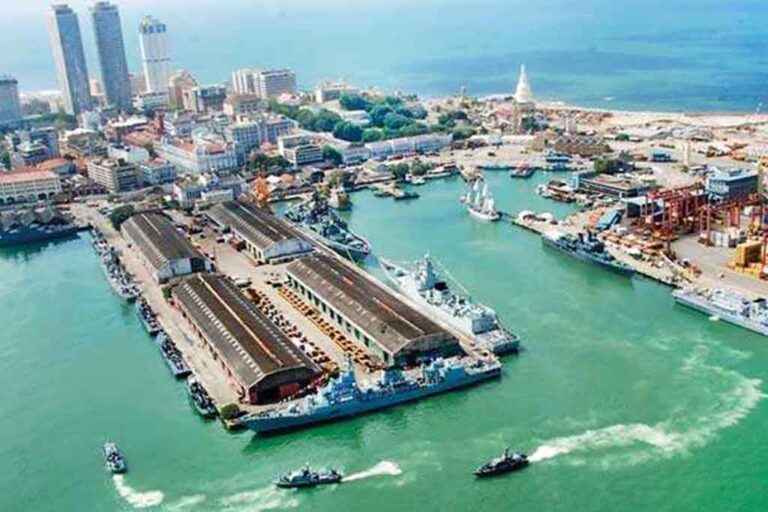
Ranasinghe highlighted the deep economic, diplomatic, and cultural ties between Sri Lanka and China. He praised the Belt and Road Initiative projects, such as the Colombo Port City and Hambantota Port, for contributing to Sri Lanka’s economic recovery and fostering collaboration between the two nations.

During Sri Lankan President Anura Kumara Dissanayake’s state visit to China from January 14 to 17, Ranasinghe anticipated further progress in trade, investment, and cultural exchanges. He noted the historical connections between the two countries, referencing visits by the Chinese monk Fa Xian and navigator Zheng He, as examples of long-standing cultural interactions.

Ranasinghe concluded by expressing his belief in the enduring bond between the two nations. “I went to school in Sichuan and learned that Sichuan people love spicy food, just like Sri Lankans. I warmly welcome more Chinese tourists to visit my hometown and deepen the connection between our peoples.”

Concerns Mount Over Sri Lanka’s Media Agreements with Chinese Institutions

0

Journalist groups in Sri Lanka have voiced strong concerns over the government’s decision to enter agreements with Chinese media institutions during President Anura Kumara Dissanayake’s recent state visit to Beijing.

According to a report by Anidda Newspaper, several media forums criticized the government’s announcement last week, which revealed that proposals for partnerships with Chinese media outlets, focused on capacity building, had been approved.

Chairperson of the Sri Lanka Working Journalists Association (SLWJA), Duminda Sampath, questioned the timing and transparency of the agreements. “Chinese media are predominantly state-controlled entities, not independent outlets. At a time when Sri Lankan journalists are advocating for reforms to ensure media independence, especially within state-run media, this move is deeply troubling,” Sampath said.

He cautioned that such partnerships might enable foreign influence in Sri Lanka’s media landscape, potentially undermining the country’s press freedom. Sampath also criticized the government for failing to consult local media stakeholders, labeling the process as lacking transparency.

Lasantha De Silva of the Free Media Movement echoed these sentiments, calling for the agreements’ contents to be made public. “Media should operate with social responsibility, not as tools of government propaganda. The public deserves to know what these agreements entail and their potential impact on the country,” he stated.

Details of Proposed Agreements

The Ministry of Health and Mass Media is reportedly preparing to sign Memorandums of Understanding (MOUs) with China’s National Radio and Television Administration (NRTA) and the state-owned Xinhua News Agency. These agreements aim to facilitate capacity-building programs for Sri Lankan officials and journalists.

The partnerships include collaborations between Associated Newspapers of Ceylon Limited (Lake House) and Xinhua News Agency, as well as agreements involving the Department of Government Information, Sri Lanka Rupavahini Corporation, and Sri Lanka Broadcasting Corporation with China Media Group.

Call for Transparency

Media organizations are urging the government to disclose the terms of these agreements and engage with local media stakeholders before proceeding. Critics fear that without transparency, these collaborations may compromise the independence of Sri Lanka’s media, which is already under scrutiny for state influence.

The government’s next steps on these agreements will be closely watched, as concerns grow over their implications for press freedom and the broader media landscape in Sri Lanka.

India Distributes Festive Kits and Essential Supplies Across Sri Lanka Ahead of Pongal

0

In a gesture of goodwill and solidarity, the High Commission of India in Colombo, along with its regional offices, organized a series of events to distribute festive kits and essential supplies ahead of the auspicious Pongal festival. The initiative also extended support to underprivileged families, local institutions, and communities across Sri Lanka.

Northern Province Initiatives

In the Northern Province, Pongal kits were distributed at the Kayts Divisional Secretariat and the Selva Sannithi Murugan Kovil, Thondaimanaru. Additionally, school bags and learning kits were provided to underprivileged students at the Kalaimagal Free Education Society in Chulipuram, fostering educational support.

Eastern Province Assistance

In collaboration with the District Secretariat Batticaloa, the High Commission distributed essential supplies to aid the rehabilitation of 750 flood-affected families across Koralai Pattu South, Koralai Pattu West, Eravur Pattu, Manmunai South West, Porathivu Pattu, Manmunai South, and Eruvil Pattu.

Central Province Contributions

The Assistant High Commission of India in Kandy celebrated New Year by distributing 200 umbrellas and raincoats to estate workers at an event at St. Joseph Vaz Church, Kadiyanlena, Nawalapitiya. On Duruthu Poya day, over 50 mattresses were donated to the pilgrim rest house at Divurumpola Raja Maha Viharaya.

Southern Province Support

The Consulate General of India in Hambantota gifted eight LED television sets to the Tissamaharama Base Hospital. Furthermore, a special Ayurveda medical camp was organized at the Sri Sudharmarama Raja Maha Viharaya in collaboration with the Department of Ayurveda, Uva Province, offering free Ayurvedic consultations and medicines to local residents.

Upcoming Initiatives

The distribution efforts will continue in the coming days, including donations of roofing sheets to families in Matale affected by recent climatic disasters, schoolbags and stationery items to students at Ramboda Temple, and essential equipment like a herbal crusher machine for Chamal Rajapaksa Ayurvedic Hospital in Hambantota. Other planned contributions include a water purifier for Iqra Primary School in Hambantota, a photocopier machine and multimedia projector for Aluthwala Maha Vidyalaya in Galle, and fishing equipment for the fisher community in Jaffna.

These initiatives are not only spreading festive cheer but also reinforcing the strong bonds of friendship between India and Sri Lanka, further strengthening their unique bilateral relationship.