Home Blog Page 64

Rs. 200 Million Spent, No Privatizations — Why a parliamentary Audit is needed? 

0

By Adolf 

In the Interim Budget 2022, the Government of Sri Lanka announced the creation of a State-Owned Enterprise (SOE) Restructuring Unit within the Ministry of Finance, Economic Stabilization and National Policies, with an allocation of Rs. 200 million to oversee reforms of major loss-making state corporations such as SriLankan Airlines, the Ceylon Electricity Board (CEB) and the Ceylon Petroleum Corporation (CPC). The aim, as presented by the Presidency and Treasury, was to strengthen financial performance and reduce the fiscal burden from persistent SOE losses. 

The unit was led by Suresh Kumar Shah, a chartered accountant and a controversial private sector leader, appointed to head restructuring efforts. Despite this high-level commitment and public expectations that at least some responsible enterprises would either be privatized or meaningfully reformed during the two-year period, no major privatization has taken place to date. There have been debates around strategic reforms and closures, but no successful divestment of significant SOEs has been completed. 

Auditor General Report

In fact, the Auditor General’s 2024 report on the Ministry’s finances provides new insight into how the allocated funds were actually spent. According to the audit findings, a total of Rs. 121 million was spent on operating the SOE Restructuring Unit in 2023 and 2024, with nearly half (Rs. 58 million) going to salaries within the unit. A portion — about Rs. 193 million (over multiple years) — was also paid to two foreign transaction consultants contracted to assist in the restructuring process. What the audit was clear about was that by the end of 2024, the core objectives of the restructuring program had not been achieved, and the unit’s activities had been temporarily suspended in early 2025, with no clear deliverables completed. 

Tax Payers Money

Critics point to these facts and argue that taxpayer money was squandered on administrative costs, consultants, and advertising, without generating meaningful outcomes such as successful privatizations or improved SOE performance. Many commentators on social media and in public debates have questioned why millions were spent while state enterprises continue to weigh heavily on the national finances and ongoing fiscal reforms. 

Expenditure 

This expenditure stands in sharp contrast to ongoing high-profile probes into smaller procurement issues, such as the case involving a former Water Board General Manager and a former president over vehicle hire spending in the UK — cases where individuals have faced legal scrutiny and arrests. Public sentiment is now asking: Why is there silence on an institutional expenditure that arguably had larger fiscal implications than these individual cases?

Economists argue that SOE reform is a vital part of any credible fiscal recovery strategy. Advocates for divestiture note that Sri Lanka’s SOEs have long accumulated losses and consumed public resources that could otherwise go toward social priorities, infrastructure and debt reduction. 

Parliamentary Audit

Given this backdrop, a full parliamentary audit of the SOE Restructuring Unit’s budget, contracts, and outcomes is increasingly being demanded by civil society, taxpayers and political watchdogs. A transparent investigation — reviewing the full two years of operations, contract awards, fees paid to consultants and the actual outcomes achieved — could restore public confidence in reforms and ensure that future state restructuring efforts avoid similar waste. LNW will investigate the performance of the UNIT and how the leadership spent money and the need for accountability . 

IMF Conditions Challenge Sri Lanka Strategic Project Incentives

0

Sri Lanka’s ambitious drive to attract large-scale investments through Strategic Development Projects is confronting new constraints under its reform program with the International Monetary Fund. At the center of debate is the continued use of tax concessions granted under the Strategic Development Projects Act, No. 14 of 2008.

The Act empowers authorities to designate projects as “strategic” based on their anticipated economic and social contribution. Once approved, these ventures may receive extensive tax holidays, exemptions from value-added tax, customs duties, and other levies. The rationale has been clear: reduce upfront costs for investors to stimulate transformative projects in infrastructure, tourism, energy, and manufacturing.

But Sri Lanka’s fiscal landscape has dramatically changed since the economic collapse of 2022. With public debt levels elevated and tax revenue historically low as a share of GDP, the IMF-backed reform agenda prioritizes strengthening state income. Central to this approach is minimizing tax expenditures the revenue government forgoes through exemptions and special treatment.

The IMF has urged authorities to rationalize incentive schemes and ensure that any concessions are transparent, targeted, and time-bound. This reflects a broader policy shift toward rule-based taxation rather than negotiated exemptions. The objective is twofold: restore fiscal credibility and ensure equitable tax treatment across sectors.

Supporters of SDP concessions caution against abrupt policy reversals. Large investors often plan projects years in advance, and policy uncertainty can deter capital inflows. In a post-crisis economy striving to rebuild growth momentum, foreign direct investment remains a critical pillar.

However, fiscal experts argue that incentives must demonstrate clear cost-benefit outcomes. If revenue losses outweigh job creation, technology transfer, or export growth, the net economic impact could be negative. Moreover, overly generous exemptions may distort competition, disadvantaging domestic enterprises that do not qualify for SDP status.

There is also a governance dimension. Ensuring parliamentary scrutiny, public disclosure of projected revenue foregone, and post-implementation audits could strengthen accountability. Aligning the SDP framework with IMF benchmarks may require codifying stricter eligibility criteria and limiting discretionary approvals.

Ultimately, Sri Lanka’s recovery strategy hinges on reconciling two imperatives: sustaining investor confidence and restoring fiscal health. The future of tax concessions under the SDP regime will likely depend on how effectively policymakers can prove that strategic incentives yield measurable national returns without undermining revenue stability.

The IMF program has not eliminated investment incentives but it has placed them under a sharper fiscal microscope.

Cyclone, Debt, and Dollars

0

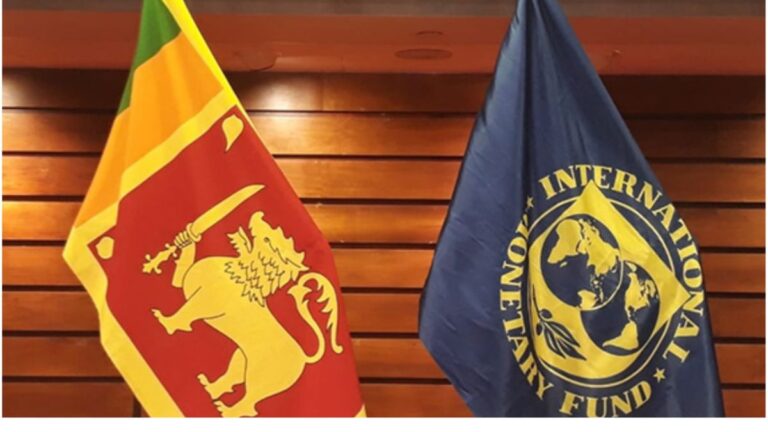
As International Monetary Fund chief Kristalina Georgieva concludes high-level talks in Colombo, scrutiny is mounting over whether Sri Lanka can secure swift access to two EFF tranches amid mounting cyclone recovery costs and lingering external vulnerabilities.

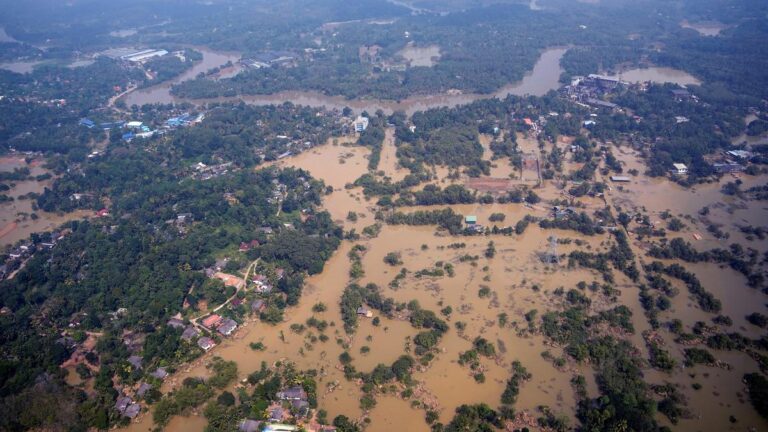
President Anura Kumara Dissanayake has framed the discussions as forward-looking—focused on ensuring that economic stabilization translates into tangible benefits for citizens, particularly rural communities battered by Cyclone Ditwah. Yet IMF engagements are rarely symbolic; they revolve around data, compliance, and fiscal discipline.

The Core Economic Pressures

Sri Lanka’s balance-of-payments position remains delicate. Tourism has rebounded, remittances are stabilizing, and inflation is moderating. But reconstruction imports, debt repayments, and weak export diversification strain reserves. Drawing two EFF tranches could help:

Offset immediate disaster-relief expenditures

Stabilize foreign exchange reserves

Maintain investor confidence

Fund social safety nets without breaching fiscal ceilings

Sensitive Reform Areas on the Table

Investigative sources indicate discussions likely covered electricity pricing reforms, public financial management upgrades, anti-corruption legislation, and progress in restructuring bilateral and private external debt. The IMF will also evaluate governance transparency in cyclone-related procurement and distribution of relief funds.

Climate adaptation financing is another emerging theme. With Sri Lanka increasingly exposed to extreme weather events, integrating resilience into macroeconomic planning may become a prerequisite for future multilateral support.

Reading the Signals

Georgieva’s public remarks commended Sri Lanka’s stabilization trajectory and disaster response. That tone suggests constructive engagement rather than confrontation. Still, IMF approval hinges on performance criteria reviews. Any deviation from agreed fiscal targets or delays in SOE restructuring could slow disbursement.

A positive decision would send a strong signal to global lenders and ratings agencies that Sri Lanka remains reform-committed. Conversely, hesitation could widen spreads and complicate market access.For now, the mood appears pragmatic. Both Colombo and Washington recognize that sustaining recovery amid climate shocks requires flexibility within reform frameworks. The coming weeks will reveal whether that flexibility translates into funds

Sri Lanka’s Market Bets on Reform, But Risks Linger

0

The steady fall in yields on Sri Lanka’s restructured International Sovereign Bonds may reflect renewed optimism, but it also places the Government’s reform credibility under sustained scrutiny.

Following the 2024 debt exchange, yields on the new instruments have compressed to between 3.6% and 8.4%, according to Bloomberg data cited during an investor call led by Treasury Secretary Dr. Harshana Suriyapperuma. While short-term maturities remain elevated around 8–8.5%, longer-dated bonds have tightened sharply, with the longest tenor trading near 3.6%.

Officials interpret this trend as validation of Sri Lanka’s compliance with its program under the International Monetary Fund. Yet markets are effectively pricing in continued fiscal discipline, structural reforms, and political stability through 2027   assumptions that carry inherent risks.

The new bond architecture is complex. Governance-Linked Bonds adjust coupons based on revenue performance starting in 2028, while Macro-Linked Bonds are tied to debt sustainability metrics aligned with IMF thresholds. These instruments were designed to share risk between creditors and the sovereign, rewarding performance but potentially raising costs if targets are missed.

Authorities say they remain comfortably within IMF debt sustainability parameters, even if the first variable threshold on the macro-linked bonds is triggered. However, such assurances depend heavily on sustained revenue mobilization and expenditure control   pillars of the IMF’s Extended Fund Facility.

Cyclone Ditwah’s limited market impact has been cited as evidence of resilience. But analysts caution that exogenous shocks from global financial volatility to commodity price swings  could quickly alter investor sentiment. The brief yield spike in early 2025 due to geopolitical tensions illustrates the sensitivity of frontier-market debt to global conditions.

Sri Lanka has secured agreements with creditors representing nearly all external debt, with over 92% already restructured. This near-completion reduces legal uncertainty, yet the durability of the recovery hinges on continued policy consistency beyond immediate IMF reviews.

The Fifth Review Staff-Level Agreement reached at end-2025 signals strong program performance. Approval would unlock another $350 million, raising total IMF disbursements to about $2 billion. But the program runs through 2027, and future reviews will test the Government’s resolve to maintain politically difficult reforms.

Markets appear willing, for now, to reward reform adherence. The challenge for policymakers is to ensure that declining yields reflect sustainable economic fundamentals rather than temporary optimism. In frontier sovereign debt markets, confidence can build steadily  but it can also reverse abruptly

Bond Haircuts and IMF Oversight Define Sri Lankan Airlines Rescue

0

The restructuring of SriLankan Airlines is emerging as a critical test of Sri Lanka’s commitment to fiscal discipline, as the state carrier navigates bond haircuts, capital infusions, and oversight linked to the International Monetary Fund program.

At the centre of the plan is a Rs. 25.2 billion Government capital injection completed in December 2025. The funds were used to extinguish outstanding state bank debt under a newly agreed restructuring package. The move strengthens the airline’s balance sheet but simultaneously increases direct state exposure, as new shares are issued primarily to the Government.

The recapitalisation follows a sharp deterioration in financial performance. For the year ended March 2025, the airline group swung to a Rs. 2.7 billion loss from an Rs. 8 billion profit the previous year, while revenue contracted significantly. The reversal has intensified scrutiny over the sustainability of state ownership.

A parallel negotiation addressed USD 175 million in Government-guaranteed bonds maturing in June 2024. Talks between the airline’s advisors — Lazard and Norton Rose Fulbright — and an ad hoc bondholder group represented by Akin Gump resulted in a proposed 15% haircut on principal. The remaining claims would be settled via a mix of cash and medium-term Government bonds at 4% interest.

Crucially, the deal requires Cabinet approval and IMF non-objection, aligning the airline’s restructuring with the country’s wider sovereign debt overhaul. By removing the Government’s guarantee liability upon completion, the agreement would reduce contingent fiscal risks a key metric under IMF debt sustainability analysis.

Treasury officials argue that settling 99% of external debt will help stabilise Sri Lanka’s credit outlook and support a future return to capital markets. However, analysts caution that restructuring addresses legacy debt but not structural inefficiencies. Without operational reforms or a credible strategic investor, recapitalisation risks becoming cyclical.

 Compounding uncertainty is the leadership vacuum following CEO Richard Nuttall’s departure to Philippine Airlines. A new chief executive will inherit the challenge of restoring profitability while potentially negotiating private-sector participation.

The airline’s future now hinges on whether financial engineering and IMF-aligned oversight can translate into operational turnaround or whether deeper structural transformation will be required to secure lasting sustainability.

Akuregoda Shooting Not a Threat to National Security – Minister

0

Public Security and Parliamentary Affairs Minister Ananda Wijepala told Parliament that the area in Akuregoda, Thalangama—where lawyer Buddhika Mallawarachchi and his wife were killed in a recent shooting—is not a high-security zone.

Responding to a question raised by Opposition Leader Sajith Premadasa under Standing Order 27/2 in Parliament, the Minister stressed that the incident was isolated and does not pose a threat to national security, public safety or the maintenance of peace in the country.

He stated that isolated incidents occurring in different parts of the country do not undermine overall national security and added that ongoing operations to suppress underworld activity and drug trafficking are being carried out successfully.

Minister Wijepala also rejected allegations by the Opposition Leader that the government and the Police Media Spokesman had issued official statements within two hours of the shooting, claiming the deceased lawyer had links to the underworld and that the killing was connected to such associations.

He clarified that neither the government nor the Police had made any such official statements. The Minister revealed that 12 special Police teams were deployed immediately after the incident to conduct investigations and apprehend those responsible. He said four suspects accused of aiding and abetting the shooters have already been arrested and are being questioned. However, he noted that further details cannot be disclosed at this stage as it may compromise ongoing investigations.

The Minister further alleged that the Opposition was attempting to portray the incident as a breakdown of national security.

“We do not underestimate the life of any individual in this country. We do not condone anyone being killed. As a government, we are committed to protecting every citizen,” he said.

He added that since assuming office, the government has taken several measures to address the circulation of illegal weapons. He noted that weapons previously issued to politicians have yet to be fully surrendered and that investigations are underway into firearms allegedly provided to underworld elements from certain military camps.

Minister Wijepala condemned the culture of violence and reiterated the government’s regret over the tragic incident. He also extended his condolences to the family of the deceased lawyer and his wife, emphasising that the crime should not be viewed as a threat to the rule of law.

Govt to Implement Welfare Schemes for Journalists This Year – Deputy Minister

0

Mass Media Deputy Minister Dr. Kaushalya Ariyarathna informed Parliament that the Government has taken steps to introduce several welfare measures for journalists this year.

He made these remarks in response to questions raised by MP Dharmapriya Dissanayake during the oral question session in Parliament yesterday (17) regarding issues faced by journalists.

The Deputy Minister said the Ministry has received numerous complaints concerning private media institutions, including closures, non-payment of Employees’ Provident Fund (EPF) and Employees’ Trust Fund (ETF) contributions, as well as salary arrears.

However, he noted that as private media institutions operate independently, the Media Ministry has limited authority to directly intervene in matters related to salaries and employment conditions. Such issues fall under the purview of the Labour Act and can be addressed through the Department of Labour.

He added that the Director General of the Department of Government Information (DGI) has issued a letter to all media institutions urging them to ensure proper remuneration for journalists. The Government has also requested that private sector media organisations provide fair and timely payments to their employees.

Dr. Ariyarathna further stated that, in line with the Government’s policy statement, steps are underway to establish a chartered institution for journalists. A draft bill for this purpose has been prepared and submitted to the Attorney General’s Department, and approval has been obtained. The bill is expected to be published in the Gazette shortly.

He said these measures respond to long-standing demands by journalists and aim to create a conducive environment for them to work with dignity and professional rights, including mechanisms to seek redress if wronged.

In addition, the Deputy Minister said that the scholarship programme previously offered to journalists will continue this year. Plans are also in place to introduce a health insurance scheme—particularly benefiting provincial journalists—alongside a broader social security programme, with implementation expected within the year.

Cabinet Approves Revised Guidelines to Fast-Track ‘Gamata Sannivedanaya’ 4G Expansion

0

The Cabinet of Ministers has approved revised reimbursement guidelines to accelerate the implementation of the “Communication to the Village” (Gamata Sannivedanaya) national project, which aims to expand 4G broadband coverage across the island.

The project is being carried out by the Sri Lanka Telecommunication Regulatory Commission (TRC) under the Finance Act No. 11 of 2004. So far, 83 communication towers have been constructed in underserved and rural areas through a cost-sharing arrangement with mobile service providers.

However, the pace of the project had slowed due to rising operational costs and limited revenue generation from certain towers in the aftermath of the economic crisis.

To address these challenges, the TRC has introduced revised reimbursement guidelines under which either a maximum of Rs. 35 million per tower or 75 percent of the actual construction cost—whichever is lower—will be reimbursed.

Cabinet approval for the revised mechanism was granted following a proposal submitted by the President in his capacity as Minister of Digital Economy.

President Directs Removal of Pakistan from Restrictive Visa Lists

0

President Anura Kumara Dissanayake has reportedly instructed relevant authorities to immediately remove Pakistan from all “negative” visa lists following discussions with Pakistan’s Federal Interior Minister and Pakistan Cricket Board Chairman Mohsin Naqvi.

The directive was issued during a meeting between President Dissanayake, Interior Minister Mohsin Naqvi and Pakistan’s Minister for Overseas Pakistanis, Chaudhry Salik Hussain.

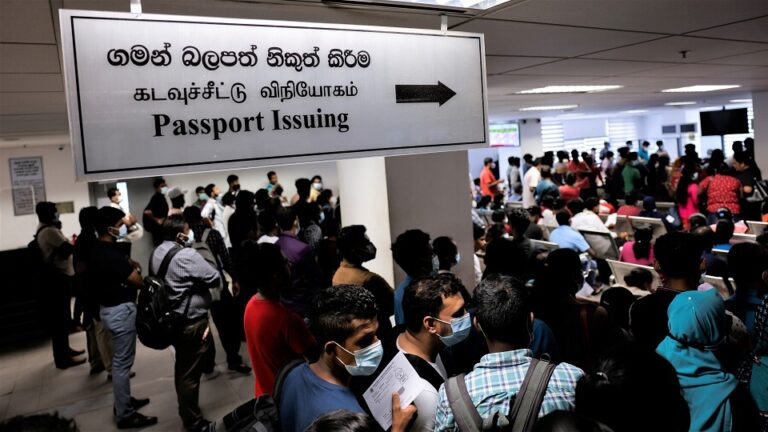
During the talks, Naqvi raised concerns over difficulties faced by Pakistani nationals in obtaining Sri Lankan visas. In response, the President directed officials to remove Pakistan from restrictive visa categories, a move expected to facilitate travel for tourists, businesspersons and other visitors, while further strengthening bilateral relations.

President Dissanayake acknowledged Pakistan’s support to Sri Lanka during challenging periods and reaffirmed his commitment to deepening ties between the two countries. He also announced that Sri Lanka’s Prime Minister is expected to undertake an official visit to Pakistan in the near future.

The discussions also covered cooperation in counter-terrorism, anti-narcotics operations and joint training of security forces. The President expressed appreciation for Pakistan’s decision to play a T20 World Cup match against India in Colombo, describing it as a gesture of goodwill.

Minister Naqvi conveyed appreciation for Sri Lanka’s efforts to enhance bilateral relations and extended an invitation from Prime Minister Shehbaz Sharif for President Dissanayake to visit Pakistan. He also thanked the Sri Lankan government for the hospitality extended to the Pakistani delegation during the cricket event.

In a message posted on his official X account, President Dissanayake said he met with Naqvi and Salik Hussain and that both sides reaffirmed their longstanding friendship, expressing gratitude for Pakistan’s continued support to Sri Lanka during difficult times.

IMF Chief Praises Sri Lanka’s Rapid Economic Turnaround

0

International Monetary Fund (IMF) Managing Director Kristalina Georgieva has stated that Sri Lanka has achieved macroeconomic and financial stability within a short period, highlighting what she described as a significant economic turnaround.

Speaking in a special interview with Ada Derana during her three-day official visit to the island, Georgieva commended the resilience of the Sri Lankan people and the government’s swift response to recent economic challenges.

She noted that inflation, which had previously surged to 70 percent, has now declined to 2 percent, while economic growth has recovered from negative territory to 5 percent.

Georgieva also referred to the IMF’s provision of US$ 200 million in emergency financial assistance following Cyclone Ditwah, stating that the timely support helped ensure affected communities were not left to face the consequences alone.

Emphasising the importance of unity and sustained reform efforts, she said Sri Lanka now has a valuable opportunity to move forward under a government that has earned public trust and is working towards long-term stability and growth.

The IMF Managing Director further identified tourism as a key sector critical to Sri Lanka’s economic future.