Home Blog Page 65

Sri Lanka’s 2026 Budget Bets on Stability -But Revenue Goals Face Tough Reality

0

Sri Lanka’s 2026 Budget, presented in Parliament today, represents a pivotal moment in the country’s post-crisis recovery, a statement of intent that combines fiscal restraint with cautious optimism. The government has pledged to sustain economic stability under the IMF programme, while promising to turn that stability into tangible growth. Yet, the real test lies in whether the ambitious revenue goals can be met without overburdening citizens or stalling the fragile recovery.

Revenue Ambitions Take Centre Stage

The government has set a revenue-to-GDP target above 15%, up from about 13.7% in 2024, signalling a renewed push to strengthen state finances. The Budget also maintains a primary surplus of 2.3% of GDP and aims to cut the overall deficit below 5% by 2028.

Rather than introducing new or higher taxes, the 2026 Budget focuses on expanding the tax base, tightening compliance, and phasing out costly tax exemptions. Officials argue that this approach will make the system fairer and more efficient, avoiding additional pressure on already strained households.

This direction is consistent with the IMF’s call for “strong revenue measures to support macroeconomic stability,” while ensuring that economic growth and fiscal prudence go hand in hand. However, economists caution that achieving these goals will require strong administrative reform and political will in areas where Sri Lanka has struggled in the past.

 Dependence on Compliance and Private Growth

The budget strategy assumes that improved tax collection and renewed investor confidence will deliver the expected revenue growth. With public investment capped at around 4% of GDP, the government is relying heavily on the private sector and foreign direct investment (FDI) to drive expansion and job creation.

This model, however, carries risks. The narrow tax base, dominated by indirect taxes such as VAT and import duties, remains a weak foundation. If consumption slows or imports decline, state revenues could fall short. Moreover, while the Budget promises a friendlier investment climate, the effectiveness of those measures will depend on how quickly bureaucratic bottlenecks and corruption are tackled.

Expert Reactions

Dr. W. A. Wijewardena, former Deputy Governor of the Central Bank, welcomed the government’s commitment to continue the IMF-backed reform programme and its reliance on private and foreign investment to fuel the economy.

“AKD showed remarkable confidence about his government’s ability to continue the current policy package and deliver prosperity as promised in his manifesto,” he observed. “His shift toward private-sector-led growth is a positive development and a step in the correct direction.”

He noted that the country’s economic stability depends not only on fiscal targets but also on maintaining rule of law and investor confidence  key elements highlighted in the Budget.

Professor Priyanga Dunusinghe of the University of Colombo said the government deserves credit for managing to gradually reduce the budget deficit despite limited external borrowing options. “There is no evidence of excessive borrowing under this government. On the contrary, the deficit has been steadily declining,” he said, adding that domestic borrowing remains the main source of financing due to restricted access to global markets.

Critical Assessment

The 2026 Budget strikes a careful balance between stability and ambition. It is disciplined rather than populist, designed to reassure creditors and investors that Sri Lanka remains committed to reform. The emphasis on compliance, digitalisation, and improved governance over new taxes is sound in principle, but execution will determine success.

France Commissions Two Cable Ships to Be Built in Sri Lanka to Boost Global Connectivity

0

Colombo, November 5 – The Embassy of France in Colombo has announced that two French cable ships will be constructed in Sri Lanka, marking another milestone in bilateral cooperation and the country’s growing reputation in advanced shipbuilding.

The vessels will be built by Colombo Dockyard PLC, selected by Orange Marine, a French company and a global leader in submarine cable installation and maintenance. The project aims to renew and expand Orange Marine’s fleet capacity, strengthening global digital connectivity infrastructure.

This follows the successful construction of the cable ship Sophie Germain in 2023 by Colombo Dockyard, which is currently in active operation.

The Embassy noted that this renewed collaboration underscores Sri Lanka’s rising prominence in the global maritime engineering sector, while reinforcing the strategic maritime partnership between France and Sri Lanka.

Officials from both sides expressed confidence that the initiative will not only enhance technological cooperation but also create new opportunities for Sri Lanka’s shipbuilding industry in the international arena.

President Dissanayake Announces Major Public Sector Reforms and Benefits in 2026 Budget

0

Colombo, November 7 – President Anura Kumara Dissanayake announced that the state administrative system has been severely weakened due to years of unfilled vacancies in the public service, emphasizing that revitalizing the public sector is a key priority of the 2026 Budget.

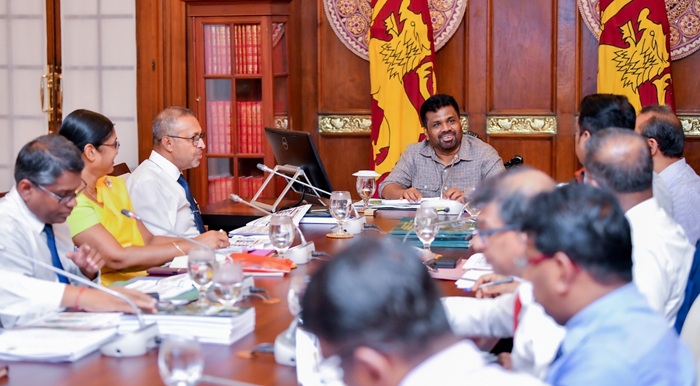
Presenting the Budget Proposals for 2026 in Parliament, the President revealed that a formal study conducted by a committee chaired by the Prime Minister had reviewed the country’s public service recruitment process and overall workforce management. Based on its findings, approval has been granted to recruit nearly 75,000 individualsthrough a transparent and merit-based procedure.

“These recruitments will focus on essential positions such as technical officers, law enforcement officers, and revenue officers, who are vital to maintaining the efficiency and continuity of key state services,” President Dissanayake said.

He also underscored that, going forward, all recruitments, promotions, and related administrative actions in the public sector will strictly adhere to prescribed examinations and service regulations, free from political influence — ensuring equal opportunities for all qualified candidates.

In addition to strengthening public service management, President Dissanayake announced a series of financial and welfare benefits for public servants, including:

  • Restructuring of the housing and property loan scheme, increasing the maximum loan amount to Rs. 5 million.
    • Rs. 500 million will be allocated for these loans, with a 4% concessional interest rate for the first Rs. 3 million and a 2% rate for amounts between Rs. 3 million and Rs. 5 million.
  • Revision of the Agrahara Insurance Scheme contribution to maintain its sustainability.
    • The minimum contribution of Rs. 125 will rise by Rs. 75.
    • Monthly contributions of Rs. 300 and Rs. 600 will be increased by Rs. 150 each.
  • Increase of the interest-free festival advance for government employees from Rs. 10,000 to Rs. 15,000.
  • Enhancement of the distress loan advance from Rs. 250,000 to Rs. 400,000, at an interest rate of 4.2%.

The President noted that these reforms are intended to both restore efficiency in public administration and improve the living standards of state employees, ensuring a more motivated and equitable public service.

Ape Janabala Party Extends Support to NPP-Led Government

0

The Ape Janabala Party (Our Power of People Party) has announced its decision to extend full support to the current government led by the National People’s Power (NPP).

The decision was formally conveyed in a statement issued by the party’s General Secretary, Chinthaka Weerakoon, who stated that the supreme council of the party had unanimously agreed to cooperate with the NPP administration.

According to the statement, the Ape Janabala Party will also support the NPP in the upcoming elections and work in collaboration with the government on key national programs introduced by President Anura Kumara Dissanayake.

The party emphasized that it would back positive government decisions while also offering constructive advice to ensure the effective implementation of national development initiatives.

In its statement, the party noted that it highly values the ongoing national initiatives under the current administration and reaffirmed its commitment to supporting the President’s vision of building a Sri Lankan nation rooted in Buddhist principles and the preservation of the country’s cultural heritage and traditions.

Debate on 2026 Budget Commences in Parliament Today

0

The debate on the Second Reading of the Appropriation Bill for the year 2026, also known as the Budget Debate, is scheduled to commence today (08) in Parliament and will continue for six days, until November 14, according to the Department of Communication of Parliament.

The vote on the Second Reading of the Budget will be held on November 14 at 6.00 p.m., following the conclusion of the debate.

Thereafter, the Committee Stage debate on the Appropriation Bill for 2026 will take place over 17 days, including three Saturdays, from November 15 to December 5. The Third Reading vote is scheduled for December 5 at 6.00 p.m., marking the conclusion of the 2026 Budget process.

Accordingly, the entire Budget Debate period will run from November 8 to December 5, 2025.

The Second Reading of the Appropriation Bill—the Budget Speech—was presented to Parliament yesterday (07) by President Anura Kumara Dissanayake, in his capacity as Minister of Finance.

In line with parliamentary tradition, the President arrived at the Chamber from the Office of the President within the Parliament premises at around 1.30 p.m., preceded by the Serjeant-at-Arms.

The President then delivered the Budget Speech, presenting the Government’s proposals for the 2026 financial year, which continued until 5.50 p.m.

Veteran Sri Lankan Banker Damien Ranjan Mallewa Passes Away

0

One of Sri Lanka’s most senior and respected banking professionals, Damien Ranjan Mallewa, has passed away.

He served at Seylan Bank for many years, and in his final role, he functioned as the General Manager of Pramukha Bank. After retiring, he resided in the United Kingdom for nearly 15 years before returning to Sri Lanka.

He had been unwell for some time and passed away yesterday (November 07).

At LNW, we are deeply saddened by his demise and extend our heartfelt condolences to his wife, Champa Mallewa, and son, Ryan Mallewa.

During 2010, when LNW faced severe pressure from the then Rajapaksa administration—including a website ban and even international arrest warrants—Mr. Mallewa was among the few who stood by us with unwavering courage and support. Our respect for him will remain forever.

Mallewa was also an avid cricket enthusiast. He personally travelled to the Caribbean islands to watch the ICC Cricket World Cup, fully funding the trip himself. His passion for the sport culminated in the publication of his book, “Winds Behind the Willows: A Sri Lankan’s Life in Love with Cricket,” a gift to cricket fans.

He also authored a series of articles exposing fraud, corruption, and malpractice in the cricket world, which were published on LNW under the title “Third Man.”

Today, Ranjan Mallewa bids farewell to his wife Champa and son Ryan and returns to the embrace of the divine. His remains will be kept at A.F. Raymond Funeral Parlour, Borella, from 1:00 PM to 3:00 PM, with the final rites scheduled for 3:30 PM at the Borella Cemetery.

May you rest in peace, dear sir, until we meet again.

WEATHER FORECAST FOR 08 NOVEMBER 2025

0

Showers or thundershowers will occur at most parts of the island after 1.00 p.m. Fairly heavy falls above 75 mm are likely at some places in Uva, Southern, Sabaragamuwa and Central provinces.
Showers or thundershowers may occur in Western, Sabaragamuwa, Central, North-western and Southern provinces and in Ampara district in the morning too.

The general public is kindly requested to take adequate precautions to minimize damages caused by temporary localized strong winds and lightning during thundershowers.

Pradeep Nilanga Dela Reappointed as Diyawadana Nilame of the Temple of the Sacred Tooth Relic

0

Pradeep Nilanga Dela has once again been elected as the Diyawadana Nilame of the historic Temple of the Sacred Tooth Relic in Kandy.

The appointment was made this afternoon (07) during the election held at the Kandy Buddhist Council.

He secured 195 votes, earning his third consecutive term as the Diyawadana Nilame. With this victory, he will serve another 10-year tenure in this prestigious position.

Dear Comrade Aravinda…

0

By Faraz Shauketaly

It appears dear man, your work is really being cut out for you by the Drug Barons in our promisingly and hauntingly beautiful land.

Your prisons are overflowing – several times the legit and acceptable humane capacity.

If I had been writing to Gothabya (the chap who ran away after consciously hurting the farmers and the Muslims) I would have pitched it differently.

I would have said that prison overcrowding was inherently part n parcel of the sentence. That would have been his justification. Sad bad and mad as he was.

As you are much more humane than that, it is my knowledge that you are painfully aware of the harsh bleak not so “Nuwa type” conditions in our prisons.

Point is you need to distinguish between the addictive substances and the “oh not so” ones.

Weed or Ganja is not addictive in the same way as say ICE or cocaine.

So we need to change this in order that “they” can be given an affordable fine and kept away from remand prison.

This will change the population in prison and free up more time for investigators. For starters.

You do see the point don’t you Comrade Aravinda?

We need you to ask Nalinda and Harshana to get together and break these offences down so the already stretched judiciary can better manage their assets and resources.

Comrade Aravinda remember that in this world of complexities simple things become realities.

US $ 30 Million IFC Loan Boosts Sri Lanka’s Clean-Energy Drive

0

In a significant step toward advancing Sri Lanka’s energy transition, the International Finance Corporation (IFC) is poised to extend a US $ 30 million loan to support the government-backed Secure, Bearable and Sustainable Energy Project (SBSE) under the umbrella of the World Bank Group. This move follows formal approval by the country’s Cabinet of Ministers of Sri Lanka, which endorsed the loan agreement earlier in May.

According to the Cabinet spokesman, Dr. Nalinda Jayatissa, negotiations with the IFC are ongoing to finalise the exact terms. The funds will be channelled via the Ceylon Electricity Board (CEB) or its designated affiliates, functioning as sub-loans to implement the project’s core components: enhancing system reliability, improving affordability of power, and accelerating the shift to sustainable energy generation. Importantly, the agreement will adhere to recommendations of the Public Debt Management Office to safeguard debt-management standards.

In broader context, this loan dovetails with the Bank Group’s new programme unveiled in June 2025, under which some US $150 million has been committed to strengthen Sri Lanka’s clean energy mix. That programme intends to add about 1 gigawatt of renewable (solar + wind) capacity and mobilise more than US $800 million of private-sector investment.

Beyond the headline loan, the IFC has been active in Sri Lanka’s financial and climate-finance reform space. For example, earlier in 2024-25 it supported the Central Bank of Sri Lanka in developing its green-finance strategy  a move aimed at boosting bank-lending to renewable projects and SME access to finance.

Although precise nine-month figures specific to the SBSE project are not publicly available yet, the IFC’s institutional data shows that for its FY 2025 (ending June 30) total commitments rose to US $71.7 billion globally up from US $56.1 billion a year earlier.

 While these numbers cover all IFC operations worldwide—not just Sri Lanka they reflect the scale at which the IFC is operating and the potential for significant deployment of funds into the country.

For Sri Lanka, the anticipated impact of the US $ 30 million loan is multiple. First, by improving power-system reliability and reducing dependence on costly fossil-fuel imports, it can help lower electricity cost burdens on households and businesses.

Second, aligning with the country’s goal of 70 % renewables by 2030, the loan is a catalyst for private-sector entry and innovation in the energy space. Third, by adhering to debt-management frameworks, the loan contributes to restoring fiscal stability and external-funding discipline.

It is, however, crucial to recognise risks: the success of the SBSE project will depend not only on funding but on execution the pace of generation-capacity roll-out, transmission upgrades, grid integration, and regulatory reform. The loan’s value lies not only in the US $ 30 million itself, but in the credible pathway it opens for larger private investment and institutional reform.

In summary, the IFC’s forthcoming loan marks a pivotal moment for Sri Lanka’s energy sector: through targeted funding, reform-linked technical support and private-sector mobilization it offers a tangible boost to cleaner, more sustainable and affordable power. 

The coming months will be critical as the project transitions from approval into implementation and as stakeholders monitor whether the promised gains translate into measurable improvements for the Sri Lankan economy and its people.