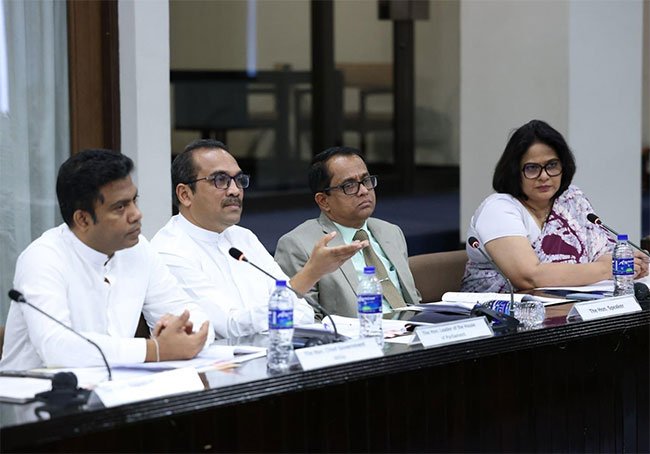
March 01, Colombo (LNW): During a recent meeting of the Committee on Parliamentary Business, chaired by Speaker Dr. Jagath Wickramaratne, a key decision was made regarding the formation of seven Sectoral Oversight Committees in the Tenth Parliament of Sri Lanka.
The committees will be tasked with overseeing the work of all ministries, and their creation marks a significant step in strengthening parliamentary accountability and governance.
Mrs. Kushani Rohanadeera, the Secretary-General of Parliament, confirmed that a consensus had been reached during the meeting, which took place on February 27.
Under the agreement, the opposition will hold the chairmanship of three committees, while the remaining four will be allocated to the government.
The decision to establish these oversight bodies was made in response to recommendations from a dedicated committee that had reviewed the effectiveness and operations of such committees in previous parliamentary sessions.
In addition to the formation of the Sectoral Oversight Committees, the Committee on Parliamentary Business also approved the creation of a new Parliamentary Caucus for Persons with Disabilities.
This initiative follows a request put forward by Members of Parliament Sugath Wasantha de Silva and Dr. Pathmanathan Sathyalingam, and it aims to address the needs and concerns of people with disabilities in Sri Lanka.
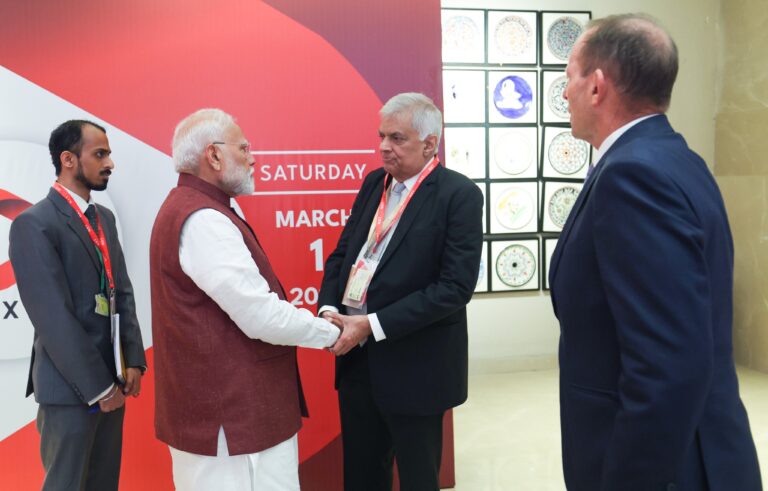
March 01, Colombo (LNW): Former Sri Lankan President Ranil Wickremesinghe recently met with Indian Prime Minister Narendra Modi at the NXT Conclave.
Following the meeting, Modi shared a message on social media platform X, expressing his admiration for Wickremesinghe.
“I have always looked forward to our interactions and have admired his perspective on various issues,” Modi wrote, adding, “At the NXT Conclave, met my friend Mr. Ranil Wickremesinghe.”
At the NXT Conclave, met my friend Mr. Ranil Wickremesinghe. I have always looked forward to our interactions and have admired his perspective on various issues. @RW_SRILANKApic.twitter.com/blBNKMaDM4
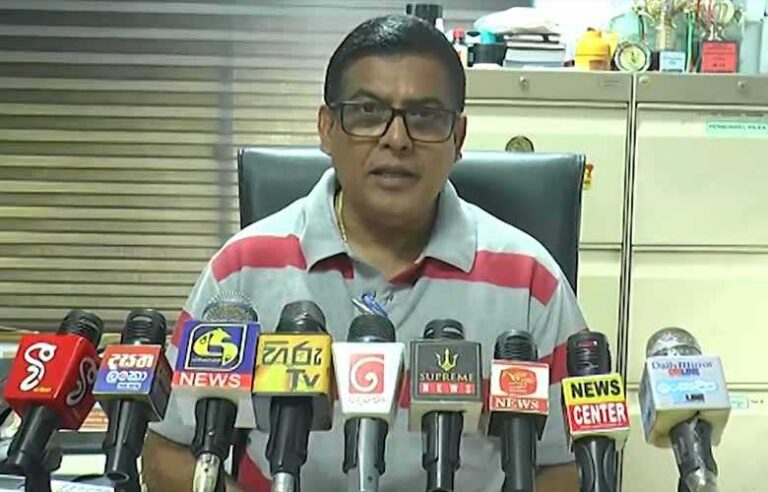
March 01, Colombo (LNW): The Fuel Distributors’ Association of Sri Lanka has issued a stark warning that the country could face a severe fuel shortage by Monday (03), as members of the association have decided to halt all new fuel orders starting from today (01).
Speaking at a briefing, Kusum Sandanayake, the association’s vice president, explained that the remaining fuel stocks at stations nationwide are based on orders placed by 8.00 a.m. on Friday (28).
With no new orders being placed as of today, he stressed that fuel supplies would rapidly dwindle, leaving stations unable to meet demand by Monday.
Sandanayake further noted that the Fuel Distributors’ Association, which has never previously resorted to strike action, had been forced into this drastic measure due to the Ceylon Petroleum Corporation’s (CEYPETCO) decision to eliminate the 3 per cent commission traditionally given to distributors, replacing it with a new, less favourable formula.
He argued that this change left distributors with no other recourse but to cease their operations.
The CEYPETCO’s decision to scrap the commission and introduce the new pricing structure has been met with strong opposition from fuel distributors, who claim it is a move that undermines their ability to operate sustainably.
Sandanayake placed the blame squarely on the shoulders of the CEYPETCO chairman and managing director, accusing them of making arbitrary and damaging decisions that had disrupted the fuel distribution system.
Following the announcement of the decision to cease fuel orders, panic buying has swept the country, leading to long queues at petrol stations. The Fuel Distributors’ Association is urging the government to intervene and find an urgent resolution to avoid the fuel crisis escalating further.
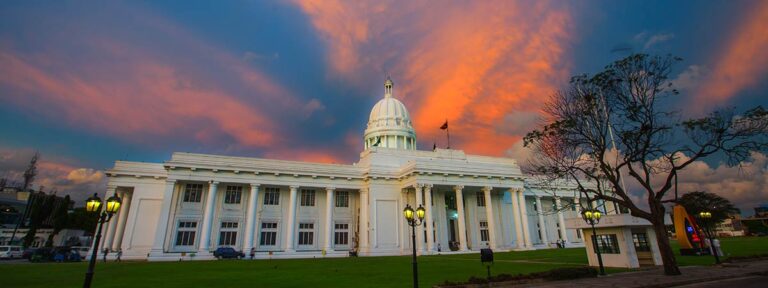
March 01, Colombo (LNW): An audit report presented at a Committee on Public Accounts (COPA) session has uncovered disturbing evidence of illegal transactions involving parking spaces designated for Colombo Municipal Council (CMC) members.
The findings, which were discussed under the chairmanship of MP Aravinda Senaratne, revealed that parking slots initially allocated for CMC members’ vehicles had been unlawfully sold to private individuals and entities, raising concerns about mismanagement and corruption within the CMC.
The audit brought to light that land meant to serve as parking for municipal council members had been diverted for private use, with no proper authorisation or oversight.
This discovery has raised serious questions about the internal controls within the CMC and the lack of accountability in managing municipal assets.
Further investigation into the financial aspects of the CMC’s parking revenue revealed that contractors tasked with overseeing parking operations had accumulated a staggering Rs. 580 million in unpaid arrears to the council.
Despite the significant amount owed, municipal authorities assured that efforts were underway to recover the overdue payments.
Furthermore, they announced that contractors with outstanding debts would be barred from participating in future tenders for municipal contracts.
In light of these revelations, COPA has ordered an immediate investigation into the individuals involved in the illicit sale of parking spaces.
The committee has also instructed officials to explore legal avenues to reclaim the municipal property that has been unlawfully transferred, ensuring that proper procedures are followed in the future.
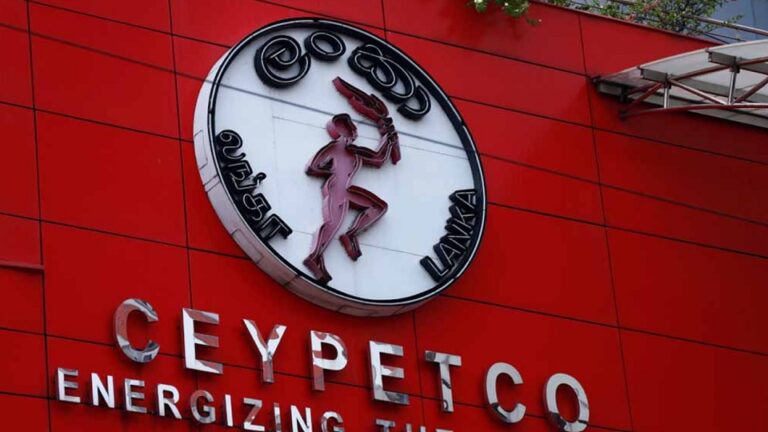
March 01, Colombo (LNW): The Ceylon Petroleum Corporation (CEYPETCO) has unveiled a new formula for fuel distributors that is set to offer greater benefits compared to the previous 3 per cent discount, according to CPC Chairman D.J. Rajakaruna.
This move comes as the CEYPETCO recently decided to discontinue the existing 3 per cent discount and replace it with a new structure designed to better support fuel distributors.
However, the announcement has sparked a strong reaction from the Fuel Distributors’ Association, which declared that it would halt fuel orders starting from March 01 in protest of the decision.
The association’s members have voiced concerns that the changes, though aimed at increasing benefits, could create undue financial strain on distributors.
Despite the protest, the CEYPETCO has sought to reassure the public that there will be no immediate risk of a fuel shortage in the country. Chairman Rajakaruna explained that under the new formula, fuel distributors will actually receive higher benefits.
He provided an example, stating that for the first 15 deliveries, distributors will now be paid Rs. 6.96 per load, and for the next 15, they will receive Rs. 6.62.
For those handling larger volumes, such as 25 loads, the new system would result in a payment of Rs. 6.69 per load, bringing their earnings to over Rs. 1.1 million, significantly more than the previous arrangements.
Rajakaruna acknowledged that distributors had expressed concerns about their earnings, particularly those handling smaller volumes, but stressed that the new formula was designed to address these concerns whilst also maintaining a sustainable model for the CEYPETCO.
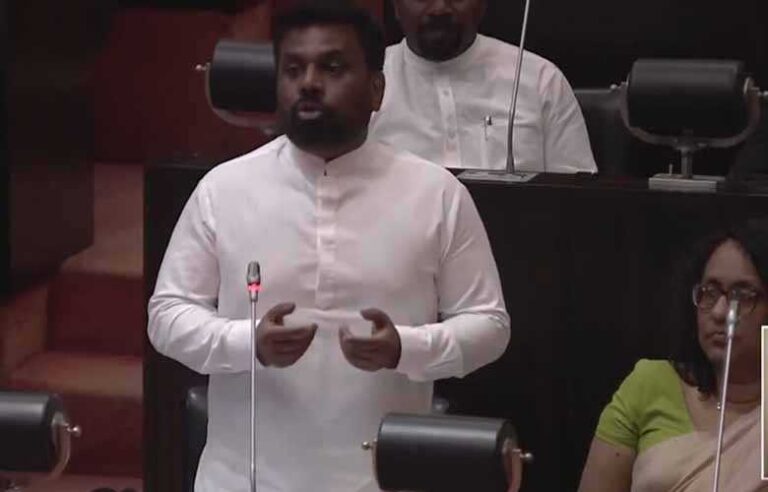
In response to rising concerns about fuel availability, Minister of Labour and Deputy Minister of Economic Development, Prof. Anil Jayantha Fernando, reassured the nation that there is no actual fuel shortage in the country.
Speaking in Parliament on March 01, Prof. Fernando addressed the recent long queues at petrol stations, emphasising that these were not a sign of dwindling fuel reserves but rather the result of an orchestrated effort to create panic.
He accused a coordinated group of attempting to fabricate a fuel crisis by stirring unnecessary fears amongst the public. The minister’s statement aims to quell any anxiety surrounding fuel availability, urging citizens to remain calm and refrain from unnecessary panic buying.
March 01, Colombo (LNW): The Colombo Crimes Division (CCD) has made two additional arrests in connection with the high-profile assassination of Sanjeewa Kumara Samararatne, better known as Ganemulla Sanjeewa.
The two suspects were apprehended on February 28 in Minuwangoda, under suspicion of being involved in the murder of the notorious organised criminal.
The first individual arrested, Udara Nirmal Gunaratne, is a 28-year-old resident of Medagowwa, Minuwangoda.
He has been charged with providing the SIM cards used to facilitate the execution of the crime. Gunaratne’s involvement in the murder is believed to have been crucial in enabling communication between the perpetrators.
The second suspect, Nalin Dushyantha, aged 31, from Minuwangoda Road, Dunagaha, was also taken into custody on similar charges, suspected of playing a role in aiding the crime.
The assassination of Ganemulla Sanjeewa took place on February 19, when he was shot dead inside the courtroom of Aluthkade Magistrate’s Court during a legal hearing.
Sanjeewa was gunned down while standing in the dock in Courtroom No. 05, an audacious attack that sent shockwaves through the country.
Following these arrests, the number of individuals detained in connection with the murder has now reached twelve.
The CCD has been actively pursuing leads and expanding its investigation to uncover the full extent of the conspiracy behind Sanjeewa’s killing.
Authorities are continuing to investigate and gather evidence, with hopes of apprehending further suspects involved in the crime.
March 01, Colombo (LNW): The Colombo Grand Mosque has officially confirmed that the crescent moon, marking the start of the holy month of Ramadan, was not sighted on the evening of Friday (February 28).
As a result, Muslims across Sri Lanka will commence their observance of fasting and prayer on Sunday (March 02).
Ramadan, the ninth month of the Islamic lunar calendar, holds great significance for Muslims around the world. It is a time of deep reflection, spiritual devotion, and self-discipline, as adherents fast from dawn until sunset.
This annual observance commemorates the moment when the Quran was first revealed to Prophet Muhammad during the sacred night of “Laylat al-Qadr.”
Fasting, one of the Five Pillars of Islam, is not only a physical act of abstaining from food and drink but also serves as a time for Muslims to strengthen their faith, increase their acts of charity, and grow closer to Allah.
It is a period that encourages community solidarity, with Muslims coming together for prayers, family gatherings, and the sharing of meals during the evening’s “Iftar,” marking the end of each day’s fast.
Throughout the month of Ramadan, Muslims dedicate themselves to increased prayer, reflection, and worship, while also seeking to help those less fortunate.
The exact dates of Ramadan may vary depending on the sighting of the moon, and the Grand Mosque’s announcement signals the start of an important spiritual journey for Muslims across Sri Lanka.
As the month unfolds, Muslims in Sri Lanka and around the globe will continue to observe the fast and engage in activities designed to purify the soul and renew their commitment to faith.
March 01, Colombo (LNW): In a strong and resolute statement delivered in Parliament yesterday (28), President Anura Kumara Dissanayake affirmed that the current government would not tolerate the resurgence of terrorism or racism in Sri Lanka.
The President made these remarks during a debate on the Defence Ministry’s expenditure head, as he warned politicians that attempts to overthrow the government through conspiracies or racial divides would no longer be permitted.
Addressing the gathering, President Dissanayake expressed his determination to ensure that the nation remains steadfast in its commitment to peace and unity, whilst also issuing a firm warning to those seeking to destabilise the government.
“The era of changing governments through conspiracies and racism is now over,” he declared, making it clear that any efforts to exploit these tactics would be futile.
In his address, the President also took the opportunity to highlight Sri Lanka’s economic recovery. He reassured Parliament that the country’s economy is stabilising and that they expect the International Monetary Fund (IMF) to approve the third review of Sri Lanka’s Extended Fund Facility (EFF), which would pave the way for the disbursement of the fourth tranche of funding. The report on this review was presented to the IMF’s Executive Board on the same day.
President Dissanayake expressed confidence that the successful completion of the third review would bring positive results, marking another significant step in the nation’s economic recovery. He emphasised that Sri Lanka’s economy is headed towards a robust and resilient future, with greater stability in the coming years.
In terms of national security and legal reform, the President revealed that his administration is working towards repealing the controversial Prevention of Terrorism Act (PTA).
He confirmed that a committee had been appointed to draft a new legal framework to replace the PTA, signalling the government’s commitment to ensuring human rights whilst addressing security concerns.
The President also outlined his plans for restructuring the armed forces, stating that by 2030, the personnel of the Sri Lanka Army would be reduced to 100,000, the Navy to 40,000, and the Air Force to 18,000.
This move, according to Dissanayake, aims to transform the military into a more professional force that will serve the nation and not individual interests.
Turning his attention to the opposition, President Dissanayake issued a stern warning to those who might seek to undermine the government through political instability or economic crises.
He reflected on past instances in Sri Lanka’s history where governments had fallen due to internal divisions or external pressures, but emphasised that his administration is prepared to withstand such challenges.
“If you think you can overthrow this government through an economic crisis, that is a mere dream,” he asserted. “Attempts to destabilise the government through internal party conflicts or public protests will also fail. We are not a government that will fall for such tactics.”
He also dismissed any attempts to create crises within the ruling party, insisting that this government was united and resolute in its commitment to national progress.
He called on all political factions to respect the democratic process and work together for the stability and prosperity of the nation, warning that any attempts to disrupt the current order would be firmly resisted.
In concluding his statement, President Dissanayake reiterated his commitment to securing a stable future for Sri Lanka, one free from terrorism, racism, and political manipulation.
March 01, Colombo (LNW): The Ceylon Petroleum Corporation (CEYPETCO) has confirmed that fuel prices will remain unchanged for the month of March 2025, with no revisions expected in the immediate future.
In an official statement, the CEYPETCO reassured consumers that the current fuel prices will stay in effect throughout the month, which are as follows:
Petrol 92: Rs. 309
Petrol 95: Rs. 371
White Diesel: Rs. 286
Super Diesel: Rs. 331
Kerosene: Rs. 183
The CEYPETCO’s Chairman took to the media to alleviate concerns over potential fuel shortages, urging the public to avoid unnecessary panic. He made it clear that there have been no indications from fuel retailers about any disruptions in supply, and that fuel distribution operations are continuing as usual.
Despite these reassurances, some areas have witnessed long queues of vehicles at petrol stations, with many consumers rushing to fill their tanks in anticipation of price hikes or shortages.
In his comment, the Chairman further highlighted that the necessary fuel stocks for the coming days have already been ordered, ensuring that the country will not face any supply interruptions.
He stressed the importance of remaining calm, as the fuel distribution system is operating as planned, with no disruptions expected.
In light of these reassurances, the CEYPETCO is urging consumers to refrain from panic buying, which has contributed to congestion at fuel stations in some regions.
The public is advised to purchase fuel as needed, and not in excess, to help maintain smooth operations and avoid unnecessary strain on the supply chain.
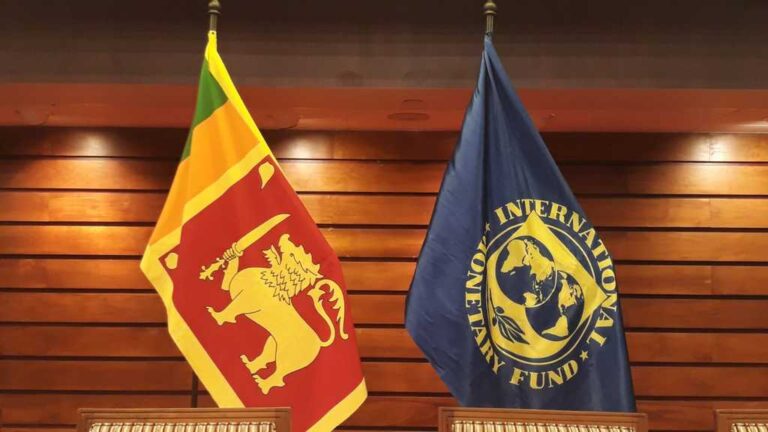
March 01, Colombo (LNW): The International Monetary Fund (IMF) on Friday (01) confirmed that it had completed the third review of Sri Lanka’s 48-month Extended Fund Facility (EFF) programme, unlocking an additional disbursement of SDR 254 million (approximately US$334 million).
This new allocation brings the total financial assistance provided to Sri Lanka under the current arrangement to SDR 1.02 billion (around US$1.34 billion).
According to the IMF, Sri Lanka’s performance under the EFF programme has remained strong, with the government meeting all key quantitative targets set for the end of December 2024.
However, the country missed the indicative target for social spending, which the IMF noted in its latest report.
In terms of structural benchmarks, most were either met or, in some cases, implemented with a slight delay. A notable achievement highlighted by the IMF was the successful completion of a bond exchange, which marks a significant step in Sri Lanka’s efforts to restore its debt sustainability.
The IMF also commended the Sri Lankan authorities for their ongoing reform programme, which has contributed to a steady economic recovery.
Despite these positive developments, the IMF stressed that the economy remains vulnerable and warned that the continuation of the reform agenda is crucial for achieving long-term recovery and ensuring the sustainability of the country’s debt.
The EFF arrangement, which was initially approved by the IMF’s Executive Board on March 20, 2023, amounts to SDR 2.286 billion (approximately US$3 billion or 395 percent of Sri Lanka’s quota in the IMF).
The programme is designed to support Sri Lanka’s efforts to stabilise its macroeconomic environment, reduce debt levels, protect the most vulnerable populations, rebuild external reserves, and implement growth-focused structural reforms, particularly in improving governance.