Home Blog Page 662

New Acting Commissioner General of Excise appointed to boost revenue efficiency

0

By: Isuru Parakrama

October 08, Colombo (LNW): The Cabinet of Ministers has approved the appointment of U.D.N. Jayaweera, a Senior Special Grade Officer from the Inland Revenue Department (IRD), as the Acting Commissioner General of Excise with immediate effect.

This decision was announced by Cabinet Spokesman Minister Vijitha Herath during a press conference held earlier today (08).

Minister Herath highlighted the critical role played by the Sri Lanka Excise Department, describing it as one of the government’s principal revenue-collecting bodies.

He stressed that the department’s efficiency and adherence to good governance practices are essential to maintaining and improving government revenue.

The appointment of Jayaweera aims to provide the department with leadership capable of tackling future challenges while continuing to meet its revenue targets.

Herath explained that the government is focused on ensuring the department is well-positioned to achieve its objectives amidst an evolving economic landscape.

The decision also entails the immediate dismissal of the current Commissioner General of Excise, J.M. Gunasiri, who had been serving on a contract basis.

The proposal, submitted by President Anura Kumara Dissanayake in his capacity as Minister of Finance, Economic Development, Policy Formulation, Planning, and Tourism, was approved to ensure that leadership changes aligned with the government’s broader fiscal goals.

Jayaweera, currently serving as Additional Secretary (Agency Coordination II) at the Presidential Secretariat, will take over the leadership of the Excise Department.

His appointment is viewed as a strategic move to bolster the department’s efficiency in revenue collection, an essential factor in the government’s economic recovery plans.

Rugby dragged to the gutter, laments Asanga

0

08 Oct 2024 | BY Jatila Karawita

  • Says unscrupulous reporters, social media influencers in tow with disgruntled elements

Former Sri Lanka Rugby (SLR) President and ex-National Cap Asanga Seneviratne in an exclusive interview with The Daily Morning, charged that certain disgruntled elements have dragged the sport into the gutter for their personal gains. 

He said that if rugby administration is cleaned up of uncouth elements who thrive under misinformation and slander by circulating false, negative and misleading articles, Sri Lanka may yet have a future to aspire to in the sport.

He however refused to reveal what ramifications SLR will face in the event of it failing to put its house in order by November from World and Asia Rugby respectively.  

Following are excerpts from the interview: 

What is your frank view of the state of rugby in this country now and the time that you were involved from a perspective of being a former national player, national coach and President of SLR? 

The junior competitions are growing even though the structure is not conducive to long-term growth and success of the players of the future national teams. Some negative coaching methods and practices have been highlighted with over training and serious physical injuries to players and this has to be properly investigated and remedies and controls put in place. 

The top club competition has managed to drive away fans to the extent that only a handful turn up for a game. It’s badly organised and there is hardly any interest. Most of the top clubs don’t even have a second side and the rest of the competitions are mainly low level 7’s tournaments. Foreign players have to be allowed to participate once again. Games must be played under lights. No one wants to make it to the grounds at 3.30 p.m. 

We have lost our main sponsor in 2020 and this has resulted in over a 400m loss of revenue in the last four years to SLR.  

Our national team has dropped in the Asian rugby rankings in the 7’s from a high of no. 2 to no. 9 and to no. 8 in the 15’s and played with India, Qatar and Kazakhstan for the first time. We were in the top four for most of our rugby history. Our women have dropped from no. 4 in Asia to no. 9 as well. Both teams are out of the top 8 in the Asian rankings and top tournaments for the first time including the prestigious Asian 7’s series, a serious setback for a founding member of Asia Rugby with a 140-year playing history.

After hosting over 22 world class international tournaments from 2011-2018 we have hosted just one tournament last year which was the quadrangular mentioned above. Overseas tours have also come to a standstill with both men and women failing to turn up for the Asian 7’s Championships in Dubai. 

We made over 25 overseas tours in Men’s, Women’s and age grade rugby Under-17 ,19, 20 (won an Asian championship) during this period. 

The Carlton International 7’s held from 2012 – 2017 was a catalyst that gave our top 75 players the financial security needed to play at the highest level and also took out the fear factor in playing against world class foreign opposition. The tournament cost over Rs. 250 million. We managed to convince most of the sponsors to tie up with the A Division clubs as well. Our spectators got to see the top 50 players in the world playing in Sri Lanka and we were the example, developing rugby nations wanted to follow and World Rugby (WR) acknowledged as a potential growth nation and Olympic participant.

This was mainly possible because of the support and efforts of former Parliamentarian Namal Rajapaksa who had a vision and wanted to see SL rugby succeed in becoming a major international participant and sports tourist destination. 

SLR separately raised close to Rs. 200 million during the course of the year thus ensuring stability and long-term growth. We had all world-class coaches and trainers looking after our national sides together with a CEO (Priyantha Ekanayake) and Head of Rugby (Imthi Marikar) overlooking the entire operation with a dedicated top-level team of experienced professionals. 

In reality SLR was overlooking an investment of over Rs. 450 million per year for rugby in Sri Lanka. 

As a former President of Sri Lanka Rugby (SLR), did you ever envisage this type of stalemate and  what do you think has brought about the current impasse between the officials of the Ministry of Sports and those helming the local rugby administration?

The main stakeholders have to take responsibility for the state of the game and administration today. What has happened is that the main clubs are so focused with the own administration they tend to ignore participating in the administration of the national body. The national administration has in the past few years seen an almost complete lack of top-level leadership from the main stakeholders. This has led to a complete breakdown of leadership and critical decision-making. We have also seen over a dozen former national players of repute and professionals resign from the governing body due to the uncouth behaviour of the leadership, thus leaving a massive vacuum in management and basic rugby etiquette.

The Sports Ministry is involved since all the main stakeholders (the A Division clubs) have engaged them to sort out the issues concerning governance and the constitution since they have found it impossible to work with the remaining officials of SLR. Also now the office bearers have been removed for the third time in three years by three different Sports Ministers thus leaving the stakeholders very little option but to deal directly with the Sports Ministry.  

It is the concerted view of rugby critics that certain disgruntled elements within the local rugby fraternity have brought about this situation for their personal gain, rather than working together to take the game in this country to the next level. Do you concur with this assessment or if not why?

Disgruntled elements and trouble makers in sports administration is nothing new in sports in Sri Lanka. Since of late we have seen some elements drag the sport into the gutter with how they conduct themselves. They are only interested in destroying all the hard work done with misinformation and slander because they are envious. Unable to fathom how to manage the process and office they represent. Chaos is created by getting unscrupulous reporters and social media influences to circulating false, negative and misleading articles.  

SLR has fallen to a new low with an interim administration having to take over running affairs, after a fallout with stakeholders, sponsors, administrators, international bodies and pretty much all concerned. 

Before we talk about taking it to the ‘Next level’, we will have to consider how we get back to the level we were at six years ago. We have no junior international rugby programme, no senior programme and our club and schools’ tournaments need serious restructuring with sponsors coming in. We need a top CEO, Men, Women and Youth Head of Coaching a world-class trainer, manager and basic administration. Whoever aspires to take over the leadership of SLR must do so with a concrete plan and the ability to deliver. 

Basically we will have to start from scratch since all the coaching and management structures, administration, player welfare, international hosting and tours for our Men, Women and Youth teams have been dismantled and destroyed. 

Do you reckon that the current rugby politics in Sri Lanka would have a detrimental effect on the overall future of the game and on those plying the trade if things are not resolved satisfactorily sooner than later?

As stated previously it has already had a serious negative impact and we are in a perilous state. Most young school leavers are walking away from the sport since they see no future. We have lost a host of top players in the last four to five years due to uncertainty, no international competitions or a pathway, lack of funds and employment and with all the major sponsors pulling out. 

It’s no longer a dream of a young player to play club and national rugby. Only the ones with no other options are continuing. 

The challenges an incoming administration has are many. Appointing a competent, qualified CEO with top-level rugby experience and setting up a team to raise finance, resurrect the A Division and other tournaments, restoring the national team with top-level coaches, management, trainers and setting up and ensuring age grade and women’s teams participate internationally. 

In your view, being an official with inside knowledge of Asia Rugby, do you think Sri Lanka will be at risk of its membership being suspended by both AR and WR in the event of the SLR administration failing to resolve its current deadlock?

 I am not involved in the decision-making of this nature in Asia Rugby. Neither have I participated in these matters in the past. I am one of the two independent members of the Council representing 36 member countries and the Chairperson of Competitions and High Performance. My committee at Asian Rugby conducts approximately 25 tournaments across the largest continent. WR has already conducted investigations, facilitated discussions and hosted stakeholder meetings at which decisions were made and agreed by all. Now some self-appointed officials seem to want to go back on what was agreed. Yes, SLR will face serious consequences if it does not resolve its administrative issues and have an elected body in place shortly. 

If the current impasse were to continue for a few months more, will it affect Sri Lanka’s participation in both 15 and Sevens competitions in the region in the coming months and what would its impact be for the stakeholders concerned?

SLR is not in the top 8 in the 7’s in the Asian circuit so they are not participating in the 7’s Championships taking place at the moment. They are due to play in the next tier of teams in October in Nepal. WR has extended the time limit to comply until mid November. I cannot comment on what may happen after the deadline if we don’t comply and have an administration in place.  

Are you content with the current standards of school rugby and sports and do you think we do enough to help school boys and girls aspire to national honours? 

The standard of school-boy rugby has to be improved if we are serious about being competitive internationally.  Our youth must be given the opportunity, training, nutrition and guidance in order to be successful. We must have a system in place like we did from 2011-2018 where SLR took on the responsibility of Youth Rugby. We must invest in educating our coaches and players continuously like we did in those years. This is a massive ask and the current rugby administration managing schools’ rugby is diabolical and clueless. They don’t even know what to ask sponsors and have no interest in developing youth or competing Internationally. The sad part is none of the Heads of schools seem to care.

The local product at the moment is exciting to watch and enjoyable since they are competing on pretty much on even terms. This all changes when you have to play overseas against unfamiliar opponents and conditions.  

The sad fact is that as a nation we really don’t care much about our youth. This is amply demonstrated in a majority of sports and how we conduct our sporting activities and competitions across the boards. The facilities we offer are dire and no one cares. The impact sports have on one’s life is completely lost on our leadership be it in schools, clubs or national bodies.   

Can you also give us your candid view of the standard of local referees this year in the schools rugby circuit and do you also champion the cause for hiring foreign referees, as done by both Royal and Trinity for the Bradby this season? 

The standard will be what the administration invests and puts in place in terms of finance, management and accountability. 

There is a lot at stake since the game is professional and the Schools tournament is now a Rs. 400-500 million investment.

The behaviour and language displayed by some parents, old boys and supporters at matches have been disgraceful and unacceptable. School authorities must take action to ensure decency and an enjoyable experience for all. Most of the time the calls they are questioning, made by the referee are incorrect. Unfortunately, it’s gone against their team and the referee is blamed. 

Yes, we must bring in foreign referees from time to time. The two matches were a joy to watch. In the past we had some of the best referees in the world overlooking match day and conducting training and education programs for our local referees. New Zealander Garratt Willamson, South African Jonathan Kaplan were two of top referees and the calibre of gentleman overlooking and training our charges. They are gentlemen who have officiated in World Cup finals and been ranked 1 in the world. The local referees went to the Sports Minister and got the committee appointed to overlook the development disbanded and sent Williamson home.

The SLR must overlook the Referees Society and ensure accountability. The Referees Society members can’t be the judge, jury and executioner. We had a midweek review where a complaint could be lodged and reviewed. I am not sure if they do this anymore. 

The biggest challenge I see is that we don’t have any top-level players taking up the whistle. This creates a massive discrepancy in how some calls are made. There has to be some serious changes made before next season as to how referee performances are analysed and managed. training and overseas exposure is a must.        

Besides rugby, what are the other sports that you were actively engaged in from an administrative side ? 

I was involved with Sri Lanka Cricket from 2011-2015 and we came into four World Cup finals and won one. We increased local sponsorship from Rs. 300 million to Rs. 1.1 billion and the TV rights from $ 29 million to $ 42 million. It’s a lot larger now with the explosion in the T 20 format, the World Test Championship (WTC) and the limited overs all drawing massive viewership and worldwide sponsors. I was also involved with the National Olympic Committee from 2016-2020. We created a High Performance Unit which I headed and introduced a training, monitoring and finance model which was well received. I am also Heading Baseball which I believe has a good future in Sri Lanka. 

Also as a former first-class cricketer for CCC and Sri Lanka Youth teams, what is your honest take on the state of cricket in Sri Lanka and do you reckon we are on the right track after a lull in team performances?

I think we have finally somewhat got our act together. The appointment of Sanath Jayasuriya, a top-class local cricketer as a coach is a good decision. Cricketers in the 90’s and 2000’s were on par or better than the best in the world. How they are overlooked for overseas personnel who have hardly played the game at any decent level is mind-boggling. The difference now is we have a former legend in the dressing room, on the grounds, at practice and in the hotel spending time with the players. This is critical. He will talk the talk and walk the walk. It’s a learning experience for him and we must be patient.  It’s probably one of SLC’s best investments. Mahinda Halangoda, another top-class former cricketer as the manager is also a good foil for Sanath. 

Shammi Silva and Ashley De Silva are two of the finest first class cricketers to have played the game. Both captains of their schools and clubs and have represented Sri Lanka. They know the game inside out and were both excellent leaders on the field.  If they are allowed to run SLC’s cricket side of things independently we will see tremendous progress and results will follow. Jerome Jayaratne being appointed back to the role of High Performance Head and Development is a critical move that will help us identify real talent and transfer them to national representation. He did this from the early 90’s to 2015 and was suddenly discarded. You can see the fall out and repercussions. He will have to rebuild his team since almost all our top coaches have left for overseas assignments.  He is technically the most qualified coach in Asia and I place him amongst the best in world cricket today. He will also introduce and push to play outstanding local talent that has been ignored and deserve breaks which clearly has been the bane in the past 10 years.  

All these gentlemen were incredible athletes with over 100 first class matches each behind them with multiple National Championships under their belts and decades of experience at the highest level. They hate losing and have all individually achieved real success on the field and I have no doubt they will impart extremely positive vibes that will create champions.

Source: The Morning


Sri Lanka reaffirms Opposition to UNHRC Draft Resolution on evidence collection mechanism

0

By: Isuru Parakrama

October 08, Colombo (LNW): Sri Lanka has reiterated its opposition to draft resolution 51/1 of the United Nations Human Rights Council (UNHRC), rejecting any extension of the external evidence collection mechanism.

This was confirmed by Cabinet Spokesperson and Minister Vijitha Herath, who clarified that the country has not agreed to any provisions that enhance the powers of this mechanism.

During a media briefing following the weekly Cabinet meeting, Minister Herath explained that the decision came after Foreign Minister’s submissions regarding the ongoing 57th session of the UNHRC in Geneva.

The Cabinet of Ministers unanimously backed Sri Lanka’s stance to reject the resolution currently being discussed at the UNHRC.

Despite its firm opposition to specific international measures, Sri Lanka remains committed to addressing core human rights concerns, particularly reconciliation efforts, through domestic frameworks.

Minister Herath assured that the government would continue to engage in meaningful dialogue with the UNHRC and participate in regular human rights reviews.

Highlighting the country’s evolving political landscape, he referenced the recent presidential election and the upcoming formation of a new government.

He remarked, “Many aspects of the proposal align with the new administration’s policies, and we will ensure our position is clearly communicated in Geneva.”

However, he cautioned that while the new government is dedicated to safeguarding human rights, implementing these measures will take time.

Sri Lanka plans to present this balanced approach to the UNHRC at the final session of the current meeting.

Postal Dept cancels stamp issuance for former Parliamentarians

0

By: Isuru Parakrama

October 08, Colombo (LNW): The Department of Posts has announced the immediate cancellation of all stamps previously issued to members of parliament.

In a formal notification, former parliamentarians have been instructed to return any unused stamps to the Parliamentary Post Office without delay.

Each parliamentarian is typically allocated 10,000 stamps annually, with an approximate value of Rs. 500,000.

However, these stamps are now deemed invalid, and their use is suspended until the new parliament is constituted following the upcoming general election.

This decision forms part of a broader effort to streamline postal expenditures and ensure accountability during the transition period between parliamentary terms.

By cancelling the current allocation, the Department of Posts aims to prevent any misuse of resources, ensuring that the system remains efficient and cost-effective.

Additionally, the return of unused stamps helps the Department maintain accurate financial records and manage its inventory more effectively.

The cancellation of these stamps remains in effect until newly elected parliamentarians take office, at which point a fresh allocation will be considered.

Police collect reports on election duty expenses from 45 divisions

0

By: Isuru Parakrama

October 08, Colombo (LNW): Reports have been compiled from 45 police divisions to assess the estimated funds required for security operations during the upcoming elections.

A senior police official confirmed that these preliminary figures will serve as the basis for calculating the final budget needed for election-related duties.

The police are preparing a comprehensive breakdown of security expenses, which will be promptly presented to the Election Commission.

This report will outline the financial requirements for ensuring the smooth and secure conduct of the elections, covering personnel deployment, logistics, and other related costs.

The proactive measures taken by law enforcement aim to support the Election Commission in ensuring a safe and well-coordinated electoral process, while also addressing the financial considerations tied to maintaining public order and protecting voters during the election period.

This coordination highlights the crucial role of the police in safeguarding the democratic process and maintaining security throughout the election cycle.

The World is Rising, but Sri Lanka Stays Asleep

0

October 07, Colombo (LNW): We have been reporting on Sri Lanka Rugby and the associated frauds for a considerable time, and we are also pointing out sources that have connections beyond Sri Lanka even in Asia. We have also pointed out that while all that is happening and in the current political situation, in the system of government officials and in the political system, ignoring even judicial decisions, Rugby is being run in a low and illegal situation.

But the political authority of this country acted for the independence and pride of the country’s rugby, together with the people who added black marks to the rugby in Sri Lanka and incurred debts on its account, to give Asia authorities the right to limitless control of Sri Lanka Rugby from outside of Sri Lanka. We also pointed out how the public was silenced and removed in the process. The influence of Asia Rugby on Sri Lanka Rugby has been highlighted with evidence dating back nearly a decade. We have exposed how the mistakes in Sri Lanka’s rugby history were used to serve both the political agendas of individuals and politicians, without revealing their names. Despite this, a sports minister failed to take the necessary action.

This issue was strongly evident in Sri Lanka rugby during the tenure of Namal Rajapaksa through to Harin Fernando. There was not even an investigation of the people who were continuously accused, and not only politicians but also the top of the Asian administration were unhesitatingly coming forward to offer various privileges and responsibilities to those who made decisions that put the country at fault. We also wrote about opportunities.

Asia administrations purely considered politicians and bureaucrats to use international support and international interest to maintain all this while influencing matters of power and disclosure. So far, it is reported that investigations have been started focusing on the gross misconducts, including the English translations of the facts presented by the media like us, various media and other sources of information and the facts based on its financial control.

In the following article, you will uncover the depth of the cover-up, which includes the endorsement of Sri Lankan politicians and the backing of officials who have undermined both Asia and domestic rugby. This situation remained overlooked until Harini Amarasuriya.

At this moment, Sri Lanka Rugby, without fully grasping the judicial decisions, is under the control of the sports development department. Officers who were removed for failing to fulfill their responsibilities in rugby administration are still part of a setup that continues to operate under their influence. Additionally, the country’s new defense secretary is being misled and allowed to be a pawn in this situation.

Visit the relevant article → https://bit.ly/3TTYsJN

With these conditions it is clear to you that the world is rising up with Asia. From the audit reports that have been presented so far, it is tempting to mention that the Asian administration is immature. To understand how much of a crisis there is in these interrogations since the current chairman brought Asia rugby from Hong Kong to the United Arab Emirates, as well as the fact that the Asian headquarters from Hong Kong is not legally established in the Emirates, and therefore an account has been started for it. The reports also show that there is none, and that all transactions are done through the United Arab Emirates Rugby Administration Account as the Asian Rugby account.

Also, based on the measures taken when the Sri Lanka rugby challenged for its independence, the differences in attitudes towards Sri Lanka and Cambodia have also been brought into focus.

The attention of the World Rugby has been directed to take further measures according to the facts stated about the lack of credibility in terms of responsibility as well as in terms of the ambiguities of financial affairs.

But it is impossible to think that the current minister will say the same to the political staff who supported the politicians who wanted to implement the behavior of Sri Lanka rugby, which is still in a position to be protected by it, as well as the office positions of the sports ministry.

The people who have wronged the Sri Lanka rugby administration but are not punished, the people who are accused of the financial administration and the people who were expelled without even being admitted to their school because of such accusations, the banned people who were accused by the rugby administration themselves are again and again at the top of the game in Sri Lanka. There is a political culture of patronage.

In spite of that, it is not rare that the administrative systems and responsibilities in Asia are called for at a time when those involved in the administration are blessed. Birds of a feather flock together and bury the rugby in celebration.

As we have said before, Sri Lanka rugby, which is more than a hundred years old, dances according to the needs of the United Emirates and exposes the accused who should be sold out to maintain Sri Lanka and hide in the blessings of politics and public administration. If turned upside down, Rugby in Asia will once again be in a responsible position.

But like the revelations we are making with evidence about rugby in Sri Lanka, it seems that Harini Amarasuriya is also in a situation where she falls to the ground and falls to the ground. For her, it seems that they are related to the things that are escaping from the members of the political official boards who acted on political interests with past unholy and corrupt connections. The same goes for government officials. There is no indication that these facts are being taken into account, proving that it’s futile to expect justice by appealing to the thief’s mother in hopes of catching the real culprit.

Heavy showers above 100 mm likely to occur at some places across SL

0

By: Isuru Parakrama

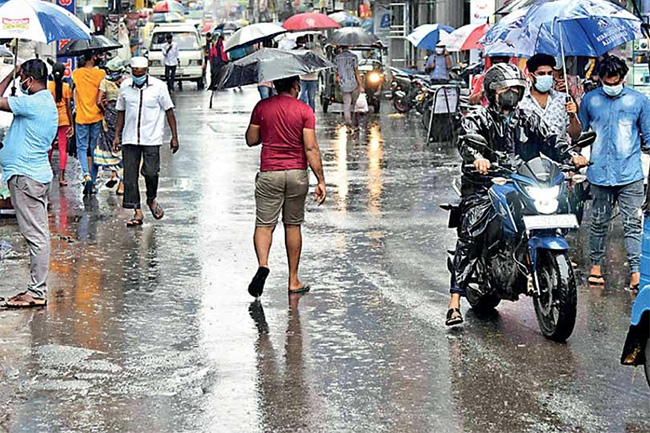
October 08, Colombo (LNW): The Intertropical Convergence Zone (where winds from the Northern Hemisphere and Southern Hemisphere converge) further affects the island’s weather, and as a result showers or thundershowers will occur at times in Western, Sabaragamuwa and North-western provinces and in Galle and Matara districts, the Department of Meteorology said in its daily weather forecast today (08).

Showers or thundershowers will occur elsewhere at several places in the island during the afternoon or night.

Heavy showers above 100 mm are likely at some places in Western, Sabaragamuwa, Central, Uva and Eastern provinces and in Galle, Matara and Puttalam districts.

The general public is kindly requested to take adequate precautions to minimise damages caused by temporary localised strong winds and lightning during thundershowers.

Marine Weather:

Condition of Rain:
Showers or thundershowers will occur at several places in the sea areas around the island.
Winds:
Winds will be South-westerly in direction and wind speed will be (25-35) kmph. Wind speed can increase up to (45-50) kmph at times in the sea areas off the coasts extending fromKankasanthurai to Hambanthota via Mannar, Colombo and Galle.
State of Sea:
The sea areas around the island can be slight to moderate. The sea areas off the coasts extending from Kankasanthurai to Hambanthota via Mannar, Colombo and Galle can be fairly rough at times. Temporarily strong gusty winds and very rough seas can be expected during thundershowers.

Sri Lanka Original Narrative Summary: 08/10

0
  1. Asian Development Bank (ADB) Country Director Takafumi Kadono and a delegation met President Anura Kumara Dissanayake, reaffirming ADB’s commitment to Sri Lanka’s economic recovery: discuss projects in tourism, particularly the Northern Region, energy, small-scale entrepreneurship, and the financial sector: emphasise its focus on developing tourism infrastructure and sectors critical for sustainable growth and long-term recovery.
  2. SJB Leader Sajith Premadasa issues a statement criticising the recent arrest of YouTuber Kalpa Gunaratne at the Colombo International Bookfair on 3 October: questions the police’s actions and calls for an impartial investigation: emphasises citizens have the right to engage in citizen journalism, which should not be suppressed by authorities.
  3. UNP Deputy Leader Ruwan Wijewardene refutes allegations against former President Ranil Wickremesinghe, denying claims about foreign chefs, food, and security changes: condemns the social media smear campaign and affirms that Wickremesinghe’s security remains intact: clarifies Wickremesinghe and his wife did not misuse the President’s House and urges critics to focus on governing responsibly, rather than spreading false information.
  4. The World Bank and Sri Lanka sign the Second Resilience, Stability, and Economic Turnaround (RESET) Development Policy Operation (DPO) for $200 million, supporting reforms to boost economic governance, growth, and protect vulnerable groups: This builds on a previous $500 million operation: Key measures include improving public debt management, tax reforms, enhancing services, export competitiveness, and revitalising social protection systems.
  5. The Director General of the Commission to Investigate Allegations against Bribery or Corruption (CIABOC), Kanishka Wijeratne, agrees to resign following the Supreme Court’s decision to allow three Fundamental Rights applications challenging his appointment to proceed.
  6. Elephant deaths in Sri Lanka decrease this year, with 277 fatalities reported up to October, compared to 488 last year: The Department of Wildlife Conservation attributes many deaths to illegal electric fences erected by farmers: Removing illegal fences and improving standards for legal ones reduced electrocutions to 35, down from 70 last year: A journal was developed to reduce fatalities further.
  7. The All Island Poultry Farmers’ Association urges for the stabilisation of poultry feed prices, as excess egg supply and reduced demand, partly due to declining tourist arrivals, have caused market prices to drop below production costs: Association President Ajith Gunasekera warns without price stabilisation, poultry farmers may stop supplying eggs.
  8. Sri Lanka’s Computer Emergency Readiness Team (SLCERT) reports over 9,000 cybercrime incidents between August and September, with 80% involving social media: Engineer Charuka Damunupola highlights increasing cyber threats, including 1,400 online fraud cases, 85 involving child cyber-bullying, and 40 cases of online sexual abuse: The data underscores the urgent need for stronger protective measures and public awareness to combat rising cybercrime.
  9. Tragedy befalls an 18-year-old student from an international school as she tragically fell to her death from the 29th floor observation deck of the Lotus Tower in Colombo: Police confirm that the student, in civilian clothes, jumped from the tower: Support services, including the National Mental Health Helpline and Sumithrayo, are available for those in crisis.
  10. The ICC announces the nominees for September’s Player of the Month awards: For the men, Sri Lanka’s Prabath Jayasuriya and Kamindu Mendis, along with Australia’s Travis Head, are shortlisted: England’s Tammy Beaumont, Ireland’s Aimee Maguire, and UAE’s Esha Oza are the women’s nominees: The awards celebrate top performances in international cricket, with winners decided by the ICC Voting Academy and fans.

Automotive component manufacturers Look to NPP Policies for Industry Revival

0

By: Staff Writer

October 07, Colombo (LNW): Sri Lanka’s automotive component manufacturers have faced significant challenges since 2020, grappling with the economic crisis and the toughest business cycles in recent history.

While many manufacturers have managed to survive, some are still navigating the effects of reduced market demand and difficulties in sourcing raw materials, partially mitigated by the temporary suspension of imported brands.

In light of these challenges, the Sri Lanka Automobile Component Manufacturers Association (SLACMA) has expressed optimism about the National People’s Power (NPP) party’s policies aimed at revitalizing the industry.

According to SLACMA President Dimantha Jayawardena, the inclusion of automobile assembly and component manufacturing in the NPP’s policy framework is a positive step for the sector’s growth.

Jayawardena emphasized that the Standard Operating Procedure (SOP) for promoting local industry has been crucial in integrating Sri Lankan manufacturers into global supply chains.

The SOP mandates the use of locally manufactured components, requiring stringent adherence to quality standards set by Original Equipment Manufacturers (OEMs). This initiative has paved the way for local manufacturers to meet international standards and tap into global markets.

The presence of global automobile brands assembling vehicles in Sri Lanka is a testament to the progress made. This initiative is overseen by the Industries Ministry, supported by a Cabinet-appointed committee with representatives from various government bodies to ensure compliance with regulations.

Currently, Sri Lanka exports approximately $800 million worth of automotive components, including $200 million in auto components, $200 million in automobile wire harnesses and electric items, and $400 million in rubber components, tires, and solid tyres.

The Industries Ministry has also laid out a 20-year master plan to enhance the country’s position in electric vehicle (EV) manufacturing, aiming to turn Sri Lanka into a hub for wire harness and electric component production for EVs.

SLACMA’s 60-member manufacturers are optimistic about the industry’s future, particularly with the NPP’s clear focus on developing automobile manufacturing and component production. They are committed to collaborating with stakeholders and policymakers to increase export-oriented revenue through global supply chains.

The government’s long-term vision, supported by the Industries Ministry, the Export Development Board, and the Board of Investment (BOI), is to achieve $3 billion in export revenue from the automotive sector within the next decade.

Jayawardena expressed confidence in meeting this target, highlighting the association’s efforts to certify manufacturers to international standards such as the IATF 16949. This initiative is partly funded by the Ministry of Industries to enhance competitiveness in the global market.

SLACMA’s short-term goals include fostering joint ventures and technical collaborations with regional and local partners to fast-track local manufacturers’ entry into global supply chains.

By securing financial support and upgrading infrastructure, SLACMA aims to strengthen Sri Lanka’s position as a competitive player in the global automotive component industry.

Credit Card Usage and Debt Rising in Sri Lanka Create new Implications

0

By: Staff Writer

October 07, Colombo (LNW): Recent trends in Sri Lanka show an increase in both the use of credit cards and the rates of default on credit card payments, according to a local study.

The research highlights that improper management of credit card spending has led to significant changes in consumption patterns and buyer behavior among cardholders.

This has resulted in a surge in compulsive purchases, unrealistic optimism about financial capacity, and eventually unmanageable credit card debt levels. The consequences of these patterns include economic burdens and stress that are difficult to control.

The study suggests that while compulsive buying and unrealistic optimism play significant roles, other factors also influence credit card use, debt accumulation, and related stress.

These include social pressures, situational factors, depression, guilt, and family conflicts. The researchers emphasized the need to explore these additional elements to gain a deeper understanding of their impact on credit card behavior and financial wellbeing.

Consumer spending via credit cards is on the rise in Sri Lanka, with outstanding credit card debt in licensed commercial banks increasing by nearly one billion rupees in August 2024.

The total credit card debt now stands at Rs. 150.6 billion, reflecting a rise of Rs. 942 million compared to the previous month. However, this amount is still Rs. 736 million below the total credit card debt recorded at the end of the previous year.

In August, licensed commercial banks provided Rs. 135.2 billion in net credit to the private sector, more than double the amount extended in July.

Although credit card debt grew during this period, it accounted for only a small portion of the total increase in private sector credit.

There are currently fewer than 2.0 million active credit cards in Sri Lanka, which suggests limited recovery in credit card spending since the rates were dramatically increased in 2022, a move that almost halted consumer spending.

Following the rate hike to as high as 36%, many banks tightened their credit conditions, particularly on credit cards.

Although rates have since fallen by about 10 percentage points, they remain relatively high, limiting the resurgence of credit card-based spending when compared to other loan rates.

Despite these constraints, recent data from August 2024 indicates the beginning of a new credit cycle, hinting at a potential increase in credit card debt.

Promotional offers, discounts, and installment payment schemes are gradually returning after a two-year gap, potentially driving higher credit card use in the coming months.

The approaching festive season and recent decreases in energy, utility, and food prices may also encourage people to increase discretionary spending, further raising credit card debt levels.

As consumer confidence grows, credit card usage in Sri Lanka could see a significant uptick, leading to a complex balance between financial growth and the risk of rising debt.

Credit Card Usage and Debt Rising in Sri Lanka Create new Implications.