Home Blog Page 672

Dry weather prevails over most parts of the island

0

Mainly dry weather will prevail over most parts of the island.

A cold weather can be expected in the Northern, North-central, Eastern, North-western and Central provinces during the early morning.

Misty conditions can be expected at some places in North-central, Sabaragamuwa, Central, North-western and Uva provinces during the morning.

Deputy Industries Minister rule out any  tax reduction from  this year’s Budget

0

Sri Lanka has agreed with the International Monetary Fund to raise the withholding tax on deposits from 5 percent to 10 percent, while providing exemptions for lower-income brackets while increasing income tax rate for businesses in the betting and gaming sector, as well as for manufacturers, importers, and traders of liquor and tobacco  from 40% to 45%,,

As per the decisions communicated to the media, this change, part of ongoing negotiations with the International Monetary Fund (IMF), aims to provide relief to middle-income earners who have been significantly affected by recent tax hikes.The revised tax structure will offer reduced rates for various income brackets.

Under the new proposal, the annual tax-exempt limit will remain at Rs. 1.2 million, while adjustments will be made to the first tax stratum and each subsequent stratum up to the fifth by an increase of Rs. 220,000.

For instance, those with a monthly income of Rs. 150,000 will see a 14% reduction in their tax rate, while individuals earning Rs. 1,000,000 monthly will benefit from a 6% reduction.The existing tax rates from 6% to 36% will remain unchanged.

These amendments are designed to gradually meet Government revenue targets while alleviating the financial burden on middle-income earners..

Deputy Minister of Industries and Entrepreneurship Chathuranga Abeysinghe states that there is no possibility of reducing taxes within this year, as the government is required to collect 15.1% of the Gross Domestic Product (GDP) in taxes in accordance with agreements reached with the International Monetary Fund (IMF).

“A reduction in indirect taxes, in particular, will have to be implemented gradually. We cannot expect a tax reduction this year. It is necessary to collect the required amount of taxes amounting to 15.1% of GDP, as stipulated by the IMF. However, once we emerge from this process and revenue collection efficiency improves, it will be possible to extend concessions to products from various industries,” he stated.

Furthermore, he emphasized the government’s long-term objective of providing tax concessions, particularly for technological investments in the banking sector and industries.

“The upcoming budget, scheduled for February 17, will outline these initiatives. The government intends to offer the necessary facilities and support to industries, aiming to create a conducive environment for industrial growth in the coming years,” he added.

Deputy Minister Abeysinghe also revealed plans to introduce a new tax policy for industrial imports.

“We are implementing a new tax framework known as the ‘Tariff Policy’. Under this policy, we aim to reduce or eliminate taxes on production inputs. Every industrialist now has a clear understanding of the imported inputs required for their production processes. This is the essence of the tariff policy,” he explained.

Addressing concerns within the industrial sector, he highlighted challenges posed by tax-free imports and undervaluation of invoices.

“Despite the efforts of local industries, certain imports enter the market at significantly low prices without paying the necessary taxes, sometimes with manipulated invoice values. To counter this, we are introducing protective measures under the anti-dumping policy, which will provide support to the industrial sector,” he added.

He further clarified that tax policies may vary across industries, but an overall reduction in taxes cannot be expected in the forthcoming budget.

Sri Lanka’s Canned Fish Price Controls Spark Quality and Industry Issues

0

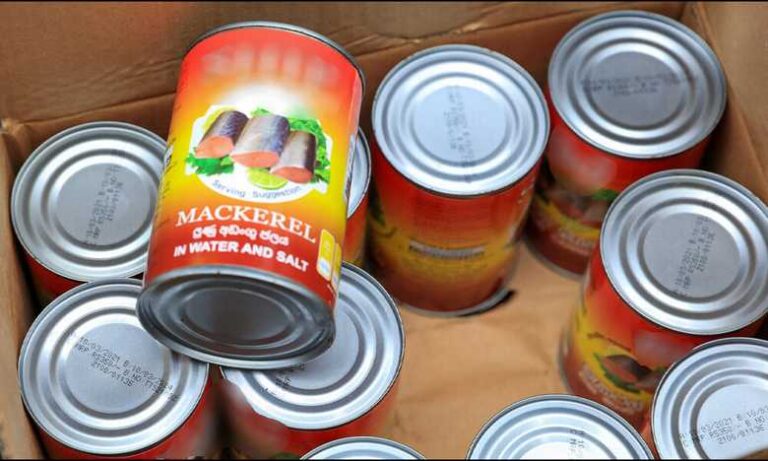
The Sri Lanka Government has imposed price controls on canned fish despite recent controversies over similar measures.

The Consumer Affairs Authority -CAA- has set a ceiling of Rs. 380 for tuna, Rs. 420 for mackerel, and Rs. 560 for jack mackerel. Such interventions have sparked debates about their impact on quality, supply, and the domestic industry.

Critics say price controls could result in shortages, as happened with raw rice earlier this year. Historical examples, such as the shortages of the 1970s, further underscore the dangers of government-imposed ceilings.

Consumer rights groups have pointed out that low-quality products often flood the market under such conditions, possibly replacing high-standard imports.

The Canned Fish Manufacturers’ Association of Sri Lanka (CFMASL) has urged the government to reduce the Value Added Tax on salmon to ease the pressure in the industry.

While the President of CFMASL, Shiran Fernando, said the controlled price itself is not an issue, he warned that without VAT reductions, the local fishermen and producers would incur heavy losses.

However, Chairman CAA Hemantha Samarakoon said the price controls had been done amidst discussion with relevant stakeholders.

Yet, consumer rights activists have raised concerns over falling quality in products. Asela Sampath of the National Consumers’ Front (NCF) said that low price fishes are mixed instead of using expensive varieties like tuna. Goldstripe sardinella is given instead.

Local canned fish producers also face challenges from imported products. High import taxes—up to Rs. 200 per can—aim to protect domestic industries, but loopholes in regulations allow importers to exploit price control measures.

For instance, only specific weights of canned fish, such as 425g net and 280g drained, fall under the price ceiling. Slight deviations in weight render the gazette unenforceable, allowing manufacturers to set prices freely.

Sri Lanka’s canning industry of fish plays a crucial role in the local economy, employing thousands and supporting fishermen during lean months. Sixteen large factories produce several types of canned fish to meet about 95 percent of the national demand.

But this policy can also destabilise the sector. Locally produced sardines and mackerel, at Rs. 560 per can, have now become more expensive than imported salmon, which is being retailed at Rs. 380 after taxes. This undermines the competitiveness of high-quality local produce.

Besides, local producers say that price controls will make them operate at a loss. For instance, special tuna, which costs Rs 460 to produce, must now retail at Rs 380, forcing producers to either compromise on quality or quit the market.

Industry sources also feel that unless something is done to set right these anomalies, the domestic industry would collapse in three months.

Sri Lanka imports around €80 million of canned fish from countries such as China, Thailand, and Chile annually. Some insist on banning the importation of fish and increasing taxes in order to save the local market. Critics point out that these measures would only benefit importers more than the fishermen and producers.

The government’s policy is also being criticised on its discriminatory use. From a total of 30 canned fish varieties, only four come under the ambit of price control.

Critics argue that this will also be useless in serving consumers’ or industry interests. The earlier, reported efforts to saturate the market with inferior qualities of imports during festive seasons have also given credence to accusations of profiteering by import networks.

In their view, the import cess tax should be increased up to Rs. 450 or to reinstate an import ban on salmon, much like that in January 2024. The implementation of pragmatic steps-like sector-targeting tax policies-will make sure that the canned fish industry not only survives but survives with dignity and protects livelihoods for 600,000 people down the value chain.

After all, while price controls may be a way to make basic goods more affordable, the unintended consequences it creates regarding decreased quality, loopholes in the market, and the endangerment of local industries, balance should be drawn in policymaking.

Sri Lanka Plantation Companies Struggle with Rising Lease Payments

0

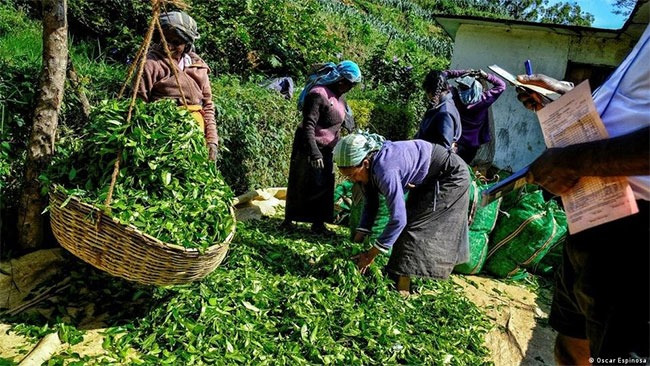
Sri Lanka the plantation companies continued to face financial pressure, including managing lease payments to the government for the land they operate on.

The industry is primarily based on state-owned land, and these companies are required to pay annual lease fees to the government. These payments are a significant part of their operational costs.

A total of 249,843 hectares of land owned by the government had been transferred to 23 local plantation companies on a lease basis for a period of 53 years in the year 1992.

The lease revenue of Rs. 587 million had been in arrears to the government from 10 of those companies as at 31 December 2023, Government Auditor General’s latest report revealed

The lease payments for plantation companies are typically calculated based on the acreage of land they operate and its designated usage (e.g., tea, rubber, coconut cultivation). These fees have been adjusted over the years, and the rates are periodically reviewed by the government, plantation industry sources disclosed. .  .

 In recent years, there has been a push from the government to increase lease fees, which has added to the financial burden on plantation companies, several heads of plantation companies complained. .

Companies have often expressed concerns about these increases, particularly given the fluctuating international commodity prices, unfavorable weather conditions, and other operational costs that impact profitability.

Plantation companies with large land holdings often face challenges in managing their lease obligations alongside other debts. The significant lease payments can strain liquidity, especially when profits are low due to factors like fluctuating crop yields or high operational costs.

 There have been discussions within the industry about the need for a more transparent and fair system for calculating lease payments. Some stakeholders argue that the government should offer more flexibility or reduce fees to help plantation companies sustain their operations and remain competitive.

Eight out of 16 estates owned by the Sri Lanka State Plantation Corporation were in loss condition in the year 2023.

Although there are 09 tea factories attached to the corporation at present, only 03 factories are doing production and 05 factories had been closed for a long time.

One of the tea factories was closed for maintenance from October 2022 and although the Knuckles Bungalow in the disused Gomara Estate was among several sightseeing spots, the corporation had not taken steps to repair and use that bungalow, audit report observed.  

Government  seeks investors to develop and upgrade Sapugaskanda oil refinery

0

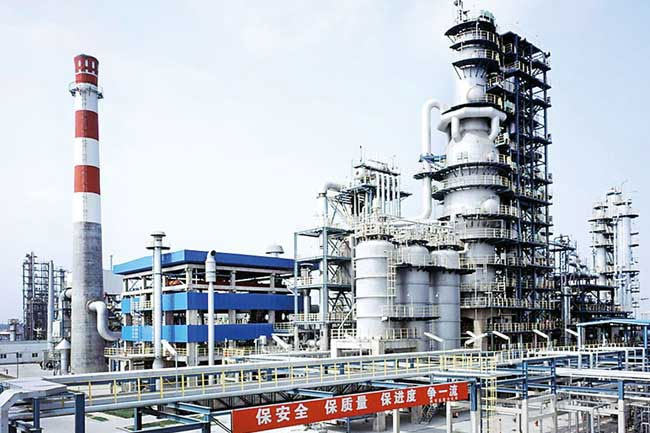
Sri Lanka is seeking investors to develop the Sapugaskanda oil refinery, which includes the establishment of a new refinery within the same premises.

The Government said that although the Ceylon Petroleum Corporation has made various efforts to modernize and upgrade the Sapugaskanda oil refinery both quantitatively and qualitatively to fulfill the demand of the market, all those efforts have not been successful.

Even though cabinet approval had been granted to establish the Sapugaskanda oil refinery as a public enterprise separate from the Ceylon Petroleum Corporation.

CPC is to identify an appropriate strategic investment partner and to take necessary steps after investigation of the possibility for the establishment of a new oil refinery in the Trincomalee area for that purpose, no action has been taken in that respect so far.

Under the policy framework relevant to the energy of the present government, the modernization of the existing refinery or construction of a new refinery has been identified as a priority function.

Approval had been granted by the board of directors of the Ceylon Petroleum Corporation to call for expressions of interest to identify a suitable investment partner based on the feasibility study conducted in the year 2022.

Accordingly, the Cabinet of Ministers has approved a proposal presented by the Minister of Power and Energy to develop the Sapugaskanda oil refinery and call for expressions of interest for the identification and selection of suitable financial suppliers/investors.

This is for the implementation of the project for the establishment of a new refinery within the same premises with a capacity of 100,000 barrels per day on the basis of an operation and transfer (BOT) system.

The rationale behind the move stems from the necessity of a ‘critical investment’ to modernise and upgrade the ageing infrastructure of the refinery. The aim is to ensure its operational efficiency and viability for at least another 25 years,” the Government Information Department noted.

Under the Ceylon Petroleum Corporation (CPC) restructuring plan, the CPC-owned refinery will be set up as a separate Government-owned and operated entity to attract and raise investments with the aim of improving fuel quality, efficiency, capacity, and reducing costs.

The restructuring plan includes revising the currently approved cadre and salary structure of the CPC while digital platforms will be introduced for multiple functions and service

The government’s aim is to get rid of the country’s only oil refinery with a capacity to supply 100percent  of the country’s kerosene requirement, 50 percent of the aviation fuel requirement, and100 percent  of the naphtha requirement.,

It was used to produce 30 percent of the diesel requirement, 14percent of the petrol requirement, 7-8percent of the gas requirement, and 75-100percent of the furnace oil requirement.

Initially designed to process 38,000 barrels of crude oil, the refinery currently has a capacity of refining about 50,000 barrels per day.

Sapugaskanda Refinery was built by Iran under the guidance of the Ceylon Petroleum Corporation (CPC) in August, 1969.

A senior engineer of the CPC said that the closure of the Sapugaskanda Oil Refinery would cost the country an additional sum of US$ 1.1 million a day to meet its crude oil requirement.He further claimed “

The refinery has been shut down on several occasions and it has cost a lot of money to resume its operations. This was  a national crime, he added

Russia Supports Sri Lanka’s BRICS Bid, Criticizes Western Policies

0

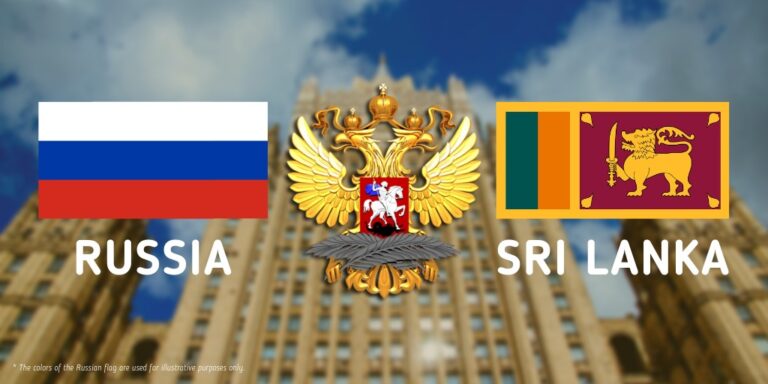
Russian Ambassador to Sri Lanka, Levan S. Dzhagaryan, affirmed Russia’s support for Sri Lanka’s bid for BRICS membership while emphasizing that the final decision would be made through consensus among member nations.

Speaking at a press conference held at the Russian Embassy in Colombo to mark the third anniversary of Russia’s military operation in Ukraine, Ambassador Dzhagaryan stated that Russia, no longer holding the BRICS chairmanship, will review Sri Lanka’s application alongside other prospective members.

The Ambassador also praised Sri Lanka’s neutral stance on the Russia-Ukraine conflict and expressed hope that the new government, led by President Anura Kumara Dissanayake, would maintain this approach.

On the topic of Russia’s assistance in setting up a nuclear power plant in Sri Lanka, Dzhagaryan revealed that despite multiple discussions between Rosatom State Corporation and Sri Lanka’s Atomic Energy Authority, no significant progress had been made. He stressed that it was up to the Sri Lankan government to proceed with the project, adding that Russia had provided the best proposal for nuclear energy development in the country.

Ukraine Conflict and Global Politics

Ambassador Dzhagaryan reiterated Russia’s position on the Ukraine conflict, calling for the demilitarization of Ukraine and its recognition as a neutral, non-aligned, and non-nuclear state. He also urged the West to acknowledge Crimea, Sevastopol, Donetsk, Luhansk, Kherson, and Zaporizhia as integral parts of Russia, while demanding the lifting of sanctions imposed by Western nations.

He welcomed former U.S. President Donald Trump’s recent telephone conversation with Russian President Vladimir Putin, stating that it provided a “new window” for dialogue. However, he noted that Russia had yet to receive serious proposals from the U.S. and stressed that any negotiations must be based on equality, mutual respect, and acknowledgment of the situation on the battlefield.

Criticizing what he described as Western double standards, the Russian Ambassador questioned why the humanitarian consequences of NATO’s military actions in Yugoslavia, Afghanistan, and Libya were not scrutinized in the same way as Russia’s operations in Ukraine.

Dzhagaryan justified Russia’s military actions, stating that the Special Military Operation launched on February 24, 2022, was necessary. He recalled that early negotiations in Istanbul had led to an agreement that Ukraine initially accepted but later abandoned, allegedly under pressure from then-UK Prime Minister Boris Johnson.

The press conference concluded with the Ambassador reaffirming Russia’s commitment to strengthening ties with Sri Lanka across multiple sectors, including energy, trade, and defense cooperation.

Water Supply Cut Near Former President Mahinda Rajapaksa’s Residence Over Unpaid Bill

0

The National Water Supply and Drainage Board (NWSDB) has disconnected the water supply to an area near the official residence of former President Mahinda Rajapaksa in Wijerama due to the non-payment of a bill amounting to Rs. 428,968.

Responding to inquiries, NWSDB Deputy General Manager Ekanayake Weerasinghe clarified that the disconnection was not at the former President’s official residence but at a location nearby, identified as a security personnel’s quarters. He emphasized that the water bill for the former President’s residence is up to date and there have been no issues regarding its payments.

“When our employees went to disconnect the water supply, they were informed that a group of police officers were staying there. However, we have no confirmation on whether they are part of the former President’s security detail,” Weerasinghe said.

The NWSDB confirmed that multiple prior notices were issued regarding the outstanding bill before the water supply was disconnected.

Over 260 Foreigners, Including Sri Lankans, Rescued from Myanmar Cybercrime Camps

0

More than 260 foreign nationals, including Sri Lankans, who were trapped in cybercrime camps in Myanmar, have been rescued and handed over to Thai authorities.

The Democratic Karen Benevolent Army (DKBA), a Myanmar rebel group, raided the cybercrime camps in Myawaddy District on February 11 and freed 261 foreign victims. The rescued individuals, including nationals from Sri Lanka, the Philippines, Bangladesh, Brazil, Nepal, Kenya, Laos, Ethiopia, Pakistan, Tanzania, Uganda, and Taiwan, were handed over to Thai authorities the following day.

Sri Lanka’s Minister of Foreign Affairs, Foreign Employment, and Tourism Vijitha Herath requested urgent assistance from his Thai counterpart, Maris Sangiampongsa, to ensure the safe repatriation of trafficked Sri Lankans. Thailand has already facilitated the return of 58 Sri Lankans, while efforts are ongoing to rescue 18 more who are reportedly still trapped and facing mistreatment.

The crackdown on human trafficking and cyber fraud along the Myanmar-Thailand border has intensified, with the DKBA highlighting the challenges of rescuing victims due to demands from Myanmar’s Junta immigration authorities and the difficult terrain.

The Sri Lankan Foreign Ministry, in coordination with Thailand and Myanmar, continues to work toward securing the safe return of the remaining victims.

Adani Green Energy Withdraws from $1 Billion Wind Power Project in Sri Lanka

0

Colombo, February 13, 2025 – Adani Green Energy, a subsidiary of India’s Adani Group, has announced its decision to withdraw from the planned $1 billion wind power project in Sri Lanka.

The project aimed to develop 484 MW Renewable Energy Wind Farms in Mannar and Pooneryn, along with a 220 KV and 400 KV transmission network to distribute electricity to the southern part of the country.

In an official statement, the Adani Group confirmed its board’s decision to “respectfully withdraw” from the wind energy and transmission projects while remaining open to future collaboration if invited by the Sri Lankan government.

Despite securing most of the necessary approvals, Adani cited unresolved environmental clearances and ongoing Supreme Court litigation as key reasons for the withdrawal. The company also noted concerns over the Sri Lankan government’s recent decision to form new committees to renegotiate the project terms.

The Sri Lankan government had been in discussions with Adani to reduce the power tariff, which was initially set at US cents 8.62 per kilowatt-hour, as approved in May 2024. A new project committee appointed this year recommended lowering the tariff to below US cents 5.50, aligning with global market rates.

The Ministry of Power stated that the review process focused on legal compliance, environmental impact, and financial feasibility to ensure the project met national interests.

With Adani’s withdrawal, Sri Lanka may now seek alternative investors or renegotiate renewable energy initiatives to meet its long-term energy goals.

Fair weather expected to prevail over most parts of the island

0

A cold weather can be expected in the Northern, North-central, Eastern, North-western and Central provinces during the early morning.

Misty conditions can be expected at some places in North-central, Sabaragamuwa, Central, North-western and Uva provinces during the morning.