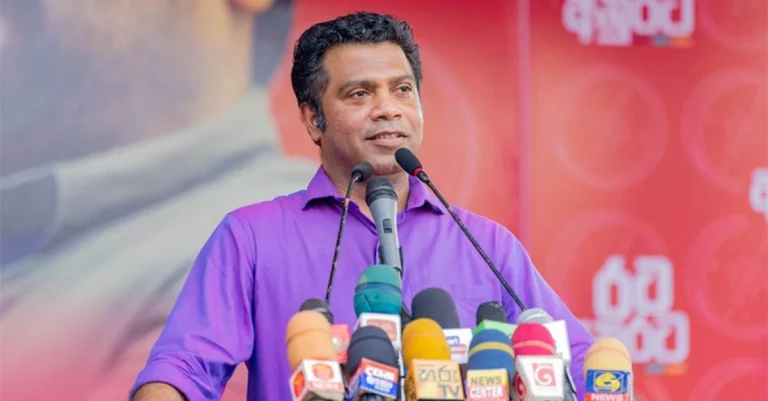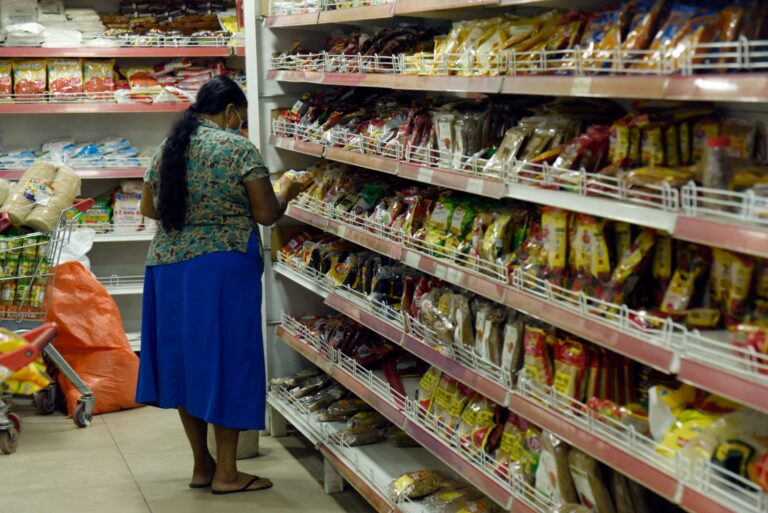
- The Cabinet of Ministers has granted approval for the import of up to 30,000 metric tons of non-iodized salt by the State Trading Corporation to address the ongoing salt shortage in the market. Cabinet Spokesman Minister Dr. Nalinda Jayatissa confirmed that the approval was given to import the stocks before January 31, 2025.
- Former MP Manoj Sirisena says he made a verbal and written clarification from the President’s Fund yesterday, about the recent statement made in Parliament by Minister Nalinda Jayatissa mentioning his name related to the misuse of funds from the President’s Fund. Issuing a statement, the former MP said that on March 9, 2009, while participating in an event held in Akuressa he was seriously injured in a suicide bomb.
- A Quo Warranto application has been filed against Minister of Rural Development, Social Security and Community Empowerment Professor Upali Pannilage, seeking his disqualification as an MP. The application was filed by public interest litigant Oshala Herath at the Court of Appeal, stating that Prof. Upali Pannilage had been appointed as a Member of Parliament under the National People’s Power (NPP) National List and was appointed a Cabinet Minister while being an officer in a public corporation.
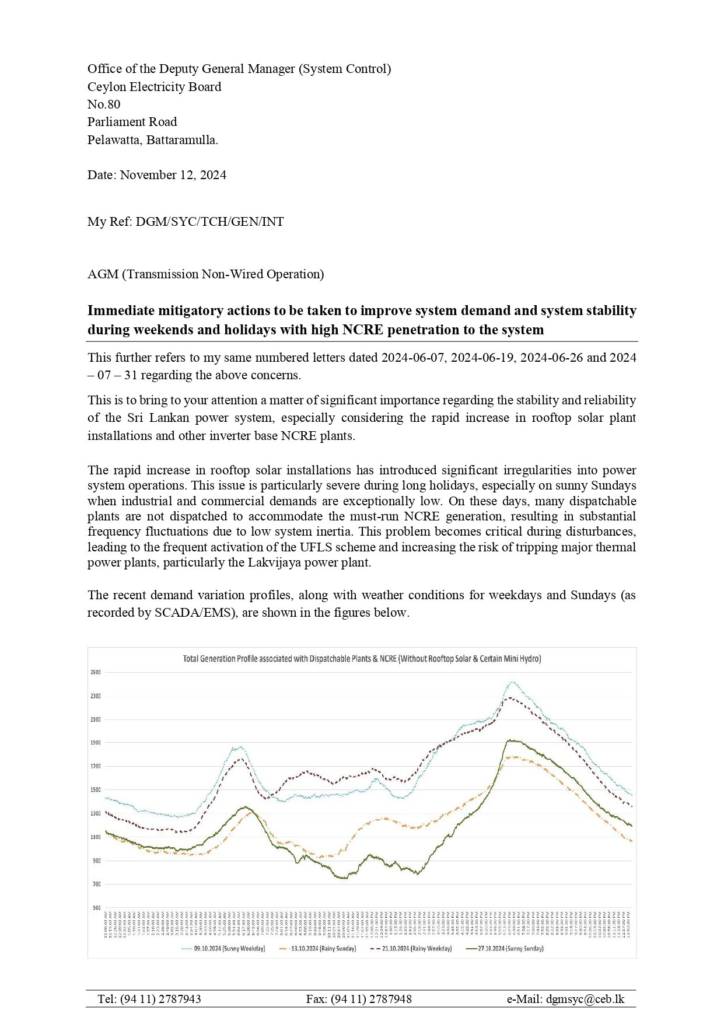
- Asian Development Bank (ADB) has agreed to provide Ceylon Electricity Board (CEB) with a loan facility of US$ 150 million, which is utilised in several essential projects in CEB’s long-term transmission plan. Accordingly, the ADB and the CEB signed an agreement for ADB to provide a loan of US$ 150 million to CEB. After rigorous due diligence by ADB on technical, economic and social merits of CEB’s upcoming investment proposals, ADB approved the loan package in November 2024, a CEB media release revealed.
- Former President Ranil Wickremesinghe says that criticism pertaining to the country’s economy should be made within the framework of the International Monetary Fund (IMF) agreement. Issuing a special statement, he emphasized that it is necessary to move forward and protect the IMF agreement and that neither the government nor the opposition has the ability to exit that agreement.
- The Cabinet of Ministers has approved a proposal to increase the daily allocation for providing breakfast to children in Early Childhood Development Centers and preschools with a high percentage of underweight children, Cabinet Spokesman Mass Media Minister Dr.Nalinda Jayatissa said.
- Police officers have reported that many traffic speed measuring devices used to detect those who drive at excessive speeds are currently detective. This has made it difficult to apprehend drivers who break speed limits. A senior Police officer mentioned that there are only one or two functional speed measuring devices available per district.
- The Cabinet of Ministers has approved the extension of the compulsory age limit of retirement for government medical officers up to 63 years, with amendments to be made in line with the Pensions Act. This decision allows government doctors who were set to retire by December 31, 2024, to continue serving until the age of 63.
- Commemorating the 25th year since the bomb attack that targeted her in December 1999, former President Chandrika Bandaranaike Kumaratunga donated essential medicines to the Apeksha Cancer Hospital in Maharagama. In a statement, the former President said she was accompanied by the family members of her Security official who had died in the bomb blast.
- Cabinet approval has been granted for the renovation of the Sugathadasa National Sports Complex according to international standards. The Sugathadasa National Sports Complex is an internationally recognized sports complex that provides class 1 sports facilities.
Sri Lanka Original Narrative Summary: 20/12
Sri Lanka Police Face Shortage of Speed Measuring Devices
The Sri Lanka Police are grappling with a shortage of functional traffic speed measuring devices, hampering efforts to curb excessive speeding, a significant contributor to road accidents.
A senior Police officer revealed that most districts have only one or two operational devices, making it challenging to enforce speed limits effectively. The National Audit Office has reported that since the purchase of 25 devices in 2016, no additional equipment has been procured, despite requests for 500 devices between 2018 and 2023.
The lack of equipment is a pressing concern, as excessive speeding remains a leading cause of road accidents. The National Audit Office criticized the Police for not prioritizing the acquisition of these devices to mitigate the risks associated with speeding.
A senior officer from the Traffic Division highlighted the urgent need for at least one speed measuring device per Police division. To address this issue, plans are underway to purchase 50 devices to improve enforcement capabilities.
This shortfall underscores the importance of investing in traffic safety measures to reduce road accidents and ensure public safety.
Cabinet Approves Increased Allocation for Preschool Breakfast Program
The Cabinet of Ministers has approved a proposal to increase the daily allocation for providing breakfast to children attending Early Childhood Development Centers and preschools with a high percentage of underweight children, according to Mass Media Minister Dr. Nalinda Jayatissa.
Speaking at the weekly Cabinet media briefing held at the Government Information Department, the Minister outlined the Government’s commitment to addressing child malnutrition.
This program, implemented by the National Secretariat on Early Child Development under the Health Ministry’s technical guidance since 2017, currently allocates Rs. 60 per day per child. However, due to rising food costs, this amount has proven insufficient. To address this, the Cabinet approved a proposal by the Women and Child Affairs Minister to increase the allocation to Rs. 100 per child.
The initiative will benefit approximately 155,000 children in 2025, focusing on preschools identified as having a high percentage of underweight children.
This effort forms part of the Government’s broader strategy to combat malnutrition, promote child well-being, and ensure a healthier foundation for early education.
CID Submits Report on Grade 5 Scholarship Exam Question Leak to Supreme Court
The Criminal Investigations Department (CID) has submitted a detailed report to the Supreme Court regarding the ongoing investigation into allegations of leaked questions in the Grade 5 Scholarship Examination.
The report was presented following an order from the Supreme Court during a hearing on Wednesday (18).
The Court has reserved its judgment on four Fundamental Rights petitions filed by students and parents seeking the cancellation of the Grade 5 Scholarship Examination. A three-judge Bench comprising Justices Yasantha Kodagoda, Kumudini Wickremasinghe, and Arjuna Obeyesekere presided over the hearing and concluded proceedings.
The judgment on these petitions is scheduled to be delivered on December 31, 2024.
ADB Grants $150 Million Loan to CEB for Long-Term Transmission Projects
The Asian Development Bank (ADB) has approved a $150 million loan facility to the Ceylon Electricity Board (CEB) to support critical projects under its long-term transmission plan.
An agreement formalizing the loan was signed yesterday (19), following ADB’s rigorous evaluation of the technical, economic, and social viability of CEB’s proposed investments. The loan package received ADB approval in November 2024, according to a statement from CEB.
The funding will enable the implementation of several vital projects from 2025 to 2027, aimed at enhancing the reliability and stability of Sri Lanka’s power grid. Additionally, these transmission assets will facilitate the integration of large-scale renewable energy developments into the national grid, aligning with the country’s sustainable energy goals.
Key initiatives under this loan include:
- Construction of six new grid substations.
- Installation of 87 km of 132 kV transmission lines.
- Development of 45 km of 220 kV transmission lines.
- Upgrading two existing grid substations.
The projects are expected to strengthen Sri Lanka’s energy infrastructure and support its transition to a more sustainable and efficient power system.
Showers expected to occur at times in Western and Sabaragamuwa provinces
Showers will occur at times in Western and Sabaragamuwa provinces and in Galle and Matara districts.
Several spells of showers may occur in North-western province.
Showers or thundershowers will occur at several places in Uva, Central and Eastern provinces and in Hambantota and Polonnaruwa districts during the evening or night. Fairly heavy showers above 50 mm are likely at some places in Uva province.
Misty conditions can be expected at some places in Central, Uva and Eastern provinces during the morning.
The general public is kindly requested to take adequate precautions to minimize damages caused by temporary localized strong winds and lightning during thundershowers.
SriLankan Airlines to Restore Grounded Aircraft and Reduce Losses
SriLankan Airlines is expediting efforts to reintegrate three grounded passenger planes into its fleet, ending a three-year hiatus caused by technical faults. The planes, leased by the airline, have remained idle, incurring substantial financial losses due to inaction on repairs.
For the past three years, SriLankan Airlines has paid USD 300,000 (approximately LKR 90 million) per month for each grounded aircraft, amounting to a monthly loss of LKR 270 million. Over three years, this has resulted in an estimated total loss of LKR 9.72 billion.
The newly formed government has prioritized addressing this issue, ensuring that the necessary spare parts are procured to restore the planes. According to reports, one aircraft will be operational by December 2024, followed by another in February 2025, and the third in April 2025.
The airline’s management has also made significant strides in improving operational efficiency. Flight delays and cancellations, which were common in recent months, have been nearly eliminated. With proper management, SriLankan Airlines is gradually overcoming its challenges and making progress toward financial stability.
This development marks a critical step in mitigating losses and enhancing the performance of the national carrier, reflecting the government’s commitment to reviving the airline industry.
Sri Lankan Paddy Farming transforms into Climate-Resilient Revolution
For centuries, rice cultivation has been at the heart of Sri Lankan agriculture, covering over a million hectares annually and accounting for 37% of the country’s land use.
However, climate change has intensified the challenges of managing water resources, particularly for water-intensive paddy farming.
The Climate Resilient Integrated Water Management Project (CRIWMP), supported by the Green Climate Fund and implemented by the Sri Lankan government with the UNDP, is addressing this issue through an innovative technique known as Alternate Wetting and Drying (AWD).
A Blend of Tradition and Innovation
Traditionally, Sri Lankan paddy fields relied on continuous flooding, requiring approximately 2,500 liters of water to produce 1 kilogram of rice. This method placed immense pressure on water resources, especially during droughts.
AWD, a sustainable alternative, has reduced water usage by up to 27% while increasing cropping intensity from 1.2 to 2.1. This enables farmers to cultivate more frequently, enhancing harvests, income, and food security.
Empowering Farmers through Knowledge
The success of AWD lies in its integration of technology and farmer empowerment. CRIWMP collaborates with farming communities to provide training, tools, and climate advisory services to implement AWD effectively.
Farmers use simple tools like buried water pipes to monitor water levels and irrigate only when necessary, conserving water and optimizing irrigation schedules with agro-meteorological advisories.
Technological Innovations in Water Management
The AWD method has been further strengthened by advanced technologies such as the Sensor Light System and the Water Level Arrow Marking System. The solar-powered Sensor Light System alerts farmers to irrigate when water levels are critically low, while the Water Level Arrow Marking System visually indicates water levels, reducing the need for field inspections. These innovations have empowered farmers like Wasantha, who now consider themselves “smart” farmers, to confidently manage water resources.
A Sustainable Shift in Paddy Cultivation
CRIWMP’s Climate Smart Agriculture Coordinator, Dr. Geethika Wijesundara, describes AWD as a transformative step for sustainable water management. By adopting AWD, farmers can cultivate paddy using just 2.9 to 3 acre-feet of water, freeing up resources to grow other field crops during a third season. This diversification boosts yields, income, and food security.
Environmental and Climate Benefits
Beyond improving water efficiency and productivity, AWD has significantly reduced methane emissions—a key contributor to global warming. In fields using AWD, methane emissions have decreased by 40%, from 570 mg/ha to 325 mg/ha. Nationwide adoption of AWD could reduce Sri Lanka’s methane emissions by 245,000 tons annually.
A Vision for the Future
Looking ahead, CRIWMP plans to conduct soil drainage mapping in two irrigation systems to optimize crop planning for the Yala season. This approach ensures paddy cultivation aligns with water availability while promoting high-value crops to enhance smallholder resilience and profitability.
Sri Lanka’s journey towards climate-resilient agriculture demonstrates the power of blending traditional farming practices with modern innovations. Through AWD and other water management advancements, Sri Lankan farmers are not only growing rice but also cultivating hope, sustainability, and resilience for future generations.
Tobe publishe don Thursday19
“Yukthi Calls for Economic Justice rejecting Debt and Unsustainable Policies”
Yukthi, a collective supporting Sri Lanka’s working-class movements and struggles for democracy and justice, has issued a strong appeal for sustainable economic policies that prioritize the well-being of the people.
The forum vehemently opposes a return to high-interest international capital markets, citing the significant burden these have already imposed on the nation.
On December 13, 2024, the Ministry of Finance announced the completion of a controversial debt restructuring agreement related to Sri Lanka’s international sovereign bonds.
This deal, finalized during a politically sensitive blackout period two days before the presidential election on September 21, 2024, has drawn widespread criticism for its long-term economic repercussions.
Yukthi warns that the agreement, which relies on Macro-Linked Bonds (MLBs) tied to Sri Lanka’s dollar-denominated GDP, will cost the country billions of dollars while failing to provide any substantial debt relief.
Under the terms of the deal, Sri Lanka’s debt repayment obligations are linked to the anticipated rise in its dollar GDP between 2025 and 2027.
However, this projection assumes a temporary appreciation of the Sri Lankan rupee under the ongoing IMF program, which delays significant repayments to bilateral and commercial creditors. An appreciated rupee, while boosting dollar GDP, could hurt foreign earnings necessary for external debt servicing.
The arrangement has severe implications for public finances. External debt servicing is projected at 4.5% of GDP, with repayments consuming 30% of government revenue. This leaves minimal fiscal space for public spending, forcing working people to shoulder the economic burden while bondholders profit.
Sri Lanka’s Economy Shows Robust Growth in Q3 2024
Sri Lanka’s economy experienced a notable 5.5% year-on-year (YoY) growth in the third quarter of 2024, marking the highest expansion since 2021. This growth continued the upward trend that began in September 2023 and outpaced the 4.7% growth recorded in the second quarter of the year.
The Department of Census and Statistics (DCS) attributed this positive performance primarily to the industrial sector, which contributed 27.3% to the GDP and grew by an impressive 10.8%.
The service sector, accounting for 55.5% of GDP, expanded by 2.6%, while agriculture, which makes up 8.2% of the GDP, grew by 3%. Additionally, taxes on products (after subsidies), contributing 8.9% to the GDP, increased by 13.3% in Q3 2024.
Several factors played a role in driving this growth. A sharp decline in interest rates toward the end of the third quarter helped ease domestic credit supply, particularly benefiting the private sector. Additionally, a significant increase in exports and imports boosted economic activities, fostering strong forward and backward linkages.
Notably, imports of investment goods and intermediate goods, such as textiles and cement, fueled the growth of key industries like apparel and construction.
Tourism and workers’ remittances also contributed positively to Sri Lanka’s foreign currency reserves, strengthening the value of the rupee in the foreign exchange market.
On the domestic front, improved water levels in reservoirs led to higher hydroelectric power generation, while increased egg and poultry production supported animal agriculture, contributing to the overall growth.
Sectoral Performance
Agriculture
Agriculture recorded a 3% growth in Q3 2024, a slight slowdown from the 4.2% growth in the same period of 2023. Key contributors to this growth included significant expansions in cereal production (46.7%), animal production (19.9%), and tea growing (16.3%). Other areas such as marine fishing, fruit cultivation, and spice growing also saw positive growth. However, some agricultural sectors, including freshwater fishing, rubber cultivation, and forestry, reported contractions.
Industry
The industrial sector as a whole grew by 10.8% in Q3 2024, a sharp turnaround from the 0.7% decline in the same quarter the previous year. The construction and mining sectors showed particularly strong growth, with increases of 23.8% and 25.4%, respectively. Manufacturing expanded by 5.3%, with notable growth in textiles, paper products, wood products, and rubber. However, the manufacturing of coke and refined petroleum products contracted by 52.3%, and the production of non-metallic minerals decreased by 3%.
Services
The service sector collectively grew by 2.6%, recovering from a contraction of 1.7% in Q3 2023. Key growth drivers included the accommodation and food services sector (18.8%), IT programming and consultancy (16%), and the insurance and pension funding sector (8.2%). Other services such as postal services, telecommunications, and real estate also saw positive growth. The only sector to decline was public administration and defense, which contracted by 1.8%.
Overall, Sri Lanka’s economic performance in Q3 2024 reflects strong growth across various sectors, indicating a resilient recovery and promising prospects for the remainder of the year.
Yukthi Calls for Economic Justice rejecting Debt and Unsustainable Policies
Yukthi, a collective supporting Sri Lanka’s working-class movements and struggles for democracy and justice, has issued a strong appeal for sustainable economic policies that prioritize the well-being of the people.
The forum vehemently opposes a return to high-interest international capital markets, citing the significant burden these have already imposed on the nation.
On December 13, 2024, the Ministry of Finance announced the completion of a controversial debt restructuring agreement related to Sri Lanka’s international sovereign bonds.
This deal, finalized during a politically sensitive blackout period two days before the presidential election on September 21, 2024, has drawn widespread criticism for its long-term economic repercussions.
Yukthi warns that the agreement, which relies on Macro-Linked Bonds (MLBs) tied to Sri Lanka’s dollar-denominated GDP, will cost the country billions of dollars while failing to provide any substantial debt relief.
Under the terms of the deal, Sri Lanka’s debt repayment obligations are linked to the anticipated rise in its dollar GDP between 2025 and 2027.
However, this projection assumes a temporary appreciation of the Sri Lankan rupee under the ongoing IMF program, which delays significant repayments to bilateral and commercial creditors. An appreciated rupee, while boosting dollar GDP, could hurt foreign earnings necessary for external debt servicing.
The arrangement has severe implications for public finances. External debt servicing is projected at 4.5% of GDP, with repayments consuming 30% of government revenue. This leaves minimal fiscal space for public spending, forcing working people to shoulder the economic burden while bondholders profit.
The debt restructuring deal is a cornerstone of the IMF Agreement approved on March 20, 2023. This program enforces austerity measures that disproportionately affect Sri Lanka’s working class, ensuring creditor repayments at the expense of public welfare.
Yukthi critiques the agreement’s assumption that Sri Lanka will return to international capital markets for development financing post-2027, describing this as a dangerous strategy likely to perpetuate cycles of debt.
Additionally, the IMF’s recommendation to liberalize imports could worsen Sri Lanka’s balance of payments. A renewed influx of luxury imports could deplete foreign reserves, making it difficult to secure essential goods during future economic shocks.
Yukthi argues that such policies, driven by financialisation and external borrowings, would only extract further from working people, who already face rising costs for essentials and reduced access to public services.
Yukthi calls for a complete rejection of these unsustainable economic approaches. Instead, it advocates for policies that foster sustainable development, uplift the working class, and reduce dependence on predatory international capital markets.
By prioritizing social welfare and essential public spending, the government can address the needs of the most vulnerable while steering Sri Lanka toward a more equitable and resilient economic future.