Home Blog Page 692

Construction Sector Sees Steady Growth anticipating Infrastructure Development

0

By: Staff Writer

February 03, Colombo (LNW): The construction industry in Sri Lanka experienced growth in building activities in December 2024, as indicated by the Purchasing Managers’ Index for Construction (PMI – Construction), compiled by the Central Bank of Sri Lanka (CBSL).

The total activity index remained at 51.4, the same value recorded in November. Despite this stability, CBSL noted that industry stakeholders emphasized the need for more large-scale construction projects to ensure continued sectoral growth.

New orders remained at a neutral threshold, signifying that the number of construction projects approved in December was consistent with the previous month.

Meanwhile, although the employment index continued to decline, the rate of contraction slowed in December. The Quantity of Purchases index showed an increase, reflecting the overall expansion in construction activities.

 However, suppliers’ delivery times continued to be extended during the month. Looking ahead, the industry outlook for the next three months remains optimistic, primarily due to anticipated favorable weather conditions. Nevertheless, firms are keenly awaiting the government’s infrastructure initiatives in the upcoming Budget.

In a parallel development, Amicis Holdings, in collaboration with Autodesk, hosted a groundbreaking event aimed at transforming Sri Lanka’s construction sector. The event attracted over 100 industry professionals, including architects, engineers, and other key stakeholders, who explored how Autodesk’s advanced technology could drive innovation and efficiency in the industry.

A major highlight of the event was the insightful presentations by industry leaders, including the International Construction Consortium Ltd. (ICC) and ARK Draft Ltd. These organizations shared their experiences in implementing Building Information Modelling (BIM) using Autodesk tools. They detailed the challenges faced during adoption and the substantial benefits achieved in design, collaboration, and project execution, resonating strongly with the audience.

Live demonstrations and panel discussions fostered an engaging platform for knowledge exchange, covering topics such as utilizing BIM for sustainable construction and addressing digital transformation hurdles. The interactive sessions sparked discussions and encouraged attendees to integrate new technologies into their workflows.

 “This event marks a pivotal step toward fostering a more innovative and sustainable construction sector in Sri Lanka. Autodesk’s solutions go beyond digital transformation; they pave the way for smarter, greener, and more efficient construction practices,” said Deric John, Co-founder and Director of Amicis Holdings.

Following the event’s success, Amicis Holdings and Autodesk reaffirmed their commitment to spearheading digital advancements and empowering Sri Lanka’s construction sector to achieve greater efficiency, sustainability, and creativity. As the country embraces this technological revolution, the future of construction appears increasingly promising.

IMF Recommends Governance Overhaul to Combat Corruption in Sri Lanka

0

By: Staff Writer

February 03, Colombo (LNW): The International Monetary Fund (IMF) has proposed 16 key reforms to strengthen Sri Lanka’s governance framework and curb corruption, according to IMF sources. Sri Lanka is the first Asian nation to undergo an IMF governance diagnostic, a crucial structural reform aimed at mitigating corruption risks and fostering economic growth.

The IMF’s Governance Diagnostic Assessment (GDA) for Sri Lanka, published in September 2023, highlights persistent social tensions stemming from declining real incomes. The report also underscores public concerns over the lack of accountability for past corruption, with officials continuing to enjoy impunity for misconduct.

To address these issues, the IMF has recommended the establishment of an independent Advisory Committee to assist in appointing members to the Commission to Investigate Allegations of Bribery or Corruption (CIABOC), with a deadline set for November 2023.

Additionally, asset declarations of high-ranking officials, including the President, Prime Minister, and ministers, must be made publicly available online in compliance with the Anticorruption Law by July 2024.

Further legislative measures include enacting a Proceeds of Crime Law in alignment with United Nations Convention Against Corruption (UNCAC) and Financial Action Task Force (FATF) standards by April 2024. A Public Procurement Law reflecting international best practices must also be introduced by December 2024.

The GDA suggests amending the National Audit Act to grant the Auditor General the power to levy surcharges on officials, including Chief Accounting Officers, for failing to ensure proper oversight of public funds. Additionally, the government must finalize regulations supporting beneficial ownership disclosures and establish a public registry for such information by April 2024.

To improve transparency in public procurement, a report on increasing competitive tendering in the ten agencies with the lowest levels of competitive bids in 2022 must be published online by December 2024. In the state-owned enterprise (SOE) sector, reforms should ensure that the proposed holding company and advisory committee consist of independent and ethical professionals.

The IMF also calls for the suspension or abolition of the Strategic Development Projects Act until a clear and transparent framework for evaluating investment proposals is established. Tax laws must be revised to prevent ministers from introducing tax changes without parliamentary approval, ensuring that such modifications do not lead to revenue losses.

By December 2023, short-term anti-corruption measures must be implemented within revenue departments to strengthen internal oversight and improve collaboration with CIABOC. A public report on these measures and their outcomes is due by December 2024.

Additionally, a Cabinet policy paper must be prepared by June 2024 to explore alternative management arrangements for the Employee Provident Fund, terminating its direct administration by the Central Bank of Sri Lanka (CBSL) following a consultative process. Banking sector reforms are also recommended to enhance corporate governance by refining the process for selecting executives and board members in government-owned banks.

By December 2024, the government must establish an online digital land registry and publish a report on the progress of registering and titling state lands. Lastly, to strengthen the judiciary, the IMF advises expanding the resources and expertise available to the Judicial Services Commission and considering governance reforms to enhance oversight and sectoral development.

These measures, if implemented effectively, are expected to bolster Sri Lanka’s governance structures, ensuring greater transparency, accountability, and economic resilience.

Sri Lankan seafarers in high demand, urge industry leader for proper mechanism

0

February 02, Colombo (LNW): Sri Lankan seafarers are in high demand internationally and there should be a proper mechanism for catering to that ever increasing demand, Seraya Shipping Private Limited and Serayav Maritime Service Limited Founder and Managing Director Sujeewa Senaratne said.

According to him, it can be identified that over 1,000 new employment opportunities are available for Sri Lankans, annually.

He made these remarks while participating in an inauguration of a new operational office complex of the company, which have earned a reputation since 2013 for providing merchant seafarers or seamen required for the international shipping industry, in Nugegoda recently (30).

Speaking at the event, Senaratne noted that at present, approximately 800 seafarers assigned to Seraya Shipping Private Limited are continuously engaged in service on approximately fifty ships around the world every day, and that there is a demand for approximately one thousand Sri Lankan merchant seafarers per year in shipping companies around the world. He pointed out that his company, which was established in 2013, has employed approximately 20,000 seafarers in the shipping industry.

The services of seafarers have become an essential factor in maintaining maritime services, which have become the strongest means of transport in the world’s import and export sector today. Since many shipping companies in the world are interested in recruiting Sri Lankan seafarers to serve on their ships, the attention of state and political authorities should be focused on resolving the various existing problems and taking steps to safeguard the job demand for seafarers in Sri Lanka, he added.

SL’s coconut industry could generate US$ 2.5 bn in revenue

0

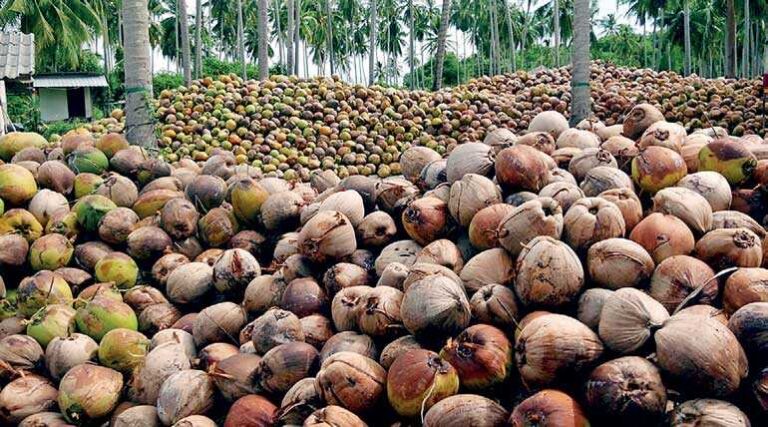
February 03, Colombo (LNW): Randeewa Malalasooriya, President of the Coconut Milk Manufacturers’ Association, has highlighted the immense growth potential of Sri Lanka’s coconut industry, suggesting that it could generate up to US$ 2.5 billion in revenue, a substantial increase from the current average of US$ 850 million.

Malalasooriya told Ada Derana that there is need for strategic improvements in the sector to achieve this goal. He pointed out that the country must increase its annual coconut production to 4.5 billion nuts in the long run to meet growing demand, whilst also focusing on the import of lower-value coconut products.

These imports could then be processed into value-added products for re-export, boosting the industry’s overall output and profitability, he emphasised.

Malalasooriya further stressed the importance of reducing coconut wastage by shifting towards processed coconut food, a move he believes will have a significant impact on both the environment and the economy.

He also noted that approximately 50 per cent of the coconut industry’s revenue comes from kernel products, with Sri Lanka currently ranked as the fourth largest coconut producer in the world.

With the right strategies in place, the industry has the potential to earn USD 2.5 billion or more,” he explained. “Despite current challenges, Sri Lanka remains well-positioned to capitalise on the global coconut market, which offers significant opportunities for growth.

Looking to the short term, Malalasooriya expressed optimism that the industry could increase its revenue to around US$ 1.5 billion. “In the long term, we believe reaching USD 2.5 billion is very achievable,” he added, citing the need for focused attention on scaling production and improving practices across the sector.

To achieve these ambitious targets, Malalasooriya suggested that Sri Lanka could look to import raw coconut materials from countries like Indonesia or the Philippines.

These lower-value products could then be processed locally, adding value before being exported to international markets.

However, he also pointed out that the country faces challenges with the yield per coconut tree, which remains relatively low compared to global standards.

Increasing efficiency in this area, alongside transitioning more coconut consumption to processed forms, could significantly reduce waste and improve the sustainability of the industry.

Malalasooriya concluded by adding that the coconut sector holds vast untapped potential, and with strategic investment and enhanced production practices, Sri Lanka could vastly increase its contribution to the global market, benefiting both local producers and the national economy.

LKR experiences depreciation in January 2025 following strong 2024 performance

0

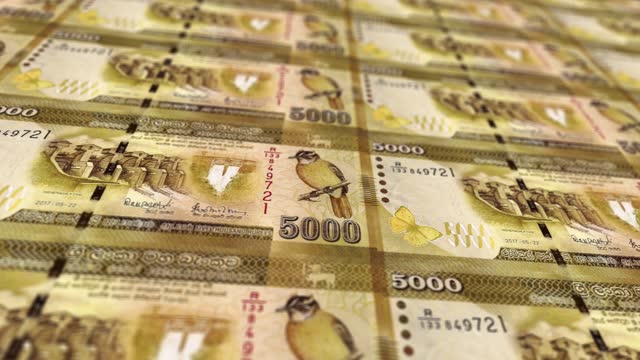
February 03, Colombo (LNW): The Sri Lankan rupee saw a 1.7 per cent depreciation against the US dollar in January 2025, following a notable 10.7 per cent appreciation over the course of 2024, according to the Central Bank of Sri Lanka (CBSL).

Whilst the rupee had experienced a significant gain throughout the previous year, the early part of 2025 saw it face challenges as it weakened not only against the US dollar but also against several other major international currencies.

This movement reflects broader global market trends, with fluctuations in cross-currency values contributing to the rupee’s decline during the month.

On a more positive note, despite the depreciation in nominal terms, the Sri Lanka rupee’s real effective exchange rate (REER 24), which measures the rupee’s value against a basket of 24 currencies, showed a marked appreciation.

The REER 24 index, which stood at 70.2 at the end of 2023, rose to 76.7 by the end of 2024.

This indicates an improvement in the overall purchasing power of the rupee internationally, though it also points to a decrease in Sri Lanka’s external competitiveness during this period.

UAE to make major investment in Sri Lanka’s ports and airports

0

February 03, Colombo (LNW): The United Arab Emirates (UAE) has committed to a significant investment in Sri Lanka’s port and airport infrastructure, according to a recent announcement from the Ministry of Transport, Highways, Ports, and Civil Aviation.

This development follows a key meeting between Minister Bimal Rathnayake and the UAE Ambassador to Sri Lanka, Khalid Al Ameri, where both parties discussed the details of the investment.

Ambassador Al Ameri confirmed that the UAE’s contributions would extend to the development of a new airport terminal, an exciting prospect for the country’s expanding aviation sector.

This collaborative initiative is expected to provide a substantial boost to Sri Lanka’s transport infrastructure, enhancing both its ports and airports to meet growing demand.

The UAE’s investment is seen as a sign of strengthening bilateral ties and increasing economic cooperation between the two nations.

In addition to the announcement of the UAE investment, the Ministry of Transport also revealed that President Anura Kumara Dissanayake is scheduled to visit the UAE later this month for official talks.

The visit aims to further strengthen the relationship between the two countries, with discussions likely to focus on expanding cooperation in trade, infrastructure, and development projects.

Hambantota Port poised to handle surge in vehicle imports following import ban lifting

0

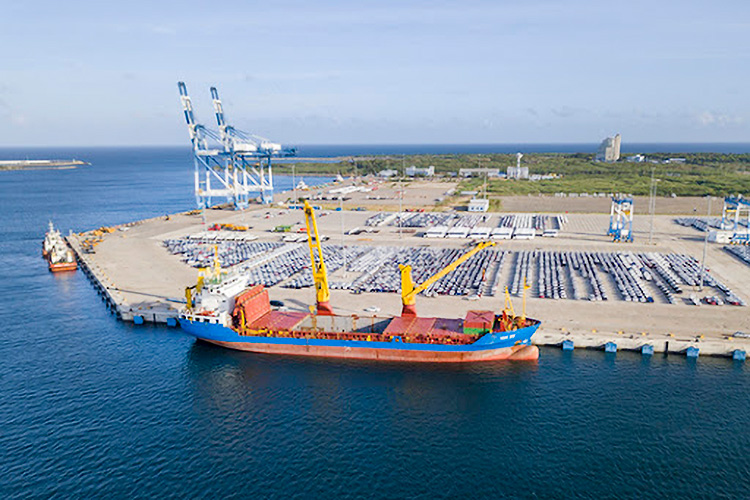
February 03, Colombo (LNW): Hambantota International Port (HIP) is well-positioned to support the anticipated increase in vehicle imports after Sri Lanka’s recent lifting of the import ban, with the port’s infrastructure and operational capacity now fully aligned to accommodate the expected rise in demand.

As Sri Lanka’s automotive market begins to recover, HIP has announced that it is ready to play a pivotal role in meeting the country’s growing import needs.

The port has seen remarkable growth in its capacity to manage vehicle imports, with state-of-the-art facilities and an experienced workforce to ensure smooth operations.

HIP’s Roll-On/Roll-Off (RORO) operations have been expanding rapidly over the past few years, with volumes rising significantly from 238,997 units in 2018 to 579,362 units in 2024.

Wilson Qu, CEO of HIPG, highlighted the port’s increasing prominence as a central hub for the nation’s automotive supply chain, noting the substantial growth in RORO traffic as proof of its expanding role in the industry.

To further enhance its capabilities, HIP has established a variety of specialised facilities to streamline the vehicle import process.

These include a dedicated customs inspection bay designed to facilitate quick and efficient checks of incoming vehicles.

This facility operates around the clock, featuring 24/7 CCTV surveillance and proper lighting to ensure all vehicles are thoroughly inspected for compliance with local standards.

For vehicles awaiting clearance or inspection, HIP provides secure storage solutions, including temporary spaces for imported vehicles before they undergo the necessary processing.

The port has also set up basic amenities for wharf clerks and importers, ensuring that the clearance process is both convenient and efficient.

One of the standout features of HIP’s new infrastructure is its Vehicle Processing Stations, which manage the necessary paperwork to expedite the release of vehicles, further ensuring a seamless experience for importers.

Additionally, the port has designed a new vehicle import yard specifically to handle large volumes of vehicles, with a storage capacity for up to 4,000 units, catering to both local imports and transshipment vehicles.

Security is paramount at HIP, with stringent access controls to ensure that only authorised personnel are allowed within the vehicle yards. The entire port, including the jetty and temporary storage areas, is fully fenced and continuously monitored by 24/7 CCTV.

The port also employs mobile and foot patrols to maintain safety and ensure accountability at every stage of vehicle handling. Furthermore, the port’s illumination is in line with international standards, ensuring high visibility and security at all times.

HIP has committed to investing an additional US$ 2 million in enhancing its infrastructure. This ongoing investment will further bolster its ability to handle increasing vehicle import volumes and continue to play a crucial role in the country’s automotive supply chain.

Government marks Independence Day with national flag display and energy conservation efforts

0

February 03, Colombo (LNW): In a bid to commemorate the nation’s 77th Independence Day, the Ministry of Public Administration has issued a directive for all government institutions to display the national flag for an entire week.

This initiative aims to instil a sense of national pride and unity ahead of the significant national celebrations.

At the same time, the ministry has reinforced its earlier instructions to refrain from using decorative lighting during this period.

This is part of a broader effort to reduce electricity consumption and promote energy conservation, particularly in light of rising utility costs.

Security preparations for the upcoming Independence Day events have been ramped up, with 1,650 personnel from the police force and Special Task Force deployed to ensure the safety of attendees and smooth conduct of the celebrations.

In addition, authorities have rolled out a special traffic management plan to prevent disruptions to public transport and ensure the parades and main events proceed without incident.

The grand 77th National Independence Day celebration will be held tomorrow at Colombo’s Independence Square, with the President set to preside over the occasion.

However, this year’s observance will mark a departure from tradition, as the usual Presidential salute will not take place.

An International Badminton Tournament Where 559 Foreigners Will Compete For A Country That Is Thinking About A Sports Economy

0

By Nishman Ranasinghe

February 01, Colombo (LNW): The participation of 559 foreign athletes has been confirmed for the 100 INTERNATIONAL CHALLENGE CHAMPIONSHIP BADMINTON TOURNAMENTS TO BE HELD IN SRI LANKA FROM FEBRUARY 25 TO MARCH 2. The tournament, which will be held at the Sugathadasa Stadium in Colombo, will be FOLLOWED BY THE 100 INTERNATIONAL BADMINTON CHAMPIONSHIP FROM THE DAY AFTER (MARCH 3) TO MARCH 8, centered around the same venue. Representing a number of large countries such as America, Canada, Japan, Malaysia, Indonesia, etc. 559 athletes are participating in the first tournament and there is still time left for the second tournament to register.

The Sports Ministry also has an opportunity to get involved as a government, in this tournament to be held at the Sugathadasa Stadium. By focusing on the energy that will be added to the country’s economy through this tournament, if not free, then by allocating the land for the tournament at a minimum price. However, the officials working in these sports administrative units are currently busier with getting the Sports Minister to implement the agendas of their friends, so it does not seem that the Minister has paid attention to the badminton tournament yet.

108 local athletes are also scheduled to participate in this tournament, and accordingly, the total participation in the tournament will be 667.

399 Male and 268 Female players are competing in the tournament. Since a large number of applications have been received for each competition category – men’s singles, women’s singles, men’s doubles, women’s doubles and mixed doubles – it is likely that a large number of players will have to compete in the qualification rounds, depending on the rankings, in order to be included in the main draw.

Two star hotels are already available near Colombo to provide accommodation for the tournament, and it is possible that cheaper hotels or more luxurious hotels will be reserved for the athletes and their friends and staff. It will be a special occasion that will bring dollars into the country. If the government has some policy agreement on this matter and reaches a common understanding on the concessions that can be provided in the use of resources that mainly belong to the Ministry of Sports in organizing such international competitions, it may be tempting not only for badminton but also for other sports to organize international competitions.

Health Minister calls for stricter oversight on Ayurvedic products and cosmetics

0

February 03, Colombo (LNW): Health Minister Dr. Nalinda Jayatissa has issued a firm directive to officials to implement comprehensive regulations governing all ingredients and products within Sri Lanka’s Ayurvedic medicine and cosmetic sectors.

The move aims to ensure greater oversight and enhance the safety and quality of these widely used products.

The minister’s comments came during a ceremony at the Ayurvedic National Hospital in Rajagiriya, where the newly appointed Chairman and members of the Ayurvedic Medicines and Products Council were presented with their appointment letters.

Addressing the need for tighter control, Minister Jayatissa underscored the growing concern over substandard products entering the market.

He stressed that the primary goal of the new regulations is to guarantee that the public has access to safe, high-quality, and reliably standardised Ayurvedic products.

“The most pressing issue we face today lies within the cosmetics sector,” the minister explained. “There are serious health risks associated with many of these products, compounded by the illegal smuggling of unregulated items. Additionally, we must address the rise of cosmetic products falsely claiming to be Ayurvedic. To rectify this, we will need to amend the NMRA Act, a process that will take some time, but it is a crucial step towards improving the situation.”

Minister Jayatissa’s call for enhanced regulation follows growing concerns over the safety of certain Ayurvedic cosmetics, which have raised alarm among both the public and health authorities.