Home Blog Page 695

Government to introduce SOE Reforms prioritizing Public-Private Partnerships

0

The Sri Lankan Government has unveiled a transformative approach to managing State-Owned Enterprises (SOEs), advocating for a modernized model that integrates public-private partnerships (PPPs).

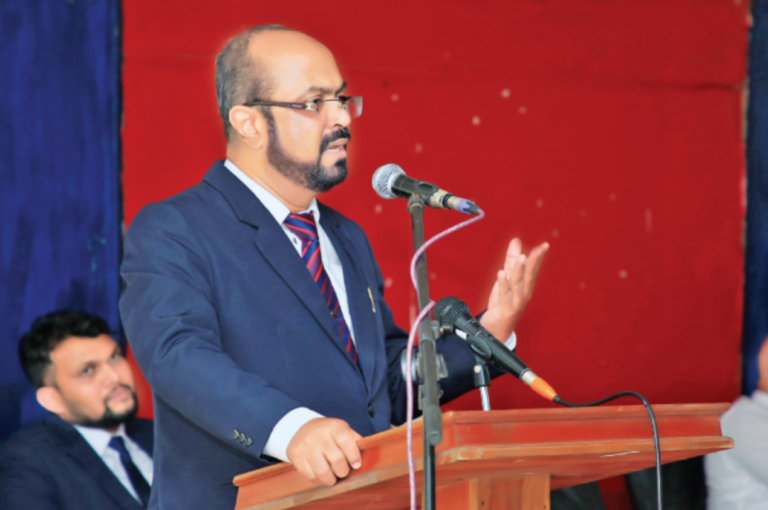
Speaking at the Sri Lanka Economic Summit, organized by the Ceylon Chamber of Commerce, Deputy Finance and Planning Minister Dr. Harshana Suriyapperuma emphasized the need to move beyond traditional business structures and harness both public and private sector strengths to drive economic growth, optimize efficiency, and unlock untapped potential.

 Drawing insights from countries that have successfully balanced State participation with private sector involvement, Dr. Suriyapperuma highlighted that the debate should not solely focus on whether the Government should run businesses but rather on the effectiveness and governance of SOEs.

He noted that State intervention remains vital in sectors where private entities are hesitant to invest, particularly in infrastructure and essential public services. However, once these industries mature and attract private investment, continued Government competition may no longer be necessary.

“Governments should operate businesses that are efficiently managed and serve areas where private involvement is limited or unfeasible. But as these industries evolve and private investors enter, we must reassess our role,” he stated.

The Minister underscored the potential of PPPs in enhancing the efficiency and scalability of SOEs. By allowing private entities to infuse capital and expertise while retaining Government oversight, these partnerships could improve competitiveness and ensure long-term sustainability.

He also pointed out that some SOEs, despite being profitable, have untapped opportunities that could be leveraged through private sector participation.

Certain SOEs can remain under Government control, but others would benefit significantly from private investments. Our goal is to explore how these entities can better contribute to economic progress, expand into new markets, and attract capital,” he added.

Recognizing the challenges of implementing reforms, particularly due to skepticism from employees and other stakeholders, Dr. Suriyapperuma reassured that the Government is committed to national interests and has a clear mandate for transformation.

 He stressed that reforms will prioritize national objectives over sectoral or individual interests, making future negotiations with stakeholders more constructive.

“The landscape has changed. People expect us to find the best solutions for the country rather than catering to narrow interests. This confidence gives us the leverage needed to implement necessary changes,” he stated.

The Government’s strategy will remain flexible, acknowledging that while some SOEs should remain under State control, others may require restructuring or privatization to enhance productivity and profitability.

Additionally, the administration is keen on creating new enterprises to harness untapped resources, with an emphasis on sustainable development and innovation.

Dr. Suriyapperuma rejected the notion that SOEs are a burden, instead positioning them as key drivers of national growth. “Whether they remain State-owned, engage in PPPs, or transition to private ownership, our goal is to maximize their contribution to the economy,” he emphasized.

Additionally, he introduced a potential fourth model: Public-Private-People Partnerships (PPPPs), which would involve community stakeholders in the decision-making process. This model aims to ensure that economic benefits are widely distributed, fostering inclusive development and a more participatory approach to governance.

With a renewed focus on strategic partnerships, efficiency, and innovation, the Government is poised to reshape the role of SOEs, positioning them as vital engines of economic progress in Sri Lanka.
Browns Agriculture Unveils Innovative Farming Solutions with Dynatrack Tractor and Sumo Rice Mill

0

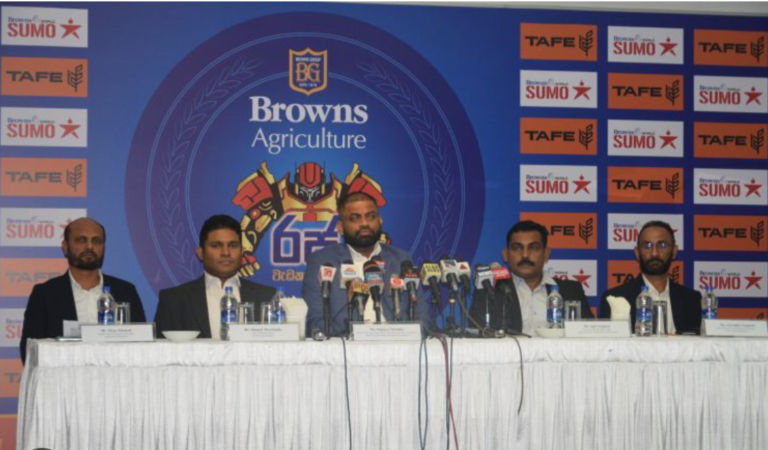
Browns Agriculture, a leader in farm mechanisation and modernisation in Sri Lanka for over 150 years, has introduced two revolutionary products to its portfolio: the new TAFE tractor model, Dynatrack, and the Browns Sumo Rice Mill.

These innovations reflect Browns Agriculture’s dedication to providing comprehensive solutions that integrate fertilisers with cutting-edge technology, enhancing productivity, improving quality, and addressing the evolving demands of both pre- and post-harvest agricultural needs.

Sanjaya Nissanka, Cluster COO – Agriculture and Heavy Equipment at Browns, highlighted the company’s longstanding legacy, stating, “For 150 years, Browns has turned challenges into opportunities, earning the trust of generations.

We introduced Sri Lanka’s first-ever four-wheel tractor, the Massey Ferguson, revolutionising farming practices and fostering the country’s green revolution. Today, we continue to equip farmers with advanced tools that enhance productivity, sustainability, and economic growth.”

The newly launched TAFE Dynatrack tractor marks a significant advancement in agricultural technology. Featuring a robust Simpson engine, it delivers superior fuel efficiency and profitability. Designed for versatility across various terrains, it includes a super-shuttle lever for seamless gear shifts and a 12×12 gear system.

With a lifting capacity of up to two tonnes, the Dynatrack tractor is equipped with Dyna Lift hydraulics and a high-capacity pump for efficient attachment handling. Its advanced features, including a dual-diaphragm clutch system, ultra-planetary drive technology, and portal-type front axle, ensure durability. The Quadra PTO system further enhances compatibility with diverse farming implements.

Alongside the Dynatrack tractor, Browns Agriculture has also launched the Sumo Rice Mill, setting a new standard in rice milling technology. Developed by Browns IT, this IoT-enabled, fully automated mill allows real-time monitoring, maintenance scheduling, and remote alerts via an advanced equipment management system accessible from laptops or mobile devices.

Designed to produce high-quality rice exceeding conventional standards, the Sumo Rice Mill is user-friendly, requiring only one operator. It tracks operational records, provides predictive maintenance alerts, and optimises performance to extend machine longevity.

Capable of processing up to 1,000 kg of parboiled or raw paddy per hour, the mill is 40% more energy-efficient than traditional models. Its 18.5 kW polisher motor ensures single-cycle polishing, reducing broken rice while maximising whole grain yield.

Additionally, a unique husk grinding mechanism eliminates the need for husk storage by converting it into powder, enhancing storage and operational efficiency.Nissanka reaffirmed Browns Agriculture’s mission, stating, “We aim to provide holistic solutions to the challenges farmers face. By offering innovative tools, resources, and continuous support, we empower the agricultural community, drive economic growth, and contribute to food security. Our commitment lies in nurturing agri-entrepreneurs and cultivating a sustainable future for Sri Lanka’s agriculture.”

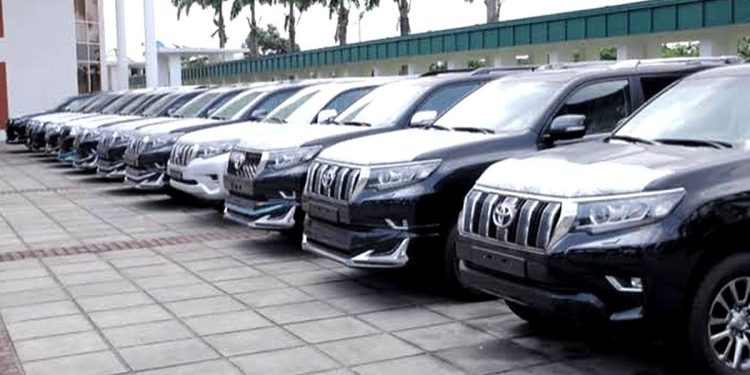
President Issues Two Gazette Notifications on Vehicle Import Taxes

0

President Anura Kumara Dissanayake has issued two new gazette notifications related to vehicle imports, focusing on taxation policies.

One gazette outlines the tax structure for electric vehicles, aiming to regulate EV imports and promote sustainable transport. The second gazette specifies the luxury tax on high-end vehicles, ensuring a progressive taxation systemfor premium automobile imports.

These measures reflect the government’s economic strategy to balance environmental sustainability, revenue generation, and import regulations in Sri Lanka’s vehicle market.

Electric Vehicle Tax

Luxury Vehicle Tax

U.S. Ambassador Encourages Sri Lankan Apparel Investments in the U.S.

0

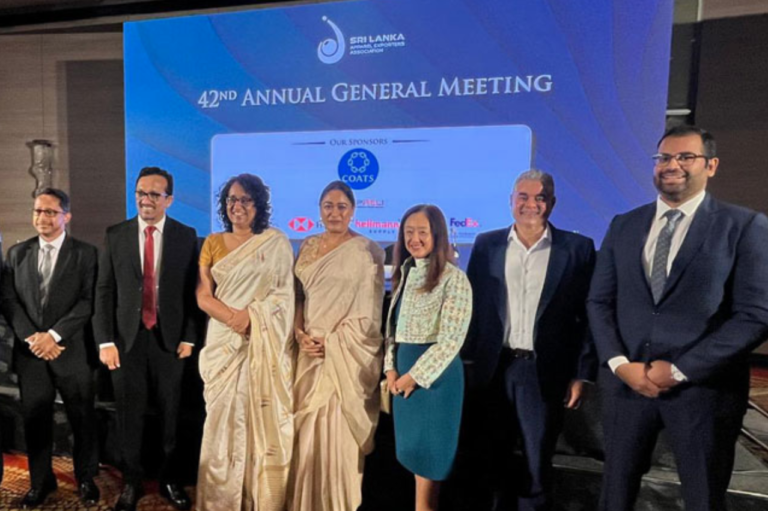
U.S. Ambassador to Sri Lanka, Julie Chung, stated that the U.S. apparel manufacturing sector is projected to generate USD 365 billion in revenue in 2025, highlighting potential benefits for Sri Lankan businesses looking to expand operations in the U.S.

Speaking at the Sri Lanka Apparel Exporters’ Association’s annual general meeting, she emphasized that Sri Lankan companies could take advantage of reduced shipping times, lower tariffs, and quicker market response by setting up operations in the United States.

Ambassador Chung also pointed out that with the new U.S. administration, the country remains open for business, expecting a rise in investments and trade opportunities. She encouraged Sri Lankan companies to view U.S. expansion as a strategic move to build a resilient and competitive future in the global market.

She further acknowledged the Sri Lankan government’s commitment to good governance and stressed that foreign investors prioritize transparent procurement processes, fair competition, and the enforcement of contracts.

Night Mail Train Service Resumes Between Colombo and Kankesanthurai

0

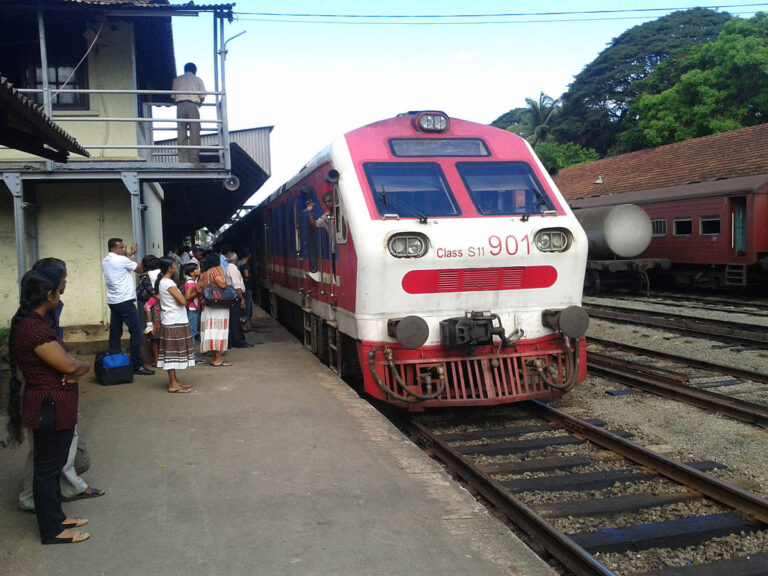
The night mail train service between Colombo Fort and Kankesanthurai has resumed operations after a nearly two-year suspension due to the modernization of the Northern Railway Line.

Railways Department General Manager Dhammika Jayasundara confirmed that the service restarted yesterday, marking a significant step in restoring long-distance rail connectivity.

Train Schedule:

  • Departure: 8:00 PM from Colombo Fort
  • Arrival: 4:35 AM at Kankesanthurai

The resumption of this express mail train is expected to provide convenient and efficient transport for passengers traveling between the North and the capital.

Government Assures No Privatization of State-Owned Energy Institutions

0

Power and Energy Minister Kumara Jayakody reaffirmed that the Government will not sell state-owned institutions, emphasizing its commitment to retaining full state ownership in the energy and financial sectors.

During an inspection tour at the Lakvijaya Power Plant in Norochcholai yesterday (31), the Minister assured that restructuring efforts would involve only the separation of electricity generation, transmission, and distribution—without any transfer of shares to private ownership.

Key Highlights:

  • State Ownership Guaranteed: The government remains firm in its stance against privatization.
  • Restructuring for Efficiency: Electricity generation, transmission, and distribution will be separated, but all entities will remain 100% state-owned.
  • Energy Security Commitment: Lakvijaya Power Plant contributes 40% of Sri Lanka’s daily electricity demand, making its efficient management critical.
  • Workforce Protection: Employees’ job security remains assured under government policies.

The Minister praised the Lakvijaya Power Plant’s management and stressed the need to maintain high operational standards.

The event was attended by:

  • Nalaka Wijekoon – CEB Additional General Manager (Generation)
  • G.W. Bamunusinghe – Power Plant Manager
  • Other senior officials and plant employees.

The government remains focused on improving energy infrastructure while ensuring that state control over key sectors is maintained.

ADB Commends Sri Lanka’s Rapid Growth in Tourism

0

Asian Development Bank (ADB) officials have acknowledged the remarkable progress of Sri Lanka’s tourism industry, attributing its success to the policies implemented by the new government.

During a meeting with Secretary to the President, Dr. Nandika Sanath Kumanayake, at the Presidential Secretariat on Thursday, ADB representatives highlighted the rapid expansion of the country’s tourism sector and discussed future development initiatives.

The meeting was attended by:

  • ADB Representatives
    • Country Operations Head, Cholpon Mambetova
    • Water and Urban Development Sector Office Director, Srinivas Sampath
    • Urban Development Specialist, Elma Morsheda
    • Senior Project Officer, Panchali Ellepola
  • Sri Lanka Officials
    • SLTDA Deputy Director General, Upali Ratnayake
    • SLTPB Managing Director, P.A.D. Damayanthi

The discussion reinforced the commitment of both parties to further strengthen Sri Lanka’s tourism industry through strategic development and international collaboration.

President Dissanayake Pledges Swift Resolution of Land Disputes in Northern Province

0

President Anura Kumara Dissanayake reaffirmed the government’s commitment to ensuring that land rightfully belongs to the people, emphasizing that land disputes in the Northern Province are under review, with steps being taken to expedite their resolution.

Speaking at the Jaffna District Coordination Committee (DCC) meeting at the Jaffna District Secretariat yesterday (31), the President stated that while the government has the authority to acquire land for development or security purposes, affected individuals must be provided with alternative land.

Key Announcements & Development Initiatives

  • Repurposing Jaffna President’s House – The government will transform the Jaffna President’s House into a project of significance for the local community. Officials have been asked to submit proposals for its new use.
  • Addressing War Displacement – The President directed officials to take swift action regarding families still displaced due to the war.
  • State Employment Opportunities – A committee led by the Secretary to the Prime Minister has identified 30,000 vacancies in state institutions, which will be filled through a fair recruitment process. Tamil-speaking youth will be given increased opportunities in the Police Department.
  • Transport Sector Overhaul – A joint bus operation between the Sri Lanka Transport Board (SLTB) and private operators will be launched, along with an increase in train services to improve mobility in the region.
  • Industrial Development & Investment – Three new industrial zones will be established in Paranthan, Mankulam, and Kankesanthurai to boost employment and economic growth. Sri Lankans who emigrated due to the war are invited to invest in these projects.
  • Tourism Expansion – With Sri Lanka expecting 2.5 million tourists next year, the government will identify and promote new attractions in the Northern Province to enhance regional tourism.
  • Water Supply & Infrastructure – The Northern Province has the lowest piped drinking water consumption in the country. The government will accelerate existing water projects and allocate new funds in the upcoming budget to expand access to clean drinking water.
  • Diplomatic Efforts on Fisheries Issues – The government will engage in diplomatic discussions to resolve the ongoing fisheries-related concerns in the region.

President Dissanayake assured that all new public sector recruitments in the Northern Province will be carried out without political interference. He emphasized the government’s unwavering commitment to improving education, healthcare, transportation, agriculture, and public services in the region, stating that political and state mechanisms must work together to uplift living standards.

The meeting was attended by key figures, including Minister of Fisheries Ramalijngam Chandrasekar, Minister of Transport Bimal Rathnayake, MPs from NPP, ITAK, and AITC, Northern Province Governor Nagalingam Vedanayagam, Chief Secretary Lilangovan, Jaffna District Secretary M. Pradeepan, Acting IGP Priyantha Weerasooriya, senior military officials, and other government representatives.

WEATHER FORECAST FOR 01 FEBRUARY 2025

0

Prevailing showery condition over the island is expected to be reduced from tomorrow (02).

A few showers will occur in Uva province and in Batticaloa, Ampara, Matale, Nuwara-Eliya and Hambantota districts.

Showers or thundershowers will occur at several places in Western and Sabaragamuwa provinces and in Galle, Matara and Kandy districts in the evening or night.

Misty conditions can be expected at some places in Western, Sabaragamuwa, Central, North-western and Southern provinces during the morning.

The general public is kindly requested to take adequate precautions to minimize damages caused by temporary localized strong winds and lightning during thundershowers.

President pledges to prioritise Northern Province development, vows to return land to rightful owners

0

By: Isuru Parakrama

January 31, Colombo (LNW): President Anura Kumara Dissanayake has reaffirmed the government’s commitment to returning land to its rightful owners in the Northern Province, stressing that the land belonging to the people should remain with them.

During a meeting of the Jaffna District Coordination Committee (DCC) held today, the President highlighted that the issue of land disputes in the region is under active review, with steps being taken to expedite the process of restitution.

The President made it clear that while the government holds the authority to acquire land for development or security purposes, it is essential that those affected are provided with alternative land.

This assurance was made in line with the government’s broader objectives to ensure fairness and justice for the people of the Northern Province.

The President’s Media Division (PMD) reported that the government is working to resolve these matters swiftly.

At the meeting, President Dissanayake also revealed plans to repurpose the President’s House in Jaffna for a more meaningful project that would benefit the people of the region.

He called on officials to submit detailed proposals for this initiative to ensure its relevance and effectiveness.

Addressing the continuing challenges faced by displaced families from the war, the President directed authorities to investigate reports that many such families are still residing in the Northern Province.

Dissanayake urged swift action to address their needs and provide necessary support.

The meeting also touched on employment opportunities in the public sector. President Dissanayake noted that a committee led by the Secretary to the Prime Minister had identified approximately 30,000 vacancies in various state institutions.

He assured that these vacancies would be filled in accordance with established procedures, creating opportunities for university graduates and young professionals in the region.

Additionally, the President called for increased recruitment of Tamil-speaking youth into the Police Department, emphasising the importance of their involvement in national security.

In a further push to improve infrastructure, the government has laid out plans to enhance the transportation network in the Northern Province.

A new initiative will see the Sri Lanka Transport Board (SLTB) collaborate with private bus operators to launch joint bus services, while train services in the region will also be expanded to meet growing demand.

To bolster the local economy, President Dissanayake announced the creation of three new industrial zones in Paranthan, Mankulam, and Kankesanthurai, which are expected to improve the livelihoods of the people in these areas.

He also invited Sri Lankans who had left the country due to the war to consider investing in these projects, thus contributing to the region’s revitalisation.

Tourism is another sector set to benefit from government efforts, with the President revealing plans to promote the Northern Province as a tourist destination.

With an estimated 2.5 million visitors expected to arrive in Sri Lanka in the coming year, the government aims to identify and develop new attractions in the region to boost tourism and stimulate the local economy.

Furthermore, the President addressed the issue of water supply in the Northern Province, which currently has the lowest consumption of piped drinking water in the country.

He announced that funds had been allocated in the upcoming budget to accelerate ongoing water supply projects, as well as to implement new initiatives to improve access to clean drinking water for residents.

President Dissanayake also underscored the government’s focus on strengthening key sectors in the Northern Province, including education, healthcare, transportation, agriculture, and public service.

He emphasised the need for close collaboration between political authorities and state mechanisms to uplift the living standards of the people in the region.

The meeting was attended by a wide range of key figures, including Minister of Fisheries, Aquatic and Ocean Resources Ramalijngam Chandrasekar, Minister of Transport Bimal Rathnayake, and several Members of Parliament, as well as senior officials from the military and police.