February 24, Colombo (LNW): The parliamentary debate on the second reading of the Budget Appropriation Bill 2025 will continue for the sixth day today (24).
This critical debate is being held as part of the ongoing discussions that have been taking place over several days in Parliament.
The session is set to begin at 9.30 AM today, with lawmakers continuing their deliberations on the proposed budget for the year.
The second reading, also referred to as the budget speech, was delivered last week by President Anura Kumara Dissanayake in his role as the Minister of Finance.
During his speech, the President outlined the government’s fiscal priorities and economic strategies for the coming year, marking the presentation of Sri Lanka’s 79th national budget.
The second reading debate is scheduled to last for a full seven days, beginning on February 18 and concluding on February 25.
This period of discussion allows Members of Parliament to scrutinise the budget and present their views on the proposed fiscal measures.
Following this phase, attention will turn to the Committee Stage Debate, which will commence on February 27 and continue until March 21.
This stage will involve detailed examinations of the budgetary provisions, with discussions taking place over 19 days, including four Saturdays.
This stage is critical for MPs to propose amendments and seek clarifications on specific aspects of the budget.
The final vote on the third reading of the Appropriation Bill is scheduled for March 21 at 6.00 PM.
This will mark the conclusion of the parliamentary process for the 79th budget, with the government hoping for its approval to move forward with its fiscal plans for the year.
February 24, Colombo (LNW): Sri Lanka’s national consumer price inflation slowed to 0.9 per cent in January 2025, down from 1.1 per cent in December 2024, reflecting moderate increases in both food and non-food categories.
However, on an annual basis, prices fell by 4.0 per cent for the 12 months leading up to January, deepening the deflationary trend that has persisted for the fifth consecutive month.
The ongoing deflation appears to be largely driven by a reduction in consumer spending following the festive season, which has eased pressure on the prices of essential food items.
Additionally, the significant reduction in electricity tariffs from mid-January helped to prevent further price hikes in other sectors.
Despite the monthly price increases, the overall annual deflationary trend continued to strengthen, with prices now 4.0 per cent lower compared to the same period last year, a sharp contrast to the 2.0 per cent decline recorded in December.
This marks the fifth straight month of falling prices, which began in September 2024 in response to consistent cuts in fuel prices and electricity tariffs.
The Central Bank has indicated that it expects this period of deflation to persist through the first quarter of 2025, with inflation expected to return to positive territory by the second quarter of the year.
In its latest biannual Monetary Policy Report, the Central Bank projected that inflation would rise to exceed its medium-term target of 5.0 per cent between the final quarter of 2025 and the first quarter of 2026.
The report suggests that inflation could peak at around 7.0 per cent in the second quarter of 2026, before stabilising.
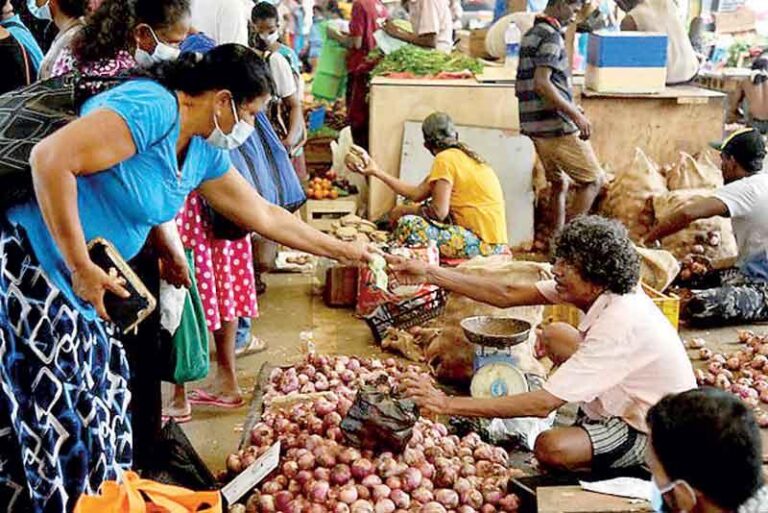
Food prices in January saw a more moderate increase of 1.0 per cent, a sharp slowdown from the 2.6 per cent rise in December. The prices of various food staples, including lime, big onions, chicken, eggs, and sugar, saw noticeable declines.
However, the prices of rice, a persistent issue for consumers, continued to climb, as did the prices of vegetables, fresh fish, and coconut products. Notably, coconut prices saw the largest increase in the food basket, making it increasingly difficult for ordinary consumers to afford.
Annual food prices decreased by 2.5 per cent, accelerating from the 1.0 per cent decline recorded in December. This reflects a broader trend where, despite occasional rises in certain categories, overall food prices remain lower than they were a year ago.
Sri Lanka is still recovering from a staggering 70 per cent increase in price indices in 2022, which was largely sustained through the first half of 2023.
In the non-food category, prices rose by 0.8 per cent in January, reversing the 0.8 per cent decline seen in December. However, on an annual basis, non-food prices fell by 5.2 per cent, a more substantial decline compared to the 2.9 per cent decrease recorded in December.
The reduction in electricity tariffs, which averaged 20 per cent, helped to keep non-food prices under control. Nevertheless, increases in housing rents, education expenses, and transport costs, driven by rising vehicle servicing costs, exerted upward pressure on non-food price inflation.
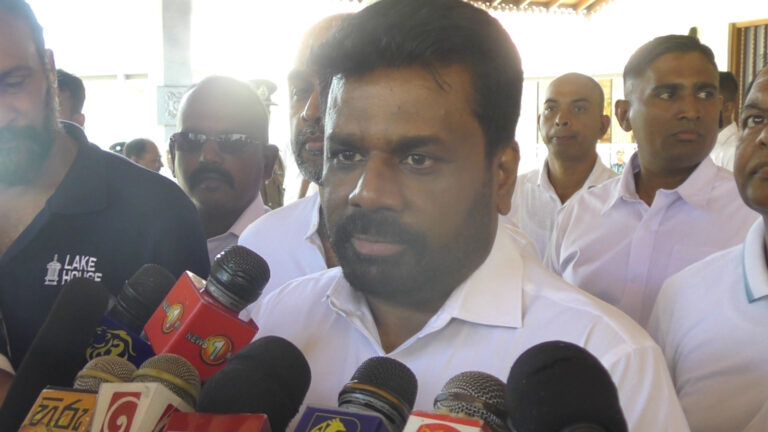
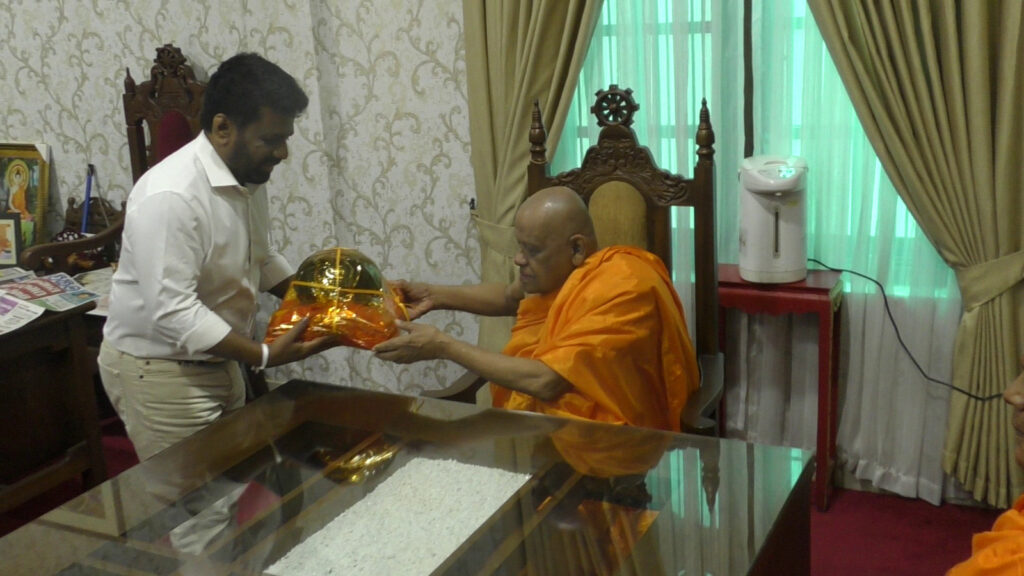
February 24, Colombo (LNW): President Anura Kumara Dissanayake has announced that a special exposition of the Sacred Tooth Relic will be held for the public following the Sinhala and Tamil New Year celebrations.
The event, which has not taken place in the past 16 years, will offer a rare opportunity for people to pay their respects to one of Sri Lanka’s most sacred symbols.
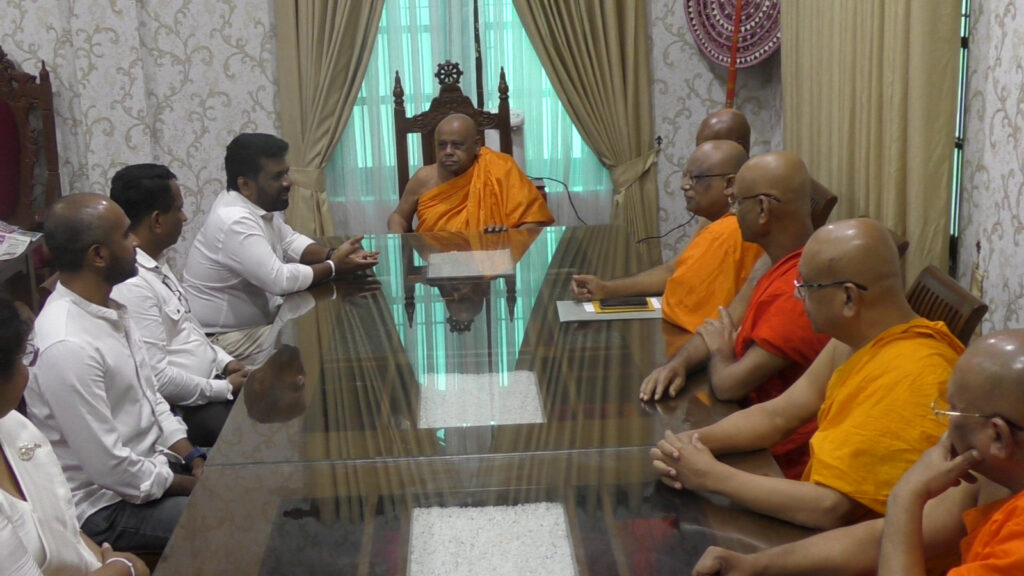
The President shared details of the forthcoming exposition following discussions held with the Mahanayake Theras of the Malwathu and Asgiriya Chapters earlier today.
During these talks, the government formally requested the Mahanayake Theras to facilitate the organisation of the exposition, and they have agreed to do so after the April festivities.
The arrangements for the event have already begun, with the involvement of key stakeholders, including the Governor of the Central Province, the Kandy District Secretary, and other relevant government officials.
Additionally, the Diyawadana Nilame, the chief lay custodian of the Temple of the Sacred Tooth Relic, will also be part of the planning process to ensure the smooth conduct of the event.
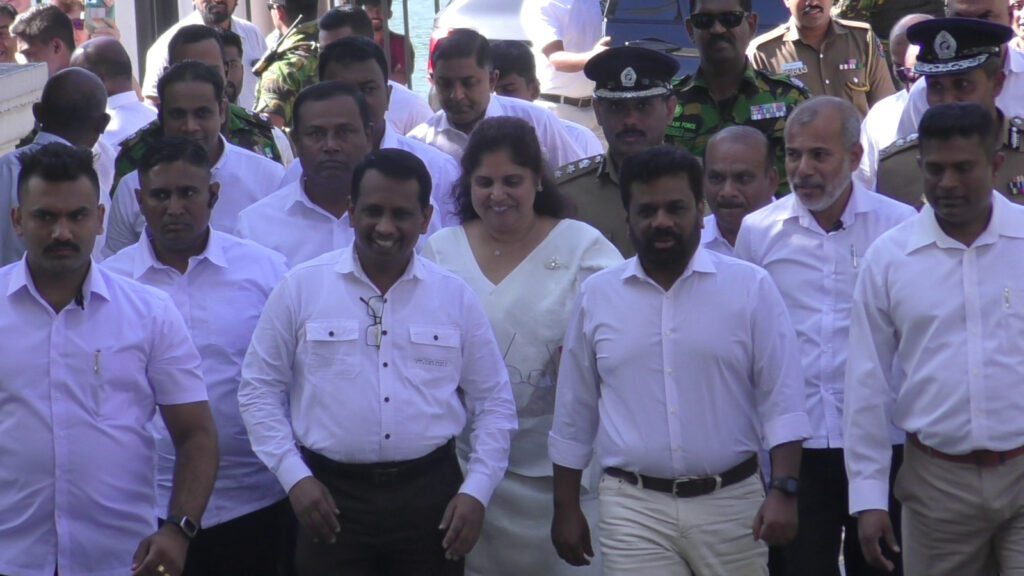
The Sacred Tooth Relic is housed at the historic temple in Kandy, one of Sri Lanka’s most venerated religious sites. President Dissanayake visited the temple earlier today, where he paid his respects to the relic and received blessings.
This symbolic gesture of reverence underscores the significance of the relic in Sri Lankan culture and religious life.
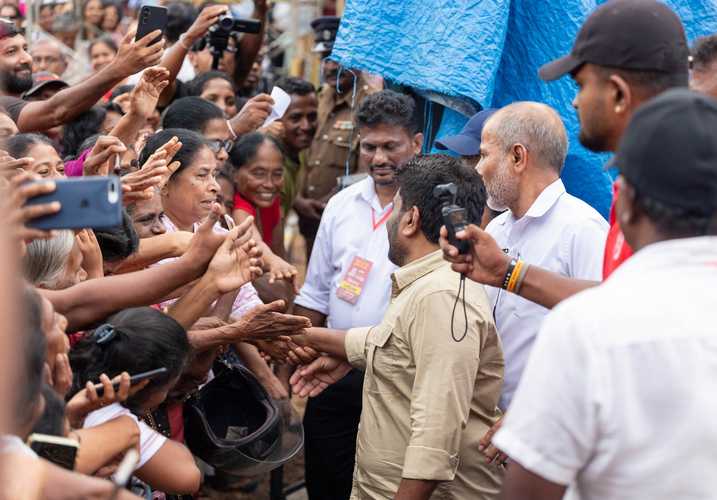
With the last public exposition having taken place over 16 years ago, this event is expected to attract a large number of devotees from across the island, offering them a chance to experience the spiritual and cultural importance of the Sacred Tooth Relic in person.
February 24, Colombo (LNW): The government’s approval rating has seen a remarkable surge following the recent election, climbing from a modest 24 per cent in July 2024 to an impressive 62 per cent by February 2025, according to the latest findings from Verité Research’s ‘Mood of the Nation’ poll.
This dramatic shift marks a significant turnaround in public opinion, with the current government enjoying its highest approval since the economic crisis.
For the first time in years, a majority of Sri Lankans (55 per cent) now believe the nation’s economic conditions are improving.
This contrasts sharply with the overwhelming negativity that prevailed during the depths of the crisis.
However, despite the positive trend, a substantial 47 per cent of respondents still describe the overall economic situation as “poor,” although this represents a notable decline from 71 per cent in July 2024.
When comparing the results from July 2024 to February 2025, the number of citizens who disapprove of the government’s performance has dropped drastically, from 60 per cent to just 16 per cent.
In the same period, the proportion of people who felt the economy was worsening fell by a staggering 51 points, from 65 per cent to a much lower 14 per cent.
In terms of government approval, 62 per cent of respondents expressed their support, more than doubling the figure recorded in the previous survey. In stark contrast, only 16 per cent voiced disapproval, a sharp reduction from the 60 per cent who disapproved last year.
The survey’s results indicate a clear shift towards greater optimism about both the government’s effectiveness and the country’s economic prospects.
The public’s outlook on the economy has also seen a marked improvement. In response to the question about whether economic conditions are getting better or worse, 55 per cent of participants now believe the economy is improving, up from just 30 per cent in July 2024.
Meanwhile, only 14 per cent think the economy is deteriorating, down substantially from 65 per cent six months ago.
When asked to evaluate the state of the economy, 35 per cent of respondents rated it as “good” or “excellent,” a 7 per cent increase from July 2024. While 47 per cent still consider it to be “poor,” this figure has dropped significantly from 71 per cent, indicating a shift in public perception of the nation’s financial health.
This survey, part of Verité Research’s Syndicated Surveys initiative, was conducted between 31 January and 5 February 2025. It was based on a randomised, nationally representative sample of 1,050 Sri Lankan adults, with a maximum margin of error of ±3.0% at a 95 per cent confidence level. The polling was carried out in partnership with Vanguard Survey (Pvt) Ltd.
February 24, Colombo (LNW): Rainy weather is expected over Northern, North-central, Eastern, Uva, and Central provinces and in Hambantota district, from tonight (24) for the next few days, the Department of Meteorology said in its daily weather forecast today.
Showers will occur in Northern, North-central, Eastern, Uva, and Central provinces and in Hambantota district in the night.
Showers or thundershowers may occur at several places in Western and Sabaragamuwa provinces and in Galle and Matara districts in the evening or night.
Fairly strong winds of (30-40) kmph can be expected at times over Northern, Eastern, North-central and North-western provinces and in Matale and Hambantota districts.
Misty conditions can be expected at some places in Western and Sabaragamuwa provinces and in Galle and Matara districts during the morning.
The general public is kindly requested to take adequate precautions to minimise damages caused by temporary localised strong winds and lightning during thundershowers.
Marine Weather:
Condition of Rain:
Showers may occur at several places in the sea areas extending from Kankasanthurai to Hambantota via Trincomalee and Batticaloa. Showers or thundershowers may occur at a few places in the sea areas extending from Colombo to Matara via Galle during the afternoon or Night.
Winds:
Winds will be north-easterly and speed will be (20-30) kmph. Wind speed can increase up to (50-55) kmph at times in the sea areas off the coast extending from Colombo to Kankasanthurai via Puttalam and Mannar and from Matara to Batticaloa via Hambantota and Pottuvil.
State of Sea:
The sea areas off the coasts extending fromColombo to Kankasanthurai via Puttalam and Mannar and from Matara to Batticaloa via Hambantota and Pottuvil will be fairly rough at times. Other sea areas around the island will be Moderate.
February 23, Colombo (LNW): The World Bank plans to finance three key projects over the next three months totaling US $200 million. These projects will support rural development and education and will establish a facility to attract private investment in renewable energy.
Its support over the medium-term, including enhancing the tourism sector, the development of lagging regions—especially in the North promoting the logistics sector as a driver of growth; improving service delivery, and ensuring the workforce is equipped with the skills required by a rapidly evolving labor market.
“Sri Lanka’s growth prospects depend on the mobilization of additional private sector investment, including foreign direct investment. Ample opportunities exist in the digital economy, tourism, logistics, agricultural value chains, and renewable energy, but realizing this potential will require further improvements in the business climate.
The World Bank’s program in Sri Lanka for the coming years will be summarized in the upcoming mid-term review of the World Bank Group’s Country Partnership Framework (CPF) for Sri Lanka.
The updated CPF, scheduled to be finalized within the next six months, will build on the government’s key priorities and serve as a roadmap for continued collaboration between Sri Lanka and the World Bank Group.
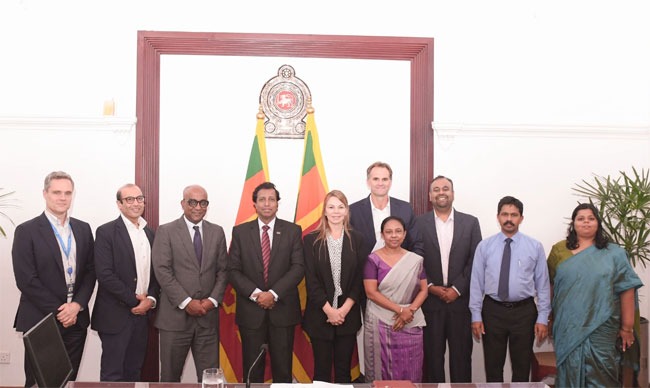
The World Bank’s South Asia Regional Director, Prosperity Practice Group, Mr. Mathew Verghis has met with the Secretary to the Prime Minister, Mr. Pradeep Saputhanthri, at the Prime Minister’s Office.
Discussions focused on Sri Lanka’s current economic outlook, ongoing reforms, and potential areas for enhanced collaboration between the World Bank and the Government of Sri Lanka, according to the PM’s Media Division.
During the discussions, the World Bank delegation expressed appreciation for the progress made in Sri Lanka’s debt restructuring process and commended the government’s recent Budget Speech – 2025 as a positive step towards economic recovery.
They underscored the importance of effective policy implementation and highlighted the Prime Minister’s Office’s crucial role in ensuring seamless interagency coordination.
Mr. Saputhanthri provided an overview of the government’s key priorities, emphasizing that the proposed budget of 2025; focuses on economic stability, good governance, and sustainable development, the statement said.
He outlined the government’s commitment to promoting investment, facilitating trade, and driving digital transformation. He Further highlighted that addressing the socio-economic challenges faced by vulnerable populations and maintaining a firm stance against corruption are among the government’s top priorities.
The Secretary also emphasized the importance of strengthening logistics for Small and Medium-sized Enterprises (SMEs) and the agricultural sector, with particular attention to the development of health, education, and tourism sectors. The discussion also covered the government’s focus on legal reforms to support these initiatives, it added.
February 23, Colombo (LNW): The National Chamber of Commerce of Sri Lanka organized the Post-Budget Analysis Seminar 2025 on February 19, providing an in-depth review of the National Budget 2025. The event brought together industry leaders, policymakers, and financial experts to evaluate the budget’s economic and business implications.
The seminar offered a thorough examination of key fiscal policies, tax proposals, government expenditure, and revenue-generation strategies.
The expert panel featured prominent figures such as Hasitha Raddella, Principal of Tax and Regulatory at KPMG Sri Lanka; Jayani C. Wickrama Arachchi, Director of the Department of Fiscal Policy at the Ministry of Finance, Planning, and Economic Development; S. Iyesha Asanthi, Commissioner of Tax Policy and Legislation at the Inland Revenue Department; and Ruwan Fernando, former Partner at Ernst & Young and National Chamber Council Member. The session was moderated by Nandika Buddhipala, CFO of Commercial Bank PLC and past president of the National Chamber of Commerce of Sri Lanka.
The discussion explored critical aspects of the budget, including its impact on businesses, sector-specific implications, and proposed tax reforms. Hasitha Raddella highlighted that the budget aims to enhance Sri Lanka’s fiscal management while focusing on taxation reforms to drive economic growth. He emphasized the government’s commitment to digitalizing public services to facilitate business operations, although clarifications on VAT implications for digital services remain pending.
Iyesha Asanthi elaborated on the transition from the Simplified Value Added Tax (SVAT) system to a Risk-Based Refund System, which is expected to streamline VAT refund processes. She noted that exporters selling over 50% of their total supplies may participate in a pilot project for the new system. The standard VAT rate remains at 18%, with the threshold set at Rs. 15 million per quarter and Rs. 60 million annually.
Due to the prevailing economic situation, the 2025 budget does not include tax exemptions or concessions. However, individual taxpayers will benefit from an increased tax relief threshold, rising from Rs. 1.2 million to Rs. 1.8 million, alongside relaxed tax brackets that will positively impact employees.
Addressing fiscal constraints, Jayani Wickrama Arachchi emphasized the importance of strategic policy implementation to maintain economic stability while managing high-interest payments resulting from Sri Lanka’s debt obligations. She stressed the necessity of progressing despite these financial challenges.
Nandika Buddhipala acknowledged the government’s efforts in formulating the 2025 budget amid stringent fiscal conditions, including compliance with the Public Finance Management Act and the IMF Debt Sustainability Framework. He underlined the urgency of addressing debt servicing and interest costs while fostering an economy conducive to exports and foreign direct investment (FDI). Buddhipala also welcomed proposals to expand Sri Lanka’s Free Trade Agreements (FTAs), particularly through participation in the Regional Comprehensive Economic Partnership (RCEP), and the extension of Double Taxation Agreements (DTAs) beyond the existing 46 nations.
Adding to the discussion, Ruwan Fernando described the budget as forward-thinking, emphasizing its focus on innovation and export growth to enhance economic resilience. He praised the allocation of resources aimed at strengthening the business sector.
Attendees gained valuable insights into the policy shifts and emerging business opportunities. During the Q&A session, participants sought clarifications on the establishment of a development bank to support SMEs and new entrepreneurs, as well as on measures to provide relief to exporters.
The National Chamber of Commerce reaffirmed its dedication to equipping the business community with timely and expert-driven insights. The Post-Budget Analysis Seminar 2025 was widely appreciated for its engaging discussions and practical takeaways, assisting businesses in planning for the year ahead.
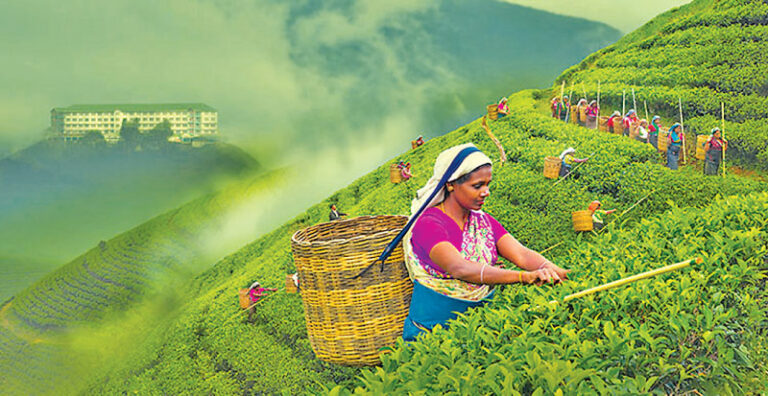
February 23, Colombo (LNW): The Sri Lankan tea industry has entered 2025 with cautious optimism, witnessing steady production growth and emerging opportunities in key markets.
While global demand for high-quality Ceylon Tea remains robust, industry stakeholders are focused on enhancing production efficiency, sustainability, and market diversification.
Despite ongoing challenges such as climate variability, rising input costs, and labor concerns, the sector is expected to maintain stable growth, with an estimated annual output of 280 million kilos.
Industry experts predict that Sri Lanka will benefit from increasing demand in markets like India and China, while traditional buyers such as Iraq, Russia, and Libya continue to play a vital role in sustaining export performance.
A significant shift in the industry has been the growing emphasis on value addition, particularly in tea packets, tea bags, and instant tea.
This trend aligns with global consumer preferences for convenience and premium specialty teas. Investments in mechanization and sustainable agricultural practices are expected to improve efficiency while ensuring the long-term viability of the tea sector.
Additionally, government policies and incentives for sustainable tea cultivation, alongside improved use of fertilizers and technological advancements, are anticipated to bolster production and export performance.
The year started with mixed results, with Sri Lanka recording a modest increase in tea export volumes while experiencing fluctuations in export value. In January 2025, tea exports reached 19.37 million kilos, reflecting a slight growth of 0.61 million kilos compared to 18.76 million kilos in January 2024.
Value-added segments, including tea packets, tea bags, and instant tea, performed well, whereas bulk tea and green tea saw declines.
The free on board (FOB) value for tea in January 2025 averaged Rs. 1,722.78 per kilo, showing a year-on-year (YoY) decrease of Rs. 26.14 from Rs. 1,748.92 in January 2024.
However, in US dollar terms, tea exports experienced a marginal increase of $0.38, signaling stability in international markets despite currency fluctuations.
While all tea categories reflected slight gains in dollar terms, rupee-based earnings declined across most segments, except for instant tea.
Iraq emerged as the top importer of Ceylon Tea, with imports reaching 3.02 million kilos, marking a 21% YoY increase from 2.50 million kilos in January 2024.
Russia remained the second-largest importer, although its imports declined by 11% YoY to 1.77 million kilos from 1.98 million kilos in 2024. Libya recorded an exceptional 406% YoY growth, securing the third position with 1.68 million kilos.
Other key importers in January 2025 included the UAE (1.27 million kilos, down 36% YoY), Türkiye (1.08 million kilos, down 37% YoY), Chile (0.78 million kilos, up 24% YoY), Saudi Arabia (0.89 million kilos), and China (0.80 million kilos, up 5% YoY).
In 2024, Sri Lanka exported a total of 245.7 million kilos of tea, generating $1.4 billion in revenue, slightly surpassing the 2023 figure of 241.9 million kilos.
A significant achievement was the record-high export value of Rs. 437 billion, approximately $1.435 billion. With projections of 280 million kilos in 2025, the industry remains cautiously optimistic about future growth, focusing on production efficiency, quality enhancement, and market expansion to sustain its global competitiveness.
February 23, Colombo (LNW): The Asian Development Bank (ADB) and the World Bank (WB) yesterday signed a new groundbreaking Full Mutual Reliance Framework (FMRF) to deepen their collaboration on co-financed public sector projects. This first of a kind arrangement between MDBs aims to streamline project processing and implementation and deliver faster and more efficient results to borrowing clients.
Under FMRF, borrowers in WB-ADB co-financings can rely on one set of rules – using the policies and procedures of either WB or ADB – on all aspects of project design, preparation, appraisal, supervision, completion and evaluation. FMRF is expected to generate efficiencies, time and cost-savings, better outcomes and a closer alignment of policies – advancing the aims of a more cohesive “Multilateral Development Bank System”.
The framework also responds to calls by the international community, including the G20, for multilateral development banks (MDBs) to work more cohesively to maximise impact and address escalating development challenges more efficiently and with better results.
“The Full Mutual Reliance Framework is a significant step in our collaboration with the World Bank and will deliver lasting benefits to communities and economies across Asia and the Pacific,” said ADB President Masatsugu Asakawa. “By leveraging our respective strengths, we can enhance efficiency, scale impact, and provide a strong platform for sustainable and inclusive growth.”
“This partnership between the World Bank Group and the Asian Development Bank is a testament to the deep trust and abiding confidence between our institutions,” said World Bank Group President Ajay Banga.
“It reflects a broader shift in development finance—where collaboration, not competition, delivers greater impact. By combining our strengths, we are making it faster, easier, and more cost-effective for countries to access the support they need.
More than just an agreement, this is a model for how development banks can work together to drive better outcomes for the people we serve.”
The framework will initially apply to selected public sector projects during a four-year initial phase, starting in 2025, to refine operational approaches and assess outcomes.
Building on earlier co-financing efforts between the two institutions, such as the Procurement Framework Agreement of 2018, the FMRF incorporates lessons learned from engagements with civil society organisations, borrower countries and other stakeholders.
The FMRF is expected to serve as a model for deeper collaboration among MDBs and help address pressing development needs while fostering knowledge sharing and innovation.
February 23, Colombo (LNW): Three individuals were brought before the Colombo Magistrate’s Court today following their arrest by the Colombo Crimes Division (CCD) in relation to the high-profile murder of notorious underworld figure Sanjeewa Kumara Samararatne, more commonly known as ‘Ganemulla Sanjeewa.’
The arrests were made on February 22 as part of ongoing investigations into the killing.
The three suspects, who were apprehended for their involvement in the crime, have been granted a 24-hour detention order by the court to allow further interrogation.
Two of the arrested suspects are believed to have provided transport for the gunman responsible for carrying out the murder, while the third individual is suspected of supplying the weapon used in the fatal attack.
The police have confirmed that all three suspects will be interrogated under the conditions of the detention orders, with the authorities working diligently to uncover further details regarding the execution of the crime and the possible network behind it.
Colombo Additional Magistrate Harshana Kekunawela, after reviewing the information presented by the police, authorised the ongoing investigations and instructed the authorities to keep the court informed of their progress in the case.
The case has raised significant public interest due to the victim’s notoriety in the underworld and the ongoing tensions between criminal factions within the region.