A shooting incident inside the Aluthkade Courts Complex this morning (19) resulted in the death of notorious drug trafficker and organized criminal “Ganemulla Sanjeewa,” police confirmed.
The assailant, who disguised himself as an attorney, infiltrated the court premises before carrying out the fatal attack. Ganemulla Sanjeewa, who was in remand custody at Boosa Prison, had been escorted to the court for legal proceedings at the time of the shooting.
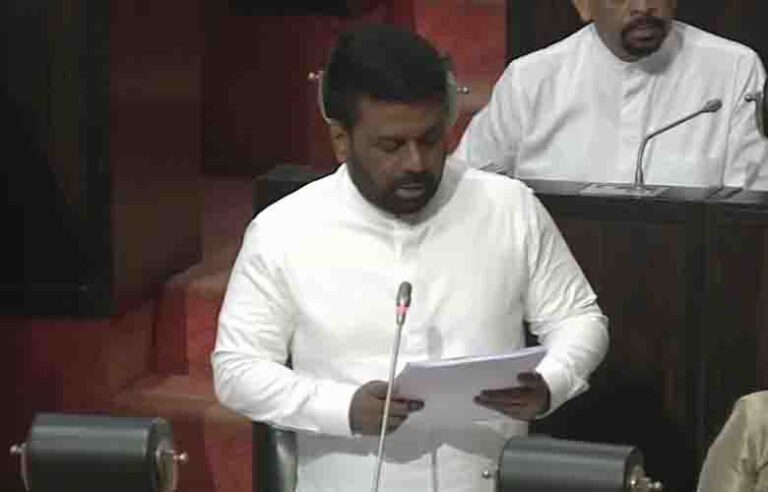
The incident was raised in Parliament by Chief Government Whip, Minister Nalinda Jayatissa, who acknowledged the growing concerns over underworld activities.
“The government is actively working to dismantle the underworld, drug trafficking networks, and illegal financial operations. Some of the individuals involved in these activities are even based outside Sri Lanka, but we are taking full responsibility for addressing these threats,” Minister Jayatissa stated.
Opposition MP Dayasiri Jayasekara also highlighted another tragic shooting in Middeniya, which claimed two lives, including that of a child, underscoring the escalating security crisis in the country.
Following the Aluthkade court shooting, police have launched a manhunt for the suspect, who managed to escape after the attack. Authorities have recovered the revolver-type firearm used in the shooting from the court premises.
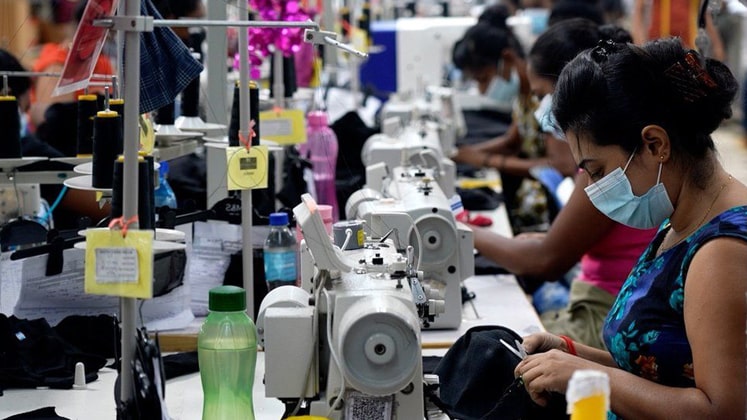
Sri Lanka’s Purchasing Managers’ Index (PMI) for January 2025 recorded growth in both the manufacturing and services sectors, reflecting positive economic momentum, according to the latest report by the Central Bank of Sri Lanka (CBSL).
The Manufacturing PMI rose to 59, while the Services PMI reached 58.5, signaling expansion in both industries.
Manufacturing Sector Sees Positive Growth
The rise in the Manufacturing PMI was attributed to improvements across key sub-indices, indicating increased production activity and business confidence. The CBSL stated that the outlook for the next three months remains positive, with expectations of further improvements in business conditions.
Services Sector Expands Across Key Industries
The Services PMI expansion was driven by increased business activities across multiple sectors. The CBSL highlighted that new business growth in January 2025 was primarily observed in financial services, transportation, accommodation, and food & beverage-related activities.
With both manufacturing and services sectors showing upward momentum, economic activity in Sri Lanka is expected to maintain a steady recovery path, fostering business confidence and investment in the coming months.
The Ceylon Electricity Board (CEB) has attributed the recent nationwide power outage to the high penetration of non-synchronous solar photovoltaic (PV) energy, which reduced grid inertia and heightened vulnerability to faults. The imbalance between electricity generation and demand led to cascading disconnections, ultimately causing a total blackout.
CEB spokesperson Eng. M.H. Dhammike Wimalaratne explained in a media release that the power failure, which occurred on February 9 at 11:13 AM, originated from a disturbance at the 33kV Panadura Grid Substation. This triggered a sudden voltage drop across the network, destabilizing the system.
At the time of the incident, over 50% of the national electricity demand was being met by 800 MW of solar PV generation, supplemented by 470 MW from the Lakvijaya Power Plant in Norochcholai and 130 MW from hydropower plants. The dominance of solar PV, which lacks synchronous generation, resulted in low grid inertia, making it susceptible to voltage and frequency fluctuations. The initial disturbance caused multiple solar PV systems to disconnect, exacerbating the instability and ultimately leading to a complete outage.
The tripping of the Norochcholai Power Plant was an automatic protective response to system instability, preventing severe damage to the plant and avoiding prolonged power failures. Additionally, the “Sunny Sunday” effect—where weekend demand is significantly lower while solar PV generation remains high—further contributed to grid instability. With most industrial and commercial operations offline, the grid operated at reduced demand and inertia, making it highly vulnerable to sudden fluctuations.
Immediate Corrective Actions
To prevent future occurrences, the CEB has implemented urgent measures, including:
Maintaining synchronous generators at minimum output and operating selected gas turbines in synchronous condenser mode to enhance grid stability.
Curtailing ground-mounted solar PV generation during low-demand periods when necessary to mitigate instability risks.
Medium-Term Strategies
The CEB is also accelerating several initiatives to strengthen grid reliability:
Adjusting rooftop solar PV inverter settings to prevent unnecessary disconnections during minor faults.
Introducing special industrial tariffs for weekends and holidays to encourage industries to operate during low-demand periods, thereby supporting grid stability.
Promoting solar PV installations with Battery Energy Storage Systems (BESS) and introducing a dedicated tariff for customers using BESS-equipped solar PV systems.
Long-Term Grid Stability Solutions
As part of its commitment to modernizing the power grid and integrating more renewable energy sources, the CEB is investing in long-term solutions, including:
Deploying grid-forming inverters with BESS to provide synthetic inertia and frequency stabilization.
Installing emergency backup generators at the Norochcholai Power Plant to enable rapid reconnection in the event of future disruptions.
Accelerating the Maha Oya Pumped Hydro Project (a 600 MW storage facility) to enhance grid flexibility and energy security.
Advancing Smart Grid investments to improve real-time monitoring and control of renewable energy integration.
The CEB acknowledges the inconvenience caused to the public and remains committed to ensuring a resilient and reliable electricity grid. As Sri Lanka transitions toward a renewable energy-driven power system, the CEB is proactively implementing both immediate and long-term solutions to enhance grid stability and energy security.
As Sri Lanka’s start-up ecosystem continues to evolve, the Lankan Angel Network (LAN) remains at the forefront, fostering innovation, investment, and collaboration. Since its inception in 2012, LAN has played a pivotal role in empowering local entrepreneurs, facilitating the growth of over 50 start-ups with investments exceeding Rs. 2 billion. By providing not just financial backing but also mentorship and strategic guidance, LAN has become a cornerstone of Sri Lanka’s entrepreneurial landscape.
Building on this strong foundation, LAN is now looking ahead to 2025 with renewed energy and ambition. With a growing network of over 100 angel investors, LAN is committed to strengthening the start-up ecosystem by bridging gaps in funding, expertise, and market access. This mission was underscored at LAN’s highly anticipated 2025 kick-off event, a gathering designed to inspire, connect, and lay the groundwork for an impactful year ahead.
The event, held at Monsoon, was a vibrant assembly of current and new LAN investors, portfolio companies, fundraising start-ups, key ecosystem partners, and LAN’s distinguished patron members. Among the notable attendees were Western Province Governor Hanif Yusoof and Principal Presidential Adviser on Digital Economy Dr. Hans Wijayasuriya, both of whom bring significant expertise to Sri Lanka’s business and digital transformation landscape.
The evening provided a unique platform for seasoned investors and emerging entrepreneurs to connect, exchange ideas, and explore opportunities for collaboration. A highlight of the event was a keynote address by Governor Yusoof, who shared his perspective on investment philosophy. He emphasized that the essence of successful investing lies in backing passionate founders, stating, “We invest in people and not companies.” His insights deeply resonated with attendees, reinforcing LAN’s commitment to supporting visionary entrepreneurs who are shaping the future.
A key announcement of the evening was the appointment of PromoLanka Holdings CEO Adil Mansoor as the new Chairman of the Board for 2025. He will lead LAN alongside an experienced Board of Directors, including Prajeeth Balasubramaniam, Dumindra Ratnayaka, Jeevan Gnanam, Anum Iqbal, and two newly inducted members—Hemas Consumer Brands Managing Director Sabrina Esufally and Capital Alliance Partners Ltd. CEO Nishok Goonasekera.
With the successful deployment of Fund I, which invested Rs. 100 million into six start-ups with participation from 100 investors, LAN announced its ambitious plans for Fund II. This next phase aims to create a larger investment pool, further strengthening Sri Lanka’s start-up ecosystem and ensuring that high-potential businesses receive the resources needed to thrive.
LAN CEO Dinali de Silva concluded the event by emphasizing the critical role of angel investing as the foundation of the start-up ecosystem. She reaffirmed LAN’s commitment to supporting promising start-ups as they scale and compete in an increasingly dynamic market.
LAN extended its gratitude to HNB for their support and to Monsoon Restaurant for hosting an exceptional evening. As LAN embarks on another promising year, the success of this event sets the stage for greater collaboration, larger investments, and a renewed commitment to fostering Sri Lanka’s next generation of entrepreneurs.
President and Finance Minister Anura Kumara Dissanayake presented the first Budget under the National People’s Power (NPP) Government for the 2025 financial year, emphasizing economic democratization despite tight fiscal conditions. Although previous commitments focused on reducing government spending, the Budget outlines an expenditure increase exceeding Rs. 7 trillion.
Dissanayake highlighted key priorities, including economic empowerment, equitable wealth distribution, and the protection of economic rights, ensuring transparency and accountability in public funds usage. The Government aims for a 5% economic growth rate in 2025 and plans to maintain above 5% real GDP growth in the medium term. Export earnings are projected to reach $19 billion, with a primary budget surplus of 2.3% of GDP.
Acknowledging the role of the IMF’s Extended Fund Facility Programme, the President stressed Sri Lanka’s goal of economic sovereignty. Ongoing debt restructuring has eased debt servicing costs, allowing resources to be redirected towards external reserve strengthening and attracting non-debt generating inflows, such as exports and foreign investments. The Government aims to stabilize finances and resume full debt servicing by 2028.
Despite declining inflation, high living costs and stagnant wages have reduced living standards. Dissanayake emphasized the need for salary increases, given the significant decline in real wages. To address this, the Government is extending the Aswesuma cash transfer program while refining beneficiary selection to improve efficiency.
Key Budget Figures:
Total revenue and grants: Rs. 4,990 billion
Tax revenue: Rs. 4,590 billion
Total expenditure: Rs. 7,190 billion
Primary surplus: Rs. 750 billion
Total financing requirement: Rs. 2,200 billion
Gross borrowing requirement: Rs. 4,000 billion
To boost investment and exports, the Government will amend the Economic Transformation Act and implement a National Export Development Plan (2025-2029). Support for small and medium enterprises will help them expand into global markets. Tariff policy revisions will ensure better access to high-quality raw materials, while Sri Lanka aims to strengthen trade agreements, particularly with ASEAN nations. A new Customs Law will be introduced to streamline trade processes and modernize border controls.
Investment in export-driven industries, eco-industrial parks, and sustainable resource management is a priority, with an emphasis on public-private partnerships. The Government will lease underutilized state land for economic activities. Business operations will be simplified through reforms in property registration, tax payments, contract enforcement, and credit access, including a “one-stop-shop” for business approvals.
Public Sector Salary Hikes and Employment Plans
A key feature of the Budget is a Rs. 345 billion allocation for public sector salary increases. The minimum monthly basic salary will rise by Rs. 15,750, from Rs. 24,250 to Rs. 40,000, incorporating existing allowances into base salaries. Employees across judicial services, public corporations, statutory boards, universities, and the military will also receive salary adjustments.
Annual salary increments will increase by 80%, from Rs. 250 to Rs. 450. The total salary revision cost is estimated at Rs. 325 billion, to be implemented between April 2025 and January 2027. Retirement benefits for employees retiring from January 2025 will be recalculated based on the new salary structure, leading to higher pensions. The distress loan limit for public servants will also increase from Rs. 250,000 to Rs. 400,000.
Public Sector Expansion
Despite recommendations to downsize, the Government plans to recruit 30,000 new employees for essential public services, allocating Rs. 10 billion for this initiative in 2025. Unemployed graduates, who have often been hired through ad-hoc programs, will be a primary focus. Recruitment will prioritize skill-based hiring, with an emphasis on training and role suitability.
Sri Lanka’s public sector currently employs 1.8 million people, about 15% of the total workforce. While there are shortages in key areas such as healthcare—with only 38,000 nurses compared to over 100,000 development officers—many graduates are employed without clear job roles. The Government’s hiring plan seeks to address this imbalance.
Pension Reforms
The Budget proposes phased pension revisions for retirees before January 2020 to ensure fairness. The first phase, beginning in July 2025, will align pre-2018 retirees’ pensions with the 2018 salary scale, with Rs. 10 billion allocated for this adjustment. Further revisions in 2026 and 2027 will align pensions with subsequent salary structures.
Acknowledging economic hardships caused by COVID-19, political instability, and the broader downturn, the Government is dedicating Rs. 10 billion to recruiting unemployed graduates into public service, despite concerns about efficiency and lack of prior training.
Conclusion
Sri Lanka’s 2025 Budget attempts to balance economic recovery, social welfare, and fiscal responsibility. While salary hikes, pension reforms, and public sector expansion aim to uplift workers, concerns remain about their impact on financial stability.
The Government’s emphasis on economic democratization, investment, and trade reforms seeks to position Sri Lanka for long-term financial security and sustainable growth.
.The 2025 Budget, presented by President and Finance Minister Anura Kumara Dissanayake on February 17, has faced widespread criticism from trade unions and industry representatives. Public sector employees, health workers, private sector employees, transport operators, and consumers have expressed dissatisfaction, arguing that key concerns have been overlooked.
However, the Ceylon Chamber of Commerce has praised the budget for maintaining policy stability by keeping the existing tax framework and avoiding sudden tax hikes.
The Chamber acknowledged that several budget proposals align with its recommendations, discussions from the Sri Lanka Economic Summit, and the Vision 2030 goals.
It also commended the focus on governance, public relief, anti-corruption measures, and inclusive economic growth.
A significant aspect of the budget is the emphasis on infrastructure development through Public-Private Partnerships (PPPs) and the expansion of the digital economy.
The Chamber welcomed reforms such as modernizing the Customs Ordinance and implementing the National Single Window to facilitate trade.
Additionally, the proposed Economic Transformation Act and new legislation on PPPs were recognized as positive steps.
Ensuring the timely implementation of these reforms is expected to attract private sector investment in key areas such as ports, tourism, and infrastructure.
The Chamber also supported the decision to uphold the Public Financial Management Act, which caps primary government expenditure at 13% of GDP.
This measure is expected to boost investor confidence and strengthen Sri Lanka’s global credit rating. Additionally, tax stability and simplified compliance processes were highlighted as crucial for fostering a more competitive business environment.
The Chamber stressed the importance of concrete action plans, particularly for long-standing projects like the National Single Window, which has been awaited by the private sector for over two decades.
Another notable reform is the establishment of a holding company for state-owned enterprises (SOEs), aligning with international best practices to improve governance, financial discipline, and operational efficiency.
Despite these commendations, several trade unions have strongly opposed the budget. Priyantha Fernando, President of the Ceylon Teachers’ Union (CTU), accused the government of misleading the public by restructuring existing allowances rather than granting genuine salary increases.
He insisted that, given the rising cost of living, a Rs. 21,500 increase in the Cost of Living (CoL) allowance was necessary by December 2024. He also warned of potential trade union action if demands were not met.
Ceylon Teachers’ Union (CTU) Secretary Joseph Stalin criticized the government for ignoring teachers’ salary issues in the recent budget. He noted that while public sector employees demanded a Rs. 20,000 raise, teachers sought the remaining two-thirds of salary adjustments per the Subodhini Committee report.
However, the budget plans salary hikes only for three years, with no allocations for 2026-2027. With a Rs. 7,500 allowance cut, actual increments will be significantly lower than expected
Ravi Kumudesh, President of the College of Medical Laboratory Scientists, criticized the budget for negatively impacting health sector employees. He highlighted reduced take-home pay, overtime allowances, and longer career progression timelines—previously set at 12 years but now extended to 40.
He warned that selective treatment of different public sector groups could lead to unrest among workers, especially those who had previously supported the government.
Pradeep Basnayake, National Convenor of the Sri Lanka Government Officers’ Trade Union Association, expressed disappointment over the minimal salary increase for public servants. Instead of the requested Rs. 25,000 raise, the budget offers an increment of just Rs. 3,500 spread over three years. Additionally, pension benefits primarily favor employees who joined before 2016.
Anton Marcus, General Secretary of the Free Trade Zones and General Services Employees Union, criticized the budget’s failure to address the ongoing economic crisis, foreign exchange issues, and debt repayment.
He noted that while the minimum wage was raised to Rs. 27,000, this increase has little practical impact as most private sector workers already earn higher salaries.
Marcus warned that stagnant wages could drive more workers to seek employment abroad. Discussions with private sector unions are underway to address these concerns
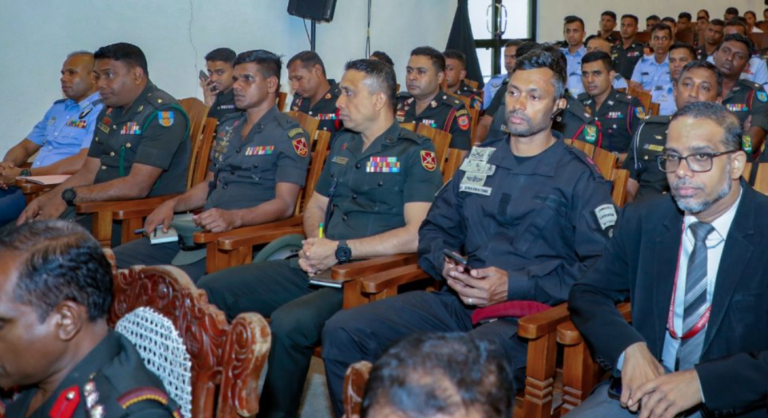
A two-day workshop to train 150 selected members of the Sri Lanka Tri-Forces and Police in implementing the “Clean Sri Lanka” program commenced on February 18 at the Sri Lanka Light Infantry Regimental Center in Panagoda.
National Initiative for Sustainable Development
Delivering the welcome address, Defence Secretary Air Vice Marshal Sampath Thuyakontha (Retd) outlined the initiative’s core objectives: enhancing governance, ensuring social, environmental, and economic sustainability, and elevating Sri Lanka’s global image. He emphasized that the program is successfully being implemented across the country, with strong collaboration from local communities, public and private sectors, media, and international organizations.
He also reaffirmed the government’s commitment under President Anura Kumara Dissanayake to overcoming the economic crisis, adhering to international policies, and fostering national stability. “The success of the ‘Clean Sri Lanka’ initiative requires a collective effort, in line with the theme ‘A Rich Country – A Beautiful Life,’” he stated.
Comprehensive Training for Effective Implementation
The workshop, which serves as a key component of the “Clean Sri Lanka” program, aims to equip participants with the knowledge and strategies needed to drive sustainable development. Secretary to the President, Dr. Nandika Sanath Kumanayake, attended the inaugural session as chief guest.
The first day featured expert presentations from Kapila Gunaratne, Chinthaka Rajakaruna, Professor Turney Pradeep Kumara, Kelum Jayaweera, and Ajith Jayasundara, covering various aspects of environmental sustainability and governance.
On the second day, Senior Superintendent of Police Lanka Amarasinghe will discuss Women’s and Child Protection Laws, while Major General Sajith Liyanage will focus on the responsibilities and accountability of public officers. The workshop will conclude with group presentations by the trainees.
A Collective Step Toward a Cleaner and Sustainable Sri Lanka
The “Clean Sri Lanka” initiative is designed to actively engage the community in sustainable development efforts, ensuring long-term benefits for the nation. This training program marks a significant step in fostering responsibility and cooperation among security forces and law enforcement agencies to drive the initiative forward.
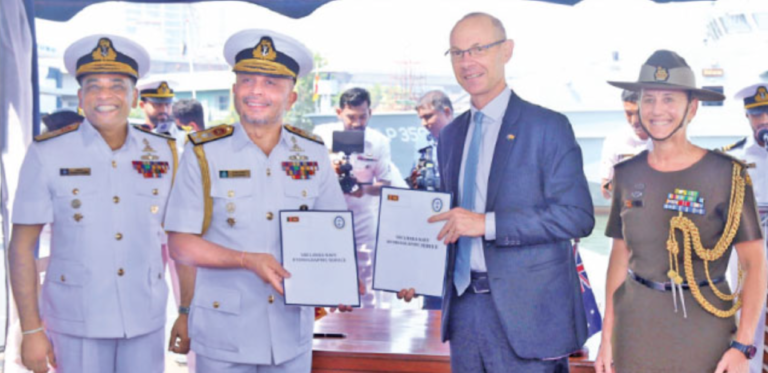
The Australian Government has strengthened Sri Lanka’s hydrographic capabilities with the donation of a Shallow Water Multibeam Echo Sounder (SWMES) to the Sri Lanka Navy Hydrographic Service (SLNHS).
The advanced hydrographic instrument was officially handed over to Sri Lanka Navy Commander Vice Admiral Kanchana Banagoda by Australian High Commissioner to Sri Lanka Paul Stephens at the Sri Lanka Navy Base Rangala in the Colombo Port yesterday (18).
The SWMES will enable the SLNHS to conduct precise hydrographic surveys essential for the creation of Nautical and Electronic Charts used by vessels, including SLN ships. This donation significantly enhances Sri Lanka’s hydrographic capabilities, paving the way for more efficient and accurate maritime mapping.
Strengthening Bilateral Cooperation
Speaking at the event, Australian High Commissioner Paul Stephens emphasized that this contribution further reinforces the longstanding maritime cooperation between Australia and Sri Lanka.
“The SLN plays a crucial role in the security of the Indian Ocean region, and we are pleased to support its efforts. This instrument will be invaluable to the SLN’s hydrographic initiatives,” he stated.
Enhancing Maritime Security and Surveying Capabilities
Navy Commander Vice Admiral Kanchana Banagoda expressed gratitude for the donation, highlighting that the acquisition of this cutting-edge technology aligns with Sri Lanka’s international maritime security commitments.
“This marks a new era in the development of Sri Lanka’s hydrographic sector. The SWMES will significantly enhance the efficiency of hydrographic surveying and enable the production of highly accurate nautical charts, which are critical for maritime operations within Sri Lankan territorial waters,” he said.
This is the first SWMES received by the SLN, and its impact is expected to be transformative. The technology’s ability to collect data in shallow waters will enhance Sri Lanka’s capacity to survey ports, coastal zones, and key waterways. The data collected will not only benefit the National Hydrographic Service but also strengthen Sri Lanka’s position in regional maritime affairs.
Australia’s Continued Support for Sri Lanka’s Maritime Development
Vice Admiral Banagoda also acknowledged Australia’s ongoing contributions to Sri Lanka’s maritime domain awareness, recalling Australia’s previous provision of the Ratnadeepa and Mihikatha vessels to bolster maritime operational capabilities. He reaffirmed Sri Lanka’s commitment to further strengthening bilateral relations and fostering deeper cooperation in the maritime sector.
The event was also attended by Australian Deputy High Commissioner to Sri Lanka Lalita Kapoor, Defence Advisor Colonel Amanda Johnston, and SLN Chief of Staff Rear Admiral Damian Fernando.
The Government will not allow a legal system that serves only the powerful, nor will it tolerate individuals taking the law into their own hands, Prime Minister Dr. Harini Amarasuriya declared while addressing a public gathering in Mullaitivu.
Emphasizing the importance of justice and equality, the Prime Minister reaffirmed the Government’s commitment to upholding the rule of law and ensuring that all citizens are treated fairly.
Transforming Education for a Brighter Future
Dr. Amarasuriya also outlined the Government’s ambitious plans for education reform, set to begin next year. These initiatives include modernized learning methods for children and comprehensive training for teachers to create an engaging and effective learning environment.
“The current Government firmly believes that educational reform is fundamental to national progress. Sustainable change can only be achieved through the collaborative efforts of the Government and citizens,” she stated.
She further assured that a new national curriculum will be introduced in 2026 to prepare students with a clear and well-structured future pathway. As part of efforts to support underprivileged students, the Government has provided Rs. 6,000 vouchers to children from economically disadvantaged families and those in schools with fewer than 300 students, enabling them to purchase essential school supplies.
A United and Equal Nation
Reaffirming the Government’s commitment to national unity, the Prime Minister vowed that racism would not be tolerated, nor would a system that protects only the elite while leaving others vulnerable.
“We have come into power with the mandate entrusted to us by the people. We have a responsibility to fulfill that trust. Let us work together to build a nation where equality prevails and every citizen can live in safety. Unity is our strength – no force can divide us,” she declared.
Balanced Development for All Regions
Acknowledging that development has been uneven across the country, Dr. Amarasuriya assured that the Government is committed to implementing a nationwide development framework that benefits all regions equally.
“The path we have chosen is not easy, but it is necessary. We will honor the trust you have placed in us and uphold the hope for a better future,” she affirmed, calling on citizens to actively participate in the nation-building process to ensure a prosperous and dignified life for all.