Home Blog Page 703

Renovation of Anuradhapura–Mahawa Railway Line Completed and Handed Over to SL Railways

0

September 14, Colombo (LNW): The renovation of the Anuradhapura–Mahawa railway line, undertaken at a cost of US$ 92 million to enhance the efficiency and regularity of Sri Lanka’s transport services, has been completed and officially handed over to the Sri Lanka Railway Department.

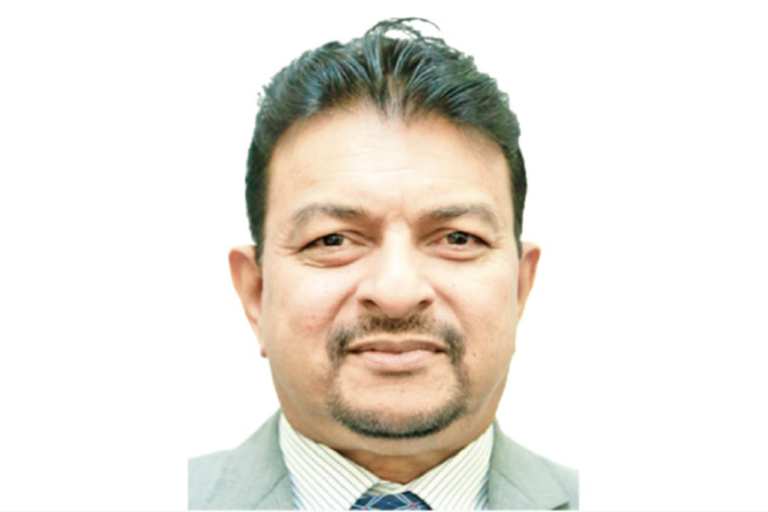
Project Director Chinthaka Jayasekara stated that the renovation, financed under a loan scheme from the Government of India, was carried out in three stages: Anuradhapura–Omanthai, Anuradhapura–Mihintale, and Anuradhapura–Mahawa. The work on the Anuradhapura–Mahawa section began in January this year under the patronage of Indian High Commissioner to Sri Lanka, Santosh Jha.

The Railway Department is optimistic that train services between Mahawa and Anuradhapura will resume tomorrow (14).

Government and Creditors Begin Third Round of Debt Restructuring Talks

0

September 14, Colombo (LNW): Sri Lanka’s private creditors and the country’s government officials are holding a third round of talks this week to agree on the restructuring of $12.6 billion in defaulted bonds, according to people familiar with the matter, Blomberg news agency reported. . 

This new round of negotiations — the first since creditors and the government reached a preliminary agreement on a debt rework in early-July — also marks the third time bondholders have gone “restricted,” or prevented from trading the securities while talks are ongoing, the people said, asking not to be named because talks are private. 

Representatives for the bondholders and the government didn’t reply to a request for comment. The creditor group holds about 50% of the outstanding overseas bonds and includes Amundi SA, BlackRock Inc. and T Rowe Price.

The committee is represented by its legal adviser White & Case LLP and its financial adviser Rothschild & Co. 

The government is seeking to reach a final agreement on the debt before the country’s presidential election set for Sept. 21, one of the people said, adding that a statement with details on the ongoing negotiations may be released next week.

The July deal with private bondholders envisaged a 28% nominal reduction in the bonds’ principal, and the issuance of so-called macro-linked bonds, whose payouts are linked to economic growth. The agreement needs the backing of the International Monetary Fund and the country’s bilateral creditors, such as China and France.

Sri Lanka bonds due in 2030 traded at around 51 cents on the dollar on Friday at 10:19 a.m. London time, according to indicative pricing compiled by Bloomberg. 

The talks are “likely to address the information vacuum market participants have faced since the last notification regarding bond restructuring in late-July,” said Avanti Save, head of Asia credit research and strategy at Barclays Bank Plc. “If an agreement is reached then it also reduces the risk of a long-drawn out renegotiation process post elections.” 

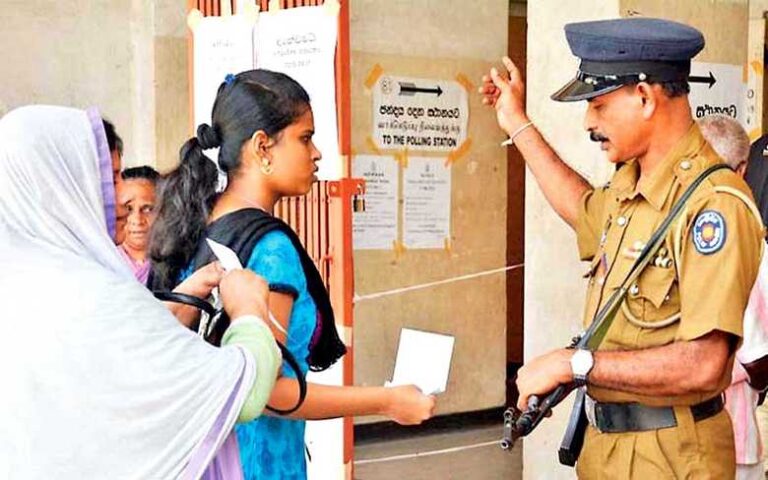
The election will be the first for the country since an economic crisis in 2022 caused living standards to plunge and the government to default on its debt for the first time ever. It is shaping up to be a close race between three candidates, including the incumbent who negotiated the IMF bailout and opposition leader Sajith Premadasa, who plans to reopen negotiations with the multilateral lender, if elected.

‘Nothing will be derailed but everything would be humanized’ – Sajith on renegotiating IMF deal

0

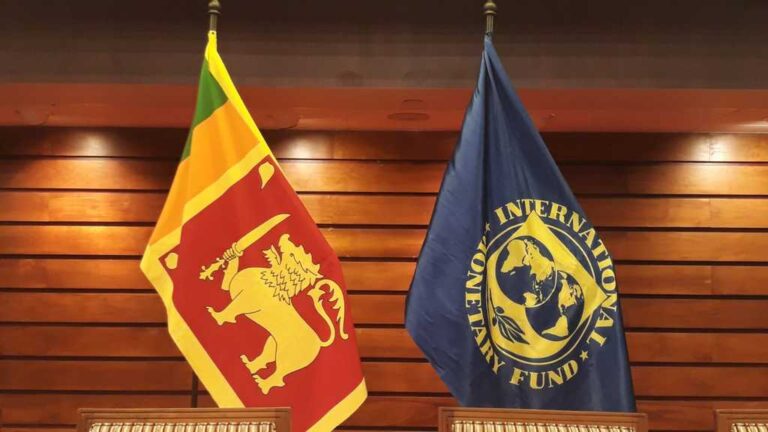
Sri Lanka’s main opposition leader said he’ll reopen negotiations with the International Monetary Fund on its $3 billion loan if he wins next week’s presidential election to ease the financial burden on working class people.

Sajith Premadasa, 57, wants rich individuals to bear more of the cost of the economic adjustment that came with the bailout program. The austerity measures that were imposed, such as tax and electricity-price hikes, and the debt restructuring, have made the incumbent leader Ranil Wickremesinghe deeply unpopular, creating a tight race for the Sept. 21 vote.

“We will make sure there is justice and fairness,” Premadasa said in an interview in his Colombo office. “The burden should be shared by the super rich, not the working class poor.”

The election will be the first for the country since an economic crisis in 2022 caused living standards to plunge and the government to default on its debt for the first time ever. Widespread unrest that followed forced the populist Gotabaya Rajapaksa to flee the country and resign. His successor Wickremesinghe went on to negotiate the IMF bailout the following year.

Premadasa, who runs a breakaway group that splintered from Wickremesinghe’s party in 2020, has emerged as one of the three leading candidates contesting an election that analysts say is too close to call. He’ll face Wickremesinghe and Anura Kumara Dissanayake, a candidate with roots in Marxist socialist policy. 

Both Premadasa and Dissanayake have said they’ll reopen negotiations with the IMF, adding to policy uncertainty. The IMF needs to conduct a third review of the loan program before it disburses the next tranche of funding, estimated at about $350 million.  

Sri Lanka’s government still hasn’t finalized debt restructuring deals with some of its creditors two years after defaulting. Investors have in recent weeks started to cut their exposure to the nation’s dollar bonds amid concerns over further delays in the debt overhaul.

The nation’s private creditors and government officials are holding a third round of talks this week to agree on the restructuring of $12.6 billion in defaulted bonds, Bloomberg News reported earlier, citing people familiar with the matter. The government is seeking to reach a final agreement on the debt before the election, one of the people said, adding that a statement with details on the ongoing negotiations may be released next week.

Premadasa declined to give details of what he’ll seek to change in the IMF loan conditions, although he was critical of a domestic debt restructuring agreed to by the current administration, which he called “dastardly” unfair in its treatment of local pension funds.

In an Aug. 2 statement, the IMF said that the timing of the program’s third review will be discussed with the government after the polls. Julie Kozack, the IMF’s chief spokesperson, reiterated that view on Thursday in Washington, saying “we will move forward with program discussions after the presidential elections take place.”

Dhananath Fernando, chief executive officer of Advocata Institute, a Colombo-based think tank, said rising costs, including food price hikes, can’t be fully attributed to the IMF program, and energy prices were raised to partly make up for the currency’s depreciation.  

He noted that most food prices and energy costs have eased in the past two years, although lower-income consumers are still “worse off compared to before the crisis.”

Boosting Exports

Premadasa leads the Samagi Jana Sandhanaya and has previously held ministerial portfolios in government, including housing and health. His manifesto, titled ‘Towards an Advanced Social Market Economy,’ champions boosting exports, reducing taxes, setting up an independent public prosecutor to tackle corruption and strengthening the rule of law.

“Export-driven economic development is one of our main mantras,” Premadasa said in the interview on Wednesday. “We would also have a purposeful effort to promote manufacturing industry, as it is of great importance to ensure that we have quality economic growth.”

Premadasa said he champions good governance and will strive to improve Sri Lanka’s business environment to help lure foreign direct investment. In a reference to popular leftist candidate Dissanayake, Premadasa said “Marxist ideologies, and extreme hardline leftist tendencies will certainly not be the kind of situation which would attract FDI.”

Dissanayake is gaining momentum in the race on a campaign platform of eliminating corruption. His coalition of leftist parties and groups, backed by protesters who ousted the Rajapaksa government in 2022, opposes the debt restructuring framework agreed with the multilateral lender. 

Premadasa said the IMF program needs to be reworked to ensure a better outcome for citizens.

“We need to be very professional in our negotiations with the IMF and we will have a good deal, a strong deal,” he said. “Nothing will be derailed but everything would be humanized.”

Source: Bloomberg

Sri Lanka Original Narrative Summary: 14/09

0
  1. President Ranil Wickremesinghe emphasized that no vacuum should be allowed to occur in state power, as such a situation could lead to a serious disaster. He further stated that state power must always be smoothly transferred from one party to another. Referring to Bangladesh’s current situation, the President pointed out that the inability to fill a power vacuum has led to a national crisis. He recalled that in 2022, Sri Lanka too faced a similar threat, but he intervened to prevent it.
  2. Sri Lanka’s main opposition leader said he’ll reopen negotiations with the International Monetary Fund on its $3 billion loan if he wins next week’s presidential election to ease the financial burden on working class people.
  3. National People’s power presidential candidate Anura Kumara Dissanayake issued a strong challenge to independent presidential candidate Ranil Wickremesinghe during a business meeting held in Matara. Dissanayake dismissed Wickremesinghe’s political tactics as mere drama, emphasizing the need for responsible leadership to address the country’s crises.
  4. President’s Counsel Kaushalya Nawaratne has resigned from his position as the President of the Bar Association of Sri Lanka (BASL) with immediate effect. The Bar Council of the Bar Association of Sri Lanka (BASL) on August 31 had unanimously decided to call for the resignation of BASL President Kaushalya Nawaratne.
  5. The Cabinet of Ministers approved the IMF proposal, based on the Sri Lankan Government’s proposal, to reduce the pay-as-you-earn (PAYE) tax from next year, says Cabinet Spokesman Minister Bandula Gunawardena. He stated that the proposal will be presented with the next budget proposal in November this year.
  6. A luxury house worth Rs. 100 million, located in Bambalapitiya, was forcibly seized by Galaboda Aththe Gnanasara Thero. The Colombo Additional Magistrate Pasan Amarasinghe, ordered Gnanasara Thero and two other respondents to immediately vacate the property, which had been unlawfully seized.
  7. Sri Lanka’s State Minister of Finance Shehan Semasinghe says that the Cabinet of Minister has decided to allow the import of vehicles under several stages starting from October 01. He stated that restrictions on importing public transport vehicles will be removed from October 01, 2024 while the restrictions on importing commercial and goods transport vehicles will be lifted from December 01, 2024.
  8. Major General Dinesh Nanayakkara of the Sri Lanka Sinha Regiment has been appointed as the new Chief of Staff of the Sri Lanka Army (SLA). He has been appointed to the position by the Commander of the Army, effective from September 16, 2024
  9. The Supreme Court has directed the Controller General of Immigration and Emigration to appear before the court in person with regard to his failure to implement the order issued by the court over the electronic visa matter. The directive was issued by the Supreme Court after considering motions filed over the non-implementation of the interim order issued by the court regarding the issue.
  10. Sri Lanka’s Hasitha Disssanayaka has won the Gold medal while Senura Hansaka won Silver in the Men’s Triple Jump event at the South Asian Junior Athletics Championships 2024 held in Chennai, India. Meanwhile, Sri Lanka has also secured the Gold medal in the Men’s 4x400m relay event.

Showers, Thundershowers, and Strong Winds Expected in Several Provinces

0

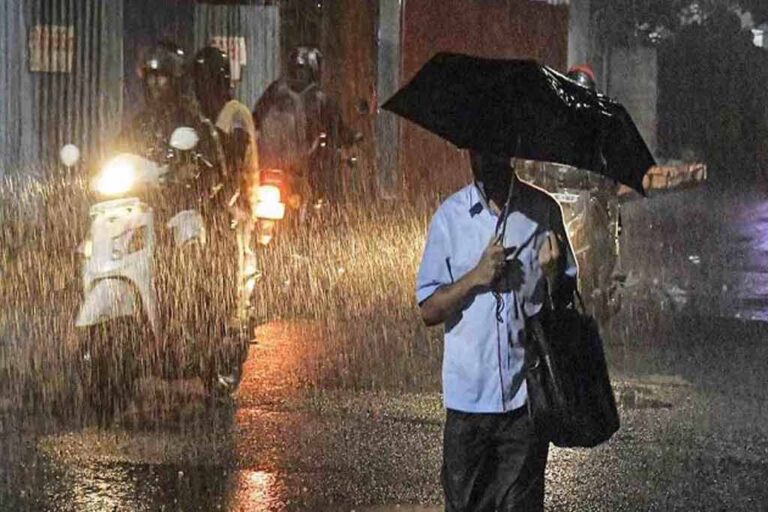
September 14, Colombo (LNW): Showers or thundershowers are expected at times in the Western, Sabaragamuwa, and North-western provinces, as well as in the districts of Kandy, Nuwara-Eliya, Galle, and Matara. Fairly heavy showers, around 50 mm, are likely in certain areas of the Western and Sabaragamuwa provinces.

Additionally, showers or thundershowers may occur in Uva province and the districts of Ampara and Batticaloa during the evening or night.

Strong winds, ranging between 40-45 kmph, are forecasted over the Western slopes of the central hills, Northern, North-central, and North-western provinces, as well as in the districts of Hambantota, Monaragala, and Trincomalee.

The general public is advised to take precautions against temporary strong winds and lightning during thundershowers to minimize potential damages.

Ranil Wickremesinghe Highlights Need for Stability Following ‘Aragalaya’ Movement

0

September 13, Colombo (LNW): Independent presidential candidate Ranil Wickremesinghe reflected on the significant changes Sri Lanka has experienced since the ‘aragalaya’ movement two years ago. He noted the collapse of political and economic structures during that period and the challenges the country faced in its aftermath.

Wickremesinghe acknowledged the inconvenience caused to the public following the ‘aragalaya’ and stressed the importance of safeguarding the country’s stability. He admitted to taking several measures, some of which were criticized for allegedly curtailing civic freedoms, but emphasized that his actions were within constitutional principles and aimed at preserving stability.

“Today, we enjoy freedom and elections,” Wickremesinghe stated, warning that without the steps he took, Sri Lanka could have faced a crisis similar to that of Bangladesh. He highlighted the necessity of maintaining a government, a framework, law and order, and stability to protect freedoms and fundamental rights.

Concluding his remarks, Wickremesinghe asserted that these elements have been successfully established, ensuring the country’s stability and safeguarding citizens’ rights.

Revitalizing Sri Lanka’s Tea Industry Key to Economic Growth amid Challenges, Say Experts at TEA AGM

0

September 13, Colombo (LNW):As Sri Lanka progresses towards economic recovery, revitalizing its tea industry is critical for growth, stated Gevorg Sargsyan, World Bank’s Country Manager for Sri Lanka and the Maldives, during the 25th Annual General Meeting (AGM) of the Tea Exporters Association (TEA) in Colombo.

“To ensure the long-term success and sustainability of this iconic sector, it’s vital for public and private stakeholders to work together to foster growth across the entire ecosystem. 

This will enable the tea industry to make meaningful contributions to the nation’s sustainable and prosperous future,” Sargsyan noted. 

Despite its status as a key economic pillar and symbol of national pride, Sri Lanka’s tea industry has faced considerable challenges in recent years. From climate change to policy inconsistencies and intense global market competition, the industry has been under mounting pressure.

Research shows that by 2070, Sri Lanka’s prime tea-growing regions could reduce by 30%, posing serious sustainability challenges. 

However, Sargsyan expressed optimism, noting, “The sustainability of Sri Lanka’s tea industry is complex, but we have the ability to address these challenges. As someone who grew up drinking Ceylon tea, I have a strong connection to this industry.”

Outgoing TEA Chairman, Ganesh Deivanayagam, highlighted that while Sri Lanka exported 263 million kilos of tea 25 years ago, generating $598 million in revenue, today, despite exporting 20 million kilos less, the industry’s earnings have doubled to $1.3 billion.

 “This reflects the global demand and value of Ceylon tea, yet it also underscores the untapped potential. Maintaining volumes could turn this into a $3 billion industry.

 Nevertheless, exporters face significant challenges, including tax burdens and outdated perceptions of the sector. But the numbers show we’ve achieved extraordinary results, and with the right support, we will overcome these challenges,” he added.

Sri Lanka’s tea production totaled 256,039 metric tonnes in 2023 but has been in decline since 2019 due to various factors like climate change, fertilizer bans, and inadequate replanting.

This downturn has also affected exports, which dropped to 241,912 metric tonnes in 2023 from 292,000 metric tonnes in 2019. However, despite declining volumes, tea exports consistently generate around $1.3 billion annually, proving its continued importance to the national economy.

The AGM also saw the election of Huzefa Akbarally as the new Chairman of the Tea Exporters Association, with over 500 participants in attendance.

September 13, Colombo (LNW):

ADB Approves $100 Million Loan for Water Supply and Sanitation sector in Sri Lanka

0

September 13, Colombo (LNW):The Asian Development Bank (ADB) has sanctioned a $100 million policy-based loan to support reforms in Sri Lanka’s water supply and sanitation sector. The initiative aims to bolster the country’s climate resilience and ensure the long-term sustainability of water services.

The Water Supply and Sanitation Reform Program is divided into two subprograms, each valued at $100 million. Subprogram 1 focuses on establishing national policies and strategies for the sector, while Subprogram 2 will support the implementation of these reforms through specific guidelines and actions.

Pedro Almeida, Senior Urban Development Specialist at ADB, highlighted the pressing challenges in the sector, citing fragmented water management and the growing impacts of climate change.

He emphasized that many Sri Lankans still lack access to piped water, and the program aims to rectify this by improving governance and creating opportunities for private sector participation.

Sri Lanka’s water resources management faces several long-standing issues, including imbalanced water allocation between agriculture and drinking water, inadequate climate change considerations, and disorganized planning due to the involvement of multiple agencies.

 The program aims to address these challenges through policy interventions that promote equitable water distribution, gender-sensitive services, and a climate change roadmap.

Subprogram 1 will also enhance the sector’s financial sustainability and operational efficiency. This will be achieved through frameworks like the climate-resilient project appraisal for investments and strategic plans for the National Water Supply and Drainage Board (NWSDB).

It is also helping to enhance the efficiency and performance of the sector through the Ministry of Water Supply and Estate Infrastructure Development’s (MWS) approval of a climate-resilient project appraisal framework for investments in the drinking water sector, and NWSDB’s financial sustainability, efficiency, and performance through financial sustainability and public-private sector roadmaps, and a business efficiency action plan.  

Additionally, a technical assistance grant of $800,000 will support the Ministry of Water Supply (MWS) and NWSDB in deploying and monitoring reform initiatives. This includes $500,000 from ADB’s Technical Assistance Special Fund and $300,000 from the Water Innovation Trust Fund.

These efforts will pave the way for improved access to safe water and a more sustainable future for Sri Lanka’s water supply and sanitation sector.

September 13, Colombo (LNW):

Sri Lanka Sets Sail for Cruise Tourism Boom: Cordelia Cruises Drives New Wave of Visitors

0

September 13, Colombo (LNW): As Sri Lanka ramps up efforts to bolster its tourism industry, the country is expected to see a surge in cruise passengers, particularly from India, in 2024. 

Cordelia Cruise Lines has completed its second season at Hambantota International Port (HIP), with six successful calls between July and September, bringing over 5,000 tourists. The next season is scheduled from June to September 2025.

Since June 2023, Cordelia has made 16 port calls, offering travel packages from Chennai to Sri Lanka. Nalin Perera, Director General of the Sri Lanka Tourism Development Authority (SLTDA), highlighted that cruise tourism plays a crucial role in boosting the country’s tourism profile. 

He noted ongoing collaborations with top travel agents and cruise lines, aiming to streamline operations and provide better facilities, including transportation and accommodation, to enhance tourist experiences.

Lance Zuo, General Manager of Commercial and Marketing at HIP, emphasized the port’s modern amenities and scenic location, making it an attractive cruise destination. Clarion Shipping, in partnership with Cordelia Cruises, offers passengers a range of excursions, from exploring historical landmarks like Galle Dutch Fort to visiting Yala National Park.

The integration of cruise operations at HIP is not only solidifying Sri Lanka’s role in global tourism but also positively impacting the local economy with a steady stream of visitors.

As a new and modern port with a 17 metre depth, HIP can accommodate any cruise liner in the world. We are fully geared to handle the needs of crews and passengers, customs, immigration & emigration and secure services. 

The nexus with Hayleys Advantis (Clarion Shipping), agents for Cordelia Cruise Lines is yet another step in promoting Hambantota as an ideal cruise ship destination. While the port’s location away from the busy metropolis, and its green environment, are added attractions, we also have a wide range of touristic offerings at a very short distance from the port’s gate.” says Lance Zuo, General Manager Commercial and Marketing.

Clarion Shipping, agents for Cordelia Cruises in Sri Lanka and GOL Travels Lanka Pvt Limited, offer several excursions to passengers disembarking at HIP, such as walks through the Galle Dutch Fort, river cruises, hikes to the Diyaluma Waterfall, visits to a nearby turtle hatchery, and treks through Yala, Udawalawe, and Bundala national parks. Visits to the Unawatuna Beach and shopping sprees are also included.

The integration of cruise ships into HIP’s operations not only solidifies the port’s role in international tourism but also contributes to the local economy by attracting a steady influx of visitors.

In the current situation, where the Government is intensely focused on elevating the country’s position in tourism, reports suggest that Sri Lanka is anticipated to welcome an increased number of cruise tourism passengers in 2024.

Sri Lanka Tourism Development Authority (SLTDA) Director General Nalin Perera, noted that cruise tourism was a well-organised arrangement as cruises played a major role in promoting tourism.

Indo-Lanka Electricity Grid Connectivity MOU to be signed soon 

0

September 13, Colombo (LNW):The Indo-Lanka electricity grid connectivity project is nearing approval, with the Sri Lankan Power and Energy Ministry having already submitted comments on the draft Memorandum of Understanding (MoU) and awaiting feedback from India. 

This ambitious project, according to Ministry Secretary Dr. Sulakshana Jayawardena, envisions a 120 km undersea submarine cable connecting Mannar in Sri Lanka with Madurai in southern India. It will consist of 25 km of overhead transmission in Sri Lanka and 130 km in India. 

The aim is to enhance Sri Lanka’s energy security and position the country within the regional renewable energy (RE) market.

The concept of an interconnected power grid between India and Sri Lanka has been under consideration for over a decade but has gained momentum in recent years. 

The Sri Lankan government has set a target to connect the two grids by 2030, aligning with its broader renewable energy goals.

One of Sri Lanka’s key energy objectives is to generate 70% of its electricity from renewable sources by 2030. The grid connection with India is seen as a critical step in achieving this, along with transitioning its thermal plants from diesel to liquefied natural gas (LNG).

 However, there are commercial, technical, and environmental challenges in optimizing the electricity mix. Sri Lanka will need to determine the right balance of electricity imports from India, LNG-based power generation, and renewable energy to meet its growing energy demands.

The commercial aspect of the project is particularly complex. While India’s coal-heavy energy grid could provide Sri Lanka with cheaper electricity, it may undermine Sri Lanka’s renewable energy goals.

 India’s energy sector is still highly dependent on coal, which accounts for over 70% of its electricity generation. Importing electricity from India would reduce costs for Sri Lanka but not necessarily boost its green credentials. 

As Prof. Anura Wijayapala from the University of Moratuwa points out, negotiating a favorable power purchase agreement (PPA) with India is essential for Sri Lanka to benefit from lower electricity prices.

In addition to managing commercial aspects, there is a challenge in coordinating the expansion of Sri Lanka’s renewable energy sector with the grid connection.

 If Sri Lanka develops its renewable energy resources more quickly than anticipated, it could lead to excess capacity, which could potentially be sold to India. 

However, the market conditions in India, with low tariffs due to competitive bidding, may not favorably support Sri Lanka’s renewable energy developers.

Moreover, the infrastructure needed for LNG generation, including terminals and pipelines, adds another layer of complexity. There are concerns that commitments to LNG could hinder Sri Lanka’s ability to fully harness its renewable energy resources.

Despite these challenges, the grid connection offers significant benefits. It would allow Sri Lanka to export excess renewable energy to India and enhance energy security by ensuring a two-way flow of electricity.

 The project could also create jobs and attract investment in renewable energy projects in Sri Lanka. However, ensuring the optimal mix of imported electricity, LNG-generated power, and renewables will require careful planning, including the use of simulation models to guide decision-making.