PRESS STATEMENT
24 January 2025, London
The Global Tamil Forum (GTF) is deeply saddened by the passing of Ven. Siyambalagaswewa Wimalasara Thero,
the Chief Sanganayake of Malwatte Chapter for the Northern and Eastern Provinces. Ven. Thero’s passing was
sudden and unexpected, and we express our heartfelt condolences to all those who were fortunate to have
associated with the Thero in many different capacities.
Ven. Siyambalagaswewa Wimalasara Thero was a key proponent and a signatory to the Himalaya Declaration
(April 2023), which aimed at promoting peace, reconciliation, religious harmony and equality among all the
peoples of Sri Lanka. Ven. Thero’s role in this initiative was crucial due to his long association with the Northern
and Eastern Provinces and his deep understanding of the fears and aspirations of the Tamil people. Ven. Thero
has built a solid inter-religious network in Vavuniya where he lived and played a pivotal role in preventing
violence in the local area even when the country was engulfed in a vicious civil war. When GTF representatives
visited Vavuniya in December 2023, we witnessed first-hand the respect with which the Thero was held by the
local religious and community leaders. When the Thero was admitted to the hospital recently leaders from all
religions visited him and paid their respects.
Ven. Thero was also instrumental in organising Mullivaikaal Remembrance events in 2023 and jointly organising in
2024, with the GTF in Vavuniya, well attended by all communities. Clearly, Ven. Siyambalagaswewa Wimalasara
Thero was a living embodiment of the mutual understanding and respect idealized among the adherents of all
religions and communities. For those of us who directly engaged with the Ven. Thero due to our joint efforts on
Himalaya Declaration, we feel the loss as that of a friend, colleague and a guide. The Thero was fluent in Tamil
and had a humorous side to him, and we cherish many memories of our many conversations with him.
We are confident that the Ven. Thero’s legacy and the impact he has had in promoting inter-religious and national
harmony, including the implementation of the Himalaya Declaration will endure. It is important that all of us
redouble our efforts to follow on the footsteps of Ven. Thero in promoting peace ethnic and religious harmony.
That will be our lasting tribute to Ven. Siyambalagaswewa Wimalasara Thero.
“May his soul attain supreme bliss of Nibbana”
-ENDS-
Media Contact: Suren Surendiran
Tel: +44 (0) 7958 590196
Skype: surendirans
Email: [email protected]
Twitter: @GTFonline & @surendirans
Notes: Global Tamil Forum (GTF) is an influential Tamil diaspora organisation – established in 2009 following the end of the armed conflict
in Sri Lanka. GTF is absolutely committed to a non-violent agenda and it seeks lasting peace in Sri Lanka, based on justice, reconciliation and
a negotiated political settlement.
Media External Document
Global Tamil Forum’s Tribute to Late Ven. Siyambalagaswewa Wimalasara Thero
No interference from those responsible for granting Brisbane visa to Romesh, who lost his Paris tour despite his talent

By – Nishman Ranasingha
Sri Lanka’s national javelin record holder and national champion Rumesh Taranga is in danger of missing out on non-issuance of visas to participate in the international championship in Bresbane, Australia, which begins on January 25.
Rumesh missed out on the opportunity to represent the Paris Olympics due to lack of adequate international level competitions and the current Athletics Association as well as the current Ministry of Sports were responsible for this. Sugatha Tillakaratne was honestly the current Deputy Minister of Sports among those who were shocked by this.
Https://qldathletics.org.au/event/brisbane-throws-challenge/ can know the details of the event and the recognition of Romesh’s talent as one of the world’s leading javelin throwers has been found and he is ready for the invitation for the tournament, but he has not yet received the required visa. The top officials of the Sports Ministry as well as the Ministers have said that they will intervene to grant permission in this regard through the Foreign Minister, but due to the lack of Australian visas, the country’s main hope for Olympics 2028 is now left unattended. It is regrettable that the government has not intervened in resolving this visa issue in such a way that the private sponsor who has come forward on behalf of the hopeful Rumesh is gradually turning indifferent.
It is a show in the past that the Athletics Association and the Sports Ministry are pointing fingers at each other due to lack of frequent visas. Here the Athletics Association has prepared all the documents for the respective sports festival and the delay of visas can be intervened at the diplomatic level. It is regrettable that the first attempt on the journey to qualify has thus undermined the contribution of those responsible for the visa issue.
Sri Lanka Expands Poultry Exports to China
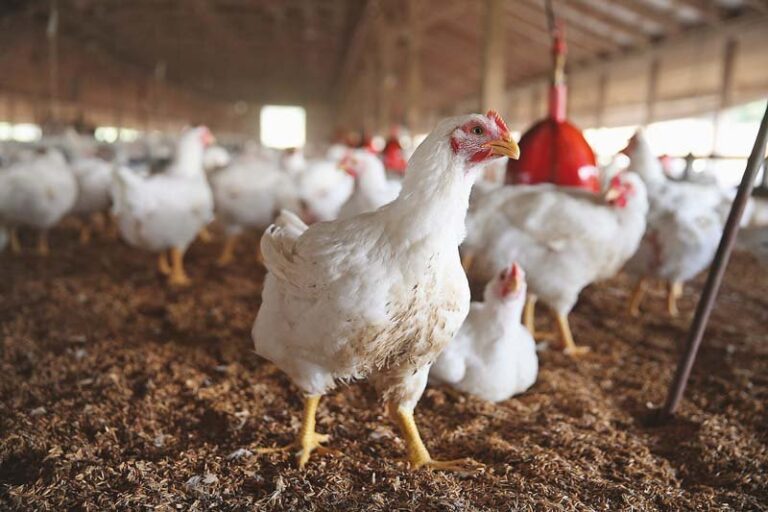
Sri Lanka’s poultry industry has secured a significant breakthrough with China opening its market for direct imports of poultry products, including chicken heads and feet, Foreign Minister Vijitha Herath announced.
This development follows a request from the industry, which will now have the opportunity to directly export these by-products, boosting foreign exchange earnings for the country.
The Cabinet approved the proposal on January 6 to facilitate poultry exports to China, which includes health and quarantine procedures to meet export standards.
This move comes after years of advocacy and diplomatic efforts by the Sri Lankan government to overcome the barriers preventing access to the vast Chinese market. As part of the agreement, China has removed restrictions on Sri Lankan chicken, eggs, and pineapples, which is a significant win for exporters in these sectors.
The breakthrough marks the culmination of years of efforts by the previous government, which first initiated steps to secure access for Sri Lankan poultry products to China.
Under the leadership of ex President Ranil Wickremesinghe, the then government prioritized eliminating trade obstacles by engaging in high-level discussions with Chinese authorities.
These efforts aimed at aligning Sri Lankan poultry exports with China’s stringent import standards, with the Agriculture and Plantation Industries Ministry playing a central role in facilitating the negotiations.
The importance of these earlier efforts cannot be overstated. Senior officials from the previous administration, despite facing challenges in the process, succeeded in creating the foundation for Sri Lanka’s eventual poultry export approval.
Their work has enabled the current government to capitalize on the fruits of these efforts and bring the poultry industry closer to reaching its full potential in the Chinese market.
Ajith Gunasekara, Chairman of the Sri Lanka Association of Animal Production, hailed the move as a major victory for the industry, pointing out that direct access to China had long been requested by industry stakeholders.
“This is a milestone after years of effort,” he said, emphasizing that access to the world’s largest poultry market will significantly boost profitability for Sri Lankan companies.
Sri Lanka’s bird flu-free status provides a unique competitive edge for its poultry products, making them particularly attractive in international markets. With the continued support of institutions like the Department of Animal Production and Health and the Export Development Board, the industry is poised for significant growth.
The next goal is to expand exports beyond by-products, with plans to penetrate the Chinese market for chicken meat in the future.
Political Clash Over Katchatheevu Island Controversy Renewed in India
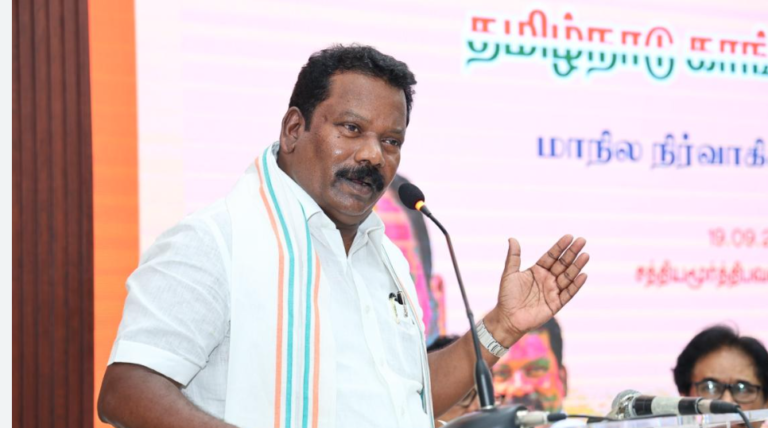
BJP President K. Annamalai on Wednesday criticized the Congress and its Tamil Nadu ally, the ruling DMK, over the 1970s ceding of Katchatheevu islet to Sri Lanka.
He particularly questioned Tamil Nadu Congress Committee (TNCC) chief K. Selvaperunthagai’s recent remark describing the decision as a “strategic maneuver” by former Prime Minister Indira Gandhi.
In a video shared on his ‘X’ account, Annamalai tagged a clip of Selvaperunthagai purportedly defending the ceding of the island as a calculated move. “He repeatedly emphasizes how Indians should be grateful to Indira Gandhi.
The DMK and Congress, for the past four decades, have jeopardized the lives of Tamil fishermen through unilateral decisions like gifting away Katchatheevu to Sri Lanka without even tabling the matter in Parliament for discussion in 1974,” Annamalai stated.
Katchatheevu, a 285-acre uninhabited isle about 20 miles north of Dhanushkodi, was ceded to Sri Lanka in 1974 under a bilateral agreement between Indira Gandhi’s administration and then-Sri Lankan Prime Minister Sirimavo Bandaranaike.
This move was described as an act of goodwill, later formalized in the 1976 exchange of letters that delineated the maritime boundary in the Sethusamudram region.
Since the start of Sri Lanka’s civil war in 1983, the islet has become a flashpoint for conflicts between Indian Tamil fishermen and the Sri Lankan Navy, often resulting in the loss of lives and livelihoods. Annamalai accused the Congress and DMK of negligence, blaming their decision-making for these continued hardships.
“Katchatheevu sporadically leaps back into attention, the latest instance being Prime Minister Narendra Modi’s indirect reference to it in the Lok Sabha,” Annamalai remarked.
He praised Modi’s efforts to strengthen India’s sovereignty and infrastructure, particularly in regions like Jammu & Kashmir and the Northeast, contrasting this with what he described as the Congress’s poor governance.
“Here we have Congress boasting that gifting away an Indian island was a strategic maneuver. Does Selvaperunthagai realize this decision cost the lives of many fishermen, led to arrests, and caused the loss of livelihoods and vessels? Is the Congress not ashamed of justifying such a reckless move? Does Tamil Nadu Chief Minister M.K. Stalin share his Congress ally’s opinion?” he questioned.
Annamalai further highlighted the plight of Tamil fishermen, arguing that the DMK and Congress had failed to safeguard their rights and interests over decades. By continuing to justify the ceding of Katchatheevu, he asserted, these parties demonstrated their inability to prioritize the well-being of Indian citizens.
World Bank Commits to Support Sri Lanka’s Economic Recovery and Growth
The World Bank has announced that it is providing renewed development project assistance to Sri Lanka, focusing on supporting the country’s economic recovery through initiatives aimed at improving economic governance, enhancing growth and competitiveness.
It is aimed at protecting vulnerable populations, particularly by providing funding for projects related to the financial sector and primary healthcare systems.
It has pledged $200 million to finance three major projects in Sri Lanka over the next three months, reaffirming its commitment to the country’s economic recovery and long-term development.
During a two-day visit, World Bank Vice President for South Asia, Martin Raiser, met with President Anura Kumara Dissanayake, Prime Minister Harini Amarasuriya, and other key stakeholders to discuss Sri Lanka’s development priorities and strategies for sustainable growth.
Raiser expressed his gratitude for engaging with the new government and private sector stakeholders, highlighting the potential to foster growth and create jobs. Discussions emphasized poverty reduction, digital transformation, and the Clean Sri Lanka initiative.
The three planned projects will support rural development, improve education, and establish a facility to attract private investment in renewable energy.
Earlier, on December 4, 2024, World Bank Executive Director Parameswaran Iyer met President Dissanayake to discuss ongoing projects and align them with government priorities.
Iyer confirmed that all existing World Bank initiatives would continue without interruption and announced the formation of an advisory group to focus on agriculture, fisheries, tourism, education, and health.
Martin Raiser stressed the importance of aligning World Bank assistance with Sri Lanka’s goals of reducing poverty, enhancing sustainability, and driving digital transformation.
He also discussed medium-term priorities such as boosting tourism, developing lagging regions in the North, improving logistics, enhancing service delivery, and equipping the workforce with skills for a rapidly evolving labor market.
Maintaining macroeconomic stability, improving governance, and attracting private sector investment were identified as essential to increasing incomes and creating jobs. Raiser highlighted significant opportunities in tourism, logistics, agricultural value chains, renewable energy, and the digital economy, while emphasizing the need to enhance the business environment to attract foreign direct investment.
Looking ahead, the World Bank’s engagement with Sri Lanka will be outlined in the mid-term review of the Country Partnership Framework (CPF), which is scheduled for completion in six months. This updated framework will integrate the government’s priorities and serve as a roadmap for continued collaboration.
Raiser concluded his visit by reaffirming the World Bank’s readiness to support Sri Lanka’s transition from recovery to sustained, inclusive growth. He emphasized the importance of collaboration between the public and private sectors to unlock the country’s full economic potential.
SMEs Demand Effective Relief amid Crisis and Policy Missteps

Small and Medium Enterprises (SMEs), the backbone of Sri Lanka’s economy, are raising urgent concerns about inadequate support amid ongoing crises and policy failures.
Despite their significant contributions—52% of GDP and over 5 million jobs—the SME sector is struggling with high-interest rates, unaddressed debt restructuring needs, and the consequences of past government mismanagement.
The SME Alliance expressed dissatisfaction with the Central Bank’s circulars issued in September 2024 and January 2025, which offered no tangible relief. Although these circulars exempt SMEs from the CRIB when applying for loans, banks have disregarded this directive, leaving debts unrestructured.
The Alliance highlighted the impact of the country’s bankruptcy declaration in 2022, which triggered a 30-35% interest rate hike on pre-existing SME loans.
This has led to severe financial strain, with SMEs unable to manage inflated rates. The Alliance believes that restructuring debt without waiving accumulated interest since 2019 is ineffective.
They propose a capped interest rate of 10% for restructured debts, noting that the proposed 15-16% rate is excessively high compared to the 7% interest paid by banks on deposits.
In 2023 alone, over 1,400 properties were seized by banks due to loan defaults. This has resulted in widespread job losses, social issues, and emotional distress.
Many entrepreneurs have pledged their only properties for loans, leaving them unable to secure additional funds to grow their businesses. The Alliance urged the government to address this issue urgently.
Another challenge SMEs face is the mounting fines for unpaid Employee Provident Fund (EPF), Employee Trust Fund (ETF), income tax, and VAT arrears over the past five years, with penalties often doubling the original dues.
The Alliance has requested a system that allows SMEs to pay only the outstanding amounts, excluding punitive fines.
The SME Alliance further blamed financial crimes committed by the previous government for the sector’s current plight. They demanded legal action against the responsible officials and compensation for the affected SMEs.
In response, the government has announced a relief package to support struggling SMEs while maintaining banking sector stability.
Developed in collaboration with the Central Bank, banks, and SME representatives, the package targets SMEs with non-performing loans (NPLs) classified after April 1, 2019.
Eligible SMEs must initiate discussions with designated banking units by March 31, 2025, and provide necessary documentation.
The proposed relief measures are categorized based on the aggregate capital outstanding as of December 15, 2024. While these measures aim to offer long-term solutions, SMEs stress the need for immediate and meaningful reforms to prevent further economic and social fallout.
STF Busts Large-Scale Illegal Distillery in Kiribathgoda
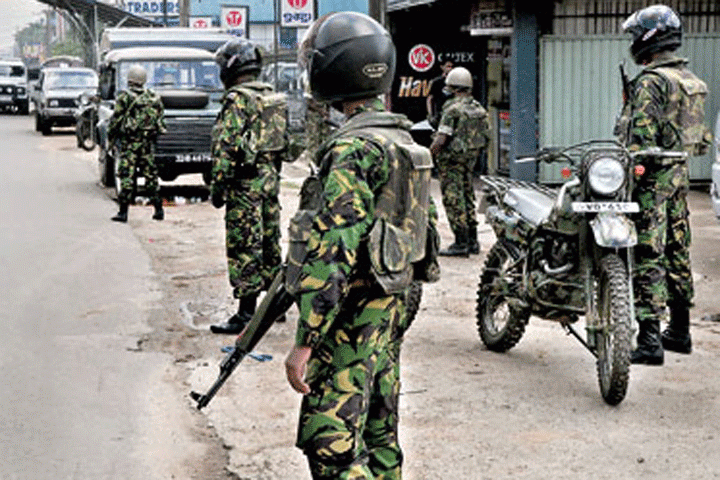
The Police Special Task Force (STF) has uncovered a large-scale illegal distillery in the Kiribathgoda area, seizing nearly 4,000 bottles of illicit liquor.
Several suspects were arrested during the operation. Authorities report that the distillery has been operating unlawfully, causing a significant revenue loss to the government.
The STF continues its efforts to crack down on illegal activities, with a focus on combating tax evasion and protecting public health by targeting unregulated alcohol production and distribution. Investigations into the operation are ongoing, and the suspects are expected to face legal proceedings.
SLFEB Targets 340,000 Foreign Employment Opportunities in 2025
The Sri Lanka Foreign Employment Bureau (SLFEB) has set an ambitious target of facilitating 340,000 overseas job opportunities for Sri Lankans in 2025.
Speaking at an awareness program for newly licensed foreign employment agents held at the Bureau of Foreign Employment, SLFEB Chairman Kosala Wickramasinghe noted that 311,000 individuals secured foreign employment in 2024, and the bureau aims to increase this figure by 12% this year.
Highlighting the need for a regulated process, Wickramasinghe stressed the importance of ensuring that overseas employment placements are carried out transparently and ethically. He also addressed concerns regarding reports of fraudulent activities involving certain licensed agencies and assured that strict legal measures would be taken against those found guilty, regardless of their influence or status.
The SLFEB continues to play a vital role in expanding international employment opportunities while prioritizing the welfare and rights of Sri Lankan workers abroad.
Colombo Stock Exchange Surpasses 17,000-Point Mark for the First Time

In a historic achievement, the All Share Price Index (ASPI) of the Colombo Stock Exchange (CSE) soared past the 17,000-point milestone for the first time today during trading.
The ASPI closed at 17,025.99 points, reflecting a remarkable performance that underscores growing investor confidence in the market. By the end of the trading session, a transaction turnover of Rs. 9.7 billion was reported, highlighting the robust activity in the exchange.
This milestone marks a significant moment in Sri Lanka’s financial market history and indicates strong momentum as the CSE continues to attract both domestic and international investors.
Prime Minister Highlights the Need to Protect Rights of Indigenous Communities
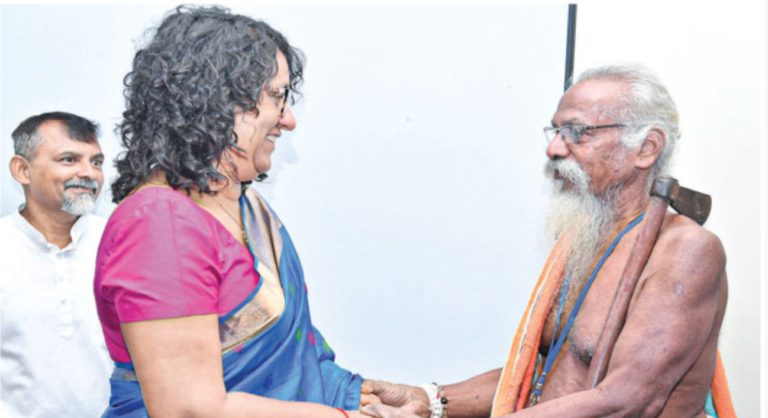
Prime Minister Dr. Harini Amarasuriya reaffirmed the importance of safeguarding the rights of Sri Lanka’s indigenous community, emphasizing that they should enjoy the same rights as all other citizens.
The Prime Minister expressed these views during a discussion organized by the Environment Ministry at the Parliament Complex on Wednesday (22), focusing on the progress of the Parliamentary Bill aimed at ensuring the rights of the indigenous community and addressing existing legal issues regarding their fundamental rights.
Dr. Amarasuriya called for swift action, instructing officials to resolve the legal and technical challenges faced by the indigenous community within the next three months. She emphasized the need to minimize the difficulties experienced by the community and ensure their rights are protected.
Commitment from Ministries
Environment Minister Dhammika Patabendi assured that the Environment Ministry would take the necessary steps to enact laws and regulations to safeguard the rights of the indigenous community. Cultural Affairs Minister Sunil Senevi emphasized that the Vedda community is a vital part of Sri Lanka’s historical and cultural heritage, underscoring the need for their protection and empowerment.
Voices from the Vedda Community
Vedda Community Leader Uruwarige Vanniyalaththo highlighted the historical significance of the community and drew attention to their current challenges. He pointed out that despite previous efforts by successive governments, their daily issues remain inadequately addressed. He also referenced the Indigenous Rights Act, which aligns with the United Nations Charter, and stressed the urgent need for effective measures to address these concerns.
Participants and Future Steps
The discussion involved a range of stakeholders, including Deputy Environment Minister Anton Jayakody, MP Sugath Balagalla, Wildlife Director General Suriyabandara, officials from the Environment Ministry, the Centre for Policy Alternatives, and members of the indigenous community.
The Environment Ministry and the Wildlife Department provided updates on the current status and outlined future actions to address the issues faced by the Vedda community.
This initiative marks a significant step towards securing the rights and preserving the cultural heritage of Sri Lanka’s indigenous population.