February 05, Colombo (LNW): In a statement made to Parliament today (05), Speaker Jagath Wickramaratne revealed that he has not yet received the Supreme Court’s determination on the Local Government Elections (Special Provisions) Bill, despite ongoing queries from the Opposition.
The Speaker’s comments followed questions raised by opposition members regarding the delay in presenting the court’s decision to the House.
The Opposition had sought clarification on why the Speaker had not disclosed the ruling, as many had expected it to be made available for discussion during today’s parliamentary session.
In response to these concerns, Leader of the House Bimal Ratnayake provided some reassurance, stating that the local government elections could still be held by the scheduled date of April 24, 2025, regardless of the court’s determination.
Ratnayake further indicated that the Bill would be brought up for debate in Parliament on February 18 and 19, offering lawmakers the opportunity to discuss and scrutinise its provisions.
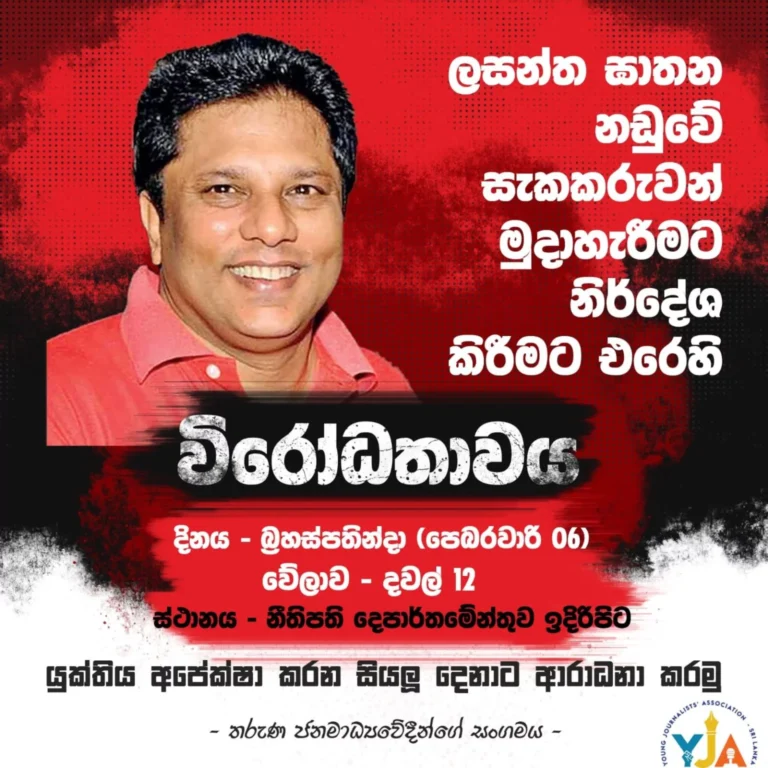
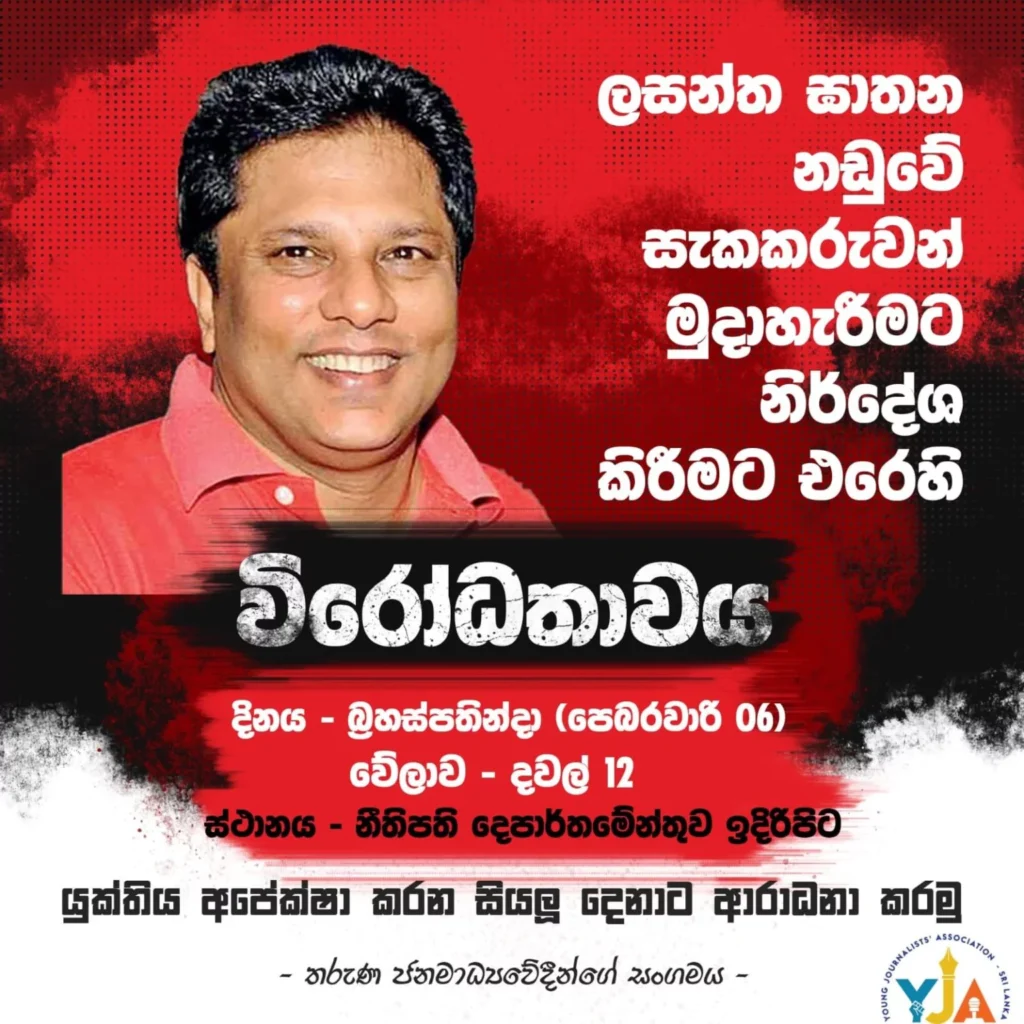
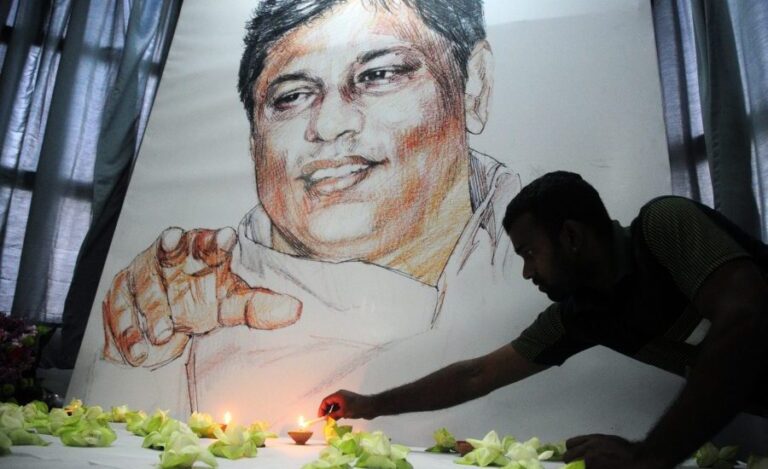
February 05, Colombo (LNW): The Young Journalists Association has called for a protest in response to the recent recommendation made by the Attorney General to release three individuals implicated in the high-profile case concerning the murder of Lasantha Wickrematunge, the former editor of The Sunday Leader.
The demonstration is set to take place tomorrow (Feb 06) at 12.00 pm in front of the Attorney General’s Department in Colombo.
Protesters will gather to express their strong objections to the Attorney General’s decision, which they believe shields those responsible for the killing of the well-known journalist.
The association has stated that the protest is aimed at demanding the resignation of the Attorney General, accusing him of protecting criminals rather than upholding justice.
Participants will also be calling for transparency regarding the criteria and legal basis behind the decision to release the suspects, whose identities have raised public concern.
The Young Journalists Association has extended an invitation to all those who stand for justice and accountability to join the protest, stressing the importance of public mobilisation in the pursuit of truth and justice in the case.
February 05, Colombo (LNW): The Ministry of Agriculture, Livestock, Land, and Irrigation is set to unveil the long-awaited certified price for paddy today, with officials emphasising that this price will be calculated based on the complete cost of production.
Deputy Minister Namal Karunaratne confirmed that the forthcoming price announcement will take into account the full expenses incurred by farmers in cultivating paddy.
He acknowledged that the long-standing demand from Sri Lanka’s farming community has been for a price that reflects at least a 30 per cent profit margin above production costs for every kilogramme of paddy harvested.
Unfortunately, this target has often remained an elusive goal.
Karunaratne explained that, despite the challenges faced in the past, the government has now taken concrete steps to meet this expectation. The authorities will ensure that the certified price will include the desired 30 per cent margin, aligning with what farmers have long been advocating for.
In addition to the price adjustment, the Deputy Minister highlighted that the Treasury has allocated a substantial Rs. 5 billion to facilitate the purchase of paddy stocks directly from local farmers.
This financial commitment aims to ease the burden on farmers, provide them with a fair return for their hard work, and support the local agricultural economy.
February 05, Colombo (LNW): Acting Inspector General of Police (IGP) Priyantha Weerasooriya has issued a strong warning to police officers and station commanders, stating that they will face both disciplinary and legal action if they refuse to accept complaints lodged by the public at police stations.
In a directive released recently, Acting IGP Weerasooriya made it clear that officers who reject complaints or fail to register them for any reason will be held accountable.
He emphasised that under the Police Ordinance, these officers could face legal repercussions in addition to the internal disciplinary measures imposed by the police department.
The Acting IGP’s circular follows numerous reports, both written and verbal, suggesting that some police officers are turning away individuals who come forward with complaints.
In many cases, these rejections have been explained with various excuses, undermining the public’s trust in the police force.
Weerasooriya stressed that such actions were unacceptable, particularly when the core duty of police officers is to serve the public by ensuring all complaints are recorded and investigated appropriately.
The circular also reminded officers that their role within the police force is not just to maintain law and order, but to respond to the concerns of the community with professionalism and integrity.
He emphasised that the failure to take action when a complaint is made not only breaches the law but also erodes public confidence in the police service.
February 05, Colombo (LNW): The Attorney General has delivered his legal opinion to the Criminal Investigations Department (CID), advising that no further legal action be taken against three individuals, including a former army intelligence officer and a retired senior police official, in connection with the ongoing investigation into the murder of journalist Lasantha Wickrematunge.
Attorney General Parinda Ranasinghe (Jnr) issued the legal advice in a letter dated 27th January 2025, addressed to the CID Director.
In his correspondence, Ranasinghe stated that the prosecution has decided not to pursue any further charges against Sergeant Prem Ananda Udalagama, a former member of the Army Intelligence Unit, Sub-Inspector Tissa Siri Sugathapala, the former Crimes Officer-in-Charge of the Mount Lavinia Police, and retired Senior DIG Prasanna Nanayakkara.
These individuals had been named as suspects in the magisterial inquiry related to the 2009 murder of Wickrematunge, who was the Editor of The Sunday Leader.
The three suspects had been arrested and remanded in custody years ago on charges of allegedly obstructing the investigation and concealing critical evidence concerning the murder.
However, with the Attorney General’s recent legal guidance, they were released on bail, and now the prospects of further criminal charges appear to have been dismissed.
The legal opinion has been shared with the Mount Lavinia Magistrate’s Court, with the Attorney General instructing the CID to submit a report on the matter within 14 days, updating the court on any progress related to the case.
In a separate but related development, Udalagama remains under suspicion for his alleged involvement in a different high-profile case — the 2009 assault on former Rivira newspaper Editor Upali Tennakoon.
This attack, which took place in the same turbulent period, has raised further questions about the extent of involvement by certain figures in Sri Lanka’s security and law enforcement apparatus during the years of conflict.
February 05, Colombo (LNW): The National Water Supply and Drainage Board (NWSDB) revealed yesterday (04) that its outstanding debt has surged to an alarming Rs. 16 billion, largely as a result of unpaid water bills from consumers.
The Board, which plays a vital role in delivering clean water across Sri Lanka, has been grappling with the increasing burden of unpaid dues from residential and commercial customers alike.
A representative from the NWSDB explained that, over the past few years, the organisation has been incurring substantial interest on loans taken from both local and international sources.
These funds were primarily used to fund a series of large-scale water supply projects aimed at improving infrastructure and extending services throughout the country.
However, the lack of timely payments from consumers has added to the financial strain on the Board, threatening the sustainability of ongoing and future projects.
As a result of this mounting debt, the NWSDB has been forced to implement stricter measures, including the disconnection of water supply to those who have failed to settle their outstanding bills.
This move comes as part of the Board’s strategy to recover the dues owed to it and ensure that it can continue operating effectively.
In a further development, the NWSDB has also indicated that it is considering an adjustment to water tariffs.
The decision to revise the pricing structure is in line with recent changes to electricity tariffs, with the Board’s special committee expected to finalise and announce the specific percentage increase soon.
This move is expected to help alleviate some of the financial pressure the organisation has been facing, but it may also place additional burden on consumers already struggling with the rising cost of living.
February 05, Colombo (LNW): A few showers may occur in Uva province and in Batticaloa, Ampara, Matale, Nuwara-Eliya and Hambantota districts, and showers or thundershowers may occur at a few places in Galle, Matara, Kaluthara and Rathnapura districts in the evening or night, the Department of Meteorology said in its daily weather forecast today (05).
Mainly fair weather will prevail over the other areas of the island.
Misty conditions can be expected at some places in Western, Sabaragamuwa, Central, Uva and North-western provinces and in Galle, Matara, and Anuradhapura districts during the morning.
Marine Weather:
Condition of Rain:
Showers or thundershowers may occur at a few places in the sea areas off the coast extending from Galle to Hambantota via Matara in the evening or night. Mainly fair weather will prevail in the other sea areas around the island.
Winds:
Winds will be north-easterly and speed will be (20-30) kmph. Wind speed can increase up to (40-50) kmph at times in the sea areas off the coast extending from Colombo to Mannar via Puttalam and from Matara to Pottuvil via Hambantota.
State of Sea:
The sea areas off the coasts extending fromColombo to Mannar via Puttalam and from Matara to Pottuvil via Hambantota will be fairly rough at times.
February 04, Colombo (LNW): The Central Bank unveils an ambitious policy agenda: inflation stabilisation, a fostered economy, and financial stability for 2025 and beyond.
Governor Nandalal Weerasinghe indicated the commitment of the institution to inflation stabilisation at 5 percent within its flexible inflation targeting framework and supported sustainable economic growth in the medium term.
A Data-Driven Approach to Monetary Policy
The CBSL is envisaging a more forward-looking and data-driven approach to monetary policy formulation through enhancing the macroeconomic modeling setup and alternative frameworks.
This process encompasses building up sound research culture within the institution that underpins policy analysis. The implementation of monetary policy under a unified policy interest rate mechanism is proposed to be made effective through the shift to a more market-friendly Open Market Operations system in 2025.
It also aims to further develop the onshore foreign exchange market by introducing a benchmark spot exchange rate that would guide all market participants and the general public. This will further improve transparency and facilitate better management of exchange rate risks.
Commitment to Economic Reforms
Governor Weerasinghe acknowledged that Sri Lanka was recovering faster than was expected compared to other countries that have faced similar economic crisis situations but noted that long-term stability is what the country really needs at present.
He said recovery can be sustained if the country enacts the necessary economic reforms. “A transformative growth acceleration is critical to enhance the country’s debt-carrying capacity and unlock its growth potential,” he pointed out.
The priority of the CBSL is to build buffers that will enable the economy to absorb such shocks, while recording non-inflationary growth with financial stability.
Strengthening Financial System Resilience
Accordingly, various policy measures are in place to strengthen financial stability, one of which involves the Bank Recapitalisation Strategy.
In this regard, and in conformity with this strategy, nine major banks in the domestic system have already submitted board-approved recapitalisation plans that will be monitored semi-annually for their compliance with minimum capital requirements.
The road map for restructuring also encompasses areas such as corporate governance, liquidity ratios, and related-party transactions under the Banking (Amendment) Act.
Accordingly, CBSL would facilitate the conducting of offshore banking operations in collaboration with the Colombo Port City Economic Commission through an appropriate regulatory and supervisory regime.
Strengthening the Non-Bank Financial Institution (NBFI) Sector
The sector of nonbank financial institutions would remain a focus area for CBSL, which was envisioned to be pursued in two stages:
Phase I: Eight successful amalgamations of finance companies.
Phase II: From December 2024, this will extend for three years into 2025–2028 to provide for enhanced resilience in finance companies intending to operate independently. This development will then be monitored to achieve agreed thresholds.
The Finance Business Act, No. 42 of 2011, and the Finance Leasing Act, No. 56 of 2000, will be amended with a view to encouraging risk management and sector stability.
The CBSL is also in the process of automation of supervisory processes and further strengthening public disclosures for better transparency and accountability of the NBFI sector.
Coordination for Policy Consistency
To that effect, Governor Weerasinghe outlined effective coordination through proper alignment at fiscal, monetary, and financial stability policy between the CBSL and the government.
In that light, a Coordination Council under the Central Bank Act meets quarterly and meets for general purposes with views on macro conditions and policy gap alignments.
CBSL also liaises with the government stakeholders through the FCMC and FSOC to plan for crisis and mitigate coordination failures, and this in turn, helps to achieve a stable financial system.
Transparency and Accountability
The CBSL maintains transparency in continuous dialogue with governmental officials and members of parliamentary standing committees. Such briefings have, among other things, covered monetary and financial policy updates, their outcomes, and the progress toward mitigating bottlenecks constraining economic activities.
Looking Ahead
The Central Bank’s agenda reflects a clear focus on ensuring macroeconomic stability, fostering growth, and reinforcing the financial system. A combination of reforms, forward-looking policies, and strong collaboration with the government underpins CBSL for a resilient and prosperous economy.
February 04, Colombo (LNW): The Samagi Jana Balawegaya (SJB) has launched a strong critique against the Government, accusing it of failing to uphold key economic promises and mismanaging critical financial and governance issues.
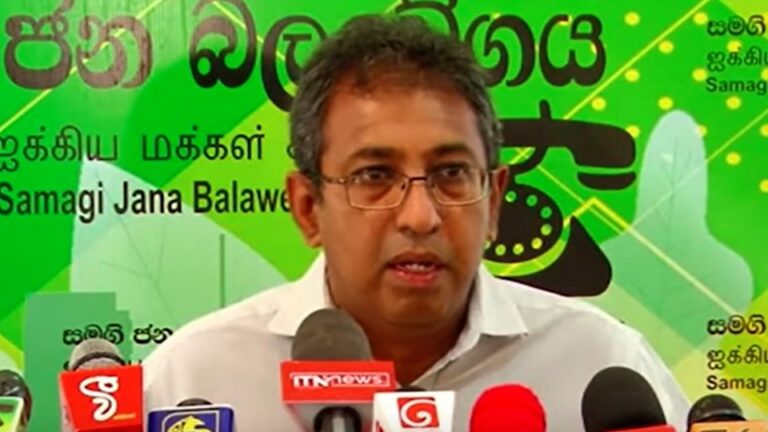
Addressing a media briefing, SJB MP Dr. Harsha de Silva highlighted concerns over tax policy reversals, questionable debt restructuring strategies, unfulfilled energy promises, and rising corruption scandals. He asserted that the administration’s failure to address these matters threatens both public trust and economic stability.
Dr. de Silva criticized the Government’s inconsistent tax policies, pointing out its reversal on an earlier promise to raise the tax threshold from Rs. 100,000 to Rs. 200,000. He accused officials of misleading the public, first pledging an increase and later denying any such commitment. This backtracking, he argued, has significantly eroded confidence in the administration’s economic direction.
Questioning the Government’s debt restructuring strategy, Dr. de Silva referenced President Anura Kumara Dissanayake’s recent statement that the country had two potential paths—either restructuring its debt or reviving the economy without it. Despite claims that Sri Lanka emerged from bankruptcy on December 21, he noted that the administration has yet to clarify how its policies will translate into real economic improvements for citizens. He further suggested that this uncertainty signals a lack of coherent economic planning.
Addressing energy policy, the SJB MP accused the Government of failing to deliver on its commitment to reduce electricity tariffs by 33%. He credited opposition efforts and public advocacy for pressuring the Public Utilities Commission of Sri Lanka (PUCSL) to implement recent tariff cuts.
Regarding fuel pricing, Dr. de Silva alleged that the Government is artificially maintaining current prices until the Provincial Council elections, despite incurring a Rs. 20 per litre loss. Given that the Ceylon Petroleum Corporation (CPC) controls 55% of the market, he warned that such price manipulation could lead to future tax hikes, particularly in vehicle taxation.
Beyond economic issues, Dr. de Silva raised serious corruption allegations, particularly concerning 323 shipping containers that reportedly left Colombo Port without proper inspection. He described this as part of a broader pattern of systemic corruption within Sri Lanka Customs.
He also called out the Secretary to the President, who has experience in investigating Customs corruption but has remained silent on this particular issue. Given his past role advising the World Customs Organisation on anti-corruption strategies, Dr. de Silva questioned the lack of action and suggested possible political interference.
Furthermore, he accused the Government of contradicting its ideological stance, arguing that it has embraced a “far-right” economic model despite its socialist rhetoric. He pointed to the National People’s Power (NPP), which previously challenged the Economic Transformation Act in the Supreme Court but has since incorporated it into its economic framework.
Dr. de Silva concluded by asserting that the Government’s inability to follow through on its promises, combined with rising corruption concerns, poses a serious challenge to its credibility. He called for greater transparency and accountability to restore public trust and ensure economic stability.
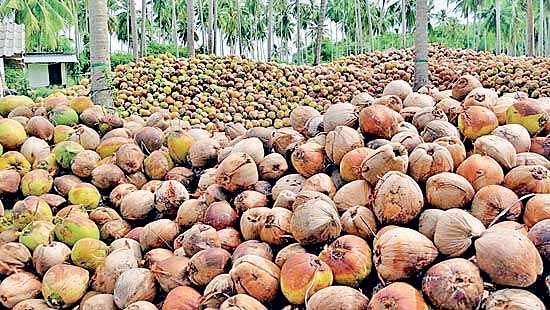
February 04, Colombo (LNW): The Ceylon Chamber of Coconut Industries (CCCI) is urgently calling for government intervention to combat an alarming coconut shortage, which threatens both domestic consumption and Sri Lanka’s export-driven coconut sector.
As a crucial part of the country’s culture and economy, coconuts play a key role in daily life while also generating vital foreign exchange revenue.
Sri Lanka typically requires 250 million coconuts per month, with 150 million consumed locally and the remaining 100 million used for exports.
However, data from the Coconut Research Institute (CRI) reveals that coconut production has significantly declined, with a shortfall of 700 million coconuts recorded between 2021 and 2024. The situation is expected to worsen, with an additional deficit of 200 million coconuts projected between January and April 2025.
This sharp decline has driven prices up, placing financial strain on households and creating supply chain challenges for export manufacturers.The coconut sector is a major contributor to Sri Lanka’s economy, providing over 750,000 direct jobs and supporting countless others indirectly. The country earned $708 million from coconut product exports in 2023, and by November 2024, earnings had risen to $782 million, reflecting a 20% increase.
By the end of 2024, total export revenue is expected to reach $850 million, the highest on record. Despite this success, the industry’s long-term stability is in jeopardy without immediate action.
According to Jayantha Samarakoon, President of the CCCI, the coconut shortage presents a dual crisis, affecting both households and exporters. He warns that without urgent intervention, Sri Lanka risks losing its competitive edge in global markets while also making coconuts unaffordable for local consumers.
The industry faces multiple challenges, including a lack of fertilizer due to high costs, inadequate irrigation, climate change impacts, pest attacks, and land fragmentation.Rising coconut prices have made this essential staple increasingly inaccessible, posing a risk of nutritional deficiencies among Sri Lankans.
Exporters are also struggling to fulfill international orders, which could damage Sri Lanka’s reputation as a reliable supplier.
To address the crisis, the CCCI has proposed several key measures. It recommends allocating LKR 1.5 billion from the CESS Fund to support farmers with subsidies for fertilizer, pest control, and replanting.
Soft loans should also be made available to enhance agricultural infrastructure, including water management and solar power adoption. Additionally, the CCCI urges consumers to reduce coconut waste and shift towards processed products such as coconut milk powder and desiccated coconut.
To stabilize the industry, the CCCI suggests temporarily permitting the import of 200 million coconuts or equivalent raw materials, such as copra chips and frozen kernels, to support local manufacturing. Establishing stringent quality standards for imported materials is also necessary to maintain product consistency for both domestic and export markets.
With global demand for coconut-based products reaching $30 billion annually, Sri Lanka has immense potential to expand its market share. The CCCI has set an ambitious goal of increasing export revenue to $1.5 billion by 2027, requiring an annual production of 4.5 billion coconuts.
Industry leaders, including Randeewa Malalasooriya of the Coconut Milk Manufacturers’ Association, believe this target is achievable through improved farming practices, reduced waste, and strategic imports of raw materials for value addition and re-export.
To sustain growth, Sri Lanka must enhance productivity and adopt innovative solutions. Industry stakeholders emphasize the need for a shift towards processed coconut products to curb wastage and ensure a stable supply.
With the right policies in place, Sri Lanka has the potential to elevate its coconut industry, securing its place as a global leader while ensuring affordability for local consumers.