Home Blog Page 75

Government Probes into Rapid Expansion of Unregulated Co-operative Banks

0

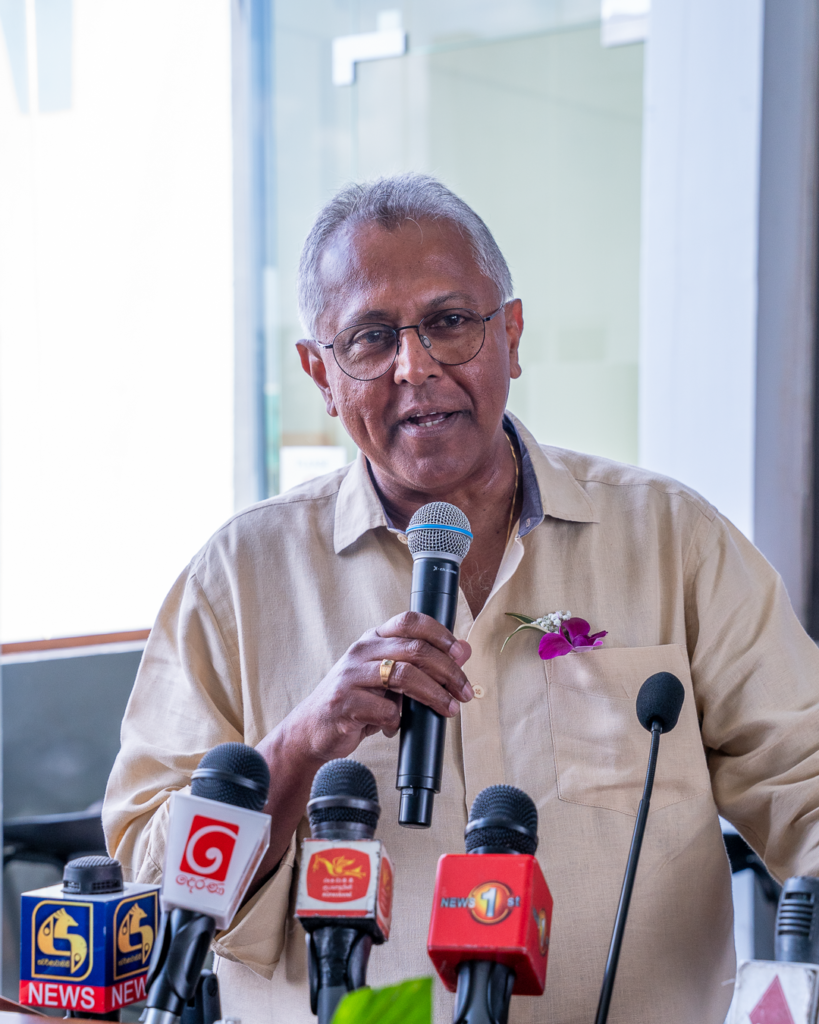
Financial institutions mushrooming in the island without a proper oversight as co-operative banks’ with branches in several regions are to be scrutinised and regularised, Trade and Co-operative Minister Wasantha Samarasinghe disclosed. 

He blamed provincial councils and some governors of provinces for approving the setting up of such irregular finance companies taking deposits from rural masses.

Minister Smarasinghe stressed the need to close the loopholes in the cooperative bank act ”Establishing cooperative banks are done under the Co-operative Societies Law, No. 5 of 1972, with power vested in the provincial councils to approve their setting up”, he added. .

The government has already taken steps to promptly introduce new laws to regulate the cooperative sector including the cooperative banking system.

Trade and Co-operative Ministry is probing some financial institutions such as Saubhagya Cooperative Bank Ltd (SCD) of the North Central Province and Anuradhapura District Rural Capital Development Cooperative Society Ltd (RCD).started in recent years as ‘co-operative banks’ which are opening branches rapidly without a proper oversight,

These institutions, while performing quasi-banking functions such as accepting deposits and issuing loans, are not licensed under the Banking Act and are therefore not subject to Central bank  supervision.

Instead, they operate under the Co-operative Societies Law No. 5 of 1972, and are monitored by the Department of Co-operative Development under the Ministry of Trade, Commerce and Food Security.

This legal framework allows for the registration of financial co-operatives at district and provincial levels, with a focus on community-based development, self-financing, and microcredit lending, a high official of the finance ministry said.

However all Cooperative rural banks are registered with the Regional Commissioner of Cooperatives and the Cooperative Development Department is monitoring and auditing the accounts of these cooperative societies.

Almost all cooperative societies are registered under the Co-operative Societies Law No.5 of 1972, by which they are authorised to accept deposits from public and lend monies to their members.

 In addition, there is a large number of Thrift and Credit Cooperative Societies, which are also categorized as Cooperative banks as they perform banking functions at grassroots level.

There are around 7,000 rural financial institutions and a significant number of significant number of Cooperative Rural Banks (CRBs) with 1,933 branches countrywide, Cooperative Development Department‘s available data shows .

These banks operate under the umbrella of the cooperative movement, with a focus on microfinance activities. The number of CRBs has grown considerably over time, starting from just three at the end of 1964.

Sri Lanka Launches Bold Crackdown to Recover Stolen Wealth

0

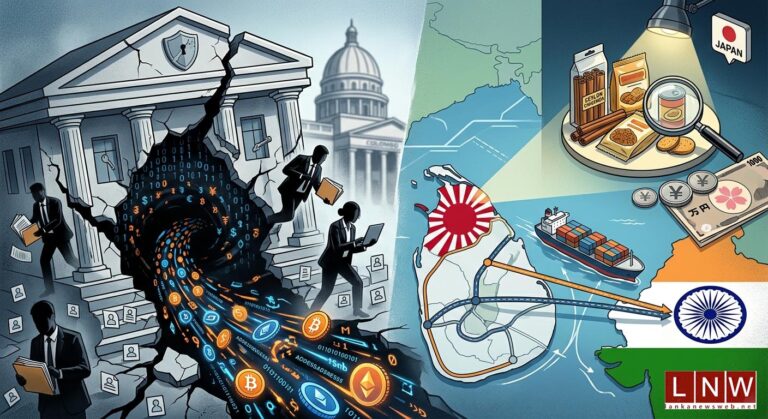
In a sweeping move to confront decades of entrenched corruption and recover stolen public funds, the Sri Lankan government has launched a major anti-graft drive under the newly enacted Proceeds of Crime Act No. 05 of 2025. The law represents a historic milestone in the country’s long fight against illicit enrichment, granting sweeping powers to investigate, freeze, and confiscate illegally acquired assets both at home and abroad.

The initiative gained momentum with the formal establishment of the Proceeds of Crime Investigation Division (PCID) a new arm of the Sri Lanka Police  on October 20, 2025. Operating from the old Police Headquarters in Colombo, the division has been mandated to probe criminal and non-criminal forms of illicit wealth accumulation.

It will collaborate with 34 key government entities, including the Commission to Investigate Allegations of Bribery or Corruption (CIABOC), the Financial Intelligence Unit (FIU), and other financial and enforcement agencies.

A senior Finance Ministry official confirmed that individuals or institutions whether in the public or private sector  found to have obtained money, property, or other assets unlawfully will face both criminal prosecution and civil asset forfeiture. Notably, the law allows for asset seizure even in cases where a criminal conviction cannot be secured, closing a major loophole that long shielded the powerful.

One of the Act’s most transformative provisions is the reversal of the burden of proof. Suspects must now demonstrate that their wealth was legitimately earned; failure to do so could lead to confiscation orders, even if they are granted bail.

Moreover, the law has retrospective effect, empowering investigators to scrutinize unexplained wealth accumulated over the past 30 years, and up to 50 years in cases involving embezzled public property.

The new law complements the broader National Anti-Corruption Action Plan (NACAP) 2025–2029, launched earlier this year under CIABOC’s leadership with technical support from the United Nations Development Programme (UNDP).

The plan responds to mounting public frustration — a 2024 national survey revealed that 49 percent of respondents admitted to paying bribes, while 84 percent believed corruption discouraged tax compliance.

Adding international backing to the reform effort, Japan has pledged a US$ 2.5 million grant to strengthen Sri Lanka’s anti-corruption framework and institutional capacity, according to Finance Ministry sources.

Already, the impact of the new regime is being felt. Authorities have initiated at least four high-profile investigations into luxury residences and hotel properties allegedly linked to public officials. Meanwhile, CIABOC’s recent nationwide awareness campaign has led to a 26 percent rise in public complaints, signaling a growing wave of citizen engagement and confidence in Sri Lanka’s fight against corruption

Guarantee Trap: Hidden Fiscal Risks Lurking in Sri Lanka’s Debt

0

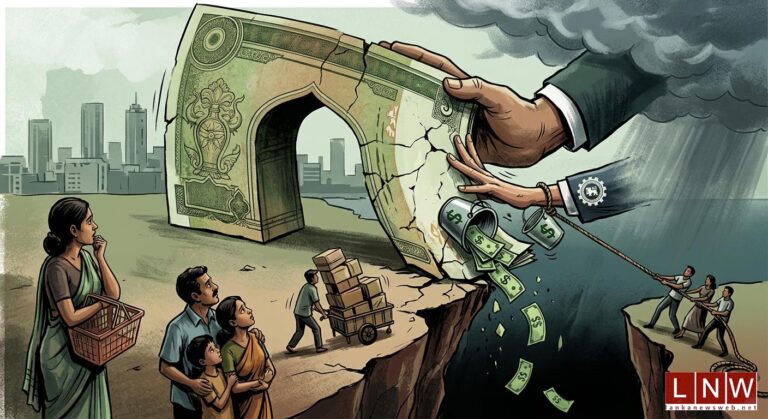
Sri Lanka’s growing dependence on government guarantees has turned into a silent threat, tightly binding public finances to the performance of state-owned enterprises (SOEs) and state banks. According to the Finance Ministry, by September 2024, outstanding guarantees and letters of comfort had surged to Rs. 1,660 billion  around 5.5 percent of GDP  underscoring the scale of the country’s hidden liabilities.

While these guarantees have been vital in financing public utilities and infrastructure, the International Monetary Fund (IMF) has repeatedly sounded alarms over their mounting fiscal risks. In its 2025 Technical Assistance Report, the IMF warned that “fiscal risks in areas such as state-owned enterprises, guarantees, public-private partnerships, financial sector, and natural disasters remain substantial.”

A large portion of these guarantees stems from currency swaps and trade credits provided by the Reserve Bank of India to the Central Bank of Sri Lanka, backed by state guarantees. Major SOEs — including the Ceylon Electricity Board, Ceylon Petroleum Corporation, Road Development Authority, SriLankan Airlines, and the National Water Supply and Drainage Board — collectively account for more than half of these obligations. Meanwhile, state banks such as the Bank of Ceylon, People’s Bank, and National Savings Bank remain the largest domestic lenders tied to these guaranteed loans, heightening systemic exposure.

For decades, the issuance of guarantees and on-lending occurred without proper credit evaluation or clear safeguards. Many loss-making SOEs benefited from state-backed borrowing to maintain essential services and infrastructure, often without any accountability or assessment of repayment capacity. This practice has left the government increasingly vulnerable to contingent liabilities that could crystallize into direct fiscal burdens.

To curb these risks, Sri Lanka enacted the Public Debt Management Act (PDMA) in June 2024, creating a structured legal framework to oversee guarantees and on-lending practices. The PDMA mandates the Public Debt Management Office (PDMO) to carry out credit risk assessments before extending guarantees and to limit such support to non-distressed entities. Complementing this, the Public Finance Management Act (PFMA) reduced the maximum ceiling on outstanding guarantees to 7.5 percent of GDP, aiming to promote sustainable debt control and fiscal discipline.

Yet, despite these reforms, the IMF cautions that the overall fiscal exposure “remains substantial.” The government is currently drafting detailed regulations to operationalize the PDMA, including mechanisms for risk evaluation, mitigation, monitoring, and public reporting. These steps are designed to close the loopholes that previously allowed unchecked guarantee issuance and to strengthen transparency and accountability.

Sri Lanka’s experience underscores the delicate balance between using guarantees to stimulate growth and avoiding the fiscal dangers they conceal. The real test lies in enforcing the PDMA and PFMA effectively. Only through disciplined risk management and transparent governance can the nation prevent today’s financial safety nets from turning into tomorrow’s fiscal time bombs.

Sri Lanka’s Gem Glory Dimmed by US $1 Billion Black Market

0

The gem and jewellery industry in Sri Lanka long celebrated for the wealth of varieties such as Ceylon sapphires, rubies and topazes is now exposed as suffering from a two-tiered reality. On the one hand, official export figures remain disappointingly low; the industry reportedly achieved only US$202 million in export earnings in 2024.

On the other hand, parliamentary disclosures and investigative reports point to an underground pipeline of exports and illicit trafficking estimated at Rs 300 billion (more than US$1 billion) annually.

The sector’s official results reveal a disconnect between ambition and delivery. In October 2025, industry officials reiterated a target of at least US$400 million for the year, even as they acknowledge historic performance far below that threshold.

Conversely, earlier reports show that cumulative exports of gems and jewellery in 2024 dropped  This suggests policy headwinds and structural bottlenecks inhibiting growth.

Multiple investigations suggest the gap between official figures and actual flows is fuelled by deep-rooted smuggling and export evasion. Chinese nationals, foreign participants and unlicensed intermediaries are reported as being active in moving high‐value gems out of Sri Lanka through informal channels and cash transactions, thereby bypassing customs and tax-regimes.

 One article highlights how undervaluation of consignments is routine, with the National Gem and Jewellery Authority (NGJA) pointing to instances where gems valued at hundreds of thousands of dollars were recorded at mere tens of thousands.

The government and regulatory bodies have acknowledged the problem. The NGJA and other authorities claim that enforcement and auctioning protocols are in place — yet critics say the existing legal and institutional framework remains inadequate to stamp out illicit activity.

Proposed reforms include duty‐free import schemes for processed and unprocessed stones, VAT refunds for exporters at the airport, and attempts to streamline licensing.

But the delay and weak enforcement mean that many expect the official pipeline to fall short of its potential.

Loss of tax revenue and foreign exchange from the hidden trade is a serious drag on the country’s overall economic recovery. With Sri Lanka targeting US$36 billion in total exports by 2030, the gem sector could have been a unique contributor — yet instead it is serving as a leak.

Internationally, unchecked smuggling and undervaluation undermine Sri Lanka’s reputation as a credible source of premium gemstones. Traditional buyers may shift to alternative hubs offering greater transparency.

Experts agree that the industry requires far stronger governance. This includes:

Rigorous audit trails for gem exports and receipts of foreign currency.

Better gem-valuation capacity and fewer arbitrage opportunities for undervaluation.

Measures to bring informal transactions into the formal economy  e.g., licensing of foreign buyers, tracking rough stone flows, stricter border controls.

Integration of value-addition (cutting, polishing, jewellery manufacturing) and export channels to raise declared earnings.

Without meaningful reform, the disparity between Sri Lanka’s natural gem-endowment and its export performance will continue to widen  with the illicit economy capturing most of the value.

In sum, while the official numbers for 2025 show some improvement, the true size of Sri Lanka’s gem and jewellery industry remains opaque. As long as more than US$1 billion of trade flows outside formal channels, the country’s economy, revenue potential and industrial credibility suffer. Only when the “underground” trade is drawn into the daylight will Sri Lanka’s gem sector deliver on its promise.

TRCSL Launches 24-Hour ‘1818’ Hotline to Support National Anti-Drug Operation

0

In support of the island-wide anti-drug campaign themed “Nation United – National Drive”, the Telecommunications Regulatory Commission of Sri Lanka (TRCSL) has launched a new 24-hour hotline, 1818, to strengthen public participation in the national effort to eradicate narcotics.

The hotline, established at the request of the national anti-drug initiative, allows citizens to share accurate and timely information on drug trafficking, distribution, or any suspicious narcotics-related activities across the country.

According to the TRCSL, the initiative aims to enhance coordination among law enforcement authorities and ensure swift response to public complaints and intelligence leads.

Chinese Envoy: Expanding RMB Cooperation Will Boost Sri Lanka’s Economic Recovery

0

At a crucial stage in Sri Lanka’s economic recovery and structural reforms, expanding cooperation with China’s renminbi (RMB) will inject fresh momentum into trade, investment, and financial modernization, Chinese Ambassador Qi Zhenhong said.

He made these remarks at the RMB Internationalization Forum held in Colombo on October 29.

Ambassador Qi noted that the dollar-centric global financial system has exposed several structural contradictions — including liquidity imbalances and risk spillovers — which have disadvantaged developing nations. He stressed that policy shifts in major economies often create a “tidal effect” on the global economy, driving up financing costs and destabilizing exchange rates in smaller nations.

Highlighting China’s efforts to promote the international use of the RMB, he said the currency’s role in global trade settlement, reserve holdings, and investment tools continues to expand, particularly in the energy, finance, and infrastructure sectors.

“For a developing country like Sri Lanka, greater use of the RMB can diversify foreign exchange reserves, reduce exchange-rate risk, and ensure more stable and cost-effective settlement channels,” the Ambassador said. “At this critical period, expanding RMB cooperation will provide new momentum for trade facilitation, investment attraction, and financial system modernization.”

He emphasised that RMB internationalisation is a market-driven, enterprise-led, and gradual process, reflecting China’s deep integration into global trade and investment.

Ambassador Qi also outlined China’s expanding global RMB network, including clearing banks in 33 countries, RMB’s inclusion in the IMF’s Special Drawing Rights basket, and the growing adoption of digital yuan in cross-border transactions.

He concluded by reaffirming China’s commitment to working with all partners to build a more diversified, inclusive, and resilient international financial system.

King Charles strips brother Andrew of titles and his mansion

0

Britain’s King Charles has stripped his younger brother Andrew of his title of prince and forced him out of his Windsor home, Buckingham Palace said on Thursday, seeking to distance the royals from him over his links to the Jeffrey Epstein scandal.Andrew, 65, the younger brother of Charles and second son of the late Queen Elizabeth, has come under mounting pressure in recent years over his behaviour and his ties to the late sex offender Epstein. Earlier this month he was forced to stop using his title of Duke of York.

Charles has now escalated his actions against Andrew by stripping him of all his titles, leaving him to be known as Andrew Mountbatten Windsor.

The Buckingham Palace statement said a formal notice had now been served on Andrew to surrender the lease of his Royal Lodge mansion on the Windsor Estate, west of London, and he will move to alternative private accommodation on the Sandringham estate in eastern England.

The decision by the king, who is still undergoing regular treatment for cancer, marks one of the most dramatic moves against a member of the royal family in modern British history.

PALACE SAYS THOUGHTS ARE WITH VICTIMS OF ABUSE

“These censures are deemed necessary, notwithstanding the fact that he continues to deny the allegations against him,” the palace said. “Their Majesties wish to make clear that their thoughts and utmost sympathies have been, and will remain with, the victims and survivors of any and all forms of abuse.”

Andrew was once regarded as a dashing naval officer and served in the military during the Falklands War with Argentina in the early 1980s.

But he was forced to step down from a roving UK trade ambassador role in 2011, before quitting all royal duties in 2019 and then was stripped of his military links and royal patronages in 2022 amid allegations of sexual misconduct that he has always denied.

That year, he settled a lawsuit brought by Virginia Giuffre, who died in April, which accused him of sexually abusing her when she was a teenager. Andrew has always denied her account, which has recently returned to prominence with the release of her memoir.

In her book, she said “entitled” Andrew believed it was his birthright to have sex with her.

Earlier this month, correspondence between Andrew and Epstein from 2011, published by the Mail on Sunday and The Sun, revealed Andrew telling Epstein that they should “keep in close touch” and that they would “play some more soon”.

KING CHARLES MADE DECISION BUT HAD SUPPORT FROM WIDER FAMILY

A palace source said that while Andrew continued to deny the accusations against him, it was clear that there had been serious lapses of judgement. The source said the decision was taken by Charles but that the monarch had the support of the wider family, including heir-to-the-throne Prince William.

The decision to force Andrew to move away from Windsor was also significant after newspapers reported he had not paid rent on his 30-room mansion for two decades, after initially paying for renovations.

In a rare political intervention into the workings of the royal family, a British parliamentary committee had on Wednesday questioned whether Andrew should still be living in the house.

Polls show the royal family has been losing the support of younger generations for years. Charles, with the support of 43-year-old William, has acted to protect the institution, which experts say is the priority of any monarch.

In 1936, Edward VIII was forced to abdicate just over a year after ascending the throne so he could marry a divorced American socialite. He retained the title of Duke of Windsor but was largely banished from Britain.

Source: Reuters 

Five Excise Narcotics Unit Officers Arrested by CID

0

Five officers attached to the Narcotics Unit of the Excise Department have been arrested by the Criminal Investigation Department (CID).

According to reports, the officers were taken into custody upon arriving to provide statements to the CID.

Further investigations are currently underway.

GMOA Temporarily Calls Off Island-Wide Strike

0

The Government Medical Officers’ Association (GMOA) has temporarily called off the island-wide strike that was scheduled to begin at 8.00 a.m. today (31).

In a statement, the GMOA said the decision was made following a special discussion held last night (30) between Health Minister Dr. Nalinda Jayatissa, the Director General of Health Services, and GMOA representatives.

The association stated that the Health Ministry has agreed to suspend the transfer of doctors that were allegedly implemented in violation of the accepted methodology, and instead to carry out transfers within a specified timeframe following the proper procedure.

These agreements are to be confirmed during a special meeting with the administrative doctors of the Health Ministry, scheduled to be held today.

Accordingly, the GMOA announced that the suspension of the strike has been extended until 12 noon today, pending written confirmation of the agreements reached.

The GMOA also warned that if the agreed measures are not implemented as promised, the strike action would be resumed at any time.

WEATHER FORECAST FOR 31 OCTOBER 2025

0

Mainly fair weather will prevail in the most parts of the island.

Misty conditions can be expected at some places in Central, Sabaragamuwa and Uva provinces during the early hours of the morning.