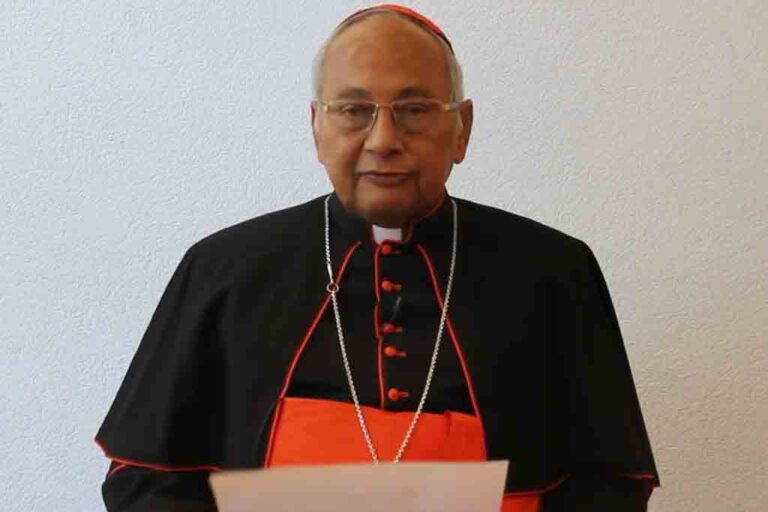
Colombo Archbishop Cardinal Malcolm Ranjith extended warm wishes for a joyful and holy Christmas in his message, urging people to reflect on the true meaning of the season.
The Cardinal highlighted the humble circumstances of Jesus Christ’s birth, recounting the Holy Family’s journey from Nazareth to Bethlehem, where they found no shelter and sought refuge in a manger. He emphasized the profound simplicity of this event, which occurred far from the grandeur of a royal palace.
“Jesus was born among the poor and marginalized,” Cardinal Ranjith noted, pointing out that shepherds were the first to welcome the Savior while angels sang praises in this modest setting. He underscored this as a testament to God’s preference for the poor, reaffirming the Biblical principle that God is the God of the poor.
The Cardinal encouraged everyone to look beyond material gifts and external celebrations, focusing instead on the spiritual joy of Christmas. He emphasized the importance of empathy and solidarity with those in need, stating, “By reaching out to the less fortunate and embracing the spirit of giving, we honor the essence of Christ’s birth.”
Cardinal Ranjith called on people to embrace simplicity and spend time with the poor, offering love and support. He reminded us that true fulfillment and joy come from shedding material attachments and living in harmony with the message of Christ’s humble beginnings.
This Christmas, the Cardinal urged all to reflect on these values and extend kindness and compassion to those around them, celebrating the season in its truest spirit.
In his Christmas Message President Anura Kumara Dissanayake says “Christmas, the day that marks the birth of Jesus Christ, is celebrated with great reverence by Christians worldwide. Jesus Christ, who came into this world to bring salvation to all, saw no divisions among people, be they rich or poor.”
The Director of Public Relations for the Archdiocese of Colombo, Rev. Fr. Jude Krishantha, has reassured Catholic devotees and the public of their safety as they attend church services for Christmas celebrations, urging them to participate without fear or doubt.
The Minister of Labour and Deputy Minister of Economic Development, Prof. Anil Jayantha says that a salary increase for public sector employees ‘must’ take place in 2025. He made this statement during a media briefing , emphasizing the government’s commitment to easing the economic hardships faced by the public.
Sri Lanka is set to achieve a significant milestone in its tourism sector as the country prepares to welcome its two millionth tourist for 2024 on December 26th. This landmark occasion will take place at the Bandaranaike International Airport (BIA) through the Silk Route, highlighting the success of ongoing tourism promotion efforts.
Sixty-two employees of the Ceylon Electricity Board (CEB), suspended for participating in protests against its privatization during the previous government, have been reinstated with compensation. These employees were suspended following a protest campaign launched by CEB trade unions last January, opposing alleged privatization efforts.
A rare genetic disorder, Congenital Methemoglobinemia, has been diagnosed for the first time in Sri Lanka, affecting a child from the Medawachchiya area in Anuradhapura. The condition, which causes the skin to turn blue and severely impairs breathing, was identified by a specialist at the premature infant unit of the Anuradhapura Teaching Hospital.
Dr. Senesh Bandara Dissanayake, the Chairman of Sri Lanka Rupavahini Corporation (SLRC), has announced his resignation just three months after assuming the role under the new National People’s Power (NPP) government.In a statement shared on social media, Dissanayake clarified that his tenure was always intended to be temporary.
Former President Mahinda Rajapaksa has received death threats from ISIS terrorists and LTTE groups, according to Manoj Gamage, Vice President of the Sri Lanka Podujana Peramuna (SLPP) Lawyers’ Association. Speaking to the media Gamage revealed that, the Ministry of Public Security withdrew the remaining military officers assigned to Rajapaksa’s security detail.
Cabinet Spokesman, Minister Dr. Nalinda Jayatissa stated that necessary steps will be taken to curb the resurgence of underworld activities. Addressing the Cabinet press briefing, Dr. Jayatissa highlighted the commitment of security forces to address this issue effectively.
The International Cricket Council (ICC) today announced the fixtures for the ICC Men’s Champions Trophy 2025, which will take place from 19 February to 9 March in Pakistan and UAE. The 15-match, eight-team event returns to the cricket calendar for the first time since the last edition was staged in 2017, with defending champions Pakistan hosting their first global cricket tournament since 1996, alongside the UAE which was confirmed as the neutral venue.
SJB Member of Parliament Dr. Harsha de Silva has welcomed the recent upgrade in Sri Lanka’s credit ratings by international agencies, stating it as a positive development for both the Government and the country.
Speaking at the SJB office in Colombo yesterday, Dr. de Silva highlighted the detrimental impact of previous credit rating downgrades on foreign direct investments (FDI). “The downgrading of Sri Lanka’s credit ratings adversely affected FDI. I hope that this upgrade will help boost foreign investments in the future,” he remarked.
The Parliamentarian also pointed out that the current Government has maintained the economic policies of the previous administration. He attributed the improved credit ratings to this policy continuity, underscoring its importance in fostering economic stability and growth.
Cabinet Spokesman and Minister Dr. Nalinda Jayatissa affirmed the Government’s dedication to curbing underworld activities and drug trafficking.
Speaking at a recent media briefing, Minister Jayatissa emphasized that addressing these issues requires a systematic approach rather than short-term operations. “As a Government, we are committed to suppressing underworld crime and combatting drug trafficking. However, we will not rely on short-term or two-week operations. The Police and Security Forces are systematically engaging in this matter,” he stated.
The Minister noted that several preliminary measures have already been implemented and underscored the importance of evaluating the outcomes of these efforts rather than focusing solely on the methods.
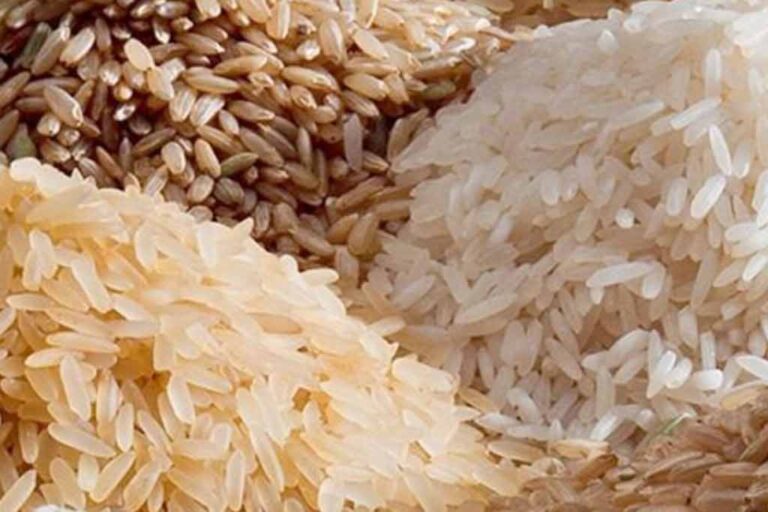
The Cabinet of Ministers has approved an extension of rice import permits until January 10, 2025, to address the ongoing rice shortage in the country. This decision was made during the Cabinet meeting held on Monday.
Under the extended arrangement, the private sector will be permitted to continue rice imports until the specified deadline. The previous import permit, which was set to expire on December 20, 2024, has been renewed to ensure a steady supply of rice.
A gazette notification formalizing the extension is expected to be issued soon. In addition to extending the import permits, the Government has committed to streamlining the rice distribution process to prevent delays and ensure timely delivery to consumers.
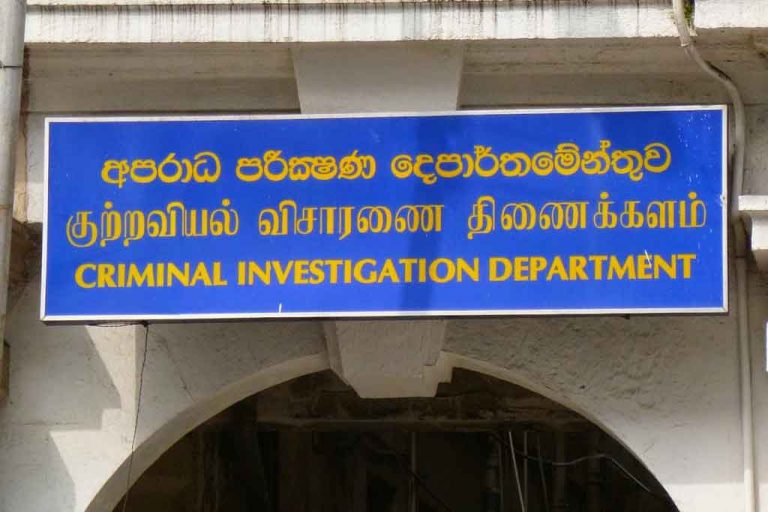
The Criminal Investigation Department (CID) has initiated an inquiry into allegations of misuse of the President’s Fund.
According to a senior officer at Police Headquarters, the investigation commenced following a written complaint submitted by a group of four lawyers representing the “Lawyers Organisation for Protection of Public Funds.” The complaint was addressed to the Acting Inspector General of Police.
The President’s Fund Act outlines clear guidelines on the appropriate utilization of the fund’s resources. The complaint alleges that expenditures have been made beyond the scope of these directives, prompting the call for a thorough investigation.
The CID is expected to scrutinize the financial activities of the Fund to determine whether any irregularities have occurred and ensure compliance with legal provisions.
Mainly fair weather will prevail over most parts of the island.Misty conditions can be expected at some places in Western, Sabaragamuwa, Central, Southern, Uva and North-central provinces during the morning.
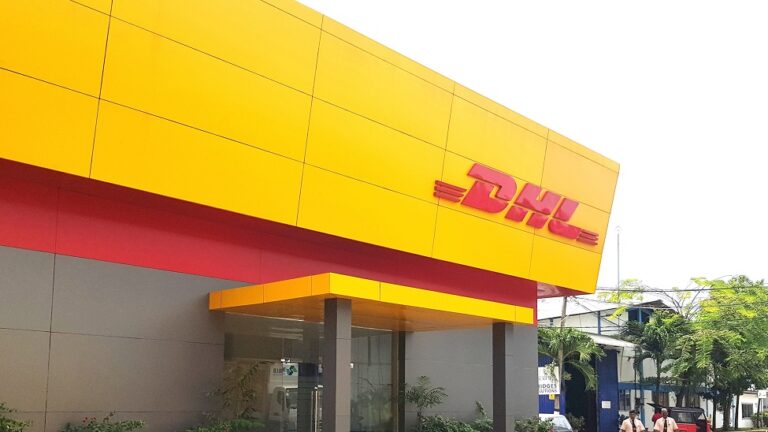
December 24, Colombo (LNW): DHL Global Forwarding has made a major advancement in enhancing Sri Lanka’s logistics capabilities with the opening of a state-of-the-art, 85,000-square-foot centralized warehouse.
This new facility will consolidate several smaller satellite warehouses and serve as the new home for DHL’s life sciences and healthcare (LSH) facility, which is relocating from Peliyagoda in early 2025.
Strategically located in Ekala, Ja-Ela—equidistant from the airport and the port city—this facility is positioned for optimal efficiency in supply chain operations. It will cater to a broad spectrum of industries with specialized infrastructure, including:
Life Sciences and Healthcare: The facility will offer fully GDP-certified, temperature-controlled storage spaces for sensitive goods.
Technology: Dedicated areas with top-tier security protocols.
Project Cargo, Electronics, FMCG, Apparel, and Vehicles: The facility will provide ISO-certified solutions, ensuring the highest standards of quality assurance across various sectors.
According to Sudeep Raina, Managing Director of DHL Global Forwarding in Sri Lanka and the Maldives, Sri Lanka has become a crucial logistics hub in South Asia, attracting prominent shipping lines and exporters.
The country’s logistics sector contributes 2.5% to the nation’s GDP, roughly €1.9 billion, playing an essential role in Sri Lanka’s economic development and global trade connectivity.
As highlighted by the Sri Lanka Economic Development Board, the Port of Colombo has seen a steady 4.5% growth in container traffic over the last decade, with transshipment accounting for over 75% of total container traffic.
The global logistics landscape has been increasingly influenced by recent disruptions, underscoring the need for resilient and adaptive logistics solutions.
With the Indian Ocean serving as one of the busiest East-West trade corridors and the strategic positioning of Sri Lanka between Singapore and Dubai, the country’s development as a logistics hub is gaining prominence.
This new facility reinforces DHL’s ongoing commitment to supporting Sri Lanka’s ambition to be a logistics powerhouse while offering customers access to advanced, reliable services.
In line with its sustainability goals, the facility will use green electricity generated by solar panels installed on-site, reflecting DHL’s commitment to reducing its environmental impact.
This version provides further context on Sri Lanka’s logistics importance and DHL’s strategic positioning while expanding on the facility’s features and global relevance.
December 24, Colombo (LNW): The Sri Lanka Air Force (SLAF) is actively modernizing its fleet, focusing on upgrading existing aircraft and acquiring new assets to enhance its operational capabilities. This year, the SLAF has launched several initiatives, including the overhaul of Kfir fighter jets and the addition of advanced surveillance aircraft.
The SLAF is undertaking a significant upgrade of its Kfir multirole combat aircraft as part of a $50 million agreement signed in 2021 with Israel Aerospace Industries (IAI). This deal involves modernizing five Kfir jets from the No. 10 Squadron, integrating advanced avionics systems, such as radar, sensors, communication systems, and new helmets.
The upgrade will bring the aircraft to a 4.5-generation standard, improving their performance and operational effectiveness. The first upgraded Kfir jet is expected to be operational by early 2025.
The Kfir overhaul program also emphasizes transferring essential skills and knowledge to SLAF personnel, with some work being carried out locally in Sri Lanka. While major components like engines will be sent to Israel, much of the overhaul will occur at SLAF’s Katunayake facility, with Israeli experts providing support.
The modernization comes with a 15-year warranty from IAI, a company renowned for its expertise in aircraft upgrades, having worked with military forces such as the Israel Air Force and the US Air Force.
The SLAF is also enhancing its maritime surveillance capabilities with the induction of a Beechcraft King Air 360ER aircraft. Acquired through the U.S. Department of Defense’s Building Partner Capacity program in October 2024, this aircraft will assist the SLAF and the Sri Lanka Navy in patrolling the nation’s waters and securing vital trade routes in the Indian Ocean. This acquisition is vital in countering maritime threats and protecting Sri Lanka’s interests in the region.
Looking forward, the SLAF is also planning to acquire additional aircraft to further bolster its capabilities. The Air Force has expressed interest in purchasing the Harbin Y-12 from China and the C-130 Hercules from the United States. These acquisitions will enhance the SLAF’s transport and logistical capabilities, supporting its broader strategic objectives.
These modernization efforts reflect the SLAF’s strategic approach to strengthening its fleet. By upgrading existing aircraft and expanding its capabilities with new acquisitions, the SLAF aims to ensure its readiness and effectiveness in securing Sri Lanka’s air and maritime domains.
These initiatives are a clear indication of the SLAF’s commitment to maintaining operational superiority in an increasingly complex regional security environment.
December 24, Colombo (LNW): Sri Lanka’s Ceylon Electricity Board (CEB) and its subsidiary, Lanka Electricity Company (LECO), have secured a $230 million loan from the Asian Development Bank (ADB) to enhance renewable energy integration and modernize the nation’s electricity grid.
The project, backed by Treasury guarantees, aims to build a climate-resilient energy infrastructure while addressing challenges posed by intermittent renewable energy sources.
Key Loan Details
The ADB’s $200 million loan under the Power System Strengthening and Renewable Energy Integration Project will focus on improving the reliability of Sri Lanka’s power system. Of this, $150 million is allocated to CEB, and $50 million to LECO.
A further $30 million will be provided in two tranches to support the Moragolla Hydropower Project and other renewable energy initiatives. These agreements, signed on December 19, 2024, involve Sri Lanka’s Ministry of Finance and ADB representatives.
Infrastructure Upgrades and Renewable Integration
The loan will fund the construction of six new grid substations, 132 kV and 220 kV transmission lines, and the augmentation of existing substations. These upgrades align with CEB’s long-term transmission plan for 2025–2027.
To further modernize the grid, Sri Lanka will install its first grid-scale battery energy storage system, a renewable energy center, and advanced automation systems, including SCADA and remote monitoring.
The project also addresses the volatility of renewable energy sources by building a robust grid capable of managing fluctuations.
With over 3,400 km of high-voltage lines and 90 substations already in place, these new investments will reduce transmission losses, minimize power interruptions, and support the government’s goals of achieving 70% renewable electricity generation by 2030 and carbon neutrality by 2050.
Sector Reforms and Economic Impact
ADB’s support for Sri Lanka’s power sector includes reforms to ensure cost-recovery pricing and competitive procurement of renewable energy.
This initiative is vital for transitioning from thermal power, which accounted for 50% of the nation’s electricity in 2023.
The project also aims to reduce power generation costs and improve energy efficiency, directly benefiting Sri Lanka’s 7.5 million electricity consumers.
Social and Gender Inclusion
The project includes programs to enhance institutional capacity, with a focus on digital solutions and renewable energy management. ADB has emphasized career development for female employees, safe electricity practices, and clean energy adoption for women-led businesses. These initiatives are integral to fostering inclusive growth and empowering women in Sri Lanka’s energy sector.
Pathway to Sustainability
Sri Lanka has made significant strides, achieving 100% household electrification by 2016. However, transitioning to renewable energy remains a priority to reduce reliance on fossil fuels and meet climate targets.
The ADB-backed project marks a critical step toward financial sustainability and competitive renewable energy development, reflecting broader goals for a resilient and sustainable Asia-Pacific.
This financing underscores ADB’s commitment to eradicating poverty and promoting long-term economic stability through sustainable infrastructure investments.