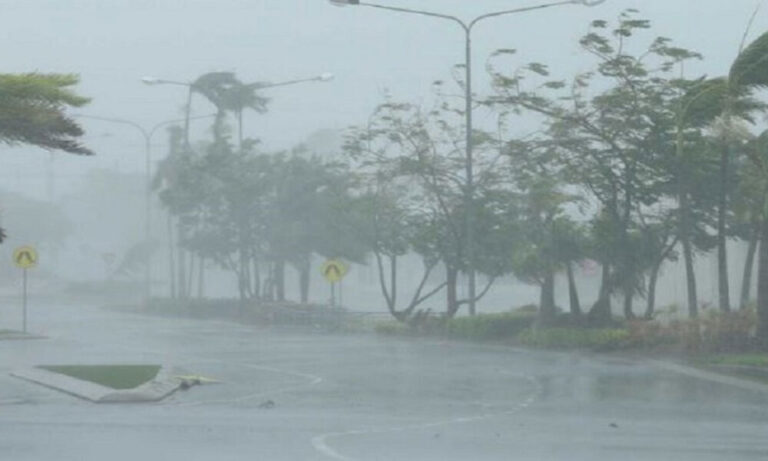
Showers or thundershowers may occur at a few places in Southern and Sabaragamuwa provinces during the afternoon or night.
Mainly fair weather is likely to prevail elsewhere.
Misty conditions can be expected at some places in Western, Sabaragamuwa, Central, Southern and Uva provinces and in Kurunegala district during the morning.
The general public is kindly requested to take adequate precautions to minimize damages caused by temporary localized strong winds and lightning during thundershowers.
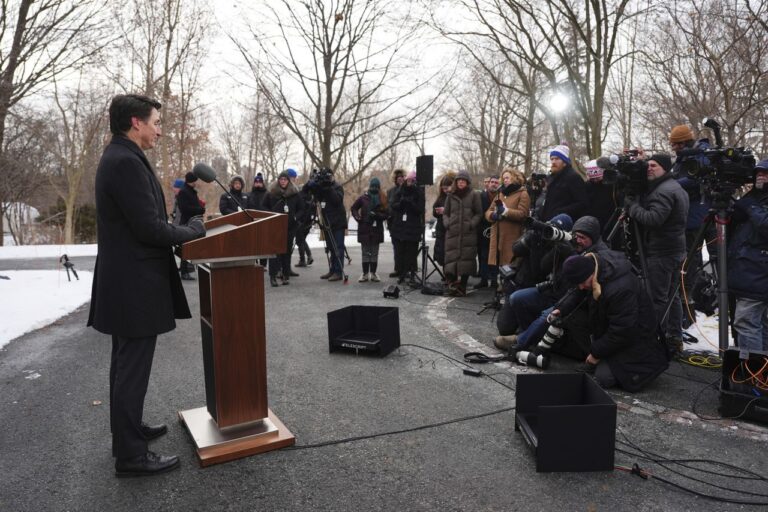
January 06, World (LNW): Canadian Prime Minister Justin Trudeau has declared his intention to step down, marking the end of nearly a decade in office.
Trudeau, who has led the Liberal Party for 11 years and served as prime minister since 2015, will vacate his position once a new leader for the ruling party is selected.
In an emotional statement to the press, Trudeau reflected on his tenure, saying, “Every morning I’ve woken up as prime minister, I have been inspired by the resilience, generosity, and determination of Canadians. I have fought for this country, for you.”
He pointed to his administration’s handling of the Covid-19 pandemic, steadfast support for Ukraine, and efforts to combat climate change as key accomplishments during his leadership.
Trudeau’s announcement comes at a time of growing political pressure. His government has faced a series of challenges, including escalating economic concerns, a sharp decline in public approval ratings, and internal party upheavals, with the resignation of several close allies.
Externally, tensions with the United States, particularly during Donald Trump’s presidency, also added strain to his administration.
To facilitate a smooth transition, Canada’s parliament will be suspended until 24 March as the Liberal Party undertakes the process of selecting a new leader. Trudeau described the current global and national environment as a “critical moment” and urged Canadians to remain united in the face of challenges.
His departure signals a pivotal shift for Canadian politics. Trudeau, the son of former Prime Minister Pierre Trudeau, came into office on a wave of optimism and international admiration.
However, his leadership trajectory has seen both soaring achievements and contentious setbacks. His legacy, shaped by progressive policies and international advocacy, will undoubtedly be debated as Canada prepares for new leadership.
January 06, Colombo (LNW): The Sri Lankan Government has pledged to design a more effective relief package to support the revival of Micro, Small, and Medium Enterprises (MSMEs), as the relief measures announced by the Central Bank of Sri Lanka (CBSL) through Circular No. 4 of 2024 have been deemed inadequate.
The Ceylon Federation of MSMEs (CFMSME) expressed dissatisfaction with the CBSL’s measures, arguing that they fail to address the severe challenges faced by the sector due to events like the Easter Sunday attacks, the COVID-19 pandemic, and ongoing macroeconomic difficulties.
CFMSME President Mahendra Perera highlighted that the CBSL’s provisions, which include the rescheduling of impaired loans and partial interest waivers, do not sufficiently meet the needs of MSMEs.
He stated that the relief measures lacked practical relevance and omitted key elements previously discussed with stakeholders. Following meetings with Minister Sunil Handunneththi and Deputy Minister Chathuranga Abeysinghe, the Government acknowledged these concerns and directed the CBSL to revise its approach.
Perera revealed that the proposed incentive package under discussion includes several significant relief measures.
These include restructuring existing loans at concessionary interest rates below 10%, issuing new loans at similarly low rates regardless of Non-Performing Loans (NPLs), and either fully waiving or partially subsidizing accrued interest on loans over the past five years.
Under the partial waiver plan, the Government would cover 50% of the interest, with banks absorbing the remainder.
Additionally, the Government is considering removing eligible MSMEs from the Credit Information Bureau of Sri Lanka (CRIB) to improve access to new loans.
Ajith Dhammika Bandara, Coordinating Officer to the Deputy Minister of Industries and Entrepreneurship Development, stated that while CRIB removal is being prioritized, MSMEs will need to work with banks directly to restructure existing loans.
The CBSL’s Circular No. 4 of 2024 outlines several conditions for SMEs seeking relief. Borrowers with credit facilities classified as Stage 3 after 1 April 2019 must initiate business revival discussions with their banks by 31 March 2025 to qualify.
Restructured loans must adhere to specific repayment timelines based on the outstanding loan amount. For instance, loans under Rs. 25 million require repayment commencement by 31 December 2025, while loans exceeding Rs. 50 million must begin repayments by 30 June 2025.
The Circular also offers interest waivers based on the outstanding loan amount and settlement timeframe.
For loans between Rs. 5 million and Rs. 10 million, waivers range from 65% for settlement within six months to 40% for settlement within 12-60 months. Loans between Rs. 10 million and Rs. 25 million receive smaller waivers, starting at 35% for quick repayment and decreasing to 20% over extended periods.
While these measures offer some respite, industry leaders argue they fail to address the sector’s structural challenges. The forthcoming revised relief package is expected to be more comprehensive, targeting the specific needs of MSMEs to ensure their sustainable recovery.
January 06, Colombo (LNW): Sri Lanka’s local vehicle assembly sector is urging the government to introduce a competitive tax framework that gives priority to locally assembled vehicles.
As a cornerstone of the nation’s economy, this industry drives job creation, preserves foreign exchange, and fosters technical innovation.
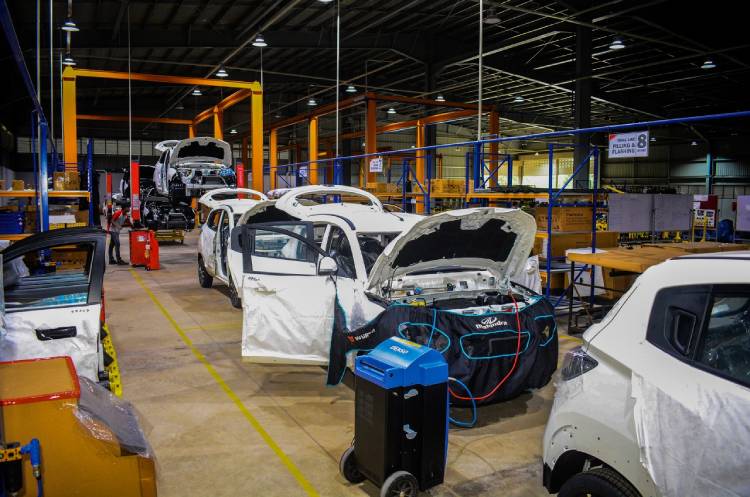
Operating under the Ministry of Industries’ Standard Operating Procedure (SOP), the sector comprises over 17 assembly plants producing a variety of vehicles, including motorcars, SUVs, motorcycles, and electric three-wheelers.
With 17 additional investors preparing to launch operations, the industry is poised for significant growth.
Currently, the sector directly employs over 5,000 technically skilled workers, including recent graduates and trainees, and indirectly supports more than 10,000 jobs. This creates a vast ecosystem that sustains thousands of families, enhancing the nation’s human capital.
During the suspension of vehicle imports, the local assembly industry demonstrated its strategic value by reducing dependency on completely built units (CBUs), conserving foreign exchange, and proving the feasibility of local manufacturing.
Global automotive giants such as Hyundai, TVS, Bajaj, Mahindra, TATA, Lanka Ashok Leyland, DFSK, Foton, JAC, JMC, Chery, Proton, Wuling, and BAIC have established operations in Sri Lanka, underscoring the sector’s ability to attract renowned international brands.
Sri Lanka’s automotive component manufacturing sector has also advanced significantly, producing high-quality parts such as batteries, tyres, bumpers, exhaust systems, seats, plastic and composite components, liners, wire harnesses, and metal and rubber parts.
These achievements have positioned Sri Lanka as a competitive player in the regional automotive supply chain, meeting international standards.
The industry is setting ambitious goals, including vehicle and component exports within the next five years. Plans include increasing component export revenue from USD 800 million to USD 2 billion and generating an additional 45,000 jobs.
Drawing from the success of countries like Thailand and Malaysia, Sri Lanka’s strategic location, government incentives, and growing supply chain infrastructure offer a solid foundation for realizing these objectives.
As the government considers lifting the suspension on CBU imports, industry stakeholders stress the importance of a competitive tax structure favoring locally assembled vehicles. Such measures will ensure sustained growth, attract further investment, and secure long-term viability.
Sri Lanka’s local assembly and automotive component sectors symbolize more than industrial activity—they represent the nation’s potential for industrial progress. With strategic policies and sustained support, these industries can propel Sri Lanka toward sustainable economic and industrial prosperity.
January 06, Colombo (LNW): Despite government efforts to position taxation as a social responsibility, policy missteps have undermined public confidence in the tax system. A core principle of taxation—fairness based on the ability to pay—has often been overlooked.
Former Deputy Commissioner General of the Inland Revenue Department (IRD), N.M.M. Milfy highlighted the adverse effects of recent tax policies, especially during a period of severe economic instability.
When inflation surged from 9% to 70% in 2022, the purchasing power of citizens drastically declined. Conventional tax policy dictates offering relief measures—such as higher thresholds, reduced rates, and targeted exemptions—during such crises to mitigate economic contraction.
Instead, the government reduced tax thresholds and increased rates for both income tax and VAT. While this led to a temporary rise in revenue, it contravened fundamental tax principles and eroded public trust, with many citizens viewing taxation as “legalized robbery.”
The long-term repercussions of such policies are significant. Excessive tax burdens can drive capital flight, disincentivize investment and savings, and prompt skilled professionals to leave the country. Additionally, tax evasion and avoidance increase, further straining public confidence and economic efficiency.
Milfy and other tax experts suggest that expanding the tax base and curbing evasion are more effective strategies to enhance revenue.
Alarmingly, over 70% of Sri Lanka’s tax revenue comes from fewer than 600 tax files, representing less than 1% of the total files maintained by the IRD.
The unequal contribution to revenue highlights inefficiencies in enforcement and the narrow scope of tax collection.
Global trends further exacerbate the problem. According to the Tax Justice Network, countries lose $480 billion annually to cross-border tax evasion by multinational enterprises (MNEs) and wealthy individuals. Sri Lanka alone forfeits $413.25 million (approximately LKR 125 billion) annually to such practices
Of this, $406.56 million is attributed to MNEs, while $6.69 million is linked to high-net-worth individuals. Notably, this loss exceeds the LKR 69 billion collected in 2022 from individual taxpayers through income taxes, including PAYE.
Experts argue that digitalization of the IRD’s processes could significantly address these issues. Tax expert N.R. Gajendran, speaking on a current affairs program, noted that Sri Lanka has consistently struggled to meet its tax revenue targets despite multiple hikes.
He attributed this failure to systemic inefficiencies, corruption, and evasion among top taxpayers. While Sri Lanka’s tax-to-GDP ratio stood at 22% in the early 1990s, it has fallen to below 15% in recent years—well below the 28%-30% ratio required for macroeconomic stability in developed nations.
Tax Consultant Suresh Perera echoed these concerns, emphasizing that enforcement gaps primarily allow high-income individuals and corporations to evade taxes.
He criticized the disproportionate focus on small taxpayers in policy discussions and urged policymakers to target large corporations, which contribute the bulk of revenue.
Addressing tax leakages, combating evasion, and implementing equitable policies are critical for Sri Lanka’s economic recovery. Without these reforms, the country risks undermining public trust and failing to meet its revenue potential, further deepening its fiscal challenges.
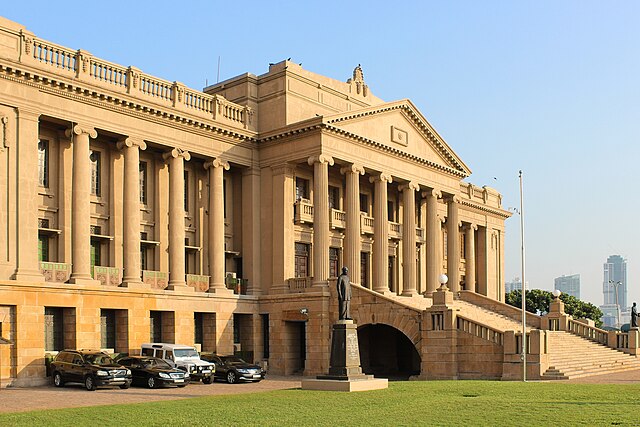
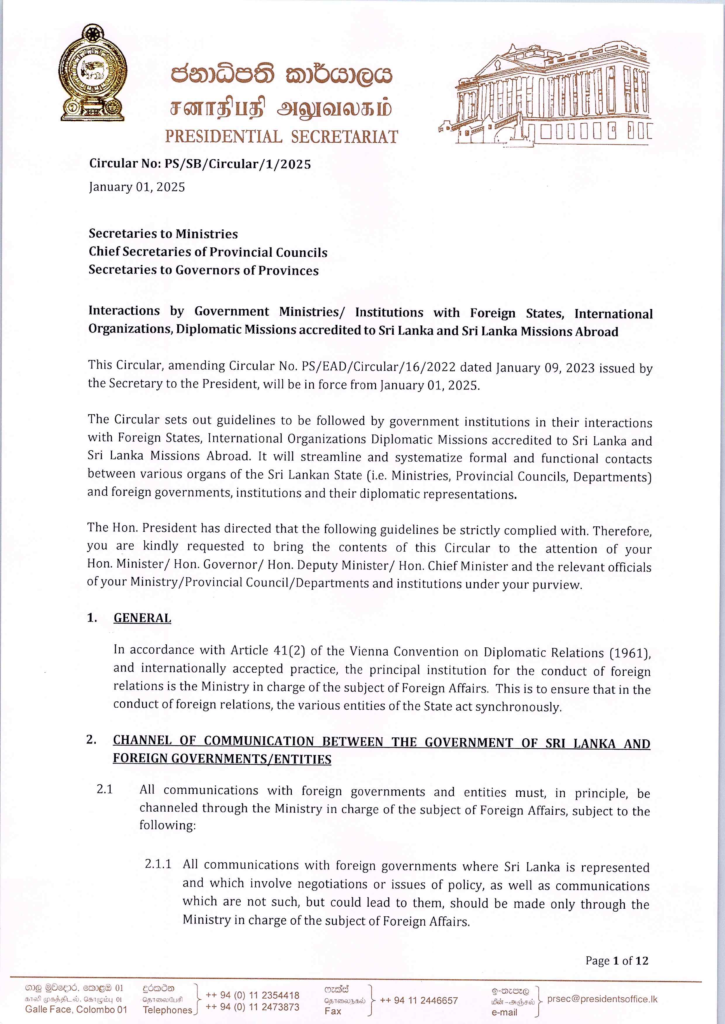
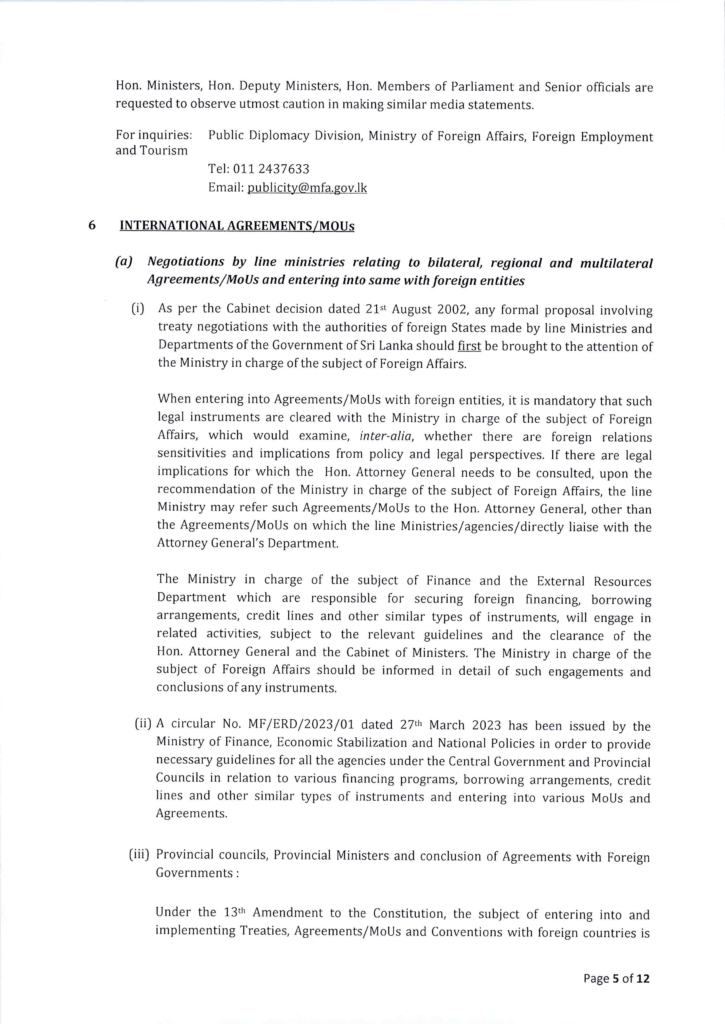
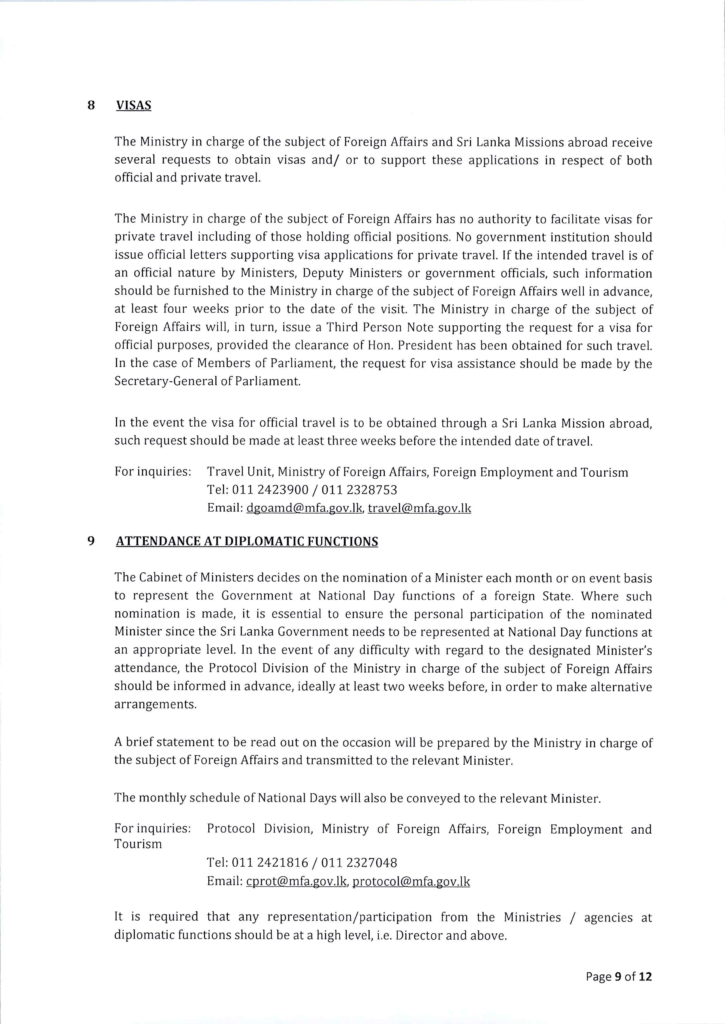
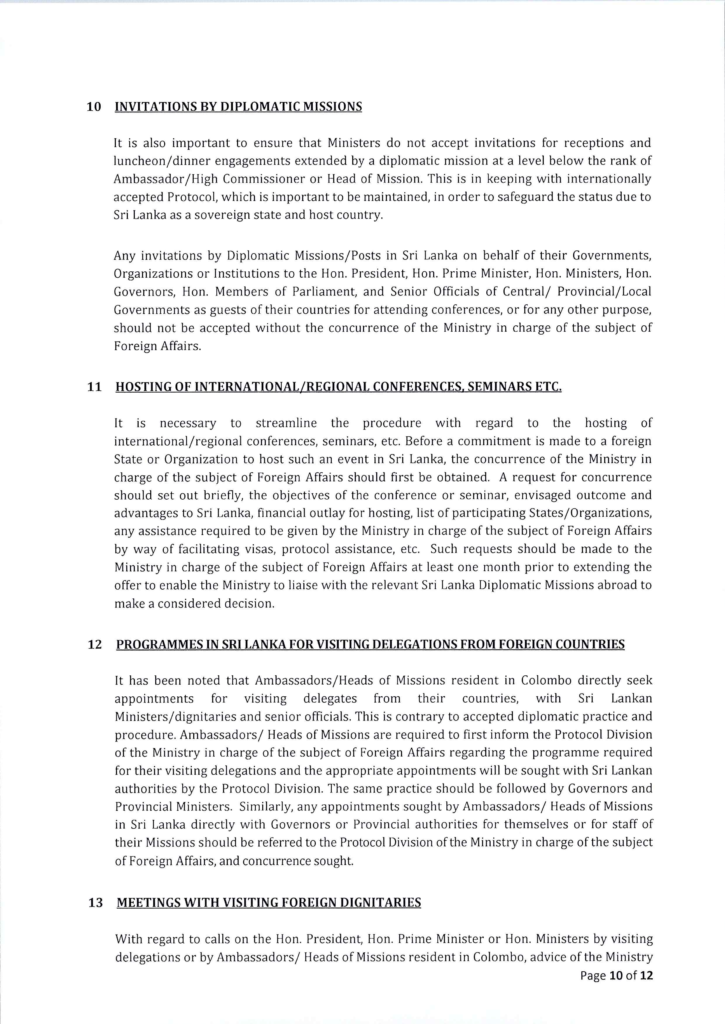
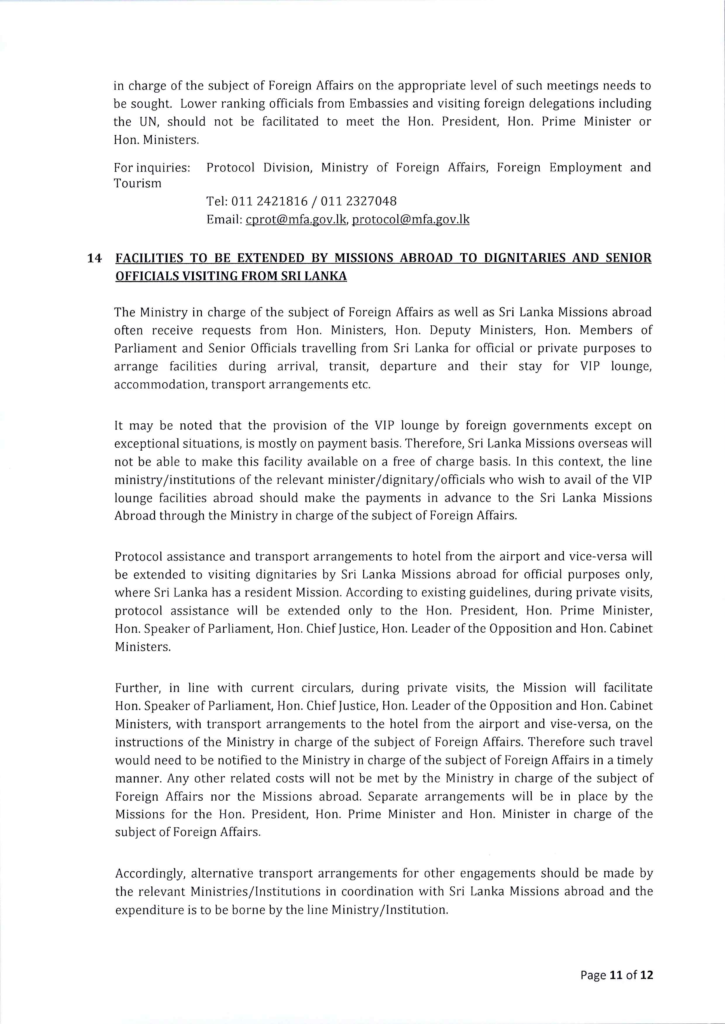
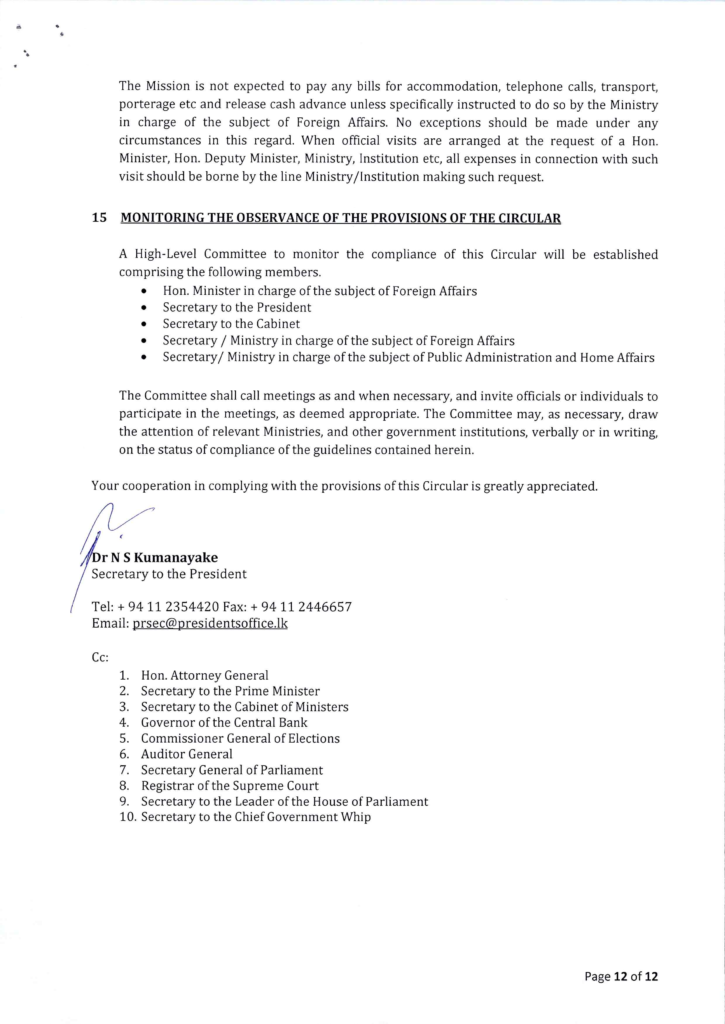
January 06, Colombo (LNW): In a bid to enhance diplomatic coherence and streamline interactions with foreign entities, the President’s Secretariat of Sri Lanka has issued an extensive circular outlining directives for government institutions.
The revised guidelines, effective from January 01, 2025, aim to ensure all communication, agreements, and engagements with foreign states, diplomatic missions, and international organisations are aligned with Sri Lanka’s overarching foreign policy objectives.
The circular emphasises the centrality of the Ministry of Foreign Affairs as the principal institution for managing foreign relations, in adherence to the Vienna Convention on Diplomatic Relations.
All correspondence involving foreign governments must be routed through this ministry.
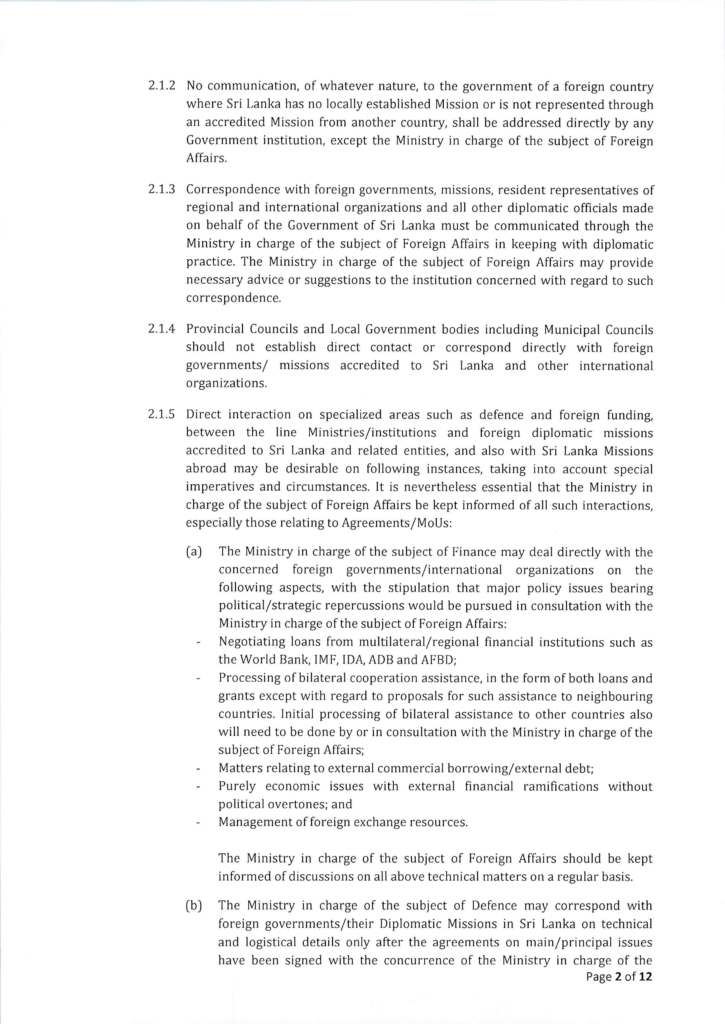
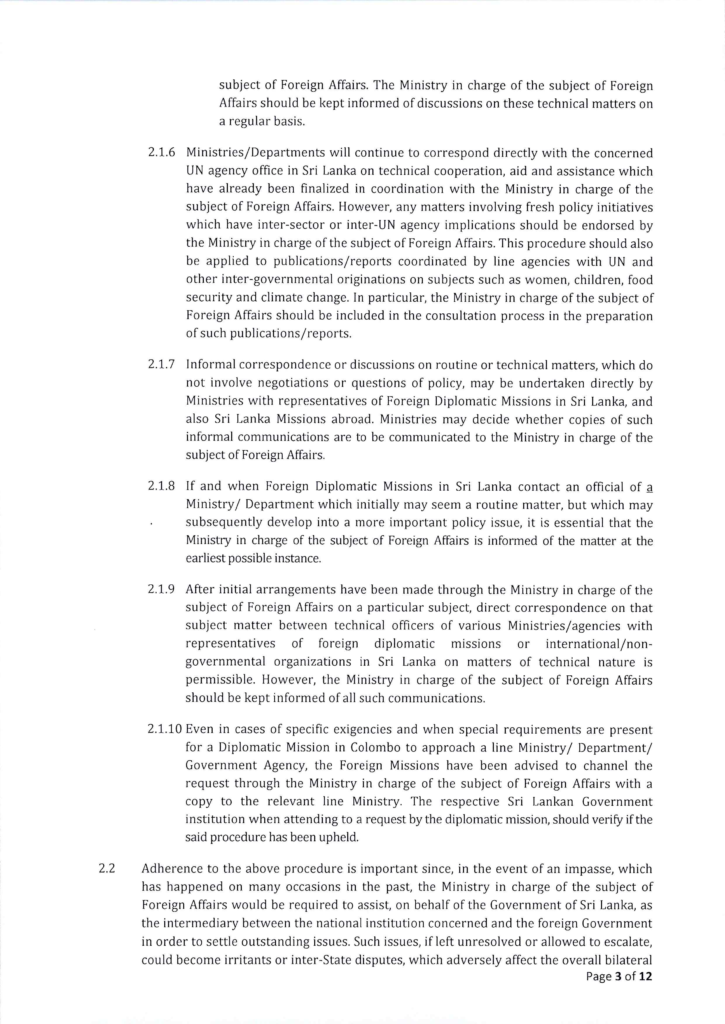
Exceptions for technical discussions, such as defence logistics or financial negotiations, are permitted but require the ministry’s regular updates and concurrence.
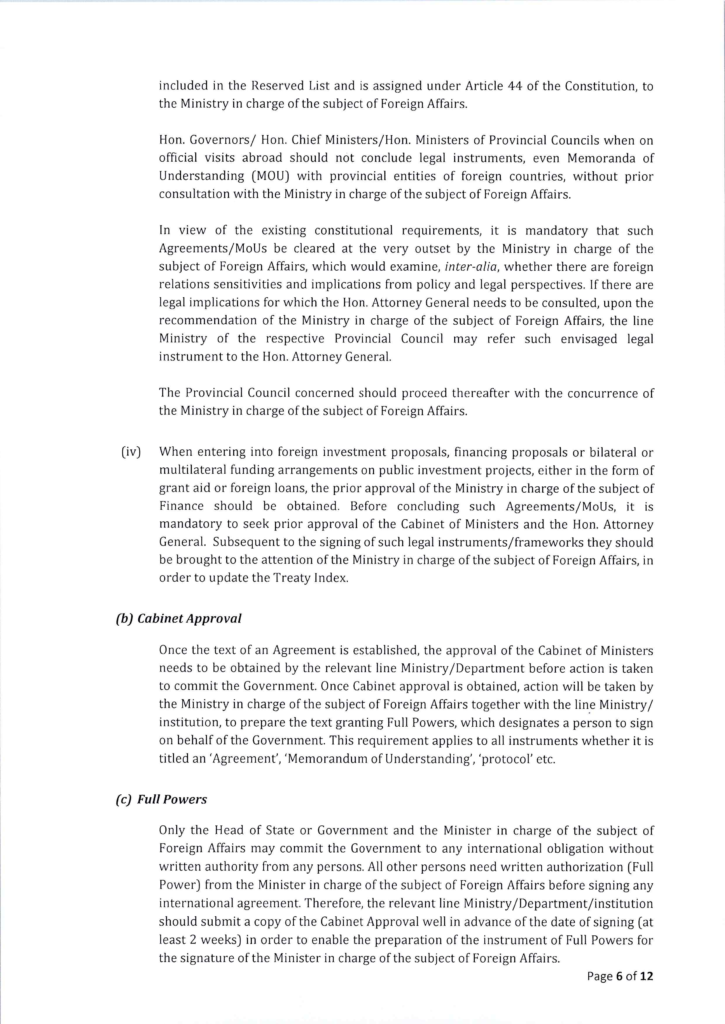
Significant restrictions have been imposed on Provincial Councils and local government bodies, which are now prohibited from initiating direct contact with foreign entities.
This step seeks to prevent discrepancies in diplomatic engagements that could strain bilateral relations or escalate into inter-state disputes.
Similarly, the guidelines caution against engagements with non-recognised states or entities lacking diplomatic ties with Sri Lanka.
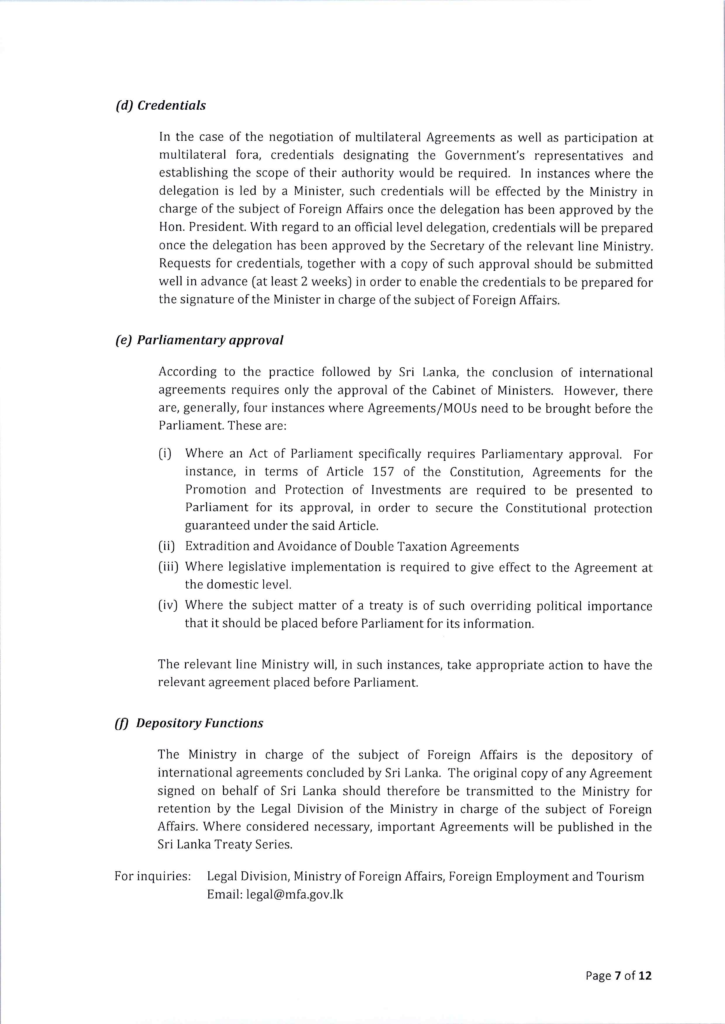
To regulate international agreements, the circular mandates clearance by the Ministry of Foreign Affairs at every stage.
Line ministries are required to secure Cabinet and Attorney General approval before committing to treaties, bilateral loans, or memoranda of understanding.
All agreements must also be recorded within the ministry’s treaty index.
The directives also address media interactions, forbidding officials from issuing foreign policy-related statements without written clearance. This policy aims to avert inconsistencies in diplomatic messaging that could compromise Sri Lanka’s international standing.
Additionally, the guidelines underline the importance of maintaining decorum at diplomatic functions, with ministers advised to accept invitations only from ambassadors or equivalent representatives.
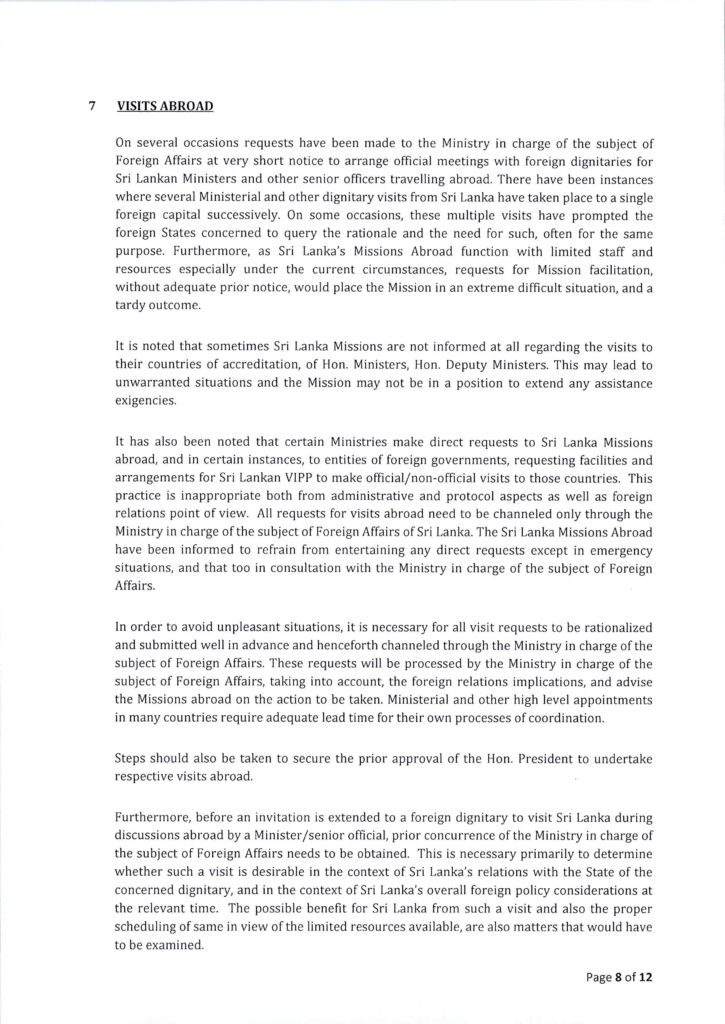
Regarding international visits, the circular stipulates that requests for official meetings abroad must be channelled through the Ministry of Foreign Affairs. This measure is intended to prevent overlapping or unnecessary visits that burden Sri Lankan missions abroad, which already face resource constraints.
Visits by dignitaries to Sri Lanka will also require ministerial oversight to ensure alignment with national interests.
A High-Level Committee, comprising senior officials from the President’s Office and key ministries, has been established to monitor compliance with the circular. This committee will address violations and promote adherence to the prescribed protocols.
By fostering a unified approach, the government seeks to enhance its international reputation whilst effectively managing relations with foreign states and organisations.
January 06, Colombo (LNW): Sri Lanka is gearing up to transform its tourism industry, aiming for 3 million tourist arrivals in 2025. This ambitious target coincides with the launch of a long-awaited marketing campaign branded as “Sri Lanka Tourism,” targeting five key markets—India, China, the UK, Germany, and France.
Sri Lanka Tourism Development Authority (SLTDA) Chairman Buddhika Hewawasam confirmed the involvement of a creative agency and five digital and PR agencies to manage campaigns for these regions.
The tagline “You’ll Come Back For More!” will accompany the promotional efforts, though it won’t serve as a formal branding tagline.
The campaign, set to launch in January 2025, will also expand into Australia and West Asia, leveraging existing direct airline connections.
These efforts aim to attract a diverse age range, including travelers aged 25 and above as well as retirees over 65. Alongside this, the SLTDA plans to spotlight unique experiences like the Pekoe Trails, promote lesser-known attractions, and encourage tourism in the East and North, with Jaffna positioned as a key destination.
Industry optimism is high, fueled by record-breaking participation in the World Travel Market (WTM) in the UK and the recent lifting of the US travel advisory for Arugam Bay.
Sri Lanka Association of Inbound Tour Operators (SLAITO) President Nalin Jayasundere predicts a 30% rise in tourist demand for 2025, which could grow further once the marketing efforts take effect.
He emphasized the importance of launching the campaign in the first quarter and called for regulatory fairness across industry stakeholders to maximize government revenue.
Economic Recovery through Tourism
Tourism has become central to Sri Lanka’s economic recovery after challenges posed by the COVID-19 pandemic and a financial crisis. The government aims to generate $5 billion in tourism revenue by 2025.
Revenue has already shown a sharp increase, climbing from $1.1 billion in 2022 to $2.8 billion by November 2024. Tourist arrivals have similarly grown, with 1.8 million visitors recorded from January to November 2024, compared to 1.3 million during the same period in 2023.
Efforts to streamline the sector include establishing a National Tourism Commission, consolidating four state agencies, and forming a Tourism Policy Formulation Council to guide strategic decisions.
These measures aim to improve infrastructure, simplify visa processes, and strengthen international collaborations, including plans for a direct air route to Japan.
Showcasing Sri Lanka’s Unique Identity
At the Sri Lanka Tourism Awards, SLTDA celebrated excellence in the sector and reinforced the country’s unique appeal. From iconic landmarks like Sigiriya and the Nine Arch Bridge to lush tea plantations and wildlife-rich parks, Sri Lanka offers diverse experiences. The government is also promoting sustainable tourism, encouraging eco-tourism, and protecting cultural and natural assets.
With strategic reforms, innovative campaigns, and a focus on sustainability, Sri Lanka is well-positioned to achieve its 2025 goals. By capitalizing on its rich heritage, stunning landscapes, and warm hospitality, the country aims to attract a growing global audience seeking authentic travel experiences.
January 05, Colombo (LNW): Our website proudly stood at the forefront as a media outlet happy with Priyantha Ekanayake’s appointment as the Chairman of the National Sports Council. This was due to his remarkable representation of the national team in two sports, the belief that he could effectively convey to the government the political underpinnings of the rugby crisis at the time, and his distinguished role as the Chief Executive of Sri Lanka Baseball.
Priyantha’s ability to clearly recognize that the Asian Rugby boycott, and particularly the international rugby boycott, seemed to be an effort by individuals who had harmed Sri Lanka’s rugby administration individuals who should have faced consequences locally to align with the international community to fulfill their own agendas, was a significant factor in this. Priyantha’s ability to advise the Minister on the necessity of punish these individuals accountable, addressing the mistakes, and advocating for the betterment of the sport he once represented was a key reason to celebrate his appointment.
However, considering the public statements he made to a national media outlet, one might question whether he is positioned to address or condone the influence of a conspiracy affecting Sri Lankan rugby. Furthermore, the constitution that empowers regional associations carries significant international implications. New Zealander Jeff Matheson is the author of the foundational document of the current constitution, a fact well known to Priyantha.
The direction rugby should take…
The development of regional rugby in Sri Lanka has stalled due to the loss of annual international aid that did not simply vanish. The issue lies in allowing foreigners to play for Sri Lanka without a proper legal basis or citizenship.
The motive behind this is not the desire to win for Sri Lanka, but rather to showcase that the leader’s son can bring victories to the country.
When the then-rugby chief, involved in the incident, committed the offense, the officials responsible were instructed to pay the £50,000 fine imposed by the international body, with the amount to be deducted annually from the international aid they receive.
Priyantha Ekanayake is clearly aware of this fact. After Namal Rajapaksa came to power, the administration began making decisions freely and directly. However, the individual who had arranged for the country’s rugby union to be fined £50,000 on his behalf obstructed this progress by appointing an Advisory Committee and placing himself as its chairman. That appointment was made with the consent and blessing of the Asia President, who had been in the Asia President’s arms for not being punished for the offense. This was explicitly stated in the letter that the then Director of Sports sent to the Rugby Administration.
As the culture of influencing Sri Lanka by aligning with Asia gradually emerged, and with the Minister’s support in attracting both local and foreign sponsors, the existing rugby administration began seeking out new sponsorships. Despite overcoming these challenges, the Asia Rugby plans to ban the Sri Lanka Rugby president for personally blame the Asia president over the phone (via internet connections) regarding the political leadership and the pressure exerted by Asian leadership on the country’s sport.
It is not a breach of the Asia Rugby’s disciplinary system, but a personal matter, and the Asia President used his power to impose the ban.
Furthermore, an investigation report has not been provided to date, and the opportunity to present the facts has not been given, and on the one hand, Sri Lanka’s sports ministers and officials of ministries and development departments have been holding back in order to attack the person who stood for the independence of rugby in the country, but they have not gone to inform the international community that a proper investigation has not been conducted regarding the person who spoke for the country.
It is clear from the media report in which he expressed his views that Priyantha Ekanayake also believes that when Asia and the international community make a statement, regardless of whether it is right or wrong, it should be accepted as such. It is unclear whether Priyantha Ekanayake considers it his responsibility to advise the Minister to accept the injustice fairly, rather than oppose it, if an unfair decision causes any harm to Sri Lankan sports.
The path that Priyantha should take to become a “rugby lover”..
As a best example of re-thinking the transfer of more power to the sports clubs in that category, which are already expecting and trying for a constitutional change, the Sri Lions Sports Club has defeated the CH team at the beginning of this year, justifying the opportunity to enter that category. Also, Priyantha Ekanayake understands what these sports clubs are doing by surrounding themselves with members of a royal culture with the high facilities available to their sports clubs.
We are aware that a privileged group surrounds them. With the convenience of restaurants in Colombo, they have managed to operate these sports clubs with relatively low taxes. But have they taken steps to prepare teams for women’s and age-group rugby competitions? How will the players who rise to the national level through sports clubs under the regional associations maintain their rugby skills once the smaller sports clubs are closed?
It should be Priyantha Ekanayake’s responsibility to advise the Minister on how to encompass the achievements of the privileged sector within the country’s sports, to nurture provincial-level organizations in order to sustain the sport nationally, to provide guidance on measures that can prevent the decentralization of the country’s resources, and to offer advice on the responsibilities that history has entrusted to this government.
But if Priyantha sees the expectations of Asia and the world at this moment (if he has actually expressed those facts to that newspaper) as dancing in the footsteps of those who have conspiratorially destroyed the independence and integrity of rugby in this country, then there is also a serious political problem.
Given that Priyantha has made positive contributions to the development of baseball in Sri Lanka as an administrator, we believe he is fully aware of its current situation. We are also confident that Priyantha knows whether his current rugby team will continue to thrive in that position and take steps to make the game shine, or whether it will falter.
We have evidence that he did not even secure the funding for the recent international tournament. Priyantha should carefully consider whether rugby should be included in the influence and exploits of such individuals.
The Minister should be instructed to act within his powers to inquire from those still striving to enter the field about how the rugby administration became indebted, and to take action against the administrations responsible for losing £50,000 on behalf of Sri Lanka. As a result, many people will be unable to travel to Asia or participate in global events. Therefore, if the government’s goal is to elevate sports in this country to the same level as rural sports, cultivate talent, and lay the foundation to enrich those talents, then it is Priyantha’s responsibility as an advisor to guide the Minister in writing to the international community. He should inform them that regional power for the expansion of sports in the country must be secured based on government policy, preventing any attempts to strip rugby of its rights through a constitutional amendment.
By now, even Sri Lanka Cricket has started to think based on the need to expand, despite the reduced votes.
Historically, in areas like Uva, Thalduwa, and Lindula, it was not the locals who played rugby, but foreigners. However, they must have left that legacy & gene behind in those regions. We must confront true socio-sexual issues without shame. By focusing on identifying potential talents and nurturing them into greatness, we should also share the true history with the world, while creating an environment to hold accountable those who have attempted to undermine the rise of rugby in Sri Lanka.
Because of them, the Ministry and the Ministry should be instructed to write to the world, which is trying to subjugate Asia and the world and destroy Sri Lankan identity, on the need for decentralization of the country’s sports policy. This is a matter that should be done by Priyantha Ekanayake.
January 06, Colombo (LNW): Two individuals, including former Provincial Councillor Salochana Gamage, have been further remanded until January 17 in connection with an alleged bribery case.
The two suspects were arrested by the Bribery Commission on charges of accepting a bribe amounting to Rs. 9 million.
The Colombo Chief Magistrate, Thanuja Lakmali, made the decision following the suspects’ appearance in court. She also indicated that a ruling on their bail applications will be issued on the next court date.
Salochana Gamage and a local businessman were apprehended in Pitakotte by officials from the Bribery Commission, who have been investigating the alleged corruption.
The case has drawn considerable attention due to the involvement of a former political figure and the significant sum allegedly exchanged in the bribery transaction.
January 06, Colombo (LNW): WhatsApp has launched a new feature aimed at making document sharing even more convenient for its users.
With the latest update to WhatsApp for iOS (version 24.25.80), users can now scan documents directly within the app, eliminating the need for third-party scanning tools or apps.
This new functionality, which is integrated into the document-sharing menu, allows users to quickly capture and send documents using just their phone’s camera.
The feature simplifies the process of sharing physical documents, providing a seamless experience for both personal and professional communication.
Currently, the feature is being rolled out gradually, with a select group of users already able to access it.
As per the latest WhatsApp changelog, which was reported by WABetaInfo, more users are expected to gain access to the feature over the coming weeks.
This addition is expected to enhance the app’s utility for users who frequently share important documents, such as contracts, forms, or receipts, without the hassle of relying on separate scanning apps.
With the convenience of scanning and sharing documents all within WhatsApp, the app continues to improve its functionality, making it a more versatile tool for its growing global user base.