Home Blog Page 79

WEATHER FORECAST FOR 29 OCTOBER 2025

0

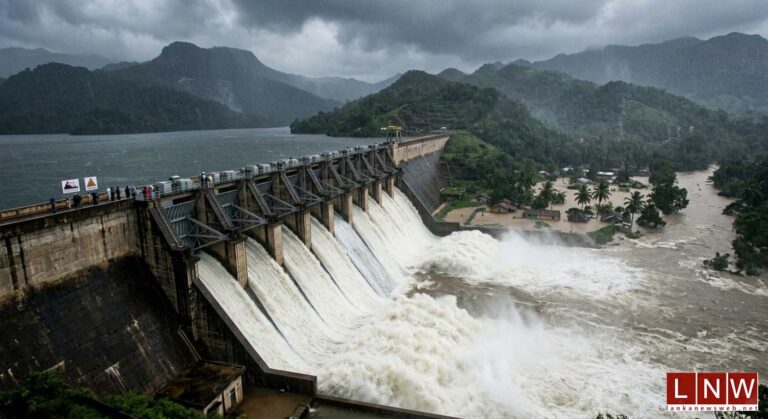
A few showers may occur in Western, Sabaragamuwa, Central and North-western provinces.
Strong winds of about (50-60) kmph can be expected at times over Western slopes of the central hills and in Western, Sabaragamuwa, Central, Southern, Northern, North-central and North-western provinces and in Trincomalee and Batticaloa districts.

The general public is kindly requested to take adequate precautions to minimize damages caused by strong winds.

AKD Must Rein In His Cow Boy Ministers Before It’s Too Late

0

By Adolf

President Anura Kumara Dissanayake came to office promising a new political culture — one built on discipline, humility, and accountability. For a nation long disillusioned by arrogance and corruption, he represented the hope of moral renewal and clean governance. Yet today, that hope is being tested by some of his own ministers who appear to have mistaken power for entitlement.

From the Power Minister’s questionable deals to the controversies surrounding Chamuditha, Wasantha, and Wijepala, the government’s image is beginning to erode. The Police Minister, in particular, often behaves more like a political cowboy than a responsible public servant — using Parliament as a platform for theatrics rather than accountability. His confidence seems to stem less from conviction and more from the unchecked power of his position.

A Question of Discipline

The President must now confront a difficult question: is this the disciplined administration he promised the people? If such behaviour continues unrestrained, this government will soon appear indistinguishable from the ones he spent years condemning. The public did not vote for more noise and spectacle — they voted for integrity, humility, and effective governance.

The issue surrounding Vijitha Herath’s land disclosure has further raised questions about transparency and ethical standards. The President’s silence in the face of such concerns only reinforces the perception that he is hesitant to hold his ministers to account. Leadership, however, is not about protecting one’s own; it is about doing what is right, even when it is politically inconvenient.

The Rise of Sajith

Meanwhile, Opposition Leader Sajith Premadasa is steadily gaining ground. His successive victories in professional associations and civil society groups suggest a shift in public sentiment. When Sajith says he “feels like the President,” it may sound like political bravado — but it also reflects a growing perception that he is more attuned to the struggles of ordinary citizens. If left unchecked, that perception could soon harden into political reality.President Dissanayake’s moral authority remains his greatest asset. But each instance of ministerial arrogance or misconduct chips away at that authority. The people expected him to lead by example — and to demand the same of those who serve under him. It is time he reminded his Cabinet that they are public servants, not masters of the state. If the President fails to rein in his ministers now — many of whom behave like unruly schoolboys intoxicated by newfound power — he risks losing the moral high ground that propelled him to leadership. The country cannot afford yet another administration consumed by ego, infighting, and disorder.

Roughly 40% of the public still believes President Dissanayake is capable of delivering real change. But belief without visible action soon turns into disillusionment. The honeymoon period is over. It is now time to show that courage and discipline apply not only to opponents but also to his own team.

Otherwise, history will remember him not as the reformer who changed the system, but as the man who allowed his promise to slip away — one unruly minister at a time. And if that happens, the political backlash will be far more severe than what even Gotabaya Rajapaksa endured.

Sri Lanka’s Mineral Industry Awakens amid Policy Reforms and Investment Surge

0

Sri Lanka’s mineral industry is stirring from a long in-stall period, buoyed by a wave of fresh investor interest, reforming policy frameworks and a push for value-added production. According to Board of Investment of Sri Lanka Chairman Arjuna Herath, the agency has already received 14 mining and mineral-extraction proposals worth over a billion US dollars in the first nine months of 2025.

Meanwhile, the government’s draft National Mineral Policy 2023, published by the Ministry of Environment Sri Lanka, sets out a broad new framework aimed at unlocking the country’s mineral wealth, emphasising value-addition, sustainable extraction, seabed resources and tracking foreign-exchange flows.

Current Situation and Statistics: Traditional data for full 2025 are still thin, but long-term series show Sri Lanka’s total minerals-production tonnage rose from about 209,509 Mt in 2021 to 224,952 Mt in 2022.

More importantly, the heavy-mineral sands sector (ilmenite, rutile, zircon) remains under-exploited despite globally-ranked high-grade deposits studies note Sri Lanka’s share of global ilmenite production remains under 1 %.

Analysts say raw-export dominance, weak downstream processing and regulatory uncertainty have held back progress.New Government Policies & Initiatives: Under the 2023 policy the government commits to:

Create a comprehensive national inventory of mineral resources.

Encourage local value-addition (to reduce raw exports).

Strengthen regulatory and fiscal norms to attract investment and improve governance.

The stakeholder roadmap for 2025-29 further targets doubling foreign-exchange earnings from minerals such as quartz and graphite by 2029, and relaxes permitting for more common minerals such as quartz for land-owners.

Analytical Insight: The surge of investor interest reflects improving macro-sentiment—Sri Lanka’s recovery trajectory, policy clarity and high-quality deposits (especially of heavy minerals) are drawing attention. Yet turning interest into production and exports depends on government follow-through. Key challenges remain: short-term licences, high royalty burdens, raw export dominance and lack of processing infrastructure.

For the minerals sector to become a driver of economic growth, authorities will need to: (1) streamline mine-licensing to match international norms (10-15 years), (2) incentivise value-added processing abroad and at home, (3) align tax-royalty policy with global benchmarks, and (4) ensure environmental/social safeguards to make the sector sustainable.

In conclusion, Sri Lanka stands on the cusp of a mineral-industry revival. The raw materials, the investor interest and the policy blueprint are in place but the transformation from potential to production will depend heavily on policy implementation and private-public coordination. If executed well, the minerals sector could contribute significantly to export earnings, job-creation and industrialisation over the next decade.

Sri Lanka’s Real Estate Sector SurgesYet Developers Still Seek Support

0

Sri Lanka’s real estate sector is showing clear signs of recovery in 2025, but analysts say government policy must now shift from stimulus to structural support if the momentum is to be sustained. The Central Bank of Sri Lanka’s Q1 2025 market analysis revealed year-on-year increases in asking prices in the Colombo district of 7.3 per cent for land, 10.4 per cent for houses and 5.5 per cent for condominiums, compared with the same period in 2024.

Moreover, a broader industry outlook from LankaPropertyWeb estimates average year-on-year land-price growth of around 12 per cent nationwide, with suburban areas in Western Province even rising by roughly 20 per cent.

lDespite this up-surge, challenges remain: house price index data shows only modest quarterly rises (2.71 % in Q1 2025) compared to volatile swings in previous years.

Meanwhile, foreign direct investment (FDI) flows into Sri Lanka stood at US$787 million in the first nine months of 2025, with part of this sum tied to real-estate-related projects, offering a positive sign for developer confidence.

From a supply-side perspective, developers cite constraints such as high financing costs, regulatory uncertainty and slow issuance of approvals as impediments particularly for projects beyond prime Colombo areas. To lock in the recovery, government action is required. Key steps include:

 Easing access to affordable credit for developers and buyers alike, by re-structuring home-loan and construction-loan interest rates.

Streamlining planning and approvals, especially for suburban and mixed-use developments poised to absorb demand from a shifting buyer base.

Providing targeted incentives (tax breaks, infrastructure offsets, fast-track zoning) for developments in under-served regions.

Ensuring transparency and foreign-investor friendliness, to convert interest into committed capital. With FDI still modest compared to potential, reforms must reassure overseas and local buyers alike.

Industry voices believe that if the government adopts a coherent support package now rather than waiting for the recovery to fully mature the sector could help underpin broader economic growth. The transition from speculative to stable growth appears underway, but without policy backing, the upturn may falter. As one developer commented: “The numbers are encouraging, but we need certainty in rules and costs to deliver projects at scale.”

In sum, Sri Lanka’s real-estate market is back in play, yet the era of recovery-led expansion demands a new era of pragmatic support and reform if it is to become a sustainable pillar of the economy.

National 4i Project Aims to Build 1,000 Young Entrepreneurs

0

A landmark national initiative titled the ‘4i Project’, aimed at developing 1,000 young and small-scale entrepreneurs across Sri Lanka, was launched last week by the Ministry of Industry and Entrepreneurship Development in collaboration with the National Productivity Secretariat and other government agencies.

Industry and Entrepreneurship Development Minister Sunil Handunneththi said the program is designed to empower youth and Small and Medium Enterprises (SMEs) by strengthening their capacity to innovate, compete, and contribute to national growth. “The initiative is open to both emerging and existing SMEs with over three years of operation and at least ten employees,” he explained, noting that the project primarily targets production-based businesses across selected districts.

The 4i Project, according to Deputy Minister Chathuranga Abeysinghe, stands for four key stages of enterprise growth—Initiation, Ideation, Integration, and Implementation. “It’s not merely about starting businesses, but about building efficient, innovative, and globally competitive enterprises,” he said, adding that Sri Lanka’s low productivity has been a key factor behind economic stagnation. The initiative, he asserted, is expected to boost national productivity by up to 52% in the coming years.

Outlining the broader vision, Ministry Secretary J.M. Thilaka Jayasundara said the program aligns with the government’s long-term plan to transform Sri Lanka into a manufacturing-driven economy by 2030. Currently, the manufacturing sector contributes about 16.1% to GDP, and the goal is to raise this to 20% through the empowerment of SMEs. “The 4i Project is central to this transition enhancing local entrepreneurs’ knowledge, skills, productivity, and export readiness,” she emphasized.

Initially launched as a pilot project in the Gampaha District, its success prompted an islandwide rollout. The project has already screened over 968 applications from 17 districts, out of which 504 outstanding entrepreneurs were selected for the first phase. The remaining eight districts are expected to be covered by mid-2026, completing the target of 1,000 participants.

 W.M.D. Suranga Gunaratna, Director of Public Enterprises, described the program as a vital step in strengthening Sri Lanka’s SME sector by providing advisory support, training, and financial guidance for sustainable growth. He revealed that several districts have already requested inclusion in the next phase, reflecting the growing enthusiasm among young entrepreneurs.

The launch ceremony featured the presentation of appointment letters to selected entrepreneurs, along with a panel discussion on lessons from the Gampaha pilot phase. Government officials, local representatives, and industry leaders attended the event, marking what Minister Handunneththi called “a new chapter in Sri Lanka’s entrepreneurial journey one driven by innovation, inclusion, and industrial growth.”

Sri Lanka’s Digital Economy Hits Rs. 1.3 Trillion, Driving Growth and Innovation

0

Sri Lanka’s digital economy has reached an estimated Rs. 1,342 billion, accounting for 4.5% of the nation’s GDP, according to the Institute of Policy Studies (IPS) in its State of the Economy 2025 report. The study underscores the expanding role of digital technologies in reshaping trade, services, and employment, marking a major milestone in the country’s transition toward a technology-driven economy.

The IPS highlights that digital businesses and online platforms are propelling innovation, reducing transaction costs, and enhancing productivity across industries. The report identifies information and communication services as a leading growth driver, contributing Rs. 606.7 billion, or 2.03% of GDP, while e-commerce now accounts for Rs. 735.2 billion, or 2.47% of GDP.

According to the report, Sri Lanka’s shift toward digitalization gained momentum during the COVID-19 pandemic, which accelerated demand for online solutions, remote work, and e-services. The ICT-BPO sector—a core pillar of the digital economy has grown exponentially since 2015, with the number of firms tripling and the workforce doubling to over 124,000 by 2018.

The IPS projects the sector will employ 300,000 professionals by 2025 and generate $2 billion in export earnings, while supporting over 1,000 tech startups and creating a competitive edge in the regional digital marketplace.

E-commerce, in particular, has emerged as a powerful growth engine. In 2024, Sri Lankans spent Rs. 367.8 billion through debit and credit card-based transactions, while the total e-commerce market value including cash payments was estimated at Rs. 735.2 billion. The IPS projects a 10.8% annual growth rate, with the market expected to reach $3.9 billion by 2029.

The report notes that 52% of internet users now make online purchases at least once a month, signaling a significant shift in consumer habits. Digital advertising has become a key influence—58% of users said they made purchases after seeing online ads. The most popular product categories include clothing (43%), personal care and beauty (23%), and electronics (22%).

Beyond retail, e-services such as online education, food delivery, transport, healthcare, and government transactions are rapidly transforming daily life. The e-services market is expected to grow 15.7% annually, reaching $1.9 billion and attracting 6.4 million users by 2029. User penetration is forecast to hit 23% of the population by 2025, driven by rising internet access and smartphone usage.

The IPS concludes that digital transformation will be central to Sri Lanka’s economic recovery and modernization. “The continued evolution of e-commerce and e-services will enhance efficiency, improve service delivery, and promote inclusive growth,” the report states.However, economists warn that to sustain this momentum, Sri Lanka must strengthen digital infrastructure, cybersecurity, and policy consistency, ensuring that its fast-growing digital economy remains both inclusive and globally competitive

World Bank Offers Technical Support to Strengthen Aswesuma Data System

0

World Bank representatives have underscored the importance of maintaining an accurate and regularly updated data system to ensure the fair and effective selection of beneficiaries under Sri Lanka’s Aswesuma Social Security Programme.

They affirmed the World Bank’s readiness to provide technical assistance and international expertise to support this process.

These observations were made during a joint meeting held at Parliament recently, attended by members of the Ministerial Consultative Committee on Finance, Planning and Economic Development, the Sectoral Oversight Committee on Economic Development and International Relations, other Members of Parliament, officials from the Ministry of Finance, Economic Stabilisation and National Policies, and representatives of the World Bank.

The meeting was chaired by Rural Development, Social Empowerment and Welfare Minister Dr. Upali Pannilageand Sectoral Oversight Committee Chairperson MP Attorney Lakmali Hemachandra. The World Bank delegation included Senior Economist for the Social Security Project Francesca Lamanna and Senior Social Security Specialist Srinivas Varadan, among others.

During the discussions, World Bank representatives emphasised that a comprehensive, data-driven social security system is essential for accurately identifying genuinely poor and vulnerable households. They clarified that inclusion in the national database alone does not guarantee eligibility for benefits; all data must be verified and analysed to ensure fairness and precision.

They further highlighted that a well-maintained and continuously updated data system is a productive long-term investment that strengthens the integrity and sustainability of Sri Lanka’s social protection framework.

Several MPs also shared their observations on challenges faced in the distribution of Aswesuma benefits, proposing that local-level committees be involved in selecting beneficiaries and that the final lists be publicly displayed within each village to ensure transparency.

Officials involved in implementing the Aswesuma programme acknowledged that certain difficulties had arisen due to insufficient information provided to implementing officers, Divisional Secretaries, and Grama Niladhari officers. However, they assured that measures are being taken to improve awareness and coordination among all stakeholders to ensure smooth implementation.

The meeting was also attended by Opposition Leader Sajith Premadasa, several Ministers, Deputy Ministers, and MPs, along with World Bank Advisor Shalika Subasinghe and senior officials from the Finance Ministry.

Prime Minister Inspects Western Province Solid Waste Management Project

0

Prime Minister Dr. Harini Amarasuriya, accompanied by a group of Ministers and senior officials, undertook an inspection visit to review progress on the solid waste management project focused on the Kelaniya and Puttalam–Aruwakkalu areas, which has been initiated to address solid waste management in the Western Province.

The visit aimed to assess the current operational status of the project, its environmental impact, and measures being implemented to enhance waste collection, transportation, and disposal efficiency.

Joining the inspection were Deputy Minister Eranga Gunasekara, Members of Parliament Lakshman Nipuna Arachchi, Asitha Niroshan, Aruna Panagoda, Dewananda Suraweera, Ajith Gihan, Hiruni Wijesinghe, Gayan Janaka, and Faizal Mohamed, as well as the District Secretaries of Colombo, Gampaha, Kalutara, and Puttalam.

Also present were local government representatives, area residents, and members of environmental organizations, who engaged in discussions on the project’s community and ecological impact.

Steps Underway to Grant Voting Rights to Sri Lankans Living Abroad – Minister Vijitha Herath

0

Foreign Affairs, Foreign Employment and Tourism Minister Vijitha Herath announced that the government has initiated steps to grant voting rights to Sri Lankans living overseas, marking a major milestone in ensuring greater democratic participation for the Sri Lankan diaspora.

The Minister said that arrangements are being made in collaboration with the Ministry of Public Administration, and that a special committee has already been appointed to create the necessary legal and procedural framework to realize this long-awaited objective.

He added that a United Nations delegation had recently visited Sri Lanka for discussions on electoral reforms, during which steps were explored to enable Sri Lankans living abroad to exercise their voting rights in future elections.

Minister Herath further revealed that the government is also working to establish a new contributory pension systemfor Sri Lankans employed overseas.

“The existing system is not effective enough. We are designing a new model through which workers can receive higher pension benefits. The scheme will utilize funds from the Social Services Department, and the necessary legal mechanisms are being prepared,” he explained.

The Minister made these remarks while attending a ceremony held yesterday (27) at the Ministry of Foreign Affairs, Foreign Employment and Tourism to mark the 40th anniversary of the Sri Lanka Bureau of Foreign Employment (SLBFE). A special commemorative cover was also issued to mark the occasion.

Commenting on employment opportunities in Israel, Minister Herath said that an increasing number of Sri Lankans are being deployed for jobs there through the SLBFE.

“There have been allegations that the Bureau is not managing this programme properly, but this is a misunderstanding. The selection process is handled entirely by the Population and Immigration Authority (PIBA) of Israel, not by us. The system is transparent, and political interference in job allocations has been completely eliminated,” he stated.

He cautioned job seekers not to make any payments to unauthorized agents or intermediaries, emphasizing that the SLBFE has introduced a digital system to ensure transparency in fees and recruitment.

“If anyone demands additional payments for foreign employment, the Bureau must be informed immediately. We have already taken legal action against several agencies that misappropriated money,” the Minister said.

Minister Herath also disclosed that a new Bill is being drafted to address legal gaps in the SLBFE Act, which currently limits the Bureau’s ability to take legal action against agencies that defraud job seekers, particularly those offering employment in countries such as Romania.

“This new law will enable stronger enforcement and better protection for Sri Lankans seeking overseas employment,” he added.

Gazette Tightens Excise Tax Payment Rules for Liquor Producers

0

A new gazette notification, issued by President Anura Kumara Dissanayake in his capacity as Minister of Finance, Economic Stabilization and National Policies, has introduced stricter procedures and deadlines for the payment of excise taxes and fees on liquor production.

The regulations, which came into effect today (28), amend key provisions under Section 22 of the Excise Ordinance to ensure timely tax compliance by licensed manufacturers.

Under the new rules, every license holder must pay the required excise tax on or before the specified date. Failure to make full payment within 30 days of the prescribed date will result in the suspension of the bottling license of the respective licensee.

According to the Excise Department, this regulation is being implemented for the first time as a new legal provisionaimed at strengthening enforcement.

The gazette further stipulates that if a license holder fails to pay the due tax or fees within 90 daysall licenses held by that individual will be suspended.

Previously, the suspension period for non-payment was six months, but the new regulations have reduced it to three months, the department said.

The Excise Department added that the revised payment deadlines were introduced to minimize tax evasion and enhance overall compliance among liquor license holders.