Home Blog Page 80

SL’s New Tax Unit Signals Shift Toward Rule-Based Fiscal Management

0

Sri Lanka’s Finance Ministry has taken a decisive institutional step by formally establishing the Tax Policy Analysis Unit (TPAU) under the Department of Fiscal Policy, signalling a move away from ad hoc tax policymaking toward a more rules-based fiscal framework. The initiative comes at a critical juncture as the country seeks to consolidate post-crisis revenue gains under its IMF-supported reform programme.

The operational launch of the TPAU was accompanied by a two-week technical training programme conducted by the International Monetary Fund from January 19 to 30, focused on strengthening analytical capacity in tax policy design and reform evaluation. Senior IMF officials subsequently engaged with Treasury Secretary Dr. Harshana Suriyapperuma and fiscal policy leadership to discuss how the Unit would be integrated into the Government’s decision-making process.

According to the Finance Ministry, the TPAU has been mandated to conduct revenue forecasting, economic and distributional analysis of tax measures, evaluation of tax expenditures, stakeholder engagement, and work on international taxation and cross-border tax cooperation. These functions address long-standing gaps in Sri Lanka’s fiscal architecture, where tax policy decisions were often fragmented across institutions or driven by short-term political considerations.

The Unit’s creation follows a year in which Sri Lanka recorded historic highs in income tax and duty collections, achieved largely through rate increases and base-broadening rather than administrative reform. Economists have warned that without a permanent analytical mechanism, such gains risk erosion through exemptions, poorly costed policy reversals, or politically motivated concessions.

IMF guidance has consistently emphasised the importance of dedicated tax policy units within finance ministries, particularly in low- and middle-income countries. In its Fiscal Affairs Department recommendations, the Fund argues that durable revenue mobilisation depends on technical capacity for forecasting, equity analysis, and expenditure review—functions that temporary commissions or external consultants cannot sustainably provide.

From an investor perspective, the establishment of the TPAU is seen as a credibility-enhancing reform. By institutionalising tax analysis within the fiscal framework, the Government may reduce uncertainty around revenue projections and signal greater commitment to policy continuity, a key concern following Sri Lanka’s history of abrupt tax changes.

However, analysts caution that the Unit’s effectiveness will depend on political buy-in and its ability to influence final decisions. Without insulation from short-term pressures, even technically sound analysis risks being sidelined. Nonetheless, the TPAU represents a structural reform aligned with IMF benchmarks, aimed at anchoring fiscal management in evidence rather than expediency

Sri Lanka Renewable Energy Plan Sets Aggressive Path to Electricty Transition

0

The Cabinet’s approval of the Renewable Energy Resources Development Plan 2025–2030 marks a significant policy milestone in Sri Lanka’s long-term energy transition. The framework sets out an ambitious target of meeting 70 percent of national electricity demand through renewable energy sources by 2030, while aligning the power sector with the country’s broader commitment to achieve carbon neutrality by 2050.

The plan was submitted to the Cabinet by Energy Minister Eng. Kumara Jayakody and developed by the Sri Lanka Sustainable Energy Authority (SLSEA) in accordance with the National Policy on Renewable Energy and statutory obligations under the Sri Lanka Sustainable Energy Authority Act of 2007.

The legislation mandates the preparation of a long-term renewable energy development roadmap, positioning the newly approved plan as both a policy requirement and a strategic response to growing energy security concerns.

According to Cabinet Spokesman Dr. Nalinda Jayatissa, the plan focuses on three core pillars of renewable energy development. These include the identification and prioritisation of suitable land for projects, the establishment of a structured implementation timeline, and the advancement of a comprehensive Renewable Energy Map to guide future investments. The proposal also introduces the concept of Renewable Energy Gardens centralised zones designed to streamline project development and grid connectivity.

A notable feature of the plan is the inclusion of floating solar panel projects, aimed at diversifying generation sources while reducing pressure on land availability. This reflects a growing recognition of land scarcity and competing land-use demands, particularly in environmentally sensitive areas.

From a policy standpoint, the framework is intended to bring greater coordination to renewable energy deployment, reduce dependence on imported fossil fuels, and strengthen energy security amid volatile global fuel markets. Supporters argue that a clearly defined roadmap could also improve investor confidence by offering greater clarity on timelines, locations, and government priorities.

However, analysts note that the plan’s success will depend heavily on execution capacity, grid readiness, and regulatory consistency. Sri Lanka’s renewable ambitions have previously faced delays due to grid congestion, procurement bottlenecks, and shifting policy signals. Without parallel investments in transmission infrastructure and institutional coordination, the scale of expansion envisioned may prove difficult to achieve within the stated timeframe.

Nonetheless, the Cabinet’s approval represents a clear political endorsement of a renewables-led energy future. If implemented effectively, the plan could reshape Sri Lanka’s electricity mix, lower long-term generation costs, and anchor the country’s climate commitments within a structured policy framework.

Port Expansion and Regulation Key to Boosting Competitiveness, Says Ravi Karunanayake

0

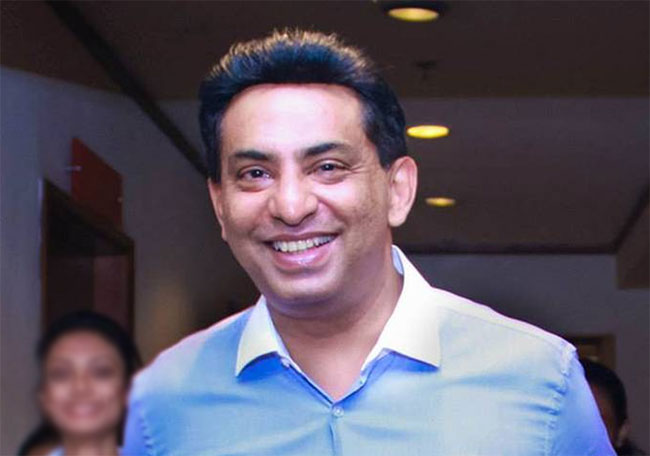
New Democratic Front (NDF) MP Ravi Karunanayake told Parliament yesterday (5) that expanding port capacity and regulating container depot operations are essential to improving efficiency and enhancing Sri Lanka’s international competitiveness in port operations.

He said these objectives could be achieved through the proposed Container Depot Operators Licensing Act, which would formalise the sector and ensure the State receives due revenue. MP Karunanayake noted that container depot operators currently function without proper regulation, do not pay taxes, and channel significant earnings without benefiting the national economy.

“For this, some fixed income needs to be generated. Through that, the container operations sector can be developed. An opportunity Sri Lanka once had has been lost to Singapore. We must acquire technology from developed countries,” he said, adding that the proposed legislation would enable the Government to secure rightful income while adopting modern technological practices used internationally.

The MP pointed out that Sri Lanka’s ports are currently ranked 25th globally, recalling that when former Minister Lalith Athulathmudali initiated port development, Sri Lanka had held a leading global position. He stressed that proper regulation could help the country regain that standing.

Highlighting operational challenges, MP Karunanayake said delays in cargo handling are costing the country millions of rupees, noting that losing even one hour at the port results in significant financial losses. He observed that while work on the East Container Terminal is underway, greater attention must be paid to optimising the existing port area.

“There is no proper space for anchoring, and ships are now diverting to other countries instead of calling at Sri Lankan ports,” he said, adding that while India clears goods in about 0.9 days, Sri Lanka takes considerably longer, undermining its competitiveness in regional maritime trade.

Sri Lanka Tea Industry Forecast to Grow 10–12% in 2026 Despite Challenges

0

Sri Lanka’s tea industry is expected to record growth of between 10 and 12 percent in 2026, despite weather-related losses and persistent structural challenges, industry officials said.

Chairman W. L. P. Wijewardene said the sector remains optimistic even after losing nearly one million kilograms of tea due to Cyclone Ditwah. He noted that favourable weather conditions in the coming months could help the industry achieve its annual production target of 300 million kilograms.

Tea production in 2025 increased to 264.12 million kilograms, up from 262.69 million kilograms in 2024, reflecting a growth of 1.43 million kilograms. Mr. Wijewardene attributed the improvement largely to the government’s fertilizer subsidy, adding that 2025 output was also 8.03 million kilograms higher than production recorded in 2023.

However, he pointed out that the Department of Census and Statistics’ third-quarter report for 2025 indicated an 8.1 percent decline in tea production volume. This downturn was attributed to supply-side challenges, including rising input costs, delays in replanting and labour shortages.

On the export front, tea shipments increased by 11.65 million kilograms in 2025 to reach 257.4 million kilograms. Export earnings rose to USD 1.506 billion during the year, while the average export price remained stable at around USD 5.85 per kilogram, Mr. Wijewardene said.

Supreme Court Orders UGC to Admit Student to Medical Faculty Over Rights Violation

0

The Supreme Court on Thursday (05) ordered the University Grants Commission (UGC) to immediately admit a Sri Lankan student to a state university medical faculty, ruling that his earlier rejection amounted to a violation of his fundamental rights.

The Court found that the student, who had completed a Russian examination equivalent to Sri Lanka’s GCE Advanced Level and fulfilled the required qualifications, had been unfairly denied admission.

The petitioner, a resident of Borella, had passed the GCE Ordinary Level examination in Colombo before relocating to Russia due to his father’s diplomatic posting. While in Russia, he completed the Senior School Certificate Examination, an examination sat by students from India, Pakistan and Bangladesh, which he contended was equivalent to the GCE Advanced Level.

He had applied for admission to a medical faculty through the Ministry of Foreign Affairs, but his application was rejected on the grounds that he did not meet the admission criteria. The petitioner subsequently challenged the decision, claiming it infringed upon his fundamental rights.

Delivering the judgment, Justice Arjuna Obeysekera, with Justices Janak de Silva and Sobhitha Rajakaruna concurring, observed that the petitioner had satisfied all relevant requirements and that the Ministry of Foreign Affairs had no authority over university admissions. The Court therefore directed the UGC to grant him immediate admission to a state university medical faculty.

President Meets Sri Lanka Cricket Team Ahead of T20 World Cup to Boost Morale

0

President Anura Kumara Dissanayake met members of the Sri Lanka national cricket team at the NCC grounds following their practice session, in a move aimed at boosting player morale ahead of the ICC Men’s T20 World Cup.

Sri Lanka will enter the home World Cup under pressure after a series of recent defeats and ongoing criticism from fans over the team’s performances.

Against this backdrop, President Dissanayake visited the squad to personally address the players, offering encouragement and reassurance as they prepare for their opening match of the tournament, scheduled to be played on February 8.

India Sends 10 Bailey Bridges to Support Post-Cyclone Ditwah Reconstruction in Sri Lanka

0

As part of ongoing reconstruction efforts following Cyclone Ditwah, India has dispatched a consignment of 10 Bailey Bridges to Sri Lanka to assist in restoring critical connectivity infrastructure in affected areas.

The shipment arrived in Colombo from Visakhapatnam onboard INS Gharial, and was formally handed over by the Acting High Commissioner of India to Sri Lanka, Dr. Satyanjal Pandey, to Deputy Minister of Ports and Civil Aviation Janitha Ruwan Kodithuwakku at a ceremony held on February 5.

The additional Bailey Bridges have been provided under India’s USD 5 million grant assistance for post-Cyclone Ditwah reconstruction, aimed at strengthening transport links and access in disaster-affected regions. Another shipment carrying the remaining bridge components is expected to arrive shortly.

The supply of Bailey Bridges forms part of the USD 450 million Reconstruction and Rehabilitation Packageannounced by India’s External Affairs Minister Dr. S. Jaishankar during his visit to Sri Lanka following the cyclone.

The newly supplied bridges will be installed at selected locations across the country, with technical assessments currently being conducted by Indian Army engineers in close coordination with the Sri Lankan Army and the Road Development Authority (RDA).

India had previously supplied four Bailey Bridges to Sri Lanka, two of which were installed in the Kilinochchi Districtand two along the Kandy–Ragala Road. These bridges have played a vital role in restoring connectivity in difficult terrain, improving access for communities and supporting the resumption of essential services, livelihoods and economic activity.

India has reaffirmed its commitment to supporting Sri Lanka’s recovery, resilience and long-term connectivity through timely, targeted and people-centric assistance.

WEATHER FORECAST FOR 06 FEBRUARY 2026

0

Showers will occur at times in Eastern, Uva and Central provinces and in Polonnaruwa and Hambantota districts. Fairly heavy showers above 50 mm are likely at some places in Uva and Eastern provinces and in Hambantota, Matale and Nuwara-Eliya districts.Several spells of showers will occur at Northern province and in Anuradhapura district.

Showers or thundershowers may occur at several places elsewhere after 2.00 p.m. Fairly heavy showers above 50 mm are likely at some places in Rathnapura, Kaluthara, Galle and Matara districts.

Fairly strong winds about (30-40) kmph can be expected at times over Northern and North-western provinces and in Matale, Trincomalee and Anuradhapura districts.

Misty conditions can be expected at some places in Western, Sabaragamuwa and Central provinces and in Galle, Matara and Badulla districts during the early hours of the morning.

The general public is kindly requested to take adequate precautions to minimize damages caused by temporary localized strong winds and lightning during thundershowers.

From Deficit to Dividend: How Sri Lanka’s Dairy Industry Is Transforming

0

By: Staff Writer

February 05, Colombo (LNW): Sri Lanka’s dairy industry is undergoing a noteworthy transformation, underlining both the challenges and emerging opportunities that shape one of the country’s most critical agricultural sectors. With domestic milk production still meeting only a fraction of national demand, the sector’s growth and its potential contribution to the broader economy hinges on enhancing local capacity, empowering dairy farmers, and harnessing state-owned assets more effectively.

According to recent industry figures, Sri Lanka produces about 40 % of its total milk demand locally, with the remainder met through imports chiefly powdered milk that costs billions of rupees every year. While production has increased over the past decade, local output remains significantly below national consumption. Official data show that domestic annual milk production has fluctuated around 380 million litres, a modest rise from earlier levels but still insufficient relative to national requirements.

Amid this backdrop, the Sri Lankan Government’s commitment to revitalise the dairy sector has taken centre stage. Prime Minister Dr. Harini Amarasuriya highlighted the transformation of state-owned Milk Industries of Lanka Company (MILCO) as a milestone in this strategy. At the recent MILCO National Dairy Farmers’ Profit Sharing and Insurance Program held at Temple Trees, she emphasised that the government’s approach prioritises economic inclusivity and shared benefits—a shift from decades of stagnation and mismanagement.

MILCO’s performance in 2025 stands as a symbol of this turnaround. The company reported its highest-ever sales turnover and historic net profit, a rare achievement for a formerly loss-making state enterprise. In recognition of this success, performance incentives will be distributed to some 22,000 dairy farmers affiliated with MILCO, with symbolic dividend payments already presented to 2,000 farmers at the event.

This revival owes much to stronger producer linkages, improved processing capacity, and better supply chain operations. MILCO now collects roughly 150,000 litres of milk daily—a significant improvement from earlier years when outputs lagged due to administrative weak points. To support sustainability, the Dairy Farmer Retirement Scheme and farm family insurance benefits were also introduced, further embedding social security within the sector’s growth narrative.

Yet challenges persist across the industry. Smallholder farmers—who constitute the backbone of Sri Lanka’s dairy production continue to grapple with rising input costs, limited access to high-quality feed and veterinary services, and logistical inefficiencies. Reports show many farmers struggle with low yields that undermine profitability, even as overall production inches upward.

Still, industry stakeholders view MILCO’s renewed performance as a catalyst for broader reform. Agricultural Minister K.D. Lalkantha praised both institutional leadership and dairy farmers for driving MILCO’s turnaround, stressing the importance of recognising national value in such achievements. Government support for tackling systemic challenges is expected to continue, signalling a long-term commitment to the sector.

Looking ahead, the Sri Lankan dairy industry’s capacity to reduce import dependence, boost rural incomes, and contribute meaningfully to GDP will depend on scaling up production efficiency and sustaining momentum from recent reform efforts. As MILCO leads by example, dairy’s potential role in strengthening the rural economy and enhancing food security becomes ever clearer

Audit Office Under Pressure: New Leader Faces Tough Task

0

By: Staff Writer

February 05, Colombo (LNW): The appointment of Samudika Jayaratne as Auditor General has finally ended a ten-month impasse that left Sri Lanka’s National Audit Office without a permanent head. The Constitutional Council’s unanimous approval follows the retirement of Chulantha Wickramaratne in April 2025, and months of heated debate over presidential nominees rejected by the Council.

The prolonged vacancy exposed the NAO to political manoeuvring. The controversy reached its peak when a serving military officer was nominated in December, sparking public concern that the audit institution could lose its independence and become an extension of state power.

Jayaratne’s appointment restores leadership, but she assumes office at a time when the economy remains vulnerable, and public scrutiny of government spending is at its highest.


Political Threats to Audit Independence

The repeated rejection of presidential nominees reflects deep distrust between the executive and oversight institutions. While the Council’s decision can be seen as a defence of institutional independence, it has also created a power vacuum that weakened the NAO’s ability to function effectively.

Jayaratne now faces the challenge of rebuilding trust in the office’s neutrality. Her appointment must signal a return to impartial audits, free from political interference. This will require courage, transparency, and a firm commitment to the principles of public accountability.


Fiscal Oversight in a Time of Scarcity

The economy’s current condition makes audit work more important than ever. Government spending is constrained, and there is heightened risk of corruption and mismanagement in areas such as public procurement, debt servicing, and emergency expenditures.

With international lenders and investors watching closely, audit reports will play a critical role in demonstrating fiscal discipline. Jayaratne must prioritise audits that reveal wasteful spending and safeguard the integrity of public funds.


Operational Challenges

The NAO’s internal capacity may have been compromised during the leadership gap. Staff morale, planning, and audit execution could have suffered, reducing the office’s effectiveness. Jayaratne must rebuild organisational stability, strengthen training, and ensure audits are conducted timely and professionally.

Moreover, she must engage with the public transparently. The NAO must not be perceived as an elite institution operating behind closed doors. Regular public disclosure of audit findings will be essential to regain credibility.


The Road Ahead

Jayaratne’s appointment is a critical step, but it marks the beginning of a difficult journey. To succeed, she must defend the NAO’s independence, strengthen fiscal oversight, and restore public confidence in governance. In the current economic environment, her performance will have profound implications for transparency and accountability in Sri Lanka.