February 24, Colombo (LNW): Showers or thundershowers are likely at a few places in Southern province and in Rathnapura, Monaragala and Kaluthara districts after 2.00 p.m., the Department of Meteorology said in its daily weather forecast today (24).
Mainly fair weather will prevail over the other areas of the island.
Misty conditions can be expected at some places in Central, Sabaragamuwa, Western, North-western and North-central provinces and in Galle and Matara districts during the early hours of the morning.
The general public is kindly requested to take adequate precautions to minimise damages caused by temporary localised strong winds and lightning during thundershowers.
Marine Weather:
The low-pressure area over the Bay of Bengal, to the northeast of Sri Lanka, is moving northeastwards and is expected to weaken further.
Under the influence of this system, heavy showers or thundershowers, Strong wind gust about (50-60) kmph are possible. Hence sea areas may be rough in the aforementioned sea areas.
Navel and fishing communities are requested to be attentive to the future forecasts and bulletins issued by the Department of Meteorology in this regard.
Condition of Rain:
Showers or thundershowers may occur at a few places in the sea areas off the coast extending from Galle to Pottuvil via Hambantota during the evening or night.
Winds:
Winds will be North-westerly in the sea areas around the island. Wind speed will be (20-40) kmph.
State of Sea:
The sea areas around the island will be moderate.
Temporarily strong gusty winds and very rough seas can be expected during thundershowers.
Afternoon showers, thundershowers likely to occur in several districts (Feb 24)

Public Backlash Persists Against Natasha Edirisooriya Despite Court Clearance, CID Apology

LISTEN TO STORY
WATCH STORY
By: Ovindi Vishmika
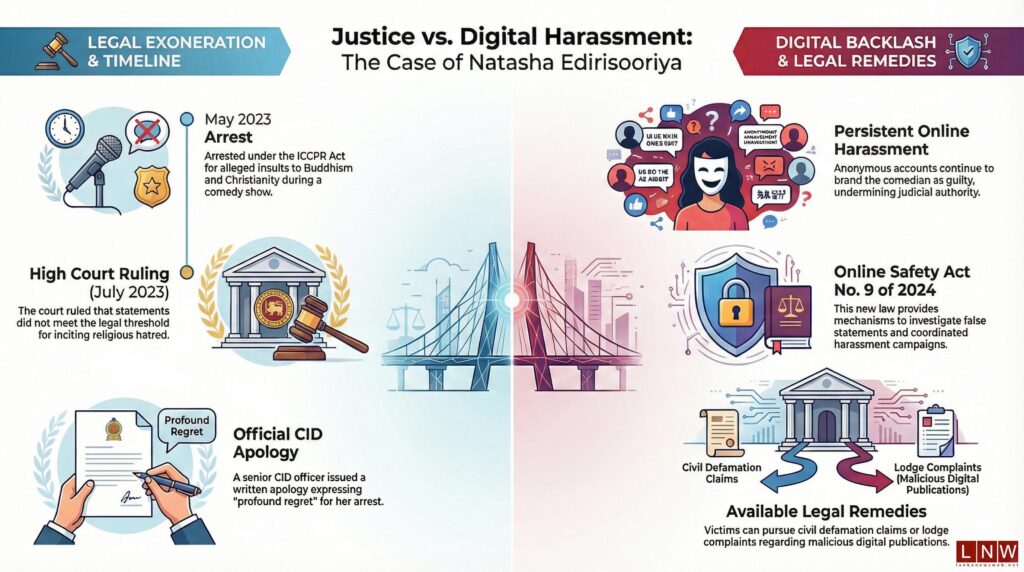
February 23, Colombo (LNW): Although stand-up comedian Natasha Edirisooriya has been legally cleared by the Colombo High Court and received a formal written apology from a former senior officer of the Criminal Investigation Department (CID), she continues to face a wave of online harassment, defamatory accusations and hostile commentary across social media platforms.
The controversy began in May 2023 when Edirisooriya was arrested over remarks made during her comedy show “Modibhimanaya,” with allegations that she had insulted Buddhism and Christianity. She was charged under Sections 291A and 291B of the Penal Code as well as Section 3(1) of the ICCPR Act No. 56 of 2007, which deals with advocacy of national, racial or religious hatred amounting to incitement.
In July 2023, however, the Colombo High Court ruled that the alleged statements did not, on their face, meet the legal threshold required under the ICCPR Act. High Court Judge Aditya Patabendige emphasized that the Act must be interpreted consistently with the constitutional guarantee of freedom of speech and expression. The Court noted that no evidence had been presented to establish hostility or violence resulting from her performance. She was granted bail accordingly.
The matter later reached the Supreme Court through a Fundamental Rights petition filed by Edirisooriya, challenging the legality of her arrest and detention. During those proceedings, a former Officer-in-Charge of the CID’s Cyber Crimes and Intelligence Analysis Unit tendered a written apology expressing “profound regret” for her arrest and remand. The Attorney General’s Department also undertook to issue a special circular clarifying guidelines to prevent improper arrests under the ICCPR Act in the future. Chief Justice P. Padman Surasena commended the resolution in open court, and the matter was concluded.
Online Harassment After Judicial Clearance
Despite these judicial findings and the official acknowledgment of error, segments of the public have continued to post abusive commentary online. Social media platforms have seen repeated allegations portraying the comedian as guilty, questioning the legitimacy of the High Court ruling, and attacking her character. Many such posts are reportedly circulated through anonymous or fake accounts, amplifying harassment while avoiding accountability.
Legal experts note that while citizens have the right to disagree with court decisions, repeatedly branding a person as a criminal after a competent court has ruled otherwise may amount to defamation if such statements are false and harmful to reputation.
Freedom of expression is constitutionally protected in Sri Lanka, but it is not absolute. Publishing false allegations with malicious intent, spreading misinformation about a court verdict, or engaging in sustained harassment may expose individuals to civil liability or other legal consequences.
Contempt of Court and Judicial Authority
There is also the question of whether certain forms of online commentary may undermine the authority of the judiciary.
Under Article 105(3) of the Constitution, the Supreme Court has the power to punish for contempt of itself and other courts.
Where commentary goes beyond fair criticism and deliberately scandalises a court, misrepresents a judicial decision, or seeks to erode public confidence in the administration of justice, such conduct could potentially amount to contempt.
While reasoned criticism of judgments is lawful in a democratic society, malicious campaigns that distort court findings or encourage hostility toward the judiciary may cross legal boundaries.
The Role of the Online Safety Act No. 9 of 2024
In addition to existing defamation and contempt provisions, Sri Lanka’s recently enacted Online Safety Act No. 9 of 2024 may provide a legal mechanism where online conduct crosses into unlawful territory.
The Act establishes the Online Safety Commission and addresses “prohibited statements” communicated online. These may include false statements made with intent to cause harm, communications amounting to harassment, and content that could constitute contempt of court.
If individuals knowingly spread false claims that contradict judicial findings, deliberately misrepresent court decisions, or engage in coordinated harassment campaigns intended to intimidate or degrade, such actions may fall within the scope of the Act. The use of fake or anonymous accounts for harmful purposes does not automatically shield individuals from investigation if legal thresholds are met.
Under the Act, complaints may be made to the Online Safety Commission, which has the authority to investigate, issue removal directives, and in serious cases refer matters for prosecution. However, the law must be applied carefully to avoid infringing legitimate freedom of expression. Mere disagreement with a judgment would not automatically amount to an offence; the key factors are falsity, intent and demonstrable harm.
Legal Remedies Available
Where online speech crosses from criticism into harassment or defamation, several legal remedies may be available. Affected individuals may pursue civil defamation claims for reputational damage. Complaints can be lodged with cybercrime authorities regarding malicious digital publication. In cases where judicial authority is undermined, contempt proceedings may be considered. Additionally, the Online Safety Commission may act where content meets the statutory definition of prohibited statements.
A Broader Democratic Concern
This situation reflects a broader challenge in the digital era. In a constitutional democracy, the determination of criminal liability rests with the courts. Public debate is vital, but it must operate within legal boundaries.
When a High Court has ruled that legal thresholds were not met, and a state official has formally apologized for procedural wrongdoing, continued vilification based on unproven or false allegations risks shifting from democratic expression to unlawful harassment. Such conduct not only harms the individual concerned but may also erode public confidence in the rule of law and the authority of judicial institutions.
As legal analysts observe, respecting court verdicts does not require silence or agreement — but it does require that public discourse remain truthful, responsible and within the limits of the law.
A Question Emotionally Charged Long After Headlines Faded – and the Challenge of Artificial Intelligence
News “Audio”;
By: Puli
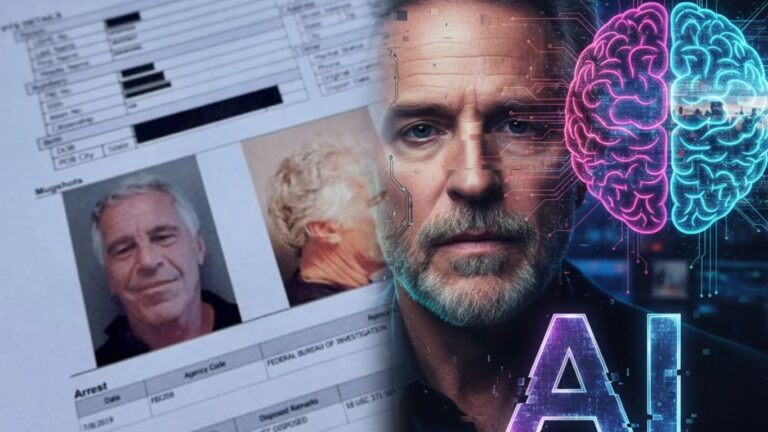
February 23, LNW (Colombo): A few days ago, the resurfacing of files connected to Jeffrey Epstein once again captured global attention, triggering anger, distrust, and deep moral anxiety. At the center of this reaction was not only the documented reality of sexual exploitation and abuse of minors, but also a wave of dark rumors spreading across the internet and political discourse.
Verified investigations exposed a powerful network in which wealth, privilege, and institutional failures left vulnerable victims unprotected. Yet alongside these confirmed crimes emerged disturbing stories of elite secrecy, sexual misconduct, and sensational claims that captured public imagination and fear even in the absence of credible evidence.
The emotional intensity surrounding the case largely stems from the dangerous imbalance of power it revealed. Survivors described environments shaped by manipulation, coercion, and influence — situations where wealth and status appeared capable of silencing accountability.
The arrest and eventual conviction of Ghislaine Maxwell strengthened the perception that Epstein’s crimes were not isolated acts but part of a coordinated system of exploitation. For many observers, the case symbolized a broader anxiety: the fear that powerful individuals can operate behind closed doors while victims struggle to be heard.
Public outrage also created fertile ground for conspiracy movements. Online communities began amplifying claims involving secret elite networks, ritualistic abuse, and other extreme allegations. These emotionally explosive narratives – often lacking credible evidence or legal findings – gained traction by tapping into genuine public distrust. Repeated institutional failures, extreme wealth inequality, and the horror of Epstein’s confirmed crimes blurred the line between documented abuse and speculative myth, making even extraordinary claims appear believable to some audiences.
Media coverage further intensified the emotional climate. Epstein’s mysterious death in custody generated suspicion, grief, and anger across political and social divides. For survivors, the loss felt like justice slipping away. For the broader public, unanswered questions became symbols of deeper systemic problems.
Beneath the controversy lies a painful reality: sensational rumors can overshadow the voices of victims themselves. While shocking narratives attract attention, survivor testimony consistently points to a simpler but devastating truth – exploitation can flourish wherever power operates without accountability. The Epstein case forced society to confront uncomfortable questions about wealth, celebrity culture, and the protection of children.
Ultimately, the Epstein scandal stands both as a confirmed tragedy and as a mirror reflecting collective fear. Verified crimes demand justice, reform, and compassion for survivors. At the same time, extreme rumors demonstrate how trauma and distrust can transform into myth when transparency feels absent.
Adding to the complexity, much of the Epstein-related content circulating online is presented as leaked evidence but consists of AI-generated or heavily manipulated videos. These deepfakes frequently depict fabricated confessions, altered news broadcasts, or synthetic interviews that appear to reveal hidden information.
Because the case continues to attract intense public interest and conspiracy speculation, misleading content spreads rapidly on social media platforms where verification is limited. Unlike authentic legal documents, these videos often rely on dramatic storytelling, emotional language, and anonymous sources rather than verifiable records. Technical warning signs may include unnatural facial movement, mismatched lip synchronization, inconsistent lighting, or robotic vocal patterns.
Authentic Epstein files originate from traceable legal systems and are typically interpreted within careful journalistic and legal frameworks. In contrast, AI-generated videos are often designed to provoke outrage, reinforce conspiratorial narratives, or generate attention without evidentiary support.
Examples include:
- Fake celebrity confession clips — short videos claiming politicians or public figures admitted connections to Epstein, often displaying subtle facial or audio irregularities.
- Fabricated news broadcast segments — clips imitating television graphics and anchors discussing supposed newly leaked lists or secret recordings that never aired on real networks.
- Altered interview footage — genuine interviews edited with AI voiceovers to create the false impression that individuals were discussing Epstein when the original topic was unrelated.
Confusion between documented allegations, proven findings, and entirely fabricated claims has directly contributed to widespread misinformation surrounding the case. As AI tools become more realistic and accessible, distinguishing truth from manipulated media requires critical evaluation of sources and responsible reporting.
Moreover, exploiting globally traumatic events for attention or influence risks creating further harm rather than understanding.
Island at AI Crossroads: Sri Lanka’s Stark Reality

By: Staff Writer
February 23, Colombo (LNW): As the global race for artificial intelligence accelerates at breakneck speed, Sri Lanka finds itself struggling to keep pace. Though the country boasts a highly competent workforce, its AI adoption rate stood at just 6.2 percent in early 2025, inching up marginally to 6.6 percent by year’s end, according to the Microsoft AI Economy Institute. That figure remains well below the global average, underscoring a widening technological divide.
AI Data Scientist A.D. Magedaragamage warns that artificial intelligence is no longer a passing innovation trend. It has become the bedrock of geopolitical and economic power in the 21st century, reshaping global hierarchies much like electricity and the internet once did. Nations that master AI are consolidating influence, while those that lag risk marginalization.
Global benchmarks paint a sobering picture. In the Global AI Index, Sri Lanka ranks 82nd out of 83 countries in AI-ready talent and infrastructure. Despite launching a comprehensive National AI Strategy for 2024–2028, the country’s ecosystem remains stalled at what experts describe as a “model level,” unable to transition from policy formulation to tangible implementation.
Infrastructure gaps remain the most critical bottleneck. Limited cloud capacity and high energy costs make advanced AI deployment prohibitively expensive. Without affordable, scalable computing power, even promising local innovations struggle to mature.
Compounding the problem is a persistent “brain drain.” As the nation works toward economic recovery, experienced AI engineers and strategic leaders are leaving for more stable markets, draining institutional knowledge and weakening the capacity to scale homegrown solutions.
Data governance presents another contradiction. While Sri Lanka has enacted a Personal Data Protection Act, its national open data portal remains largely dormant. Developers lack access to high-quality, localized datasets essential for building ethical and context-sensitive AI models. The result is a policy framework without practical fuel.
Analysts warn that unless Sri Lanka shifts from policy intent to rapid execution within the next 12 to 18 months, it risks becoming merely an importer of foreign AI systems deepening technological dependence rather than fostering sovereignty.
The stakes are high. Artificial intelligence is no longer optional; it is structural. Sri Lanka’s future competitiveness hinges on whether it can convert its technical talent into measurable productivity gains. Failure to act decisively could lock the nation into a decade of reliance on external innovation, with diminished economic leverage and reduced strategic autonomy.
Higher Licence Fees, Mandatory EPF hake Private Transport Sector

By: Staff Writer
February 23, Colombo (LNW): The government’s decision to revise driving licence fees and widen compulsory social security coverage for segments of the transport sector marks one of the most consequential regulatory shifts in recent years. Approved by the Ministerial Consultative Committee on Transport, Highways and Urban Development, the measures were formalised through two Extraordinary Gazette notifications under the Motor Traffic Act.
The first regulation revises the fee structure for driving licences. The second extends the validity period of licences an adjustment officials say is designed to streamline renewals and reduce administrative congestion. While the extension appears consumer-friendly, the fee hike has triggered concern among commercial drivers already grappling with rising fuel and maintenance costs.
Behind the technical language of Gazette numbers lies a broader fiscal and policy recalibration. Licence fees are a significant non-tax revenue source. Increasing them during a period of economic adjustment raises questions about whether the move is aimed at improving road safety administration or shoring up public finances.
More transformative, however, is a recommendation to make contributions to the Employees’ Provident Fund and the Employees’ Trust Fund compulsory for private bus drivers, conductors, three-wheeler operators, and app-based transport workers. At present, many of these workers operate in the informal economy, without structured retirement savings or employer-backed protections.
Under existing law, private and semi-government employees contribute 8 percent of their wages to EPF, while employers pay 12 percent to EPF and 3 percent to ETF creating a combined 23 percent monthly contribution. Extending this framework to transport service providers would represent a structural shift in how gig and informal labour is classified.
Ride-hailing platforms currently treat drivers as independent contractors, excluding them from mandatory employer contributions. If enforced, the new recommendation would compel either platform companies or vehicle owners to assume employer status potentially increasing operating costs significantly.
Industry insiders warn that higher compliance costs may be passed on to commuters through fare adjustments. Three-wheeler drivers, who form a politically sensitive voting bloc, fear reduced take-home income if contributions are deducted without corresponding fare revisions.
The proposal also raises enforcement questions. Monitoring thousands of semi-formal operators requires administrative capacity and digital tracking mechanisms that Sri Lanka’s labour authorities have historically struggled to maintain.
Yet proponents argue the reform addresses long-standing inequities. Informal transport workers lack pension security and insurance buffers. In the event of illness or retirement, many depend solely on personal savings. Integrating them into formal social security systems could improve long-term financial resilience and reduce future welfare burdens.
The viability of these reforms hinges on policy consistency. Sudden fee hikes and mandatory contributions risk resistance if implemented without phased consultation. Transparent timelines, digital registration frameworks, and clarity on employer liability will determine whether the reforms modernise the sector or deepen financial strain on drivers already navigating narrow margins.
Empty Runways, Grand Plans: Mattala’s Tourism Gamble
By: Staff Writer
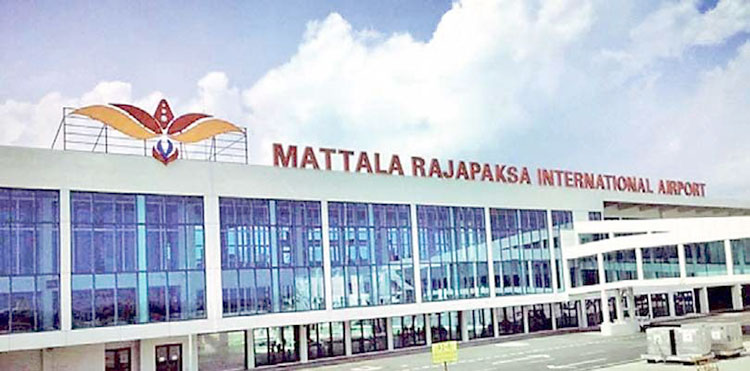
February 23, Colombo (LNW): Sri Lanka’s Marxist JVP-led National People’s Power (NPP) government is attempting to breathe life into the underused Mattala Rajapaksa International Airport, recasting it as a strategic gateway for tourism rather than a symbol of sunk cost. Officials say the time has come to transform the near-empty airport into a functioning southern hub that can ease pressure on Bandaranaike International Airport and directly serve resort zones.
At a recent media briefing, Sri Lanka Tourism Development Authority Chairman Buddhika Hewawasam outlined what he termed a practical “game plan”: secure scheduled commercial flights. For years, MRIA has depended largely on sporadic charter services during peak seasons. The absence of regular airline operations remains its core weakness.
The proposed revival hinges on a coordinated marketing and operational strategy involving tour operators, the Civil Aviation Authority, and Airports and Aviation Services Sri Lanka. Authorities want to reposition Mattala as a credible “alternative airport” for scheduled services and flight diversions.
However the airport’s troubled history complicates the pitch. Airlines have often preferred diverting to India’s Trivandrum International Airport instead of landing at Mattala, citing operational familiarity and concerns over wildlife hazards. The airport’s well-documented encounters with birds and even elephants straying near runways damaged its reputation in global aviation circles.
Officials now say they are working with the International Civil Aviation Organization to strengthen safety certifications and standardise wildlife risk mitigation. Without internationally recognised compliance and demonstrable safety upgrades, however, marketing campaigns may struggle to persuade risk-averse carriers.
From a tourism perspective, the logic appears compelling. Mattala sits within driving distance of high-demand attractions such as Yala National Park, Ella, and the southern beaches. Direct arrivals could shorten travel times and reduce congestion in Colombo. Officials argue that with improved expressways linking the South, connectivity obstacles have eased compared to a decade ago.
However, infrastructure alone does not generate passenger traffic. Airlines prioritise yield, load factors, and network integration. A secondary airport requires either strong origin-destination demand or incentives that offset commercial risk. Sustained subsidies or fee waivers may attract initial flights, but they strain public finances already under pressure.
Policy inconsistency further clouds viability. Sri Lanka’s recent record of abrupt tax changes, regulatory shifts, and economic volatility has dented investor confidence. Long-term aviation planning demands stable fiscal and regulatory frameworks qualities the island has struggled to guarantee.
The NPP government’s ideological shift from its predecessors also raises questions about continuity. Investors and airlines will seek assurances that commitments made today will survive political cycles.
Rebranding Mattala as a tourism-friendly southern gateway is politically attractive and geographically logical. But aviation success depends less on slogans than on consistent policy, proven safety standards, and commercially viable passenger demand. Without those fundamentals, the runway lights may shine brightlywhile aircraft remain scarce.
Voluntary Drug Rehabilitation Scheme Records Strong Early Results
February 23, Colombo (LNW): The Ministry of Public Security has reported encouraging progress from its voluntary rehabilitation initiative aimed at supporting individuals battling drug dependency.
Speaking to Newsfirst, Colonel Channa Gomez, Assistant Commissioner of the Bureau of Rehabilitation, said the first batch of participants has successfully completed the structured recovery programme and has now reintegrated with their families and communities.
He noted that the scheme, which is designed to offer a supportive and non-punitive pathway to recovery, combines counselling, vocational training and wellness activities to help participants rebuild their lives. According to officials, several individuals from the initial intake have already secured employment or resumed their education following completion of the programme.
Colonel Gomez emphasised that voluntary enrolment remains open to anyone seeking assistance to overcome substance dependence. He stressed that the initiative focuses on rehabilitation rather than punishment, offering a confidential and professionally supervised environment for recovery.
Those wishing to join the programme or obtain further information can contact the Bureau of Rehabilitation directly. Assistance and guidance are available through the dedicated hotline on 0112 883 891, where trained officers provide details on eligibility, admission procedures and available support services.
The Ministry stated that, given the positive response so far, there are plans to expand the programme in the coming months to accommodate more participants and strengthen community-based aftercare support.
CID Probes Sophisticated Phone Scam Involving Fake Police Officials

February 23, Colombo (LNW): The Criminal Investigation Department has launched a wide-ranging inquiry into an organised fraud ring accused of swindling members of the public by posing as police officers and banking representatives.
According to a statement issued by the Sri Lanka Police, the investigation is being spearheaded by the CID’s Computer Crime Investigation Division following a series of complaints from victims across the country. Several individuals have already been taken into custody, while detectives continue to track down other suspects believed to be involved in the network.
Initial findings suggest the group used overseas telephone numbers manipulated to resemble local landline contacts, thereby increasing the likelihood that recipients would answer the calls. Targets reportedly included bank customers and professionals whose contact details may have been obtained through illicit online channels.
During the calls, the fraudsters allegedly introduced themselves as officials from well-known financial institutions, falsely claiming that irregularities or legal complaints had been filed against the victim’s bank account. To heighten the sense of urgency, the call would then be transferred to another individual impersonating an officer from a police investigation unit.
In several cases, suspects are said to have conducted WhatsApp video calls while dressed in clothing resembling official police uniforms. Investigators revealed that the group staged convincing backdrops designed to mimic police offices, complete with mock questioning sessions and fabricated documentation, in order to pressure victims into compliance.
Under the guise of “securing” or “verifying” their accounts, victims were instructed to transfer funds to a series of designated bank accounts. Authorities have since discovered that the stolen money was funnelled through multiple intermediary accounts before being converted into cryptocurrency via accounts on Binance.
Those arrested have reportedly admitted to moving funds at the direction of individuals who recruited them online, receiving commissions in return for facilitating the transactions.
Police have urged the public to exercise extreme caution when receiving unsolicited calls relating to bank accounts or alleged legal matters. Citizens are advised never to disclose confidential banking information, passwords or one-time verification codes to unknown callers.
The Police Media Division has also appealed to media organisations to amplify the warning, stressing that heightened awareness is essential to preventing further financial losses as investigations continue.
Namal Rajapaksa Voices Regret Over Cancelled Oxford and Cambridge Union Events

February 23, Colombo (LNW): SLPP MP Namal Rajapaksa has spoken out after planned appearances at the Oxford Union and the Cambridge Union were withdrawn amid objections from sections of the Tamil student community and activist groups.
In a statement posted on his social media platforms, the Sri Lankan parliamentarian said he was disheartened that the engagements had been called off, arguing that the long-standing traditions of both debating societies were rooted in free expression and the robust exchange of ideas.
He remarked that the two historic institutions had, for generations, served as arenas where public figures are expected to defend their positions before critical audiences and engage with challenging questions. It was this culture of open scrutiny, he said, that had prompted him to accept the invitations without hesitation.
Rajapaksa suggested that organised pressure had ultimately made it difficult for the events to proceed, adding that universities should remain spaces where disagreements are confronted through reasoned discussion rather than through efforts to shut down dialogue. In his view, preventing debate risks deepening divisions rather than resolving them.
He further stated that he would have welcomed the opportunity to address critics directly, including those who fundamentally disagree with his political stance, maintaining that genuine reconciliation can only be achieved through conversation. Avoiding engagement, he argued, does little to strengthen democratic values.
Despite the cancellations, Rajapaksa expressed appreciation to both Unions for extending invitations and acknowledged the challenging circumstances they faced. He voiced hope that a future opportunity might arise to participate in a forum where differing perspectives can be aired openly and respectfully.
Prime Minister Urges Scouts to Lead with Discipline and Vision at Baden-Powell Commemoration
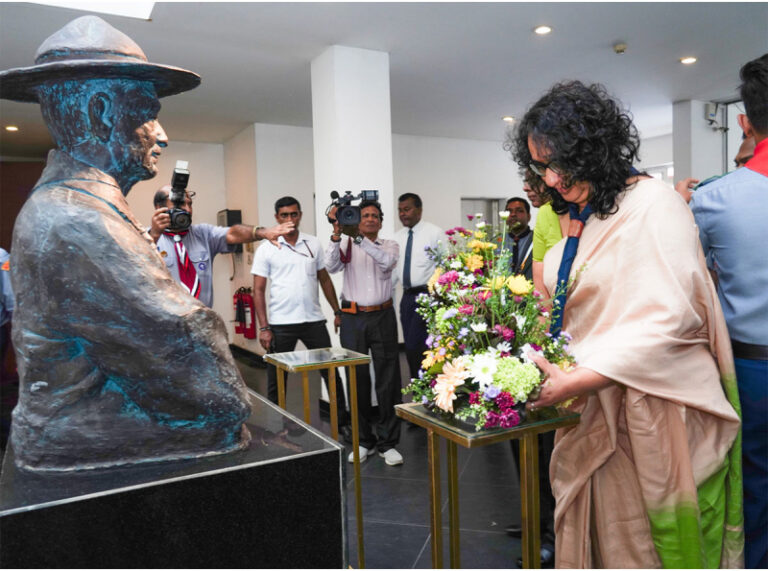
February 23, Colombo (LNW): Prime Minister Harini Amarasuriya on Saturday called upon young Scouts to take an active and principled role in shaping the nation’s future, as she addressed celebrations marking the 169th birth anniversary of Robert Baden-Powell and World Scout Thinking Day.
The commemorative event was held on February 22 at the National Scout Headquarters, drawing Scout leaders, district representatives and youth members from across the island.
In her address, Dr Amarasuriya underscored that Scouting is fundamentally about character-building rather than titles or rank. She reminded the audience that the spirit of the movement lies in discipline, community service and readiness to respond in times of need — ideals captured in the enduring motto, “Be Prepared”.
She encouraged Scouts to grow into responsible citizens who combine knowledge with compassion, embrace diversity and use modern technology wisely and ethically.
The Prime Minister also highlighted the importance of environmental stewardship, urging Scout groups to expand initiatives such as tree-planting campaigns, conservation of water sources and local clean-up drives. She noted that youth-led environmental action could make a tangible difference in addressing climate-related challenges facing the country.
As part of the ceremony, several districts received laptop computers under a nationwide Scout Digitalisation Project aimed at strengthening administrative capacity and digital literacy. First-aid kits were also distributed to support community response activities and training programmes.
Chief Scout Commissioner Manoj Nanayakkara presented the Prime Minister with a commemorative Scout stamp collection and special cover, marking the significance of the occasion.
Senior government officials, including the Secretary to the Prime Minister, representatives of the Sri Lanka Scout Association, and uniformed Scouts from various provinces attended the event, reaffirming their commitment to service, leadership and national development.