Home Blog Page 843

Sri Lanka Original Narrative Summary: 18/06

0

  1. President Ranil Wickremesinghe assures the proposed Imputed Rental Income Tax should not cause concern, noting that it would impact only 10% of homeowners and property owners: acknowledges the importance of broadening the tax base and enhancing tax administration efficiency: affirms the government’s commitment to these objectives, signalling openness to discussions on expanding the tax net and improving tax administration practices.
  2. Opposition Leader Sajith Premadasa says President Ranil Wickremesinghe asserted the process of new tax regime aiming the quantitative rise of the state revenue in the shortfall of state revenue and targets: urges the government to implement a transparent taxing system: proposes a more efficient and transparent taxing system by digitising it, thereby paving the way for tax evaders to be tracked and included upon.
  3. Former Senior DIG Ravi Seneviratne says the Easter attack could have been ‘easily avoided’ if accurate intelligence had been shared with the CID: blames the State Intelligence Services and Directorate of Military Intelligence for misleading investigations: also criticises the transfer of key officers after Gotabaya Rajapaksa became president, which he believes hampered the investigation and protected high-profile individuals: Seneviratne recently pledged his political allegiance to NPP openly.
  4. The Ministry of Justice, Prison Affairs, and Constitutional Reforms has spearheaded significant legal reforms since 2022, passing 59 reforms with 7 draft laws and 44 amendments pending: highlights include expanding Supreme Court judges, establishing Commercial High Courts, and enhancing judicial digitisation: aims to boost economic growth through improved legal frameworks and governance.
  5. Speaker Mahinda Yapa Abeywardena discloses the Supreme Court’s verdict on the proposed ‘Sri Lanka Telecommunications (Amendment) Bill,’ asserting that the Supreme Court has found several clauses of the Bill to be unconstitutional: Consequently, these clauses will necessitate a special majority in Parliament for approval: However, the Court indicated that if the contentious clauses are amended, they could pass with a simple majority.
  6. The IMF has highlights the necessity of upcoming tax adjustments in Sri Lanka to bolster national reserves: These reforms, aiming for 15% of GDP by 2025, follow significant strides in tax policy during 2023-2024: IMF’s Peter Breuer notes Sri Lanka’s unique fiscal challenges, contrasting them with global economic strategies: stresses the need for effective debt restructuring and broad creditor participation to ensure sustainability.
  7. Election Commission Chairman Rathnayake cautioned against premature election date announcements by political parties, asserting sole authority under the Constitution: NPP’s Anura Kumara Dissanayake and Tourism Minister Harin Fernando proposed September 28 or October 5 for polling, prompting Rathnayake to clarify Commission’s post-July 17 decision-making period within September 17 to October 17 for elections.
  8. Special transport services are aiding pilgrims visiting Mihintale Temple for Poson Poya: Sri Lanka Railways launches a free train from Anuradhapura supervised by Minister Bandula Gunawardena: Bus services are also available due to rail maintenance, with 400 extra buses between Mahawa and Anuradhapura: The Ministry of Buddhasasana has organised Poson Poya events till June 24.
  9. Police throw water cannons to disperse a protest by unemployed graduates near Diyatha Uyana, Parliament Junction, today (18): Simultaneously, a protest march by university non-academic staff on Lotus Road, Colombo Fort, caused road closure and severe traffic congestion: The University Trade Union Joint Committee (UTUJC) organised the latter demonstration.
  10. Sri Lanka finishes their 2024 T20 World Cup campaign with an emphatic 83-run victory over Netherlands at Daren Sammy National Cricket Stadium, St. Lucia: This win, led by Charith Asalanka’s explosive 46, marked their first victory after defeats and a rain-abandoned match: Asalanka praised the team’s effort in achieving a challenging total.

Protests in Colombo today (June 18)

0

June 18, Colombo (LNW): Police threw water cannons to disperse a protest organised by unemployed graduates near the Diyatha Uyana at the Parliament Junction this afternoon (18).

Meanwhile, the Lotus Road in Colombo Fort has been blocked due to a protest march organised by university non-academic staff, compelling the authorities to close the road temporarily for vehicular movement.

The event resulted in severe traffic congestion in the area.

The protest march was organised by the University Trade Union Joint Committee (UTUJC).

Special transport services launched for Mihintale pilgrims ahead of Poson Poya

0

June 18, Colombo (LNW): Special public transport services have been implemented to facilitate pilgrims visiting Mihintale Temple ahead of Poson Poya, observed on Friday (June 21).

Sri Lanka Railways yesterday (17) inaugurated a complimentary train service from Anuradhapura to Mihintale, launched under the supervision of Minister of Transport Bandula Gunawardena.

This service will remain free of charge for the public during this period.

Due to ongoing maintenance work on the railway track between Mahawa and Anuradhapura, special bus services have been introduced for pilgrims travelling from Colombo to Mihintale.

The Ministry of Transport has deployed an additional 400 buses to operate between Mahawa Railway Station and Anuradhapura to accommodate the increased demand.

The National Poson Week begins tomorrow (June 18) and extends until the following Monday (24).

The Ministry of Buddhasasana, Religious and Cultural Affairs has arranged various activities for Poson Poya celebrations centred around Anuradhapura, Mihintale, and Thanthrimale.

Dollar value against LKR at banks today (June 18)

0

June 18, Colombo (LNW): The Sri Lankan Rupee (LKR) indicates further depreciation against the US Dollar today (18) in comparison to last week, as per leading commercial banks in the country.

At Peoples Bank, the buying price of the US Dollar has increased to Rs. 298.56 from Rs. 298.36, and the selling price to Rs. 308.67 from Rs. 308.47.

At Commercial Bank, the buying price of the US Dollar has increased to Rs. 297.82 from Rs. 297.58, and the selling price to Rs. 308 from Rs. 307.47.

At Sampath Bank, the buying price of the US Dollar has increased to Rs. 299.50 from Rs. 299, and the selling price to Rs. 308.50 from Rs. 308.

President assures imputed rental income tax scope will affect only 10 per cent of owners

0

June 18, Colombo (LNW): President Ranil Wickremesinghe assured Parliament today that the proposed Imputed Rental Income Tax should not cause concern, noting that it would impact only 10 per cent of homeowners and property owners.

Responding to queries raised by Opposition Leader Sajith Premadasa during today’s session, who voiced objections to the new tax, Wickremesinghe acknowledged the importance of broadening the tax base and enhancing tax administration efficiency.

The President affirmed the government’s commitment to these objectives, signalling openness to discussions on expanding the tax net and improving tax administration practices.

IMF stresses essentiality of tax reforms amidst SL’s fiscal challenges

0

June 18, Colombo (LNW): In the wake of the upcoming tax adjustments that may amplify financial burdens for businesses and individuals in Sri Lanka, the International Monetary Fund (IMF) has underscored their necessity to bolster the country’s reserves.

Acknowledging these developments, the IMF Senior Mission Chief for Sri Lanka, Peter Breuer, highlighted the significant strides made in tax policy reforms throughout 2023 and 2024.

These reforms aim to boost government revenues towards achieving approximately 15 per cent of GDP by 2025.

Breuer described the policy adjustments as a modest recalibration. He contrasted Sri Lanka’s economic approach with that of other nations, noting that while some countries stimulate their economies during downturns, Sri Lanka’s crisis stems from a severe decline in fiscal revenue, leading to unsustainable debt levels and eventual default.

Addressing the press in an online briefing following the IMF’s approval of the second review, Breuer emphasised that from 2019 to 2022, Sri Lanka’s average general government revenues stood at approximately 9.3 per cent of GDP, significantly lower than the average of 26 percent observed in comparable economies.

He underscored the IMF’s stance on debt treatment comparability among Official Creditors, stating that while this is crucial for debt sustainability, the IMF’s primary concern remains whether the restructuring targets are being effectively met by all creditors.

Breuer concluded by affirming the importance of broad creditor participation in debt restructuring efforts to restore Sri Lanka’s debt sustainability, underlining the IMF’s indirect stake in ensuring these targets are achieved.

Justice Ministry drives major legal reforms and judicial modernisation in Sri Lanka

0

June 18, Colombo (LNW): The Justice, Prison Affairs and Constitutional Reforms Ministry has achieved substantial advancements in legal reforms, marking a period of prolific legislative activity over the past two years.

Secretary to the Ministry M.N. Ranasinghe highlighted the enactment of 59 legal reforms since 2022, with an additional 7 draft laws and 44 legal amendments pending approval in Parliament.

Speaking at the Presidential Media Centre on Monday (June 17), Ranasinghe underscored the ministry’s pivotal role in drafting laws across various sectors.

In detail, Parliament passed 29 reforms in 2022, followed by 17 in 2023 and 13 so far in 2024.

The Department of Legal Draftsman played a crucial role by preparing 273 draft laws in 2022 and 299 in 2023, encompassing all three official languages for other ministries.

Efforts towards modernising the judicial system were also highlighted, with significant strides made in digitisation to address delays in legal proceedings.

Notably, the number of Supreme Court judges was increased by 14 after 42 years, accompanied by recruitment of 76 judicial officers and promotion of 34 individuals to High Court Judges.

This expansion facilitated the establishment of new courts and increased capacity in existing ones, including the introduction of digitisation in the Supreme Court to enhance accessibility for citizens and legal professionals.

Furthermore, initiatives aimed at improving the Ease of Doing Business Index included the establishment of four Commercial High Courts in the Western Province to handle commercial disputes, with plans for additional courts underway.

The ministry is also advancing legal reforms to support the Port City project, including the creation of an investment court to expedite resolution of investor disputes.

Moreover, the introduction of Small Claims Courts in 2022 for speedy resolution of financial disputes up to Rs. 2 million has proven effective, with courts operational in Colombo, Kandy, and Matale, and plans for expansion to other regions underway.

In response to recommendations from the Judicial Zoning Committee, new courts have been established in various locations, including a tourism court in Morawewa, with further expansions planned.

Additionally, measures to strengthen alternative dispute resolution mechanisms have bolstered Sri Lanka’s dispute settlement rate, which stands at nearly 70%, earning international acclaim.

Legislatively, the introduction of Bills such as the Anti-Corruption Bill and amendments to drug possession penalties reflect ongoing efforts to enhance legal frameworks and governance.

The Ministry remains committed to advancing these reforms to foster a more efficient and accessible justice system, vital for supporting economic growth and investment in Sri Lanka.

EC Chief cautions against premature announcements on upcoming polls

0

June 18, Colombo (LNW): Election Commission Chairman R.L.A.M. Rathnayake warned all political parties not to produce premature announcements on the holding of the elections, asserting that the decision rests solely with his office under constitutional authority.

Recently, NPP Leader Anura Kumara Dissanayake suggested potential polling dates of either September 28 or October 5, urging overseas Sri Lankans to consider travel arrangements for voting.

Additionally, Tourism Minister Harin Fernando indicated October 5 as a likely polling day.

Responding to such claims, Rathnayake clarified that the Commission is empowered by the Constitution to determine the election date, with action slated to commence after July 17.

The polling period is set between September 17 and October 17, inclusive of weekdays and weekends, affording flexibility for the Commission’s decision-making, he noted.

Previously, Rathnayake confirmed that the Commission will adhere strictly to constitutional and statutory provisions when calling for nominations for the presidential election.

Political parties are actively preparing for the election, with alliances anticipated to bolster candidate support.

To date, Anura Kumara Dissanayake and Opposition Leader Sajith Premadasa have declared their candidacy for the upcoming elections.

Sri Lanka plans property tax reform amidst economic stabilisation efforts

0

June 18, Colombo (LNW): The Ministry of Finance, Economic Stabilisation and National Policies of Sri Lanka has clarified details regarding the implementation of a proposed property tax, described as an imputed rental income tax within the context of the International Monetary Fund (IMF) supported Extended Fund Facility (EFF) programme documents.

In response to misconceptions, the Ministry emphasised that Sri Lanka faces a profound economic crisis primarily due to a significant decline in government tax revenue, leading to substantial budget deficits and unsustainable levels of public debt.

To address these challenges, rigorous fiscal consolidation efforts have been undertaken aimed at increasing government revenue from a low of 8.3% of GDP in 2022 to 15% of GDP by the end of 2025.

Regarding specific fiscal measures, the Ministry outlined that progressive reforms in corporate and personal income taxes were implemented in 2023, followed by Value Added Tax (VAT) reforms in 2024.

These reforms are on track to meet the revenue target of 13.5% of GDP by the end of 2024, with further gains expected to achieve the 15% target by 2025. A key component of these measures includes the introduction of a wealth tax focused on property.

The Ministry underscored that details of the envisaged property tax, aimed predominantly at high-wealth individuals rather than average income earners, are still under design and will be subject to legislative amendments.

Initial estimates suggest the tax could contribute 0.2% of GDP by 2025 and 0.4% in subsequent years. The tax structure will include mechanisms to prevent double taxation and minimise economic distortions.

Furthermore, the Ministry highlighted that property taxes are common globally, including in developing countries like India, and are considered efficient, progressive, and non-distortive revenue sources for funding public services.

The proposed tax is anticipated to be enacted by April 2025, pending legislative processes and improvements in valuation mechanisms and databases.

It was clarified that similar imputed income calculations have been included in Sri Lanka’s existing tax framework, such as the “Net Annual Value” under the Inland Revenue Act No. 10 of 2006.

Moreover, the Ministry noted that property in Sri Lanka is already subject to local authority rates and stamp duty, establishing a precedent for the proposed property tax.

The Ministry concluded by asserting that enhancing government revenue and reducing budget deficits have been instrumental in stabilising the economy, contributing to lower interest rates and currency appreciation, which benefit all citizens.

Failure to achieve the necessary revenue levels, however, could risk a resurgence of economic crises with severe implications for the country.

Supreme Court rules amendments to Telecom Bill require special majority

0

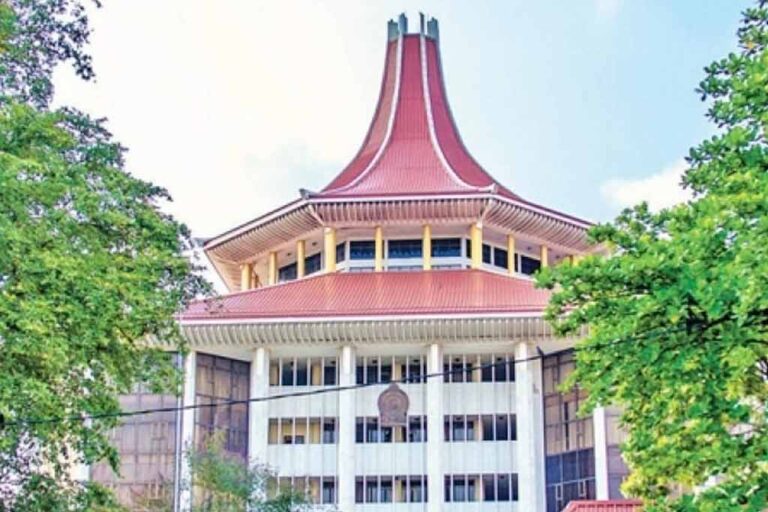
June 18, Colombo (LNW): The Speaker of Parliament has disclosed the Supreme Court’s verdict on the proposed ‘Sri Lanka Telecommunications (Amendment) Bill’.

The Supreme Court has found several clauses of the Bill to be in conflict with the Constitution.

Consequently, these clauses will necessitate a special majority in Parliament for approval.

However, the Court indicated that if the contentious clauses are amended, they could pass with a simple majority.