November 03, Colombo (LNW):The general public is kindly requested to take adequate precautions to minimise damages caused by lightning during thundershowers as the atmospheric conditions are favourable further for afternoon thundershowers in most parts of the island, the Department of Meteorology said in its daily weather forecast today (03).
Showers or thundershowers will occur in the most parts of the island during the evening or night. Showers may occur over the coastal areas of Western and Southern provinces during the morning too.
Heavy showers above 100 mm are likely at some places in Central and Uva provinces.
The general public is kindly requested to take adequate precautions to minimise damages caused by temporary localised strong winds and lightning during thundershowers.
Marine Weather:
Condition of Rain:
Showers or thundershowers will occur at several places in the sea areas around the Island.
Winds:
Winds will be Westerly to South-westerly in the sea areas extending from Puttalam to Pottuvil via Galle and Hambantota, and variable in direction in the other sea areas around the island. Wind speed will be (20-30) kmph.
State of Sea:
The sea areas around the island will be slight to moderate. Temporarily strong gusty winds and very rough seas can be expected during thundershowers.
A meeting on the digitalisation of social welfare benefit programmes was held at the Presidential Secretariat, chaired by President Anura Kumara Dissanayake: The discussion highlighted the need to digitise the paddy storage system to stabilise rice prices and enhance long-term solutions for rice shortages: Plans for digitising the “Aswesuma” programme and relief distribution for low-income families were also addressed.
Former MP Udaya Gammanpila claims the government has a “deal” with the Ilangai Thamil Arasu Kachchi (ITAK) to appoint M.A. Sumanthiran as Foreign Minister after the general election, subject to two conditions: adopting a federal constitution and accepting the 2015 UNHRC resolution: criticises this as favouring separatist agendas and announces plans for a petition to remove Public Security Secretary Ravi Seneviratne.
Former Education Minister Susil Premajayantha says the reception of the fourth tranche of the International Monetary Fund’s (IMF) External Fund Facility (EFF) is uncertain: backs his claim by asserting that the IMF only agreed to act on the disbursement of the fourth tranche based on the budget put forward by the current regime: challenges President Anura Kumara Dissanayake to disclose reasons for not reaching a final agreement with the IMF regarding the disbursement of the fourth tranche: Earlier, the IMF had set course to release US$ 337 million as the fourth tranche of the EFF at the end of the year.
The Ministry of Public Administration reports delays in reclaiming government quarters from five former ministers due to ongoing issues with the properties: urges former ministers to address these matters promptly: Inspections will begin if quarters are not returned by next week, and legal action will follow if any former minister or relatives are still occupying the properties.
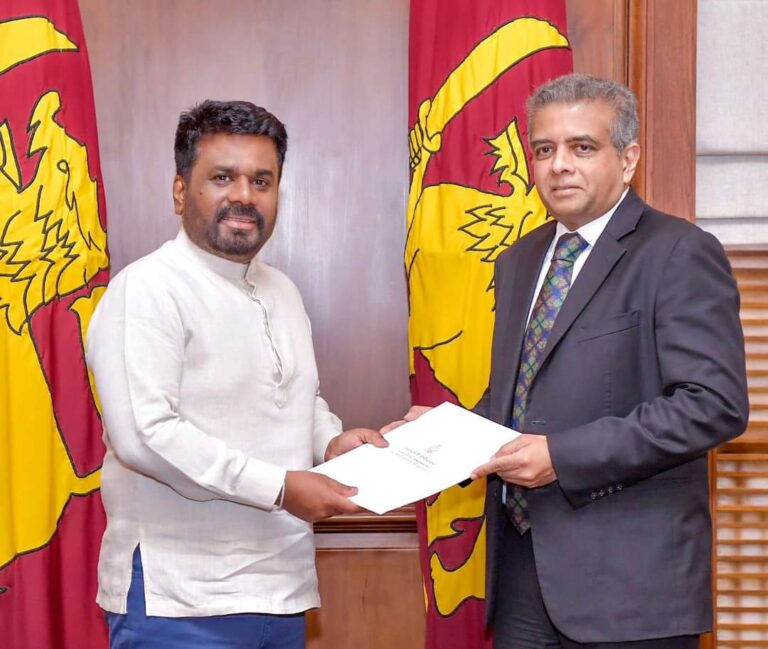
Sunil Jayarathne has been appointed as Chairman of the Civil Aviation Authority of Sri Lanka: With over 37 years of Customs experience, he previously served as Additional Director General and Media Spokesman: His expertise includes chairing committees on trade facilitation, customs valuation, and implementing key policies: Jayarathne is an internationally recognised expert in trade and customs, with extensive experience in international trade and border management.
The Consumer Affairs Authority begins a survey on paddy and rice stocks across ten districts, with reports from four districts already submitted to the ministry: Chairman Hemantha Samarakoon says the survey follows ministry instructions to assess stock levels, aiming to provide comprehensive data on paddy and rice availability in these regions.
The Postal Department designates 3 November as a special day for distributing official notices for the 2024 general election: Senior Deputy Postmaster General Rajitha Ranasinghe says 2,090 distribution offices and 8,000 staff are engaged in delivering election notices from 8:00 am to 6:00 pm, continuing until November 07: The general election is scheduled for November 14, 2024.
The Health Ministry reports 23% of Sri Lanka’s urban population has diabetes, with 30% showing pre-diabetic symptoms: Diabetes cases nationwide have risen to 14%: Dr. Shanti Gunawardena highlights the severe impact, noting that one person in Sri Lanka loses a leg every hour due to diabetes complications.
The National Building Research Organisation (NBRO) issues early landslide warnings for eight districts due to ongoing heavy rain, effective from 5 pm November 02 to 5 pm November 03: Level 02 warnings cover areas in Kalutara, Kandy, Kegalle, Matara, and Ratnapura, while Level 01 warnings are in effect for locations in Badulla, Galle, and Kurunegala.
Public Security Minister Vijitha Herath announces the arrest of six individuals, including a foreign national, suspected of posing a threat to national security and tourist safety: The arrests followed intelligence reports of potential attacks in Arugam Bay and suspicious photography of financial sites in Colombo: Investigations are ongoing, and the National Security Council has convened to address the issue.
November 02, Colombo (LNW): China has significantly ramped up its humanitarian support and public sector training programs for Sri Lanka this year, particularly following the election of President Anura Kumara Dissanayake.
The Chinese government recently announced a major contribution of emergency aid valued at Rs. 400 million to support Sri Lanka, with further aid and training initiatives aimed at assisting the nation’s recovery efforts and long-term resilience.
On October 30, the Chinese Embassy in Colombo confirmed this new round of aid, which comes alongside Rs. 30 million in cash previously provided to assist flood relief.
Chinese Ambassador Qi Zhenhong also met with President Dissanayake in October, during which he presented this emergency flood relief donation.
Concurrently, Prime Minister Dr. Harini Amarasuriya discussed with Ambassador Qi ways to enhance bilateral cooperation for both immediate relief and future flood management.
This recent aid complements China’s July 2024 humanitarian package, which includes Rs. 1.5 billion in prefabricated housing, fishing equipment, and rice for fisherfolk in the Northern and Eastern provinces.
This comprehensive assistance package, worth Rs. 500 million for each region, represents China’s largest single investment in these provinces, where neighboring India has also played a significant role in development.
In November 2023, China provided kerosene to 27,000 fishing boats across Sri Lanka, with each boat receiving 150 liters to alleviate economic challenges faced by fisherfolk in the aftermath of last year’s financial crisis.
China has previously provided substantial assistance, amounting to 500 million yuan in humanitarian aid in 2022 to support Sri Lanka through the economic crisis.
China is also Sri Lanka’s primary partner for public sector training programs, a commitment highlighted by Sri Lanka’s Finance Secretary Mahinda Siriwardana at the first China Aid Training Alumni Reception.
Siriwardana noted that China has trained over 8,000 Sri Lankan public sector employees across sectors such as health, education, and construction, with nearly 1,000 annual training opportunities now offered to Sri Lanka. India has also expanded its training support for Sri Lankan professionals in judiciary, media, and law enforcement.
Ambassador Qi explained that China’s approach to foreign aid training emphasizes sharing, consultation, and mutual development, allowing countries to exchange governance experience and benefit from China’s modernization insights.
Over 13,000 Sri Lankan professionals have participated in training programs in China, with sessions covering public administration, technology, economic policy, agriculture, and disaster management.
As part of its commitment to global development, China plans to enhance its training programs to meet the priorities of Sri Lanka’s new government.
These programs are expected to provide ongoing support in areas like environmental resilience, agriculture, and public health, fostering deeper cooperation with Sri Lanka and other developing nations within the Global South.
November 02, Colombo (LNW): American engineering technology firm Transdigm Group has committed $8.5 million in partnership with AmSafe BirdPort to open a facility within Sri Lanka’s Wathupitiwala Export Processing Zone (EPZ).
According to the Board of Investment of Sri Lanka (BOI), this investment supports the establishment of a new factory, “SHIELD,” aimed at delivering engineering solutions to the global aviation sector.
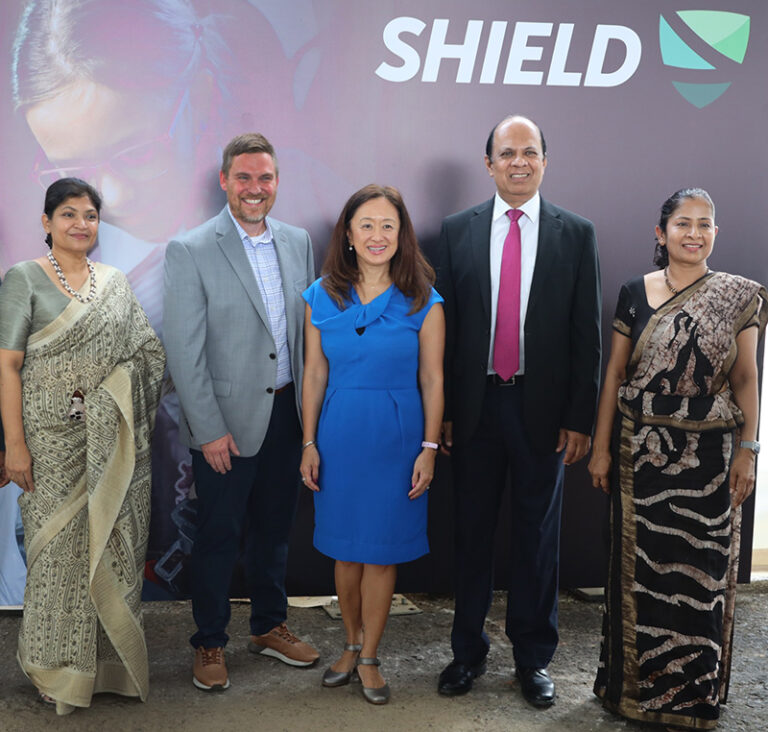
The BOI announced that SHIELD’s operations are moving from China to Sri Lanka, solidifying the investment. The foundation for the new factory was laid on October 31 in a ceremony attended by SHIELD Chairman Dennis Pursel, BOI Chairman Arjuna Herath, BOI Director-General Renuka M. Weerakoon, AmSafe BirdPort General Manager Chandani Ekanayake, and US Ambassador Julie Chung.
Formed in 2013 from a merger of AmSafe Commercial Products and Beam’s Seatbelts, SHIELD has since become a leader in occupant safety systems, providing trusted products ranging from child car seats to commercial seatbelts.
US Ambassador Chung remarked on the significance of SHIELD’s decision to relocate to Sri Lanka, reflecting rising US interest in investing in the country.
The US is Sri Lanka’s largest export market, and increased investment highlights the potential for expanded bilateral trade.
Ambassador Chung added that strengthening the investment climate and improving governance in Sri Lanka could attract more manufacturers.
The U.S. Ambassador emphasized that if the new government can enhance the investment climate, enforce anti-corruption measures, and foster business-friendly governance and transparency, it could attract even more manufacturers.
Since the merger of AmSafe Commercial Products and Beam’s Seatbelts in 2013, SHIELD has emerged as a leader in occupant safety systems.
From child car seats to commercial vehicle seatbelts, SHIELD’s products are renowned for their quality and reliability worldwide. SHIELD’s relocation of its facility from China to Sri Lanka underscores the increasing interest in U.S. investments in the country.
The partnership between the United States and Sri Lanka is founded on mutual goals and respect. Efforts range from increasing farmers’ crop yields and expanding school lunch programs for the urban poor in Colombo to enhancing Sri Lanka’s maritime security.
Chandani Ekanayake, General Manager of AmSafe BirdPort, highlighted the company’s role in providing engineering solutions for major airlines and aircraft manufacturers like Boeing and Airbus, making a notable impact on Sri Lanka’s economy.
As the parent company of AmSafe BirdPort, Transdigm—valued at $6.6 billion with a global workforce of over 16,000—leads in engineering solutions for aviation. SHIELD’s product range emphasizes safety across child seats, commercial trucks, RVs, buses, and construction equipment.
This $8.5 million investment is expected to create 500 new jobs for Sri Lankans, as noted by the BOI.
November 02, Colombo (LNW): Transparency International Sri Lanka (TISL), a well-known corruption watchdog, has stationed around 160 observers across all districts to monitor public resource misuse in the 2024 General Election.
Since October 14, TISL has received 70 complaints, mainly regarding new appointments in public institutions that raise concerns over potential abuse of power for political gains.
One such complaint involved a candidate allegedly appointed to a public service position, prompting TISL to lodge a formal complaint with the Election Commission.
TISL’s National Coordinator for the Programme for the Protection of Public Resources (PPPR), Thushanie Kandilpana, emphasized the organization’s vigilance toward the new ruling party, particularly any misuse of public assets during the campaign.
Kandilpana noted the recent appointments of new governors, ministry secretaries, and chairpersons, pointing out that some of these individuals may have political ties, which could compromise election integrity.
TISL reminded these appointees to adhere to election laws and avoid exploiting public resources, highlighting similar instances from previous elections where public assets, such as government vehicles, were misused by officials.
Speaking at a press conference at TISL’s Nawala office, Kandilpana recalled that TISL had received 117 complaints of public resource misuse involving government officials during the last Presidential Election.
This led the Election Commission to remove over 40 officials from election duties, reinforcing TISL’s call for stringent enforcement of election regulations. In that election,
TISL registered over 1,000 complaints, some of which remain under investigation. One high-profile case involved Lanka Mineral Sands Ltd., which hired 47 employees above the required cadre during the election period.
TISL continues to pursue this case with the Ministry of Industries and has indicated its readiness to take legal action if necessary.
To encourage civic involvement, TISL urged the public to report any misuse of public resources during the election, providing various reporting options, including their website (www.apesalli.lk), a hotline (076 322 3442 with WhatsApp support), and fax (011 286 5777). Verified complaints will be forwarded to the Election Commission for further action.
In addition, TISL raised concerns over recent appointments within the Palmyrah Development Board (PDB) in Jaffna, suggesting these changes breach election laws.
During the campaign, TISL noted, the ruling party appointed new board members and replaced the chairman twice within 12 days.
Election law prohibits new appointments, promotions, or transfers without the Election Commission’s prior approval during the election period.
TISL has formally requested the Election Commission to investigate these appointments and take corrective action, arguing that such actions undermine public trust and could impair the electoral process’s fairness.
TISL has called on President Anura Kumara Dissanayake’s administration to halt further appointments in public institutions until after the election.
This appeal aligns with previous criticisms by Dissanayake’s Janatha Vimukthi Peramuna (JVP)-led National People’s Power (NPP) party when it was in the opposition, where it pledged to ensure transparent, corruption-free governance devoid of political interference.
November 02, Colombo (LNW): Sri Lanka is aiming to complete its debt restructuring by the end of this year, with a goal to exit its default rating category soon afterward.
According to Central Bank Governor Nandalal Weerasinghe, the country’s efforts include formalities such as due diligence and documentation, necessary to finalize the debt exchange and secure investor involvement.
This strategic plan, supported by the International Monetary Fund (IMF) and international advisors, reflects Sri Lanka’s commitment to addressing its financial difficulties after securing a debt restructuring agreement with official and private creditors, including China Development Bank.
The debt restructuring agreement with bondholders is a pivotal step, as it involves macro-linked bonds, which are tied to Sri Lanka’s economic growth.
This alignment of debt repayment with economic performance aims to make debt servicing sustainable and is a practical solution for a country recovering from economic setbacks.
Additionally, Governor Weerasinghe remains optimistic that an upgrade to Sri Lanka’s credit rating will follow shortly after restructuring, a critical step for the country’s reintegration into international financial markets.
Meetings with rating agencies in Washington, D.C., indicate that Sri Lanka could initially be reclassified from its default status to a CCC rating or better, based on its financial outlook.
However, delays in the IMF’s third review of the $3 billion Extended Fund Facility (EFF) have posed additional challenges. Originally set for December, this review was postponed due to a delay in next year’s budget submission and an impending presidential election.
With parliamentary elections scheduled for November 14, the government has voiced a strong commitment to continue with debt restructuring.
A staff-level agreement with the IMF is expected by early December, but formal approval may be further delayed, as Sri Lanka needs to submit the new budget before the IMF Executive Board can complete the review process.
Sri Lanka’s approach to debt restructuring and efforts to stabilize its financial standing reflect a strategic focus on long-term economic recovery.
While the delays in IMF proceedings may extend the timeline for an official credit rating upgrade, the government’s commitment to addressing structural debt issues is a promising sign for future economic stability.
November 02, Colombo (LNW): In response to a recent resurgence of measles cases, Sri Lanka’s Health Ministry has designated a special vaccination week from November 4 to 9, according to a statement from the Health Promotion Bureau.
This initiative aims to contain the outbreak that has impacted primarily adults in the 20–30 age range since 2023, raising concerns amongst health authorities.
The ministry’s press release noted that while the initial cases have mostly appeared among young adults, the virus has subsequently been transmitted to younger children, particularly infants under nine months.
The upcoming vaccination campaign will focus on those at higher risk: individuals aged 20 to 30 will receive immunisations for measles and Rubella, while children from nine months to 19 years will be vaccinated against measles alone.
The recent cases are a stark reminder of the nation’s past battle with the disease. In 2019, the World Health Organization (WHO) had declared Sri Lanka free of endemic measles, crediting the achievement to sustained immunisation efforts that interrupted local transmission of the virus.
However, this resurgence underscores the need for vigilance, especially given measles’ highly infectious nature and its potential to endanger vulnerable young children.
Health authorities have reiterated the importance of timely vaccination to prevent further spread, with this special week representing an essential public health effort to safeguard communities across the country.
November 02, Colombo (LNW): Dr. Nalinda Jayatissa, Kalutara District Team Leader for the Nation People’s Power (NPP) in the upcoming general election, has announced that the party will prioritise accessible, quality medicines for all citizens under an NPP-led government.
He emphasised that confidence in government-distributed medicines has eroded, necessitating decisive reforms to ensure that patients receive effective, high-standard treatments through state healthcare systems.
Dr. Jayatissa outlined the NPP’s vision to provide affordable, reliable medicines at pharmacies across the nation.
Central to these reforms is the establishment of a state-of-the-art laboratory to rigorously test and monitor medication quality, which he stated would address gaps in existing regulatory infrastructure.
“At present, we lack world-class laboratories for medicine quality assurance, and this deficiency leads to quality control issues. Thus, establishing a formal, high-standard medicine testing institute is imperative,” he noted.
To build a reliable, transparent system, Dr. Jayatissa stressed the need to eradicate corruption, political interference, and inefficiencies from key health sector bodies, including the Ministry of Health’s Medical Supply Unit and the Drug Regulatory Authority.
According to Jayatissa, rooting out these problems will reinforce not only the quality of medicines but also the broader healthcare infrastructure.
Further, to alleviate overcrowding in government hospitals, Dr. Jayatissa proposed setting up ‘Primary Health Centres’ (PHCs), each intended to serve around 4,000 residents.
These centres would create localised access to healthcare and simultaneously reduce hospital burdens. He highlighted plans to integrate PHC data into a comprehensive national health database as part of the ‘Sri Lanka Digitisation Programme’.
Through this digital system, patients would be able to access treatment and healthcare services at any government hospital by using a unique personal identification number, facilitating streamlined, coordinated care nationwide.
Through these initiatives, Dr. Jayatissa reaffirmed the NPP’s commitment to delivering high-quality healthcare that is both affordable and trustworthy, setting a transformative agenda for the nation’s healthcare system.
November 02, Colombo (LNW): Ex-State Minister Lohan Ratwatte, recently arrested on allegations of possessing an illegally imported luxury car assembled locally, has been moved to the prison hospital following a court decision.
Ratwatte, apprehended by Mirihana Police on October 31 in Kandy, was initially remanded until November 07 but has now been granted permission to receive medical attention at the prison hospital.
The arrest was tied to the discovery of an unregistered, high-end vehicle at his wife’s residence in Mirihana, Nugegoda.
This three-storey property, owned by Ratwatte’s wife, Shashi Prabha Ratwatte, came under police scrutiny on October 26 following intelligence suggesting the presence of an unregistered luxury car without licence plates.
Police located the car at the residence, prompting further investigation.
Upon questioning, both Ratwatte and his wife informed police that Ratwatte’s mother-in-law occupies the residence and that the vehicle was reportedly brought there three weeks prior by Ratwatte’s private secretary.
Notably, the private secretary was recently found deceased from gunshot wounds in Katugastota, Kandy, adding a layer of complexity to the ongoing investigation.
The case has cast a spotlight on the issue of unregistered vehicles within high-profile circles and raised questions regarding the potential misuse of luxury cars in Sri Lanka.
Ratwatte’s transfer to the prison hospital has led to public speculation that elite personnel accused of crime being arrested and subsequently admitted to prison hospital is an ongoing trend in Sri Lanka, easing reparation regardless of the nature of their alleged crimes.
The investigation continues into both the origins of the car and the suspicious circumstances surrounding the recent death of his private secretary.
November 02, Colombo (LNW): Axiata Group Berhad announced that Dr. Hans Wijayasuriya, its CEO of Telecommunications Business and Group Executive Director, will transition from his role in January 2025, as he takes on a pivotal new position with the Sri Lankan government.
Dr. Wijayasuriya has been invited to lead the country’s digital transformation strategy as Chief Advisor to the President on Digital Economy and in other strategic capacities.
Having accepted the invitation from the Government of Sri Lanka, Dr. Wijayasuriya has informed Axiata of his decision to step down effective January 15, 2025.
During the transitional period, he will oversee key responsibilities at Axiata, including guiding the group’s telecommunications operations across Malaysia, Indonesia, Bangladesh, Sri Lanka, and Cambodia, and will remain available to advise the Sri Lankan government on digital initiatives in a non-executive capacity.
Dr. Wijayasuriya’s departure marks the close of a 30-year tenure with Axiata and its predecessor, Telekom Malaysia.
Throughout his career, he has shaped the group’s strategy and elevated its influence across the Asia-Pacific region.
In recognition of his leadership and technological contributions, he was awarded the GSMA Chairman’s Award in 2024, the highest honour in the global mobile industry.
Axiata’s Chairman, Tan Sri Shahril Ridza Ridzuan, commended Wijayasuriya, acknowledging his “visionary leadership” that has driven the group’s growth.
Axiata’s CEO and Managing Director Vivek Sood added:
“It is a great honour that one of our own has been selected to contribute at a national level. Dr Wijayasuriya’s appointment demonstrates Axiata’s dedication to developing leaders who make an impact far beyond our industry.”
As he prepares to take on his advisory role with the government, Dr. Wijayasuriya expressed deep gratitude for his time with Axiata, saying, “Being part of Axiata’s journey has been an honour. I am privileged to contribute to Sri Lanka’s digital future, bringing every lesson I’ve learned to this new role.”