November 18, Colombo (LNW): Showers will occur at times in the Northern and Eastern provinces, and fairly heavy showers about 50 mm are likely at some places, the Department of Meteorology said in its daily weather forecast today (18);
Showers or thundershowers will occur in Western, Sabaragamuwa, Central, Southern, Uva, North-western and North central provinces during the evening or night.
Fairly heavy showers above 75 mm are likely at some places in Western and Sabaragamuwa provinces and in Galle and Matara districts.
Misty conditions can be expected at some places in Western, Sabaragamuwa, Central and Uva provinces and in Galle and Matara districts during the morning.
The general public is kindly requested to take adequate precautions minimise damages caused by temporary localised strong winds and lightning during thundershowers.
Marine Weather:
Condition of Rain:
Showers or thundershowers will occur at several places in the sea areas off the coast extending from Mannar to Hambanthota via Kankasanthurai, Trincomalee and Batticaloa. Showers or thundershowers will occur at several places in the other sea areas around the island during the evening or night.
Winds:
Winds will be Easterly or North-easterly in the sea areas around the island. Wind speed will be (15-30) kmph in the sea areas around the island. Wind speed can increase up to (40-45) kmph at times in the sea areas off the coasts extending from Mullaitivu to Puttalam via Kankasanthurai and Mannar.
State of Sea:
The sea areas extending from Mullaitivu to Puttalam via Kankasanthurai and Mannar can be fairly rough at times. The other sea areas around the islandwill be slight to moderate. Temporarily strong gusty winds and very rough seas can be expected during thundershowers.
President Anura Dissanayake will present the Government Policy Statement at 11:30 am on November 21, during the inaugural session of the 10th Parliament: In line with constitutional provisions, the statement will outline the government’s vision and upcoming initiatives, marking the ceremonial commencement of Parliament’s new session, which begins at 10:00 am.
SJB Chairman Imthiaz Bakeer Markar expresses confidence in the party’s resilience despite potential challenges following its election defeat, comparing it to the UNP’s recovery in 1970: rules out leadership changes, citing historical examples like the JVP’s eventual success: affirms the SJB’s ability to overcome setbacks, rectify shortcomings, and reclaim political ground in the future.
The National People’s Power (NPP) announces the names nominated to fill the 18 National List MP seats won by the party in the 2024 parliamentary election: Bimal Niroshan Rathnayake; Dr. Anura Karunathilake; Prof. Upali Pannilage; Eranga Udesh Weerarathna; Aruna Jayasekara; Dr. Harshana Sooriyapperuma; Janitha Ruwan Kodithuwakku; Punya Sri Kumara Jayakody; Ramalingam Chandrasekar; Dr. Najith Indika; Sugath Thilakaratne; Lakmali Kanchana Hemachandra; Sunil Kumara Gamage; Gamini Rathnayake; Prof. Ruwan Chaminda Ranasinghe; Sugath Wasantha de Silva; Abubakar Adambawa (Digamadulla District); Ranthnayake Hettige Upali Samarasinghe (Vanni District).
All GCE A-Level preparatory activities, including lectures and classes, will be prohibited from midnight on November 19, with legal action against violators: Enhanced supervision addresses past issues as 333,185 candidates, including 253,390 school students and 79,795 private applicants, prepare for the exams, scheduled from November 25 to December 20.
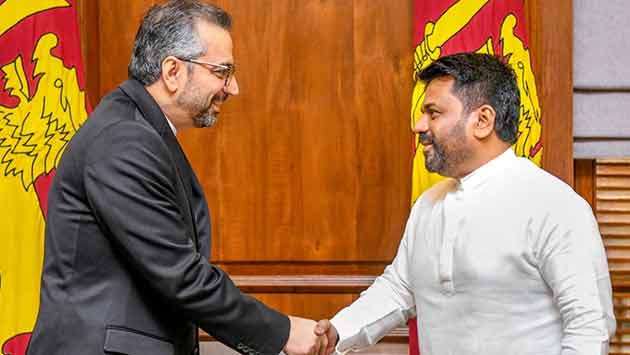
Iranian Ambassador Alireza Delkhosh congratulates Sri Lanka on its successful parliamentary election, lauding its democratic strength: expresses hope for enhanced political, economic, and cultural ties under the new government, emphasising Iran’s commitment to bilateral cooperation, inter-parliamentary exchanges, and supporting Sri Lanka’s economic growth: highlights the longstanding relationship between the two nations and prospects for deeper collaboration.
Sri Lanka’s 2024 parliamentary election ushered in unprecedented change, with 146 of 196 elected MPs being first-time representatives: The National People’s Power (NPP) dominated, securing 141 seats, including 130 newcomers: Other parties, including the SJB and ITAK, also introduced fresh faces: With national list appointees pending, Parliament is expected to see over 150 new MPs in total.
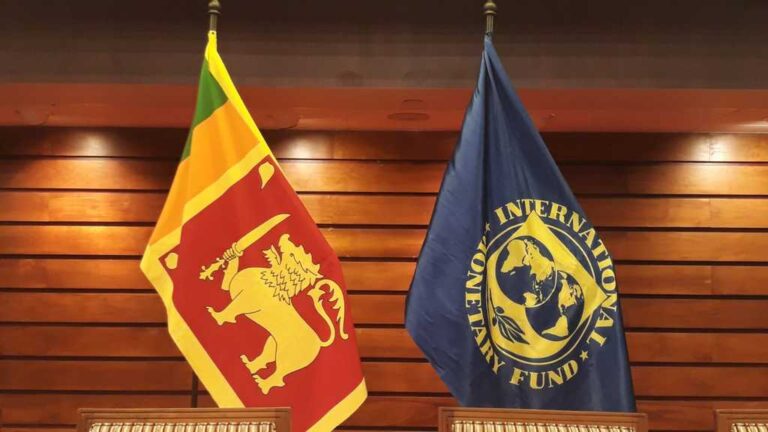
An IMF team, led by Senior Mission Chief Peter Breuer, arrives in Sri Lanka for a third review of the country’s reform programme under the $2.9 billion Extended Fund Facility: If successful, the review will release the next bailout tranche: The IMF has disbursed over $1 billion to support Sri Lanka’s post-crisis recovery.
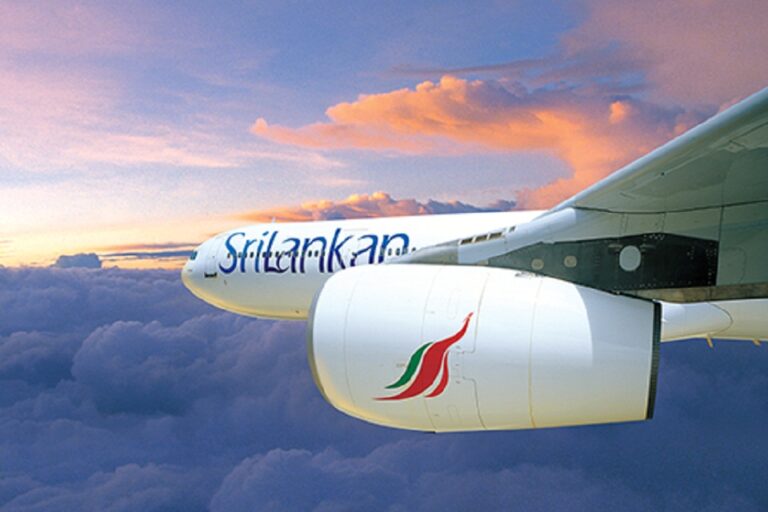
Three SriLankan Airlines planes at Bandaranaike International Airport were grounded for technical maintenance, causing flight cancellations and delays: Affected flights included services to and from Chennai, New Delhi, and Melbourne: Passengers were informed, and alternative flights arranged: The airline emphasised that post-flight technical checks are essential and time-consuming, ensuring safety and reliability for operations.
Police arrest four suspects in Mattakkuliya for involvement in an abduction linked to the notorious ‘Ava Group’ criminal gang: Two suspects, connected to the gang, were lured and assaulted by individuals allegedly acting on instructions from Dubai: The incident followed threats issued via TikTok, with videos of the assault shared as retaliation. Investigations are ongoing.
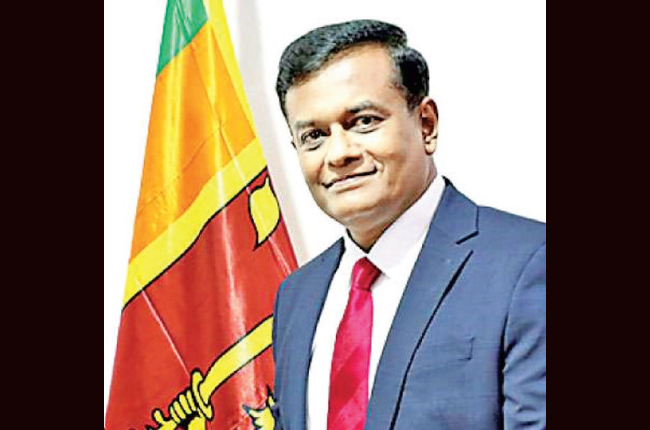
Sri Lanka’s new Cabinet and Deputy Ministers will be sworn in today (18) at 10 am before President Anura Kumara Dissanayake: The 10th Parliament, with over 175 new MPs, will convene on 21 November: A special counter will collect MPs’ details on 19–20 November, according to Secretary General Kushani Rohanadeera.
November 16, Colombo (LNW): It is reported that Sports Director General Shemal Fernando, who went to appear in the Asia Rugby official election, was not given the opportunity to represent. The Director of Sports, in an ethically unacceptable move, appointed the Acting President of the disbanded Rugby Administration as a facilitator for Rugby, claiming it was done at the request of former Sports Minister Harin Fernando and World Rugby.
Accordingly, Director General Shemal Fernando was made the respondent by the media for many big issues. The Director General, facing allegations from the media suggesting he was manipulating the rugby agenda for personal interests, was ultimately exposed when it was revealed that the former president was preparing to attend the office election and annual general assembly of Asian Rugby held in Bangkok. Accordingly, he was not prevented from participating in that work which is against the law, and even though the Director General went to Bangkok, he was not allowed to vote in the office election.
In order to give that opportunity, due to the non-enforcement of the law regarding the damage done to the rugby in Sri Lanka, the director general has been sent to Sri Lanka empty-handed, without the intervention of the people who have gone to the Asian level. International media reports indicate that 29 votes were cast, with 17 going to the former president and 11 to Ada Milby, the president of the Philippines, who contested against him. The total comes to 28 instead of 29, as Sri Lanka’s vote was not counted. The current Asian president did not get the vote in Sri Lanka for the first time, and the then president who left to vote used the vote for the Japanese candidate who was competing against him at the time.
Because of that resentment, the Asia President was able to facilitate matters such as not considering discrimination against Sri Lanka because the Ministers, former and those who hope to enter the administration as well as government officials stood up for the needs of the Asia President.
The true intent behind this desire became clear when the unusual administrative body known as the Stabilization Committee, appointed by Minister Roshan Ranasinghe and later declared invalid by the court, was established. At the very outset, they attempted to alter the existing constitution by highlighting the need for changes that would grant power to rugby-playing clubs of that caliber.
We have repeatedly pointed out that the Director General of Sports is confined to serving their interests, with those who have agendas lurking in front of him to target the foundation. The demand for power by those sports clubs emerged primarily due to the continuous and repeated revelations by lankanewsweb.net. They are avoiding the issue of Sri Lanka Rugby’s 55 million debt while those in power at the sports clubs they refer to hold authority. The representatives of these clubs, who claim to have or can secure assets to spend millions on rugby, fail to mention the problem of the 55 million debt in Sri Lanka Rugby’s account.
Furthermore, they remain silent on the fact that the £50 fine should be imposed on those who represented the administration, which stated that the fine should be deducted from the funds allocated for the development of rugby in Sri Lanka. This is because these individuals were appointed through the sports clubs that are demanding power. In the process of socializing these matters and continuously informing the public through the media, they seem to believe that they can conceal the truth by gaining more power. This belief led them to engage in the effort to change the constitution, aiming to create this influence.
Once the Stabilization Committee is appointed, you will witness a word made by its chairman in the context of introducing other sports clubs, in addition to the 8 clubs he names, as part of the comparative matters discussion. “Not even a clubhouse” The sports clubs he says do not have this shortcoming. They are places where you can taste liquor in royal style. How many times have the annual evaluations of the stadium buildings and the income they generate been altered? What is the valuation of a construction or business in relation to such venues? We are not implying that they should not receive concessions.
Such things need to happen for the sake of the game. However, in our view, it is unethical to suggest that those who seek to rise through such luxuries, while belittling and devaluing the struggles and difficult conditions of the same sport, should wield the power they possess. If those who came from very humble beginnings, not just in the world but also in our country, had given up because of their circumstances, today there would be no president named Anura Kumara Dissanayake in this country. That is the truth. Therefore, even though these top sports clubs feel through this video that they are royally taking the key to rule the rugby and are humiliating and embarrassing other sports clubs, they are taking over the heavy task of reducing inequalities from the lower stage to the upper stage of the people and trying to adjust the system of the state accordingly. Will a ruling government agree to this constitutional amendment?
Dinesh Priyanth is a man who knows the world around his village as well as Anura Kumara understands the world politically. Had he studied with the most limited resources, qualified as a soldier, gone to war, and not been disabled, he would not have had to take up the spear to strive for the conquest of the world. Such an unfortunate inheritance was a gift for him, but how many stories are there of people who simply fell by the wayside due to the lack of sports in those schools?
Even today, when we read the 100 meters race with the character of Mudalihami, which we learned as children, we see children from distant villages who encounter many moments where they aspire to become like Mudalihami.
We believe that not only the rulers of the state but also government officials, whether knowingly or unknowingly, have played a part in enabling the effort to seize power for these elite sports clubs. The reason for this may lie in the platform we have created for those who have borrowed and had to pay fines, highlighting the need for different constitutional changes. We take pride in that. By pointing out issues such as collecting debts from the royal class, holding wrongdoers accountable without paying the fines incurred for their mistakes from the development funds received from World Rugby, and at least investigating and punishing those wrongs, the royal sports clubs were criticized.
We have come to understand that the conflict in Rugby field represents a battle of a class determined to protect the princes who make decisions and are responsible for these mistakes. As far as we know, there are no individuals in that royal society who think in terms of class, placing sports clubs in the same category as schools.
A clear example of this is National People’s Power and Prime Minister Harini Amarasuriya. However, there are old minds who still cannot accept the power of the less influential, and they continue to chatter and make jokes. They only engage with the country through songs they sing for fun, once their own class’s needs are fulfilled. We are aware that this unfortunate situation is still impacting the Director General of Sports.
We raised all these concerns now, respecting his history of capable and honest administration. Much of what has been discussed here is information he has been aware of for some time. We believe that, despite offering watered-down responses to many of these issues, he must understand the seriousness of the situation. The clearest example of this is the obstruction of the election held in Bangkok, along with blaming the facilitator for how it was conducted. However, we believe there is more to this situation than what we are aware of.
Thanuja Weerakkodi, a highly talented player who represented Sri Lanka, is currently going abroad for a women’s rugby development program. There is no doubt about her talent. However, in the current situation, it is unclear which leader she has aligned herself with.
If those expenses are covered by Rugby’s accounts, it represents a serious mistake in using Rugby’s funds for months without transferring control to a constitutionally appointed administration.
All these actions are closely related to wrongdoing. While there may be ways to untangle some of the issues, the knots of conscience will torment them until the end. The response given by the Director General of Sports, who is taken aback by all of this, is brief, yet it carries a deeper meaning: “When the new minister is appointed, we will meet after the meeting!”
We believe there is much to unpack in the response given by the Director General of Sports. Not all citizens have perished in a country where power was once determined by the worship of the cobra rising from the Kelani River. If they are caught at this moment and the rust and decay of their intellect are not removed, not only the corruption but other flaws will rise to the surface, appearing like lifeless corpses.
November 17, Colombo (LNW): The government of People’s Power, under President Anura Kumara Dissanayake, has decided not to sell or divest SriLankan Airlines but retain ownership, in contrast to what the previous administration had planned for the financially troubled airline.
This decision comes after a notable shift was seen, as the airline showed signs of returning to profitability this year, according to an official statement.
The previous administration initiated the privatization process of the national carrier through the State-Owned Enterprises Restructuring Unit, with an express intention to divest some its ownership.
Former Cabinet later discarded the privatization plan and opted to consider other models for divestment.
But the current government is keen to retain SriLankan Airlines within the state-controlled system, Prof. Anil Jayantha, Chairman of the NPP Economic Council, said, owing to its non-replaceable role in developing tourism.
It has been placed beyond any full or partial sale and is emphasizing more on perfecting the management through a new internal model.
By that time, the previous Cabinet had already moved to absorb US$510 million of the airline’s debt, in order to sweeten it for private investors.
The government was planning to sell at least 51 percent of the state-owned enterprise. SLA has long faced financial difficulties, rooted in legacy operational problems and costs associated with past debt.
In the recent past, SLA has been receiving periodic financial support provided by the General Treasury through equity injections and loan guarantees, among other forms. In the first half of 2024, the government approved a Rs. 5 billion equity contribution to support the continued cash flow difficulties.
Despite the hard financial environment, SLA has recorded a total revenue of Rs. 63.8 billion in Q1 of the financial year 2024/25, which depicts a decline of 12.7% from Rs. 73.1 billion recorded during the same period of 2023/24.
Excluding finance charges and exchange differences, SLA recorded a pre-tax profit of Rs. 0.6 billion during the period, down considerably from the Rs. 8.0 billion profit seen during the first quarter of 2023/24.
However, when finance charges and exchange differences were included, the SLA Group had revealed a net loss of Rs 12.9 billion in the three months ending in 2024/25 from a net profit of Rs 25.8 billion a year ago.
In March 2024, the Cabinet of Ministers approved treasury-guaranteed debts of USD 210 million and Rs 31.4 billion (approximately USD 100 million) to be taken off the books of SriLankan Airlines onto the Government’s balance sheet, reducing the airline’s debt burden.
The NPP government’s decision to retain SriLankan Airlines in the hands of the state will be a strategic one for tourism strengthening, with long-term stability of the airline and an internal restructuring process in view of its financial improvement.
November 17, Colombo (LNW): Sri Lanka is implementing an integrated smart city initiative, with the aim of merging digital technologies in daily life, enhancing efficiency and sustainability while improving the quality of living among citizens.
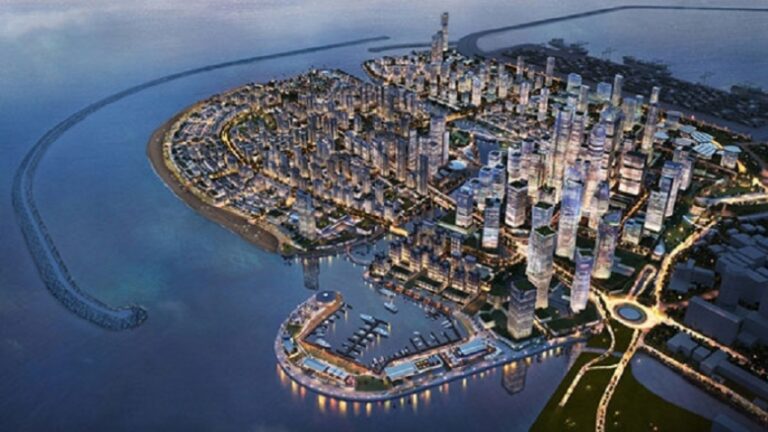
It finds its flagship example in the Colombo Port City project, which is being developed incorporating sustainable design and smart city principles.
The development boasts five signature precincts, namely the Financial District, Central Park Living, and The Marina, all coming together to seal its position within Sri Lanka’s blueprint for an intelligent tomorrow.
In this transformation process, the most important role is being played by the “National Digital Economy Strategy 2030”, which targets intensive digital literacy across the board to trigger innovation and attract investment.
Included in these initiatives are the need for enhanced digital skills and technological fluency to ensure access for all citizens to the benefits accruable from a smart city.
Key elements in making the flourishment of a smart city include inclusive urban planning and engaging a cross-section of stakeholders, from government officials to local communities. In this way, such a participative approach will make sure that technological advancement serves the needs of all citizens.
Bringing together scholars and practitioners from various disciplines is very important also to make sure that smart technology benefits all strata of the population.
In this instance, research and development also involve health impact assessments and the tuning of projects for various stakeholder needs.
The most recognizable project under this program is “A Smarter Sri Lanka,” in collaboration with Sri Lanka Telecom.
This program, so far, has integrated smart technology from smart TVs and homes to smart lighting systems with the intention of creating a networked society where people’s lifestyles are seamlessly connected to essential services.
Its increasing participation in international forums, such as the Thailand Smart City Expo 2024, is a mark of its presence in the international smart technology playground.
It was organized by DEPA, the digital economy promotion agency of Thailand in association with N.C.C Management, making it the biggest smart city exhibition in Southeast Asia with innovation exhibits in telecommunications, energy, urban living, industry, mobility, the environment, and healthcare.
The Sri Lankan Embassy in Thailand arranged free exhibition space for local companies during the exposition and they were allowed to show their capabilities.
Companies like Venora Lanka Power Panels Ltd. and Azend Technologies Ltd. have displayed products in smart energy management, automation, and telecommunications, indicating Sri Lanka’s competitive advantage in the international arena within the technology sector.
Smart city developments aim to enhance citizens’ well-being, promote sustainable environments, and upgrade public services through digital technologies such as AI.
Nevertheless, this movement toward digitization imposes potential risks on deepened inequalities in the case of a lack of consideration for inclusivity.
Open, participatory planning will be essential in order to ensure that smart city projects serve a range of diverse needs and support wellbeing and inclusive growth.
November 17, Colombo (LNW): A team from the International Monetary Fund, headed by Senior Mission Chief Peter Breuer, will be visiting Colombo between November 17 and 23 for the third review of Sri Lanka’s economic reform program under the Extended Fund Facility of the IMF.
The review would lie with an assessment of the government’s economic policies, especially in terms of recent adjustments, and the next installment of the loan release.
The expected key areas the third review is supposed to cover include:Fiscal Adjustments: The review of fiscal measures, both on the revenue and expenditure sides;Structural Reforms: The privatisation commitments and recent policy reversals;Debt Restructuring: Progress under the debt restructuring process after the previous agreements.
A team led by Krishna Srinivasan, Director of the IMF’s Asia Pacific Department, visited Sri Lanka in October 2024 and discussed the forthcoming review with President Anbura Kumara Dissanayake and Prime Minister Harini Amarasuriya, amongst others.
The IMF praised the commitment of the government to reforms, amidst resistance in bringing the budget in line with the IMF targets and retaining economic stability.
Sri Lanka, rebounding after an economic crisis in 2022, has already secured three tranches of $360 million each. However, risks to the recovery include a deceleration in reform momentum, regional conflicts, instability in commodity prices, and delays with debt restructuring.
The IMF mission has underscored the modernization of monetary policy in Sri Lanka through a shift to flexible inflation targeting, which includes structural and economic reforms.
Such reforms involve the phasing out of monetary financing and the modernization of the monetary policy framework of the Central Bank. The IMF did raise a roadmap on how this should be done to ensure more financial stability with effective monetary policy conduct.
Other recommendations included adjustments to the Reserve Maintenance Period, SRR requirements, and liquidity monitoring. Clearer distinction was also suggested on monitoring versus forecasting and improving internal communication to ensure that the implementation of policies was well executed.
The IMF remains committed to supporting Sri Lanka through this period of adjustment in rebuilding a more stable financial future for the country.
November 17, Colombo (LNW): Iranian Ambassador to Sri Lanka Alireza Delkhosh has expressed confidence in the expansion of political, economic, and cultural relations with Sri Lanka in the aftermath of the recent parliamentary elections within the country. He congratulated the Government and people of Sri Lanka for their democratic process, viewed by him as a solid foundation to start strengthening bilateral relations.
He drew on the traditional friendship that has existed between Iran and Sri Lanka while expressing his hope for the new government to encourage cooperation in very vital areas.
He also highlighted how much room there was for deeper inter-parliamentary exchanges and diplomatic collaboration while committing Iran’s determination to support Sri Lanka’s economy.
The Ambassador showed eagerness by Tehran to increase economic involvement with Sri Lanka in spite of U.S. sanctions against its government.
This comes at a very critical time for Sri Lanka, which faces severe economic challenges and urgently needs to attract foreign investment and increase its trade.
Over the years, Iran and Sri Lanka have signed agreements spanning many sectors of the economy, science and technology, media, and tourism.
One well-known agreement is the $514-million Uma Oya hydropower and irrigation project completed with Iranian assistance.
Sanctions delayed this project, supposed to improve irrigation, provide drinking water and electricity to some of the poorer regions of Sri Lanka.
While Wickremesinghe was more partial towards better relations with the West, the new administration sought stronger ties with the U.S. and Israel, hence its decision to join the U.S.-led naval coalition and ink the air connectivity deal with Israel.
For its part, Iran hopes for increased ties on the economic front, amidst sanctions: trade, economic cooperation, maritime connectivity.
The developing partnership with Sri Lanka fits into Iran’s policy of strengthening its influence within the Indian Ocean Region. Sri Lanka, due to its geographical position and proximity to main sea routes-such as that of Malacca-is an important partner for Iran, which is additionally seeking regional coalitions-including proposals for a naval coalition that would involve India and Pakistan.
Expressed in other words, the present economic crisis of Sri Lanka, coupled with years of mismanagement, corruption, and reliance on imports, makes foreign partnership more vital than before.
Sri Lanka’s muddling economy has at least allowed for creative solutions like the barter trade agreement with Iran. In December 2021, Sri Lanka exported tea worth $20 million to Iran, partially clearing its $251 million oil debt due to Tehran without hurting its foreign currency reserves.
The Iran-Sri Lanka relationship is a reflection of how domestic and global pressures shape bilateral ties. Both nations are faced with internal challenges and geopolitical shifts as they try to redefine partnerships.
Iran wishes to present itself as a reliable partner to countries in such economic straits, but at the same time try to avoid being entangled deeper into conflicts like the Gaza war, which may potentially have wider ramifications on its diplomatic and economic goals.
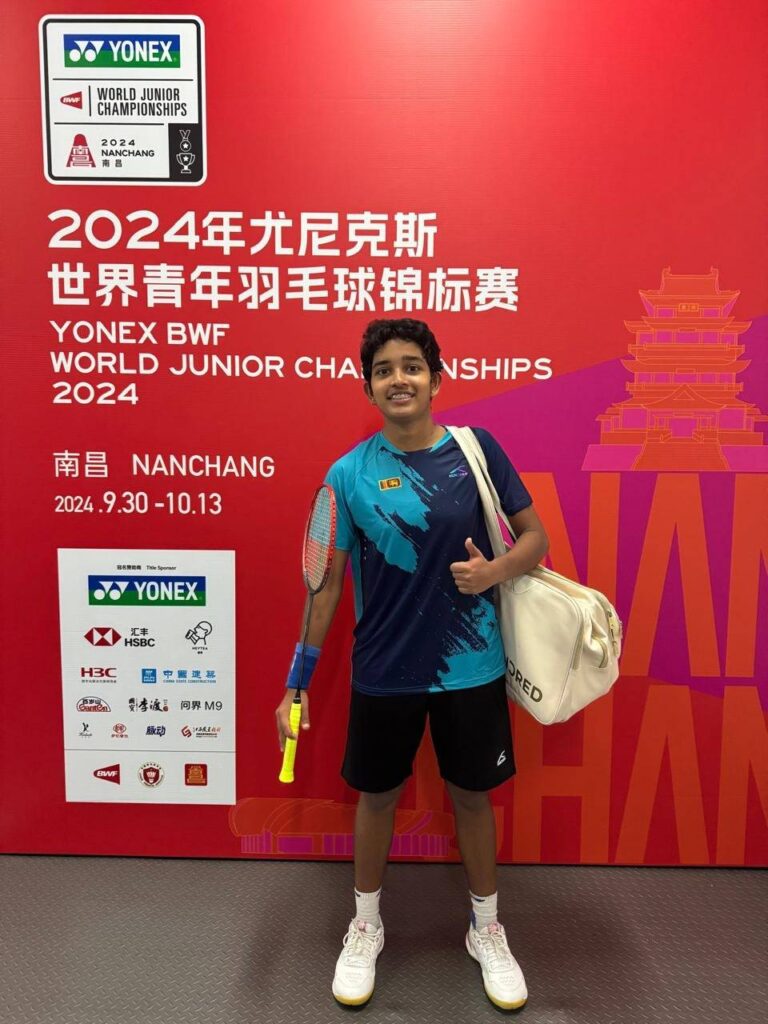
November 17, Colombo (LNW): The sun hasn’t set yet, but the future of Sri Lankan badminton shines bright as Ranithma Liyanage, the “Black Horse” of Sri Lanka Badminton, prepares to enter the finals of the Bahrain International Series 2024. At just 17 years old, Ranithma has already etched her name as a formidable athlete, carrying the hopes of a nation and the promise of a new era in Sri Lankan Badminton.
Sri Lanka has long cherished moments of glory on the international badminton stage, with legends like Chandrika de Silva, Thilini Jayasinghe, and Niluka Karunaratne setting the bar high. But Ranithma’s journey represents something more profound—a testament to the resilience and revival of Sri Lanka Badminton after years of rebuilding.
Under the guidance of Sri Lanka Badminton President Rohan de Silva and supported by strategic initiatives like training partnerships with Indonesian players, young athletes like Ranithma, Viren Nettasinghe, and the doubles duo Isuri and Sithumi are rewriting the narrative of Sri Lankan badminton. Their performances reflect dedication, planning, and an unwavering belief in their potential.
Ranithma’s victory over the Philippines’ Mikaela Joy De Guzman in the semifinals (21-11, 21-8, 21-18) is a testament to her mental resilience and physical endurance. Her maturity and focus are beyond her years, and her determination echoes the aspirations of an entire nation.
The finals promise to be a thrilling clash as Ranithma faces India’s Prakriti Bharath, the Spanish Under-19 Junior Champion. It’s a match that will demand every ounce of skill, strategy, and stamina. Yet, no matter the outcome, Ranithma has already proven her mettle as one of Sri Lanka’s brightest stars.
Slogan: “Ranithma Liyanage: Lighting Up the Courts, Inspiring a Nation!” Sri Lanka watches with bated breath, cheering on its young star who is on the cusp of history. Let’s celebrate her journey and hope for a future filled with even greater triumphs!
November 17, Colombo (LNW): Sri Lanka’s government is under increasing pressure to resolve outstanding payments to over 3,000 contractors, owed around Rs. 150 billion for public construction projects since 2019. The crisis, exacerbated by delayed payments, threatens the financial stability of many construction firms.
In 2022, former President Ranil Wickremesinghe took steps to address the arrears, allocating Rs. 50 billion for partial payments. However, funds ran out quickly, and further treasury bonds were issued in 2023 to meet the growing demands.
The new Cabinet recently decided to reallocate unused 2024 budget funds to clear an additional Rs. 28.37 billion in road rehabilitation dues, a key part of Sri Lanka’s ambitious road network upgrade.
While this move is vital, it raises concerns about potential misuse of funds and the need for strict oversight to avoid corruption. Financial experts stress the importance of transparency in managing public resources during Sri Lanka’s ongoing economic recovery.
Sri Lanka’s new government faces mounting pressure to address outstanding payments to over 3,000 contractors involved in public construction projects, whose dues have accumulated since 2019.
These contractors are owed approximately Rs. 150 billion for work completed on buildings, roads, and infrastructure projects. The situation has become dire, with many construction companies at risk of financial collapse due to delayed payments.
In response to the crisis, the government initially took steps under former President Ranil Wickremesinghe’s direction in October 2022, when he, in his capacity as Finance Minister, instructed the Department of Treasury Operations to explore the possibility of allocating Rs. 50 billion to pay off some of the arrears.
At the time, development projects were put on hold, and contractors faced months of uncertainty regarding their payments. A partial payment of Rs. 20 billion was eventually disbursed, but funds quickly ran out.
By February 2023, the Finance Ministry raised Rs. 11.6 billion through treasury bonds to help settle the mounting dues. This financial measure became a recurring solution as the government continued to grapple with its fiscal challenges.
The new three member Cabinet recently decided to reallocate unused funds from the 2024 budget to help clear an additional Rs. 28.37 billion in outstanding bills related to the road rehabilitation initiative.
Launched in 2020, this ambitious five-year project aimed to upgrade Sri Lanka’s road network. However, due to budget constraints, significant portions of the project’s bills remain unpaid.
Minister Vijitha Herath confirmed that Rs. 20 billion has been earmarked in the 2024 budget for essential roadworks, but the government now needs to use unused funds to ensure that contractors are paid and road maintenance continues.
This decision, though necessary, raises concerns among financial analysts about the risks of misuse of funds.
Economic warn that reallocating large sums without strong oversight could open the door to corruption and mismanagement. They emphasized the importance of transparency and accountability in managing public finances to prevent financial scandals.
The process of reallocating funds from the 2024 budget requires Cabinet approval, and funds must be carefully identified as unspent or underutilized.
The reallocation must align with the government’s priorities, particularly given Sri Lanka’s broader economic challenges, such as debt restructuring. The Ministry of Finance, along with the Auditor General, will oversee these reallocations to ensure legal and fiscal compliance.
While the government’s decision to reallocate funds may alleviate some immediate financial pressures, it underscores the significant challenges faced by Sri Lanka’s public infrastructure sector. The coming months will be crucial in ensuring that funds are used responsibly and that the country’s infrastructure development continues without further delays.
November 17, Colombo (LNW): The European Union (EU) has renewed its commitment to aiding Sri Lanka’s economic recovery and promoting trade, as EU Ambassador to Sri Lanka, Carmen Moreno, emphasized during a recent meeting with Export Development Board (EDB) Chairman, Mangala Wijesinghe.
Accompanied by Deputy Head of Mission Lara Bredal, Moreno expressed the EU’s dedication to economic stability in Sri Lanka while underscoring the significance of governance and anti-corruption reforms to attract European investments.
Moreno praised the Sri Lankan government’s recent efforts to tackle corruption and strengthen anti-corruption institutions, highlighting that such initiatives are vital for building investor trust.
She also noted Sri Lanka’s progress in combating money laundering and terrorism financing, alongside its adherence to international standards on environmental protection, labor rights, and human rights. These elements are crucial for attracting Foreign Direct Investment (FDI) from the EU.
The EU has remained a key trading partner for Sri Lanka, ranking as the country’s second-largest export market in 2023 with merchandise exports surpassing $2.71 billion.
Sri Lankan apparel, a major contributor to export growth and local employment, has significantly benefited from this trade relationship.
Additionally, Sri Lanka enjoys enhanced access to EU markets through the GSP+ scheme, reinstated in 2017. This preferential trade arrangement grants duty-free access to 66% of tariff lines, bolstering Sri Lankan exports.
The EU’s assistance to Sri Lanka extends beyond market access. It has provided technical support for Sri Lanka’s Export Development Board (EDB) to secure Geographical Indication (GI) certification for Ceylon Cinnamon, in collaboration with various public and private sector partners.
The National Export Strategy (2018-2022) of Sri Lanka, which aims to strengthen export performance, was backed by the EU’s funding and technical expertise, facilitated through the International Trade Centre (ITC) in Geneva.
Further reinforcing its support, the EU concluded a four-year Trade-Related Assistance project in 2021, which was designed to elevate the competitiveness of Sri Lankan Small and Medium Enterprises (SMEs) in both EU and regional markets.
The project focused on value chains in sectors such as spices, processed food, beverages, and IT/BPO services. Through this initiative, Sri Lankan SMEs expanded into eight new European and Asian markets, with over 300 business meetings fostering connections.
Additionally, 120 SMEs benefited from targeted training to enhance their export skills, guided by the ITC.
At the conclusion of the meeting, EU representatives and senior officials from the EDB committed to continuing their cooperation to strengthen trade ties between Sri Lanka and the EU, a political and economic union of 27 member states. EDB Director General Champika Dharmasena, along with other key figures, participated in the discussions.
EDB Chairman Mangala Wijesinghe noted that Sri Lanka’s appeal for FDI is expected to rise with anticipated political stability and consistent policy-making following the forthcoming general election.