November 17, Colombo (LNW): The 2024 General Election has ushered in a transformative era for Sri Lanka’s legislature, with an unprecedented influx of new faces in Parliament.
Of the 196 Members of Parliament (MPs) elected at the district level, a remarkable 146 are entering Parliament for the first time, signifying a wave of change in the island nation’s political landscape.
The National People’s Power (NPP) has emerged as the dominant political force, achieving a decisive victory with 141 district-level seats. Amongst these, an astounding 130 MPs are newcomers, marking a significant generational and ideological shift within the parliamentary framework.
The Samagi Jana Balawegaya (SJB), securing 35 seats, also reflects this trend, with eight first-time MPs amongst its representatives.
However, the party’s veteran presence remains robust, as 27 of its members are returning MPs.
The Sri Lanka Podujana Peramuna (SLPP), once a powerhouse in national politics, saw its representation diminish drastically, electing only one new MP. Similarly, the Ilankei Tamil Arasu Kachchi (ITAK), which claimed six seats, brought three newcomers into the legislative body. The Sri Lanka Muslim Congress (SLMC) added one first-time MP to its ranks.
Meanwhile, the New Democratic Front (NDF) secured three seats, all occupied by seasoned Parliamentarians.
As the newly elected MPs prepare to assume office, attention also turns to the allocation of 29 national list seats, which are expected to include a significant number of fresh faces. This will further bolster the count of first-timers, pushing the threshold well beyond 150 and reinforcing the historic nature of this election.
Political analysts suggest that this influx of new representatives signals the electorate’s clear demand for a departure from traditional politics.
This can also be viewed as a mandate for transformative governance, with voters placing their trust in a new generation of leaders to address the nation’s pressing challenges, analysts told LNW.
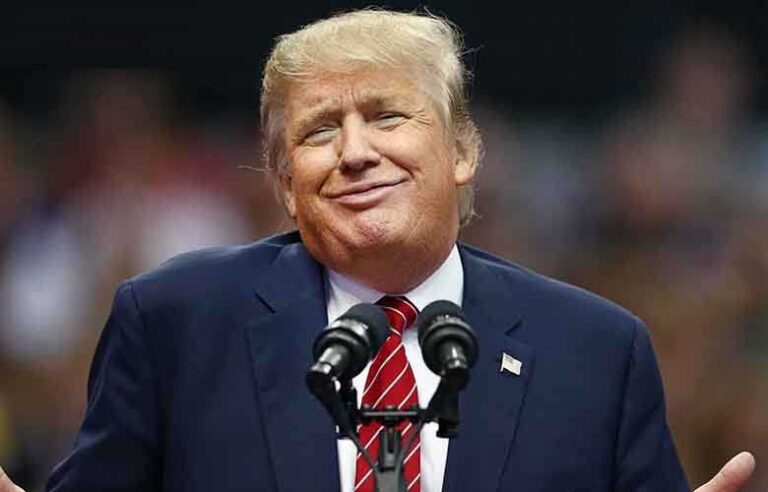
November 17, Colombo (LNW): U.S. President Donald Trump’s protectionist trade policies have had a broad impact on Sri Lanka’s economy, affecting trade relations, investment, and geopolitical positioning.
Economic experts in Sri Lanka have highlighted the opportunities and challenges brought about by these shifts in global trade dynamics. While the policies opened some doors for diversifying trade partnerships, they also introduced uncertainties and risks for Sri Lanka.
Changes in Tariffs and Exports
Professor Priyanga Dunusinghe, a noted Sri Lankan economist, emphasized the potential impact of Trump’s trade policies on Sri Lanka. He pointed out that the new tariffs, proposed after Trump’s election, included a 60% increase on Chinese goods and a 20% hike on imports from other countries.
This could have a significant effect on Sri Lanka’s exports, particularly in the textile sector, a major component of its economy. If the 12.2% tariff on garments exported to the U.S. were to rise to 20% or more, the price competitiveness of Sri Lankan garments could be compromised, leading to a decline in sales.
In 2023, Sri Lanka’s exports to the U.S. were valued at $2.7 billion, accounting for 23% of the country’s total exports. Dunusinghe estimated that a tariff increase could lead to an 8-10% drop in foreign exchange earnings from the U.S. This, in turn, could create challenges for Sri Lanka’s trade balance and economic stability.
Broader Impact on Trade Relations and Investment
Trump’s decision to withdraw from the Trans-Pacific Partnership (TPP) in 2017 had a ripple effect on global trade, even though Sri Lanka was not a member.
The move altered the landscape of regional trade agreements, potentially impacting Sri Lanka’s strategy in the Asia-Pacific region.
Trump’s preference for bilateral over multilateral trade deals created opportunities for countries like Sri Lanka to negotiate directly with the U.S. but also added complexities to trade negotiations.
Trump’s protectionist stance also led to shifts in global supply chains. Some U.S. companies, wary of trade uncertainties, explored alternatives to China. This opened up opportunities for countries like Sri Lanka to attract foreign direct investment (FDI) if they could position themselves as stable manufacturing hubs.
Impact on Tourism, Debt, and Economic Vulnerability
Although tourism was not directly affected by Trump’s trade policies, his administration’s foreign policy changes and travel advisories had the potential to influence global travel patterns, indirectly affecting Sri Lanka’s tourism sector.
Additionally, Trump’s economic policies, including tax cuts and increased U.S. spending, led to higher global interest rates. For Sri Lanka, a country with significant foreign debt, higher interest rates increased borrowing costs, complicating economic stability.
Trump’s trade policies presented a mixed bag for Sri Lanka—offering some opportunities for increased investment and diversification but also posing significant risks due to economic instability and heightened trade tensions.
The long-term effects, including ongoing protectionist measures under subsequent U.S. administrations, suggest that Sri Lanka must continue to navigate a complex global trade landscape with caution, seeking to balance economic interests with shifting geopolitical alliances.
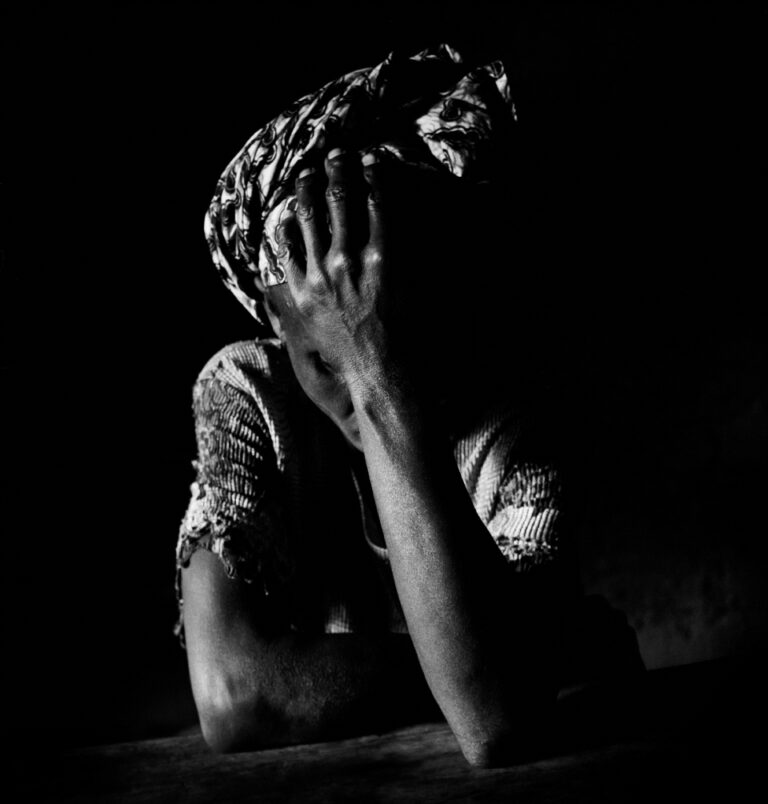
November 17, Colombo (LNW): Domestic violence (DV), Sexual and Gender-Based Violence (SGBV), and other forms of gender-based abuse remain a serious social issue in Sri Lanka.
These incidents, apart from police reports, studies, and documentation, underline the inertness of successive governments to contain the crisis. Each year, the Bureau for Prevention of Abuse on Women and Children receives complaints of gender-based violence ranging from 120,000 to 130,000.
Thirteen women have so far died from injuries related to domestic violence this year alone, a situation that continues to spotlight the essential role organizations such as Women in Need (WIN) play in supporting victims.
However, WIN would assert that this is an issue that requires a far more robust and coordinated response from the government if a long-term solution is to be identified.
Rising Intensity in Domestic Violence
Those advocating for the rights of women say incidents of domestic violence are getting more brutal with time. According to WIN’s Executive Director, Savitri Wijesekara, substance abuse such as alcohol consumption, and increasingly crystal methamphetamine use, is contributing to the recent escalation of violence.
Many victims come for assistance with serious injuries including cuts and burns, she said. The centre offers a range of assistance from counseling to legal advice and even emergency shelter.
It operates four shelters that offer immediate shelter to women and children, in addition to food, medical services, transportation, and other needs. WIN does its best, but the strains of growing demand-its Colombo shelter is now full-and sometimes the only thing it can do is to relocate entire families for safety.
Wijesekara asserts that the burden borne by service providers like WIN, as well as that borne by the women and children themselves, has not been recognized sufficiently by the authorities.
Legal Challenges Faced by Victims
Aside from safe houses, WIN offers a number of other critical services, such as psychological counseling, legal aid, a 24-hour hotline, and the 2six4 mobile app.
WIN’s legal unit assists victims through court cases and frequently files for protection orders under the 2005 Prevention of Domestic Violence Act.
However, Mariam Mohamed, the Legal and Programme Manager with WIN, also brought to light various challenges that victims faced in the courts.
Whereas, for example, the Act provides a procedure for granting immediate relief for victims through evidence, many courts use preconditions before issuing protection orders, requiring previous complaints with the police, which the law does not require. This can delay protections needed by victims.
New Initiatives and Solutions
Against the ever-rising cases of domestic violence, WIN is advocating for an expanded national response. Next year, it intends to conduct a National Gender Summit that brings together policymakers and the judiciary to highlight priorities and agree on actionable solutions based on community feedback.
The WIN Sexual and Gender-Based Violence Forums operate at its regional centers in Colombo, Jaffna, Batticaloa, Anuradhapura, Badulla, and Ratnapura. It brings together stakeholders at the district level, including government agencies, police, hospitals, District WDOs, and NGOs, who hold monthly meetings of the forums to discuss and find solutions to local problems and challenges.
Such activities by WIN raise the issue of gender-based violence to a national level, putting demands for systemic change and enhanced protection measures for victims in place. The work unveils the urgent need for a coordinated fight against domestic violence and how important it is for the government to be involved in the process of creating long-term solutions.
November 17, Colombo (LNW): The National People’s Power (NPP) has revealed its 18 candidates for the National List seats secured during the 2024 parliamentary elections.
This announcement follows the party’s landslide victory, which granted it significant representation in Parliament and reinforced its position as a transformative political force in Sri Lanka.
The individuals selected represent a diverse group of professionals and activists, reflecting the NPP’s commitment to incorporating expertise and grassroots representation into the legislative process.
The NPP National List seats include:
Bimal Niroshan Rathnayake – Longstanding political activist and key strategist.
Dr. Anura Karunathilake – Esteemed medical professional and advocate for healthcare reform.
Prof. Upali Pannilage – Academic specialising in social sciences.
Eranga Udesh Weerarathna – Youth leader and community organiser.
Aruna Jayasekara – Educationist and public sector reform advocate.
Dr. Harshana Sooriyapperuma – Expert in economic development.
Janitha Ruwan Kodithuwakku – Grassroots political activist.
Punya Sri Kumara Jayakody – Rural development specialist.
Ramalingam Chandrasekar – Advocate for minority rights and social equity.
Dr. Najith Indika – Prominent environmentalist and policy advisor.
Sugath Thilakaratne – Former athlete and promoter of youth empowerment.
Lakmali Kanchana Hemachandra – Women’s rights activist.
Sunil Kumara Gamage – Public sector professional with a focus on governance.
Gamini Rathnayake – Advocate for labour rights.
Prof. Ruwan Chaminda Ranasinghe – Academic with expertise in sustainable development.
Sugath Wasantha de Silva – Social justice campaigner.
Abubakar Adambawa – Representative for the Digamadulla District with a focus on interfaith harmony.
Ranthnayake Hettige Upali Samarasinghe – Vanni District advocate for rural communities.
November 17, Colombo (LNW): The Samagi Jana Balawegaya (SJB) is reportedly engaged in internal discussions over the need for significant leadership reform following its dramatic defeat in the 2024 Parliamentary Election, sources told LNW.
The party’s inability to prevent the ruling faction from securing a two-thirds majority in Parliament has heightened calls for change.
Party insiders noted that this marks the fourth consecutive electoral defeat under the leadership of Sajith Premadasa, spanning two presidential elections and two general elections.
Critics within the party have argued that Premadasa’s efforts in Parliament, including his frequent utilisation of Standing Order 27/2 to pose over 150 questions to the ruling government, have failed to resonate with the public.
The recent election results, which saw voters overwhelmingly reject traditional political structures in favour of a leftist administration, have further underscored the need for the opposition to adapt and present a vision more aligned with public sentiment, sources indicated.
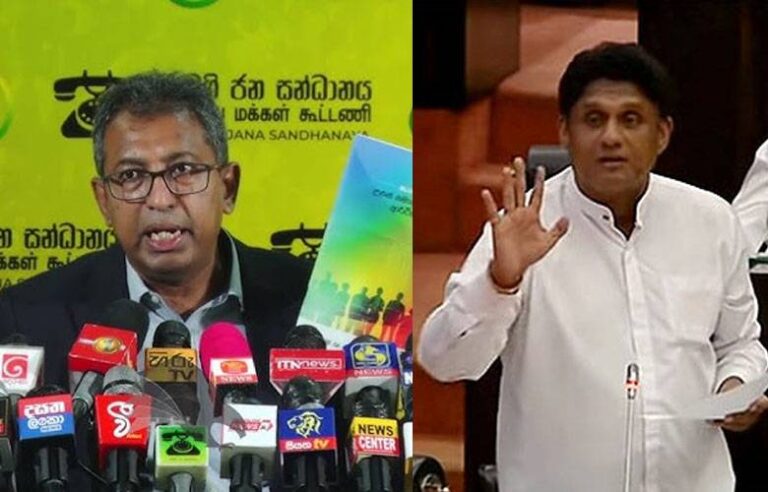
Amidst these developments, discussions are intensifying around a proposal to appoint Dr. Harsha de Silva as Leader of the Opposition whilst allowing Premadasa to retain his role as party leader.
Dr. Silva, widely regarded as a knowledgeable and pragmatic politician with extensive local and international experience, is seen as a strong candidate to revitalise the party’s image and strategy.
Sources within the SJB revealed that a significant faction supports this dual leadership arrangement, believing it would allow the party to rebuild its credibility and align with the electorate’s evolving expectations.
Observers now await official announcements, which could signal a transformative moment for the party.
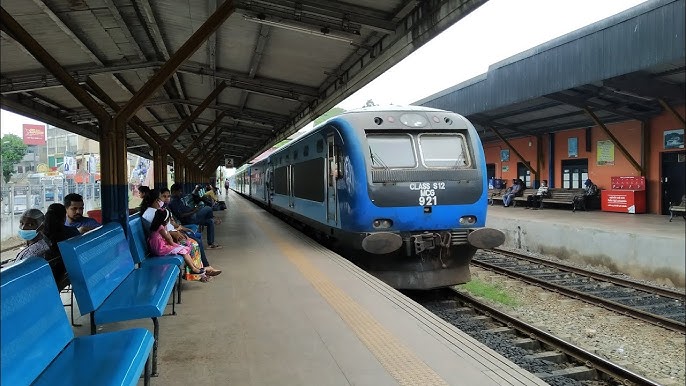
November 17, Colombo (LNW): The Department of Railways has announced the deployment of special train services today (17) and tomorrow (18) to accommodate commuters returning to work following the General Election break and the extended weekend.
These additional services are designed to ease congestion and cater to increased passenger demand. Seven special trains have been introduced, complementing the regular train schedule to ensure smoother travel.
The routes covered include Colombo Fort to Badulla, Badulla to Colombo Fort, Kandy to Colombo Fort, and Beliatta to Colombo Fort.
Furthermore, special services will also operate from Colombo Fort to Hikkaduwa, Matara to Colombo Fort, and Galle to Colombo Fort.
Officials from the Department of Railways emphasised that these arrangements aim to provide greater convenience for travellers during this busy period, ensuring efficient and reliable transportation for those resuming their regular routines.
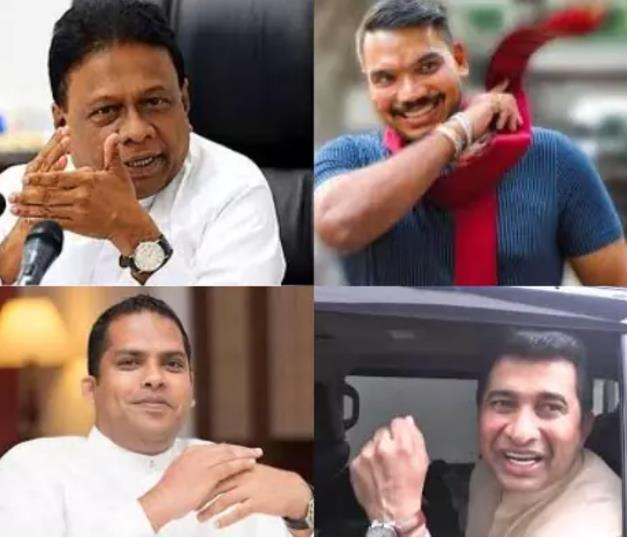
November 16, Colombo (LNW): Dullas Alahapperuma served as the Sports Minister during Gotabaya Rajapaksa’s presidency. The last South Asian Games featuring Sri Lanka took place under his tenure. Despite their strong performances at the event, the athletes began suffering from serious illnesses while in Sri Lanka.
Many succumbed to dengue. Dallas walked into the Sugathadasa Sports Hotel where they were staying and realized the potential for mosquitoes to breed there. But by the time it was repaired, many things that should have happened had already been completed. Then Namal Rajapaksa was appointed as the Minister of Sports. Familiar with the playing field, Namal started strong but later faltered, influenced by false flatterers and a tendency to undervalue the achievements of his predecessors.
Beyond the prominent rugby clubs in Sri Lanka, there was a president who rose through Peterson and made significant contributions to rugby, cricket, and football in Sri Lanka, as well as to Kure Park Ground. The sense of fear and inferiority experienced by certain individuals within the main sports clubs quickly reached the minister. Later, in the face of the Sri Lanka’s Revolutionary “Aragalaya”, rugby was banned when he left the sports ministry, but the court held the next official election and allowed Sri Lanka rugby to continue.
Namal, who initially acted based on his own views, allowed political fame and significant achievements for the country to slip through his fingers in many instances. He adopted a dictatorial approach, and when he left, the sport was left in a tangled mess, much like a ball of yarn.
Roshan Ranasinghe, who came after that, instead of the experience of Polonnaruwa, he was a worker with a desire to pretend to be Colombo. He viewed his wealth, along with the power of his ministerial position, as a sword to protect the authority of the government. Due to his actions with this sword, cricket, rugby, and football faced international bans, affecting all three sports that had been receiving support for the development of Sri Lankan sports. It was also significant that some of his appointees, along with those who were very close to him, gained the power to control the game according to their own interests.
Ultimately, Ranil Wickremesinghe decided to remove Roshan from the position of sports minister, as he had been acting like the king’s bodyguard, wielding the sword as though it were poised to strike both him and the entire sport of the country.
Harin, who came in afterward, had a lot of work to do. It was similar to how Ranil ended the oil queues, as an effort to remove the bans that had been imposed on the game. His primary responsibility was to negotiate an agreement with the ICC to ensure there would be no political interference in reviving cricket, an income-generating institution crucial for fulfilling the country’s various needs.
Additionally, there was an issue where the Sports Ministry did not receive the necessary allocation for the number of matches required for athletes to represent the country in the Olympics.
He patiently addressed its fundamental issues and moved forward. But Rugby, which has its own bond, is currently in the legal limbo due to its entanglement with the upper branches of the problem. It was because, as someone with a close relationship to rugby and a background in playing the sport, he aimed to make a difference for those in his social class.
Although he tried to hide it, it came out in some of his statements. While he left, the Director General of Sports seemed to be shoved into the water by the president of the dissolved rugby administration.
Harin banned netball as well as rugby and turned the banned administration into a funny council that gathers people to support the administration. Later, he was completely innocent of the death, and ran away, leaving the Director General of Sports’ fingerprints all over the matter.
Now, these four ministers have faced rejection from the people in two ways during the election. Two have been defeated, and although the other two may enter parliament through the national list, the political parties they represented have suffered a severe defeat at the hands of the people. All three of them entered parliament representing the Popular Front, which had achieved a historic victory in 2020.
Of those three, only Namal Rajapaksa, who inherited the leadership of the party from his father, remains today. Namal also offered to be the 2024 president. Additionally, Roshan Ranasinghe, who displayed excessive pride during his tenure as Sports Minister, claimed that the reason for his confidence was that a fortune teller had told him he was destined to become the President of the country.
In that way, he formed a new party and entered the presidential race. Although he had previously seen Arjuna Ranatunga, who had influenced many of the issues he faced with cricket, alongside Roshan Ranasinghe at the time of the party’s formation, Arjuna was later seen on a different stage. In the end, he left Polonnaruwa, where he had sought the vote, and Kalutara constituency Dilith Jayaweera’s party ran, but he lacked enough votes to enter parliament.
Although Harin gave up his dream of Gampaha and returned to Badulla to contest, Chamara Sampath was chosen to replace him in the single seat that Harin’s party won in Badulla. All three former sports ministers approached their work by attempting to answer questions in a way that made it seem as though the person asking didn’t know, while subtly emphasizing that they themselves had the knowledge.
The significance lay in recognizing the ignorance of those ministers. Dullas Alahapperuma had the ability to navigate through tricky situations with ease, a skill this group lacked. But this does not align with the approach that was supposed to address the issues within the game. Instead, it was based on their personal likes and dislikes.
It would be a significant loss for the president, who hails from Thambuttegama, if he does not find someone capable of properly understanding Thambuttegama and assessing the situation relative to that area. Therefore, the mindset that only high-class clubs are sports clubs should be shifted, and sports administration should evolve into a more widespread and decentralized aspect of human society.
Unfortunately, there is no need to discuss the four individuals who were appointed as sports ministers in Sri Lanka over the past four years. The decisions they made, driven by power, as well as the consistency and flaws in those decisions, can be seen in the political fate they have experienced so far.
All three of them have failed to emerge from the party that contested in the 2020 election. Both are now on the national list. Public trust has been shattered, and confidence has been lost. The fate of the parties they were in, as reflected in the way the votes fell, is not difficult to discern.
November 17, Colombo (LNW): A delegation from the International Monetary Fund (IMF), led by Senior Mission Chief Peter Breuer, will visit Colombo from November 17 to 23 to undertake the third review of Sri Lanka’s ongoing economic reform programme.
This initiative is being implemented under the framework of the IMF’s Extended Fund Facility (EFF), a key support mechanism to assist nations facing severe economic challenges.
The review will focus on evaluating the effectiveness of reforms introduced to stabilise Sri Lanka’s fragile economy.
Since the EFF programme’s initiation, it has provided vital financial assistance and policy advice to address structural inefficiencies and rebuild the country’s fiscal health.
Sri Lanka’s reform agenda, implemented in the wake of its economic crisis, has included measures to improve fiscal discipline, restructure debt, and stimulate growth.
The IMF team’s visit is anticipated to provide critical insights into the pace of these reforms and their impact on the broader economy.
Beyond the financial review, the visit underscores the IMF’s ongoing partnership with Sri Lanka, aimed at ensuring long-term economic resilience.
Whilst the IMF has previously commended the country’s commitment to challenging reforms, the third review will determine the release of the next tranche of financial support under the EFF agreement.
The government has expressed optimism regarding the outcomes of this review, which will influence both domestic confidence and international investor perceptions of Sri Lanka’s economic recovery trajectory.
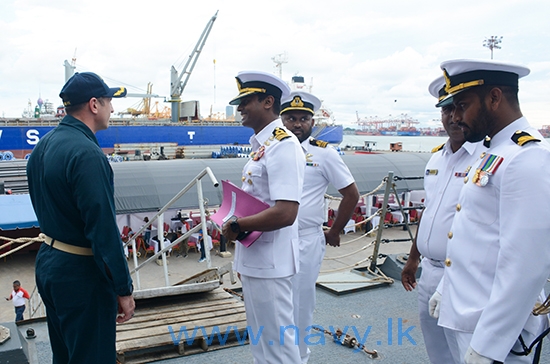
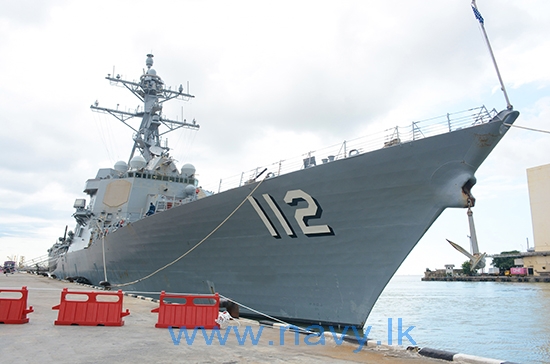
November 17, Colombo (LNW): The USS Michael Murphy, an Arleigh Burke-class guided missile destroyer of the United States Navy, arrived at the port of Colombo yesterday (16) for a scheduled replenishment visit, the Sri Lanka Navy announced.
The vessel was welcomed in accordance with traditional naval customs, underscoring the longstanding maritime partnership between the two nations.
The 155.2-metre-long destroyer is operated by a crew of 333 personnel and is under the command of Commander Jonathan B. Greenwald.
The USS Michael Murphy serves as a versatile combat vessel equipped to support various naval missions, reflecting the US Navy’s strategic reach and operational capabilities.
Its visit underscores ongoing cooperation in maritime security and the mutual commitment to maintaining regional stability.
During its stay, the crew will oversee resupply and routine maintenance activities, ensuring the ship is prepared for its operational objectives. The vessel is scheduled to depart Sri Lanka today (17) upon completion of these tasks.
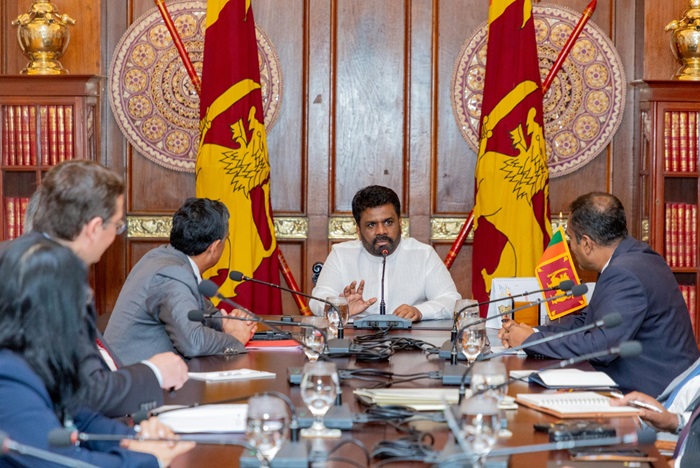
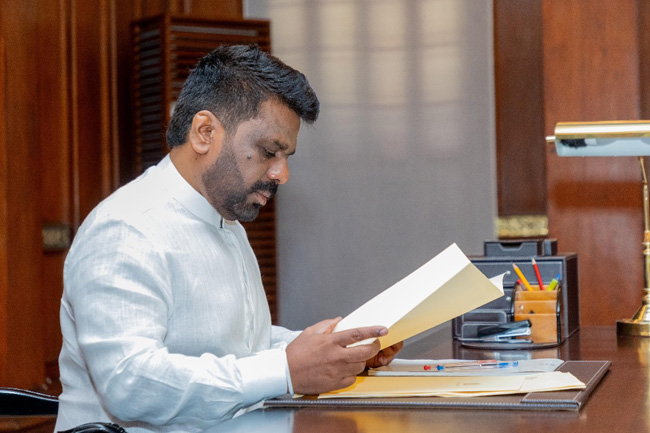
November 17, Colombo (LNW): The Cabinet Ministers of Sri Lanka’s newly formed government will officially take their oaths tomorrow (18) at 10:00 a.m. before President Anura Kumara Dissanayake at the Presidential Secretariat in Colombo, a statement by the President’s Media Division (PMD) said.
This marks the next significant step following the National People’s Power (NPP)’s resounding victory in the 2024 General Election.
Tilvin Silva, a senior spokesman for the NPP, previously revealed that the Cabinet would be limited to 25 members or fewer, with ministries and responsibilities assigned based on a “scientific and rational” methodology.
This streamlined approach is aimed at enhancing efficiency and ensuring accountability in governance.
The inaugural session of Sri Lanka’s Tenth Parliament, comprising members elected on 14 November, is set to convene on November 21, as outlined in an Extraordinary Gazette issued earlier this year.
The session will formalise the new parliamentary composition and set the stage for legislative proceedings under the new administration.
The NPP achieved a landslide victory in the election, securing a two-thirds majority with an unprecedented 159 parliamentary seats. This triumph granted the party a strong mandate to implement its policies and pursue significant reforms across various sectors.
The NPP’s MP pool’s representation of society is significant, providing space at the lawmaking body for people of diverse communities, most notably those deemed marginalised.
The NPP’s victory in the 2024 Polls sets another bombshell in the Sri Lankan political landscape with its winning of the Northern province, an event occurred for the very first time in Sri Lanka under the current Westminster system where a party rooted in leftist and socialist ideologies gained the trust of the Tamil community of the island nation.