October 27, Colombo (LNW): Showers or thundershowers will occur at times in Western, Sabaragamuwa and North-western provinces and in Galle, Matara and Mannar districts. Fairly heavy showers above 50 mm are likely at some places in Western, Sabaragamuwa and North-western provinces.
Showers or thundershowers will occur at several places in the other areas of the island during the evening or night.
Strong winds about 40 kmph can be expected at times over Northern, North-central and North-western provinces and in Trincomalee and Hambantota districts.
The general public is kindly requested to take adequate precautions to minimise damages caused by temporary localised strong winds and lightning during thundershowers.
Marine Weather:
Condition of Rain:
Showers or thundershowers will occur at several places in the sea areas around the Island. Heavy showers are likely at some places in the sea areas off the coasts extending from Negombo to Mannar via Puttalam.
Winds:
Winds will be South-westerly in the sea areas around the island and wind speed will be (30-35) kmph. Wind speed can increase up to (50-55) kmph at times in the sea areas off the coasts extending from Trincomalee to Puttalam via Kankasanthurai and Mannar and from Hambantota to Pottuvil.
State of Sea:
The sea areas off the coasts extending from Trincomalee to Puttalam via Kankasanthurai and Mannar and from Hambantota to Pottuvil can be rough at times. The other sea areas around the island can be moderate. Temporarily strong gusty winds and very rough seas can be expected during thundershowers.
President Anura Kumara Dissanayake announces the government plans to hold Provincial Council and Local Government elections next year: emphasises the need for a comprehensive political mechanism, including the Presidency, Cabinet, Parliament, Provincial Councils, and Local Government bodies, to effectively govern and revitalise the country.
Samagi Jana Balawegaya (SJB) Leader and General Election candidate Sajith Premadasa vows that the taxes faced by the people of Sri Lanka will be reduced if his party is granted Parliamentary majority in the upcoming Parliamentary Election: stresses that only the SJB has the proper programme formulated for the development of the country.
Chanu Nimesha, Secretary of Women’s Affairs for the Sri Lanka Socialist Party, makes history by becoming the first transgender person to contest an election in Sri Lanka: She will be representing the Kegalle District: expresses gratitude to the party for this groundbreaking opportunity, marking a significant step toward inclusion and representation in Sri Lankan politics.
The National People’s Power (NPP), led by President Anura Kumara Dissanayake, wins the Elpitiya Local Council election with 17,295 votes, securing 15 seats: Samagi Jana Balawegaya followed with 7,924 votes and 6 seats, while Sri Lanka Podujana Peramuna gained 3,597 votes for 3 seats: People’s Alliance also won 2 seats with 2,612 votes.
The Ceylon Electricity Board (CEB) has proposed a 6% electricity tariff increase for December, currently under review by the Public Utilities Commission of Sri Lanka (PUCSL): This marks the third adjustment this year, following a 21.9% increase in March and a 22.5% reduction in July: Public consultations will precede the final decision, with potential feedback due Monday.
The Central Bank reports Sri Lanka’s worker remittances rose significantly in September 2024, with US$ 555.6 million received compared to US$ 482.4 million in September 2023: Total remittances from January to September 2024 reached US$ 4,843.8 million, reflecting an 11.5% increase over the same period in 2023.
McDonald’s Corporation and International Restaurant Systems (Pvt) Ltd mutually end their franchise partnership in Sri Lanka through an amicable legal settlement: thank the public for their support and urged people to ignore past media speculation about their relationship.
Australian High Commissioner Paul Stephens clarifies that Australia’s updated travel advisory for Sri Lanka is based solely on credible risk assessments, not political or commercial factors: Issued alongside advisories from the US, UK, Canada, New Zealand, and Japan, the update aims to help Australians make informed travel decisions without discouraging tourism, acknowledging potential impacts on both foreigners and Sri Lankans.
The Human Rights Commission (HRC) will decide on October 30 regarding the alleged leak of Grade 5 Scholarship Exam questions: HRC Commissioner Nimal Punchihewa stated that the Commission has received the CID’s investigation report and complaints from parents and others, prompting the HRC to launch its own investigation into the matter.
Sri Lanka defeat Hong Kong 71-47 in the first semifinal of the 13th Asian Netball Championships 2024, securing their place in the final: The tournament is taking place at the Koramangala Indoor Stadium in Bengaluru, India.
October 26, Colombo (LNW): Commissioner General of Elections Saman Sri Rathnayake reported that 62 election-related complaints, including incidents of election violence, were received in the past 24 hours. The District Centre for Election Complaints recorded one complaint of election violence and 42 complaints of election law violations by 4:30 p.m. on Thursday (24). Additionally, the National Centre for Election Complaints registered 19 complaints related to election law violations.
Since the election period began on September 26, a total of 662 complaints have been filed with the Election Commission. These include five cases of election violence, 642 instances of election law violations, and 15 other election-related issues. Out of these, 522 complaints have been investigated and resolved, while 140 cases remain under investigation, Rathnayake stated.
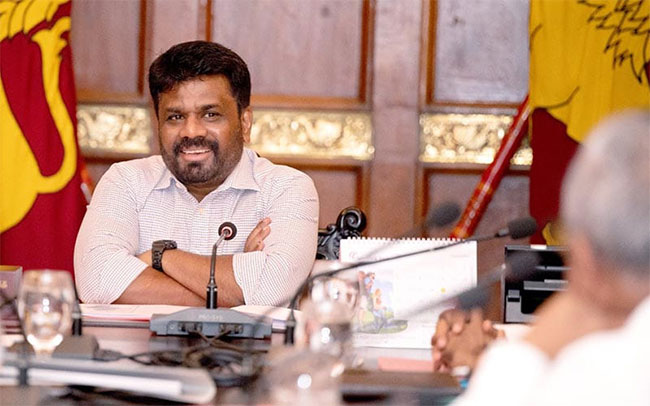
October 26, Colombo (LNW): President Anura Kumara Dissanayake met with officials from the Agriculture and Trade Ministries and representatives from the Paddy Marketing Board (PMB) yesterday (25) at the Presidential Secretariat to address rising rice prices and discuss stabilization measures.
During the meeting, the President outlined immediate actions to tackle price concerns, highlighting the need for a comprehensive database of rice mill owners and wholesale dealers. He instructed officers to inspect rice stocks in Polonnaruwa and Ampara Districts in the coming days and gather information on pledge loans related to rice storage.
Key officials in attendance included Prime Minister’s Secretary Pradeep Saputhanthri, Agriculture Ministry Secretary M.P.N.M. Wickremesingha, Trade Ministry Secretary M.M. Naimuddin, Consumer Affairs Authority Chairman Hemantha Samarakoon, and PMB Chairman A.M.U. Pinnalanda.
In a separate session with rice mill owners, President Dissanayake announced that the government would assist small and medium-scale rice mills in expanding their capacity, aiming to stabilize the rice market. He emphasized that while the government provides extensive support for agriculture, irrigation, and fertilizer subsidies, rice mill owners bear a social responsibility to maintain fair pricing for consumers.
The President warned against exploitative practices, stating that no business would be allowed to profit unfairly by inflating rice prices, reaffirming the government’s commitment to ensuring accessible rice prices for the public.
October 26, Colombo (LNW): The International Monetary Fund (IMF) announced that Sri Lanka has made substantial progress in its reform initiatives and expressed optimism for a swift approach to the third review of the Extended Fund Facility (EFF). This positive outlook was shared by Krishna Srinivasan, Director of the IMF’s Asia and Pacific Department, during a press briefing at IMF headquarters in Washington.
“We are encouraged by what we have heard so far and are hopeful for quick progress toward the third review,” Srinivasan said, noting that inflation in Sri Lanka is on the decline. He highlighted that the country has made “hard-won gains” through committed reform efforts, a consensus supported by the new administration’s intent to protect and build upon these achievements.
Srinivasan recently led a high-level team to Colombo for discussions with the new government, reporting “productive discussions” that are continuing this week during the IMF’s annual meetings. He noted that growth in Sri Lanka has been positive over the past four quarters, with the IMF program addressing priorities like social protection.
The IMF Director also confirmed that Sri Lanka has reached agreements with its official creditors and has an agreement in principle with private creditors. The next step is securing a formal agreement with all creditors, which Srinivasan described as a “significant step forward.” He emphasized that while progress has been made, continued reforms are essential for Sri Lanka to achieve a robust and sustainable economic recovery.
to provide highlights on central bank (CB) monetary policy operations during 1st three quarters of 2024, raising serious concerns over deflationary economy in years ahead and monetary policy failure to maintain the domestic price stability and
to recommend
an emergency rate cut of at least 200 bps and
a timely injection of fresh reserves of at least Rs. 3 trillion in years ahead to promote a fair distribution of credit across priority sectors such as exports and domestic foods to recover the economy before the second round of default possible in 2028 consequential to the commencement of foreign debt service on restructured terms.
Leading highlights are as follows.
Early signs of the economy being pushed to a deflationary trap indicative of monetary policy failure to boost the aggregate demand actively.
Flexible inflation target being breached consecutively for six months from April.
Upward pressure of money market interest rates notwithstanding the excess liquidity in the banking sector and significant disinflation path of likely permanent nature.
Early warning of significant and systemic contraction of the monetary base in years ahead when outstanding credit to government starts maturing without any rollovers.
Policy interest rates
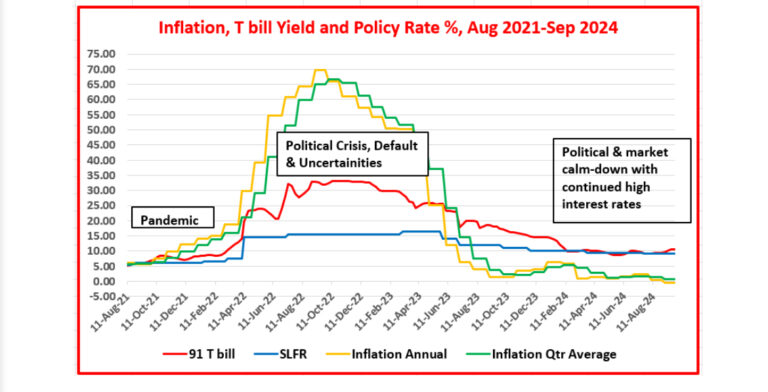
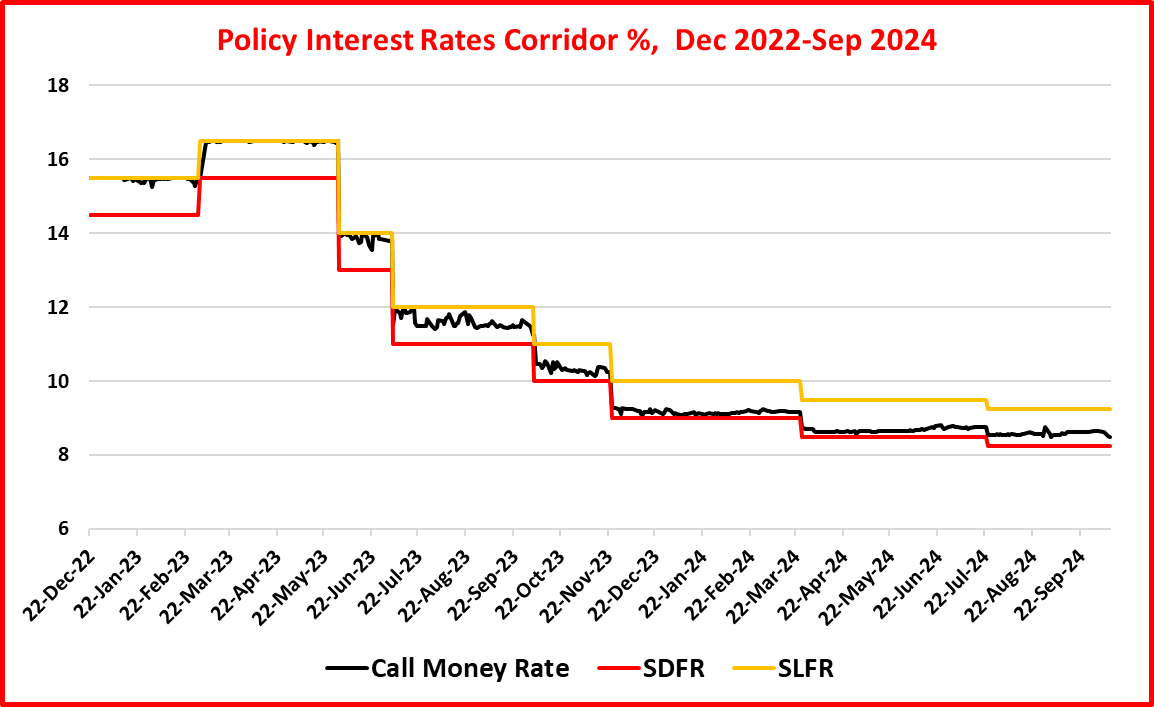
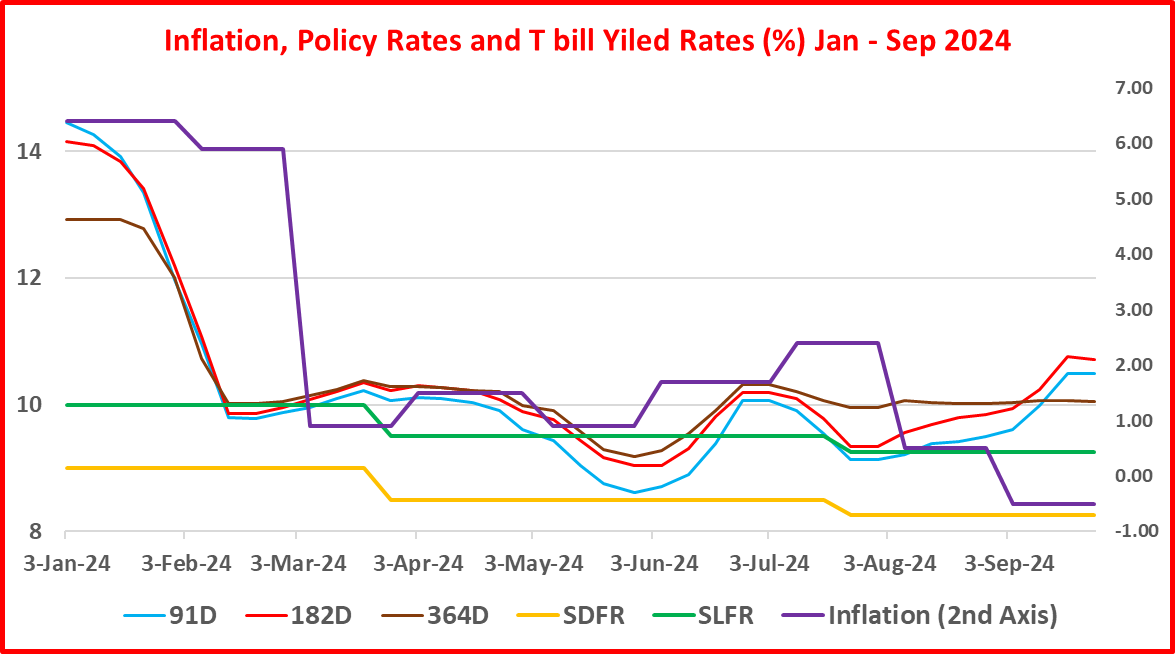
Policy rates cut twice by a total of 75 bps, i.e., standing deposit facility rate (SDFR) to 8.25% and standing lending facility rate (SLFR) to 9.25% (see the Chart below).
Further injection of reserves to the economy on the top of the prevailing excess liquidity to support the policy rates corridor.
Injection of fresh reserves
Continuation of reverse repo window, mainly on overnight and 7-day basis as the major source of fresh reserves to support the policy rates corridor (see the Chart below).
Injection of a total of nearly Rs. 6.9 trillion on the offer of Rs. 8.4 trillion at 220 reverse repo auctions with rising volumes in September.
Standing facility window
Active use of standing deposit facility to park bank excess reserves at risk free interest rate (SDFR) while standing lending facility remaining highly inactive from the third quarter (see the Chart below).
Overall OMO
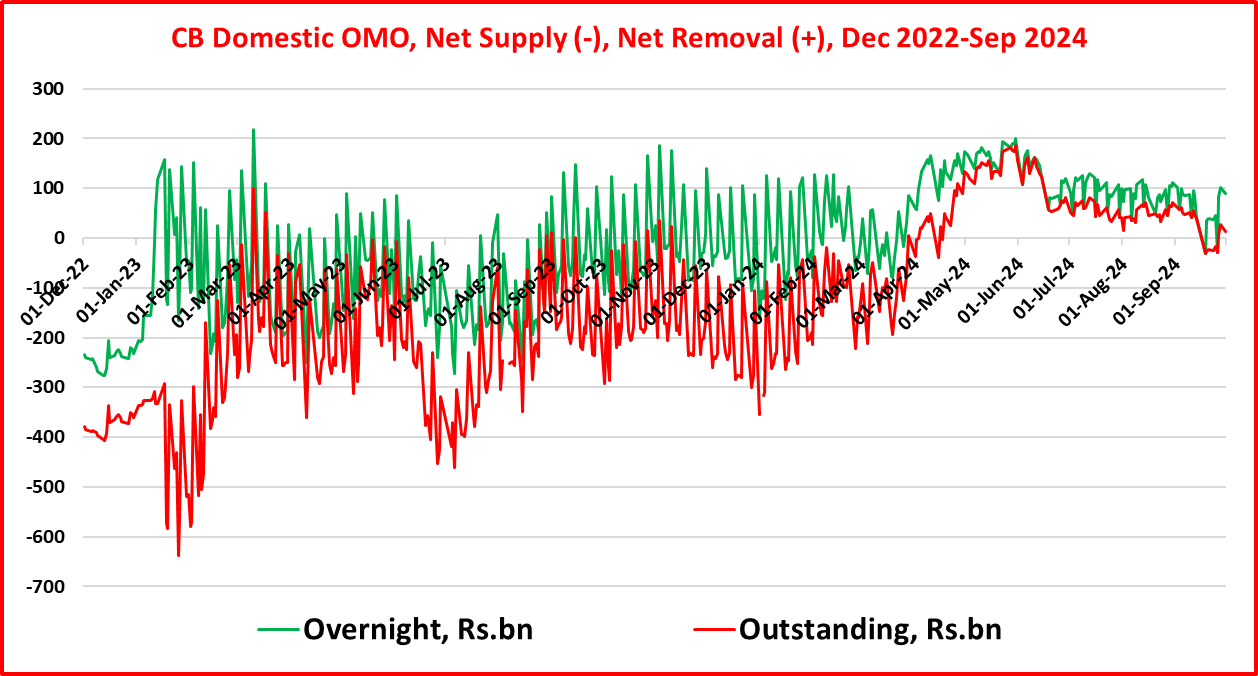
Domestic OMO resulting in an overall removal of reserves on overnight as well as outstanding basis with a high volatility reported in September (see the Chart below).
Overall bank reserve position being not commensurate with the present policy rates cutting cycle as there has been an overall removal of reserves after the month of May instead of injection of reserves.
Inter-bank overnight market
Inter-bank overnight lending rate, the key monetary policy operating target, rising towards the upper bound of policy rates corridor since July from being closer to the lower bound during prior months (see the Chart below).
While overnight inter-bank repos rising in highly fluctuating volumes, call money volume being mostly below Rs. 20 bn tending to fall below Rs. 10 bn in August and September (see the Chart below).
Two inter-bank rates mostly moving closer to each other within the policy rates corridor, despite significant deviations and volatilities in volumes.
Weekly Treasury bill auction yields
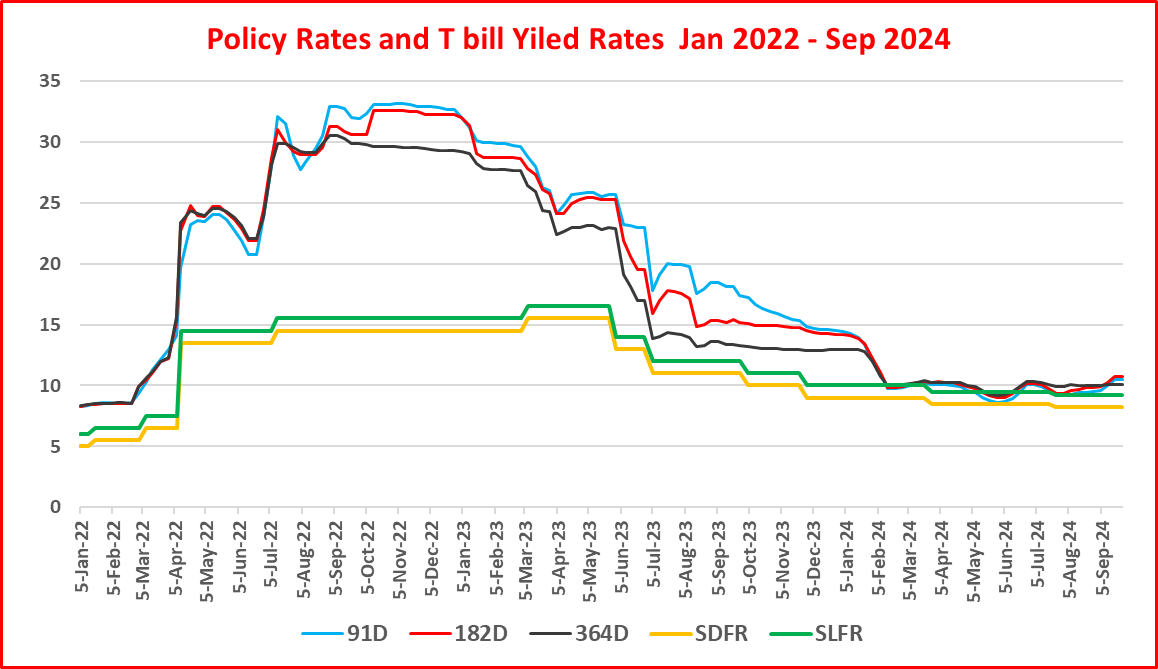
Yields which dropped to the policy rates corridor in May and June showing an unjustified upward movement in since July, despite rising market liquidity and improved confidence in fiscal stance under the close IMF watch and deflationary movement (see the Chart below).
Foreign currency operations
Foreign reserve rising closer to US$ 6 bn largely through concessionary debt flows resulting a temporary surplus BOP which helped monetary operations targeting a transitory period of currency appreciation after the overshoot in 2022 (see the Chart below).
Monetary aggregates
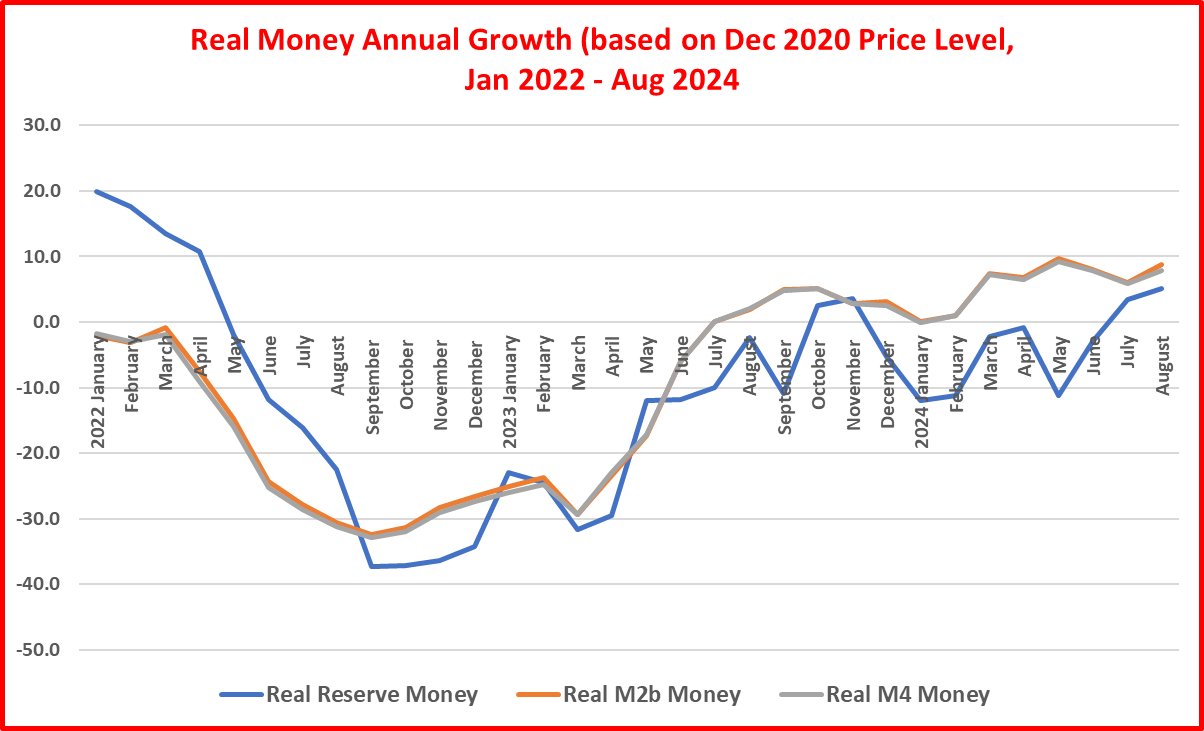
Annual monetary growth which collapsed in 2022 and 2023 on the sugar high interest rate policy picking up slightly towards 10%, despite the unacceptably high volatility of reserve money growth (see the Chart below).
Real money growth remining low below 10% not sufficient to stimulate the aggregate demand although it recovered from its burst in 2022 (see the Chart below).
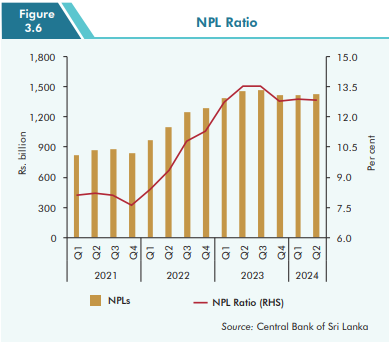
Private sector credit picking up slowly but high NPL ratios around 13% as reported in the CB Financial Stability Review 2024 concern the systemic limitation of the monetary sector to support the revival of the economy (see the two Charts below).
The dollarization in reserve money gradually picking up with the newly borrowed foreign reserves while the absolute impact remains with the holding of government securities continuing at Rs. 2.5 trillion on restructured basis (see the two Charts below).
Serious early warnings on a possible systemic contraction of reserve money when these securities are redeemed on restructured terms in years ahead.
OMO irregularity and loss to public funds
Overnight reverse repos offering at interest rates lower than the SLFR despite the same credit quality and terms, casing a loss to the CB around Rs.10.6 bn for far in 2024 (see the Chart below). In many cases, overnight reverse repo rate was lower than the call money rate too violating the policy rates corridor principle.
Domestic price stability
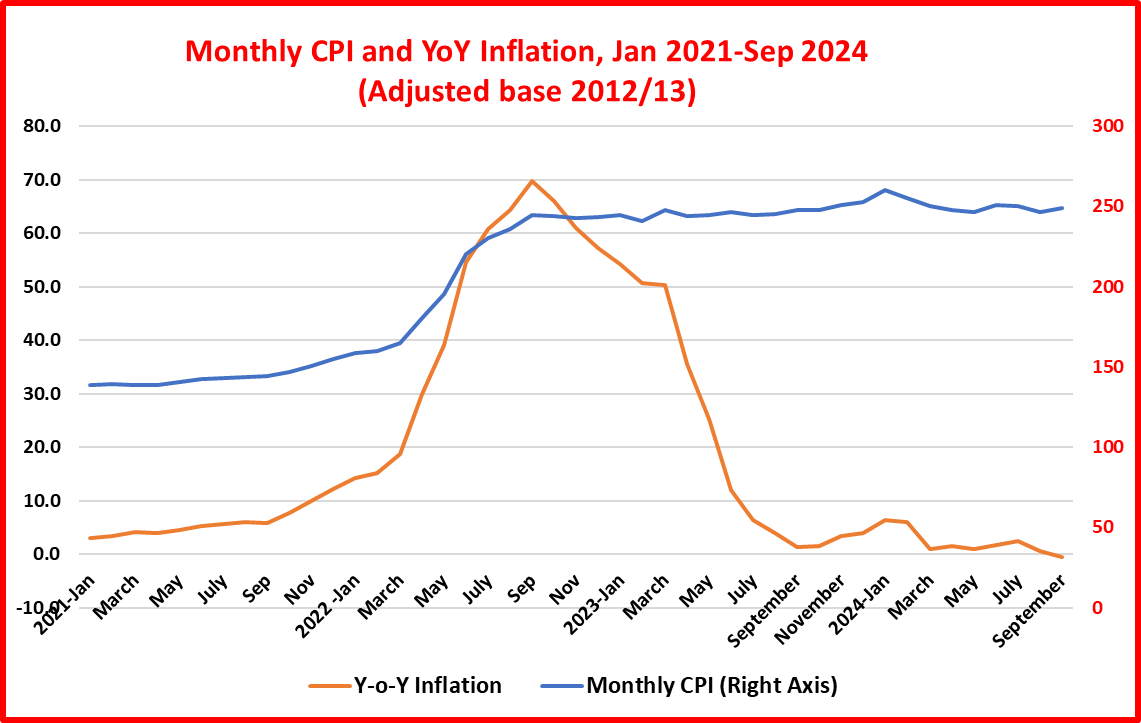
The CB’s objective for the domestic price stability is the quarterly average of the percentage increase of the Colombo Consumer Price Index (CPI) targeted at 3%-7% termed as flexible inflation target. This statistical inflation target is questioned on several grounds (see the two Charts below).
Consumer prices remaining at elevated levels significantly above the pre-inflation period although rate of price increases has decelerated to negative levels (deflation trap).
Inflation target being breached consecutively for six months.
Inflation reaching deflationary territory over a period of 7 months with ample prior warnings.
Remarks on an emergency jumbo rate cut of 200 bps
As pointed out above, a salient upward pressure on interest rates is clear from the second quarter, despite a significant disinflation path to deflation territory and 75 bps policy rate cut (see two Charts below) so far in the year.
At the last monetary policy decision on 26 September, the CB also predicted and accepted a deflationary path in the near-term without taking any pre-emptive actions.
Deflation is worse than inflation.
First, it causes losses to producers and sellers pushing them to cut production activities that will have spiral effects on employment, wages and prices.
Second, resulting debt service problems cause additional risks to the financial system on the top of already high non-performing loans.
Present deflation is largely the direct oitcomr of expenditure cuts due to significant macro-economic contraction caused by the super tight monetary policy and currency crisis since early 2022.
An emergency prevails for a Jumbo policy rate cut of at least 200 bps to reverse upward pressure of market interest rates to pre-empt deflationary trap before it getting worse, given the belief of the monetary hypothesis.
Overall remarks
The outright failure of the monetary policy to keep the domestic price stability.
Inappropriateness of non-risk-taking policy interest rates-based monetary policy model in view of the insignificant volume of call money to respond to policy rates decisions.
Re-commencement of dollarization of the monetary system back to borrowed foreign reserves from credit to government. This is an early signal of another currency crisis in few years ahead.
Emergency for a jumbo policy rate cut of at least 200 bps to correct monetary and financial conditions.
A medium-term need of fresh reserves at least Rs. 3 trillion to promote distribution of credit across the priority sectors with a target to generate a sizable foreign currency surplus in order to prevent the second round of default eminent in 2028.
This article is released in the interest of participating in the professional dialogue to find out solutions to present economic crisis confronted by the general public consequent to the global Corona pandemic, subsequent economic disruptions and shocks both local and global and policy failures. All are personal views of the author based on his research in the subject of Economics which have no intension to personally or maliciously discredit characters of any individuals.)
P Samarasiri
Former Deputy Governor, Central Bank of Sri Lanka
(Former Director of Bank Supervision, Assistant Governor, Secretary to the Monetary Board and Compliance Officer of the Central Bank, Former Chairman of the Sri Lanka Accounting and Auditing Standards Board and Credit Information Bureau, Former Chairman and Vice Chairman of the Institute of Bankers of Sri Lanka, Former Member of the Securities and Exchange Commission and Insurance Regulatory Commission and the Author of 12 Economics and Banking Books and a large number of articles published.
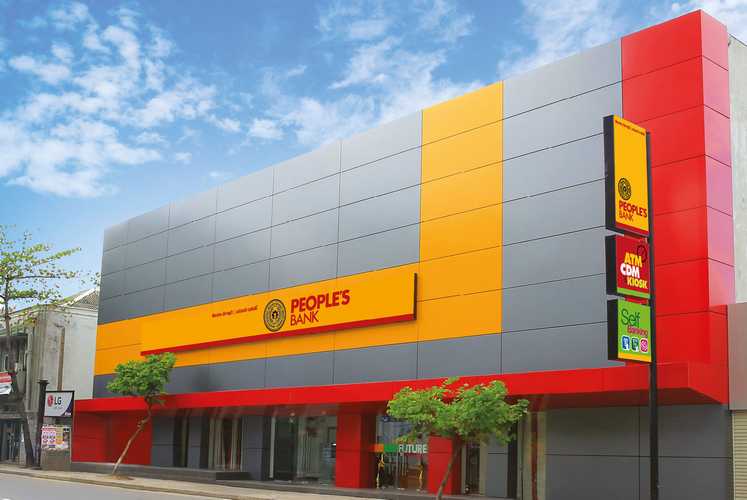
People’s Bank has concluded the issuance of Rs. 10 billion in BASEL III Compliant Tier 2, Unlisted, Rated, Unsecured, Subordinated Redeemable Debentures, adhering to the Central Bank of Sri Lanka (CBSL) requirements.
The funds raised are set to enhance the bank’s Tier 2 Capital and bolster its Total Capital Adequacy Ratio, providing a stronger capital base that aligns with regulatory guidelines.
The medium to long-term nature of these debentures, combined with their subordinated status, will support the bank’s capacity for expanded lending, adding a buffer to its regulatory capital in line with BASEL III.
With these proceeds, People’s Bank aims to diversify its lending products and expand its loan portfolio. As Sri Lanka’s second-largest state bank by assets,
People’s Bank reported a consolidated operating income of Rs. 96.8 billion and a pre-tax profit of Rs. 19.3 billion for the fiscal year ending December 31, 2023.
However, the bank’s net interest income declined to Rs. 67.8 billion, a reduction from the previous year’s Rs. 91 billion. This drop reflects the impacts of high-interest costs on deposits and customer interest concessions amid the elevated interest rate environment during 2022 and early 2023.
The Bank expressed satisfaction with the bank’s performance, highlighting resilience in managing economic challenges over recent years. He noted that the bank has successfully navigated the Domestic Debt Optimization program, alleviated rupee liquidity stresses, and advanced regulatory capital growth.
Bnak officials further emphasized the bank’s dedication to supporting national economic progress, particularly as economic indicators begin to show signs of improvement.
Looking forward, People’s Bank is in readiness to support Sri Lanka’s growth trajectory, reinforcing the institution’s role in safeguarding national interests.
The bank’s interest expenses have started to stabilize, aligning with the current interest rate environment observed in late 2023. The Deputy General Manager of Treasury Investment Banking and Financial Institutions, , extended gratitude to investors, noting their confidence was pivotal to the debenture issuance’s success.
He highlighted that the debenture issuance positions People’s Bank to reach an all-time high in capital adequacy by year-end, surpassing the CBSL’s stipulated 13.5% minimum for Domestic Systemically Important Banks noting that the investor response underscores confidence in People’s Bank, which will propel it toward growth objectives.
The People’s Bank Investment Banking Unit (PBIBU), acting as Manager to the Issue, played a crucial role. Established within the bank’s Treasury, PBIBU focuses on fostering Sri Lanka’s capital markets by offering comprehensive services such as financing, advisory, public offerings, debt structuring, and trustee services.
Through these efforts, People’s Bank aims to contribute meaningfully to national economic growth.
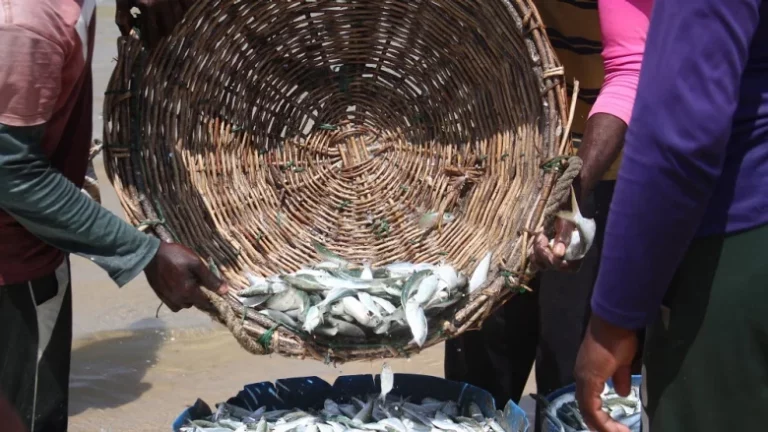
The Food and Agriculture Organization (FAO) of the United Nations, backed by funding from the Norwegian government, has initiated a transformative project aimed at bolstering resilience and sustainability in Sri Lanka’s fishing sector.
By equipping a multi-day fishing vessel with advanced cooling technology and a fuel-saving bulbous bow, FAO’s initiative showcases how new technologies can address some of the fishing industry’s most pressing challenges—namely, post-harvest losses, operational costs, and quality control for both local and export markets.
Sri Lanka’s fishing sector, which relies on multi-day fishing boats, plays a critical role in the deep-sea fishing industry and is especially crucial for the export of tuna.
Traditionally, these boats use ice to keep fish fresh during their extended voyages, but this method often compromises fish quality due to temperature inconsistencies, leading to significant post-harvest losses. According to an FAO Fish Loss and Waste (FLW) Assessment conducted between 2022 and 2023, an estimated 41.4% of fish quality is lost in multi-day fisheries in Sri Lanka.
To address this challenge, FAO implemented an advanced cooling system on a newly constructed multi-day fishing boat.
This technology ensures that fish are maintained at ideal temperatures throughout the journey, significantly reducing waste and spoilage.
By strengthening preservation methods, this system allows fishers to deliver high-quality products to market, minimizing loss and enhancing the resilience of their fishing operations.
Fuel consumption is another pressing concern for Sri Lanka’s multi-day fishing boats, which require between 8,000 to 11,000 liters of diesel per trip. This high fuel demand places a financial strain on operators, costing them approximately 3 to 4 million LKR for each voyage.
To alleviate these costs, FAO introduced a bulbous bow technology on the new vessel. This technology, which minimizes wave resistance, enables a remarkable 13% reduction in fuel use.
While the advanced cooling system raises fuel demands, the fuel-saving bulbous bow compensates for this by reducing overall consumption. This dual benefit offers long-term economic advantages for boat owners.
The bulbous bow’s installation, which cost around 1 million LKR, was funded by the boat owner with FAO’s technical assistance, demonstrating how sustainable practices can be embraced through public-private collaboration.
Fair pricing remains a challenge for Sri Lankan fishers, who are often subject to price manipulation by middlemen who leverage gaps in quality knowledge. To empower fishers with greater control over pricing,
FAO introduced an AI-powered mobile application. This tool enables fishers to assess fish quality in real-time according to Yellowfin Tuna export standards, simply by uploading a photo.
By providing immediate quality feedback, the app allows fishers to negotiate fairer prices, enhancing their bargaining power and ensuring equitable market access.
The handover of this technology to the Department of Fisheries and Aquatic Resources underscores FAO’s commitment to a resilient future for Sri Lanka’s fisheries.
By integrating cutting-edge cooling systems, fuel-efficient technologies, and AI-based tools, FAO is not only tackling immediate industry challenges but also promoting long-term economic and environmental sustainability. These advancements empower fishing communities, reduce waste, and optimize operational efficiency, ultimately positioning Sri Lanka’s fisheries sector for a sustainable future
October 26, Colombo (LNW): Sri Lanka is making substantial strides in implementing critical economic reforms, a key move that could facilitate a swift progression toward the third review of its Extended Fund Facility (EFF) program, a senior International Monetary Fund (IMF) official disclosed on Thursday.
Speaking in Washington, Krishna Srinivasan, director of the IMF’s Asia and Pacific Department, acknowledged the country’s recent reforms and collaborative efforts with the IMF, which he believes have moved Sri Lanka closer to financial stability.
Upon the election of Sri Lanka’s new government, Srinivasan led an IMF delegation to Colombo to engage with the country’s leadership and discuss economic strategies.
These discussions have been both productive and ongoing, with follow-up meetings scheduled during the IMF-World Bank Annual Meetings.
According to Srinivasan, Sri Lanka, which faced severe economic instability in 2022, has shown remarkable progress in implementing reforms. Recent data shows the country experiencing positive economic growth over the past four quarters, coupled with decreasing inflation—a clear indicator of recovery.
Srinivasan emphasized that under the EFF, Sri Lanka’s program framework aligns with some of the new government’s priorities, particularly in areas such as social protection. The program discussions will continue in Washington, with the IMF hopeful for rapid progress toward the upcoming third review of the program.
Regarding debt restructuring, Srinivasan noted that Sri Lanka has reached an agreement with its official creditors and secured a preliminary arrangement with private creditors. The next step is finalizing a comprehensive agreement across all creditor groups, a vital phase in Sri Lanka’s path toward a sustainable financial recovery.
He acknowledged that much remains to be done, particularly in continuing the necessary reforms to strengthen the country’s economy.
When asked about macro-linked bonds, a type of debt instrument, Srinivasan clarified that while the IMF does not directly negotiate the terms, it is focused on ensuring that debt restructuring agreements align with the IMF program’s debt objectives and maintain consistent treatment across creditors.
While macro-linked bonds are increasingly popular in debt restructuring, Srinivasan noted that different approaches suit different countries, and conventional bond exchanges may still be viable.
The Group of 24 (G-24), an international coalition of developing nations, has also acknowledged Sri Lanka’s reform achievements.
During a press conference at the Annual Meetings in Washington, the G-24 commended Sri Lanka’s economic resilience while advocating for more inclusive debt restructuring frameworks.
Iyabo Masha of the G-24 Secretariat highlighted that Sri Lanka’s economy has shown clear signs of recovery, with economic growth accelerating, fiscal reserves increasing, and rising import duties as evidence of fiscal stabilization. Nevertheless, Masha stressed that challenges related to debt sustainability persist.
October 26, Colombo (LNW): The Colombo Port City Special Economic Zone (SEZ) is rapidly gaining attention, with over 100 companies considering operations within its boundaries, as reported by its promoters.
The Colombo Port City Economic Commission (CPCEC) has established a public registry listing Authorised Persons (APs), which includes both primary and secondary investors.
These APs feature renowned global companies from countries such as India, the UAE, Singapore, the UK, Norway, and the US, highlighting the SEZ’s international allure and its potential as a regional service hub.
Colombo Port City is positioning itself as a leading business center in South Asia, providing a contemporary legal framework and a conducive environment for investors.
This SEZ is emerging as a competitive alternative to established financial centers like Dubai and Singapore, invigorating Sri Lanka’s economic landscape.
Its strategic location and modern infrastructure offer significant growth opportunities, enabling Sri Lanka to enhance its regional presence.
Historically, international and Sri Lankan IT and BPO firms have preferred locations like Dubai and Singapore due to their favorable conditions, including the ability to pay employees in USD, tax incentives, political stability, and strong economies.
Recognizing these advantages, Colombo Port City has created a regulatory framework with strategic incentives that parallel these benefits. It presents a compelling option for global businesses aiming to expand in South Asia, while also serving as a viable solution for local enterprises seeking to extend their reach.
Recently implemented banking regulations within Colombo Port City further bolster investor confidence by protecting capital movements, creating a secure business environment. These measures are designed to attract foreign direct investments (FDI), benefiting the local economy and opening up new growth pathways.
Unlike other zones in Sri Lanka under the Board of Investment (BOI), the policies of the Colombo Port City SEZ are uniquely crafted to connect benefits directly to foreign earnings, export services, and new business initiatives.
This ensures that only companies committed to genuine investments can access the SEZ’s advantages, as opposed to merely relocating for tax incentives.
The competitive tax incentives and modern regulatory framework are designed to attract high-value FDI, encourage innovation, and support sustainable economic growth. By emphasizing authentic investments, Colombo Port City aligns its development with Sri Lanka’s broader objectives of innovation, entrepreneurship, and job creation.
To uphold this focus on genuine investment, the CPCEC has established clear criteria within the SEZ’s legal framework. Secondary investors must meet specific standards, such as generating over $50 million in global revenue or creating at least 100 jobs within five years of operation.
They must also demonstrate how their business will positively impact Sri Lanka’s economic and social development through innovation, research, or establishing an international financial center.
Investors are required to submit comprehensive business plans to qualify for incentives, with annual compliance reviews conducted by the CPCEC. If these standards are not met, the CPCEC reserves the right to deny licenses or renewals.
This structured approach ensures that the development of Colombo Port City remains aligned with Sri Lanka’s economic goals, fostering a vibrant business ecosystem.