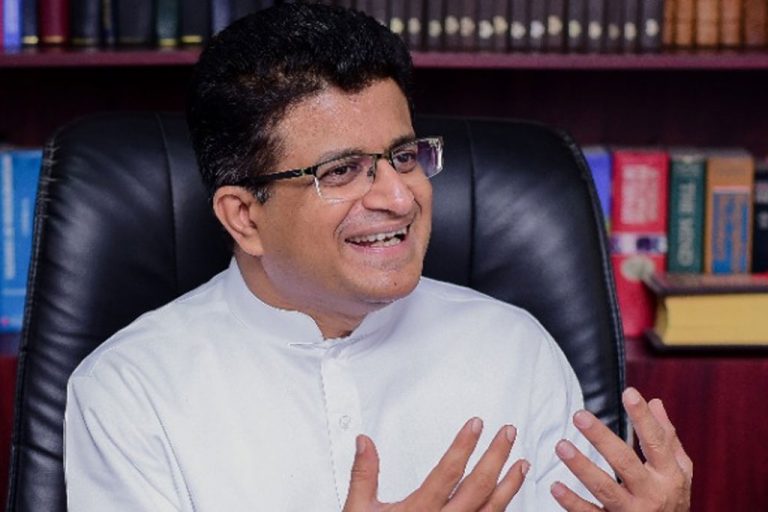
June 02, Colombo (LNW): Former JVP MP and member of the National Peoples Power’s (NPP) Economic Council Sunil Hadunnetti clarified his stance regarding remarks made about billionaire businessman Elon Musk, affirming that he had no intention to categorise Musk as an ‘economic hit-man’.
Speaking at a Business Forum, Hadunnetti expressed regret for any misinterpretation, specifying that his comments regarding economic hit-men referred to James Packer and George Soros, associated with the previous Ranil Wickremesinghe regime.
Hadunnetti emphasised that renowned investors avoid Sri Lanka due to instability, political interference, and lawlessness.
He extended his apologies to Elon Musk, reiterating that his remarks were misquoted and not directed towards Musk.
June 02, Colombo (LNW): Pride month, or notably the month filled with rainbowish glamour all over the world has just arrived. Pride Month holds profound significance for the global LGBTQIA+ community, serving as a commemoration of the ongoing struggle for equality, recognition, and acceptance.
But do Sri Lankans really get the idea of what it means to be celebrating Pride?
In Sri Lanka, where cultural and societal attitudes towards non-normative sexual orientations, gender identities, gender expressions and sex characteristics often pose challenges, Pride Month takes on added importance.
Despite facing legal restrictions and social stigmatisation, the celebration of Pride offers a vital opportunity for Sri Lanka’s queer community to affirm their identities, advocate for their rights, and foster solidarity.
Sri Lanka still clings on to the colonial relics evident in her Penal Code, in which sections 365 and 365A are perceived to be a prison sentence for queer people. In addition, the Vagrants Ordinance of Sri Lanka provides sections such as 2, 7 and 9, constituting the persecution of people of non-normative identities.
The Penal Code of Sri Lanka continues to be wielded as a tool of oppression against LGBTQIA+ individuals, perpetuating discrimination and injustice within the legal system.
Sections 365 and 365A of the Penal Code criminalise “carnal intercourse against the order of nature” and “gross indecency“, and LGBTQIA+ individuals face the constant threat of legal persecution and harassment, despite such provisions failing to provide a definition for such terms.
These vague and archaic provisions are often used to justify arbitrary arrests, police raids, and extortion attempts targeting queer individuals, particularly transgender people and men who have sex with men.
Moreover, the broad language of the Penal Code allows for the arbitrary interpretation of what constitutes “unnatural acts“, leaving LGBTQIA+ individuals vulnerable to arbitrary arrests and discriminatory treatment by law enforcement authorities.
This legal ambiguity fosters an environment of fear and intimidation, forcing many queer individuals to conceal their identities and live in the shadows to avoid persecution.
The discriminatory application of the Penal Code not only violates the fundamental rights and freedoms of LGBTQIA+ individuals but also perpetuates harmful stereotypes and stigma surrounding non-normative sexual orientations and gender identities.
It reinforces social prejudices and inhibits progress towards greater acceptance and inclusion of queer communities in Sri Lankan society.
Pride Month serves as a beacon of visibility and representation for Sri Lanka’s queer community. In a society where LGBTQIA+ individuals often face invisibility and erasure, Pride events provide a platform for showcasing diverse identities and experiences.
By openly celebrating Pride, individuals assert their right to exist authentically and challenge the prevailing norms of silence and shame surrounding non-heteronormative orientations and gender expressions.
Visibility not only empowers queer individuals but also educates the broader society, dispelling myths, stereotypes, and misconceptions about LGBTQIA+ lives.
Pride Month serves as a catalyst for advocacy and awareness-raising on LGBTQIA+ rights and issues in Sri Lanka. Despite progressive strides in recent years, including a bill proposing the decriminalisation of consensual same-sex relations between adults being well-prepped into meeting parliamentary scrutiny soon, and a landmark Supreme Court determination validating the bill’s importance, legal protections and societal acceptance remain limited for the queer community.
Pride events offer a platform for raising awareness about the ongoing struggles, discrimination, and violence faced by queer citizens in Sri Lanka. Through rallies, workshops, and discussions, activists amplify their voices, advocate for legal reforms, and demand equal rights and protections under the law.
Pride Month fosters community building and solidarity among Sri Lanka’s queer population. In a context where social networks and support systems for LGBTQIA+ individuals may be scarce, Pride events provide spaces for forging connections, building friendships, and finding belonging.
Whether through vibrant parades, cultural performances, or support group meetings, Pride celebrations create a sense of community resilience and empowerment.
These gatherings offer opportunities for sharing experiences, offering mutual support, and affirming each other’s identities in a society that often marginalises queer voices.
Pride Month also encourages intersectional activism and inclusivity within Sri Lanka’s queer community. Recognising that identities are multifaceted and intersect with other forms of oppression, such as class, ethnicity, religion, and disability, Pride events strive to be inclusive and intersectional.
By amplifying the voices of marginalised queer individuals, including transgender persons, people of diverse nationalities, people who are differently-abled, and those living in rural areas, Pride celebrations aim to create spaces where all identities are affirmed and valued.
Embracing diversity within the LGBTQIA+ community strengthens solidarity and ensures that no one is left behind in the fight for equality and justice.
Pride Month celebrates the rich cultural and artistic expressions of Sri Lanka’s queer community. Whilst indigenous queer identities such as ‘Nachchi‘ originated in Sri Lanka in the late 18th century with the influence of India’s acceptance for non-cultural gender identities continue to exist, from literature and music to visual arts and performance, LGBTQIA+ artists and creatives contribute to the vibrant tapestry of the island’s cultural landscape.
Pride events showcase the talents and creativity of queer individuals, providing platforms for artistic expression, storytelling, and self-representation. Through art, queer Sri Lankans reclaim narratives, challenge norms, and envision inclusive futures where all identities are celebrated and respected.
As Pride Month unfolds across the globe, it is essential to recognise its significance for Sri Lanka’s queer community.
In a country where LGBTQIA+ rights are still evolving, Pride celebrations offer moments of visibility, advocacy, community building, and cultural expression. By embracing Pride Month, Sri Lankan queer individuals affirm their identities, assert their rights, and demand recognition and acceptance in a society that too often marginalises their voices.
Pride Month traces its roots to the Stonewall Riots of June 1969, a pivotal moment in LGBTQIA+ history. In New York City, patrons of the Stonewall Inn, a popular gay bar, resisted police harassment, igniting days of protests and sparking the modern queer rights movement. From this uprising emerged a call for equality, visibility, and pride in one’s identity. Today, Pride Month commemorates the bravery of those who stood up against oppression, celebrates queer identities, and advocates for justice and inclusion worldwide.
In conclusion, Pride month is not just a month canvassing the globe with a rainbow veil, as it indeed holds a deeper meaning to it.
Let us stand in solidarity with Sri Lanka’s LGBTQIA+ community and support their ongoing struggle for equality, dignity, and inclusion.
June 02, Colombo (LNW): The International Monetary Fund (IMF) and the World Bank Group announced on Friday an intensified collaborative effort aimed at reinforcing climate action.
This joint endeavour involves the implementation of an enhanced framework tailored to assist nations in amplifying their response to the pressing challenge of climate change.
In a joint statement, the institutions outlined that this collaboration will furnish vital backing for countries’ climate strategies, operating through a cohesive, nation-led strategy encompassing policy reforms and climate-related investments.
They underscored that within their respective mandates, the World Bank Group and the IMF will harness their analytical capabilities, technical assistance, financial resources, and policy acumen to augment reform programmes driven by individual countries.
The framework is built upon three fundamental principles: firstly, the identification of each country’s specific climate challenges and the prioritisation of policy reforms essential for addressing them; secondly, collaboration with other Multilateral Development Banks and development partners to aid countries in executing these reforms via technical assistance and financial support; and thirdly, the facilitation of country-led platforms aimed at mobilising additional climate finance, including contributions from the private sector.
The World Bank Group has committed to allocating 45 per cent of its annual financing towards climate change adaptation and mitigation by 2025.
It also pledges to extend efforts to provide renewable energy access to 250 million people in Africa by 2030, alongside expanding its crisis toolkit to bolster support for those at the forefront of the climate crisis.
Concurrently, the IMF will play a role in assisting countries in fortifying their resilience to climate change.
This support will be facilitated through the Resilience and Sustainability Trust, which draws funding from contributions made by 23 countries.
June 02, Colombo (LNW): President Ranil Wickremesinghe has underscored the imperative nature, as outlined in the constitution, of prioritising Buddhism.
He has stressed that the responsibility for upholding this principle lies with the executive, legislature, and judiciary.
During his participation in the inauguration ceremony of the “Gurudev Suva Arana Gilan Bhikshu Centre” in Kiriwatthuduwa, Homagama, President Wickremesinghe reiterated the need for the executive, the constitution, and the judiciary, as the three branches of government, to prioritise the Buddhist doctrine within the nation.
He emphasised that any failure to support this principle constitutes a violation of the constitution and reiterated the obligation of all Members of Parliament to protect it.
President Wickremesinghe highlighted that the core principles of the country’s constitution include people’s sovereignty, the prioritisation of Buddhism, and the preservation of territorial integrity.
He emphasised the importance of consistently advancing while safeguarding these principles, stating that any opposition to them constitutes a breach of the constitution.
Moreover, President Wickremesinghe shared that he was entrusted with overseeing the treatment of a critically ill patient who, despite being on the brink of death, is now showing gradual signs of recovery.
He expressed his heartfelt appreciation in advance for the invaluable guidance and support provided by the Maha Sangha throughout this endeavour.
The establishment of the “Gurudev Suva Arana Gilan Bhikshu Centre” was initiated following the suggestion of the late Chief Registrar of Sri Lanka Ramanya Maha Nikaya and the Chief incumbent of Sri Dhathumaluwa Viharaya Kohuwala, Venerable Mapalagama Siri Somissara Nayaka Thero, and upon the recommendation of the current Chief incumbent of Sri Dhathumaluwa Viharaya Kohuwala, Venerable Pitigala Sonuttara Nayaka Thero.
This centre aims to cater to the needs of monks locally and internationally.
The centre comprises a five-story building and a three-story building, facilitating simultaneous treatment for fifty monks.
Its amenities include 20 rooms, a ward yard, an alms hall, medicine stores, emergency treatment units, office rooms, and a hostel for doctors, ensuring comprehensive care and accommodation for those in need.
Under the supervision of qualified medical professionals, facilities have been established to provide treatment for sick monks. Additionally, a conducive environment has been created to accommodate five hundred monks for meditation practice.
The construction of the Gurudev Suva Arana Gilan Bhikshu Centre has been accomplished through the labour contributions of the Sri Lanka Army, supported by both local and international donors.
During the ceremony, homage was paid to the current Chief incumbent of Sri Dhathumaluwa Viharaya Kohuwala, Venerable Pitigala Sonuttara Nayaka Thero, for his national and religious service.
Furthermore, acknowledgment was extended to him for his dedication to establishing the Gurudev Suva Arana Gilan Bhikshu Centre, catering to monks both domestically and internationally.
Following the conferral of the Sri Sannath Patra honorary title, the President presented the vijinipata to him.
The President also bestowed a commemorative gift upon Venerable Neunghaeng, the head of the Buddhist hospital in Ulsan, South Korea, who generously provided the essential medical equipment for this monk hospital centre.
Additionally, a commemorative gift was presented to Mrs. Sandhya Kantilatha, who graciously donated the land for the construction of this Bhikshu Hospital.
June 01, Colombo (LNW): President Ranil Wickremesinghe has underscored the critical role of modern technologies, especially Artificial Intelligence (AI), in achieving Sri Lanka’s future social and economic goals. He announced the launch of a comprehensive AI initiative set to begin next year, with the aim of integrating AI into all sectors over the next five years. The university system will play a central role in this endeavor, as highlighted by the President during a discussion with university scholars at the Presidential Secretariat on Thursday, May 30.
In his address, President Wickremesinghe emphasized the urgency of transitioning Sri Lanka from an import-dependent economy to an export-oriented one to ensure economic stability. He pointed out that the country faces a crucial period between 2027 and 2040 for addressing foreign debt obligations, necessitating a significant economic transformation by 2035.
During the meeting, a group of university professors and scholars presented a proposal on the application of AI technology in Sri Lanka. The President was briefed on various AI projects already underway at several universities, detailing their operations and objectives. This move aligns with the government’s broader strategy to leverage cutting-edge technology to drive economic growth and innovation.
President Wickremesinghe’s commitment to fostering AI adoption is seen as a pivotal step towards enhancing the country’s technological capabilities and ensuring sustainable economic development. The integration of AI is expected to bring about substantial improvements in various sectors, contributing to the overall progress of the nation.
June 01, Colombo (LNW): Leader of the Mawbima Janatha Party, Dilith Jayaweera, has introduced the concept of “Modern Nationalism” as a central theme for his party’s new political alliance, ‘Sarva Jana Balaya’. In a recent statement, Jayaweera emphasized the need to redefine nationalism, distancing it from its traditional associations with racism and ethnic division.
Jayaweera explained that Modern Nationalism involves leveraging a country’s resources effectively to achieve national development, a practice he says is common globally but often misinterpreted in Sri Lanka. He cited examples from the USA and India, particularly referencing Indian Prime Minister Narendra Modi’s campaigns.
“This approach is about using resources practically to maximize a country’s potential,” Jayaweera said. “It’s crucial to clear the misconceptions that have historically clouded the idea of nationalism and move beyond past divisions.”
The policy agreement for ‘Sarva Jana Balaya’ was signed in Colombo on Monday by Jayaweera along with representatives from several political groups, including the National Freedom Front’s MP Wimal Weerawansa, Pivithuru Hela Urumaya’s MP Udaya Gammanpila, and Yuthukama National Organization’s Gevindu Kumaratunga. This alliance aims to foster economic, political, and social development in Sri Lanka through a unified approach.
MP Wimal Weerawansa highlighted that the alliance’s most suitable candidate would contest for President, emphasizing the coalition’s inclusive and strategic nature. He also addressed rumors about the National Freedom Front’s involvement in the Dr. Shafi “Wanda Kottu” incident, denying any direct accusations and stressing the importance of a thorough investigation by authorities.
Weerawansa added that the National Freedom Front’s role was to request proper inquiries, not to determine guilt, underscoring the party’s responsible political stance.
The ‘Sarva Jana Balaya’ alliance looks forward to expanding with more groups in the future, aiming to introduce Modern Nationalism as a pathway to a more united and prosperous Sri Lanka.
June 01, Colombo (LNW):National Peoples’ Power (NPP) member Sunil Handunneththi has compared billionaire entrepreneur Elon Musk to an economic hitman, criticizing the Sri Lankan government’s openness to such foreign investors. Addressing the media, Handunneththi expressed concerns over the government’s efforts to attract high-profile investors like Musk, claiming that the Board of Investment (BOI) has been restructured to facilitate this.
Handunneththi likened Musk to other controversial billionaires such as Hungarian-American hedge fund manager George Soros and Australian businessman James Packer. He argued that investors like Musk do not offer benefits without expecting significant returns, suggesting that their involvement could have detrimental effects on the local economy.
He further criticized President Ranil Wickremesinghe for promoting the Economic Transformation Bill, which he claims was not demanded by the people. Handunneththi contends that this legislation is part of a broader strategy to bring in foreign investors, potentially at the expense of national interests.
June 01, Colombo (LNW): A most wanted suspect, Osman Pushparaj, believed to have maintained close ties with four Sri Lankans arrested in India over suspected links with ISIS, has been apprehended in Colombo. The arrest was made during a joint operation by the Criminal Investigations Department (CID) and the Terrorism Investigation Division (TID) of Sri Lanka Police.
Police Media Spokesman DIG Nihal Thalduwa confirmed the identity of the suspect and noted the significance of the arrest in ongoing counter-terrorism efforts. The authorities are investigating further to understand the extent of Pushparaj’s involvement with ISIS and any potential threats posed by his activities.
This operation underscores the collaborative efforts between Sri Lankan law enforcement agencies in addressing national security concerns and combating terrorism.
President Ranil Wickremesinghe emphasized the imperative of promoting modern technologies, particularly Artificial Intelligence (AI), to attain future social and economic objectives within the country. He announced the commencement of this programme slated to initiate next year, aiming to proliferate AI across all sectors within a span of five years. The President underscored the pivotal role assigned to the university system in this initiative.
Opposition Leader Sajith Premadasa criticized those who shy away from economic discussions due to the absence of a proper economic plan and team. Premadasa called on the National People’s Power (NPP) to allocate two consecutive days for discussions and decisions on economic matters, highlighting the importance of involving leaders in these debates.
The Ceylon Petroleum Corporation (Ceypetco) has revised its fuel prices with effect from midnight yesterday (May 31). Accordingly, the price of Petrol Octane 92 will be reduced by Rs. 13 to Rs. 355 per litre while Auto Diesel is to be reduced by Rs. 16 to Rs. 317 per litre. Kerosene has been reduced by Rs. 13 to Rs. 202. Meanwhile, the prices of Petrol 95 Octane and Super diesel will remain unchanged.
The overall rate of inflation as measured by the Colombo Consumer Price Index (CCPI) on year-on-year (y-o-y) basis decreased to 0.9% in May 2024, the Department of Census & Statistics (DCS) says. Last month, the CCPI-based inflation was calculated at 1.5%, according to the latest figures published by the DCS.
The Colombo High Court ordered the release of former Governor of the Central Bank of Sri Lanka (CBSL) Ajith Nivard Cabraal and three other defendants in a case filed against them alleging financial losses caused to the government of Sri Lanka through investments in Greek treasury bonds in 2012. The attorneys who appeared on behalf of the former CBSL chief had raised objections that the relevant case filed by the Commission to Investigate Allegations of Bribery or Corruption (CIABOC) cannot be maintained.
The Minister of Foreign Affairs of Maldives Moosa Zameer is scheduled to travel to Sri Lanka for an official visit from June 03 to 06, Maldivian media reported. The visit is being undertaken on the invitation of his Sri Lankan counterpart, Foreign Minister Ali Sabry, it said.
The Vehicle Importers’ Association has raised doubts regarding the government’s repeated claims of easing existing restrictions and allowing vehicle imports. President of the Sri Lanka Vehicle Importers’ Association Prasad Manage highlighted the uncertainty and potential impacts on the vehicle prices once imports are permitted.
The Court of Appeal has adjourned further consideration of a petition filed by plantation companies seeking writ order invalidating the gazette notification issued by the Minister of Labor stipulating a minimum daily wage for plantation workers, until next Monday (June 03). The petition, filed by 21 plantation companies including Agarapatana Plantations Ltd., was taken for consideration before a two-member Appeals Court judge bench consisting of Justices Sobitha Rajakaruna and Dhammika Ganepola.
Osman Pushparaj, a most wanted suspect believed to have close ties with and assisted four Sri Lankans arrested in India for suspected ISIS links, was arrested in Colombo in a joint operation by the CID and TID, according to the Police Spokesman.
The South Asian Institute of Technology (SAITM) and the Neville Fernando Teaching Hospital (NFTH) will be handed over to the Faculty of Medicine, University of Moratuwa in August. The decision was taken in order to make pre-arrangements for the University of Moratuwa before commencing academic studies in January 2025, according to the PMD.
June 01, Colombo (LNW):State Minister of Defense, Premitha Bandara Tennakoon, has announced plans to incorporate financial literacy into the curriculum of the National Cadet Corps (NCC).
“This initiative comes in response to observations of societal issues related to financial management, such as insufficient savings, uninformed investment decisions, and susceptibility to scams like pyramid schemes,” the minister said.
The Minister has already had discussions with Kawan Rathnayake, Chairman of Bank of Ceylon, who has consented to provide training and knowledge-sharing assistance for the initiative.