Home Blog Page 890

Evacuation alerts issued for Kalutara and Ratnapura amid landslide risks

0

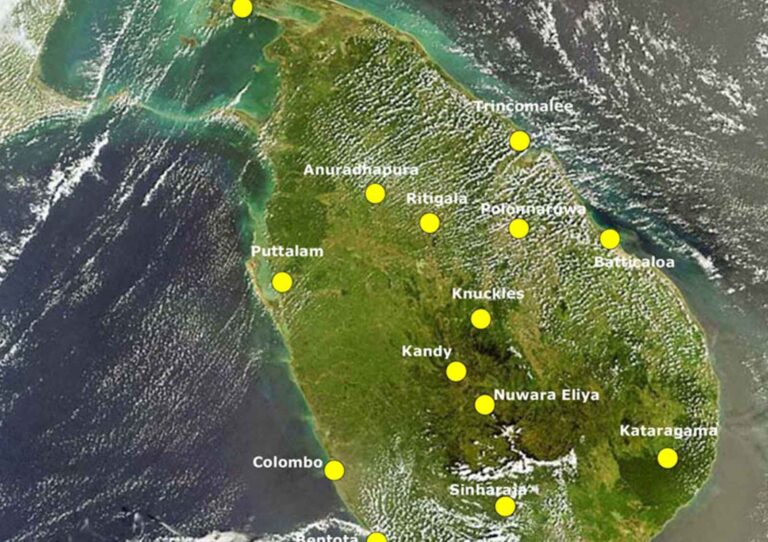
August 18, Colombo (LNW): The National Building and Research Organisation (NBRO) has issued a Level-3 (Red) landslide evacuation alert for areas in Kalutara and Ratnapura districts as intense rainfall persists.

The warning covers Ingirya and Bulathsinhala in Kalutara, and Elapatha, Eheliyagoda, and Kalawana in Ratnapura.

With over 150mm of rain recorded within 24 hours, residents in these areas are advised to evacuate due to the heightened risk of landslides, rock falls, and ground subsidence.

The advisory urges immediate action should heavy rains continue.

Heavy rain, strong winds expected in several provinces: Rough seas pose threat along key coastal areas

0

August 18, Colombo (LNW): Showers or thundershowers will occur at times in Western, Sabaragamuwa and North-western provinces and in Kandy, Nuwara-Eliya, Galle and Matara districts, the Department of Meteorology said in its daily weather forecast today (18).

Fairly heavy showers above 75 mm are likely at some places in Western and Sabaragamuwa provinces and in Galle and Matara districts.

Showers or thundershowers will occur at several places elsewhere over the island during the evening or night.

Fairly strong winds about (30-40) kmph can be expected at times over Western slopes of the central hills and in Northern, North-central and North-western provinces.

General public is kindly requested to take adequate precautions to minimise damages caused by temporary localised strong winds and lightning during thundershowers.

Marine Weather:

Condition of Rain:
Showers or thundershowers will occur at times in the sea areas off the coast extending from Puttalam to Hambantota via Colombo and Galle. Showers or thundershowers will occur at a few places in the other sea areas around the island during the afternoon or night.
Winds:
Winds will be south-westerly and wind speed will be (30-40) kmph. Wind speed can increase up to (5560) kmph at times in the sea areas off the coasts extending from Kankasanthurai to Puttalam via Mannar and from Hambantota to Pottuvil. Wind speed can increase up to 50 kmph at times in the sea areas off the coasts extending from Puttalam to Hambantota via Colombo and Galle.
State of Sea:
The sea areas off the coasts extending from Kankasanthurai to Puttalam via Mannar and from Hambantota to Pottuvil will be rough at times. The sea areas off the coasts extending from Puttalam to Hambantota via Colombo and Galle may be fairly rough at times. Temporarily strong gusty winds and very rough seas can be expected during thundershowers.

Red Alert Rain Warning Issued for 7 Districts

0

August 17, Colombo (LNW): In view of the ongoing heavy rains, steps have been taken to issue pre-slide warnings for three districts. Accordingly, landslide warnings have been issued for Neluwa, Elpitiya, Nagoda, Yakkalamulla in Galle district, Horana, Matugama in Kalutara district and Pitabeddara in Matara district.

Sri Lanka eyes Indonesia for batik industry enhancement  

0

Sri Lanka, batik industry has been given an elevated status in collaboration with Indonesia Fostering Cultural and Economic collaboration between the two countries. .

In addition to these focal points, the meeting also highlighted the thriving collaboration between Sri Lanka and Indonesia. Both nations expressed keenness to explore avenues for increased trade, particularly in industries like batik production. 

Notably, the trade volume between the two countries has seen a remarkable 6% increase in recent years, growing from 49 million to 475 million in 2021.

It was revealed that Indonesia’s diverse economy, supported by sectors such as manufacturing, agriculture, and services, presents numerous opportunities for partnership. 

Trade, tourism, and the exploration of new avenues for cooperation are central to the objectives of strengthening the relationship between Sri Lanka and Indonesia, encompassing both economic and cultural aspects.

Batik originated in Indonesia and was introduced to Sri Lanka by the Dutch. But the batik industry in Sri Lanka has developed into a unique form of textile art exclusive to the country.

The Indonesian Embassy in Colombo, in partnership with the Professional Business Coaches Association (PBCA), recently organized an engaging Batik Workshop at the BMICH, featuring the expertise of two distinguished Batik artists from the Museum Tekstil Indonesia. 

These artists shared their knowledge and skills with 42 Sri Lankan Batik artists, making the event a notable exchange of cultural and artistic traditions.

In addition to the Batik artists, the workshop was attended by representatives from the Ministry of Industries and prominent Batik entrepreneurs from Sri Lanka.

 Indonesian Ambassador Dewi Gustina Tobing expressed her deep appreciation to all the attendees and emphasized the dual significance of Batik as both a cultural heritage and an economic opportunity. 

She highlighted how Batik has bolstered Indonesia’s cultural influence and economic growth, suggesting that similar opportunities could be harnessed within Sri Lanka’s Batik industry.

Participants in the workshop enthusiastically engaged in the Batik-making process, crafting their own pieces and gaining a deeper appreciation for this intricate art form. 

To complement the cultural immersion, the Indonesian Embassy also provided a variety of traditional Indonesian snacks, allowing participants to savor the rich culinary traditions of Indonesia. 

This initiative was part of the Embassy’s ongoing efforts to promote Indonesian culture in Sri Lanka.

Beyond the artistic and cultural aspects, the event underscored the thriving collaboration between Sri Lanka and Indonesia, with both nations expressing a strong interest in exploring new avenues for trade, particularly in Batik production..

 The diverse Indonesian economy, with its robust manufacturing, agriculture, and service sectors, offers numerous opportunities for partnership.

Sri Lanka’s headline inflation expected to remain below target – CBSL

0

August 17, Colombo (LNW):  The Central Bank of Sri Lanka (CBSL) predicts that the headline inflation is expected to be below the target in the forthcoming months, and reach the 5% target with appropriate policies in the medium term.

In its monetary policy report for the month of August 2024, the CBSL has highlighted that the economic growth recovery towards the potential level is expected to continue over the medium term with appropriate policies.

Furthermore, it mentioned that the Central Bank of Sri Lanka conducts monetary policy under a Flexible Inflation Targeting (FIT) framework, aimed at maintaining inflation at the target rate of 5%, while supporting economic growth to reach its potential.

The Economic Research Department of the CBSL released its second Monetary Policy Report for 2024 in keeping with the requirements of the Central Bank of Sri Lanka Act, No. 16 of 2023, based on information that the Monetary Policy Board of the Central Bank considered in formulating the monetary policy decision during the July 2024 review.

The Monetary Policy Report provides forward-looking insights about the economy, particularly in terms of inflation and economic growth. The Report also aims to provide an assessment of risks to the projections on inflation and economic growth, considering the ongoing and expected developments on domestic and global fronts, the CBSL said.

Following a temporary rise in early 2024, headline inflation declined notably thereafter due to reductions in energy prices, a slowdown in food inflation, and subdued demand conditions.

Headline inflation is expected to remain well below the targeted level of 5 per cent (yearon-year) in the near term, and gradually stabilise around the targeted level over the medium term. 

Economic activity continued to rebound in 2024, supported by the gradual restoration of macroeconomic stability, low interest rates and improving investor confidence. 

The Sri Lankan economy is expected to continue its growth momentum in 2024, gradually moving towards its potential level over the medium term.

Sri Lanka’s Dried Fish Industry undergoes Modernization to Boost Competitiveness 

0

The Sri Lankan Government is implementing proactive measures to revitalize the dried fish industry by introducing online portals to streamline the registration process, thereby reducing costs and bureaucracy. 

Simplified guides in Sinhala and Tamil are being developed to help SMEs navigate legal formalities, food hygiene standards, and Good Manufacturing Practices (GMP). T

o address the skill gap, companies are enhancing their onboarding processes and providing regular training to improve technical and interpersonal skills, crucial for adopting modern technologies and increasing productivity.

Additionally, the Government and industry stakeholders are intensifying extension and marketing services to expand the market for dried fish products. 

By offering SMEs expert guidance on entering new markets and complying with industry standards, these efforts aim to overcome challenges such as limited market growth and the lack of comprehensive marketing strategies. 

Trade fairs and exhibitions are also being leveraged to showcase Sri Lanka’s dried fish products and connect with potential international buyers.

The industry is undergoing a transformation driven by a collective vision of modernization, market expansion, skill development, and sustainability.

 These efforts are expected to significantly boost the economy and ensure that Sri Lanka’s dried fish products meet high-quality standards, appealing to a global market. With continued Government support and private sector innovation, the future of Sri Lanka’s dried fish industry appears promising, poised for substantial growth both domestically and internationally.

The dried fish industry in Sri Lanka, a significant segment of the local economy, is undergoing a transformation aimed at overcoming long-standing challenges and enhancing its global competitiveness.

 This sector, traditionally plagued by bureaucratic hurdles, outdated practices, and limited market access, is seeing concerted efforts from various stakeholders, including Government entities, industry associations, and private companies, to streamline processes, modernise operations, and expand market reach.

The dried fish sector has faced a multitude of difficulties, ranging from cumbersome registration and permitting processes to inadequate training and financial issues. 

Historically, the process of formalising businesses within this industry has been burdened by complex legal procedures and slow dispute resolution mechanisms. These challenges have not only hampered the growth of the industry but have also made it difficult for small and medium-sized enterprises (SMEs) to thrive.

Furthermore, the industry has suffered from a lack of standardised vocational training programs, resulting in poor skill levels among workers. The absence of structured onboarding processes and regular training has exacerbated this issue, limiting the sector’s ability to innovate and maintain high-quality standards.

Sri Lanka’s Dried Fish Industry undergoes Modernization to Boost Competitiveness 

The Sri Lankan Government is implementing proactive measures to revitalize the dried fish industry by introducing online portals to streamline the registration process, thereby reducing costs and bureaucracy. 

Simplified guides in Sinhala and Tamil are being developed to help SMEs navigate legal formalities, food hygiene standards, and Good Manufacturing Practices (GMP). T

o address the skill gap, companies are enhancing their onboarding processes and providing regular training to improve technical and interpersonal skills, crucial for adopting modern technologies and increasing productivity.

Additionally, the Government and industry stakeholders are intensifying extension and marketing services to expand the market for dried fish products. 

By offering SMEs expert guidance on entering new markets and complying with industry standards, these efforts aim to overcome challenges such as limited market growth and the lack of comprehensive marketing strategies. 

Trade fairs and exhibitions are also being leveraged to showcase Sri Lanka’s dried fish products and connect with potential international buyers.

The industry is undergoing a transformation driven by a collective vision of modernization, market expansion, skill development, and sustainability.

 These efforts are expected to significantly boost the economy and ensure that Sri Lanka’s dried fish products meet high-quality standards, appealing to a global market. With continued Government support and private sector innovation, the future of Sri Lanka’s dried fish industry appears promising, poised for substantial growth both domestically and internationally.

The dried fish industry in Sri Lanka, a significant segment of the local economy, is undergoing a transformation aimed at overcoming long-standing challenges and enhancing its global competitiveness.

 This sector, traditionally plagued by bureaucratic hurdles, outdated practices, and limited market access, is seeing concerted efforts from various stakeholders, including Government entities, industry associations, and private companies, to streamline processes, modernise operations, and expand market reach.

The dried fish sector has faced a multitude of difficulties, ranging from cumbersome registration and permitting processes to inadequate training and financial issues. 

Historically, the process of formalising businesses within this industry has been burdened by complex legal procedures and slow dispute resolution mechanisms. These challenges have not only hampered the growth of the industry but have also made it difficult for small and medium-sized enterprises (SMEs) to thrive.

Furthermore, the industry has suffered from a lack of standardised vocational training programs, resulting in poor skill levels among workers. The absence of structured onboarding processes and regular training has exacerbated this issue, limiting the sector’s ability to innovate and maintain high-quality standards.

Government Eases Export Earnings Repatriation Rules amidst Forex Hoarding

0

The Sri Lankan government has decided to relax the rules governing the repatriation of export earnings, responding to requests from exporters, their representatives, and various government agencies. 

This decision comes despite the ongoing issue of some exporters stashing foreign currency in foreign banks, a practice that has been depriving the country of much-needed foreign exchange since 2009.

These fraudulent actions have been facilitated by the lack of strict enforcement of the Foreign Exchange Control Law, previously known as the Exchange Control Act, which mandates that export earnings be returned to Sri Lanka within six months. 

The new regulations, titled ‘Rules 01 of 2024,’ were published in the Extraordinary Gazette on 1 July 2024 and are set to be enacted under the Sri Lanka Central Bank Act No. 16 of 2023.

These updated rules aim to provide greater flexibility for exporters in managing their earnings amidst the current economic challenges.

 The proposal, presented by President Ranil Wickremesinghe in his capacity as the Finance Minister, received approval from the Cabinet of Ministers and is now awaiting final approval from Parliament.

The issue of exporters hoarding foreign exchange overseas has resulted in significant losses for Sri Lanka. The Central Bank has revealed that nearly $3 billion in export earnings were hoarded abroad last year alone. A report by an official think tank indicates that Sri Lanka has lost approximately $53.5 billion over the past 12 years due to this practice.

In response, the Central Bank’s revenue monitoring unit has been actively tracking export conversion and dollar earnings using a mechanism developed in collaboration with customs since July 2022. However, data collection has been challenging, with only 57 percent of exporters responding to a questionnaire sent by the Central Bank. This has made it difficult to assess the full extent of the issue.

Some traders have been found to manipulate the declared value of imports and exports, either overpricing or underpricing goods to transfer money overseas. The Central Bank issued regulations in February 2021 to oversee export earnings repatriation, requiring all licensed banks to submit reports to the Director of the Foreign Exchange Department.

Despite these efforts, the total merchandise export value is still based on statistical values submitted to Customs, which may not accurately reflect actual earnings. 

The Central Bank emphasizes the need for a shipment-wise export remittance monitoring system, developed by the ICT Division of Customs, to address these discrepancies. 

Sri Lanka Customs, governed by a 150-year-old ordinance, faces challenges in dealing with free trade agreements and export valuation, leading to issues such as the undervaluation or overvaluation of commodities like tea and products under the India–Sri Lanka Free Trade Agreement.

Sri Lanka Original Narrative Summary: 17/08

0
  1. President Ranil Wickremesinghe emphasized that the “Puluwan Sri Lanka” agreement, signed by 34 political parties and alliances, was not intended to create a new political party but to unite the nation and build a brighter future for the country and its people.
    He noted that those who signed this agreement are not individuals who shied away from the economic challenges, but rather, they are people who embraced these challenges, believing in the potential to rebuild the country.
  2. Sri Lanka Muslim Congress (SLMC) Batticaloa District MP Ali Zahir Moulana has met with President Ranil Wickremesinghe and assured his support at the upcoming Presidential Election.
  3. Former President Maithripala Sirisena states that he has not decided to support any of the candidates who are contesting the 2024 Presidential Election. Issuing a statement, Sirisena also refuted certain media reports and the statements made by some politicians of both the ruling party and the opposition regarding him.
  4. It has been reported that strict disciplinary action has been decided against members of the Sri Lanka Podujana Peramuna (SLPP) who are supporting Ranil Wickramasinghe in the 2024 presidential election.
  5. The Central Bank of Sri Lanka (CBSL) predicts that the headline inflation is expected to be below the target in the forthcoming months, and reach the 5% target with appropriate policies in the medium term.
  6. Justice Sobhitha Rajakaruna has been appointed as the Acting President of the Court of Appeal, the President’s Media Division (PMD) said. Accordingly, Justice Rajakaruna took oath as the Acting President of the Court of Appeal before President Ranil Wickremesinghe at the President’s Office.
  7. The passenger ferry service between Nagapattinam in India and Kankesanthurai (KKS) near Jaffna in the Northern Province of Sri Lanka, which was earlier launched in October 2023, has resumed on Friday (August 16) after repeated delays.
  8. In view of the ongoing heavy rains, steps have been taken to issue pre-slide warnings for three districts. Accordingly, landslide warnings have been issued for Neluwa, Elpitiya, Nagoda, Yakkalamulla in Galle district, Horana, Matugama in Kalutara district and Pitabeddara in Matara district.
  9. Sri Lanka’s Vishmi Gunaratne has become the first Sri Lanka Women’s player other than Chamari Athapaththu to score an ODI Century in the 1st ODI against Ireland being played in Belfast.
  10. Sri Lankan cricketer Niroshan Dickwella has been suspended from participating in all forms of cricket with immediate effect due to an alleged anti-doping violation, Sri Lanka Cricket (SLC) confirmed. Dickwella found guilty of a doping violation during the recent Lanka Premiere League (LPL).

EU Deploys Election Observation Mission to Sri Lanka for 2024 Presidential Election

0

August 17, Colombo (LNW): The European Union (EU) has decided to deploy an Election Observation Mission (EOM) to Sri Lanka for the upcoming Presidential Election on September 21, following an invitation from the Election Commission of Sri Lanka. This marks the EU’s seventh EOM in the country, reflecting its ongoing commitment to supporting Sri Lanka’s electoral processes.

Josep Borrell, High Representative of the Union for Foreign Affairs and Security Policy and Vice-President of the European Commission, appointed Nacho Sánchez Amor, a Member of the European Parliament, as the Chief Observer of this mission.

Borrell emphasized that the deployment of the EOM underscores the EU’s dedication to ensuring credible, transparent, and peaceful elections in Sri Lanka, in line with their longstanding partnership. Chief Observer Nacho Sánchez Amor expressed his honor in leading the mission, highlighting the election’s significance in Sri Lanka’s ongoing recovery and reform efforts following the 2022 political and economic crisis.

Palestinian Ambassador Bids Farewell to Speaker Mahinda Yapa Abeywardana

0

August 17, Colombo (LNW): Palestinian Ambassador Dr. Zuhair M. H. Zaid paid a farewell visit to Sri Lanka’s Speaker of Parliament, Mahinda Yapa Abeywardana, on Wednesday, August 7th. The Secretary General of Parliament, Kushani Rohanadeera, was also in attendance.

During their meeting, Speaker Abeywardena inquired about the current situation in Palestine, to which Dr. Zaid provided an update on the political, social, and humanitarian challenges the region is facing. The Ambassador expressed his heartfelt gratitude to the Speaker and the people of Sri Lanka for their steadfast support during difficult times in Palestine. He also thanked Sri Lanka for the hospitality he received during his tenure and highlighted the historical ties between the two nations.

Dr. Zaid emphasized that the potential for increased private investments could be realized through the conduct of democratic elections. Speaker Abeywardena commended Dr. Zaid for his significant contributions to strengthening the diplomatic and cultural ties between Sri Lanka and Palestine during his time as Ambassador.