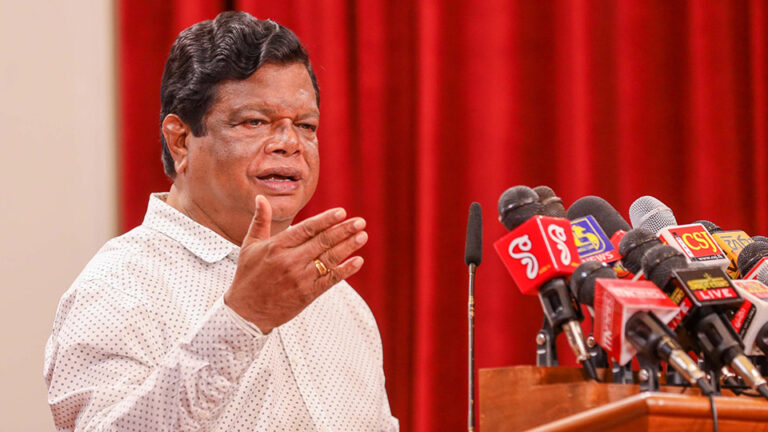
September 11, Colombo (LNW): The Cabinet of Ministers has approved obtaining loan facilities from the Asian Development Bank (ADB) to support Sri Lanka’s financial sector stability and reform programme, Cabinet Spokesman and Mass Media Minister Dr. Bandula Gunawardhana announced.
Speaking at the weekly Cabinet media conference, Minister Gunawardhana stated that the approval was granted at the Cabinet meeting held on September 25, 2023, to secure a loan of US$ 400 million on a policy basis under two sub-programmes aimed at stabilizing and reforming the financial sector in Sri Lanka. Of this amount, US$ 200 million has been allocated for the first sub-programme, effective December 2023.
To obtain the remaining US$ 200 million under the second sub-programme, 12 pre-policy activities need to be completed. Minister Gunawardhana noted that most of these activities have already been completed or are in the final stages of completion.
September 11, Colombo (LNW): In a significant turnaround from a severe economic crisis, Sri Lanka has made strides in stabilizing its economy under the leadership of President Ranil Wickremasinghe. Inflation, which once soared to 70%, has now been reduced to single digits, signaling a positive shift.
The country’s borrowing costs have fallen, economic growth has exceeded expectations, and debt restructuring efforts have unlocked additional funding from international lenders like the IMF.
Minister of Transport, Highways, and Mass Media, Dr. Bandula Gunawardena, credited much of this progress to the new Economic Transformation Bill, passed unanimously in parliament. This law sets development targets and aims to prevent future economic crises by promoting national growth through public and private initiatives.
The legislation focuses on modernizing key sectors, such as agriculture, while pushing for Sri Lanka to become a competitive, export-oriented digital economy.
The bill introduces a national policy framework, supported by new institutions like the Economic Commission of Sri Lanka, Investment Zones, and the National Productivity Commission.
These bodies aim to implement structural changes to enhance the country’s economic competitiveness. Additionally, outdated laws, such as the Board of Investment Law of 1978, have been repealed to make way for these reforms.
Key goals outlined in the bill include achieving net-zero emissions by 2050, increasing female labor force participation to 50% by 2040, and maintaining a GDP growth rate of 5% annually until 2027, with an 8% growth target for the following 15 years. The government also plans to boost exports to 25% of GDP by 2025 and 60% by 2040.
Other objectives include lowering the unemployment rate to below 5% by 2025 and reducing the central government’s financing needs to less than 13% of GDP by 2032. The plan further targets increasing net Foreign Direct Investment (FDI) to 5% of GDP by 2030, with a significant portion of GDP driven by exports.
Additionally, new financial laws, such as the Public Financial Management Act and the Public Debt Management Act, are part of ongoing reforms aimed at increasing transparency and accountability in Sri Lanka’s fiscal policies. These reforms align with the International Monetary Fund (IMF) program to improve the country’s financial accountability and stability.
Dr. Gunawardena emphasized that these legislative changes are crucial for Sri Lanka’s long-term success and are designed to remain effective even under future administrations. He further stressed that any political party seeking power must clarify its stance on these reforms.
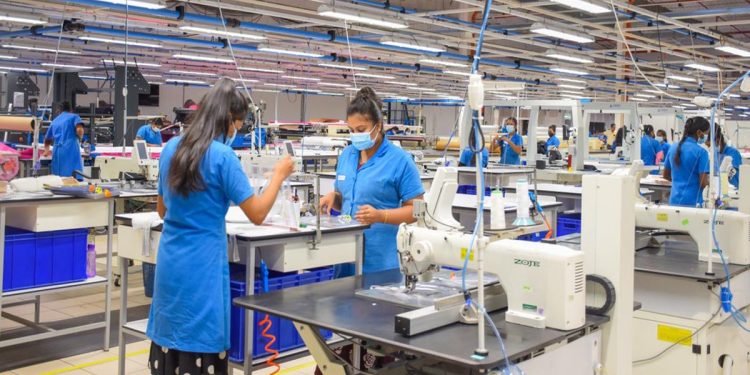
September 11, Colombo (LNW): The Joint Apparel Association Forum (JAAF) yesterday called on the Government to urgently resolve ongoing challenges related to the issuance of short-term business visas, which have been halted since 2 August.
The JAAF noted that all official foreign business visitors, including buyers, machinery suppliers, and technical service providers, have faced significant hurdles entering Sri Lanka due to the lack of a proper business visa issuance system.
It said while tourist visas are available on arrival, there is currently no facility to issue business visas through this channel. Foreigners arriving for short-term business visits are not eligible for tourist visas, leaving a critical gap in the country’s ability to accommodate overseas business visitors.
The JAAF points out that these visitors are essential to the nation’s economic recovery, particularly in sectors like apparel and manufacturing, where international engagement is vital for exports and business expansion.
Adding to the confusion, the immigration website remains outdated, offering no helpful guidance for business visitors seeking entry to Sri Lanka. This lack of clarity is creating further uncertainty, impacting the flow of international business.
Additionally, while there have been discussions around visa-free entry for 35 countries, the implementation of this policy has been delayed, further complicating the situation.
“Sri Lankan enterprises are at a critical juncture in their ongoing recovery efforts. At such a moment, it is incumbent on the Government to take all possible measures to streamline the flow of not just goods, but also personnel.
Business travellers often have specific requirements, including the need to carry samples, documents, and other material while travelling.
For the benefit of Sri Lanka’s business and export community, swift action is needed to implement a solution that facilitates international business travel and restores confidence in Sri Lanka as a business-friendly destination,” JAAF Secretary General Yohan Lawrence said.
The JAAF is urging the Government to authorise Sri Lankan Embassies overseas to issue short-term, single-entry business visas as an interim solution. This would ensure that genuine business visitors can legally travel to Sri Lanka on the appropriate visa, preventing further disruption to trade and industry.
Recent discussions with the Sri Lanka Tourism Development Authority (SLTDA) and the Sri Lanka Tourism Promotion Bureau (SLTPB) suggest that efforts are being made to resolve the issue.
However, no timeline has been provided, and businesses continue to experience significant delays and uncertainty
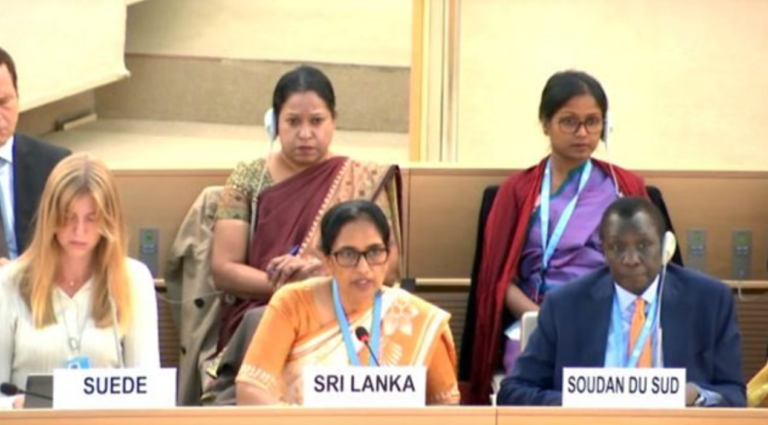
September 11, Colombo (LNW): Sri Lanka has reaffirmed its dedication to constructive engagement with the United Nations Human Rights Council (UNHRC) and various international human rights mechanisms. Himalee Arunatilaka, Sri Lanka’s Permanent Representative to the UN in Geneva, voiced strong opposition to Human Rights Council Resolution 51/1, which authorized an external evidence-gathering mechanism without Sri Lanka’s consent.
Arunatilaka highlighted the country’s ongoing economic recovery following its most severe economic crisis, pointing out significant developments such as a 5.3% economic growth in the first quarter of 2024, a strengthened currency, and a sharp drop in inflation from over 70% in September 2022 to just 1.7% by June 2024. These advancements, she noted, have brought tangible benefits to the citizens of Sri Lanka.
While acknowledging the short-term negative impacts of budgetary cuts on vulnerable populations, Arunatilaka stressed that economic stability is key to ensuring the enjoyment of economic and social rights. Welfare programs like the “Aswesuma” cash transfer initiative and the national school nutrition program are aimed at cushioning these effects.
The Gulf Cooperation Council (GCC) nations praised Sri Lanka’s ongoing engagement with international human rights mechanisms.
During the 57th session of the UNHRC, Dr. Hind bint Abdulrahman Al Muftah, Qatar’s Permanent Representative to the United Nations Office in Geneva, delivered a statement on behalf of the GCC.
The Gulf nations expressed appreciation for Sri Lanka’s efforts to promote reconciliation, accountability for human rights violations, and economic recovery.
The GCC countries welcomed Sri Lanka’s positive interaction with human rights bodies and its establishment of the Joint Ministerial Permanent Committee on Human Rights, responsible for implementing international recommendations.
They also commended the country’s efforts to provide social support to poor families and bolster food security.
The GCC urged Sri Lanka to continue its progress with legislative reforms and to foster national reconciliation through effective dialogue. They also called for continued support through technical cooperation, capacity building, and constructive dialogue to enhance reconciliation and economic prosperity.
Transitioning from a debt-driven economic crisis toward stabilization and inclusive growth involves budgetary restrictions, which cause unfortunate short-term adverse impacts on various segments of society, particularly the vulnerable, Himalee Arunatilaka said. .
This is an unavoidable consequence of the financial crisis and the stringent measures required for economic recovery—a reality not unique to Sri Lanka. Strengthening the economy is vital to the enjoyment of economic and social rights as well as the right to development.
Welfare measures, such as the *Aswesuma* cash transfer program, which will support nearly two million people in 2024, the national school nutrition program, which covers 1.6 million students, and the *Urumaya* land ownership scheme, which aims to grant freehold titles to all communities across 25 districts,mitigate the effects of fiscal austerity on vulnerable groups.
In parallel with our economic recovery, the Government continues to take steps to heal past wounds and to address the residual issues affecting civilians from all communities arising from decades of conflict.
To promote national unity and reconciliation among our diverse communities, domestic initiatives such as the Office on Missing Persons (OMP), the Office for National Unity and Reconciliation (ONUR), the Office for Overseas Sri Lankans, and the Interim Secretariat for the Truth and Reconciliation Mechanism (ISTRM) have been established.
September 11, Colombo (LNW): Nearly 14 years after the collapse of the F&G Group of companies (F&G Real Estate and F&G Property Developers) and the related downfall of Golden Key Credit Card Company, new revelations have emerged, causing further distress to the depositors and investors.
The Ceylinco conglomerate, led by Lalith Kotelawala, saw its empire crumble, leaving around 7,000 depositors, many of whom still face financial hardship. Some have even passed away during their long struggle to recover their investments.
The liquidation of F&G in 2009 left depositors grappling to reclaim over Rs. 6 billion owed to them, despite the company’s assets being valued at approximately Rs. 7 billion by 2013.
This financial debacle led depositors to file a fundamental rights petition (FR 317/2009) in the Supreme Court, seeking judicial intervention to reclaim their funds. While the court issued orders in favor of depositors, recent developments suggest that F&G’s new management has failed to comply with these directives, deepening the frustration of those affected.
A key issue involves F&G’s current management and its dealings with ZRA Holdings, the company that took over F&G under Supreme Court supervision. Instead of prioritizing the repayment of depositors,
ZRA Holdings allegedly used F&G funds to invest Rs. 200 million into an 11% stake in a hotel property in Wadduwa, initially named Ocean Queen Hotel and later rebranded as Aryana Queen.
This hotel, co-owned by a Turkish investor and a local partner, had been struggling financially and could not repay its loans from the Bank of Ceylon (BOC). As a result, BOC prepared to auction the hotel to recover its dues.
ZRA Holdings reportedly intervened by making a partial loan repayment to BOC, utilizing funds from F&G depositors. Furthermore, sources claim that ZRA Holdings overvalued the hotel at nearly Rs. 1.2 billion and overpaid for the 11% share purchase, further misusing depositor funds.
This financial maneuvering, combined with other unsubstantiated withdrawals from the NDB Bank for unspecified business purposes, has outraged depositors.
The depositors are particularly incensed because ZRA Holdings had previously provided an affidavit to the Supreme Court in March 2021, assuring that any funds invested in F&G would remain unencumbered and be used solely for reviving the company.
This recent use of depositor funds for unrelated investments contradicts that commitment and raises questions about the integrity of F&G’s current management.
The Depositors Association, representing the interests of those affected, has continuously raised concerns with F&G’s management about these questionable financial decisions. However, the management has refused to meet with depositors’ representatives or disclose details of the transactions.
The silence of two directors, previously tasked with protecting depositors’ interests, has further fueled speculation that they might be benefiting from these underhanded deals.
Depositors, many of whom lost their life savings, initially had a glimmer of hope when the Supreme Court ordered the repayment of 51% of their deposits, though without interest.
Now, with evidence of mismanagement, they are preparing to seek further intervention from the Supreme Court, accusing ZRA Holdings of siphoning off depositor funds in direct violation of court orders.
As these allegations continue to unfold, questions remain about whether those responsible will be held accountable for the financial losses imposed on thousands of innocent depositors.
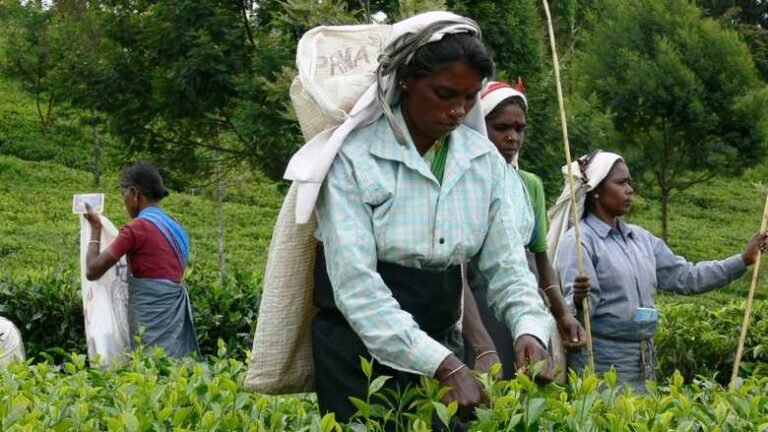
September 11, Colombo (LNW): An agreement has been reached to provide a daily minimum wage of Rs. 1,350 for plantation workers, along with an additional allowance of Rs. 50 for each extra kilogram of tea leaves plucked. The decision was made during a discussion held today (10) by the Wages Board, which included State Minister of Labour, MP Vadivel Suresh, estate owners, and plantation trade unions.
The Labor Commissioner will issue a gazette notification to implement this decision, effective immediately.
Commenting on the agreement, MP Vadivel Suresh stated, “We came to an agreement that the plantation worker should receive Rs. 1,552 per day, including EPF and ETF if they return to work.”
He emphasized that the workers should not be overburdened, adding, “That means Rs. 1,350 without EPF and ETF. Even though it is Rs. 1,350, plantation workers shouldn’t be given more work. We cannot limit the labour of the plantation worker. If they work more, they can earn more than the basic salary. We cannot limit it to Rs. 350.
September 11, Colombo (LNW): Ten individuals, including Madhushan Chandrajit, the convener of the Inter-University Student’s Federation, have been arrested for allegedly participating in a protest in front of the Colombo Fort railway station, reportedly in violation of election laws.
The protest, organized by the Inter-University Student’s Federation, was held to voice opposition to several issues, including the establishment of private universities. The protesters gathered on the main road outside the Fort railway station and attempted to advance forward.
According to a News 1st correspondent, police arrived at the scene and instructed the protesters to disperse. However, when the protesters continued to move forward, the police intervened, leading to the arrest of Madhushan Chandrajit and nine others.
September 11, Colombo (LNW): The Government of Sri Lanka has firmly rejected the latest report by the UN High Commissioner for Human Rights, accusing the Office of the High Commissioner for Human Rights (OHCHR) of exceeding its mandate by commenting on macroeconomic, financial, and budgetary issues that fall under the sovereign parliamentary purview.
Sri Lanka’s Permanent Representative to the UN, Ambassador Himalee Arunatilaka, responding to the report, emphasized that the nation has successfully stabilized its economy through prudent economic decision-making, financial oversight, and governance, a fact that has been widely recognized.
Sri Lanka reiterated its commitment to engaging with the UN, the Universal Declaration on Human Rights, and the related treaties. The Ambassador highlighted that while economic strengthening for the prosperity of all Sri Lankans remains a government priority, the country is also making progress on national unity and reconciliation through various domestic processes. These include the Office on Missing Persons (OMP), the Office for Reparations (OR), the Office for National Unity and Reconciliation (ONUR), the Office for Overseas Sri Lankans, and the Interim Secretariat for the Truth and Reconciliation Mechanism (ISTRM).
Ambassador Arunatilaka underscored the implementation of social protection measures, such as the ‘Aswesuma’ programme, to support vulnerable groups. She also expressed Sri Lanka’s disapproval of the OHCHR report, stating that it lacked balance and failed to acknowledge the atrocities committed by the LTTE during decades of conflict.
Sri Lanka strongly rejected Resolution 51/1 and the external mechanism established within the OHCHR, calling it unwarranted and counter-productive.
President Ranil Wickremesinghe has expressed his commitment to integrating Generation Z into society and empowering them to take responsibility for the country’s development. He said he believes this will enable Sri Lanka’s youth to shape the society they envision for themselves.
Opposition Leader Sajith Premadasa has accused President Ranil Wickremesinghe and JVP Leader Anura Kumara Dissanayake of forming a secret political alliance ahead of the 2024 Presidential election. He further suggested that the two leaders may have divided the presidency and premiership between them. Premadasa criticized their alleged alliance, stating that it benefits them, not the country, and urged the public not to be deceived by false promises again.
The Presidential Candidate of the National People’s Power (NPP), Anura Kumara Dissanayake says that the NPP would establish a government that truly supports the people of Sri Lanka. He also criticized the current administration and former rulers of the country for enriching themselves while putting the country in poverty.
President Ranil Wickremesinghe has removed five state ministers, including Geetha Kumarasinghe, with immediate effect, according to the President’s Media Division (PMD). The other State Ministers removed from their portfolios include Shasheendra Rajapaksa, Amith Thenuka Vidanagamage, Prasanna Ranaweera and D.V. Chanaka.
The Government of Sri Lanka has rejected the latest report on the island nation by the UN High Commissioner for Human Rights, accusing it of exceeding the OHCHR’s mandated sphere of human rights to comment on macroeconomics as well as financial and budgetary issues under sovereign parliamentary purview.
An agreement has been reached in a discussion held in the Wages Board, to provide a daily minimum wage of Rs. 1,350 for plantation workers along with an allowance of Rs. 50 for an extra kilogramme of tea leaves. State Minister of Labour, MP Vadivel Suresh, estate owners and plantation trade unions were present for the discussion.
The Commissioner General of Examinations Amith Jayasundara says that the results of the 2023 G.C.E. Ordinary Level Examination are expected to be released within this month. He further stated that they are currently conducting various checks and finalizing the result and that the results will be ready for release in about two weeks.
The Convenor of the Inter University Students’ Federation (IUSF), Madushan Chandrajith and several others were taken into police custody during a protest near the Colombo Fort Railway Station. The protest was organized against the proposed National Education Policy Framework and the establishment of private medical colleges.
The Cabinet of Ministers has granted approval for the procurement of a policy-based loan of US$ 400 million from the Asian Development Bank (ADB) through two sub-programmes for the implementation of Sri Lanka’s financial sector stability and reform programme. The first sub-programme has received US$ 200 million of the total loan amount by December 2023.
Sri Lanka triumphed over Cambodia in a thrilling penalty shootout, winning 4-2 after a 2-2 draw in regulation time during the AFC Asia Cup 2027 Qualifiers Playoff Round at Phnom Penh Olympic Stadium. Goalkeeper Sujan Perera was the hero of the night, making crucial saves in the penalty shootout to secure the victory.
September 11, Colombo (LNW): The government has announced plans to increase the Mahapola scholarship premium starting in April 2025. Speaking at a press conference at the Government Information Department, Cabinet Spokesman and Mass Media Minister Dr. Bandula Gunawardhana stated that Cabinet approval has been granted to raise the Mahapola scholarship premium to Rs. 7,500 and the bursary premium to Rs. 6,500.
The Mahapola scholarship and bursary premiums for university students have not been revised since 2015. The Cabinet of Ministers recognized the need for an increase following a joint proposal by the Ministers of Education, Trade, Commerce, and Food Security.