Home Blog Page 96

PM Highlights Structural Barriers to Women’s Leadership at World Woman Davos Agenda

0

Prime Minister Dr. Harini Amarasuriya said the exclusion of women from decision-making is structurally maintained through gendered power hierarchies, stressing that meaningful change requires transforming institutions and power structures to create environments where women can lead with confidence.

She made these remarks while addressing the World Woman Davos Agenda 2026 on January 21 at the World Woman House, held on the sidelines of the 56th Annual Meeting of the World Economic Forum in Davos-Klosters, Switzerland.

Speaking at a high-level forum themed “Women Leading the Changing Global Order,” the Prime Minister noted that although women worldwide are increasingly asserting themselves in political, economic and social spheres, their contributions remain systematically undervalued, particularly in unpaid care work, informal labour and agriculture.

Dr. Amarasuriya said women in leadership, especially in politics, often face harassment, character assassination and systemic marginalisation, which discourages participation and reinforces entrenched patriarchal structures. She emphasised that addressing these challenges is not about protection, but about enabling women to exercise leadership with autonomy, authority and confidence.

Highlighting progress in Sri Lanka, the Prime Minister said the country has made historic strides in political representation under the current inclusive government, with 20 women elected to Parliament for the first time. She said this reflects a clear shift towards more inclusive governance.

Concluding her address, Dr. Amarasuriya said leadership should go beyond occupying seats within existing systems and instead focus on restructuring those systems themselves. She reaffirmed Sri Lanka’s commitment to feminist and intersectional leadership and called on global actors to ensure women and marginalised communities are central to shaping the future global order.

COPE Seeks Power to Directly File Fraud, Corruption Complaints with CID, CIABOC

0

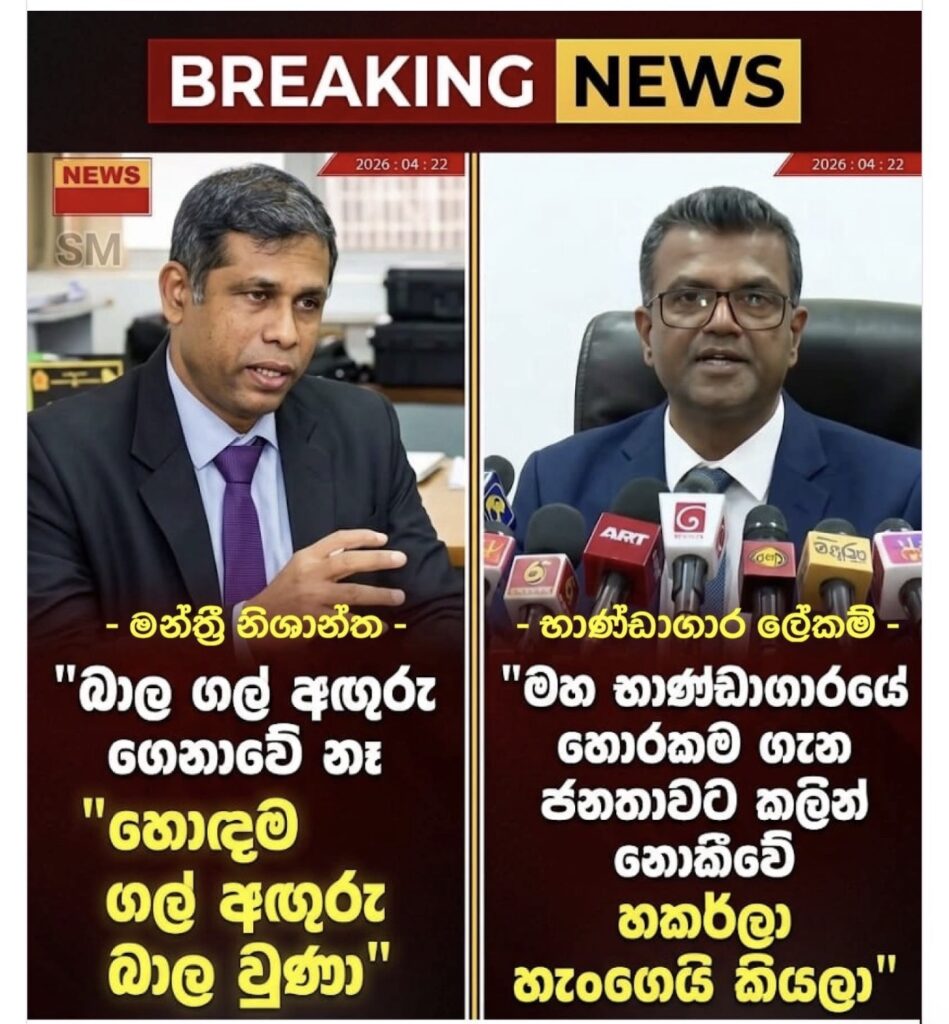
Committee on Public Enterprises (COPE) Chairman MP Dr. Nishantha Samaraweera said a proposal to empower the committee to directly file complaints with the Criminal Investigation Department (CID) and the Commission to Investigate Allegations of Bribery or Corruption (CIABOC) will be presented to Parliament shortly.

Speaking to the media in Kandy, Dr. Samaraweera explained that at present, matters related to fraud and corruption uncovered by COPE are referred to the Attorney General, a process that often causes delays as cases must be re-studied before being forwarded to investigative authorities. The proposed change aims to speed up action against corruption.

He said the proposal has already been submitted to the Standing Orders Committee, which has given its consent, and now awaits parliamentary approval. Once approved, COPE will be able to directly hand over evidence and findings to the CID or CIABOC for further investigation.

Dr. Samaraweera noted that there is a recurring pattern of abuse of power by both politicians and public officials, resulting in serious harm to the public and misuse of state funds. He stressed that enabling COPE to act directly is a crucial step toward eliminating fraud, corruption, theft and waste.

He also revealed that several necessary amendments have already been introduced to the Audit Act, with more reforms currently being prepared, expressing hope that all Members of Parliament would support these measures without opposition.

Sri Lanka Highlights Recovery, Reforms and Investment Opportunities at Davos – Deputy Minister

0

The Sri Lankan delegation led by Prime Minister Dr. Harini Amarasuriya showcased the country’s economic recovery, governance reforms and investment opportunities during a series of high-level bilateral meetings on the sidelines of the World Economic Forum in Davos, Switzerland, Finance and Planning Deputy Minister Dr. Anil Jayantha Fernando said.

Speaking to the Daily News from Davos, Dr. Fernando said the engagements were aimed at deepening international partnerships and advancing key national priorities at a crucial time for Sri Lanka’s economic progress and sustainable development. He described the meetings as highly successful, with a strong focus on economic recovery, governance reforms, investment promotion, tourism and post-cyclone rebuilding efforts.

He said the delegation emphasised high-end collaborations, partnerships and investor connections, reflecting Sri Lanka’s continued engagement with global stakeholders to support long-term economic stability.

Discussions were held with representatives of the European Union, United Nations Development Programme (UNDP), International Monetary Fund (IMF), Asian Development Bank (ADB), the President of Singapore, several UN agencies, the Swiss Asian Chamber of Commerce, the Sri Lankan business community in Switzerland, and other international organisations and private sector leaders.

Among the key engagements was a meeting with European Commissioner for International Partnerships Jozef Síkela, which focused on strengthening Sri Lanka–EU cooperation and advancing shared interests. A separate meeting with Masato Kanda, President and Chairperson of the Board of Directors of the ADB, reviewed ongoing cooperation and future collaboration, with Kanda reaffirming ADB’s readiness to support rebuilding and relief efforts following Cyclone Ditwah.

The delegation also met Hassan El Houry, Chairman of Menzies Aviation, to explore opportunities in aviation services and connectivity, and held discussions with Hadja Lahbib, European Commissioner for Preparedness and Crisis Management, during which the Prime Minister expressed appreciation for EU support following the cyclone and requested continued assistance for recovery and development.

At the Global Tourism Forum held at the Euronews Hub in Davos, the Prime Minister highlighted Sri Lanka’s tourism potential and the diverse experiences offered by the country. Meetings were also held with UNDP representatives, including Alexander De Croo, where Sri Lanka expressed gratitude for UN support in flood relief and livelihood assistance.

In addition, talks were held with Robert M. Uggla, Chairman of A.P. Moller Holding, focusing on private sector engagement and potential areas of collaboration. The delegation also met IMF Managing Director Kristalina Georgieva, who reaffirmed the IMF’s commitment to supporting Sri Lanka’s ongoing economic recovery.

Sri Lanka–China Discussions Focus on Agriculture Challenges and Environmental Protection

0

A high-level discussion on addressing challenges in Sri Lanka’s agriculture sector and related environmental concerns was held this morning (22) at the Presidential Secretariat, under the patronage of Secretary to the President Dr. Nandika Sanath Kumanayake.

According to the President’s Media Division (PMD), the meeting was conducted in line with the Memorandum of Understanding (MoU) on Enhancing China–Sri Lanka Agricultural Productivity and focused on the joint implementation of programmes to resolve key issues facing the country’s agriculture sector while improving overall productivity.

The discussion explored the potential use of Chinese technology and tools to tackle agricultural challenges and associated environmental issues. Attention was also given to measures to minimise crop damage caused by wild animals.

In addition, participants discussed possible assistance from China for the cleaning and restoration of the Beira Lake, as part of broader environmental rehabilitation efforts.

Those who took part in the discussion included Senior Lecturer of the Faculty of Agriculture and Plantation Management at Wayamba University of Sri Lanka, Vishvajith Kandegama; Professor Zhang Guozhu of Guizhou University; Cao Xuan and Wei Ping from the Department of Commerce and Management of Hubei Province, along with several other representatives.

WEATHER FORECAST FOR 23 JANUARY 2026

0

Showers will occur at times in Northern, North-central, Eastern provinces and in Matale and Nuwara-Eliya districts. Fairly Heavy falls above 50 mm are likely at some places in Northern, North-central provinces and in Trincomalee districts.

Several spells of showers will occur in Uva and Northwestern provinces.

Showers or thundershowers may occur at a few places elsewhere during evening or night.

Misty conditions can be expected at some places in Western, Sabaragamuwa, Central, North-western, and Uva provinces and in Galle and Matara districts during the early hours of the morning.

New Port City Laws aim to Boost Oversight towards Economic Growth

0


By:Staff Writer

January 22, Colombo (LNW): Sri Lanka’s Parliament took a pivotal step this month by endorsing the Colombo Port City Economic Commission (Amendment) Act, No. 01 of 2026, signaling fresh legislative momentum to tighten oversight over offshore banking and strengthen tax compliance within the Colombo Port City Special Economic Zone.

Speaker Dr. Jagath Wickramaratne confirmed the certificate endorsement on January 21, ending weeks of political debate on the amendment bill originally introduced on December 2, 2025, and passed on January 1, 2026. The revised legal framework grants the Central Bank of Sri Lanka (CBSL) enhanced regulatory authority over offshore banking, aligning the Port City with global financial standards and ostensibly scaffolding investor confidence under internationally accepted norms.

The amendment arrives at a delicate juncture for Sri Lanka’s economy. According to multiple international institutions, the island nation has been navigating a recovery from the deep crisis of 2022, recording notable GDP growth including a 5.4% expansion in Q3 2025 and showing resilience across manufacturing and services sectors.

However projections for 2026 show moderating growth, with Standard Chartered forecasting roughly 3.5% GDP expansion compared with stronger performance in 2025 a reminder that structural reforms must be sustained. The IMF’s Extended Fund Facility data also highlights that Sri Lanka’s growth will continue at a modest pace, inflation will remain in check, and national savings will stabilise but risks stemming from fiscal constraints and external demand shocks persist.

Economic experts have been vocal about the Port City’s potential and pitfalls. “Regulatory clarity and strong oversight are key if the Port City is to attract high-quality foreign direct investment rather than merely serving as a tax haven.”

 He stresses that oversight alone is insufficient without broader reforms in transparency and corporate governance.

MP Harsha de Silva defended the amendment:“Enhancing the Central Bank’s supervisory powers ensures fiscal discipline and protects our financial system’s integrity  essential for expanding Sri Lanka’s role as a global financial hub.”

Officials say that these changes aim to bridge gaps in tax compliance, clarify criteria for “Businesses of Strategic Importance,” and signal to investors that Sri Lanka is committed to global norms rather than unfettered tax giveaways.

However, prior attempts at lax tax incentives drew IMF warnings, which recommended targeted business environment improvements not blanket tax holidays to ensure long-term fiscal sustainability.

With foreign exchange reserves climbing toward projected year-end levels around USD 7 billion and inflation kept under control, Sri Lanka’s macroeconomic backdrop has strengthened, but only moderately. Analysts note that developing Port City into a legitimate financial core could help diversify the economy beyond tourism, remittances and agriculture, potentially boosting exports of services and financial products.

Still, much will depend on how Singapore, Dubai, and other regional financial centers react, and whether Sri Lanka can actually convert legislative reforms into meaningful capital flows and jobs. As one senior economist put it“Legislation is step one; execution, credibility, and sustained policy consistency are everything.”

Digital Ambition Meets Reality in Sri Lanka’s Policy Push

0

By:Staff Writer

January 22, Colombo (LNW): Sri Lanka’s renewed digital transformation drive has gathered momentum, marked by high-level meetings, international partnerships, and a flurry of project announcements. From advanced research collaborations to cashless transport systems and digital classrooms, the government is presenting a vision of a technologically empowered economy. Yet beneath the optimistic narrative lies a critical question: does the state possess the institutional capacity, technical depth, and coordination needed to deliver on these promises?

At the heart of the government’s strategy is its effort to position Sri Lanka as a regional technology hub. A recent high-level discussion at the Parliament Complex involving Finland’s University of Oulu and India’s IIT Madras highlights this ambition. 

The proposed establishment of a technology research and development institute, alongside aspirations to engage in cutting-edge fields such as 6G communications, signals a desire to leapfrog into future technologies. 

However, Sri Lanka’s past struggles in sustaining research ecosystems raise concerns. Without long-term funding models, skilled human capital retention, and robust governance frameworks, such institutions risk becoming symbolic rather than transformative.

Parallel to research ambitions is the digitisation of everyday public services. The rollout of card-based bus fare payments in the Uva Province is being promoted as a milestone in modernising transport. 

While bus operators have reportedly agreed to implement the system province-wide, similar initiatives in the past have faced delays due to weak enforcement, uneven infrastructure, and resistance from informal operators. Scaling such systems nationally will require more than pilot projects it will demand regulatory consistency, cybersecurity safeguards, and public trust in digital transactions.

The launch of Sri Lanka Expo 2026 adds another layer to the digital push. Marketed as a gateway to global markets, the exhibition aims to showcase the country’s export, manufacturing, and innovation potential. The unveiling of a dedicated website signals a digital-first approach to investment promotion. However, analysts caution that digital platforms alone cannot compensate for structural export challenges, including logistics inefficiencies, policy uncertainty, and limited value-added production.

Education sector digitisation further reflects the government’s multi-pronged approach. Plans to distribute computers and smart boards to schools through foreign grant assistance could help bridge the digital divide. Yet hardware-focused interventions have previously faltered due to inadequate teacher training, maintenance gaps, and uneven connectivity across rural regions.

Taken together, the initiatives suggest a coordinated policy intent rather than isolated actions. Still, intent does not guarantee impact. The real test of Sri Lanka’s digital transformation will lie in execution how effectively ministries collaborate, how transparently projects are monitored, and whether digital reforms translate into measurable productivity gains. Without addressing these structural weaknesses, the digital push risks becoming a collection of announcements rather than a genuine economic reset.

Ports Drive Growth to gain sustained economic advantage

0

By:Staff Writer

January 22, Colombo (LNW): Sri Lanka’s ports are emerging as critical pillars of the national economy, with the Colombo Port recording record-breaking container volumes and Hambantota making notable gains in maritime trade. Yet as regional competition intensifies, the country’s ability to translate port growth into sustained economic advantage is increasingly dependent on policy reforms, technological upgrades, and strategic investment areas where the country has historically lagged.

The Central Bank of Sri Lanka (CBSL) notes that while Colombo’s port expansion is significant, geography alone can no longer secure its transshipment dominance. Competing ports in South Asia and the Middle East have achieved rapid growth through focused investment, regulatory reform, and digital transformation. This has placed Sri Lanka in a position where it must actively defend its hub status rather than rely on historical advantage.

The CBSL’s report highlights the port sector’s strong performance in 2024 and 2025. Container throughput in the first ten months of 2025 reached 6.92 million TEUs, with transshipment volumes accounting for 5.52 million TEUs.

This growth reflects not only regional trade dynamics but also domestic economic activity. However, the report also reveals that congestion and capacity constraints have been recurring challenges. In 2024, a surge in traffic following shipping route changes away from the Red Sea led to severe congestion, underscoring the vulnerability of port operations to external shocks.

The introduction of the Colombo West International Terminal (CWIT) in February 2025 provided relief, supporting a rebound in ship arrivals. Yet the CBSL warns that operational efficiency cannot be solved by terminals alone.

Modernisation, automation, and digitalisation are essential to improve turnaround times, reduce bottlenecks, and enhance reliability factors that directly influence shipping lines’ choice of hub.

In addition to Colombo, Hambantota Port has gained momentum, starting container handling operations in 2024 and achieving notable growth through 2025. Vehicle handling has also improved following the relaxation of import restrictions. This diversification is significant, as it reduces dependence on a single port and strengthens Sri Lanka’s maritime trade infrastructure.

However, the CBSL emphasises that the broader economic impact of ports depends on multimodal connectivity and value-added logistics. For ports to contribute meaningfully to long-term growth, they must be integrated with road, rail, and warehousing networks, while also offering advanced logistics services. This requires strategic planning and coordination across government agencies.

Ultimately, Sri Lanka’s port performance is a critical economic asset, but the country must adapt to remain competitive. The planned completion of the Colombo East Container Terminal and CWIT by 2026 will increase capacity to 15 million TEUs, but the real challenge lies in ensuring that growth translates into efficiency, resilience, and sustainable economic development.

If Sri Lanka can align infrastructure expansion with digital transformation and private sector expertise, ports could become a major engine of growth. If not, the nation may see its maritime advantage erode as regional rivals accelerate.

Sustainability and Compliance Redefine Sri Lanka’s Apparel Export Future

0

By:Staff Writer

January 22, Colombo (LNW): Sri Lanka’s apparel sector is navigating a decisive moment as global markets demand stronger proof of ethical production, transparent supply chains, and environmental responsibility. Industry leaders say the country’s exporters are responding by reinforcing their commitment to internationally recognised human rights and sustainability standards, positioning apparel as a strategic pillar of national exports rather than a low-cost manufacturing base.

According to industry representatives, European brands in particular are tightening supply chain due diligence requirements, making compliance with social and labour standards non-negotiable. Sri Lankan manufacturers, backed by long-standing certification frameworks and industry collaboration, believe they are well placed to meet these expectations and retain their competitive edge.

This message was reinforced at a recent forum in Colombo that brought together local manufacturers, regulators, certification bodies, and global sustainability experts. Speakers emphasised that responsible production is no longer driven only by ethical considerations, but by hard commercial realities. Consumers, investors, and regulators are increasingly aligned in demanding assurance that garments are produced under fair labour conditions with full transparency.

Worldwide Responsible Accredited Production (WRAP), one of the world’s leading social compliance certification bodies, highlighted Sri Lanka’s early adoption of ethical manufacturing practices. The country received its first WRAP certification more than two decades ago, a move that helped establish its reputation as a responsible sourcing destination at a time when global scrutiny was still limited.

Industry leaders stressed that this early start must now be translated into a data-driven advantage. As buyers demand real-time visibility into supply chains, exporters must demonstrate traceability from raw materials to finished garments. Digital platforms that integrate social audit data, factory compliance records, and sustainability metrics are becoming central to buyer decisions.

The Joint Apparel Association Forum (JAAF) noted that both the United States and the European Union are moving toward stricter regulatory frameworks on responsible sourcing. These changes mean exporters can no longer treat sustainability as an optional value addition. Instead, it must be embedded into everyday business decisions, from procurement and production planning to workforce management.

Participants at the forum agreed that Sri Lanka’s apparel industry has an opportunity to differentiate itself not on price alone, but on trust, transparency, and compliance. However, maintaining this position will require continued investment in technology, certification, and skills development, particularly in data management and reporting.

As global regulations continue to evolve, the sector’s ability to adapt quickly could determine its long-term resilience. For Sri Lanka’s apparel exporters, sustainability is no longer just about meeting standards it is about safeguarding market access and ensuring the industry’s relevance in an increasingly regulated global economy.

Record Drug Seizures Mark Major Escalation in Law Enforcement Efforts

0

January 22, Colombo (LNW): Sri Lankan law enforcement agencies recorded their largest-ever haul of illicit drugs in 2025, reflecting a sharp intensification of anti-narcotics operations, according to Police Media Spokesperson Assistant Superintendent of Police F. U. Wootler.

Speaking at a special media briefing held at the Government Information Department, ASP Wootler outlined progress under the “Nation United – National Drive Programme,” highlighting significant gains made in disrupting drug trafficking networks across the country.

He revealed that in 2024, police confiscated a combined total of 10,871 kilograms of illegal substances, including heroin, cannabis, crystal methamphetamine, hashish and cocaine. The following year, seizures surged dramatically.

In 2025 alone, authorities intercepted 23,692 kilograms and 307 grams of narcotics—more than double the quantity seized the previous year. Officials described the figures as unprecedented, attributing the increase to enhanced intelligence-led operations, tighter coastal surveillance and closer coordination among enforcement agencies.

Police say the latest results demonstrate a renewed commitment to tackling the drug trade and reducing its social and economic impact, while signalling tougher action against organised criminal networks involved in narcotics trafficking.