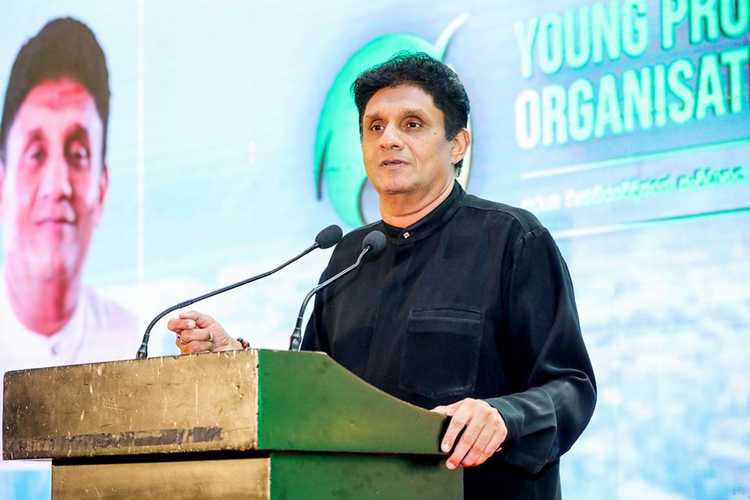
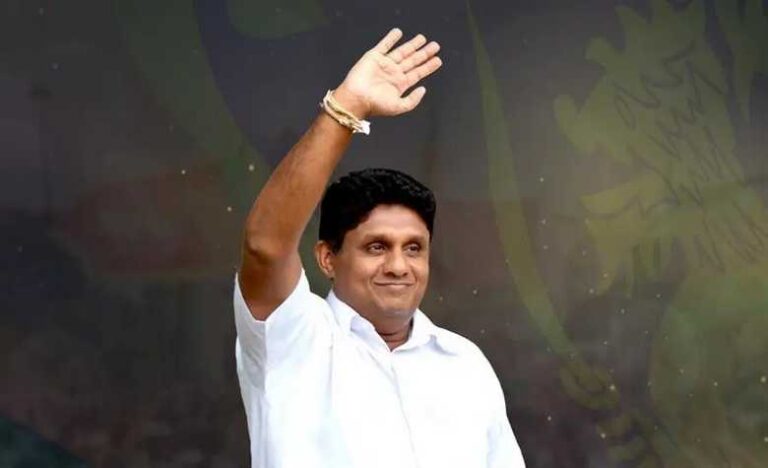
August 22, Colombo (LNW): Opposition leader and presidential candidate for the Samagi Jana Sandhanaya (SJB) Sajith Premadasa has pledged to renegotiate Sri Lanka’s current deal with the International Monetary Fund (IMF) if elected.
Premadasa criticised the existing agreement, arguing it prioritises debt sustainability over vital economic growth, which he believes is essential for the country’s future.
Speaking at the National Visionary Summit in Colombo, hosted by the National Council of Professionals, Premadasa highlighted that Sri Lanka’s economy requires more than just financial stability.
He emphasised that the government should focus on areas such as trade and other critical sectors instead of merely achieving a modest 3.1 per cent growth by 2029, as outlined in the present IMF agreement.
According to Premadasa, this growth target is insufficient to meet the nation’s broader economic needs.
“We need growth that is not only sustainable but also tradable and inclusive,” Premadasa said, stressing the importance of shared prosperity.
He reiterated that while the Samagi Jana Balawegaya supports ongoing reforms, they intend to reshape policies that drive robust, long-term economic expansion.
Premadasa’s comments come as the nation debates its economic future amidst challenging times, with his message resonating strongly with professionals and the business community seeking a more ambitious and growth-oriented economic strategy.
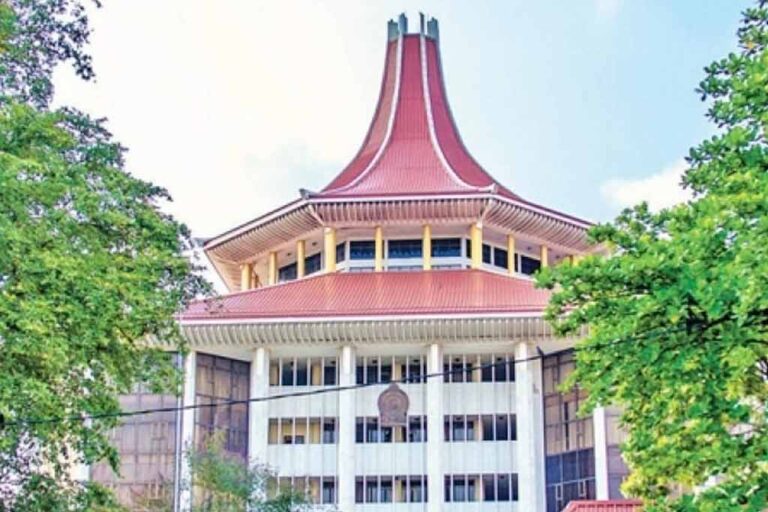
August 22, Colombo (LNW): In a significant ruling, Sri Lanka’s Supreme Court, led by Chief Justice Jayantha Jayasuriya, directed the Election Commission to promptly organise the long-delayed Local Government elections.
The bench ruled that the failure to hold the polls, initially scheduled for 9 March last year, constitutes a violation of citizens’ Fundamental Rights by the Finance Ministry, Election Commission, and Attorney General.
The five-judge bench, including Justices Vijith Malalgoda, Murdu Fernando, Gamini Amarasekara, and Yasantha Kodagoda, delivered the decision in response to four Fundamental Rights petitions.
These petitions were filed by Samagi Jana Balawegaya (SJB) General Secretary Ranjith Madduma Bandara, National People’s Power (NPP) MP Harini Amarasuriya, the Centre for Policy Alternatives, and PAFFREL.
The petitions named multiple respondents, including Treasury Secretary Mahinda Siriwardena and the Election Commission.
The petitioners’ legal team featured prominent counsel, including Upul Jayasuriya PC, Nigel Hatch PC, and Viran Corea PC, while the Election Commission was represented by Saliya Pieris PC, and the Attorney General by Additional Solicitor General Nerin Pulle.
This landmark decision underscores the judiciary’s stance on upholding democratic rights, pressing authorities to expedite electoral processes amidst public demand for accountability.
August 22, Colombo (LNW): Concerns are mounting among investors as Sri Lanka’s dollar bonds continue to decline, driven by uncertainty surrounding the country’s debt restructuring timeline and the potential impact of the approaching presidential election.
The bonds due in 2030 dipped below 55 cents on the dollar this week, marking a drop from 59 cents in mid-June.
This decline positions Sri Lanka as one of the worst-performing emerging markets in August, trailing only Lebanon.
In July, Sri Lanka reached a preliminary agreement with private investors to restructure $12.6 billion in bonds.
The arrangement requires approval from the International Monetary Fund (IMF) and major bilateral creditors, including China and France.
The Sri Lankan government has since requested further clarifications from the IMF regarding the restructuring plan, reflecting growing apprehension over the deal’s viability.
Analysts suggest that the uncertainty stems from both the timing of the proposed bond exchange and the political ambiguity surrounding the upcoming election.
Portfolio manager Carlos de Sousa from Vontobel Asset Management noted that Sri Lankan bonds have underperformed other distressed assets due to these uncertainties.
A Bloomberg index tracking Sri Lanka’s dollar bonds shows a 1.6% decline this month, although the bonds have gained 9.7% in value this year, surpassing the Bloomberg Emerging Markets Hard Currency Aggregate Index.
According to Junior Finance Minister Shehan Semasinghe, the government remains engaged in ongoing discussions regarding debt restructuring.
An initial assessment from the Official Creditor Committee has been received, but further information is awaited before finalising talks with bondholders.
The timeframe for concluding the agreement remains unspecified, heightening investor concerns.
The situation is further complicated by the looming presidential election on 21 September, where President Ranil Wickremesinghe seeks a renewed mandate amid ongoing economic recovery efforts following Sri Lanka’s 2022 debt default.
The IMF continues to review the proposed restructuring to ensure it aligns with the terms of the $3 billion loan granted to the country.
However, the debt deal faces scrutiny over concerns regarding equitable treatment of creditors. Bilateral lenders have traditionally been reluctant to disclose borrowing terms, adding to the complexity.
The restructuring plan currently includes a 28% nominal reduction in bond principal and provisions for macro-linked bonds tied to economic growth.
Analysts remain cautious about the possibility of a pre-election resolution. Barclays Plc analyst Avanti Save highlighted the limited window to finalise the deal, while portfolio manager Thys Louw from Ninety One UK Ltd. speculates that the agreement is unlikely to materialise before the election, signalling potential delays in the restructuring process.
August 22, Colombo (LNW): President Ranil Wickremesinghe formally received the credentials of two newly appointed High Commissioners and three Ambassadors at a ceremony held at the President’s House in Colombo on 21 August, the President’s Media Division (PMD) announced.
Among those presenting their credentials were High Commissioners representing Zambia and Bangladesh, as well as Ambassadors from Lithuania, Vietnam, and Myanmar.
The event highlights the continued strengthening of diplomatic ties between Sri Lanka and these nations.
The list of newly designated envoys includes:
Ms. Diana Mickeviciene – Ambassador of Lithuania (based in New Delhi)
Ms. Trinh Thi Tam – Ambassador of Vietnam (based in Colombo)
Ms. Marlar Than Htaik – Ambassador of Myanmar (based in Colombo)
Mr. Percy Patson Chanda – High Commissioner of Zambia (based in New Delhi)
Mr. Andalib Elias – High Commissioner of Bangladesh (based in Colombo)
Following the formal presentations, President Wickremesinghe engaged in warm and constructive discussions with the diplomats, touching on areas of mutual cooperation and shared interests.
The ceremony, held with due protocol, was attended by prominent officials including Foreign Affairs Minister Ali Sabry and Presidential Secretary Saman Ekanayake.
August 22, Colombo (LNW): The Maligakanda Magistrate’s Court has issued a restraining order barring health sector trade unions and the Inter-University Students’ Federation (IUSF) from conducting protest marches or entering the premises of the Health Ministry today (22).
The order, effective from 10:00 a.m. to 9:00 p.m., also prohibits activities that could disrupt public movement or create inconvenience in the surrounding areas.
This legal directive was enacted in response to growing concerns over potential unrest and disruptions caused by recent demonstrations. The authorities sought the court’s intervention, highlighting the likelihood of public inconvenience and possible clashes in a high-traffic area that includes essential government services.
The health sector unions and the IUSF have been vocal in their demands, staging multiple protests in recent weeks, pressing for various grievances, including better working conditions, fair wages, and educational reforms.
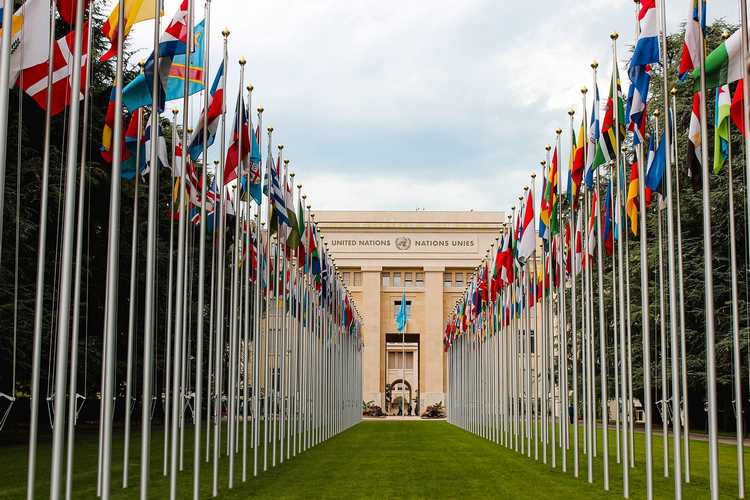
August 22, Colombo (LNW): The Presidential Secretariat, in collaboration with the Ministry of Foreign Affairs and the United Nations Office in Sri Lanka, is holding a National Event today (22) at the Presidential Secretariat.
This gathering is intended to outline Sri Lanka’s contributions ahead of the upcoming UN Summit of the Future, scheduled for 22-23 September 2024 in New York.
The event aims to present Sri Lanka’s priorities in line with the objectives of the Summit, which focuses on the adoption of the “Pact for the Future.”
This pact will provide a comprehensive framework for addressing critical global challenges, such as poverty, climate change, digital governance, peace and security, and sustainable development.
The national event includes four panel discussions mirroring the core themes of the Pact for the Future.
Topics include Sustainable Development and Climate Financing, the Digital Divide and Global Digital Compact, Women and Youth in Future Generations, and Humanitarian Principles in Warfare.
These discussions are designed to facilitate dialogue among government officials, international agencies, civil society, academia, and other key stakeholders.
The event underscores Sri Lanka’s active engagement in global multilateral efforts and its commitment to sustainable development and humanitarian initiatives.
Participants include high-level government representatives, diplomats, UN agencies, international organisations, and civil society leaders.
The outcomes from this dialogue are expected to strengthen Sri Lanka’s role in shaping global strategies and fostering international cooperation.
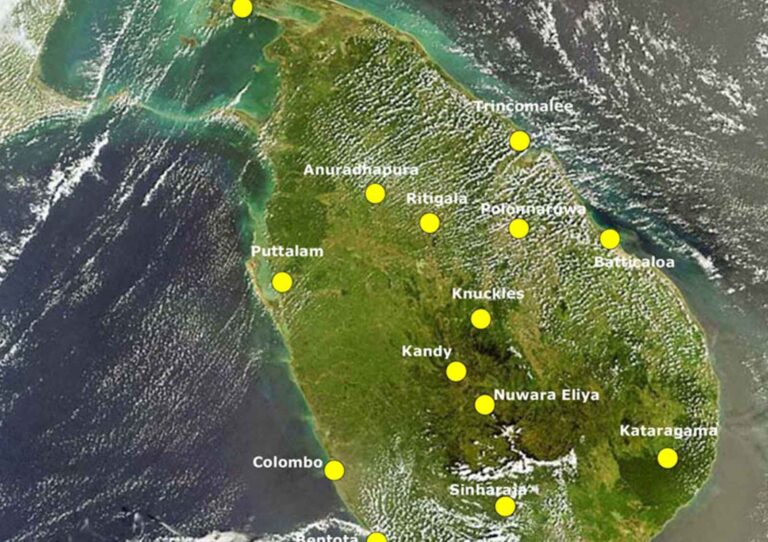
August 22, Colombo (LNW): Prevailing showery condition over the island is expected to reduce from today (22), the Department of Meteorology said in its daily weather forecast today.
Several spells of showers will occur in Western, Sabaragamuwa and North-western provinces and in Kandy, Nuwara-Eliya, Galle and Matara districts.
Showers or thundershowers will occur at a few places in Eastern and Uva Provinces during the evening or night.
Fairly strong winds about (30-40) kmph can be expected at times over Western slopes of the central hills and in Northern, North-central and North-western provinces and in Hambantota district.
The general public is kindly requested to take adequate precautions to minimise damages caused by temporary localised strong winds and lightning during thundershowers.
Marine Weather:
Condition of Rain:
Showers or thundershowers will occur at several places in the sea areas off the coast extending from Puttalam to Matara via Colombo and Galle. Showers or thundershowers will occur at a few places in the other sea areas around the island during the afternoon or night.
Winds:
Winds will be south-westerly and wind speed will be (30-40) kmph. Wind speed can increase up to (55–60) kmph at times in the sea areas off the coasts extending from Trincomalee to Puttalam via Kankasanthurai, Mannar and from Hambantota to Pottuvil. Wind speed can increase up to50 kmph at times in the sea areas off the coasts extending from Puttalam to Hambantota via Colombo and Galle.
State of Sea:
The sea areas off the coasts extending from Kankasanthurai to Puttalam via Mannar and from Hambantota to Pottuvil will be rough at times. The sea areas off the coasts extending from Puttalam to Hambantota via Colombo and Galle may be fairly rough at times. Temporarily strong gusty winds and very rough seas can be expected during thundershowers.
Its been quite a while, certainly over two years since I’ve been moved to put pen-to-paper like this for public consumption. Those who have followed my previous contributions may recall that I was a regular guest columnist and a frequent appearance on your screens in the late evenings but all of that came to almost a complete stop with the defeat of the UNP at the last General Election; I had literally given up, previously having worked with various civil society and pressure groups for almost three decades, trying to change the course of our Nation, I felt it was time to let-go and keep quiet. It was not only the massive loss the UNP suffered in 2020, when for the first time in my life I joined a Political Party to contest an election, under H.E. the incumbent President Wickramasinghe but also the disappointment of two previous attempts; in 2015 as a nominee professional on the JVP National List (which two seats we secured they decided to fill with defeated comrades) and then in 2019, when many of us civil activists got behind a common candidate, Gen. (Retd) Mahesh Senanayake encouraging the voters to shed party allegiances and get behind the professionals to build a new nation. We all know what happened, 6.9 million voters elected the “weda karana apei wiruwa” with an astounding majority (and the Wiruwa then abandoned ship and ran away) whilst the people didn’t even let our man muster 50K in total. Thus, it was that in complete disgust and utter frustration I resigned to my practice, recommenced my international work travelling regularly and tried to be content in my sulky corner; gave up watching local news, didn’t bother reading any papers and ran-away from any political discussion or dialogue, even at social occasions.
However, some of us do remain “Political Animals” as Aristotle expounds, it remains cancerously in our blood and the fever to make things better never goes down; I’ve diagnosed that this is indeed a terminal illness and the only remedy is to keep fighting the good fight until its time to meet your maker. It was thus when the Hon. Opposition Leader, whom I consider a friend, telephoned me in or around October or November 2021 I agreed to meet with him at his official residence. I found his sincerity far superior to my pride and he won me over instantly with his humility, offering me the olive branch that he bore no ill-feeling for my having declined his (SJB) invitation and contesting instead with the UNP; we left the bygones behind and I agreed to assist him as an advisor on legal / constitutional matters. This relationship was nothing new to me though, since for many years I have known and worked with Sajith, I knew him to be a few years my senior at S. Thomas’ Prep and we occasionally played guitar and sang together, sharing some fun in lighter vein at our annual Roy-Tho pilgrimage; but we also communicated with each other on more serious matters of State and Politics and I was always quick to offer my 2-cents worth with a quick message or call when needed and he always appreciated it.
So Why Sajith?
Its not for any of those reasons, for my friendship that I recently met Mr. Sajith Premadasa in Parliament and agreed to join his campaign, its because I cannot see anyone else matching that commitment for change with an equally ready qualified and passionate team that can get us out of where we are. It is as simple as that. If we don’t elect Mr. Sajith Premadasa to office as our 9th Executive President and immediately thereafter allow him to form a government made up of proven, eminently qualified, passionately committed and most importantly pristinely non-corrupt personnel, we will all be lamenting for years to come and our next generation, our kids will curse us!
Let me set down a few reasons for your consideration before I engage in the dialogue of why not his competitors: • Primarily I believe he is genuine and sincere in his declared passion for true change and that’s a darn good reason without anything more; • He has given priority to education as a means of empowering our future generations and that is what I’ve also committed a majority of my public service to; • He’s been well groomed under many leaders in Politics, including the incumbent H.E. the President when he was in the UNP and leadership is embedded in him with those years of gruelling experience; • He has shown through sheer committed service, even without governmental power that if one truly wants to serve, you will find a way to do it and to me that speaks volumes of the man (even if I don’t factor in my personal knowledge of his sincerity); • He manifests discipline, personal decorum and the highest standards of political behaviour and etiquette and I have never seen him to sling cheap-mud at his opponents, we really need to get this through to those who come forward to serve us as our representatives; • He has got the team to deliver – all one needs is to compare the mammoth bank of experts, professionals and proven leaders across a spectrum of vocations, trades or enterprise who are already flanking him and gathering by the day and I pose the question, which other prospective “team captain” can boast of such a crème-da-la-crème that almost spoils him for choice; • He has a plan – whilst others are making wild promises in usual Sri Lankan fashion as to what they “will do” when (that is if) they make it to office, Sajith and the SJB have a clear and workable plan with full knowledge of the very challenging mission at hand, with our country tethering on the edges of economic bankruptcy and a clear vision on how to save us.
I do not mince my words when I say this – take it from me, with our country where it is at present, if we miss the bus this time, we have certainly lost out on the whole journey and the sure end will be a very steep and insurmountable precipice!
Why Not Anura?
Perish the thought that these are “sour grapes” since my (former) comrade Anura K. Dissanayake didn’t include me in his Parliamentary Group in 2015, after I won my National List seat; this has nothing to do with it as I believe (he has also stated it publicly) that we remain friends, I maintain very cordial relations with many former comrades of the JVP from that campaign and even some of their re-launched NPP. I concede that AKD is a very attractive public speaker and can draw mass crowds, we did the same in 2015 too when we secured 06 seats (including our 02 National List) in Parliament, which they managed to reduce to 03 seats at the next election (2020) even under the relaunched NPP banner; but being a good stage-speaker alone is no criterion to handover the reigns of a nation, particularly when we are tethering for sheer survival and do not have the luxury to experiment with untested individuals.
Has AKD to date pronounced the members of his future Cabinet? Surely he can’t handle all the portfolios by himself; other than the public pronouncement that a future NPP Cabinet will be limited to 25 heads have they placed before the public any possible name of a single suitor to such office? Are we then to speculate that once elected AKD will suddenly pull out a dream-team magically? The simple response is that on all relative scales AKD led NPP cannot even come close to the bank of proven professionals and experts that Sajith has at hand in the SJB; that is the reality and we need to see this very soon before we make a drastic mistake of listening to our hearts instead of our heads!
Why Not RW?
Admittedly he is the most senior in the race but he unfortunately, my former Party Leader (at the last 2020 election) comes with way too much baggage that nullifies his very presence as a candidate. Is it not utterly ridiculous that one of the oldest Political Parties (if not the) in our country is struggling to field their candidate from that party and the household “elephant” symbol and he has had to rely on a “gas cylinder” to try and remind the people of our fuel crisis?
I vividly recall a very interesting conversation from an elderly lady, a die-hard UNP’er from my Moratuwa electorate at the last election. She told me (in Singhalese which translated meant) that she had decided not to vote for me or the UNP, due to her anger with RW; but when she went into the polling booth and saw the elephant on the ballot paper, she just didn’t have the heart to vote for any other symbol, so she crossed that box and gave me one preference vote (not for any other). Now this is the sentiment of the traditional UNP voter and they will never stand this nonsense of RW shedding the Party for anticipated political gain from the SLPP; which is now denied to H.E. President Wickramasinghe in any event, with the young Namal Rajapakse joining the fray.
Although RW has picked the gas-cylinder for obvious advertising reasons, to remind us of the “aragalaya” days and he now proclaims to be the saviour of the economy, we all know this not to be true; factually we are now in deeper debt than before and all that accumulated debt when we declared a sovereign default remains to be settled. All he actually managed was to realign the balance of payments between imports and exports by sharp increases in pricing, thereby reducing consumption and not servicing our debt (suspending capital and interest repayments); you are obviously going to show a surplus. However, this burden remains for the next government to grapple with. RW also wants us to continue the status quo and permit him to continue but those around him are the same rogues that led his predecessor up the garden path, until he gave up and ran away!
Why Not Young Namal?
I am personally (as an old Thomian) elated that we have two of “our lot” running for the Head of Government in our Republic, my friend Sajith (from Prep School) and my young learned-friend Namal from a much later era; surely our forefathers like mahamanya DS Senanayake, Dudley Senanayake, SWRD Bandaranaike and W. Dahanayake, all who were groomed at our school-by-the-sea to assume leadership of the nation must be proud!
Namal does show signs of a mature young leader than what we saw as he entered politics, the exuberance of youth appear to have left him and I was particularly impressed with a dialogue I watched on TV recently; but he has more time and this is far too early for him to assume the reigns of the top job, I wish him well for the future sincerely. He also needs to distance himself from that “Rajapakse tagline” that many around him appear to be promoting him with, that sort of politics will not run for long my young friend, certainly not beyond the tenure of your senior (and father) for whom some, including myself, are still grateful for the leading us to the end of a bloody and useless war that sucked the very lifeblood out of our nation for three decades; but now we need to move beyond, reach reconciliation and think-anew as one united Sri Lanka.
My Prediction & the Future:
Mr. Sajith Premadasa, MP, the Hon. Leader of the Opposition is leading the race in all the pre-election polls and reviews and he will most certainly reach the goal, there may not be a need for a second preference count; however the challenge my friend lies beyond that victory.
We must quickly finish a simple celebration, which I very sincerely wish for you, to see you as our 9th Executive President but then we have a lot of work to do in re-building our nation! We need to get some good, non-corrupt and hard-working teams together in the various fields as we form a new government led by you, appeal to the People to join and work with us and start the hard and gruelling tasks ahead of us; laying brick-by-brick, firmly from the foundation upwards, cleaning up the muck and negativity that has pulled us down thus far, until we take our People to the promised land, the land that flows with milk and honey that has been assured to all Sri Lankans by our forefathers!
To that end I leave this city now and get on an aeroplane in the next few hours, to help and assist in that mammoth challenge ahead of us, in any way that I can – #2GetherVcan
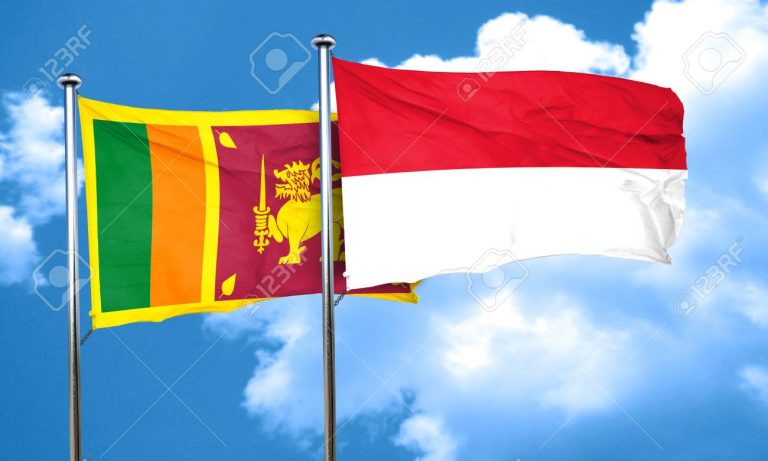
August 21, Colombo (LNW): The Embassy of Indonesia, together with the Indonesian community in Sri Lanka, celebrated the 79th Independence Day with a flag-hoisting ceremony at the Embassy premises on Saturday (17th). The celebration was highlighted by the Indonesian Ambassador to Sri Lanka, Dewi Gustina Tobing, and the Indonesian community cutting the anniversary cake.
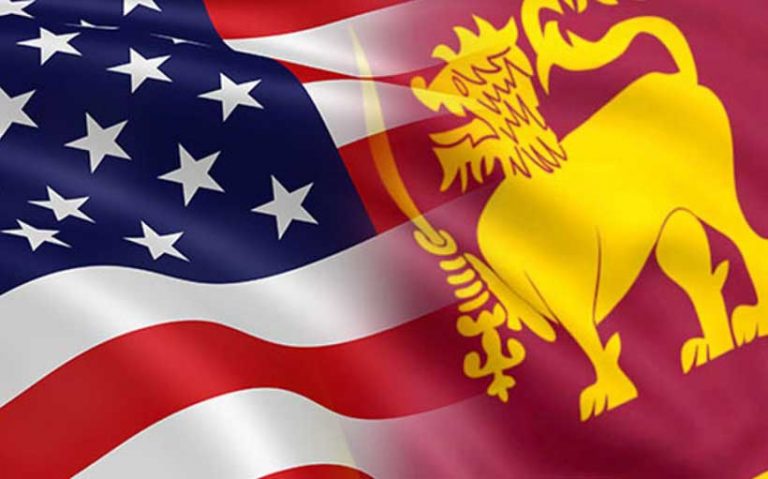
August 21, Colombo (LNW): US Acting Assistant Secretary of State for Oceans, International Environmental, and Scientific Affairs, Jennifer Littlejohn, is currently on an official visit to Sri Lanka. During her stay, she is expected to hold discussions with Sri Lankan officials and partners, focusing on U.S.-supported wildlife protection projects. The visit began with US Ambassador in Colombo, Julie Chung, greeting Littlejohn.