Home Blog Page 981

Sri Lanka seeks US $11.26 bln investment to achieve renewable energy targets 

0

 The Sri Lanka Sustainable Energy Authority (SLSEA) has been invigorated to go on with the master plan for achieving the target of sharing the national grid with 70 percent of renewable electricity resulting from the enforcement of Electricity Act (amendment) No. 16 of 2022, by 2030. 

Minister Kanchana Wijesekara has instructed the Authority to work in collaboration with the CEB to add a minimum of 2,550 MW renewable electricity to the national grid during the period 2023 – 2026.

“Up to 2023 we had been able to connect 1,600 MW of renewable energy capacity to the grid and endeavouring to reach the target to be fulfilled by 2030, with having given priority to six major renewable energy generation projects,” Sepala said.

Sri Lanka is looking for $11.26 billion in investment to meet its renewable energy targets in eight years through 2030 including building storage capacity, Narendra De Silva, the Acting General Manager at the state-run Ceylon Electricity Board, said.

De Silva, addressing a forum to explain Sri Lanka’s renewable energy requirements for potential Indian partners said the island nation is likely to see solar power as a key source in the energy mix by 2026.

The CEB’s 2030 target showed plans by 2030 to generate 3,805 MW from solar power, 1,475 MW from wind power, and establish Battery Energy Storage System (BESS) with 1,100 MW capacity, and Pumped Storage Plants (PMP) with 700 MW.

“We are looking at approximately $9.4 billion in acquiring this generation infrastructure,” he said, adding that further $1.86 billon investment is required for the network.

He said Sri Lanka’s Northern region will be focusing more on wind power plants and the Eastern region will focus mainly on solar power plants. The southern region is demarcated for both wind and solar plants.

, 150 MW of solar is to be completed by the end of this year, and will be the largest solar capacity being connected to the system. 

Also 100 MW of solar projects at Siyambalanduwa for which tenders have already been awarded and this project once completed by the end of 2025 will generate a total of energy 200 GWh annually. 

One hundred MW solar project at Oddamavadi in Batticaloa which will be connected to the national grid in 2024/ 2025 and 50 MW of solar project at Sampoor is under construction.

Apart from the solar project, a 234 MW wind power project at Poonaryn will be activated to enable it to supply a total energy of 804 GWh per year next year. 

 The Sri Lanka Sustainable Energy Authority (SLSEA) has been invigorated to go on with the master plan for achieving the target of sharing the national grid with 70 percent of renewable electricity resulting from the enforcement of Electricity Act (amendment) No. 16 of 2022, by 2030.

 Minister Kanchana Wijesekara has instructed the Authority to work in collaboration with the CEB to add a minimum of 2,550 MW renewable electricity to the national grid during the period 2023 – 2026.

“Up to 2023 we had been able to connect 1,600 MW of renewable energy capacity to the grid and endeavour to reach the target to be fulfilled by 2030, with having given priority to six major renewable energy generation projects,” Sepala said.

Sri Lanka is looking for $11.26 billion in investment to meet its renewable energy targets in eight years through 2030 including building storage capacity, Narendra De Silva, the Acting General Manager at the state-run Ceylon Electricity Board, said.

De Silva, addressing a forum to explain Sri Lanka’s renewable energy requirements for potential Indian partners said the island nation is likely to see solar power as a key source in the energy mix by 2026.

The CEB’s 2030 target showed plans by 2030 to generate 3,805 MW from solar power, 1,475 MW from wind power, and establish Battery Energy Storage System (BESS) with 1,100 MW capacity, and Pumped Storage Plants (PMP) with 700 MW.

“We are looking at approximately $9.4 billion in acquiring this generation infrastructure,” he said, adding that further $1.86 billon investment is required for the network.

He said Sri Lanka’s Northern region will be focusing more on wind power plants and the Eastern region will focus mainly on solar power plants. The southern region is demarcated for both wind and solar plants.

150 MW of solar is to be completed by the end of this year, and will be the largest solar capacity being connected to the system. 

Also 100 MW of solar projects at Siyambalanduwa for which tenders have already been awarded and this project once completed by the end of 2025 will generate a total of energy 200 GWh annually. 

One hundred MW solar project at Oddamavadi in Batticaloa which will be connected to the national grid in 2024/ 2025 and 50 MW of solar project at Sampoor is under construction.

Apart from the solar project, a 234 MW wind power project at Poonaryn will be activated to enable it to supply a total energy of 804 GWh per year next year. 

US expresses concern on China’s consideration of military facility in Sri Lanka

0

China is reportedly considering pursuing military facilities in multiple locations, including in Sri Lanka, as per the latest report by US Intelligence Community.

These facilities are beyond developing its military base in Djibouti and its military facility at Ream Naval Base in Cambodia.

“Beijing will focus on building a fully modernised national defence and military force by 2035 and for the PLA to become a world-class military by 2049.

 In the meantime, the CCP hopes to use the PLA to secure what it claims is its sovereign territory, to assert its preeminence in regional affairs, and to project power globally, particularly by being able to deter and counter an intervention by the US in a cross-Strait conflict,” the assessment by the US intelligence said.

However, China lacks recent warfighting experience, which probably would weaken the PLA’s effectiveness and leaders’ willingness to initiate a conflict, it said.

“Xi Jinping’s prioritisation of security and stability for the CCP is undermining China’s ability to solve complex domestic problems,” it added.

“Beijing’s hardline approach to alleged separatism in Xinjiang, Hong Kong, and Tibet, as well as broader crackdowns on religion and dissent in China, have generated widespread global criticism of China’s human rights abuses and extraterritorial interference,” it added

China is planning to set up a radar base in the jungle near Dondra Bay, about 155 kilometres southeast of the Sri Lankan capital of Colombo.

The facility will be able to monitor India’s assets in the Indian Ocean, including its Navy, and its strategic installations in the southern and eastern parts of South Asia, like the Kudankulam and Kalpakkam nuclear power plants and their refuelling activities.

Some observers believe Dondra Bay’s radar station could track the movements of Indian warships en route to the Andaman and Nicobar Islands.

A Chinese radar base in Sri Lanka will also be able to monitor US and UK military assets on Diego Garcia, a British Indian Ocean Territory.

In Sri Lanka, “With the help of its radar, China will be able to spy on the Indian space station in Sriharikota (Andra Pradesh), the missile testing range in Chandipur (Odisha) and several other Indian military bases, “as well as monitor its satellites in space.”

In August,last year  the Chinese surveillance vessel Yuan Wang 5 docked for six days at the port of Hambantota for logistical and supply operations, this despite Indian warnings to Sri Lanka. Since then, India has increased its monitoring of Chinese movements in the region.

Several academics note that India’s Defence Minister Rajnath Singh submitted a 12-page secret report to Indian Prime Minister Narendra Modi drafted by the Indian naval intelligence about China’s attempt to set up a radar base in Sri Lanka.

According to the document, China is working on a deal with Sri Lanka to lease Dondra Bay for 99 years, as it did for the Port of Hambantota.

Govt. takes over Rs. 100 bn worth Sri Lankan Airlines debt sparing $ 175 mn bond

0

In the wake of no taker for the share divestiture and the restructuring of loss making Sri Lankan Airlines after postponing four times of the request for proposals till mid April , the government has taken over worth  Rs. 100 billion of SriLankan Airlines sparing the US $ 175 million five year international bond.

The SOE Restructuring Unit (SRU) said yesterday that the Cabinet of Ministers by its decision dated 4 March 2024 approved the transfer of liabilities of SriLankan Airlines to the Government of Sri Lanka (GoSL):

SriLankan Airlines should show operational and financial progress in the next six months, Minister of Aviation Nimal Siripala de Silva said.

He noted that progress should be shown as the Government has provided necessary assistance by absorbing the USD 510 million outstanding debt by the national carrier. 

SriLankan Airlines has faced severe criticism in the recent past due to the severe inconvenience caused to passengers as a result of operational issues.

However, based on a proposal by the President, as the Finance Minister, the government has allocated funds to cover US$ 510 million from the total US$ 1.2 billion debt that the airline owed to banks and other institutions, he said.

The national carriers liabilities included $ 105 million of Treasury guaranteed debt due to Bank of Ceylon, $ 12.9 billion of Treasury guaranteed debt due to Bank of Ceylon, $ 105 million of Treasury guaranteed debt due to People’s Bank.and Rs. 18.5 billion of Treasury guaranteed debt due to People’s Bank

These liabilities will be taken over by the treasury under the new financial arrangement .SRU said consequent to the move (worth Rs. 100 billion), the only component of significant term borrowing that remains in the books of SriLankan Airlines relates to a $ 175 million, 7%, five year international bond issued in 2019. 

This bond is also backed by a sovereign guarantee and is due for settlement in June 2024.“The Cabinet of Ministers has also decided that in the event of a ruling in favour of Sri Lankan Airlines with respect to the arbitration case filed by it against Airbus SE, steps will be taken to transfer proceeds arising from the same to the GoSL,” the SRU added. 

Last week Ports, Shipping and Aviation Minister Nimal Siripala de Silva the Government decided to take over $ 512 million of national carrier’s debt in a bid to make the national carrier more attractive to prospective investors. 

The Government last week announced that the deadline for Expressions of Interest for the national carrier was extended to 22 April. The previous deadline was 5 March.

Dollar rates in Sri Lanka today(Mar 13)

0

March 13, Colombo (LNW): The Sri Lankan Rupee continues to exhibit strength against the US Dollar in commercial banks in Sri Lanka today (March 13), marking a further appreciation compared to Tuesday’s rates.

As reported by Peoples Bank, the buying and selling rates of the US Dollar remain stable at Rs. 300.82 and Rs. 311.30, respectively.

Commercial Bank notes a reduction in the buying rate of the US Dollar from Rs. 300.48 to Rs. 300.41, while the selling rate has also dropped from Rs. 310.25 to Rs. 309.75.

Similarly, at Sampath Bank, the buying and selling rates of the US Dollar have decreased from Rs. 302 to Rs. 301.50 and from Rs. 311 to Rs. 310.50, respectively.

Water Consumption Surges by 15% Amid Arid Conditions

0

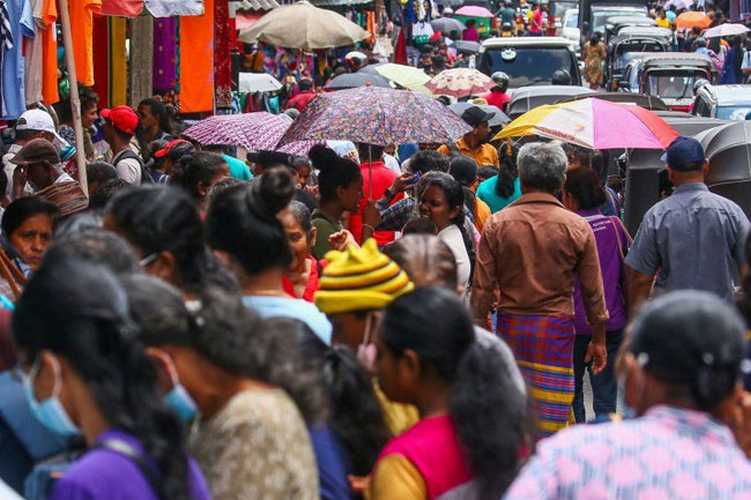
March 13, Colombo (LNW): With arid weather prevailing, water consumption in the region has surged by 15%, prompting the National Water Supply and Drainage Board to announce low-pressure water supply to higher ground and outermost areas of water projects. While water cuts have not been enforced in any region thus far, the Board urges residents to use water judiciously.

The Department of Meteorology predicts the continuation of dry weather conditions into the next month, with intermittent showers expected. However, these showers are not anticipated to provide sufficient rainfall to alleviate the arid conditions. Ajith Wijemanna, the Director of the Department of Meteorology, emphasized that the dry spell is likely to persist until the onset of the South Western monsoon.

In light of the increased water consumption and the prolonged dry period, authorities are urging the public to adopt water-saving measures to ensure sustainable usage during these challenging conditions.

State University Non-Academic Staff Strike Extends into Second Day

0

March 13, Colombo (LNW): The non-academic staff members of all 17 state universities in Sri Lanka have entered the second consecutive day of their trade union action. The token strike, initiated at noon on March 12, is a protest against the authorities’ failure to fulfill promises made during a meeting on January 22, specifically regarding the rectification of salary cuts.

As the strike continues until 4.30 p.m. today, the non-academic staff members are emphasizing their demand for a resolution to the salary cut issue. K. L. D. G. Richmond, the co-secretary of the Inter University Trade Union Federation, warned that if authorities do not provide a satisfactory solution, they are prepared to escalate the protest to an indefinite strike starting next week.

The ongoing trade union action highlights the urgency for a resolution to address the concerns of the non-academic staff members and underscores their commitment to securing fair compensation for their work.

Cabinet Approval for Yen 1.6 Billion Grant from Japan to Bolster Sri Lanka’s Development Projects

0

March 13, Colombo (LNW): The Cabinet of Ministers has granted approval for Sri Lanka to sign documents with the Japanese government, securing a grant of Yen 1.6 billion (approximately Rs. 3.3 billion) under the Japanese Economic and Social Development Program. This grant aims to support various projects in Sri Lanka, particularly those addressing immediate humanitarian needs and uplifting the country’s economic situation amid the current crisis.

Japan, a longstanding ally of Sri Lanka, is extending its cooperation by providing immediate humanitarian grants to communities affected by the economic downturn. The approved grant of Japanese Yen 1.6 billion will be allocated for the implementation of several key projects under the Japanese Economic and Social Development Program.

The projects include:

  1. Response and management enhancement project for oil spills of Sri Lanka Coastal Defense Force
  2. Project to supply assisting equipment for maternal and infant treatments in the main hospitals of the Northern province
  3. Project to distribute assisting equipment for garment courses in vocational training centers of the Northern province
  4. Project to award assisting equipment for the security of fishermen in Northern and Eastern provinces

President Ranil Wickremesinghe, in his role as the Minister of Finance, Economic Stabilization, and National Policies, proposed the signing of exchange papers and other relevant documents with Japan to facilitate the donation grants for these projects. The approval from the Cabinet marks a significant step towards the initiation of these developmental endeavors.

Sri Lanka Original Narrative Summary: 13/03

0

1. President Ranil Wickremesinghe underscored the importance of education instilling resilience in children, encouraging them to confront challenges with unwavering principles. He also highlighted the significance of education beyond textbooks, encompassing sports, leadership and the exploration of emerging fields like artificial intelligence (AI).

2. Opposition Leader Sajith Premadasa has voiced concerns over the high levels of child, infant, and maternal malnutrition prevalent in the country. Citing statistics from a 2022 census indicating that 25% of children aged 5-18 are underweight, Premadasa stressed the urgent need for action to address this critical issue. In an effort to tackle the malnutrition crisis affecting mothers, babies, children, and school children, Sajith Premadasa announced plans to meet with representatives from the International Monetary Fund (IMF) in the coming week.

3. The Cabinet of Ministers has given its approval to publish the Draft Bill of the Recovery of Loans by Banks (Special Provisions) Act No. 4 of 1990, which was amended to facilitate legal provisions for the suspension of Parate Law.

4. Minister of Power and Energy Kanchana Wijesekera has held discussions with an Indian government delegation regarding the renewable energy cooperation between the two countries, capacity building programs, technology transfer, investments, opportunities and policies related to the sector. 

5. Prices of imported milk powder will be reduced from this week, Minister of Trade, Commerce and Food Security Nalin Fernando announced: Said that the prices of imported milk powder will be reduced between Rs.100 – Rs.150 per kilo.

6. Cabinet approval has been granted for the Draft bill on Gender Socialization Equality to be published in the government gazette notification for Parliament approval. 

7. Parliamentarian M. A. Sumanthiran, PC was the ONLY MP that represented the opposition at Monday’s (11) meeting at the President’s Office to discuss the IMF-supported program for the country. Following the discussion convened by the President regarding the International Monetary Fund (IMF) program, M. A. Sumanthiran, PC voiced significant concerns regarding the lack of transparency surrounding the IMF program’s implementation. 

8. The Ministry of Education has reiterated the set of guidelines issued earlier aiming to ensuring the protection of school children from potential adverse effects of the prevailing high atmospheric temperatures. Emphasized the responsibility of all principals of the schools island-wide, in order to ensure the protection of children, while highlighting the need to comply with the guidelines issued earlier.

9. Sri Lanka to receive a grant of Yen 1.6 billion (approximately Rs. 3.3 billion) under the Japanese Economic and Social Development Program for the implementation of several projects. Japan has expanded its corporation to provide Sri Lanka with immediate humanitarian grants for the communities devastated by the present economic crisis and to empower the government sector to upgrade the economic situation of the country.

10. The Sri Lanka Cricket Selection Committee selected a 16-member squad to take part in the ODI series against Bangladesh. The squad was approved by Minister of Sports and Youth Affairs Harin Fernando. The ODIs will be played on the 13th, 15th and 18th of March in Chattogram, Bangladesh.

Warning Issued by Department of Export Agriculture on Pepper Root Disease Threatening Cultivations

0

March 13, Colombo (LNW):The Department of Export Agriculture (DEA) has alerted farmers to the imminent risk of a fungal disease posing a threat to pepper cultivation in Sri Lanka. In a discussion held at the Ministry of Plantation Industry under the guidance of Agriculture and Plantation Industry Minister Mahinda Amaraweera on the morning of the 12th, DEA officials revealed the presence of a root-damaging fungal disease affecting pepper vines.

Known as ‘Quick wilt and slow wilt,’ these diseases result from the fungus Phytophthora Capsici, which attacks the root system of pepper vines. The consequence of root rot is the wilting and eventual death of pepper vine leaves, as the vine fails to receive adequate water and nutrition.

The spread of this disease is further exacerbated by the damage caused by the stem-boring gull. Reports indicate that all areas related to pepper cultivation in the country are currently experiencing the effects of these diseases, leading to the complete destruction of approximately 200 acres of pepper cultivation. The DEA emphasizes the heightened risk of rapid disease spread due to the prevailing hot and dry weather conditions.

To combat these diseases, the DEA recommends the use of anti-fungal agents containing 64 percent Mancozeb and 08 percent Metalaxin. Fungicides such as Ribomil, Redoxil, and Radon are cited as suitable for controlling the condition.

Despite a high yield reported during this Maha Season in pepper cultivation, the DEA underscores the potential threat to pepper pods due to root rot caused by the fungal infection around the pepper root system. The Ministry of Agriculture and Plantation Industries urges farmers to take preventive measures, including the burning and destruction of diseased pepper vines and the application of recommended chemicals to control the spread of this damaging disease.

Minister Douglas Devananda Foresees Release of Northern Lands Under SF, WLD, and FCD Control

0

March 13, Colombo (LNW):Minister of Fisheries, Douglas Devananda, expressed optimism regarding the release of lands in the Northern Province currently under the control of Security Forces (SF), Wildlife Department (WLD), and Forest Conservation Department (FCD). Speaking at a function held at the Jaffna District Secretariat, where lands in Jaffna and Kilinochchi districts were handed back to their owners, Minister Devananda stated that the majority of such lands have already been released. He confidently anticipates the release of the remaining lands within the coming months.

During the event, the Minister emphasized the government’s commitment to gradually returning farmers’ lands acquired by SF, WLD, and FCD. He highlighted the collaborative efforts of the President and the Army Commander of the Northern region in aligning with the goal of releasing these lands. Minister Devananda underscored that the President advocates for the release of lands to their previous state before 1985, with a target to complete the process by next April.

Addressing the Indian poaching issue, Minister Devananda reported the recent arrest of three boats and twenty fishermen on March 10. He urged the SF to intensify operations, emphasizing that diplomatic measures between the two countries are being pursued at the highest levels through the Foreign Minister. The event was attended by senior officials, including the District Secretaries of Jaffna and Kilinochchi Districts, and Senior Advisor to the President, Sagala Ratnayake.